Navigating Energy Procurement: Your Risk Assessment Checklist
Published: 12/05/2025 Updated: 07/02/2026
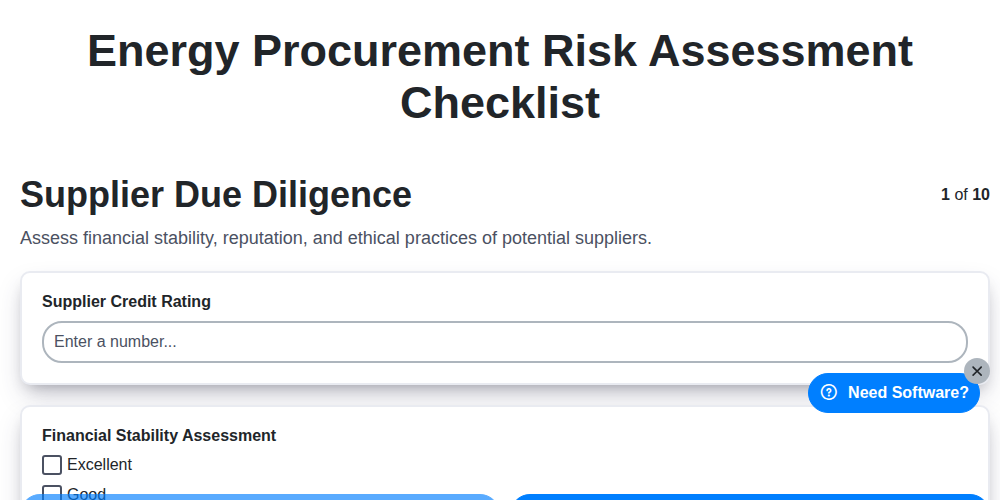
Table of Contents
- Introduction: Why Energy Procurement Risk Assessment Matters
- 1. Supplier Due Diligence: Knowing Your Partners
- 2. Contractual Terms & Conditions: A Deep Dive
- 3. Market Volatility & Price Risk: Predicting the Unpredictable
- 4. Geopolitical & Regulatory Risks: Staying Ahead of the Curve
- 5. Cybersecurity & Data Security: Protecting Your Assets
- 6. Supply Chain Resilience: Building a Robust Foundation
- 7. Contract Performance Monitoring: Ensuring Delivery
- 8. Insurance & Liability Coverage: Mitigating Potential Losses
- 9. Sustainability & ESG Considerations: Aligning with Values
- 10. Contingency Planning & Business Continuity: Preparing for the Unexpected
- 11. Integrated Risk Management: Connecting the Dots
- 12. Regular Review & Updates: Keeping Your Assessment Current
- Conclusion: Proactive Procurement for a Secure Future
- Resources & Links
TLDR: Buying energy is risky! This checklist helps you spot potential problems - from supplier reliability and price spikes to geopolitical chaos and cyber threats. It's your guide to a safer, more sustainable energy procurement strategy, ensuring business continuity and minimizing financial surprises.
Introduction: Why Energy Procurement Risk Assessment Matters
Energy procurement isn't just about securing the lowest price; it's a critical function intertwined with operational stability, financial health, and increasingly, sustainability goals. A sudden price spike, a supplier failure, or a regulatory shift can cripple a business, disrupting production, damaging reputation, and impacting the bottom line. That's why a robust energy procurement risk assessment is no longer a 'nice-to-have' - it's a necessity.
This assessment goes beyond simply comparing supplier bids. It's a proactive process that identifies, analyzes, and mitigates the diverse and complex risks associated with securing your energy supply. Failing to do so leaves your business vulnerable to unforeseen circumstances that can have devastating consequences. This checklist provides a framework to systematically evaluate these risks and build a more resilient energy procurement strategy.
1. Supplier Due Diligence: Knowing Your Partners
Your energy procurement strategy is only as strong as the suppliers you choose. Robust supplier due diligence is the foundational step to mitigating risk and ensuring reliable energy supply. Don't just pick the lowest bidder - investigate thoroughly!
This process extends far beyond simply verifying their licenses and financial stability. A comprehensive assessment should include:
- Financial Health: Review their credit ratings, financial statements (audited preferred), and overall economic stability. Look for signs of potential insolvency or instability.
- Operational Capacity: Understand their generation/supply capabilities, infrastructure, and ability to meet your energy requirements consistently. Are they overextended?
- Reputation & Track Record: Research their history and reputation within the industry. Check for past breaches of contract, legal disputes, or negative publicity. Online reviews and industry reports can be invaluable.
- Compliance and Ethics: Ensure they adhere to all relevant environmental, social, and governance (ESG) standards, and have robust anti-corruption and ethical business practices.
- Key Personnel: Identify and vet key individuals within the supplier's organization. Their experience and competence directly impact service delivery.
- Subcontractor Management: If they utilize subcontractors, scrutinize their selection process and oversight of those partners. You are indirectly responsible for their actions.
- Security Protocols: Assess their physical and digital security measures to protect critical infrastructure and data.
Don't be afraid to ask tough questions and demand transparency. This upfront investment in due diligence significantly reduces the likelihood of future disruptions and protects your business.
2. Contractual Terms & Conditions: A Deep Dive
Your energy procurement strategy is only as strong as the contracts underpinning it. A superficial review of terms and conditions can leave you exposed to significant financial and operational risks. Let's break down the critical areas that demand your meticulous attention.
Beyond the Price: While pricing is undoubtedly a key factor, focusing solely on the headline rate is a dangerous trap. Scrutinize these aspects thoroughly:
- Price Adjustment Mechanisms: Understand exactly how prices can fluctuate. Are they tied to specific indices? How frequently do they adjust? What are the limitations or caps on these adjustments? Hidden complexity here can lead to unexpected cost spikes.
- Termination Clauses: What triggers termination? What are the penalties for early termination? Are there 'force majeure' clauses and how are they defined? Ensure you have the flexibility to exit the contract if circumstances change.
- Payment Terms & Penalties: Late payment fees, early payment discounts - know them all. Understand the implications for your cash flow and ensure they align with your internal processes.
- Volume Commitments & Take-or-Pay Obligations: Are you committed to purchasing a minimum volume of energy? Failing to meet these obligations can be costly. Assess your actual needs carefully.
- Change of Law Clauses: How are unexpected regulatory changes handled? Ensure they don't disproportionately impact your business.
- Dispute Resolution: What is the agreed-upon process for resolving disagreements? Is it arbitration, litigation, or mediation? Consider the cost and potential timeline for each.
- Assignment & Subcontracting: Can the supplier assign the contract or subcontract portions of their obligations? Understand the implications for service quality and your contractual rights.
- Liability Limitations: Examine the supplier's limitations of liability. Ensure they're reasonable and don't leave you exposed to unacceptable risk.
Legal Review is Essential: Never assume you fully understand a complex energy contract. A thorough legal review by an experienced energy lawyer is a vital investment that can save you significant costs and headaches down the line.
3. Market Volatility & Price Risk: Predicting the Unpredictable
Energy markets are notoriously volatile, influenced by a complex interplay of factors far beyond your immediate control. From sudden shifts in global demand to unexpected weather events, price fluctuations can significantly impact your bottom line. A robust energy procurement strategy must proactively address these risks.
This section of your risk assessment should delve into several key areas:
- Historical Price Analysis: Review historical price trends for your energy sources (electricity, natural gas, renewables) over various timeframes (short, medium, and long-term). Identify patterns and potential drivers of volatility.
- Supply & Demand Fundamentals: Assess current and projected supply and demand balances for your energy commodities. Consider factors like production levels, consumption forecasts, and infrastructure constraints.
- Weather Sensitivity: Evaluate how your energy consumption and prices are impacted by weather patterns. Develop models to forecast demand fluctuations based on seasonal forecasts.
- Futures Market Analysis: Monitor energy futures contracts to gauge market expectations and potential price movements. While not perfect predictors, they provide valuable insights.
- Index Tracking & Price Spread Analysis: Understand how your energy prices relate to broader market indices. Analyze price spreads between different energy sources to identify potential arbitrage opportunities or risk exposures.
- Scenario Planning: Develop various price scenarios (best case, worst case, most likely) based on different assumptions about market conditions. This helps prepare for a range of outcomes and informs hedging strategies.
Key Questions to Ask:
- What are the primary drivers of price volatility for my energy sources?
- How sensitive is my energy consumption to price fluctuations?
- What hedging or risk mitigation strategies can I employ to manage price risk?
- How frequently should I re-evaluate my price risk assessment based on market changes?
4. Geopolitical & Regulatory Risks: Staying Ahead of the Curve
Energy procurement isn't just about price; it's deeply intertwined with the shifting sands of global politics and ever-evolving regulations. Failing to account for these factors can expose your organization to significant disruption and financial loss.
Understanding the Landscape: Geopolitical risks encompass everything from trade wars and international conflicts to political instability within supplier nations. Regulatory risks, meanwhile, can arise from changes in environmental policies, energy mandates, carbon pricing mechanisms, and import/export controls. These aren't static - they're constantly evolving.
Assessment Focus: When evaluating geopolitical and regulatory risks, consider:
- Supplier Country Stability: Assess the political climate, potential for unrest, and historical stability of countries where your suppliers source energy or materials. Utilize reputable risk assessment tools and resources.
- Trade Agreements & Tariffs: How might changes in trade agreements or the imposition of tariffs impact energy costs and supply chains? Factor in potential escalations and retaliatory measures.
- Regulatory Changes: Stay abreast of upcoming legislation related to energy production, carbon emissions, and environmental impact. Consider how new policies might affect supplier compliance and operational costs.
- Sanctions & Export Controls: Be acutely aware of any current or potential sanctions affecting suppliers or sourcing locations. Ensure compliance to avoid legal repercussions.
- Policy Advocacy: Where possible, engage with industry groups and policymakers to influence regulations in a way that supports business continuity.
Proactive Mitigation: Don't wait for a crisis. Incorporate geopolitical and regulatory risk assessments into your routine procurement processes. Diversify supplier bases, conduct scenario planning, and build flexibility into your contracts to cushion against potential disruptions. Regular review and updates are essential - what's stable today might be volatile tomorrow.
5. Cybersecurity & Data Security: Protecting Your Assets
Energy procurement involves sharing sensitive data - consumption patterns, pricing strategies, supplier details - making it a prime target for cyberattacks. A robust cybersecurity and data security assessment is no longer optional; it's essential.
Here's what your assessment should cover:
- Supplier Cybersecurity Posture: Don't just take their word for it. Evaluate their security certifications (ISO 27001, SOC 2, etc.), penetration testing results, incident response plans, and employee training programs. Are they aligned with your organization's security standards?
- Data Encryption & Access Controls: How is data encrypted, both in transit and at rest? Who has access to sensitive procurement data, and are access controls regularly reviewed and updated? Implement the principle of least privilege.
- Vulnerability Management: Does your supplier have a robust vulnerability management process? Are systems regularly scanned for vulnerabilities and patched promptly?
- Incident Response Plan: A clear incident response plan is vital. What steps does your supplier take if a breach occurs? How will you be notified, and what is the recovery process? Consider including a right to audit their response.
- Data Location & Compliance: Understand where your procurement data is stored. Is it compliant with relevant data privacy regulations (GDPR, CCPA, etc.)?
- Third-Party Risk Management: Your supplier's suppliers are your suppliers' suppliers. Assess their cybersecurity posture as well, recognizing that vulnerabilities can propagate down the supply chain.
Addressing these points proactively can significantly reduce your exposure to cyber threats and protect your valuable energy procurement data.
6. Supply Chain Resilience: Building a Robust Foundation
Energy procurement isn't just about securing the lowest price; it's about ensuring a continuous and reliable supply. A single disruption - whether a natural disaster, geopolitical event, or supplier failure - can cripple operations and impact your bottom line. Supply chain resilience focuses on anticipating, preparing for, and recovering from these potential disruptions.
Here's what to consider when assessing and strengthening your energy supply chain resilience:
- Supplier Diversification: Avoid over-reliance on a single supplier. Having multiple, geographically diverse sources mitigates risk if one fails. Evaluate the suppliers' own supply chains - are they also diversified?
- Geographic Risk Mapping: Understand where your suppliers source their energy and assess the risk factors associated with those regions (e.g., political instability, natural disaster vulnerability).
- Inventory Management: Depending on your needs and the energy type, consider maintaining a strategic buffer of energy or fuel.
- Logistics Assessment: Review transportation routes and modes. Are there alternative routes if primary options are disrupted? Consider potential bottlenecks.
- Early Warning Systems: Implement systems to monitor potential disruptions-weather patterns, geopolitical events, supplier financial health-and receive alerts.
- Communication Protocols: Establish clear communication channels with suppliers and internal stakeholders to ensure rapid response and coordination during a crisis.
- Scenario Planning: Regularly conduct "what-if" scenarios to test your resilience strategies and identify weaknesses. How would you react to a sudden pipeline shutdown or a prolonged storm affecting a key supplier?
- Financial Stability of Suppliers: A financially unstable supplier is a risky supplier. Assess their financial health regularly.
By proactively assessing and bolstering your energy supply chain resilience, you're not just mitigating risk; you're building a foundation for long-term operational stability and business success.
7. Contract Performance Monitoring: Ensuring Delivery
Contract performance monitoring isn't just about ticking boxes; it's about proactively safeguarding your energy supply and budget. Once your energy procurement contract is signed, the real work begins. Consistent, rigorous monitoring is crucial to ensure your supplier is delivering on their promises and that you're getting the agreed-upon service and pricing.
Here's what to focus on:
- Regular Reporting Review: Demand regular, detailed reports from your supplier, outlining key performance indicators (KPIs). These should include volume delivered, pricing accuracy, adherence to agreed-upon delivery schedules, and any deviations. Don't just receive them - actively analyze them for trends and potential issues.
- Volume Reconciliation: Meticulously reconcile delivered volumes against contracted amounts. Discrepancies, even seemingly small ones, can add up significantly over time. Implement a clear process for addressing and resolving any discrepancies.
- Price Verification: Continuously verify that pricing aligns with the contracted rates. This includes scrutinizing invoices and comparing them against agreed-upon formulas and indices.
- Service Level Agreement (SLA) Tracking: If your contract includes SLAs (e.g., response times for outages, complaint resolution), track performance against these targets.
- Regular Communication: Maintain open communication channels with your supplier. Proactive meetings and quick responses to inquiries can help identify and resolve issues before they escalate.
- Performance Audits: Consider periodic audits, either internal or external, to verify data accuracy and contract compliance.
- Escalation Procedures: Establish clear escalation procedures for performance issues and ensure both parties understand the process.
Ignoring contract performance monitoring is a recipe for potential disruptions, cost overruns, and strained supplier relationships. A proactive approach ensures you're getting the value you negotiated and minimizing potential risks.
8. Insurance & Liability Coverage: Mitigating Potential Losses
Energy procurement isn't just about securing competitive pricing; it's about safeguarding your business from significant financial risks. While robust contracts and contingency plans offer layers of protection, adequate insurance and liability coverage are crucial final lines of defense.
Why is it important? Even with diligent risk assessment, unforeseen events can occur. A supplier's failure to deliver, an environmental incident at a generation facility, or a sudden regulatory change can all lead to substantial financial repercussions. Insurance and liability coverage provide a financial safety net to absorb these unexpected losses, minimizing disruption and protecting your bottom line.
Key Considerations:
- Supplier's Insurance: Understand the extent of your supplier's insurance coverage and ensure it adequately addresses potential liabilities stemming from their operations. Review their policies and confirm they align with your risk appetite.
- Business Interruption Insurance: This covers losses incurred due to supply disruptions - critical when dealing with energy procurement.
- Environmental Liability Insurance: Important for covering potential environmental damage or cleanup costs arising from energy production or transportation.
- Product Liability Insurance: Addresses claims related to defects or damages caused by the energy product itself.
- Contractual Indemnification: Carefully review your energy procurement contracts to understand the indemnification clauses. Ensure they're fair and appropriately allocate risk.
- Policy Limits & Exclusions: Pay close attention to policy limits and any exclusions that could impact coverage in specific scenarios. Regularly review and update coverage as your business evolves.
- Legal Review: Have your legal team assess your insurance coverage to ensure it aligns with your contracts and risk profile.
By prioritizing robust insurance and liability coverage, you can proactively mitigate potential losses and create a more resilient energy procurement strategy.
9. Sustainability & ESG Considerations: Aligning with Values
Energy procurement isn't just about securing the lowest price; it's increasingly about aligning your business with your values and contributing to a more sustainable future. Integrating Environmental, Social, and Governance (ESG) factors into your energy procurement risk assessment is no longer a "nice-to-have" - it's becoming a business imperative.
What does this entail?
- Supplier's Environmental Practices: Evaluate your supplier's carbon footprint, waste management strategies, and adherence to environmental regulations. Look beyond just their stated commitments and investigate their actual performance. Do they invest in renewable energy sources? What are their emissions reduction targets?
- Social Responsibility: Assess their labor practices, human rights policies, and community engagement. Are they committed to fair wages and safe working conditions across their operations and supply chain?
- Governance & Ethical Conduct: Examine their governance structure, transparency, and ethical standards. Are they open about their operations and committed to responsible business practices?
- Lifecycle Assessment: Consider the entire lifecycle of the energy source, from extraction or generation to delivery and disposal. This holistic view helps identify hidden environmental and social impacts.
- Reporting & Transparency: Look for suppliers who are transparent about their ESG performance and committed to reporting their progress against established metrics.
Why is this important for risk management?
Ignoring ESG considerations introduces significant risks. Reputation damage from unsustainable practices, regulatory fines, investor pressure, and difficulty attracting and retaining talent are just a few potential consequences. Proactively integrating ESG into your procurement process mitigates these risks and positions your business for long-term success. It also opens doors to new opportunities, such as attracting purpose-driven customers and accessing green financing.
10. Contingency Planning & Business Continuity: Preparing for the Unexpected
Energy procurement isn't just about securing the best price; it's about ensuring a reliable and uninterrupted supply, even when things go wrong. A robust contingency plan and strong business continuity strategy are crucial elements of a comprehensive energy risk assessment.
What can go wrong? Consider scenarios like supplier bankruptcy, unexpected disruptions to infrastructure (natural disasters, equipment failure), sudden regulatory changes impacting supply, or even a cyberattack targeting your energy supplier. These events can cripple operations, impact production, and damage your reputation.
Your Contingency Plan Should Include:
- Alternative Suppliers: Identify and vet backup energy suppliers who can step in quickly. Having pre-negotiated agreements, even if not fully utilized, provides a significant advantage.
- Demand Response Capabilities: Explore options to reduce energy consumption during peak demand or supply shortages. This could involve implementing energy-efficient technologies or establishing load-shedding protocols.
- On-Site Generation: Consider on-site generation capabilities, such as solar panels or generators, to provide a buffer against grid disruptions.
- Communication Protocols: Clearly defined communication channels and escalation procedures are essential for timely and effective responses to emergencies. Who needs to be notified, and how quickly?
- Regular Testing: Conduct drills and simulations to test your contingency plan's effectiveness and identify areas for improvement. This isn's a "set it and forget it" process; regular updates are vital.
- Business Impact Analysis (BIA): Understand which business functions are most critical and require immediate attention during a disruption. This helps prioritize recovery efforts.
Business Continuity focuses on resuming normal operations as quickly as possible. This means having documented procedures, backup data storage, and remote work capabilities. Integrating your energy procurement contingency plan into your overall business continuity strategy is paramount. Proactive planning significantly reduces the potential impact of unforeseen circumstances, safeguarding your operations and minimizing financial losses.
11. Integrated Risk Management: Connecting the Dots
While each area within the Energy Procurement Risk Assessment Checklist - from supplier due diligence to sustainability considerations - presents distinct challenges, true resilience comes from recognizing how these risks intertwine. Siloed risk management leads to blind spots and amplified vulnerabilities. For instance, a supplier's weak cybersecurity posture (addressed in section 5) could expose your organization to regulatory penalties stemming from data breaches (impacting section 9, Insurance & Liability Coverage) and ultimately disrupt supply chain operations (section 6).
Integrated risk management means actively identifying these dependencies. Consider mapping risks to potential cascading effects. A sudden geopolitical shift (section 4) might drive price volatility (section 3), forcing a reassessment of contractual terms (section 2) and potentially straining supplier performance (section 7). How does your contingency plan (section 10) account for multiple simultaneous risks?
This holistic view requires cross-functional collaboration. Procurement, legal, finance, IT security, and sustainability teams must communicate openly and share intelligence. Data gathered during supplier due diligence (section 1) shouldn't exist in isolation - it should inform your market volatility analysis (section 3) and be factored into your insurance coverage strategy (section 8).
Ultimately, integrating these risk assessment areas transforms your energy procurement from a series of isolated activities into a robust, proactive strategy, strengthening your organization's ability to navigate an increasingly complex and uncertain energy landscape. It's not just about identifying risks; it's about understanding their interconnectedness and building a resilient system that anticipates and adapts to whatever the future holds.
12. Regular Review & Updates: Keeping Your Assessment Current
An Energy Procurement Risk Assessment isn't a one-and-done project. The energy landscape is constantly shifting - new regulations emerge, geopolitical events unfold, technologies advance, and supplier practices evolve. What felt manageable six months ago might present a significant vulnerability today.
Therefore, establish a regular review schedule, at least annually, and ideally more frequently (quarterly or bi-annually) depending on the volatility of your energy market and the specifics of your operations. This review should encompass all aspects of your initial assessment. Don't just passively check boxes; actively reassess the likelihood and impact of each identified risk.
Consider these triggers for more frequent reviews:
- Significant market shifts: Unexpected price fluctuations, policy changes, or technological breakthroughs.
- Supplier changes: New suppliers or changes within existing supplier organizations.
- Regulatory updates: Changes in environmental regulations, reporting requirements, or energy policies.
- Geopolitical events: International conflicts or political instability impacting energy supply chains.
- Internal operational changes: New facilities, expansions, or changes in energy consumption patterns.
During these reviews, update your risk scores, adjust mitigation strategies, and ensure your contingency plans remain relevant and effective. Document all changes and the rationale behind them. A living, breathing risk assessment is a far more valuable asset than a static document gathering dust on a shelf.
Conclusion: Proactive Procurement for a Secure Future
Navigating the energy procurement landscape is no longer a simple matter of securing the lowest price. It demands a holistic and proactive approach, acknowledging the complex web of risks that can significantly impact your operations. This checklist serves as a crucial first step - a framework for consistent and thorough evaluation. By integrating these risk assessments into your procurement process, you're not just mitigating potential disruptions; you're building resilience, demonstrating corporate responsibility, and positioning your organization for long-term success. Remember, energy procurement isn's just about buying power; it's about securing a stable and sustainable future. Continuous review and adaptation of this checklist, alongside staying informed about emerging risks and best practices, will be paramount to ensuring ongoing protection and optimizing your energy strategy.
Resources & Links
- International Energy Agency (IEA): Provides analysis and data on global energy markets, including trends in supply, demand, and pricing. Valuable for understanding market volatility and geopolitical influences on energy procurement. Their World Energy Outlook and market reports are particularly relevant.
- ISO (International Organization for Standardization): Provides standards, including ISO 14001 (environmental management) and others relevant to sustainability and risk management within procurement processes. Offers a framework for structured assessments.
- Risk.net: A leading platform for risk management professionals. Provides news, analysis, and resources on a wide range of risks, including those related to commodity markets and supply chains. Useful for keeping abreast of broader risk management best practices.
- Sustainable & Ethical Supply Chain Risk Index (SESRI): Focuses specifically on supply chain risk with a sustainability & ethical lens, which is increasingly important in energy procurement. Provides data and assessments of risk levels across regions and industries. Helpful for point 9.
- National Institute of Standards and Technology (NIST): Provides cybersecurity frameworks and guidelines. Relevant for securing energy procurement processes and protecting data. Particularly relevant for section 5. Offers practical guidance for risk assessments and controls.
- Risk Management Institute, Inc. (RMI): Provides resources on risk management and insurance, including articles, courses, and templates. Helps understand insurance and liability coverage (section 8) and broader risk mitigation strategies.
- American Health Information Management Association (AHIMA): While focusing on healthcare, their data security and privacy resources are applicable to any organization handling sensitive procurement data. (supports point 5)
- International Chamber of Commerce (ICC): Provides guidance on international trade and contract negotiation. Helpful for understanding contractual terms and conditions (section 2) and mitigating risks in international energy procurement.
- NABU (Nature and Biodiversity Conservation Union): Provides insights into environmental and geopolitical considerations that can impact energy procurement decisions, especially concerning renewables and resource extraction. Supports section 5 and 9 (sustainability).
- Business Continuity Institute (BCI): Provides resources and certifications for business continuity management. Relevant for contingency planning and business continuity (section 5). Offers frameworks for risk assessment and recovery.
- Deloitte: A leading professional services firm offering insights and reports on risk management, sustainability, and energy markets. Offers various articles and white papers that can support various sections of the article.
- Ernst & Young (EY): Similar to Deloitte, EY provides professional services and publications on risk management, energy transitions, and ESG. Provides insightful reports and analyses for various aspects of energy procurement risk.
Frequently Asked Questions
What is energy procurement?
Energy procurement is the process of sourcing electricity and natural gas for a business or organization. It involves negotiating contracts with energy suppliers, managing risk, and ensuring a reliable and cost-effective energy supply.
Why is a risk assessment checklist important for energy procurement?
A risk assessment checklist helps identify potential issues and vulnerabilities within your energy procurement strategy. It allows you to proactively mitigate these risks, ensuring price stability, supply security, and compliance.
Who should use this risk assessment checklist?
This checklist is designed for anyone involved in energy procurement, including energy managers, procurement specialists, facilities managers, and business owners. It's helpful for both experienced and those new to the process.
What types of risks does the checklist cover?
The checklist covers a broad range of risks, including market volatility, supplier viability, regulatory changes, contract terms, supply disruptions, and environmental considerations.
How often should I review and update my energy procurement risk assessment?
Ideally, you should review your risk assessment at least annually, or more frequently if there are significant market changes, regulatory updates, or changes to your business operations.
What is 'market volatility' in the context of energy procurement?
Market volatility refers to the unpredictable fluctuations in energy prices. These fluctuations can be influenced by factors like weather, geopolitical events, and supply/demand imbalances.
What does 'supplier viability' refer to?
Supplier viability assesses the financial health and stability of your energy supplier. It's crucial to ensure they are likely to be around to fulfill their contractual obligations.
What is a 'hedge' and how does it relate to risk assessment?
A hedge is a strategy to offset potential losses from market volatility. Your risk assessment should evaluate the need for hedging and potential hedging strategies.
What does 'contract terms' risk assessment involve?
This aspect examines the specific clauses within your energy contract, including pricing mechanisms, termination clauses, and penalties. You need to understand the implications of each term and potential risks associated with them.
What are some indicators of a potential supply disruption?
Indicators can include extreme weather events, infrastructure failures, geopolitical instability in key energy-producing regions, and supplier operational issues.
Comments
There are no comments yet. Be the first to add one!
Energy Management Solution Demo
Managing operations, safety, and compliance in the energy sector is critical. ChecklistGuro's Work OS platform streamlines your workflow from exploration and production to distribution and maintenance. Enhance safety, improve efficiency, and ensure regulatory adherence. Discover how ChecklistGuro can transform your energy business!
Related Articles
Stay Compliant: Your Energy Metering Compliance Checklist Template
Unlock Savings: Your Complete Energy Efficiency Audit Checklist
Your Ultimate Energy Efficiency Audit Checklist Template
Power Through: Your Essential Energy Grid Outage Support Checklist
Oil & Gas Well Safety Inspection Checklist: Ensuring a Secure Operation
HVAC System Maintenance Checklist: Building Climate Control & Energy Savings
Renewable Energy Project Checklist Template
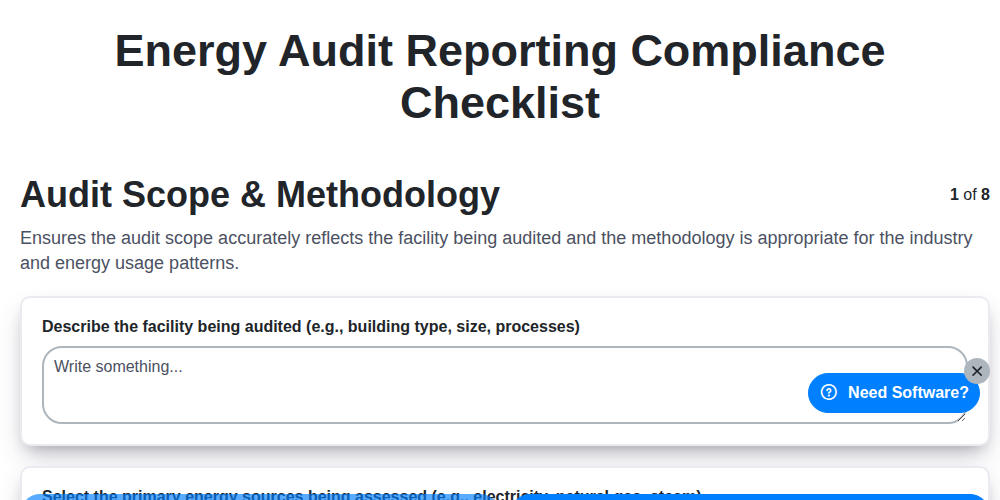
Energy Audit Reporting Compliance: Your Checklist for Success
Need help with
Energy?
Have a question? We're here to help. Please submit your inquiry, and we'll respond promptly.