Navigating Energy Project Changes: Your Comprehensive Change Management Checklist Template
Published: 12/05/2025 Updated: 07/02/2026
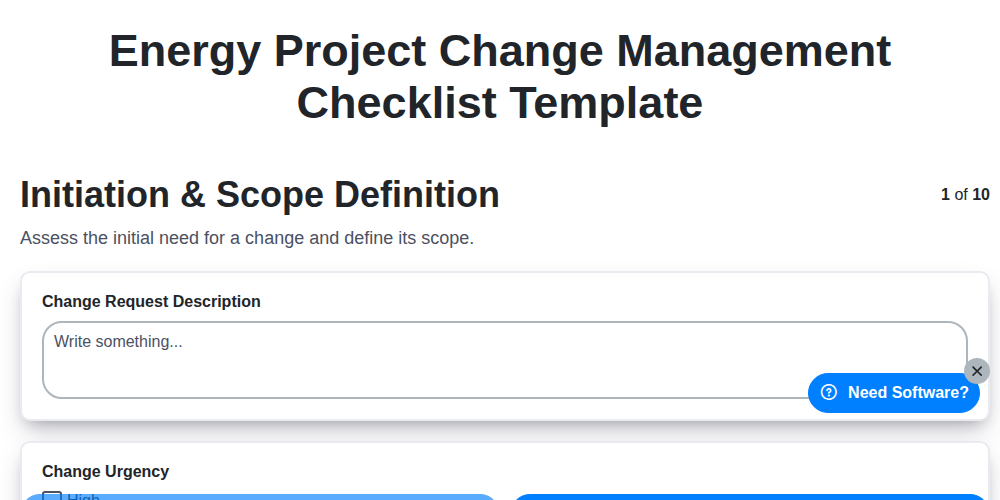
Table of Contents
- Introduction: Why Energy Project Change Management Matters
- 1. Initiation & Scope Definition: Laying the Foundation
- 2. Impact Assessment: Understanding the Ripple Effect
- 3. Risk Identification & Mitigation: Proactive Problem Solving
- 4. Approval & Authorization: Getting the Green Light
- 5. Implementation Planning: Mapping the Route to Success
- 6. Resource Allocation: Securing What You Need
- 7. Communication & Stakeholder Management: Keeping Everyone Informed
- 8. Implementation & Execution: Putting the Plan into Action
- 9. Verification & Testing: Ensuring Functionality
- 10. Documentation & Closure: Finalizing the Changes
- Checklist Template: Your Guide to Energy Project Change Management
- Best Practices for Energy Project Change Management
- Conclusion: Embracing Change for Energy Project Success
- Resources & Links
TLDR: Energy projects rarely go exactly as planned. This checklist template is your roadmap for managing those inevitable changes - from initial planning & risk assessment to final execution & closure. It ensures changes are handled properly, minimizing disruption and maximizing project success. Download it now to streamline your change management process!
Introduction: Why Energy Project Change Management Matters
Energy projects - whether they involve facility upgrades, renewable energy integration, or efficiency enhancements - are inherently disruptive. They touch various departments, impact operations, and often require significant investment. Without a robust change management process, even the most technically sound energy project can falter. Resistance from employees, unexpected delays, budget overruns, and ultimately, a failure to realize the intended benefits are common pitfalls.
This isn't just about managing technical aspects; it's about guiding people through a transition. Effective change management ensures everyone understands why the change is happening, what it means for them, and how they can contribute to its success. It bridges the gap between the vision of a more sustainable and efficient operation and the reality of putting that vision into action. Failing to manage change effectively can derail your energy project, leading to frustration, lost investment, and a missed opportunity to achieve your sustainability goals. This checklist template is designed to provide a structured approach to minimizing those risks and maximizing the chances of a successful energy project transformation.
1. Initiation & Scope Definition: Laying the Foundation
Before you even think about energy-efficient lighting or smart thermostats, a crystal-clear understanding of your project's initiation and scope is absolutely critical. This is where you define what you're trying to achieve and why. A poorly defined scope is a recipe for scope creep, budget overruns, and ultimately, a failed project.
Here's what this phase should cover:
- Clearly State Project Goals: What specific energy savings are you aiming for? Quantify them! (e.g., "Reduce energy consumption by 15% within 12 months.")
- Define Project Boundaries: What facilities are included? What's not included? Be explicit.
- Identify Key Stakeholders: Who will be affected by this project? Get their initial buy-in.
- High-Level Feasibility Study: A preliminary assessment of the technical and economic viability of the project.
- Initial Scope Document: A concise document outlining the project's objectives, boundaries, and initial assumptions. This serves as a shared understanding for everyone involved.
Getting this phase right sets the stage for success. Don't rush it!
2. Impact Assessment: Understanding the Ripple Effect
An energy project, no matter how seemingly contained, creates a ripple effect. A thorough impact assessment is critical to identify and address these effects before implementation, preventing costly surprises and ensuring a smoother transition. This isn't just about energy savings; it's about understanding how the project will affect people, processes, and the overall organizational landscape.
Consider these areas during your assessment:
- Operational Impacts: How will the changes affect day-to-day operations? Will workflows need to be adjusted? Will there be any downtime required for installation or configuration?
- Employee Impacts: How will employees be affected? Will new skills be required? Will there be any changes to roles or responsibilities? Address potential anxieties and provide adequate training.
- Financial Impacts: Beyond the energy savings, consider upfront costs, ongoing maintenance, potential disruptions to productivity, and any unforeseen expenses.
- Environmental Impacts: Assess the broader environmental implications, including waste reduction, emissions reduction, and the overall sustainability profile of the project.
- Safety Impacts: Evaluate how the project might affect safety procedures and protocols. Ensure compliance with all relevant safety regulations.
- System Integration: If the project involves new equipment or software, assess the impact on existing systems and data.
A well-documented impact assessment serves as a baseline for measuring success and proactively managing concerns throughout the project lifecycle. Don't underestimate the importance of this step - it's your early warning system for potential challenges.
3. Risk Identification & Mitigation: Proactive Problem Solving
Energy projects are inherently complex, laden with technical challenges, regulatory hurdles, and the potential for unexpected delays. A robust risk identification and mitigation strategy isn't just a good idea - it's essential for project success. Ignoring potential pitfalls can lead to cost overruns, schedule slips, and even project failure.
So, how do you proactively tackle risk in your energy project? It starts with a thorough assessment.
1. Identify Potential Risks: Brainstorming sessions with the project team, consultations with subject matter experts, and a review of past project experiences are all valuable techniques. Consider risks across all areas: technical (equipment failure, integration challenges), environmental (permitting delays, unforeseen site conditions), financial (funding fluctuations, commodity price volatility), and regulatory (changing legislation, permit revocations). Think about what could go wrong.
2. Analyze the Impact & Probability: Don't just list risks; analyze them. For each identified risk, determine:
- Probability: How likely is this risk to occur? (e.g., Low, Medium, High)
- Impact: If the risk does occur, what is the potential negative effect on the project's scope, schedule, and budget? (e.g., Minor, Moderate, Major)
3. Develop Mitigation Strategies: This is where you move from identification to action. For each risk, develop a plan to:
- Avoid: Eliminate the risk entirely (e.g., choosing a different technology).
- Reduce: Lower the probability or impact of the risk (e.g., robust equipment testing, redundant systems).
- Transfer: Shift the risk to another party (e.g., through insurance, contractual agreements).
- Accept: Acknowledge the risk and prepare contingency plans if it occurs (typically for low-probability, low-impact risks).
4. Assign Responsibility & Track Progress: Assign ownership for each mitigation action to a specific team member. Regularly review the risk register and track the progress of mitigation efforts. Ensure that these actions are documented and updated as the project evolves.
Example Risk & Mitigation:
| Risk | Probability | Impact | Mitigation Strategy | Owner |
|---|---|---|---|---|
| Permit approval delay | Medium | Major | Engage early with regulatory agencies, build strong relationships, prepare comprehensive application | Environmental Consultant |
| Equipment delivery late | Medium | Moderate | Identify alternative suppliers, establish buffer time in schedule | Procurement Manager |
By embracing a proactive approach to risk identification and mitigation, you can significantly improve the likelihood of delivering your energy project on time, within budget, and to the expected level of quality. Remember, identifying potential problems before they arise is far less disruptive - and less costly - than dealing with them during execution.
4. Approval & Authorization: Getting the Green Light
Reaching the point where you need formal approval signifies significant progress - you've outlined the project, assessed its impact, and identified potential roadblocks. However, it's crucial not to skip this step. This phase ensures alignment with organizational goals, secures necessary funding, and solidifies commitment from key decision-makers.
Your checklist should detail exactly who needs to review and authorize the Energy Project. This typically includes:
- Project Sponsor: The executive champion who secures resources and champions the project.
- Finance Department: To confirm budget availability and financial viability.
- Operations Leadership: To validate operational feasibility and impact.
- Legal/Compliance (if applicable): To ensure adherence to regulations and contracts.
- Sustainability Team (if applicable): To confirm alignment with sustainability goals.
The approval documentation should explicitly state the scope, budget, timeline, and key assumptions. Include a summary of the Impact Assessment and Risk Mitigation plan. A formal approval signature block ensures accountability and avoids confusion later. Don't assume approval - get it in writing! Documenting this clearly avoids delays and potential conflicts down the line.
5. Implementation Planning: Mapping the Route to Success
This phase is where the theoretical groundwork transforms into a practical roadmap. Implementation planning goes beyond simply knowing what needs to be done; it details how, when, and by whom. A robust plan minimizes disruption and maximizes the likelihood of achieving your energy project's goals.
Here's what a comprehensive implementation plan should include:
- Detailed Task Breakdown: Divide the overall project into smaller, manageable tasks. Be specific - "Install solar panels" becomes "Unpack solar panel boxes," "Mount racking system," "Connect panels to inverter," etc.
- Sequencing & Dependencies: Clearly define the order in which tasks must be completed. Identify dependencies: Task B cannot start until Task A is finished. Visualizing this with a Gantt chart can be invaluable.
- Timeline & Milestones: Assign realistic start and end dates for each task, establishing key milestones along the way. These milestones act as checkpoints for progress assessment.
- Contingency Planning: Acknowledge that unexpected issues will arise. Build in buffer time and alternative solutions for common setbacks (e.g., delayed material deliveries, inclement weather).
- Pilot Programs (if applicable): For larger projects, consider a pilot phase to test implementation procedures and identify potential problems on a smaller scale before full deployment.
- Training Requirements: Outline any necessary training for personnel involved in the implementation, ensuring they have the skills and knowledge required for their roles.
A well-defined implementation plan isn't just a document; it's a living guide that helps your team navigate the complexities of your energy project with confidence and precision.
6. Resource Allocation: Securing What You Need
An Energy Project, by its nature, demands significant resources - both tangible and intangible. Simply having a brilliant plan isn't enough; you need the right resources, and you need them available when you need them. This section focuses on meticulously planning and securing those essential components.
What Resources Are We Talking About?
Think beyond just money. Resource allocation encompasses:
- Financial Resources: The budget is your foundation. This includes not just the initial investment, but also contingency funds for unforeseen issues.
- Human Resources: This isn't just about headcount. It's about having the right people with the required skills - engineers, project managers, contractors, subject matter experts - and ensuring they're available at critical points in the project lifecycle.
- Equipment & Technology: Specialized equipment, software, and technology are often necessary for energy projects. Availability, maintenance, and potential upgrades need to be factored in.
- Materials & Supplies: From wiring and piping to specialized components, ensure a reliable supply chain is in place.
- Time: Time is a resource just as valuable as money. Realistic timelines and buffers are crucial for success.
Key Allocation Steps:
- Detailed Requirements: Clearly define the resources needed for each task outlined in your implementation plan. Don't guess - be specific.
- Prioritization: Not all resources are created equal. Prioritize based on criticality and impact on the project schedule.
- Sourcing & Procurement: Identify sources for each resource. This might involve internal departments, external vendors, or contractors. Negotiate favorable terms and establish clear contracts.
- Allocation Matrix: Create a matrix that clearly assigns resources to specific tasks and responsibilities. This provides transparency and accountability.
- Contingency Planning: What happens if a key resource becomes unavailable? Develop backup plans and identify alternative options.
- Tracking & Management: Regularly monitor resource utilization to ensure everything is on track. Address any shortfalls or overages promptly.
Proper resource allocation isn't just about spending money; it's about maximizing the return on your investment and ensuring your Energy Project stays on track and within budget.
7. Communication & Stakeholder Management: Keeping Everyone Informed
Energy projects, by their very nature, impact a wide range of people - employees, customers, community members, leadership, and regulatory bodies. Effective communication and stakeholder management aren't just "nice-to-haves"; they're critical for project success. Lack of transparency and failure to address concerns can lead to resistance, delays, and ultimately, project failure.
Here's what you need to consider:
- Identify All Stakeholders: Don't just think about internal teams. Consider suppliers, contractors, local residents, and anyone who will be affected by the project. Create a stakeholder register detailing their interests, level of influence, and potential impact.
- Develop a Communication Plan: Outline what information needs to be shared, when, how, and who is responsible for delivering it. Tailor your communication methods to suit different stakeholder groups. A senior leader might prefer a concise briefing document, while frontline employees might need more detailed training.
- Regular Updates: Establish a rhythm for updates. This could include regular progress reports, town hall meetings, email newsletters, or even dedicated online portals.
- Feedback Mechanisms: Create channels for stakeholders to voice concerns and provide feedback. This might include surveys, suggestion boxes, or dedicated contact persons. Actively listen and address feedback promptly.
- Proactive Communication: Don't wait for issues to arise. Be proactive in communicating changes, potential disruptions, and project milestones.
- Crisis Communication Plan: Be prepared for unexpected events. Have a plan in place to communicate effectively during a crisis, ensuring clear and consistent messaging.
- Transparency and Honesty: Be upfront about challenges and setbacks. Building trust requires honesty and transparency, even when the news isn't positive.
Effective communication and stakeholder management build buy-in, mitigate resistance, and contribute significantly to a smoother, more successful energy project.
8. Implementation & Execution: Putting the Plan into Action
This is where the rubber meets the road! All the careful planning, assessment, and approvals culminate in the actual implementation of your energy project. This phase requires disciplined execution and a commitment to sticking to the established plan, while remaining agile enough to address unforeseen challenges.
Key Activities & Considerations:
- Phased Rollout: Consider a phased implementation, starting with a pilot area or a small group of users. This allows for early feedback and adjustments before a full-scale rollout.
- Adherence to Schedule: Maintain a strict adherence to the project timeline. Regular progress reviews and proactive problem-solving are crucial for keeping things on track.
- Team Coordination: Ensure seamless coordination between all involved teams - engineering, operations, procurement, and others. Clear roles and responsibilities are paramount.
- Change Management Reinforcement: This is a critical moment to reinforce the change management strategy. Ongoing communication and training are essential to ensure buy-in and minimize resistance.
- Real-Time Monitoring: Implement real-time monitoring of key performance indicators (KPIs) to track progress and identify any deviations from the plan.
- Issue Resolution: Establish a clear process for identifying, documenting, and resolving issues that arise during implementation. Don't let minor issues derail the project.
- Documentation: Continuously document all activities, decisions, and changes made during the implementation phase. This is invaluable for future reference and troubleshooting.
Effective implementation requires dedication, attention to detail, and a proactive approach to problem-solving. Keep the communication channels open, and celebrate milestones achieved along the way!
9. Verification & Testing: Ensuring Functionality
Now that the implementation is underway and changes are being rolled out, it's absolutely crucial to verify that everything is working as intended. This phase isn't just about confirming the new system or process exists; it's about validating that it functions correctly and delivers the anticipated benefits.
This stage involves rigorous testing across multiple dimensions. Start with unit testing, examining individual components of the energy project change to ensure they operate as designed. Progress to integration testing, ensuring these components work seamlessly together. Don't forget user acceptance testing (UAT) - involve key stakeholders and end-users to test the changes from their perspective. This is your opportunity to catch any usability issues or unexpected behavior.
Create a detailed test plan before testing begins. Define clear acceptance criteria for each test case. Document all test results meticulously, noting any failures and the steps taken to resolve them. Regression testing is vital; ensure existing functionality remains unaffected by the new changes. Keep stakeholders informed about testing progress and any roadblocks encountered. Only proceed to the next phase after all critical tests pass and any identified issues are resolved. This thorough verification and testing phase significantly minimizes post-implementation issues and contributes to a smoother transition.
10. Documentation & Closure: Finalizing the Changes
The finish line is in sight! This final stage is critical for long-term success and institutionalizing the changes implemented during your energy project. It's about ensuring everything is properly recorded, lessons are learned, and the new processes are sustainable.
Here's what this stage involves:
- Final Project Report: Compile a comprehensive report summarizing the project's objectives, activities, outcomes (including energy savings realized), challenges encountered, and key learnings.
- Procedure Updates: Formally update all relevant standard operating procedures (SOPs), manuals, and training materials to reflect the new processes and technologies. Ensure these updates are readily accessible to all affected personnel.
- Knowledge Transfer: Conduct thorough knowledge transfer sessions to ensure the team has the skills and understanding to maintain the changes. This might involve training, mentorship, or creation of quick reference guides.
- Lessons Learned Review: Facilitate a lessons learned session with the project team and key stakeholders. Document these learnings to inform future energy projects and improve change management practices.
- Project Closure Meeting: Hold a formal closure meeting to celebrate successes, acknowledge contributions, and formally close the project.
- Archiving: Securely archive all project documentation (including this checklist!) for future reference and audit purposes.
- Post-Implementation Review: Schedule a follow-up review (typically 3-6 months post-implementation) to assess the sustained benefits and identify any necessary adjustments or refinements.
Proper documentation and closure aren't just about ticking boxes; they're about securing the long-term value of your energy project and building a culture of continuous improvement.
Checklist Template: Your Guide to Energy Project Change Management
Navigating energy project changes can be complex, demanding meticulous planning and execution to minimize disruption and maximize success. A robust change management process isn't just a formality; it's your roadmap for mitigating risk, ensuring stakeholder alignment, and ultimately, delivering the intended benefits of your energy project. This checklist template provides a structured approach to ensure consistency and thoroughness throughout the change lifecycle. Download our customizable template at the end of this article!
Here's a breakdown of the essential steps outlined in our checklist, along with key considerations for each phase:
1. Initiation & Scope Definition: Clearly define the change. What's being altered? Why is it necessary? What are the boundaries of the change? Document initial assumptions and objectives. Key Question: What problem are we solving, and what does success look like?
2. Impact Assessment: Analyze the potential effects of the change on all aspects of the project - timelines, budget, resources, systems, and personnel. Identify affected departments and teams. Key Consideration: Who will be impacted, and how significantly?
3. Risk Identification & Mitigation: Proactively identify potential risks associated with the change and develop mitigation strategies. This includes technical, operational, and financial risks. Key Question: What could go wrong, and what are our contingency plans?
4. Approval & Authorization: Secure necessary approvals and authorizations from relevant stakeholders, including project sponsors, department heads, and executive leadership. Key Consideration: Document the approval chain and ensure accountability.
5. Implementation Planning: Develop a detailed implementation plan outlining tasks, timelines, responsibilities, and dependencies. Consider the order of implementation and potential sequencing issues. Key Question: How will we execute the change, step-by-step?
6. Resource Allocation: Identify and allocate the necessary resources - personnel, equipment, budget - to support the implementation of the change. Address potential resource conflicts. Key Consideration: Do we have the right people and tools available?
7. Communication & Stakeholder Management: Develop a communication plan to keep stakeholders informed about the change, its impact, and progress. Regularly engage with stakeholders to address concerns and manage expectations. Key Question: How will we keep everyone in the loop and ensure buy-in?
8. Implementation & Execution: Execute the implementation plan, closely monitoring progress and addressing any unexpected issues. Maintain clear communication and documentation throughout the process. Key Consideration: Are we following the plan, and are we adjusting as needed?
9. Verification & Testing: Thoroughly verify and test the implemented change to ensure it meets the intended objectives and doesn't introduce new problems. Document testing results and corrective actions. Key Question: Does the change work as expected and doesn't cause unintended consequences?
10. Documentation & Closure: Document all aspects of the change management process, including planning, implementation, testing, and results. Obtain formal closure approval and archive relevant documentation. Key Consideration: What lessons have we learned, and how can we improve future change management processes?
Best Practices for Energy Project Change Management
Energy projects, by their very nature, are complex undertakings involving significant investment, technical expertise, and potential disruption. Effective change management is not just a nice-to-have - it's critical for ensuring successful project delivery, minimizing risks, and maximizing ROI. Here's a breakdown of best practices, aligned with the key phases of your change management checklist:
1. Initiate Thoughtfully & Define Scope Clearly: Don't rush into implementation. Thoroughly document the project's objectives, desired outcomes, and boundaries. Vague scope leads to scope creep, delays, and budget overruns.
2. Understand the Ripple Effect (Impact Assessment): Energy projects rarely exist in isolation. Map out all affected areas - from operational processes and maintenance schedules to equipment lifecycle and employee roles. A comprehensive assessment minimizes unforeseen consequences.
3. Anticipate and Address Potential Roadblocks (Risk Identification & Mitigation): Proactively identify potential risks - technical, financial, regulatory, and social. Develop mitigation strategies before they materialize. Regularly review and update these as the project evolves.
4. Secure Buy-In at All Levels (Approval & Authorization): Gain explicit approval from all relevant stakeholders, including leadership, finance, operations, and environmental departments. Document these approvals meticulously to avoid challenges later.
5. Plan with Precision (Implementation Planning): Develop a detailed, phased implementation plan with clear timelines, milestones, and dependencies. Consider contingencies for potential delays or unforeseen complications.
6. Allocate Resources Strategically (Resource Allocation): Secure the necessary financial, human, and technological resources to support the project. Don't underestimate the importance of skilled personnel and specialized equipment.
7. Keep Everyone Informed (Communication & Stakeholder Management): Establish a clear communication plan to keep stakeholders informed of progress, changes, and any potential impacts. Two-way communication is vital - listen to feedback and address concerns promptly.
8. Execute with Discipline (Implementation & Execution): Stick to the plan as closely as possible, but remain adaptable to necessary adjustments. Regular monitoring and reporting are essential.
9. Validate Results Rigorously (Verification & Testing): Thoroughly test and verify that the project delivers the intended results and meets all performance requirements. Don't skip this crucial step.
10. Document Everything & Close Properly (Documentation & Closure): Maintain comprehensive documentation throughout the project lifecycle. Upon completion, formally close the project, review lessons learned, and archive all relevant documents for future reference.
By following these best practices and leveraging a robust checklist, you can significantly increase the likelihood of a successful and impactful energy project change management process.
Conclusion: Embracing Change for Energy Project Success
Successfully navigating energy projects isn's just about technical prowess; it's about masterful change management. The checklist we've explored - encompassing Initiation & Scope Definition, Impact Assessment, Risk Mitigation, Approval, Planning, Resource Allocation, Communication, Execution, Verification, Documentation, and Closure - represents a robust framework for ensuring a smooth transition and minimizing disruptions.
Remember, an energy project often touches numerous stakeholders and alters existing processes. Ignoring the human element and failing to proactively address potential resistance can derail even the most brilliantly conceived plans.
By consistently applying this checklist, project teams can foster a culture of transparency, engagement, and adaptability. This proactive approach not only minimizes risks but also maximizes the likelihood of achieving your energy project's objectives, realizing the promised benefits, and building a foundation for future success. Embracing change isn't just a step; it's the cornerstone of a thriving energy future.
Resources & Links
- Project Management Institute (PMI): A leading professional organization for project management. Their website offers a wealth of resources, including standards, templates, and articles related to change management and project methodologies. Look for articles on 'change control' and 'project scope management'.
- Association for Project Management (APM): Another professional body for project management, particularly strong in the UK. Offers guidance, training, and resources on change management processes relevant to energy projects.
- Change Management Review: A dedicated website with articles, case studies, and best practices for change management across various industries, including helpful insights applicable to energy projects. Search for keywords like 'project change control' and 'resistance management'.
- Gartner: A research and advisory company. While much of their content is behind a paywall, they sometimes publish insights and reports on project management trends and best practices, which can inform change management strategies in the energy sector. Look for reports on 'project portfolio management' and 'risk management'.
- McKinsey & Company: A global management consulting firm. Often publishes articles and reports on organizational change and transformation, offering a strategic perspective that can be applied to energy project changes. Search for articles relating to 'transformation' and 'change leadership'.
- Smartsheet: A work management platform with a rich library of project management templates, including change management checklists and workflows. Offers practical tools for tracking changes and assigning responsibilities.
- Asana: A popular project management software platform. Offers features for tracking changes, managing tasks, and facilitating collaboration - essential for implementing a change management process in an energy project.
- ProcessXpert: Provides resources for process improvement and change management, including templates and articles about documenting change management processes. Useful for establishing clear workflows and accountability.
- International Organization for Standardization (ISO): While not directly about project change management, understanding ISO standards (especially ISO 9001 for quality management and ISO 27001 for information security) can be crucial for maintaining compliance and managing risk in energy project changes.
- Business Process Management Institute (BPMI): BPMI focuses on documenting and optimizing business processes. Their resources can be helpful for visualizing and controlling changes to project workflows in the energy sector.
- Schneider Group: Schneider Group often publishes articles about change management best practices across multiple industries. Their insights can be adapted for energy project scenarios.
Frequently Asked Questions
What is change management in the context of energy projects?
Change management in energy projects is the structured approach to dealing with alterations to a project's scope, schedule, budget, or quality. It involves identifying, assessing, planning, implementing, and controlling these changes to minimize disruption and ensure project success. It's more than just documenting changes; it's about understanding their impact and communicating effectively.
Why is change management crucial for energy projects?
Energy projects are inherently complex, involving significant investments, regulatory hurdles, and long timelines. Changes are inevitable. Without robust change management, even seemingly minor adjustments can lead to cost overruns, delays, rework, safety risks, and damage to stakeholder relationships. Effective change management helps control these risks and maintain project integrity.
What types of changes are typically handled by this checklist template?
The checklist template covers a wide range of changes, including but not limited to scope changes (e.g., revised engineering designs, altered resource requirements), schedule modifications (e.g., revised timelines for construction, permitting delays), budget adjustments (e.g., price fluctuations in materials, unforeseen site conditions), quality concerns (e.g., revised specifications), and regulatory changes.
Who should use this change management checklist template?
This template is designed for a broad audience involved in energy projects, including project managers, engineers, construction managers, procurement specialists, commissioning teams, and stakeholders with decision-making authority. Anyone responsible for identifying, assessing, or approving project changes should find it useful.
How is this checklist template 'comprehensive'?
The template includes steps covering the entire change management lifecycle - from initial identification and impact assessment to approval, implementation, and post-implementation review. It goes beyond simple documentation by incorporating risk assessment, communication planning, and stakeholder engagement elements.
Can I customize this checklist template?
Yes, absolutely. The template is designed to be adaptable. You should tailor it to the specific needs and complexities of your energy project, adding or removing steps, modifying risk assessment criteria, and adjusting communication protocols as necessary. It's a starting point, not a rigid set of rules.
What is an 'impact assessment' and why is it important?
An impact assessment evaluates the consequences of a proposed change across all areas of the project - cost, schedule, quality, safety, environment, and stakeholder relationships. It's crucial for making informed decisions about whether to approve a change and for planning the implementation effort. The checklist template provides guidance on conducting a thorough impact assessment.
What does 'stakeholder engagement' mean in this context?
Stakeholder engagement involves actively communicating with and involving individuals and groups affected by the proposed change. This includes informing them of the change, seeking their input, and addressing their concerns. Transparent and consistent communication is key to maintaining buy-in and minimizing resistance.
Where can I find resources or further information about change management best practices?
Several organizations offer resources on change management, including the Project Management Institute (PMI), the Association of Change Management Professionals (ACMP), and various online guides and tutorials. The checklist template may also include links to relevant resources. Researching industry standards and best practices is highly recommended.
What should I do if I identify a change that is outside the scope of this checklist?
This checklist provides a solid framework for most common changes. If you encounter a change that's fundamentally different or extremely complex, you should consult with experienced change management professionals or project governance bodies to develop a tailored approach.
Comments
There are no comments yet. Be the first to add one!
Energy Management Solution Demo
Managing operations, safety, and compliance in the energy sector is critical. ChecklistGuro's Work OS platform streamlines your workflow from exploration and production to distribution and maintenance. Enhance safety, improve efficiency, and ensure regulatory adherence. Discover how ChecklistGuro can transform your energy business!
Related Articles
Stay Compliant: Your Energy Metering Compliance Checklist Template
Unlock Savings: Your Complete Energy Efficiency Audit Checklist
Your Ultimate Energy Efficiency Audit Checklist Template
Power Through: Your Essential Energy Grid Outage Support Checklist
Oil & Gas Well Safety Inspection Checklist: Ensuring a Secure Operation
HVAC System Maintenance Checklist: Building Climate Control & Energy Savings
Renewable Energy Project Checklist Template
Energy Audit Reporting Compliance: Your Checklist for Success
Need help with
Energy?
Have a question? We're here to help. Please submit your inquiry, and we'll respond promptly.