Navigating Energy Sales Contracts: Your Compliance Checklist
Published: 12/05/2025 Updated: 07/02/2026
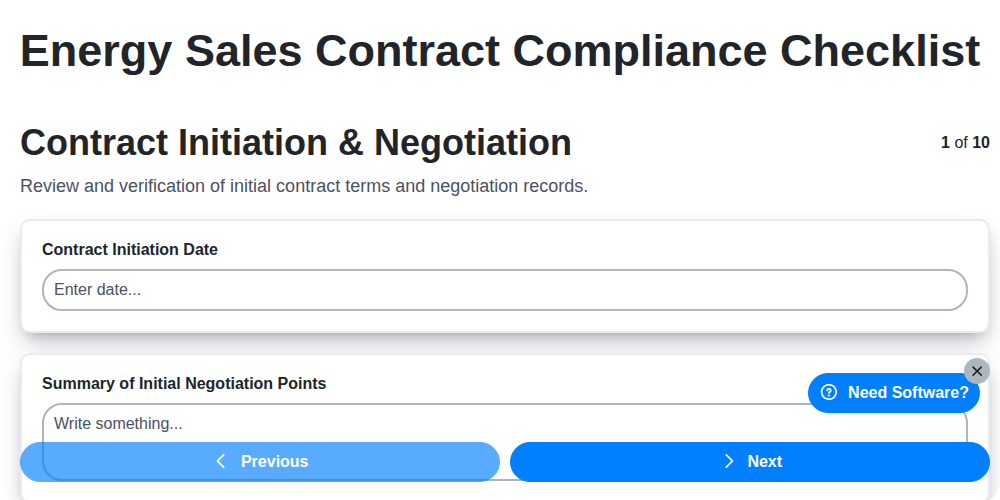
Table of Contents
- Introduction: Why Energy Sales Contract Compliance Matters
- 1. Contract Initiation & Negotiation: Laying the Foundation
- 2. Legal & Regulatory Approvals: Ensuring a Solid Base
- 3. Pricing & Payment Terms: Clarity and Accuracy
- 4. Service Level Agreements (SLAs): Defining Performance Standards
- 5. Supply & Delivery: Reliability and Efficiency
- 6. Metering & Reporting: Tracking and Transparency
- 7. Contract Amendments & Renewals: Adapting to Change
- 8. Compliance with Energy Regulations: Staying Ahead of the Curve
- 9. Contract Performance Monitoring: Proactive Risk Management
- 10. Record Keeping & Audit Trail: Demonstrating Accountability
- 11. Key Roles and Responsibilities in Contract Compliance
- 12. Technology Solutions for Streamlining Compliance
- Conclusion: Your Path to Sustainable Energy Sales
- Resources & Links
TLDR: Energy sales contracts are complex! This checklist acts as your guide, covering everything from initial negotiations to ongoing performance monitoring and renewals. It ensures you're compliant with legal requirements, meet service level agreements, and maintain a clear audit trail - reducing risk and maximizing success in the energy sales landscape. Download the template and stay on top of your obligations!
Introduction: Why Energy Sales Contract Compliance Matters
Energy sales contracts are the backbone of any successful energy supply arrangement, whether you're a retailer, aggregator, or large consumer. But a well-negotiated contract is only the beginning. True value and risk mitigation come from diligent and ongoing compliance. Failing to adhere to the intricate details of an energy sales contract can lead to significant financial penalties, legal challenges, reputational damage, and disruptions to supply. This isn't just about ticking boxes; it's about ensuring fair practices, upholding regulatory requirements, and maintaining a strong, trustworthy relationship with your counterparties. A robust compliance program demonstrates your commitment to ethical operations and provides a clear audit trail, crucial in an increasingly scrutinized industry. This checklist provides a framework to navigate these complexities, ensuring your energy sales contracts remain legally sound and operationally efficient.
1. Contract Initiation & Negotiation: Laying the Foundation
A robust energy sales contract starts long before the ink dries. This initial phase - Contract Initiation & Negotiation - is critical for setting the stage for a successful and compliant partnership. Don't underestimate the importance of meticulous preparation!
Here's what you need to focus on:
- Define Clear Objectives: Before even reaching out, clearly define your needs and goals. What are you hoping to achieve with this contract? (e.g., specific energy supply volume, pricing targets, sustainability goals).
- Thorough Due Diligence: Research the potential supplier thoroughly. Evaluate their financial stability, reputation, and experience. Check references.
- Scope of Services: Precisely define the scope of services. Avoid ambiguity by clearly outlining what's included and, importantly, what's not.
- Risk Assessment: Identify and assess potential risks involved. Consider factors like market volatility, supply chain disruptions, and regulatory changes.
- Negotiation Strategy: Develop a negotiation strategy that aligns with your objectives and considers your leverage points.
- Documentation: Meticulously document all communication, proposals, and negotiation points throughout the process. This becomes invaluable later for reference and dispute resolution.
A poorly executed initiation can lead to misunderstandings, disputes, and ultimately, non-compliance. Invest the time and effort to lay a solid foundation!
2. Legal & Regulatory Approvals: Ensuring a Solid Base
Navigating the legal and regulatory landscape for energy sales contracts can be a significant hurdle. Failure to secure the necessary approvals upfront can lead to delays, penalties, and even contract invalidation. This section outlines critical steps to ensure a solid legal and regulatory foundation for your energy sales agreement.
Essential Approvals & Considerations:
- Identify Applicable Regulations: The specific approvals required will vary dramatically based on the jurisdictions involved (both supplier and customer locations), the type of energy being sold (electricity, natural gas, renewable energy certificates), and the nature of the customer (residential, commercial, industrial). Research thoroughly!
- Permits & Licenses: Ensure you hold all necessary permits and licenses to engage in energy sales activities. This might include retail electricity supplier licenses, gas sales licenses, or specific permits for renewable energy generation and sales.
- Contract Review by Legal Counsel: Engage experienced legal counsel specializing in energy law. They can review the contract's language for compliance with all relevant regulations and identify potential legal risks.
- Regulatory Body Notifications: Many jurisdictions require formal notification to regulatory bodies prior to contract execution. This may involve submitting the contract for review or simply informing them of the agreement's existence.
- Consumer Protection Laws: Scrutinize the contract to ensure compliance with consumer protection laws, particularly when dealing with residential customers. Disclosures regarding pricing, terms, and conditions must be clear and understandable.
- Environmental Regulations: If applicable, ensure compliance with environmental regulations related to energy generation and supply, particularly for renewable energy projects.
- Antitrust Compliance: Be mindful of antitrust laws and avoid any language or clauses that could be interpreted as anti-competitive.
- Documentation: Maintain meticulous records of all approval processes, communications with regulatory bodies, and legal reviews. This forms a crucial audit trail.
Proactive legal and regulatory due diligence isn't just about avoiding problems; it establishes credibility and strengthens your position in the energy market.
3. Pricing & Payment Terms: Clarity and Accuracy
This section is often a significant point of contention, so meticulous attention to detail is crucial. A poorly defined pricing structure or unclear payment terms can lead to disputes and strained relationships. Here's what your checklist should cover:
- Clearly Defined Pricing Models: Specify the pricing mechanism (e.g., fixed rate, variable rate tied to a specific index, tiered pricing). Outline all factors influencing price fluctuations and how these are communicated to the customer.
- Fuel Surcharges & Adjustments: If applicable, detail how fuel surcharges are calculated, capped, or adjusted, including the indices used and the frequency of updates.
- Taxes & Fees: Explicitly list all applicable taxes, fees, and surcharges, and clarify who is responsible for paying them.
- Payment Schedules & Methods: Outline payment dates, acceptable payment methods (e.g., ACH, wire transfer, check), and any associated fees for late payments or specific payment methods.
- Early Payment Discounts: If offering discounts for early payments, specify the terms and conditions clearly.
- Invoice Accuracy & Dispute Resolution: Establish a process for customers to dispute invoice inaccuracies and a timeline for resolution.
- Escalation Procedures: Define the escalation path for payment issues or discrepancies.
- Currency Considerations: For international contracts, specify the currency for all transactions and any exchange rate fluctuations affecting pricing.
Ensure these terms are clearly articulated, easily understood, and aligned with both internal cost structures and customer expectations. Regular review and updates are essential to reflect market changes.
4. Service Level Agreements (SLAs): Defining Performance Standards
Service Level Agreements (SLAs) are the bedrock of a successful energy sales contract. They move beyond vague promises and establish clear, measurable performance standards for the energy supplier. A well-defined SLA isn't just a formality; it's a critical tool for ensuring accountability, managing expectations, and resolving disputes effectively.
What should be included in your energy sales contract's SLAs? Start by identifying key performance indicators (KPIs) directly related to the services you're receiving. These might include:
- Supply Reliability: Percentage of uptime, frequency and duration of outages, response time to interruptions.
- Energy Quality: Voltage stability, frequency consistency, harmonic distortion levels.
- Customer Service: Response times to inquiries, complaint resolution timelines, availability of support staff.
- Billing Accuracy: Percentage of invoices error-free, resolution time for billing disputes.
- Delivery Performance: On-time delivery of energy, adherence to agreed-upon schedules.
Each KPI should have clearly defined thresholds for acceptable performance. Furthermore, outline the consequences for failing to meet these thresholds. This could include financial penalties, service credits, or even termination rights. Don't forget to specify reporting frequency and the format in which performance data will be presented. Regular monitoring and transparent reporting are crucial for maintaining accountability and fostering a strong, collaborative relationship.
5. Supply & Delivery: Reliability and Efficiency
A robust energy sales contract hinges on a reliable and efficient supply & delivery process. This isn't just about getting power from point A to point B; it's about consistently meeting demand, minimizing disruptions, and optimizing logistical efficiency. Here's what your checklist needs to cover:
- Route Optimization & Redundancy: Are delivery routes planned for optimal efficiency, minimizing transportation costs and delivery times? Crucially, are there backup routes or alternative supply sources in place to mitigate risks associated with unforeseen events like road closures or equipment failures?
- Capacity Planning & Forecasting: How accurately are you forecasting demand? Regularly review consumption patterns and adjust supply capacity accordingly. Over-provisioning wastes resources, while under-provisioning leads to service interruptions.
- Equipment Maintenance & Inspection: A proactive maintenance schedule for all delivery infrastructure - substations, transformers, power lines - is vital. Scheduled inspections identify potential issues before they impact delivery.
- Contingency Plans for Disruptions: Develop and regularly test plans for responding to disruptions like severe weather, equipment breakdowns, or cybersecurity threats. This should include communication protocols and alternative power sources.
- Logistics Tracking & Visibility: Implement a system to track energy delivery from source to customer. Real-time data on delivery status allows for rapid response to potential issues and provides transparency for both parties.
- Fuel Source Diversification (if applicable): If your energy supply relies on specific fuels, assess and potentially diversify fuel sources to mitigate price volatility and supply chain vulnerabilities.
6. Metering & Reporting: Tracking and Transparency
Accurate metering and comprehensive reporting are cornerstones of a successful energy sales contract. They provide essential data for both the supplier and the customer, ensuring transparency and accountability throughout the agreement's lifecycle.
What's Involved?
This section of your compliance checklist should cover:
- Meter Verification & Calibration: Regularly verifying the accuracy and calibration of meters is crucial. This involves scheduled inspections, record-keeping of calibration dates, and addressing any discrepancies promptly. Non-compliant meters can lead to billing disputes and financial losses.
- Data Acquisition & Transmission: Ensure the system for acquiring and transmitting meter data is reliable and secure. Are data logs available? Are there backup systems in place to prevent data loss?
- Reporting Frequency & Content: The contract should clearly define reporting frequency (monthly, quarterly, annually?) and the specific data to be included. Common reports might include consumption data, peak demand, cost breakdowns, and energy efficiency metrics.
- Report Validation & Reconciliation: Don't just generate reports; validate them. Implement processes to ensure data integrity, cross-referencing meter readings with billing statements and other relevant information.
- Accessibility & Format: Reporting should be accessible to the customer in a clear and understandable format, often online via a portal. Consider automated reporting solutions to streamline the process.
- Audit Trail: Maintain a complete audit trail of all meter data, reporting processes, and any adjustments made. This documentation is vital for audits and resolving disputes.
Failing to adequately address metering and reporting can lead to inaccurate billing, damaged customer relationships, and potential legal repercussions. This section of your checklist ensures you are maintaining a transparent and accountable energy supply arrangement.
7. Contract Amendments & Renewals: Adapting to Change
Energy sales contracts aren't static documents; they're living agreements that need to evolve alongside market conditions, regulatory shifts, and the specific needs of both the supplier and the customer. Proactively managing contract amendments and renewals is crucial for maintaining a profitable and compliant partnership.
Understanding the Need for Change: Expect amendments. Market volatility, technological advancements (like new storage solutions or distributed generation), and changes in customer demand can all necessitate adjustments to the original agreement. Ignoring these changes can lead to missed opportunities or, worse, non-compliance.
The Renewal Process: Begin the renewal discussion well in advance - ideally six to twelve months before the contract expiry. This allows ample time for assessment and negotiation. Key steps include:
- Performance Review: Conduct a thorough review of the contract's performance. What worked well? Where were there challenges?
- Market Analysis: Assess current energy market conditions and anticipate future trends.
- Negotiation: Be prepared to negotiate new terms, including pricing, volume, and delivery schedules. Flexibility and a data-driven approach are key.
- Documentation: Meticulously document all discussions, proposals, and the final agreed-upon terms.
- Internal Alignment: Ensure all relevant internal departments (sales, finance, legal, operations) are aligned on the renewal strategy.
Amendment Management: For smaller adjustments or clarifications, formal amendment processes should be in place. These often involve a written amendment document referencing the original contract and outlining the specific changes. Proper approvals and sign-offs are critical to ensure accountability and maintain a clear audit trail. Failure to properly manage amendments can create ambiguity and potential legal disputes.
8. Compliance with Energy Regulations: Staying Ahead of the Curve
The energy sector is a highly regulated landscape, and staying compliant isn't just about avoiding penalties - it's about maintaining a sustainable and ethical business. Energy sales contracts operate within a complex web of local, regional, and national regulations that are constantly evolving. Failing to adhere to these rules can lead to hefty fines, legal action, and reputational damage.
This section highlights key areas of regulatory compliance you need to consider within your energy sales contracts. These include, but are not limited to:
- Environmental Regulations: Understand and comply with regulations related to emissions, waste disposal, and sustainable sourcing of energy. Changes in carbon pricing, renewable energy mandates, and pollution standards directly impact contract viability.
- Consumer Protection Laws: Energy sales contracts often fall under consumer protection regulations, requiring clear and transparent disclosures, fair pricing, and accessible complaint resolution processes.
- Market Rules & Regulations: Depending on your operating region, you'll need to adhere to rules governing energy markets, grid access, and wholesale pricing.
- Data Privacy & Security: Energy usage data is sensitive. Compliance with data privacy laws (like GDPR or CCPA) is paramount.
- Reporting Requirements: Regularly monitor and comply with mandatory reporting obligations related to energy consumption, emissions, and compliance activities.
Staying Ahead:
- Legal Counsel: Engage experienced legal counsel specializing in energy law to ensure ongoing compliance.
- Regulatory Monitoring: Subscribe to industry updates and regulatory alerts to stay informed about changes.
- Training: Provide regular training for your team on relevant regulations and compliance procedures.
- Audits: Conduct periodic internal and external audits to verify compliance and identify areas for improvement.
9. Contract Performance Monitoring: Proactive Risk Management
Energy sales contracts are complex, and a "set it and forget it" approach is a recipe for potential disaster. Robust contract performance monitoring isn't just about identifying issues after they arise; it's about actively mitigating risks and ensuring ongoing value delivery.
This involves establishing a consistent system for tracking key performance indicators (KPIs) defined within your contract. What are those? Think beyond simple volume delivered. Consider:
- Delivery Accuracy: Are you consistently meeting agreed-upon delivery schedules and quantities?
- Quality & Specifications: Are the energy products and services meeting the specified quality standards?
- Pricing Adherence: Are prices being applied correctly, and are any negotiated discounts being honored?
- Customer Satisfaction: For contracts involving direct customer interaction, feedback is critical.
- Penalty Avoidance: Are you tracking and managing any potential penalties or performance-based charges?
Implement automated tools and dashboards wherever possible to visualize performance trends. Regularly review these dashboards with relevant stakeholders - sales teams, operations, and finance - to identify potential problems early. Don't just look at the numbers; investigate the reasons behind any deviations. Are they due to market fluctuations, operational inefficiencies, or supplier issues? Early identification allows for corrective action and proactive communication with your counterparty. Finally, document these monitoring activities; consistent record-keeping is essential for audits and dispute resolution.
10. Record Keeping & Audit Trail: Demonstrating Accountability
Maintaining a robust record-keeping system and establishing a clear audit trail are absolutely critical for energy sales contract compliance. It's not enough to simply do the right things; you need demonstrable proof that you did. This section goes beyond basic documentation; it's about creating a living, verifiable history of your contract performance.
Here's what a comprehensive record-keeping and audit trail should encompass:
- Document Repository: Create a centralized, secure location (physical or digital) to store all contract-related documents: the original contract, amendments, communications (emails, letters, meeting minutes), permits, regulatory filings, invoices, payment records, performance data, and any supporting documentation.
- Version Control: Implement strict version control for all documents. Clearly label versions, track changes, and retain older versions for future reference. This is especially important during contract amendments.
- Data Logging: Automate data logging wherever possible. Capture key performance indicators (KPIs), meter readings, delivery quantities, pricing updates, and payment details.
- Access Controls: Limit access to sensitive contract information to authorized personnel only, and maintain an audit log of who accessed what and when.
- Audit Trails: Maintain detailed audit trails for all critical actions - contract changes, pricing adjustments, delivery confirmations, payment processing, and reporting updates.
- Regular Audits: Conduct periodic internal audits to verify adherence to contract terms and identify potential compliance gaps. Document audit findings and corrective actions taken.
- Retention Policy: Establish and adhere to a defined document retention policy, complying with legal and regulatory requirements.
A well-maintained record-keeping system not only facilitates compliance reviews but also serves as invaluable evidence in case of disputes or regulatory inquiries. It demonstrates your commitment to transparency and accountability, building trust with stakeholders and minimizing potential risks.
11. Key Roles and Responsibilities in Contract Compliance
Successfully navigating an Energy Sales Contract requires a collaborative effort. Clearly defined roles and responsibilities are crucial for ensuring ongoing compliance and avoiding costly penalties. Here's a breakdown of key players and their typical duties:
1. Contract Manager: The central point of contact, responsible for overall contract oversight. They monitor performance against agreed-upon terms, track deadlines, manage communications between parties, and coordinate compliance activities.
2. Legal Counsel: Provides legal review of the contract, ensures compliance with relevant laws and regulations, and advises on potential legal risks. They also handle dispute resolution if necessary.
3. Energy Procurement/Sales Team: Responsible for initiating the contract, negotiating terms, and ensuring the contract aligns with overall business strategy and energy needs. They maintain a deep understanding of market conditions and regulatory changes impacting the agreement.
4. Finance Department: Manages payment schedules, invoices, and reconciles payments with contract terms. They ensure accurate accounting and reporting related to the energy sales contract.
5. Operations Team: Directly involved in the supply and delivery of energy. They ensure operational practices adhere to the contract's technical specifications and timelines. This often includes coordinating logistics and maintenance.
6. Metering & Data Analytics Team: Responsible for accurate meter data collection, validation, and reporting. They ensure data integrity and compliance with reporting requirements outlined in the contract.
7. Compliance Officer/Team: Oversees the overall compliance program, monitors changes in regulations, and ensures all relevant departments adhere to the contract's compliance requirements.
8. IT Department: Plays a vital role in managing data storage, access controls, and reporting systems related to the contract. They also assist with implementing and maintaining any necessary software solutions.
Effective communication and coordination between these roles are paramount. A well-defined RACI matrix (Responsible, Accountable, Consulted, Informed) can be invaluable in clearly outlining who is responsible for each task and ensuring accountability throughout the contract lifecycle.
12. Technology Solutions for Streamlining Compliance
Staying on top of energy sales contract compliance can feel like a monumental task, especially as regulations evolve and contracts become more complex. Thankfully, technology offers a powerful suite of solutions to automate processes, minimize errors, and free up your team to focus on strategic initiatives.
Several types of technology can be game-changers. Contract Lifecycle Management (CLM) software centralizes your contracts, automating workflows for review, approval, and tracking. This ensures adherence to internal policies and identifies potential compliance gaps before they become issues. Many CLM systems also offer built-in alerts and reminders for critical dates like renewal deadlines and SLA review periods.
Data analytics platforms can connect to your metering data, billing systems, and performance reports, providing a real-time view of your compliance status. Automated dashboards can highlight any deviations from contractual obligations, triggering immediate investigations and corrective actions. Machine learning algorithms can even predict potential compliance risks based on historical data.
Specialized energy management software often incorporates compliance features, streamlining processes like meter data management, reporting, and regulatory filings. Cloud-based platforms enhance collaboration and accessibility, ensuring all stakeholders have access to the latest information.
Finally, robotic process automation (RPA) can automate repetitive tasks such as data entry, report generation, and invoice reconciliation, reducing the risk of manual errors and improving efficiency. While it requires initial setup, RPA can deliver substantial long-term benefits.
By embracing these technologies, you can transform your energy sales contract compliance from a reactive, error-prone process into a proactive, efficient, and reliable operation.
Conclusion: Your Path to Sustainable Energy Sales
Navigating energy sales contracts can feel like traversing a complex maze, but it doesn't have to be overwhelming. By consistently applying an Energy Sales Contract Compliance Checklist - covering everything from initial negotiation to ongoing performance monitoring - you're not just mitigating risk; you're building a foundation for a sustainable and profitable energy business. Remember, proactive compliance isn's just about avoiding penalties; it fosters trust with your partners, strengthens your reputation, and ultimately fuels long-term success. Embrace these practices, refine your checklist based on your specific circumstances, and establish a system that ensures your energy sales contracts remain compliant, efficient, and beneficial for all parties involved. Your commitment to diligence will pay dividends for years to come.
Resources & Links
- U.S. Department of Energy: Comprehensive information on energy technologies, policies, and regulations. A core resource for understanding the broader energy landscape.
- Federal Energy Regulatory Commission (FERC): Regulates interstate transmission of electricity, natural gas, and oil. Provides rules, orders, and compliance guidance related to energy sales.
- U.S. Energy Information Administration (EIA): Provides data, analysis, and forecasts on energy production, consumption, and prices. Essential for understanding market trends and informing contract negotiations.
- National Renewable Energy Laboratory (NREL): Focuses on renewable energy research and development. Provides insights and resources relevant to renewable energy sales contracts.
- S&P Global: Provides market intelligence, risk management tools, and commodity pricing information crucial for accurate pricing and risk assessment in energy contracts.
- Wood Mackenzie: Another provider of energy market intelligence and analysis, covering a wide range of energy sectors.
- LexisNexis: Legal research service offering access to statutes, regulations, case law, and legal commentary relevant to energy sales contracts. (Subscription required.)
- Westlaw: Similar to LexisNexis, another comprehensive legal research service. (Subscription required.)
- ISO New England: Regional Transmission Operator (RTO) for New England. Provides information on grid operations and compliance requirements in that region. Similar RTO websites exist for other regions (e.g., MISO, ERCOT, PJM, CAISO).
- PJM Interconnection: Another example of an RTO, PJM serves a large portion of the US, important for understanding the grid and compliance in the region.
- International Organization for Standardization (ISO): While not solely energy-focused, ISO standards often apply to quality management, environmental management, and energy management systems, impacting contract compliance.
- Enverus: Provides data and analytics solutions for the energy industry, supporting contract management and performance monitoring. (Often a paid service.)
- Aurubis: Provides metals and services critical to energy infrastructure. Understanding their data and practices help assess long-term contract needs
- Basel Committee on Banking Supervision: Addresses financial risks, relevant if large financial institutions are involved in energy sales contracts.
Frequently Asked Questions
What are energy sales contracts and why are they important?
Energy sales contracts are legally binding agreements between energy suppliers and consumers (businesses or individuals) outlining the terms of energy supply. They're important because they define pricing, delivery, termination clauses, and legal responsibilities, ensuring a clear understanding of the relationship and mitigating potential disputes.
Who needs to be aware of energy sales contract compliance?
Anyone who enters into an energy sales contract, including businesses, property owners, facility managers, procurement specialists, and individuals signing energy supply agreements. Compliance is a shared responsibility.
What are some common compliance areas in energy sales contracts?
Common areas include accurate meter readings, regulatory reporting (like REC tracking for renewable energy), contract renewal processes, adherence to pricing structures, transparency in fees and charges, and compliance with local and national energy regulations.
What is a 'REC' and why is it mentioned in compliance?
A Renewable Energy Certificate (REC) represents the environmental attributes of one megawatt-hour (MWh) of electricity generated from a renewable energy source. Compliance often involves proper tracking and reporting of RECs to ensure the accuracy of renewable energy claims and avoid penalties.
What happens if I don't comply with my energy sales contract?
Non-compliance can lead to penalties, contract termination, legal action, damage to reputation, and potential financial losses. Penalties vary depending on the specific violation and the contract's terms.
Are there different compliance requirements for different types of energy contracts (e.g., fixed rate vs. variable rate)?
Yes, the specifics can vary. Fixed-rate contracts emphasize adherence to the agreed-upon price, while variable rate contracts require careful monitoring of market fluctuations and potential price adjustments. Specific clauses relating to index adjustments or volatility need close attention.
What role do audits play in energy sales contract compliance?
Audits help verify accuracy and identify areas for improvement. They can be internal (conducted by your own team) or external (performed by a third-party consultant) and often involve reviewing meter readings, invoices, and contract documents.
Where can I find updated information on energy regulations impacting my contract?
Stay updated by consulting regulatory agencies (like the Federal Energy Regulatory Commission (FERC) in the US or equivalent bodies in other countries), industry associations, legal counsel specializing in energy law, and reputable energy news sources.
What should I do if I suspect my energy supplier is not complying with the contract?
Document the suspected non-compliance with evidence (invoices, meter readings, communications). Contact the supplier to discuss your concerns. If the issue isn't resolved, consider seeking legal advice and reporting the matter to relevant regulatory bodies.
How often should I review my energy sales contract and compliance procedures?
Ideally, review your contract at least annually, or whenever there are significant changes in regulations, pricing structures, or your energy consumption patterns. Regular review ensures continued compliance and helps identify opportunities for optimization.
Comments
There are no comments yet. Be the first to add one!
Energy Management Solution Demo
Managing operations, safety, and compliance in the energy sector is critical. ChecklistGuro's Work OS platform streamlines your workflow from exploration and production to distribution and maintenance. Enhance safety, improve efficiency, and ensure regulatory adherence. Discover how ChecklistGuro can transform your energy business!
Related Articles
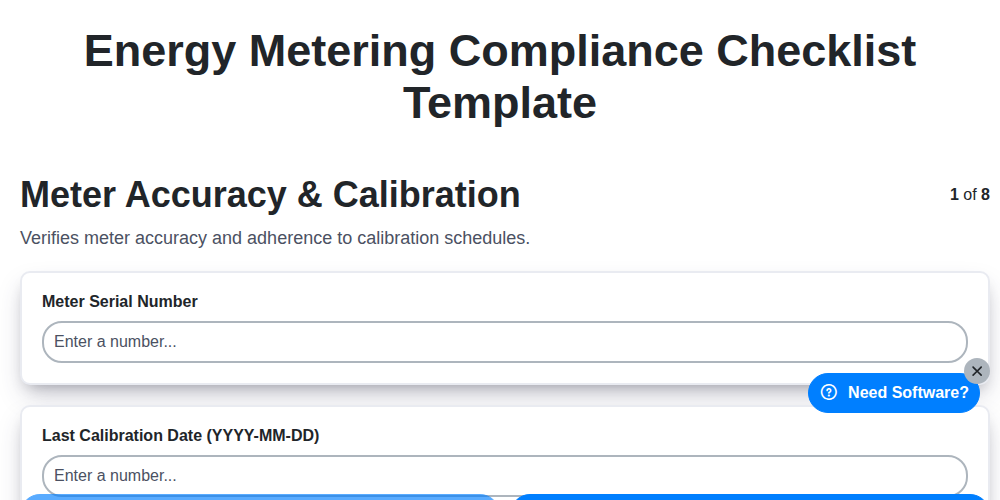
Stay Compliant: Your Energy Metering Compliance Checklist Template
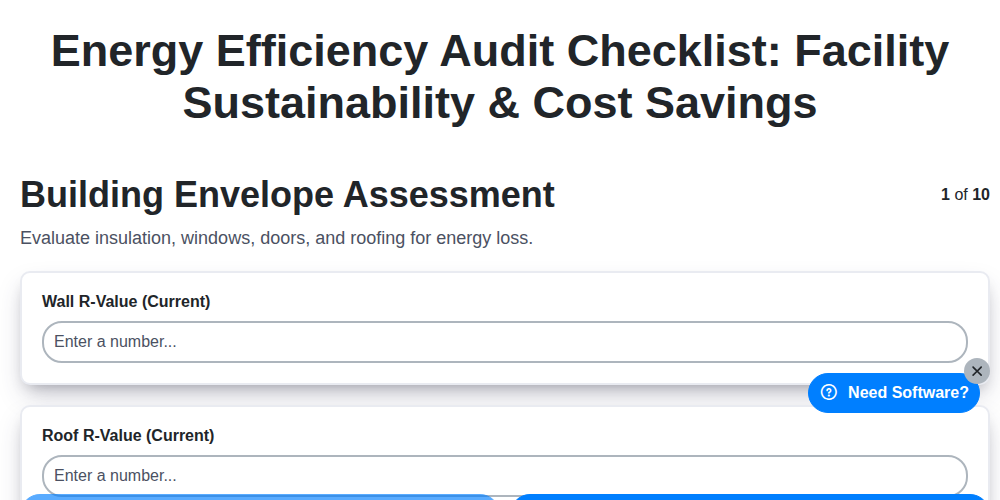
Unlock Savings: Your Complete Energy Efficiency Audit Checklist
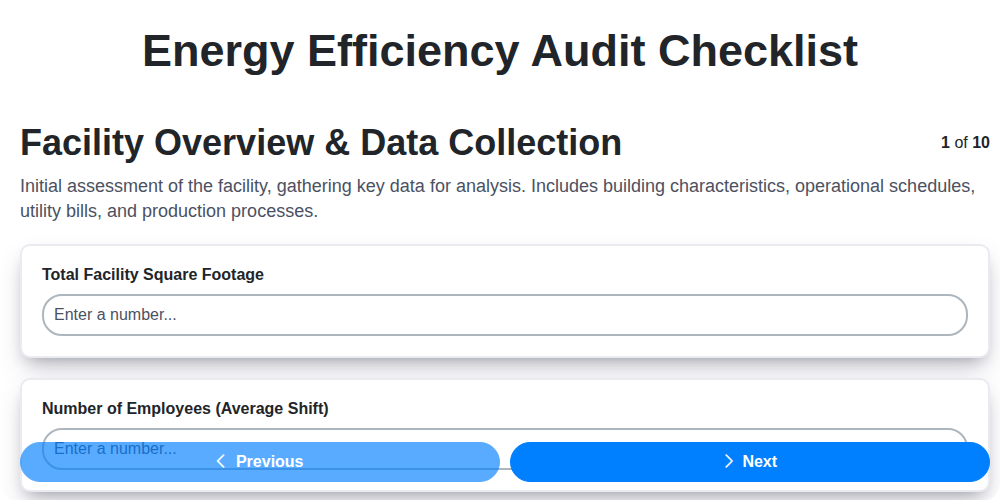
Your Ultimate Energy Efficiency Audit Checklist Template
Power Through: Your Essential Energy Grid Outage Support Checklist
Oil & Gas Well Safety Inspection Checklist: Ensuring a Secure Operation
HVAC System Maintenance Checklist: Building Climate Control & Energy Savings
Renewable Energy Project Checklist Template
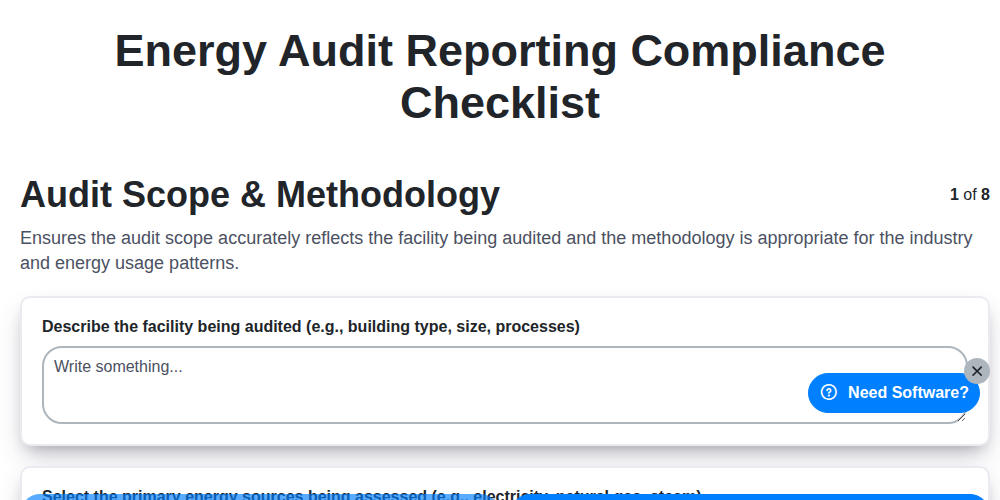
Energy Audit Reporting Compliance: Your Checklist for Success
Need help with
Energy?
Have a question? We're here to help. Please submit your inquiry, and we'll respond promptly.