Energy Storage System Safety: Your Essential Checklist Template
Published: 12/05/2025 Updated: 07/02/2026
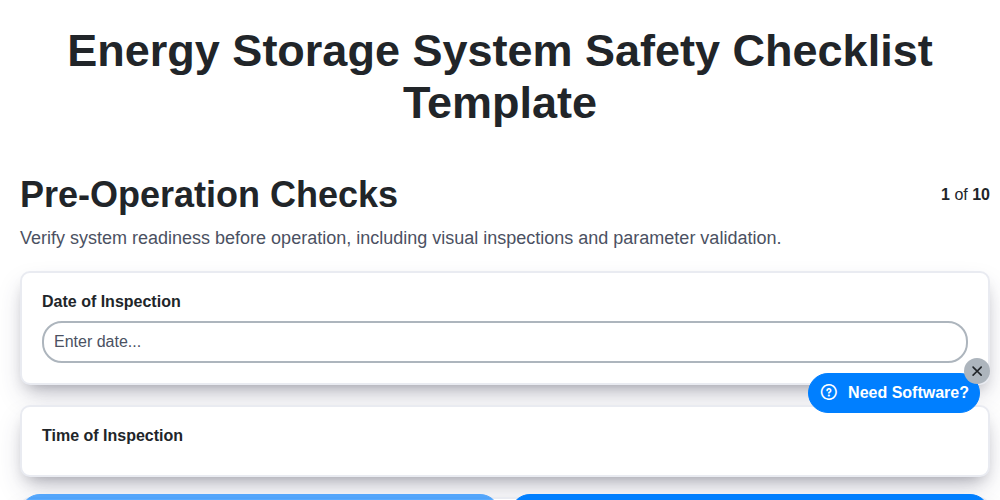
Table of Contents
- Introduction: Why ESS Safety Checklists Matter
- Understanding Energy Storage System (ESS) Hazards
- Pre-Operation Checks: Setting the Stage for Safety
- Battery Module Inspection: A Deep Dive
- HV/LV Electrical Checks: Ensuring System Integrity
- Fire Suppression System: Your First Line of Defense
- Ventilation System: Maintaining Air Quality
- Thermal Management System: Preventing Overheating
- Emergency Response Procedures: Preparedness is Key
- Safety Equipment Verification: Ready for Action
- Environmental Monitoring: Tracking Potential Risks
- Post-Operation Checks: Wrap-Up and Record Keeping
- Checklist Template: Your Practical Guide
- Continuous Improvement: Beyond the Checklist
- Resources & Links
TLDR: Running an energy storage system? This checklist template is your go-to guide for ensuring safety! It covers everything from pre-op checks and battery inspections to fire suppression, ventilation, and emergency response - helping you proactively identify and mitigate risks for a reliable and safe operation.
Introduction: Why ESS Safety Checklists Matter
Energy Storage Systems (ESS) are rapidly becoming vital components of modern infrastructure, supporting renewable energy integration, grid stabilization, and backup power solutions. However, the increasing complexity and high voltage/current nature of these systems demand a proactive and rigorous approach to safety. A single oversight can lead to serious consequences, including fire, explosion, and environmental hazards.
That's where a comprehensive ESS safety checklist comes in. It's more than just a formality; it's a vital tool for identifying potential risks before they become problems. This checklist ensures consistent adherence to safety protocols, reduces the likelihood of accidents, and provides a documented record of due diligence. By systematically evaluating key system components and procedures, you can minimize risk, protect personnel, and ensure the long-term reliability of your energy storage investment. This article outlines the crucial elements of a robust ESS safety checklist, providing a template for enhanced safety and operational excellence.
Understanding Energy Storage System (ESS) Hazards
Energy storage systems (ESS), while crucial for a sustainable future, present unique and potentially serious hazards if not handled with meticulous care. These aren't your average household batteries; we're talking about large-scale deployments involving high voltages, significant energy densities, and potentially hazardous chemicals. Understanding these risks is the first and most vital step in ensuring safe operation.
Several factors contribute to the potential for incidents. Lithium-ion batteries, a common ESS technology, can experience thermal runaway - a chain reaction of overheating that can lead to fire or explosion. Leaks of corrosive electrolytes are also a concern, posing environmental and health risks. High voltage DC (HVDC) systems introduce electrical shock hazards, while the sheer scale of these systems can complicate emergency response. Furthermore, the integration of ESS with existing grid infrastructure brings its own complexities. Ignoring these potential hazards, or failing to implement robust safety protocols, can have devastating consequences. This checklist is designed to provide a structured approach to mitigating these risks - but it's only as effective as the diligence with which it's followed.
Pre-Operation Checks: Setting the Stage for Safety
Before any energy storage system (ESS) begins operation, a meticulous pre-operation checklist is absolutely critical. This isn't just a formality; it's the first line of defense against potential hazards and ensures reliable, safe performance. This checklist should be completed by trained personnel and documented thoroughly.
Here's a breakdown of what a comprehensive pre-operation check should cover:
- System Documentation Review: Verify the latest versions of system manuals, schematics, and operational procedures are readily available and understood by all personnel.
- Site Security & Access: Confirm that the ESS site is properly secured, with restricted access only to authorized individuals. Check fencing, gates, and security cameras.
- Clearance & Obstruction Check: Ensure the area surrounding the ESS is clear of any obstructions that could hinder access for maintenance or emergency response.
- Power Supply Verification: Confirm that all incoming power supplies (grid, generators, etc.) are stable, within specified voltage and frequency ranges, and correctly connected.
- Communication System Validation: Test all communication links between the ESS, control systems, and monitoring platforms. Verify data transmission accuracy.
- Initial System Configuration: Review and confirm the initial system configuration settings, including voltage limits, current limits, and state-of-charge targets. Any deviations from default settings should be documented and approved.
- Weather Conditions Assessment: Consider current and forecasted weather conditions. Extreme temperatures or storms may require adjustments to the startup procedure or postponement of operation.
Battery Module Inspection: A Deep Dive
Battery modules are the fundamental building blocks of any energy storage system (ESS), and their condition directly impacts overall system safety and performance. A thorough inspection is paramount, extending beyond a cursory visual check. This section outlines critical inspection points.
Visual Inspection: Begin with a comprehensive visual assessment. Look for any signs of physical damage - cracks, swelling, deformation, or corrosion. Pay close attention to the module casing, busbars, and terminals. Discoloration, bubbling, or leakage are red flags requiring immediate investigation. Document any irregularities with photographs.
Cell Voltage & State of Charge (SOC): Record the voltage of each cell within the module. Significant variations between cells can indicate imbalances and potential issues like cell degradation or internal shorts. Correlate voltage readings with SOC data to verify accuracy and identify any unexpected deviations.
Internal Resistance Measurement: Utilize an internal resistance meter to measure the internal resistance of each cell. An increase in internal resistance signals aging and reduced performance. Consistent measurements across cells are key; outliers require further scrutiny.
Busbar & Interconnection Integrity: Carefully inspect busbars and interconnection points for corrosion, loose connections, or signs of overheating. Ensure all connections are tight and properly torqued according to manufacturer specifications. A megohmmeter can be used to test insulation resistance.
Wiring and Cable Inspection: Examine all wiring and cables connected to the module for fraying, cracking, or damage to insulation. Verify proper routing and secure fastening to prevent shorts and potential fire hazards.
Gas Venting (if applicable): Some battery modules have venting mechanisms. Verify that these vents are clear of obstructions and functioning correctly. Any unusual odors emanating from a module are a serious concern and warrant immediate investigation.
Manufacturer's Data Sheets: Always refer to the battery module's data sheet for specific inspection guidelines and acceptable ranges for voltage, SOC, and internal resistance.
HV/LV Electrical Checks: Ensuring System Integrity
High-voltage (HV) and low-voltage (LV) electrical systems are the arteries of any energy storage system (ESS). Regular and meticulous checks are paramount to preventing failures, ensuring operational safety, and maximizing the lifespan of your investment. This section outlines critical HV/LV electrical checks that should be incorporated into your ESS safety checklist.
Here's what to focus on:
- Insulation Resistance Testing: Regularly test insulation resistance of all HV and LV cables, connections, and equipment. Low resistance indicates potential degradation and risk of short circuits. Record readings and compare against baseline values.
- Voltage and Current Measurements: Verify proper voltage levels at all points within the system. Check current draw during charging and discharging to confirm expected performance and identify any anomalies.
- Connection Tightness Verification: Loose connections are a common source of failure and heat generation. Visually inspect and torque all connections according to manufacturer specifications. Document the torque applied.
- Grounding System Integrity: A robust grounding system is essential for safety. Verify continuity of ground connections and perform ground resistance testing.
- Circuit Breaker and Disconnect Testing: Test circuit breakers and disconnect switches to ensure they operate correctly and can isolate sections of the ESS in case of emergencies. Document operational status.
- Wiring and Cable Condition: Inspect wiring and cabling for any signs of damage, abrasion, or exposure. Replace damaged cables immediately.
- Overcurrent Protection Devices: Confirm the correct sizing and operational status of fuses and circuit breakers.
Frequency: These checks should be performed at least quarterly, and ideally more frequently depending on the application and environmental conditions. A detailed record of findings and corrective actions should be maintained.
Fire Suppression System: Your First Line of Defense
A robust fire suppression system is absolutely critical for any energy storage system (ESS). These systems don't just put out fires; they're designed to minimize damage, protect personnel, and prevent escalation to a catastrophic event. This checklist section focuses on ensuring your fire suppression system is fully operational and reliable.
Key Checks:
- System Type Verification: Confirm the installed system (e.g., FM-200, Novec 1230, water mist) is appropriate for the battery chemistry and environment. Review design specifications for compatibility.
- Nozzle Integrity & Coverage: Visually inspect all nozzles for obstructions, corrosion, and proper aiming. Ensure adequate coverage of battery modules and associated equipment.
- Pressure & Cylinder Status: Check cylinder pressure levels against manufacturer specifications and documentation. Verify cylinder dates and expiration dates.
- Control Panel Functionality: Test the control panel's functionality, including manual activation, alarm signals, and detection system integration. Review event logs for any anomalies.
- Detector Calibration: Verify the detectors (heat, smoke, or specialized gas detectors) are calibrated and sensitive enough to detect potential fire hazards.
- Manual Release Points: Ensure all manual release points are accessible and functional for emergency activation.
- Regular Maintenance Records: Review the maintenance log for evidence of scheduled inspections, testing, and servicing by qualified professionals.
- Training Documentation: Confirm personnel are adequately trained on the system's operation and maintenance procedures.
Important Note: This system requires regular professional servicing according to manufacturer recommendations. Do not attempt repairs or modifications unless qualified to do so.
Ventilation System: Maintaining Air Quality
Effective ventilation is paramount for the safe operation of any energy storage system (ESS). The build-up of gases like hydrogen, methane, or volatile organic compounds (VOCs) released by battery degradation can pose significant safety hazards, including flammability and toxicity. This checklist section focuses on ensuring your ventilation system is functioning correctly and maintaining a safe air quality within the ESS enclosure.
Key Checks:
- Fan Operation: Verify all ventilation fans are operating at the designed speed and direction. Listen for unusual noises indicating wear or malfunction.
- Airflow Measurement: Use an anemometer to measure airflow rates at key points within the enclosure and compare readings to design specifications. Record measurements.
- Filter Integrity: Inspect air filters for excessive dust accumulation or damage. Replace filters according to the manufacturer's recommended schedule. Document filter changes.
- Ductwork Inspection: Examine ductwork for leaks, blockages, or corrosion. Repair or replace damaged sections.
- Exhaust System Verification: Confirm that the exhaust system is effectively removing potentially harmful gases away from populated areas.
- Air Quality Sensors: If equipped with air quality sensors (e.g., for hydrogen, methane, VOCs), calibrate and verify their accuracy. Ensure alarms are functioning properly and the thresholds are appropriately set.
- Emergency Ventilation System (if applicable): Test the functionality of any emergency ventilation systems designed to rapidly remove fumes in the event of a fault or incident.
- CO2 Monitoring (Optional): Consider monitoring CO2 levels, particularly in enclosed environments, as an indicator of ventilation effectiveness.
Thermal Management System: Preventing Overheating
Energy storage systems, particularly those utilizing lithium-ion batteries, generate significant heat during operation. Effective thermal management is therefore critical for ensuring safety, maximizing lifespan, and maintaining optimal performance. This section of your safety checklist focuses on verifying that your system's thermal management capabilities are functioning correctly.
Checklist Items & Considerations:
- Coolant Level & Condition: Regularly inspect the coolant reservoir (if applicable) to ensure sufficient levels and check for any signs of contamination or degradation. Low coolant levels or contaminated coolant can drastically reduce cooling efficiency.
- Pump/Fan Operation: Verify the proper operation of pumps and fans responsible for circulating coolant or airflow. Listen for unusual noises and check for consistent speed. A failed pump or fan can lead to rapid temperature escalation.
- Temperature Sensors & Calibration: Ensure all temperature sensors are functioning correctly and that readings are accurate. Calibration should be performed periodically according to manufacturer recommendations. Faulty sensors can provide false readings, masking potentially dangerous overheating conditions.
- Heat Exchanger Inspection: Visually inspect heat exchangers for any signs of blockage, corrosion, or fouling. Reduced heat transfer can lead to localized hotspots.
- Airflow Pathways: Confirm unobstructed airflow pathways throughout the system. Blockages can impede cooling and create heat buildup.
- System Log Analysis: Review system logs for any alerts or anomalies related to temperature control. Investigate any unusual patterns or trends.
- Emergency Shutdown Thresholds: Validate that emergency shutdown thresholds for high temperatures are correctly configured and functional.
Why is this important? Overheating can lead to thermal runaway, a chain reaction that can result in fire, explosion, or the release of hazardous materials. A robust thermal management system, combined with thorough safety checks, is your first line of defense.
Emergency Response Procedures: Preparedness is Key
An Energy Storage System (ESS) presents unique safety challenges, and having robust emergency response procedures is absolutely critical. This isn't just about knowing what to do; it's about regular training, clear communication, and readily accessible resources.
Here's what your emergency response procedures should cover, and why each point matters:
- Incident Notification & Communication: Establish a clear chain of command and designated personnel responsible for reporting incidents - internal and external (fire department, utility companies, environmental agencies). Ensure multiple communication methods are available (radio, phone, email) in case one fails.
- Evacuation Plan: Develop a detailed evacuation plan, clearly marked escape routes, and designated assembly points. Conduct regular drills to ensure everyone knows the procedures and can execute them swiftly.
- Firefighting Considerations: ESS fires can be complex and require specialized knowledge. Training firefighters on the unique characteristics of lithium-ion batteries (thermal runaway, toxic fumes) is paramount. Ensure first responders have access to the ESS documentation outlining the battery chemistry and potential hazards. Never assume a standard firefighting approach is sufficient.
- Spill Containment & Cleanup: For incidents involving electrolyte leakage, outline procedures for containing the spill, preventing environmental contamination, and proper cleanup utilizing appropriate personal protective equipment (PPE).
- Medical Response: Establish procedures for addressing injuries resulting from electrical shock, chemical exposure, or thermal burns. Ensure readily available first aid supplies and trained personnel.
- Post-Incident Investigation: A thorough investigation following any incident is vital to identify root causes, prevent recurrence, and improve safety protocols. Document findings and corrective actions.
- Regular Drills & Training: Emergency response isn't a once-a-year event. Frequent drills involving all relevant personnel (operations, maintenance, emergency responders) keep everyone sharp and prepared.
Remember: Your emergency response plan should be a living document, regularly reviewed and updated based on lessons learned and evolving best practices.
Safety Equipment Verification: Ready for Action
Your Energy Storage System (ESS) is only as safe as the equipment designed to protect it. This section of the checklist focuses on verifying that critical safety equipment is present, functional, and ready to respond to potential hazards.
Here's what we're checking:
- Fire Detection & Alarm Systems: Verify the presence and functionality of smoke detectors, heat sensors, and audible/visual alarm systems. Test the system's responsiveness and ensure all personnel are aware of alarm signals.
- Personal Protective Equipment (PPE): Confirm adequate supplies of appropriate PPE (gloves, eye protection, respirators, arc flash suits) are readily accessible and in good condition. Ensure personnel are trained in their proper use.
- Emergency Lighting: Test emergency lighting systems to ensure illumination is sufficient for safe egress during power outages.
- First Aid Kits: Inspect first aid kits to ensure they are fully stocked and readily available, with personnel trained in basic first aid and CPR.
- Spill Response Kits: Check the contents and expiration dates of spill response kits designed for battery electrolyte or other hazardous materials. Confirm trained personnel are available for spill containment and cleanup.
- Communication Systems: Verify the functionality of communication systems (radios, phones) for emergency contact and coordination.
Documentation is key. Record all verification results, including dates, personnel involved, and any corrective actions taken. This provides a clear audit trail and demonstrates your commitment to safety.
Environmental Monitoring: Tracking Potential Risks
Maintaining a safe energy storage system (ESS) environment goes beyond just checking the equipment; it's about understanding and mitigating potential risks to the surrounding area. Environmental monitoring plays a critical role in this process.
Here's why it's vital and what it entails:
- Gas Detection: ESS batteries, particularly lithium-ion, can release gases like hydrogen, methane, and carbon monoxide under certain conditions. Continuous monitoring for these gases, utilizing calibrated sensors, is crucial. Thresholds should be established, and automated alarms triggered if these levels exceed safe limits.
- Temperature Mapping: Localized overheating can be a significant precursor to thermal runaway. Implement a temperature mapping system using strategically placed sensors to identify and address any abnormal temperature gradients within the ESS room.
- Humidity Control: Excessive humidity can accelerate corrosion and impact battery performance. Monitoring humidity levels and maintaining them within specified ranges is essential for long-term reliability.
- Air Quality: While less common, monitoring for other airborne contaminants that could impact battery chemistry or surrounding infrastructure should be considered, especially if the ESS is located near industrial processes.
- Data Logging & Trending: Don't just record data; analyze it. Log all environmental data and establish trending patterns to proactively identify potential issues before they become critical. This allows for predictive maintenance and adjustments to operational parameters.
Regular calibration and verification of all environmental monitoring equipment are paramount to ensure the accuracy and reliability of the data collected.
Post-Operation Checks: Wrap-Up and Record Keeping
Once the energy storage system (ESS) has completed its operational cycle, a thorough post-operation checklist is vital for identifying potential issues that may have arisen during use. This isn't just about confirming everything shut down correctly; it's about gathering data for future preventative maintenance and ensuring long-term system reliability.
Key Post-Operation Checks Include:
- System Log Review: Carefully examine the ESS control system logs. Look for any error codes, warnings, or unusual events that occurred during operation. Document these findings, even seemingly minor ones.
- Temperature Monitoring: Verify the temperature of battery modules and critical components is within acceptable ranges, as recorded by thermal management sensors. Compare these readings to baseline data to identify any concerning trends.
- Visual Inspection (Repeat): A quick visual inspection of the system, similar to the pre-operation check, can reveal signs of stress, leakage, or damage that may not have been apparent before.
- Environmental Conditions: Check environmental factors (temperature, humidity) in the ESS room. Significant deviations from expected conditions can impact battery health and performance.
- Fire Suppression System Status: Confirm the fire suppression system is armed and ready, with any required refills or pressure checks completed.
- Ventilation System Verification: Ensure the ventilation system continues to operate as expected to prevent the build-up of potentially harmful gases.
Record Keeping is Paramount:
The data collected during post-operation checks is invaluable. Maintain a detailed log, including:
- Date and time of inspection
- Inspector's name/signature
- Readings from all relevant sensors (temperature, voltage, current, etc.)
- Observations - any deviations from expected behavior, signs of wear or damage
- Corrective actions taken (if any) and who performed them
- Next scheduled maintenance tasks
Consistent and accurate record keeping enables predictive maintenance, helps identify patterns, and provides crucial information for troubleshooting and optimizing system performance. Don't skip this critical final step!
Checklist Template: Your Practical Guide
Ensuring the safe operation of an Energy Storage System (ESS) is paramount. Unexpected incidents can have serious consequences, impacting not only equipment but also personnel and the surrounding environment. This comprehensive checklist template serves as a practical guide to systematically verify critical safety aspects throughout the entire lifecycle of your ESS - from pre-operation to post-operation.
Below you'll find a breakdown of the key areas covered in the checklist, with specific points to examine. Please remember this is a template; tailor it to your specific ESS technology, size, location, and regulatory requirements. We strongly recommend involving qualified personnel - including electrical engineers, safety officers, and battery specialists - in developing and implementing your own customized checklist.
Download the full checklist template for a readily usable document.
Here's a glimpse of what's included:
- Pre-Operation Checks: Initial system assessment, documentation review, permitting verification, and personnel training.
- Battery Module Inspection: Visual inspection for damage, corrosion, swelling, and proper labeling. Voltage and capacity testing.
- HV/LV Electrical Checks: Verification of high and low voltage connections, insulation integrity, grounding, and protective device functionality.
- Fire Suppression System: Regular inspection and testing of fire detection and suppression systems, including agent levels and functionality.
- Ventilation System: Ensuring adequate airflow to prevent overheating and manage potentially released gases.
- Thermal Management System: Assessment of cooling system performance, temperature sensors, and control systems.
- Emergency Response Procedures: Confirmation of readily accessible and understood emergency response plans and contact information.
- Safety Equipment Verification: Checking the availability and functionality of personal protective equipment (PPE), first aid kits, and spill control materials.
- Environmental Monitoring: Assessment of ambient conditions, potential gas leaks, and adherence to environmental regulations.
- Post-Operation Checks: Review of operational data, identification of potential issues, and documentation of any anomalies.
Disclaimer: This checklist is intended as a guide and should not be considered a substitute for professional engineering advice. Always consult with qualified experts to ensure compliance with all applicable codes and regulations.
Continuous Improvement: Beyond the Checklist
While a comprehensive checklist like the one we've outlined is a vital foundation for energy storage system (ESS) safety, relying solely on it creates a false sense of security. Safety isn't a static achievement; it's a dynamic process requiring continuous improvement.
Think of the checklist as your baseline - a minimum requirement. To truly excel in ESS safety, you need to foster a culture of proactive identification and mitigation of potential hazards. This means regularly reviewing the checklist itself - is it still relevant given changes in technology, operational procedures, or regulatory requirements? Encourage all personnel involved in ESS operation and maintenance to actively suggest improvements, near-miss reporting, and innovative solutions.
Consider incorporating feedback mechanisms like incident investigations, periodic safety audits (both internal and external), and benchmarking against industry best practices. Data gathered from environmental monitoring and system performance can also reveal trends that warrant further investigation and adjustments to safety protocols. Don't be afraid to challenge assumptions and embrace new technologies that enhance safety. Ultimately, a truly safe ESS environment isn't just about ticking boxes - it's about a relentless pursuit of excellence and a commitment to learning from every experience.
Resources & Links
- National Institute of Standards and Technology (NIST): NIST conducts research and develops standards related to energy storage safety, including fire risk assessment and battery safety testing. Their publications and research are crucial for understanding and mitigating ESS hazards.
- International Energy Agency (IEA): The IEA provides reports and analysis on energy storage technologies, including safety considerations and best practices for deployment. Their insights cover global trends and potential risks.
- Underwriters Laboratories (UL): UL provides safety testing, certification, and inspection services for energy storage systems. Their standards and certifications are widely recognized and provide a benchmark for safety.
- National Renewable Energy Laboratory (NREL): NREL conducts research and development related to renewable energy technologies, including energy storage. Their work often addresses safety and performance concerns of ESS.
- Fire Protection Research Foundation (FPRF): FPRF conducts research on fire protection and safety, and they have published studies relevant to battery fire risks and mitigation strategies for ESS.
- National Fire Protection Association (NFPA): NFPA develops codes and standards related to fire safety, including those applicable to energy storage systems. NFPA 855 is a key standard for ESS safety.
- American Society of Heating, Refrigerating and Air-Conditioning Engineers (ASHRAE): ASHRAE provides standards and guidelines related to ventilation, thermal management, and fire safety, which are vital for ESS operation. Their standards contribute to maintaining air quality and preventing overheating.
- Environmental Health and Safety (EHS) - NIH: This page offers helpful resources and insights into best practices for safe operations and general ESS safety.
- Centers for Disease Control and Prevention (CDC): While not exclusively focused on ESS, the CDC provides general guidance on hazard communication, personal protective equipment (PPE), and emergency response that are relevant to ESS safety.
- Occupational Safety and Health Administration (OSHA): OSHA provides regulations and guidance to ensure worker safety in various industries, including those involving energy storage systems. They focus on hazard communication, PPE, and safe work practices.
- International Organization for Standardization (ISO): ISO develops and publishes international standards, some of which are relevant to energy storage system safety management, covering areas like risk assessment and operational procedures.
- International Electrotechnical Commission (IEC): IEC develops international standards for electrical equipment, including energy storage systems. Their standards cover design, testing, and safety requirements.
Frequently Asked Questions
What is an Energy Storage System (ESS)?
An Energy Storage System (ESS) is a device or system that stores energy for later use. They come in various forms, including batteries (lithium-ion, lead-acid, etc.), flywheels, and compressed air systems, and are increasingly used alongside renewable energy sources like solar and wind power to improve reliability and efficiency.
Why is ESS safety so important?
ESS, particularly battery systems, involve high voltages and currents, and can pose risks like fire, explosion, and electrical shock if not properly handled and maintained. Safety is paramount to protect people, property, and the environment.
Who should use this checklist template?
This checklist is designed for anyone involved in the planning, installation, operation, and maintenance of ESS, including engineers, technicians, installers, facility managers, and safety personnel.
What types of ESS does this checklist cover?
The checklist is designed to be broadly applicable, covering various ESS technologies, but it emphasizes lithium-ion battery systems, which are the most common. Specific adjustments might be needed based on the technology being used.
Can I modify the checklist template?
Absolutely! This template is a starting point. Feel free to add, remove, or modify items to better suit your specific ESS type, location, and risk assessment results. Always consult relevant standards and regulations.
What are the key areas covered by the checklist?
The checklist covers topics like site assessment, system design, installation, commissioning, operation, maintenance, fire safety, and emergency response.
What is a 'risk assessment' and why is it important?
A risk assessment is a process of identifying potential hazards associated with the ESS and evaluating the likelihood and severity of those hazards. This allows you to prioritize safety measures and implement appropriate controls.
What does 'NEC' refer to in the checklist?
NEC refers to the National Electrical Code, a widely adopted standard for the safe installation and operation of electrical systems in the United States. Many regions or countries will have their own equivalent standards.
What's the difference between 'preventative maintenance' and 'corrective maintenance'?
Preventative maintenance involves regularly scheduled inspections and servicing to prevent failures, while corrective maintenance is performed to fix problems after they's occurred. Both are crucial for ESS safety and longevity.
Where can I find more information about ESS safety standards and regulations?
Refer to the National Electrical Code (NEC), relevant international standards (like IEC standards), local building codes, and guidelines from organizations like the NFPA (National Fire Protection Association). Consult with qualified electrical engineers and safety professionals.
How often should I review and update this checklist?
Review and update the checklist at least annually, or more frequently if there are changes to the ESS system, operational procedures, or relevant safety regulations.
What should I do if I identify a safety concern during a checklist review?
Immediately report the concern to the appropriate personnel (e.g., facility manager, safety officer, engineer) and take corrective action to address the issue. Document the concern and the corrective actions taken.
Comments
There are no comments yet. Be the first to add one!
Energy Management Solution Demo
Managing operations, safety, and compliance in the energy sector is critical. ChecklistGuro's Work OS platform streamlines your workflow from exploration and production to distribution and maintenance. Enhance safety, improve efficiency, and ensure regulatory adherence. Discover how ChecklistGuro can transform your energy business!
Related Articles
Stay Compliant: Your Energy Metering Compliance Checklist Template
Unlock Savings: Your Complete Energy Efficiency Audit Checklist
Your Ultimate Energy Efficiency Audit Checklist Template
Power Through: Your Essential Energy Grid Outage Support Checklist
Oil & Gas Well Safety Inspection Checklist: Ensuring a Secure Operation
HVAC System Maintenance Checklist: Building Climate Control & Energy Savings
Renewable Energy Project Checklist Template
Energy Audit Reporting Compliance: Your Checklist for Success
Need help with
Energy?
Have a question? We're here to help. Please submit your inquiry, and we'll respond promptly.