Energy Trading Risk Management Checklist: A Comprehensive Guide
Published: 12/05/2025 Updated: 07/02/2026
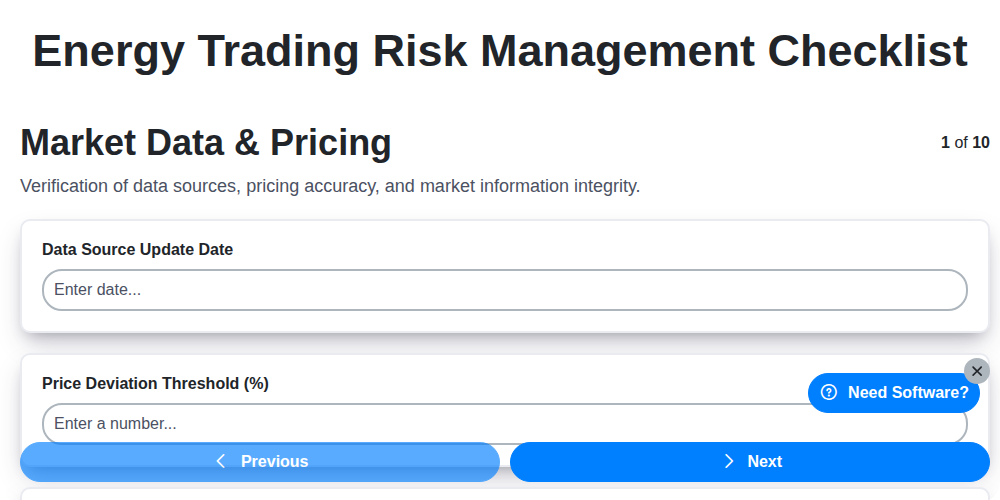
Table of Contents
- Introduction: Navigating the Complexities of Energy Trading Risk
- 1. Market Data & Pricing: Ensuring Accuracy and Reliability
- 2. Counterparty Credit Risk: Assessing and Mitigating Exposure
- 3. Regulatory Compliance: Staying Ahead of Evolving Rules
- 4. Position Limits & Reporting: Maintaining Transparency and Control
- 5. Model Risk Management: Validating and Monitoring Trading Models
- 6. Operational Procedures: Standardizing Workflows for Risk Reduction
- 7. Cybersecurity & Data Security: Protecting Sensitive Information
- 8. Stress Testing & Scenario Analysis: Preparing for Adverse Events
- 9. Record Keeping & Audit Trail: Maintaining Accountability
- 10. Business Continuity & Disaster Recovery: Ensuring Operational Resilience
- 11. Integration with Trading Platforms: A Critical Component
- 12. The Role of Technology in Risk Management
- Conclusion: Building a Robust Energy Trading Risk Framework
- Resources & Links
TLDR: Trading energy is risky! This checklist helps you stay on top of it all - from pricing & credit risk to regulations, cybersecurity, and disaster recovery. It's your guide to proactive risk management, helping you avoid costly mistakes and keep your business running smoothly. Download the template and start strengthening your defenses today!
Introduction: Navigating the Complexities of Energy Trading Risk
Energy trading, with its inherent volatility and intricate market dynamics, presents a unique and significant set of risks. From fluctuating commodity prices to counterparty defaults and evolving regulatory landscapes, successful energy traders must proactively manage these risks to protect their organizations and maintain stability. This isn't simply about avoiding losses; it's about optimizing performance and fostering sustainable growth within a constantly changing environment. Managing these risks effectively requires a systematic and comprehensive approach, a framework that ensures all critical areas are considered and continuously monitored. This article introduces a practical checklist - a foundational tool - to guide energy trading firms through this complex terrain, providing a roadmap for robust risk management and ongoing operational excellence. Ignoring even a single element can have serious consequences, so let's delve into the key areas we'll be covering.
1. Market Data & Pricing: Ensuring Accuracy and Reliability
Energy trading thrives on accurate and timely market data. A single data error can lead to significant financial losses and regulatory scrutiny. This section of your ERM checklist focuses on ensuring the integrity and reliability of the data that informs your trading decisions.
Key Considerations:
- Data Sources: Identify all sources of market data (exchanges, brokers, third-party providers). Establish a documented hierarchy of preferred and backup sources.
- Data Validation: Implement automated checks and manual reviews to validate incoming data. Look for outliers, inconsistencies, and anomalies. Define acceptable tolerance levels for data errors.
- Pricing Methodologies: Clearly define and document pricing methodologies, including the rationale behind chosen pricing points and how they are derived. Regularly review these methodologies to ensure they remain accurate and reflect market conditions.
- Data Quality Metrics: Establish quantifiable metrics to monitor data quality (e.g., data latency, error rates, completeness). Track these metrics over time and investigate trends.
- Vendor Risk Management: If relying on third-party data providers, conduct thorough due diligence and ongoing monitoring of their data quality, security, and operational stability. Include data quality requirements in vendor contracts.
- Real-Time Monitoring: Implement real-time monitoring of market data feeds to quickly identify and address any issues impacting data accuracy.
2. Counterparty Credit Risk: Assessing and Mitigating Exposure
Counterparty credit risk is a core concern in energy trading, representing the potential loss if a counterparty defaults on its obligations. Effective management requires a layered approach, encompassing robust assessment, stringent limits, and ongoing monitoring.
1. Creditworthiness Assessment: This begins with comprehensive due diligence. Don't rely solely on credit ratings. Investigate:
- Financial Health: Analyze financial statements (balance sheets, income statements, cash flow statements) to evaluate liquidity, leverage, and profitability. Look for trends and potential vulnerabilities.
- Industry Outlook: Consider the overall health and prospects of the counterparty's industry. Is it facing headwinds or tailwinds?
- Management Quality: Evaluate the experience and competence of the counterparty's management team.
- Business Relationships: Understand their business model, key clients, and dependencies.
- Public Information: Scrutinize news articles, legal filings, and regulatory reports for potential red flags.
2. Credit Limits & Collateralization: Based on your assessment, establish appropriate credit limits for each counterparty. These limits should be dynamically adjusted based on evolving risk profiles. Implement robust collateralization agreements - margin calls should be triggered promptly when exposures exceed predetermined thresholds. Regularly review and update these agreements, ensuring they reflect market conditions and regulatory requirements.
3. Credit Exposure Monitoring: Continuously monitor credit exposure across all trading activities. Real-time monitoring of potential future exposure (PFE) is crucial, especially in volatile markets. Establish clear escalation procedures for breaches of credit limits or other concerning developments.
4. Netting Agreements: Utilize netting agreements where possible to reduce overall credit exposure by offsetting obligations. Ensure netting agreements are legally enforceable and properly documented.
5. Credit Risk Mitigation Techniques: Consider employing credit derivatives (e.g., credit default swaps) to hedge credit risk, although be mindful of the associated complexities and costs.
6. Regular Review and Validation: Credit risk assessments aren't one-time exercises. Conduct regular reviews (at least annually, and more frequently for higher-risk counterparties) and validate assessment methodologies to ensure accuracy and effectiveness.
3. Regulatory Compliance: Staying Ahead of Evolving Rules
The energy trading landscape is subject to a constantly evolving web of regulations, designed to ensure market integrity, protect consumers, and prevent systemic risk. Staying compliant isn't just about avoiding penalties; it's about maintaining a sustainable and trustworthy business. This section outlines critical areas within regulatory compliance for energy traders.
Key Regulatory Areas & Considerations:
- EMIR (European Market Infrastructure Regulation): Focus on reporting obligations for OTC derivative trades. Ensure accurate and timely reporting to trade repositories, including details of counterparties and transaction specifics. This includes ongoing validation and reconciliation of data.
- MiFID II/MiFIR (Markets in Financial Instruments Directive II/Regulation): Covers trading venue requirements, best execution obligations, and transparency rules. Be prepared for increased reporting and data granularity demands.
- NERC CIP (North American Electric Reliability Corporation Critical Infrastructure Protection): Vital for operations in North America, covering cybersecurity and physical security protocols.
- FERC (Federal Energy Regulatory Commission) Regulations: Crucial for entities operating within the US electricity market, covering market-based rate filings, congestion management, and reliability standards.
- Local & National Regulations: Energy markets are highly localized. Maintain constant awareness of regional and national regulations that may impact your trading activities.
- Data Privacy (GDPR, CCPA, etc.): Ensure all data handling practices adhere to relevant privacy regulations when dealing with counterparty and customer information.
- Staying Informed: Proactively monitor regulatory updates through industry publications, regulator websites, and legal counsel. Establish a process for assessing the impact of new rules and implementing necessary adjustments.
Proactive Measures for Compliance:
- Dedicated Compliance Team: Consider a dedicated team or individual responsible for regulatory monitoring and implementation.
- Regular Compliance Audits: Implement independent audits to assess the effectiveness of compliance controls.
- Training Programs: Provide ongoing training to trading staff on regulatory requirements and internal procedures.
- Documented Policies & Procedures: Maintain comprehensive, up-to-date documentation of compliance policies and procedures.
4. Position Limits & Reporting: Maintaining Transparency and Control
Energy trading is a heavily regulated landscape, and adherence to position limits and accurate reporting is paramount. Failing to comply can result in hefty fines, reputational damage, and even trading restrictions. This section of your ERM checklist focuses on ensuring you're managing your exposures responsibly and meeting all reporting obligations.
Here's what needs to be covered:
- Understanding Regulatory Requirements: Stay abreast of applicable position limits imposed by relevant regulatory bodies (e.g., FERC in the US, EMIR in Europe). These limits aren't static; they evolve, so continuous monitoring is crucial.
- Real-Time Monitoring: Implement systems that provide real-time visibility into your aggregated positions across all trading activities and across all relevant asset classes. Alerts should trigger when approaching or breaching established limits.
- Accurate Data Integrity: Position limit monitoring is only as good as the data it's based on. Ensure data feeds are accurate, reconciled regularly, and traceable back to the original transactions.
- Reporting Procedures: Establish clear and documented procedures for reporting positions to regulators, including the frequency, format, and deadlines. Automation of reporting where possible reduces errors and improves efficiency.
- Internal Reporting: Don't just focus on regulatory reporting. Provide regular, insightful position reports to senior management and risk committees, highlighting potential breaches or areas of concern.
- Limit Setting & Review: Establish robust methodologies for setting position limits, considering market conditions, risk appetite, and regulatory constraints. These limits should be reviewed and adjusted periodically.
- Breach Management: Develop a documented process for handling position limit breaches, including escalation procedures, root cause analysis, and corrective actions.
5. Model Risk Management: Validating and Monitoring Trading Models
Energy trading relies heavily on sophisticated models - from pricing and valuation to risk assessment and optimization. However, these models are only as good as their underlying assumptions and implementation. Failing to adequately manage model risk can lead to inaccurate decisions, significant financial losses, and reputational damage.
A robust Model Risk Management (MRM) framework is therefore crucial. This isn't a one-and-done exercise; it's an ongoing process involving validation, monitoring, and governance. Here's a breakdown of key steps:
- Initial Validation: Before a model is deployed, rigorous validation is required. This includes independent review of the model's design, assumptions, data inputs, and documentation. Sensitivity analysis, backtesting (comparing model outputs to actual market outcomes), and benchmarking against alternative models are essential.
- Ongoing Monitoring: Model performance needs continuous monitoring. Track key model outputs, compare them to market prices and observed outcomes, and investigate any deviations. Establish clear thresholds for acceptable performance, and develop escalation procedures when those thresholds are breached.
- Model Inventory & Governance: Maintain a comprehensive inventory of all trading models, including their purpose, owner, validation dates, and performance metrics. Define clear roles and responsibilities for model development, validation, and oversight.
- Data Quality Checks: Models are only as good as the data they consume. Implement robust data quality controls to ensure the accuracy, completeness, and timeliness of model inputs. Regularly assess the data sources and validation processes.
- Documentation & Change Management: Thorough documentation is vital. Maintain records of model development, validation, and any subsequent changes. Implement a formal change management process to control modifications and reassess model performance after changes are implemented.
Effective MRM isn't about stifling innovation; it's about ensuring that models are fit for purpose and contribute to informed decision-making within a framework of sound risk management.
6. Operational Procedures: Standardizing Workflows for Risk Reduction
Energy trading is inherently complex, involving rapid decision-making and significant financial exposure. Without clearly defined and consistently followed operational procedures, even the best risk management models can be undermined by human error, communication breakdowns, and process inefficiencies. This section focuses on establishing and maintaining robust operational procedures as a critical layer of defense against risk.
What does a solid operational procedure checklist for energy trading look like? It's more than just a manual; it's a living document that guides your team through every stage of the trading lifecycle. Here's a breakdown of key elements:
- Trade Execution and Confirmation: Define clear steps for order entry, confirmation processes, and reconciliation to minimize errors and ensure accuracy. This includes specifying approved trading platforms and authorized personnel.
- Trade Booking & Allocation: Standardize the process of booking trades into systems and allocating risk appropriately. Clearly outline responsibilities and escalation paths.
- Settlement & Payment: Establish automated checks and balances to ensure timely and accurate settlement and payment processes, reducing counterparty risk and potential disputes.
- Communication Protocols: Define clear communication channels and reporting structures for traders, risk managers, and operations personnel. This should include escalation protocols for unusual market conditions or potential breaches.
- Regular Review and Updates: Operational procedures are not static. They require periodic review and updates to reflect changes in regulations, market conditions, technology, and organizational structure. Implement a formal review cycle (e.g., annually or after significant events).
- Training and Competency: Ensure all personnel involved in energy trading operations receive adequate training on relevant operational procedures and possess the necessary competencies. Track training records and regularly assess understanding.
Implementing robust operational procedures isn't just about compliance; it's about fostering a culture of disciplined risk awareness and accountability within your energy trading organization.
7. Cybersecurity & Data Security: Protecting Sensitive Information
The energy trading landscape is increasingly reliant on digital infrastructure, making robust cybersecurity and data security paramount. A data breach or cyberattack can cripple operations, lead to significant financial losses, damage reputation, and trigger regulatory penalties. This checklist item isn't just about installing antivirus software; it's a comprehensive approach to safeguarding your critical data and systems.
Key Considerations:
- Risk Assessment: Regularly conduct thorough risk assessments to identify vulnerabilities and potential threats specific to your trading environment. This includes evaluating third-party vendor risks.
- Access Controls: Implement strict access controls, including multi-factor authentication, role-based access, and regular review of user permissions. Limit access to sensitive data based on the principle of least privilege.
- Network Security: Employ firewalls, intrusion detection/prevention systems, and network segmentation to protect against unauthorized access.
- Data Encryption: Encrypt sensitive data both in transit and at rest.
- Incident Response Plan: Develop and regularly test an incident response plan to effectively handle security breaches. This plan should clearly define roles, responsibilities, and communication protocols.
- Employee Training: Provide ongoing cybersecurity awareness training for all employees, emphasizing phishing scams, password security, and safe data handling practices.
- Vulnerability Management: Implement a vulnerability scanning and patching program to identify and remediate weaknesses in your systems.
- Data Loss Prevention (DLP): Consider DLP solutions to monitor and prevent the unauthorized transfer of sensitive data.
- Regular Security Audits: Conduct periodic security audits, both internal and external, to evaluate the effectiveness of your security controls.
8. Stress Testing & Scenario Analysis: Preparing for Adverse Events
Energy trading, by its very nature, operates within a volatile environment. Relying solely on historical data or current market conditions is a recipe for potential disaster. Robust stress testing and scenario analysis are crucial components of a comprehensive Energy Trading Risk Management (ETRM) framework.
What are we talking about? Stress testing involves subjecting your trading portfolio to extreme but plausible market conditions, while scenario analysis examines the impact of specific, predefined events - like a sudden geopolitical crisis, a major infrastructure outage, or a significant regulatory shift. It's not about predicting the future, but about understanding how your positions would perform under duress and identifying vulnerabilities before they become costly problems.
Key Elements of an Effective Program:
- Define Scenarios: Don't limit yourself to the obvious. Consider a wide range of possibilities, including extreme weather events, cyberattacks on grid infrastructure, sudden changes in demand, or unexpected regulatory action.
- Establish Stress Levels: Don't just stress-test on bad conditions. Implement a tiered approach - mild, moderate, and severe stress levels - to assess resilience across a spectrum of potential outcomes.
- Portfolio Impact Assessment: Quantify the impact on P&L, margin requirements, and liquidity under each scenario. Identify the positions and strategies most at risk.
- Risk Mitigation Strategies: Develop and test strategies to reduce exposure during stressed conditions. This could involve hedging, position limits, or adjusting trading parameters.
- Regular Review and Updates: Market dynamics and regulatory landscapes constantly evolve. Stress testing and scenario analysis must be a living process, reviewed and updated regularly to remain effective.
Failing to adequately stress test your portfolio isn't just about potential financial losses; it's about the long-term health and reputation of your trading operation.
9. Record Keeping & Audit Trail: Maintaining Accountability
In the complex world of energy trading, a robust record keeping and audit trail isn't just a "nice-to-have"; it's a fundamental pillar of risk management and regulatory compliance. Every decision, transaction, and communication should be meticulously documented. This isn't just about ticking boxes; it's about creating a clear and verifiable history of your trading activities.
What needs to be captured? Think beyond just trade tickets. This includes:
- Trade Data: Dates, times, volumes, prices, counterparties, and booking references for all trades.
- Pricing Data: Sources and rationale for price data used, including timestamps and confirmation of accuracy.
- Decision-Making Processes: Notes on the reasoning behind trades, including considerations of market conditions, risk appetite, and regulatory requirements.
- Communication Records: Copies of emails, chat logs, and any other relevant communication with counterparties, colleagues, and management.
- System Activity Logs: Detailed records of user access, system changes, and data modifications.
Why is this critical?
- Regulatory Scrutiny: Regulators demand comprehensive audit trails to verify compliance and identify potential misconduct.
- Error Resolution: Accurate records allow for rapid identification and correction of errors, minimizing financial and reputational damage.
- Legal Defense: A well-maintained audit trail provides essential documentation in case of legal disputes or investigations.
- Internal Accountability: Fosters a culture of responsibility and transparency within the trading team.
- Process Improvement: Analysis of historical data can reveal inefficiencies and opportunities for improvement in trading processes.
Key Considerations:
- Immutability: Records should be stored in a way that prevents unauthorized modification or deletion.
- Accessibility: Authorized personnel should have readily available access to relevant records.
- Retention Policies: Establish clear retention periods for different types of records, aligned with regulatory requirements and business needs.
- Regular Audits: Conduct periodic audits of record keeping practices to ensure compliance and identify areas for improvement.
10. Business Continuity & Disaster Recovery: Ensuring Operational Resilience
Energy trading thrives on speed and connectivity. A sudden disruption - whether a natural disaster, cyberattack, or system failure - can halt trading, impact profitability, and severely damage reputation. A robust Business Continuity and Disaster Recovery (BCDR) plan is not just a nice-to-have but a critical component of any comprehensive Energy Trading Risk Management framework.
This section outlines essential considerations for your BCDR plan:
- Risk Assessment: Identify potential threats specific to your geographic locations, infrastructure, and trading activities. Consider power outages, natural disasters, pandemics, cyberattacks, and infrastructure failures.
- Impact Analysis: Determine the potential impact of each identified risk on your trading operations, systems, and personnel. Quantify potential financial losses and reputational damage.
- Recovery Time Objectives (RTOs) & Recovery Point Objectives (RPOs): Define acceptable downtime (RTO) and data loss (RPO) for key trading processes. These objectives dictate the level of investment and complexity required in your BCDR plan. Trading, understandably, often requires very short RTOs and minimal data loss.
- Backup & Redundancy: Implement comprehensive data backup procedures and geographically diverse redundant systems. Consider cloud-based solutions for increased resilience. Regularly test backup integrity.
- Communication Plan: Establish clear communication channels and protocols for internal and external stakeholders during a disruptive event.
- Alternative Trading Locations: Identify and test alternative trading venues or manual trading processes to maintain market access.
- Employee Training & Awareness: Train employees on BCDR procedures and ensure they understand their roles and responsibilities.
- Regular Testing & Maintenance: Conduct periodic BCDR drills and exercises to validate the plan's effectiveness and identify areas for improvement. Update the plan regularly to reflect changes in technology, regulations, and business operations.
- Third-Party Dependencies: Assess the BCDR capabilities of critical vendors and counterparties. Ensure their plans align with your own.
A well-executed BCDR plan demonstrates a commitment to operational resilience, mitigating risk, and maintaining trust with stakeholders in volatile energy markets.
11. Integration with Trading Platforms: A Critical Component
Seamless integration with trading platforms is no longer a nice-to-have - it's a fundamental necessity for effective Energy Trading Risk Management. Siloed systems lead to delays, errors, and a fragmented view of risk exposure. A robust ERM system must connect directly with your trading platforms to automate data feeds, ensuring real-time updates on market prices, positions, and transactions. This minimizes manual intervention, reduces the potential for human error, and provides traders and risk managers with the most accurate, current information for decision-making. Consider the following when evaluating integration capabilities: API availability and functionality, data mapping and transformation processes, real-time vs. batch data synchronization options, and the ability to handle diverse data formats common across various trading venues. Prioritizing integration will significantly streamline your ERM workflows and bolster overall risk management efficacy.
12. The Role of Technology in Risk Management
Energy trading risk management is increasingly reliant on sophisticated technology. Gone are the days of spreadsheets and manual processes - today's dynamic markets demand real-time data, automated workflows, and robust analytical tools. Several key areas benefit immensely from technological advancements:
- Real-Time Data Feeds: Integrating market data feeds directly into risk management platforms provides immediate visibility into pricing volatility and potential exposures. Automated price updates minimize manual intervention and reduce errors.
- Automated Calculations & Reporting: Risk models, position limits, and regulatory reporting requirements can be automated, freeing up risk managers to focus on analysis and proactive mitigation strategies.
- Advanced Analytics & Machine Learning: Predictive analytics and machine learning algorithms can identify patterns, predict market movements, and enhance stress testing and scenario analysis. They can also flag potential counterparty credit risks earlier.
- Centralized Data Management: Consolidating data from various sources - trading platforms, reference data providers, and internal systems - into a single, integrated platform improves data quality, consistency, and accessibility.
- Workflow Automation: Automated workflows for approvals, validations, and exception handling streamline processes and reduce operational risk.
- Cloud-Based Solutions: Cloud technology offers scalability, flexibility, and cost-effectiveness, enabling firms to quickly adapt to changing market conditions and regulatory requirements.
- Cybersecurity Integration: Modern risk management platforms incorporate robust cybersecurity features to protect sensitive data and prevent unauthorized access.
Technology isn't simply a tool; it's a foundational element for effective energy trading risk management in the modern era.
Conclusion: Building a Robust Energy Trading Risk Framework
Ultimately, effective Energy Trading Risk Management isn't a one-time implementation; it's a continuous journey of assessment, adaptation, and improvement. This checklist provides a strong foundation, but its success hinges on a commitment to ongoing monitoring, periodic reviews, and a culture of risk awareness throughout the organization. By diligently addressing each area - from market data accuracy and counterparty creditworthiness to robust cybersecurity and comprehensive stress testing - energy trading firms can significantly mitigate potential losses, maintain regulatory compliance, and foster sustainable growth. Remember, a proactive and well-maintained risk framework is not just about avoiding problems; it's about building confidence, maximizing opportunities, and ensuring the long-term viability of your energy trading business.
Resources & Links
- Commodity Futures Trading Commission (CFTC): The primary regulator for energy derivatives trading in the US. Offers rules, regulations, and enforcement actions related to risk management.
- Federal Energy Regulatory Commission (FERC): Regulates interstate transmission of electricity, natural gas, and oil. Important for understanding market dynamics and compliance in the energy sector.
- Eurex: One of the world's largest derivatives exchanges. Provides insights into energy futures and options contracts, and related risk management practices.
- Intercontinental Exchange (ICE): Global exchanges and clearing house; offers energy derivatives and insights into pricing and risk management strategies. Useful for Market Data & Pricing section.
- International Swaps and Derivatives Association (ISDA): Develops standard documentation and protocols for derivatives transactions, particularly relevant for Counterparty Credit Risk assessment and mitigation.
- Risk.net: Provides news, analysis, and resources related to risk management across financial markets, including energy trading. Useful for general insights and regulatory updates. Relevant for Regulatory Compliance & Model Risk Management.
- RMA (Risk Management Association): A professional association for risk managers, providing resources, training, and networking opportunities. Good for understanding industry best practices, especially in Counterparty Credit Risk and Stress Testing.
- European Market Infrastructure Regulation (EMIR): EU regulation impacting derivatives trading, including reporting requirements and risk mitigation techniques. Crucial for Regulatory Compliance & Position Limits & Reporting, especially for firms operating in or with European counterparts.
- International Organization for Standardization (ISO): Develops and publishes international standards, including those related to risk management (ISO 31000). Provides a framework for a robust risk management system; relevant for all sections.
- National Institute of Standards and Technology (NIST): Offers cybersecurity frameworks and guidance, essential for Cybersecurity & Data Security and Business Continuity & Disaster Recovery.
- FICO: Provides credit risk scoring and analytics solutions. Relevant for Counterparty Credit Risk assessment and mitigation. Provides advanced modelling and technology.
- Quanterix: Provides Risk Analytics and modelling software solutions - relevant to all sections, especially Model Risk Management and Stress Testing & Scenario Analysis.
- IBM: Offers a wide range of technology solutions, including those for risk management and data security. Useful for exploring technology solutions for Integration with Trading Platforms and Cybersecurity & Data Security.
- Association of Corporate Counsel (ACC): Provides legal resources and insights, helpful for understanding regulatory compliance requirements. Relevant for Regulatory Compliance and Record Keeping & Audit Trail.
Frequently Asked Questions
What is Energy Trading Risk Management (ETRM)?
Energy Trading Risk Management (ETRM) is the process of identifying, measuring, monitoring, and mitigating risks associated with energy trading activities, including physical energy transactions (like electricity, natural gas, oil) and financial derivatives. It encompasses market risk, credit risk, operational risk, and regulatory risk.
Why is an ETRM checklist important?
An ETRM checklist provides a structured approach to managing complex risks inherent in energy trading. It helps ensure compliance, minimizes potential losses, improves operational efficiency, and promotes a culture of risk awareness within the organization.
Who should use this checklist?
This checklist is beneficial for a wide range of professionals involved in energy trading, including traders, risk managers, compliance officers, IT personnel, and senior management overseeing trading operations. It's useful for both established firms and those new to energy trading.
What types of risks does an ETRM checklist typically cover?
A comprehensive ETRM checklist usually covers market risk (price volatility), credit risk (counterparty default), operational risk (system failures, errors), regulatory risk (compliance issues), and liquidity risk (ability to meet obligations).
How often should I review and update this checklist?
The checklist should be reviewed and updated at least annually, or more frequently if there are significant changes to market conditions, regulatory requirements, internal policies, or trading strategies. Regular review ensures continued relevance and effectiveness.
What is the difference between physical and financial risk in energy trading?
Physical risk relates to the actual delivery of energy - factors like weather patterns affecting supply, pipeline outages, and transport logistics. Financial risk pertains to the price movements of energy contracts (spot, forward, swaps), and derivatives used to hedge or speculate.
How does regulatory compliance factor into ETRM?
Regulatory compliance is a critical component. ETRM systems must adhere to regulations like EMIR (European Market Infrastructure Regulation), Dodd-Frank Act, and local energy market regulations. The checklist helps ensure adherence to reporting requirements, margin calls, and other compliance obligations.
What role does technology play in ETRM?
Technology is integral to modern ETRM. Specialized ETRM software solutions automate many processes, providing real-time risk monitoring, sophisticated analytical tools, and improved reporting capabilities. The checklist should assess the effectiveness and integration of technology within the risk management process.
What is VaR (Value at Risk) and how does it relate to ETRM?
VaR is a statistical measure used to quantify the potential loss in value of an asset or portfolio over a specific time period. In ETRM, VaR is used to estimate the maximum potential loss from energy trading activities under normal market conditions.
How can I tailor this checklist to my specific organization?
This checklist provides a general framework. Tailor it by adding or modifying items to reflect your organization's specific trading activities, risk appetite, regulatory environment, and operational structure. Consider conducting a preliminary risk assessment to identify key areas of focus.
Comments
There are no comments yet. Be the first to add one!
Energy Management Solution Demo
Managing operations, safety, and compliance in the energy sector is critical. ChecklistGuro's Work OS platform streamlines your workflow from exploration and production to distribution and maintenance. Enhance safety, improve efficiency, and ensure regulatory adherence. Discover how ChecklistGuro can transform your energy business!
Related Articles
Stay Compliant: Your Energy Metering Compliance Checklist Template
Unlock Savings: Your Complete Energy Efficiency Audit Checklist
Your Ultimate Energy Efficiency Audit Checklist Template
Power Through: Your Essential Energy Grid Outage Support Checklist
Oil & Gas Well Safety Inspection Checklist: Ensuring a Secure Operation
HVAC System Maintenance Checklist: Building Climate Control & Energy Savings
Renewable Energy Project Checklist Template
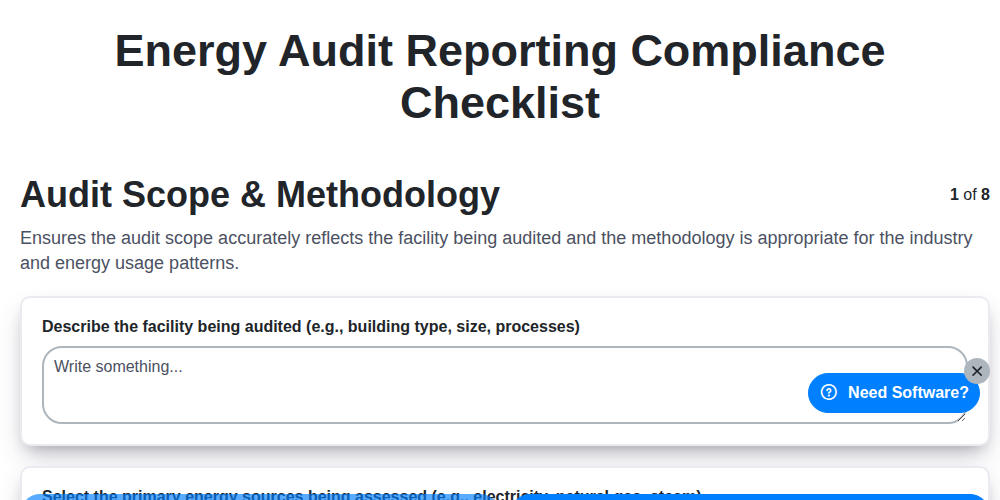
Energy Audit Reporting Compliance: Your Checklist for Success
Need help with
Energy?
Have a question? We're here to help. Please submit your inquiry, and we'll respond promptly.