Navigating Complexity: Your Energy Trading Settlement Compliance Checklist
Published: 12/05/2025 Updated: 07/02/2026
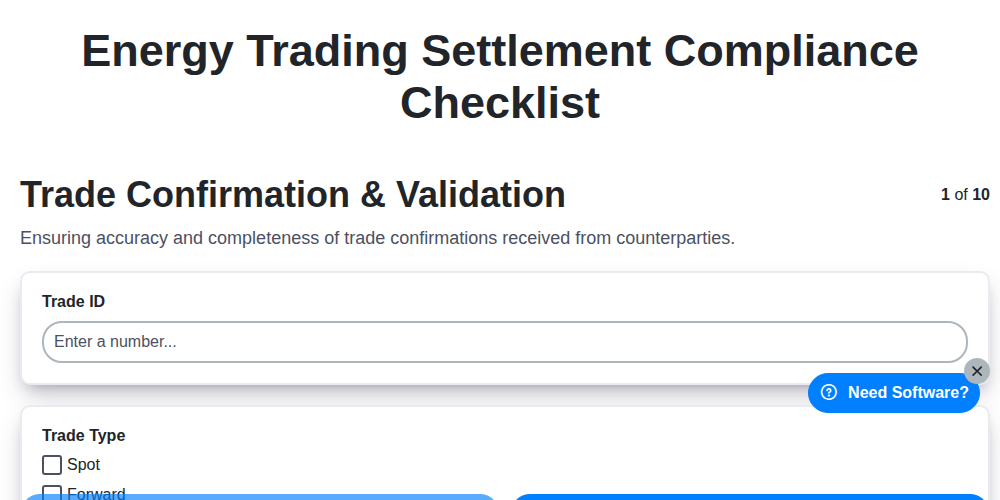
Table of Contents
- Introduction: The Criticality of Energy Trading Settlement Compliance
- 1. Trade Confirmation & Validation: The Foundation of Accuracy
- 2. Delivery/Allocation Instructions: Ensuring Physical Flow Alignment
- 3. Nomination & Scheduling: Coordinating Resources Effectively
- 4. Settlement Instructions & Payment Processing: Timely and Secure Transactions
- 5. Market Data Reconciliation: Verifying Pricing and Quantity Integrity
- 6. Position Reconciliation: Maintaining Accurate Exposure Records
- 7. Regulatory Reporting Compliance: Meeting Statutory Obligations
- 8. Credit Risk Management: Mitigating Financial Exposure
- 9. System Access & Security: Protecting Sensitive Data and Systems
- 10. Documentation & Audit Trail: Establishing Accountability and Traceability
- 11. Common Pitfalls and How to Avoid Them
- 12. Leveraging Technology for Streamlined Compliance
- Conclusion: Proactive Compliance for Sustainable Trading
- Resources & Links
TLDR: Energy trading settlement is a minefield of compliance! This checklist simplifies it, covering everything from trade confirmations to regulatory reporting and system security. Use it to stay organized, avoid costly errors, and ensure you're hitting all the essential compliance marks.
Introduction: The Criticality of Energy Trading Settlement Compliance
Energy trading settlements are the backbone of a functioning energy market. They represent the complex and multifaceted process of ensuring that transactions - from electricity and natural gas to renewables - are accurately recorded, delivered, and financially reconciled. Failure to maintain robust compliance within this process isn't just about avoiding fines; it's about safeguarding market integrity, maintaining participant trust, and ensuring the continuous flow of energy. This isn't a one-size-fits-all endeavor. Regulations vary across jurisdictions and energy commodities, requiring a dynamic and meticulously managed compliance framework. This checklist serves as a vital tool to navigate these complexities, providing a structured approach to ensuring adherence to the ever-evolving landscape of energy trading settlement rules. Ignoring even seemingly minor details can trigger significant financial penalties, legal challenges, and reputational damage, impacting the entire trading ecosystem. Let's delve into the key areas that demand your focused attention.
1. Trade Confirmation & Validation: The Foundation of Accuracy
Accurate trade confirmation and validation are paramount in energy trading settlement. This initial step lays the groundwork for all subsequent processes and directly impacts the integrity of your settlement cycle. Errors at this stage can cascade, leading to costly disputes, regulatory scrutiny, and reputational damage.
Your checklist here should include rigorous checks on every confirmed trade. Don't assume confirmation equals accuracy! Key verification points include:
- Price Verification: Does the agreed-upon price match the initial offer/bid and subsequent negotiations?
- Volume & Quantity Checks: Confirm the traded quantity aligns with agreed volumes and units.
- Delivery Point Accuracy: Verify the agreed delivery location and schedule are correct. A single digit error here can lead to significant logistical issues.
- Counterparty Details: Ensure all counterparty identifiers (legal entity identifiers (LEIs), account numbers, etc.) are accurate and complete.
- Product Specification: Confirm the traded product (e.g., natural gas, electricity, specific grades) matches the intended specification.
- Legal & Contractual Terms: Review key contractual terms reflected in the confirmation - this might involve referencing underlying agreements.
Automated systems can significantly improve efficiency and reduce manual errors in this process. However, always maintain a layer of human oversight, especially for complex transactions or when dealing with less familiar counterparties. Regularly audit your confirmation process to identify potential weaknesses and refine your controls.
2. Delivery/Allocation Instructions: Ensuring Physical Flow Alignment
Accurate and timely delivery/allocation instructions are the bedrock of a smooth energy trading settlement process. These instructions detail where and when the physical energy should be delivered, and miscommunication or errors here can lead to significant financial and operational repercussions - from curtailments and imbalance penalties to strained relationships with counterparties.
This checklist item focuses on validating these instructions at multiple points. Here's what needs to be addressed:
- Instruction Accuracy: Verify the accuracy of delivery quantities, locations, and timings against trade confirmations and nomination schedules. Even slight discrepancies can impact flows.
- Timeliness: Ensure instructions are disseminated to relevant parties (transmission operators, storage facilities, counterparties) within the required timeframes. Late instructions can cause congestion and curtailments.
- Consistency: Cross-check delivery instructions with nomination and scheduling data. Inconsistencies highlight potential errors and require immediate investigation.
- Validation with Counterparties: Confirm receipt and acceptance of delivery instructions from all involved counterparties. This provides an extra layer of assurance and facilitates issue resolution.
- Data Integrity: Maintain a robust data integrity check, including version control and audit trails, to track any changes made to delivery/allocation instructions.
- Automated Validation: Implement automated checks wherever possible to flag anomalies and reduce manual errors. This can involve comparing instructions against pre-defined parameters and real-time system data.
Failing to diligently manage delivery/allocation instructions can result in penalties, system instability, and reputational damage. A comprehensive review and validation process is critical for ensuring physical flow alignment and maintaining a reliable energy trading operation.
3. Nomination & Scheduling: Coordinating Resources Effectively
Nomination and scheduling are critical processes in energy trading settlement, acting as the bridge between agreed-upon trades and the physical movement of energy. This stage involves formally notifying transmission system operators (TSOs) or distribution system operators (DSOs) about the intended movement of energy and securing the necessary grid access. Failure to execute this correctly can lead to curtailments, penalties, and disruptions to the power supply.
Your compliance checklist here needs to encompass more than just submitting nominations. It should include:
- Accurate Data Submission: Ensuring all nomination data - quantity, location, time - is correct and aligns with the trade confirmation and delivery instructions. This requires robust data validation checks.
- Timely Submission: Adhering to all TSO/DSO nomination deadlines. Late submissions often result in rejection or penalties.
- Grid Capacity Awareness: Proactively monitoring grid capacity and planning nominations accordingly. Understanding congestion points and potential constraints is vital.
- Allocation Instructions Alignment: Confirming that nominated volumes are properly allocated and aligned with delivery instructions. Any discrepancies require immediate investigation and correction.
- Contingency Planning: Developing procedures for handling unexpected events, such as outages or changes in demand, that could impact scheduled energy flows.
- Communication Protocols: Establishing clear communication channels with TSOs/DSOs for real-time updates and coordination.
- Record Keeping: Maintaining comprehensive records of all nominations, schedules, and related communications for audit trails and dispute resolution.
Ultimately, effective nomination and scheduling requires constant vigilance and a deep understanding of the grid infrastructure and associated regulations.
4. Settlement Instructions & Payment Processing: Timely and Secure Transactions
Accurate and timely settlement instructions and payment processing are the backbone of reliable energy trading. Errors or delays in this critical area can lead to financial penalties, disputes, and reputational damage. This section of your compliance checklist requires meticulous attention to detail and robust controls.
Here's what you need to ensure:
- Standardized Formats: Utilize standardized settlement instructions formats (e.g., SWIFT, CHAPS) and ensure they are consistently applied across all trades and counterparties.
- Instruction Validation: Implement a rigorous validation process to verify the accuracy of bank account details, amounts, currencies, and settlement dates. Automated checks are highly recommended to minimize human error.
- Matching and Reconciliation: Closely monitor settlement instructions to ensure they accurately reflect confirmed trades. Automated matching and reconciliation processes are essential.
- Payment Processing Controls: Secure payment processing systems and adhere to strict authorization workflows. Implement dual controls for high-value transactions.
- Netting and Payment Optimization: Explore opportunities for netting and payment optimization to reduce transaction costs and streamline operations, always in compliance with applicable regulations.
- Regular Review: Periodically review settlement processes and update procedures to reflect market changes and regulatory updates.
- Contingency Planning: Develop contingency plans for potential settlement failures, including alternative payment methods and escalation procedures.
Ensuring accuracy, security, and timeliness in settlement instructions and payment processing isn't just about compliance; it's about maintaining trust with your counterparties and safeguarding your organization's financial health.
5. Market Data Reconciliation: Verifying Pricing and Quantity Integrity
Market data reconciliation is a critical, yet often overlooked, element of energy trading settlement compliance. It's the process of comparing internal records of market data (prices, volumes, timestamps) with the official sources - typically exchanges, clearinghouses, or independent market operators. Discrepancies, even seemingly minor ones, can indicate errors in trade execution, data feeds, or internal calculations, potentially leading to financial losses and compliance breaches.
Here's why robust market data reconciliation is essential:
- Identifying Errors: Spotting discrepancies early allows for immediate correction of trade data, preventing compounding errors in subsequent settlement processes.
- Regulatory Requirements: Many jurisdictions mandate market data reconciliation as part of energy trading compliance.
- Risk Mitigation: Prevents potential over/under payments, inaccurate P&L reporting, and disputes with counterparties.
- Improved Data Quality: Highlights weaknesses in data feeds and internal systems, driving ongoing improvements.
Your reconciliation process should involve a clear methodology for identifying, investigating, and resolving discrepancies. This includes defining materiality thresholds, documenting reconciliation procedures, and regularly reviewing the effectiveness of your controls. Don't just verify the numbers - understand why they might be different.
6. Position Reconciliation: Maintaining Accurate Exposure Records
Position reconciliation is a critical, often overlooked, pillar of energy trading settlement compliance. It's the process of ensuring that your internal records accurately reflect your trading positions - both at a portfolio and individual trade level - and align with those held by counterparties and clearinghouses. Inaccurate position records can lead to significant financial risk, regulatory scrutiny, and operational inefficiencies.
This isn't simply about matching buy and sell orders. It's a holistic review that considers all factors impacting your exposure, including:
- Underlying Assets: Accurate tracking of volumes, grades, and delivery locations for each traded commodity.
- Contractual Obligations: Accounting for all obligations arising from trading contracts, including physical delivery, financial settlements, and options exercises.
- Market Data Impact: Incorporating adjustments based on market data corrections and price discrepancies.
- Counterparty Alignment: Regularly comparing your position records with those reported by your counterparties to identify and resolve discrepancies.
- Clearinghouse Validation: Ensuring your positions reconcile with those reported to the relevant clearinghouses.
A robust position reconciliation process involves automated matching wherever possible, followed by rigorous manual review and investigation of variances. It requires a clear escalation process for resolving discrepancies and documenting all findings. Failing to adequately reconcile positions can lead to unexpected margin calls, inaccurate financial reporting, and increased regulatory penalties. Ultimately, accurate position records provide a foundation for sound risk management and a transparent, compliant trading operation.
7. Regulatory Reporting Compliance: Meeting Statutory Obligations
Energy trading is a heavily regulated industry, and compliance with regulatory reporting requirements is paramount. Failure to adhere to these obligations can result in significant penalties and reputational damage. This section outlines key areas of focus for ensuring regulatory reporting compliance.
Understanding Applicable Regulations: The first step is a comprehensive understanding of the regulations impacting your operations. These vary significantly based on geographic location and the specific energy commodities traded. Common frameworks include REMIT (EU), FERC regulations (US), and local national regulations. Regularly monitor updates and amendments to these regulations.
Key Reporting Requirements: Common reporting obligations include:
- Transaction Reporting: Detailed reporting of trades to regulators, often requiring specific timestamps, counterparties, and pricing information.
- Market Participant Reporting: Periodic reports detailing your market position, volumes traded, and other relevant data.
- Benchmark Administration Reporting: If you administer a benchmark, stringent reporting requirements apply to ensure transparency and prevent manipulation.
- Emissions Reporting: Accurate tracking and reporting of emissions data, especially crucial in the evolving carbon markets.
Maintaining Accurate Records: Reliable data is the foundation of compliant reporting. Implement robust data governance policies to ensure data accuracy, completeness, and consistency.
Automating Where Possible: Manual reporting is prone to errors and inefficiencies. Leverage technology to automate data collection, validation, and reporting processes.
Staying Informed & Proactive: Regulatory landscapes are constantly evolving. Designate a dedicated compliance team or individual to stay abreast of changes, interpret new requirements, and proactively adjust your procedures. Regularly engage with regulators and industry bodies to seek clarification and ensure best practices are being followed.
8. Credit Risk Management: Mitigating Financial Exposure
Energy trading inherently carries credit risk - the risk that a counterparty will fail to meet their financial obligations. This isn't just a theoretical concern; defaults can lead to significant financial losses and disrupt market stability. A robust credit risk management framework is therefore paramount for any energy trading operation.
Our checklist emphasizes a proactive approach, moving beyond simple credit limits. Here's what we consider:
- Counterparty Due Diligence: Thoroughly assess the financial health and creditworthiness of all counterparties before engaging in transactions. This involves reviewing credit ratings, financial statements, and industry reputation. Regular reassessments are crucial, as financial conditions can change rapidly.
- Credit Limit Setting & Monitoring: Establish clear credit limits for each counterparty, based on their creditworthiness and the nature of the transactions. Continuously monitor exposure against these limits and trigger alerts for breaches. Automated systems for exposure tracking are highly recommended.
- Collateral Management: Implement a robust collateral management process. Secure margin requirements to mitigate potential losses. Regularly review and update margin calls to reflect market volatility and counterparty risk profiles.
- Risk Mitigation Strategies: Explore risk mitigation techniques such as netting agreements, guarantees, and credit derivatives. Understand the terms and conditions of these instruments and their impact on overall risk exposure.
- Stress Testing & Scenario Analysis: Regularly conduct stress tests and scenario analyses to evaluate the potential impact of adverse market events and counterparty defaults. This helps identify vulnerabilities and refine risk management strategies.
- Exposure Reporting & Internal Controls: Establish clear reporting lines for credit exposure and implement strong internal controls to prevent unauthorized transactions and ensure adherence to credit risk policies.
A proactive and comprehensive credit risk management strategy isn't just about avoiding losses; it's about building a sustainable and trustworthy energy trading operation.
9. System Access & Security: Protecting Sensitive Data and Systems
Energy trading settlements involve highly sensitive data - trade details, financial information, and customer data. A robust system access and security framework is therefore paramount. This isn't just about preventing unauthorized access; it's about maintaining the integrity and reliability of the entire settlement process.
Here's what your checklist should include:
- Role-Based Access Control (RBAC): Implement granular access permissions based on employee roles and responsibilities. Limit access to only the data and systems necessary for job function. Avoid blanket 'administrator' privileges.
- Multi-Factor Authentication (MFA): Mandate MFA for all users accessing critical systems. This adds an extra layer of protection beyond just usernames and passwords.
- Regular Password Reviews & Complexity Requirements: Enforce strong password policies and mandate regular changes.
- Vulnerability Scanning & Penetration Testing: Conduct regular scans to identify and address potential security vulnerabilities within your systems. Simulate attacks to test the effectiveness of your defenses.
- Endpoint Security: Protect all devices (laptops, desktops, mobile phones) accessing trading systems with appropriate security software and policies.
- Network Segmentation: Segment your network to isolate critical settlement systems from less secure areas.
- Data Encryption: Encrypt sensitive data both in transit and at rest.
- Access Logging & Monitoring: Maintain detailed logs of all system access and activity, and actively monitor these logs for suspicious behavior.
- Incident Response Plan: Develop and regularly test a plan for responding to security incidents. This should include procedures for containment, eradication, and recovery.
- Vendor Risk Management: If using third-party vendors for system access or data processing, rigorously assess their security practices.
10. Documentation & Audit Trail: Establishing Accountability and Traceability
In the complex world of energy trading settlement, a robust documentation and audit trail isn't just a nice-to-have - it's a critical component of compliance and risk mitigation. Without a clear, accessible record of actions and decisions, you're flying blind.
This section focuses on establishing and maintaining a comprehensive audit trail for every step of the settlement process. This includes:
- Standardized Record Keeping: Implement clear naming conventions, folder structures, and version control for all documentation related to trades, nominations, settlement instructions, and communications.
- Timestamped Actions: Every critical action - trade confirmation, nomination submission, settlement instruction modification - should be timestamped and attributed to a specific user.
- Secure Storage: Documentation must be stored securely, protected from unauthorized access, alteration, or deletion. Cloud-based solutions with robust security features are often a good choice.
- Audit Log Management: Maintain an audit log that records user logins, system changes, and any modifications to data.
- Regular Review and Retention: Establish a schedule for regular reviews of documentation and define retention periods aligned with regulatory requirements and internal policies.
- Exception Handling Documentation: Critically, document all exceptions - errors, overrides, or deviations from standard processes - with clear explanations, approvals, and corrective actions taken.
A strong documentation and audit trail facilitates internal investigations, supports regulatory audits, demonstrates accountability, and provides valuable insights for process improvement. Failing to maintain it effectively can result in penalties, reputational damage, and increased operational risk.
11. Common Pitfalls and How to Avoid Them
Energy trading settlement compliance is riddled with potential pitfalls that can lead to fines, reputational damage, and operational disruptions. Here's a look at some common issues and how to proactively avoid them:
- Delayed or Incomplete Trade Confirmation & Validation: Missing confirmations or discrepancies in validation can cascade into settlement errors. Avoidance: Implement automated confirmation matching processes and rigorous validation checks against original trade terms.
- Nomination & Scheduling Mismatches: Incorrect or late nominations leading to delivery failures and imbalance penalties are frequent. Avoidance: Establish clear communication channels between traders, logistics teams, and scheduling parties. Automated nomination processes linked to trade confirmations minimize human error.
- Settlement Instruction Errors: Incorrect bank details or payment amounts can result in rejected payments and reconciliation issues. Avoidance: Implement dual verification processes for settlement instructions and automate where possible, using secure data feeds.
- Market Data Reconciliation Delays: Late reconciliation of market data creates uncertainty and hinders accurate settlement. Avoidance: Prioritize and automate market data reconciliation, ensuring timely feeds from all sources.
- Insufficient Position Reconciliation: Inaccurate position information can lead to unexpected margin calls and potential breaches of regulatory limits. Avoidance: Regularly reconcile positions using validated market data and trade confirmations.
- Regulatory Reporting Inconsistencies: Failure to accurately and timely report to regulatory bodies can trigger investigations and penalties. Avoidance: Leverage regulatory reporting software and establish a robust review process for submitted data.
- Credit Risk Management Gaps: Inadequate credit risk assessments can expose the business to significant financial losses. Avoidance: Regularly review and update credit limits and implement robust collateral management practices.
- Lack of System Access Control: Unauthorized access to critical systems can compromise data integrity and security. Avoidance: Implement role-based access controls and regularly audit user permissions.
- Poor Documentation & Audit Trail Deficiencies: Insufficient or incomplete documentation hinders auditability and increases the risk of regulatory scrutiny. Avoidance: Enforce strict documentation protocols and ensure all settlement activities are auditable.
- Over-Reliance on Manual Processes: While some manual checks are necessary, excessive reliance on manual processes increases the likelihood of errors. Avoidance: Prioritize automation of repetitive tasks and leverage technology to streamline workflows.
- Lack of Training & Awareness: Insufficient training can lead to unintentional compliance breaches. Avoidance: Provide regular training to all personnel involved in the energy trading settlement process and keep them updated on regulatory changes.
12. Leveraging Technology for Streamlined Compliance
Manual compliance processes in energy trading settlement are ripe for error and inefficiency. Thankfully, technology offers a powerful suite of solutions. Consider implementing automated workflows to handle repetitive tasks like trade confirmation validation, settlement instruction processing, and market data reconciliation. Robotic Process Automation (RPA) can mimic human actions to execute these tasks, freeing up your team for more strategic activities.
Beyond RPA, explore dedicated energy trading settlement platforms that offer integrated compliance features. These platforms often incorporate real-time data feeds, automated alerts for discrepancies, and built-in regulatory reporting tools. Machine learning algorithms can be utilized to identify anomalies and potential compliance risks, allowing for proactive remediation. Cloud-based solutions improve accessibility and scalability, while blockchain technology offers potential for enhanced transparency and security in settlement processes. Investing in technology isn't just about efficiency; it's about building a more robust and resilient compliance framework.
Conclusion: Proactive Compliance for Sustainable Trading
Navigating the complexities of energy trading settlement compliance isn't a one-time task; it's an ongoing commitment. This checklist provides a robust framework, but remember that regulatory landscapes evolve, market practices shift, and internal processes require continuous refinement. By embracing a proactive approach - regularly reviewing and updating your compliance procedures, investing in robust systems, and fostering a culture of awareness amongst your team - you're not just minimizing risk, you're building a foundation for sustainable and reliable energy trading operations. Ignoring any aspect of this checklist, or failing to adapt to change, can lead to significant financial penalties, reputational damage, and operational disruptions. Ultimately, prioritizing compliance isn't just about avoiding trouble; it's about securing the long-term success of your energy trading business.
Resources & Links
- Entegris: Provides materials and solutions for power and energy markets, including those involved in energy trading. Their expertise can be helpful for understanding data integrity and security, crucial for settlement compliance.
- U.S. Energy Information Administration (EIA): Provides comprehensive data, analysis, and forecasts related to energy - vital for understanding market trends and regulatory landscapes impacting settlement.
- International Energy Agency (IEA): Similar to EIA, but with a global perspective. Provides insights into international energy markets and policies, relevant to broader trading compliance.
- ISO New England: Regional Transmission Operators (RTOs) like ISO New England have specific rules and requirements that impact energy trading settlement. Their website provides detailed information on these processes.
- PJM Interconnection: Another major RTO, PJM's website provides rules, market participant information, and settlement procedures relevant to energy traders in the PJM region.
- CAISO (California ISO): The California ISO manages the electric grid for California. Their website provides essential information on market operations, settlement, and compliance.
- North American Electric Reliability Corporation (NERC): NERC develops and enforces reliability standards for the bulk power system. Compliance with these standards is a foundational element of energy trading operations, impacting settlement processes.
- Freddie Mac: While primarily focused on mortgage securities, Freddie Mac's data and reporting standards can provide a useful benchmark for understanding data governance and quality, applicable to settlement data.
- SWAP Information Repository (SIR): While focused on derivatives, the processes and regulatory scrutiny apply broadly to any data-intensive, regulated market, providing parallels for settlement data governance.
- Regulations.gov: The official website for accessing and commenting on proposed and finalized federal regulations in the United States. Crucial for staying abreast of changing compliance requirements.
- Ernst & Young (EY): EY provides consulting and advisory services related to energy trading and risk management, including compliance. Their website offers insights and perspectives on regulatory changes and best practices.
- Deloitte: Similar to EY, Deloitte offers consulting on regulatory compliance and risk management within the energy sector, including settlement related matters.
- PricewaterhouseCoopers (PwC): Another major consulting firm providing energy-specific compliance and risk management solutions.
- IBM: IBM provides technology and solutions for data management, analytics, and security - key elements for streamlined settlement compliance. (Consider mentioning specific IBM solutions relevant to data governance or blockchain, if applicable).
- SAP: SAP offers enterprise resource planning (ERP) software, often used in energy trading, which can help automate and track settlement processes.
- Oracle: Similar to SAP, Oracle provides software solutions for managing data and automating processes within energy trading businesses.
- eFTsure: Provides solutions for energy trade confirmation and settlement, addressing specific compliance challenges in the trading lifecycle. Useful for confirming accuracy.
- Risk Business International (RBI): Specialized consultancy focusing on energy trading and risk management, offering tailored compliance solutions.
Frequently Asked Questions
What is energy trading settlement and why is compliance important?
Energy trading settlement is the process of reconciling and finalizing financial transactions related to energy trades. Compliance ensures adherence to regulatory requirements, prevents penalties, maintains market integrity, and builds trust with counterparties.
Who needs to be concerned with this compliance checklist?
Anyone involved in energy trading, including traders, settlement clerks, brokers, energy suppliers, retailers, and entities operating energy trading platforms. This applies regardless of the size or type of energy traded (electricity, natural gas, etc.).
What are the main areas covered by this compliance checklist?
The checklist covers areas like accurate trade recording, timely data submission, reconciliation processes, validation of metering data, adherence to contract terms, regulatory reporting (e.g., REMIT, EMIR), and robust documentation.
What is REMIT and why is it mentioned in the article?
REMIT (Regulation on Wholesale Energy Market Integrity and Transparency) is an EU regulation aimed at preventing market manipulation and promoting transparency in the European wholesale energy market. Compliance with REMIT is a key requirement for energy traders.
How can I ensure accurate trade recording?
Implement robust trade capture systems, enforce strict data validation checks, use standardized trade reporting formats, and conduct regular audits of trade records. Ensure all relevant details (price, volume, counterparty, timestamps) are captured accurately.
What's the importance of timely data submission in energy trading settlement?
Late submissions can lead to penalties, settlement failures, and reputational damage. The checklist emphasizes adhering to specific deadlines set by relevant clearinghouses and regulatory bodies.
What does 'reconciliation' mean in the context of energy trading settlement?
Reconciliation is the process of comparing trade data between different parties (e.g., trader, broker, clearinghouse) to ensure consistency and identify discrepancies. Regular reconciliation minimizes errors and potential losses.
How does metering data validation fit into the compliance picture?
Metering data is the basis for many settlement calculations. Validation checks ensure the data is accurate, consistent, and compliant with contractual obligations. This involves checking for anomalies, meter tampering, and adherence to measurement protocols.
What documentation is considered essential for demonstrating compliance?
Essential documentation includes trade confirmation records, reconciliation reports, audit trails, data validation reports, training records, and any correspondence related to settlement disputes or regulatory inquiries.
Where can I find more detailed information about specific regulations (e.g., REMIT, EMIR)?
Refer to the official websites of regulatory bodies like the European Commission, national energy regulators (e.g., Ofgem in the UK), and clearinghouses. Legal counsel specializing in energy markets can also provide expert guidance.
Comments
There are no comments yet. Be the first to add one!
Energy Management Solution Demo
Managing operations, safety, and compliance in the energy sector is critical. ChecklistGuro's Work OS platform streamlines your workflow from exploration and production to distribution and maintenance. Enhance safety, improve efficiency, and ensure regulatory adherence. Discover how ChecklistGuro can transform your energy business!
Related Articles
Stay Compliant: Your Energy Metering Compliance Checklist Template
Unlock Savings: Your Complete Energy Efficiency Audit Checklist
Your Ultimate Energy Efficiency Audit Checklist Template
Power Through: Your Essential Energy Grid Outage Support Checklist
Oil & Gas Well Safety Inspection Checklist: Ensuring a Secure Operation
HVAC System Maintenance Checklist: Building Climate Control & Energy Savings
Renewable Energy Project Checklist Template
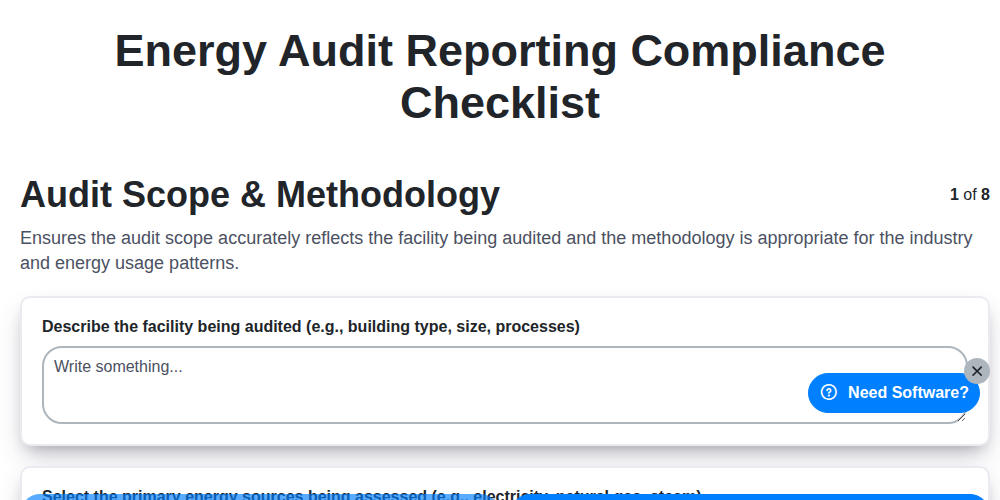
Energy Audit Reporting Compliance: Your Checklist for Success
Need help with
Energy?
Have a question? We're here to help. Please submit your inquiry, and we'll respond promptly.