The Ultimate ERP Vendor Management Checklist: A Step-by-Step Guide
Published: 12/20/2025 Updated: 12/21/2025
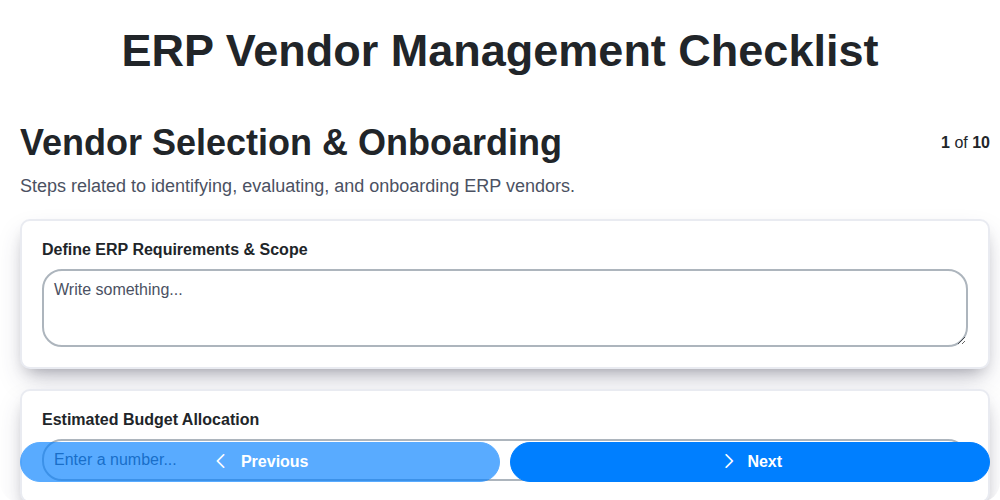
Table of Contents
- Introduction: Why ERP Vendor Management Matters
- 1. Vendor Selection & Onboarding: Finding the Right Partner
- 2. Contract Review & Negotiation: Securing the Best Terms
- 3. Defining Success: Service Level Agreement (SLA) Monitoring
- 4. Measuring Performance: Performance Reporting & Reviews
- 5. Building Bridges: Relationship Management & Communication
- 6. Protecting Your Data: Security & Compliance Alignment
- 7. Assessing Financial Risk: A Critical Evaluation
- 8. Planning for the Inevitable: Exit Strategy & Transition Planning
- 9. Ensuring Accountability: Audit & Compliance Verification
- 10. Staying Ahead of the Curve: Innovation & Future Readiness
- 11. Continuous Improvement: Regular Vendor Management Reviews
- 12. Documentation: The Cornerstone of Effective Vendor Management
- Conclusion: Mastering ERP Vendor Management for Long-Term Success
- Resources & Links
TLDR: Managing your ERP vendor is crucial for success! This checklist breaks down the entire process - from choosing the right vendor and negotiating contracts to ongoing performance monitoring, security, and even planning for the future. Use it to ensure you're maximizing value, minimizing risk, and building a strong, long-term partnership.
Introduction: Why ERP Vendor Management Matters
In today's complex business landscape, your Enterprise Resource Planning (ERP) system isn't just software; it's a cornerstone of your operations. And the vendor providing that ERP? They're a crucial partner. Effective ERP vendor management isn't just about ensuring the system works; it's about maximizing its value, mitigating risks, and future-proofing your business. A poorly managed ERP vendor relationship can lead to costly overruns, unmet expectations, security vulnerabilities, and ultimately, hindered growth. This checklist outlines the essential steps to cultivate a successful and sustainable partnership with your ERP vendor, ensuring your investment delivers long-term benefits and aligns with your evolving business needs. Ignoring these areas can open the door to significant problems; proactively managing your ERP vendor is an investment in your company's stability and success.
1. Vendor Selection & Onboarding: Finding the Right Partner
Choosing the right ERP vendor is a pivotal decision that significantly impacts your organization's efficiency, growth, and future success. This initial phase isn't just about finding software; it's about building a partnership. Here's a breakdown of the key steps:
- Define Your Needs: Before even looking at vendors, deeply analyze your current processes, pain points, and future goals. What functionalities are essential? What integrations are required? Document this comprehensively.
- Research & Shortlist: Utilize industry reports, peer recommendations, online reviews (Gartner, Forrester, Capterra), and your own research to create a list of potential vendors. Don't just focus on size; consider specialized vendors who may be a better fit for your niche.
- Request for Information (RFI) & Request for Proposal (RFP): Formalize your inquiry. An RFI gathers general information, while an RFP details your specific requirements and seeks proposals. Ensure the RFP is clear, concise, and includes detailed evaluation criteria.
- Demo & Proof of Concept (POC): Don't just watch a demo; participate in it. Request a POC using your actual data and workflows to truly assess the software's capabilities and user-friendliness.
- Reference Checks: Contact existing clients of the shortlisted vendors to gain firsthand insights into their experiences-both positive and negative.
- Team Involvement: Include stakeholders from various departments (finance, IT, operations) in the selection process to ensure buy-in and address diverse needs.
- Onboarding Plan: Once selected, develop a detailed onboarding plan that outlines responsibilities, timelines, and training requirements. A smooth onboarding process minimizes disruption and maximizes the value of your new ERP system.
2. Contract Review & Negotiation: Securing the Best Terms
The ERP vendor contract is the foundational document governing your relationship. Don't rush this stage - a poorly negotiated contract can lead to hidden costs, limitations on functionality, and disputes down the line. This goes far beyond just pricing.
Key Areas to Scrutinize:
- Scope of Services: Clearly define what's included - implementation, training, ongoing support, upgrades, customizations. Ambiguity here is a breeding ground for disagreements.
- Pricing & Payment Terms: Go beyond the initial quoted price. Understand licensing models, ongoing maintenance fees, potential overage charges, and payment schedules. Look for flexibility and potential discounts.
- Intellectual Property Rights: Who owns the customizations you make? Ensure you retain sufficient rights and control.
- Liability & Indemnification: Carefully review clauses related to liability for data breaches, system failures, or other issues. Understand the vendor's responsibility and your own.
- Termination Clauses: What happens if you want to end the contract? What are the penalties, and what's the process for data retrieval?
- Escalation Procedures: Define a clear escalation path for resolving disputes.
- Change Management: How will changes to the ERP system be managed, and who bears the cost?
Negotiation Strategies:
- Don't Accept the First Offer: Everything is negotiable.
- Benchmark: Research industry standards and other vendor contracts.
- Involve Legal Counsel: A legal expert specializing in IT contracts is invaluable.
- Consider Future Needs: Factor in potential growth and evolving requirements.
- Document Everything: Keep a detailed record of all discussions and agreements.
3. Defining Success: Service Level Agreement (SLA) Monitoring
An ERP vendor relationship isn't just about getting the software implemented; it's about ongoing performance and value delivery. This is where robust SLA monitoring becomes absolutely critical. Simply having an SLA isn't enough - you need a system to actively track, measure, and report on its adherence.
Beyond the Basics: What to Monitor
While the SLA itself dictates the core metrics (uptime, response times, resolution times, etc.), successful monitoring goes deeper. Consider these aspects:
- Granularity: Break down high-level SLAs into more granular metrics. For example, response time can be further segmented by issue complexity or user type.
- Real-Time vs. Periodic: Implement both real-time dashboards for immediate visibility and scheduled reports for trend analysis.
- Automated Tools: Leverage monitoring tools that automatically collect data, alert you to breaches, and generate reports. Manual tracking is prone to errors and is simply unsustainable.
- User Impact: Connect SLA performance to its impact on your business. A 99.9% uptime is meaningless if critical functions are still slow or unavailable during that time. Gather user feedback and incorporate it into your assessment.
- Escalation Procedures: Clearly define escalation paths and timelines for SLA breaches. Who needs to be notified, and what actions are required?
Proactive vs. Reactive Monitoring: A proactive approach involves regularly reviewing SLA performance, even when things seem to be going well. This allows you to identify potential issues before they escalate and allows for continuous improvement discussions with your vendor.
Document, Document, Document: Maintain a detailed log of SLA performance, including any breaches, corrective actions, and related communication. This creates a valuable audit trail and strengthens your position in future negotiations.
4. Measuring Performance: Performance Reporting & Reviews
Vendor management isn't a set it and forget it endeavor. Consistent performance monitoring and regular reviews are vital to ensuring your ERP vendor continues to deliver value and aligns with your evolving business needs. This involves more than just checking if tasks are completed; it's about understanding how they're completed and the impact on your overall operations.
What to Track:
- Key Performance Indicators (KPIs): Define clear, measurable KPIs upfront in your contract. These might include system uptime, response times, resolution times for issues, data accuracy, and user satisfaction.
- Service Delivery Metrics: Beyond general KPIs, track specific metrics tied to services provided. For example, if the vendor manages data migrations, track migration speed and error rates.
- Cost-Effectiveness: Regularly evaluate if the vendor's services are delivering the expected ROI. Compare actual costs against budgeted amounts and identify opportunities for optimization.
- User Feedback: Gather regular feedback from internal users who interact with the ERP system and the vendor's support teams. This provides valuable insights into usability, effectiveness, and overall satisfaction.
- Project Milestones: If the vendor is involved in ongoing projects, rigorously track progress against agreed-upon milestones and timelines.
Review Process:
- Regular Reporting: Establish a schedule for performance reports - monthly, quarterly, or annually, depending on the contract and complexity.
- Review Meetings: Conduct formal review meetings with the vendor to discuss performance data, identify areas for improvement, and address any concerns. Document these meetings and agreed-upon action items.
- Escalation Procedures: Clearly define escalation procedures for addressing performance issues that don't meet agreed-upon standards.
- Continuous Improvement: Use review findings to collaborate with the vendor and implement changes that enhance performance and efficiency.
5. Building Bridges: Relationship Management & Communication
Vendor management isn't just about ticking boxes and fulfilling requirements; it's about building a strong, collaborative relationship. An ERP vendor is a significant investment, and its success is intrinsically linked to your own. Failing to prioritize relationship management and communication can lead to misunderstandings, unmet expectations, and ultimately, a less effective ERP system.
Here's how to foster a productive partnership:
- Regular Check-ins: Schedule consistent meetings - not just when there's a problem! These can be brief (15-30 minutes) and focus on progress, potential roadblocks, and overall satisfaction.
- Designated Points of Contact: Establish clear lines of communication with specific individuals on both sides. Avoid circulating emails or constantly reaching out to multiple contacts.
- Proactive Feedback: Don't wait for formal reviews to voice concerns or offer suggestions. Provide timely feedback, both positive and constructive.
- Transparency is Key: Be open and honest about your needs, challenges, and expectations. Encourage the vendor to do the same.
- Understand Their Business: Take the time to learn about the vendor's organization, their team, and their priorities. This fosters mutual respect and understanding.
- Celebrate Successes: Acknowledge and appreciate the vendor's contributions. Recognizing their efforts builds goodwill and reinforces a positive working relationship.
A healthy vendor relationship, built on trust and open communication, is a cornerstone of a successful ERP implementation and ongoing operation.
6. Protecting Your Data: Security & Compliance Alignment
In today's landscape, data is a critical asset, and entrusting it to an ERP vendor requires meticulous attention to security and compliance. This isn't just a nice-to-have; it's a business imperative. Failing to adequately assess and align with your vendor's security posture can expose your organization to significant legal, financial, and reputational risks.
Here's what you need to consider:
- Due Diligence is Key: Don't just take your vendor's word for it. Request and thoroughly review their security certifications (e.g., SOC 2, ISO 27001). Understand their security policies, procedures, and controls.
- Data Location & Residency: Know where your data will be stored and processed. Ensure it aligns with relevant data residency requirements (e.g., GDPR, CCPA).
- Access Controls & Encryption: Verify strict access controls are in place and data is encrypted both in transit and at rest. Understand their identity and access management (IAM) practices.
- Incident Response Plan: Ensure the vendor has a robust incident response plan and that you're included in the communication protocols in case of a breach.
- Subcontractor Management: Many ERP vendors utilize subcontractors. Ensure their security practices are also assessed and aligned.
- Regular Audits: Integrate security and compliance assessments into your ongoing vendor management process. Don't just conduct them during onboarding.
- Legal Review: Have your legal team review the vendor's security and privacy terms within the contract to ensure they are legally sound and adequately protect your interests.
By prioritizing security and compliance alignment, you're not just mitigating risk; you're fostering a trusted partnership with your ERP vendor and safeguarding your valuable data.
7. Assessing Financial Risk: A Critical Evaluation
Vendor management isn't just about ensuring ERP functionality; it's a vital component of your organization's overall financial health. Overlooking financial risk associated with your ERP vendor can expose you to significant liabilities and disruptions. This section digs into the crucial steps for a thorough assessment.
Beyond the Balance Sheet: Don't just review the vendor's publicly available financial statements (though that's a necessary starting point!). Delve deeper. Consider:
- Vendor Viability: Is the vendor stable and likely to remain so? Look at their revenue trends, profitability margins, and debt levels. A sudden downturn could impact their ability to support your ERP system.
- Business Continuity Planning: Does the vendor have robust disaster recovery and business continuity plans? What's their backup strategy, and how quickly can they recover in case of an outage? A disruption to their operations directly impacts yours.
- Dependency Risks: How reliant is the vendor on a few key clients or technologies? A loss of a major client, or a reliance on outdated infrastructure, poses a risk.
- Insurance & Liability: Ensure the vendor carries adequate insurance coverage to protect against potential liabilities related to data breaches, service disruptions, or other incidents. Review their policy details and coverage limits.
- Subcontractor Risk: Many ERP vendors rely on subcontractors. Understand who these subcontractors are, their financial health, and the level of vendor oversight they receive.
- Pricing Transparency & Escalation Clauses: Are pricing models clearly defined? Are there escalation clauses in place that protect you from unexpected cost increases?
Due Diligence is Key: Financial risk assessment shouldn't be a one-time event. Regularly revisit these factors and update your evaluation as circumstances change. A proactive and vigilant approach is the best defense against financial instability impacting your ERP environment.
8. Planning for the Inevitable: Exit Strategy & Transition Planning
Even the strongest vendor relationships can evolve or reach a natural endpoint. Ignoring the potential need to transition away from your ERP vendor is a significant risk. A proactive exit strategy isn't about anticipating failure; it's about maintaining control, minimizing disruption, and safeguarding your business data and operations.
Here's why a well-defined exit strategy is crucial:
- Data Ownership & Portability: Clearly outline data ownership and ensure you have a plan for data extraction, migration, and storage before an exit becomes necessary. This includes all historical data, configurations, and customizations.
- Minimizing Disruption: A phased transition plan, with defined timelines and responsibilities, can minimize operational downtime. Consider parallel running (operating both systems simultaneously for a period) to ensure a smooth handover.
- Knowledge Transfer: Capture critical vendor-specific knowledge - integrations, custom code, unique configurations - and document it internally. This reduces reliance on the vendor.
- Contractual Considerations: Understand your contractual obligations regarding termination, penalties, and data return. Review these carefully when the relationship begins, not just when leaving.
- Contingency Planning: Have a backup plan in case the exit process encounters unexpected challenges. This might involve temporary support, accelerated data migration, or alternative solutions.
Don't leave your ERP vendor relationship to chance. Incorporate exit strategy and transition planning from the outset, and periodically review and update it to reflect changing business needs and vendor performance. It's an investment that provides peace of mind and protects your business in the long run.
9. Ensuring Accountability: Audit & Compliance Verification
Vendor management isn't just about selecting the right ERP vendor; it's about maintaining ongoing accountability and ensuring they adhere to both your internal policies and external regulations. Regular audit and compliance verification is a crucial, often overlooked, element of a robust ERP vendor management program.
This involves more than just occasional reviews. It's a proactive process that should be baked into your relationship from the outset. Consider these key steps:
- Define Audit Scope & Frequency: Establish clear parameters for audits. What systems and processes will be reviewed? How often will these audits occur (annually, semi-annually, or based on risk assessment)?
- Documentation is Key: Ensure the vendor maintains thorough documentation of their security controls, data handling practices, and compliance certifications. This documentation should be readily available for review.
- Independent Verification: Engage independent auditors (either internal or external) to assess the vendor's compliance. This objective perspective helps identify potential weaknesses and areas for improvement.
- Compliance Certifications: Verify the vendor's adherence to relevant industry certifications (e.g., SOC 2, ISO 27001, HIPAA, GDPR). Request and review their certifications and reports.
- Remediation Plans: If audit findings reveal non-compliance, work collaboratively with the vendor to develop and implement remediation plans with clear timelines and responsible parties. Track progress diligently.
- Continuous Monitoring: Implement ongoing monitoring tools and processes to detect anomalies and potential compliance breaches in real-time, rather than relying solely on periodic audits.
By prioritizing audit and compliance verification, you're not just fulfilling legal requirements; you're building trust, mitigating risk, and solidifying a truly valuable partnership with your ERP vendor.
10. Staying Ahead of the Curve: Innovation & Future Readiness
ERP vendor relationships aren't static; technology evolves, and so should your partnership. Simply maintaining existing functionality isn't enough to keep your business competitive. This section focuses on ensuring your ERP vendor isn't just meeting current needs, but actively contributing to your future success.
Proactive Engagement is Key: Don't wait for problems to surface. Regularly schedule discussions with your vendor about upcoming technology releases, emerging industry trends, and potential areas for process improvement. Ask about their roadmap and how it aligns with your long-term strategic goals.
Explore Emerging Technologies: Encourage your vendor to demonstrate new features and functionalities. Consider pilot programs for emerging technologies like AI, machine learning, blockchain, or IoT integrations that could optimize your operations. Even if not immediately applicable, understanding these possibilities allows for proactive planning.
Joint Innovation Workshops: Collaborate with your vendor to host workshops focused on identifying opportunities for innovation. These sessions should involve key stakeholders from both organizations to foster a shared vision and drive creative solutions.
Assess Vendor's Investment in R&D: A commitment to research and development demonstrates a vendor's dedication to staying ahead. Inquire about their R&D budget, focus areas, and how they translate innovations into tangible benefits for their clients.
Future-Proofing Your Agreement: Review your contract periodically to ensure it includes clauses that allow for the integration of new technologies and supports future scalability. Consider including provisions for regular assessments of the vendor's ability to adapt to evolving business needs.
By prioritizing innovation and future readiness, you can transform your ERP vendor relationship from a mere service provider into a strategic partner driving growth and competitive advantage.
11. Continuous Improvement: Regular Vendor Management Reviews
Vendor management isn't a set it and forget it exercise. The business landscape, your needs, and your vendor's capabilities are constantly evolving. To ensure your ERP vendor relationship continues to deliver maximum value, implement regular, structured reviews.
These reviews shouldn't just be about addressing immediate problems; they should be forward-looking, focused on identifying opportunities for improvement and proactively adapting to change. Here's what a robust review process should include:
- Frequency: Establish a cadence - quarterly, semi-annually, or annually - depending on the vendor's criticality and contract terms. Critical vendors warrant more frequent reviews.
- Participants: Include stakeholders from IT, finance, operations, and the business units directly impacted by the ERP system.
- Agenda: Develop a consistent agenda covering key performance indicators (KPIs), emerging business requirements, potential areas for optimization, and any concerns raised by stakeholders.
- Documentation: Meticulously document review findings, action items, and assigned responsibilities. Track progress on these action items until completion.
- Feedback Loop: Create a clear mechanism for stakeholders to provide ongoing feedback and suggestions outside of formal review periods.
- Contract Alignment: Ensure reviews are aligned with contractual obligations and opportunities for renegotiation. Have a discussion of emerging features and pricing changes.
By making regular vendor management reviews a priority, you proactively mitigate risks, optimize performance, and build a stronger, more collaborative partnership that drives long-term success.
12. Documentation: The Cornerstone of Effective Vendor Management
Consistent, thorough documentation isn't just a nice-to-have in ERP vendor management; it's the bedrock upon which a successful partnership is built. Think of it as your memory - a reliable record of decisions, agreements, and ongoing performance. Without it, you're navigating a complex relationship with guesswork and potentially, significant risk.
What should you document? It's more than just the initial contract. We're talking about:
- Selection Rationale: Why this vendor? Document the evaluation criteria, scoring, and reasons for choosing them over alternatives.
- Onboarding Records: Track progress, training, and acceptance testing.
- Contract Details: Store the executed contract, amendments, and any related correspondence.
- SLA Performance Logs: Evidence of adherence (or lack thereof) to agreed-upon service levels.
- Review Meeting Minutes: Summarize discussions, action items, and decisions made during performance reviews.
- Communication Records: Key emails, letters, and meeting notes demonstrating ongoing dialogue.
- Security and Compliance Records: Proof of vendor adherence to your organization's security and compliance policies.
- Risk Assessment Reports: Documented findings and mitigation strategies related to financial and operational risks.
- Exit Planning Documents: All details pertaining to transition planning, data retrieval, and vendor termination procedures.
Centralize this documentation, making it readily accessible to authorized personnel. A dedicated vendor management system, shared drive, or even well-organized digital folders are all viable options. Regularly review and update documentation to reflect changes in the vendor relationship and ensure its continued accuracy and relevance. Neglecting documentation leaves you vulnerable - embrace it as a proactive measure for long-term success.
Conclusion: Mastering ERP Vendor Management for Long-Term Success
Navigating the world of ERP vendor management can feel overwhelming, but as we've explored, it doesn't have to be. Implementing a structured, proactive approach-following a comprehensive checklist encompassing vendor selection, contract scrutiny, ongoing performance monitoring, and even exit strategies-is the key to unlocking the full potential of your ERP system.
Think of vendor management not as a one-time project, but as an ongoing partnership. A thriving relationship built on clear communication, mutual accountability, and a shared commitment to innovation will yield far greater returns than simply implementing a system. By consistently evaluating your vendor's performance, staying ahead of compliance requirements, and planning for the future, you're not just managing a vendor; you're investing in the long-term success of your business. Don't let reactive firefighting become the norm. Embrace a proactive vendor management strategy and secure a robust and adaptable ERP foundation for years to come.
Resources & Links
- Gartner: A leading research and advisory company providing insights and analysis on IT vendors and ERP systems, useful for vendor selection and evaluation.
- Forbes: Offers business news and insights, including articles on vendor management best practices and risk assessment strategies applicable to ERP implementations.
- CIO: Provides IT leadership and management information, offering guidance on vendor selection, contract negotiation, and risk mitigation related to ERP systems.
- ISC²: A non-profit membership association that helps IT professionals, including those involved in vendor management and compliance, advance their expertise. Relevant for Security & Compliance Alignment.
- SHRM (Society for Human Resource Management): Provides resources related to contract management and legal considerations, helpful for Contract Review & Negotiation, especially concerning legal and HR aspects.
- UK National Audit Office: While UK-focused, the NAO provides excellent public sector audit resources, which offer valuable frameworks for Audit & Compliance Verification, adaptable to any organization.
- Protiviti: A consulting firm specializing in risk management, internal audit, and compliance, providing insights relevant to Financial Risk Assessment and overall vendor management practices.
- The Corporate Counsel Association: Offers resources and best practices for legal professionals involved in contract negotiation and vendor management, covering areas like SLA development and enforcement.
- APQC (American Productivity & Quality Center): Provides benchmarking data and research on various business processes, including vendor management, helping organizations assess performance and identify areas for improvement - relevant to Performance Reporting & Reviews and Innovation & Future Readiness.
- ISO (International Organization for Standardization): Provides standards related to quality management, security, and risk management, which can provide a framework for Security & Compliance Alignment and Audit & Compliance Verification.
- Project Management Institute (PMI): Provides methodologies and best practices for project management, including transitioning ERP systems and planning for exit strategies. Relevant for Exit Strategy & Transition Planning.
Frequently Asked Questions
What is ERP vendor management and why is it important?
ERP vendor management is the process of overseeing and managing your relationships with the vendors who provide software, services, and support for your ERP system. It's important for ensuring you get the value you expect, minimizing risks, and maintaining a stable and efficient ERP environment. It goes beyond just initial selection and includes ongoing performance reviews, contract negotiations, and ensuring compliance.
Who should be involved in ERP vendor management?
A cross-functional team is ideal. This should include representatives from IT, procurement, finance, and the business units that rely on the ERP system. The team leader is often an ERP project manager or IT leader with a good understanding of both the ERP system and vendor management best practices.
What are the key stages of the ERP vendor management process outlined in the checklist?
The checklist covers several key stages: Planning & Assessment, Vendor Selection & Onboarding, Ongoing Performance Management, Contract Management, and Exit Strategy. Each stage has specific steps and considerations to ensure a comprehensive approach.
What types of vendors fall under ERP vendor management?
It includes a wide range, such as the primary ERP software vendor, implementation partners, support providers, cloud hosting providers, and any third-party integrations or add-ons used with your ERP system.
What is a 'Service Level Agreement' (SLA) and why is it important in ERP vendor management?
An SLA is a documented agreement outlining the level of service a vendor promises to provide. It defines metrics, responsibilities, and consequences for non-performance. It's critical for ensuring accountability and receiving the expected level of support and performance from your vendors.
How does the checklist help with risk management related to ERP vendors?
The checklist includes steps to identify and mitigate various risks, such as vendor financial stability, security vulnerabilities, dependency risks, and compliance issues. It helps ensure business continuity and data protection.
What is 'vendor rationalization' and is it mentioned in the checklist?
Vendor rationalization is the process of consolidating your vendor base to reduce complexity, leverage economies of scale, and improve overall vendor management efficiency. The checklist touches upon this as a potential outcome of the assessment and optimization phases.
Can this checklist be used for both initial ERP vendor selection and ongoing management?
Yes! The checklist is designed to be adaptable. While some sections are more relevant for initial selection, most steps can be applied to ongoing vendor performance reviews and contract negotiations.
What should I do if a vendor isn't meeting the terms outlined in their SLA?
The checklist outlines steps for performance improvement plans, escalation procedures, and ultimately, exploring alternative vendor options if the situation isn't resolved.
Comments
There are no comments yet. Be the first to add one!
ERP - Enterprise Resource Planning Solution Demo
Overwhelmed by disconnected systems? ChecklistGuro provides a centralized ERP solution, connecting your business processes - finance, operations, & more - for improved visibility and control. Simplify operations & boost efficiency.
Related Articles
MRP System Go-Live Checklist: Your Path to a Successful Implementation
Top 10 CMiC Alternatives for 2025
The Ultimate Foundation Waterproofing Installation Checklist Template
Top 10 Odoo Alternatives for 2025
How to Save Money on Bill of Materials (BOM) Management Software
The Ultimate Waterproofing Checklist: Ensuring a Leak-Proof Installation
The 10 Best Manufacturing Management Software of 2025
MRP Vendor Master Data Checklist: Ensuring Accuracy and Efficiency
We can do it Together
Need help with
Enterprise Resource Planning (ERP)?
Have a question? We're here to help. Please submit your inquiry, and we'll respond promptly.