Facility Inspection Workflow: Digital Management for Built Environment Compliance
Published: 06/18/2026 9:00 PM Updated: 06/19/2026 12:29 PM
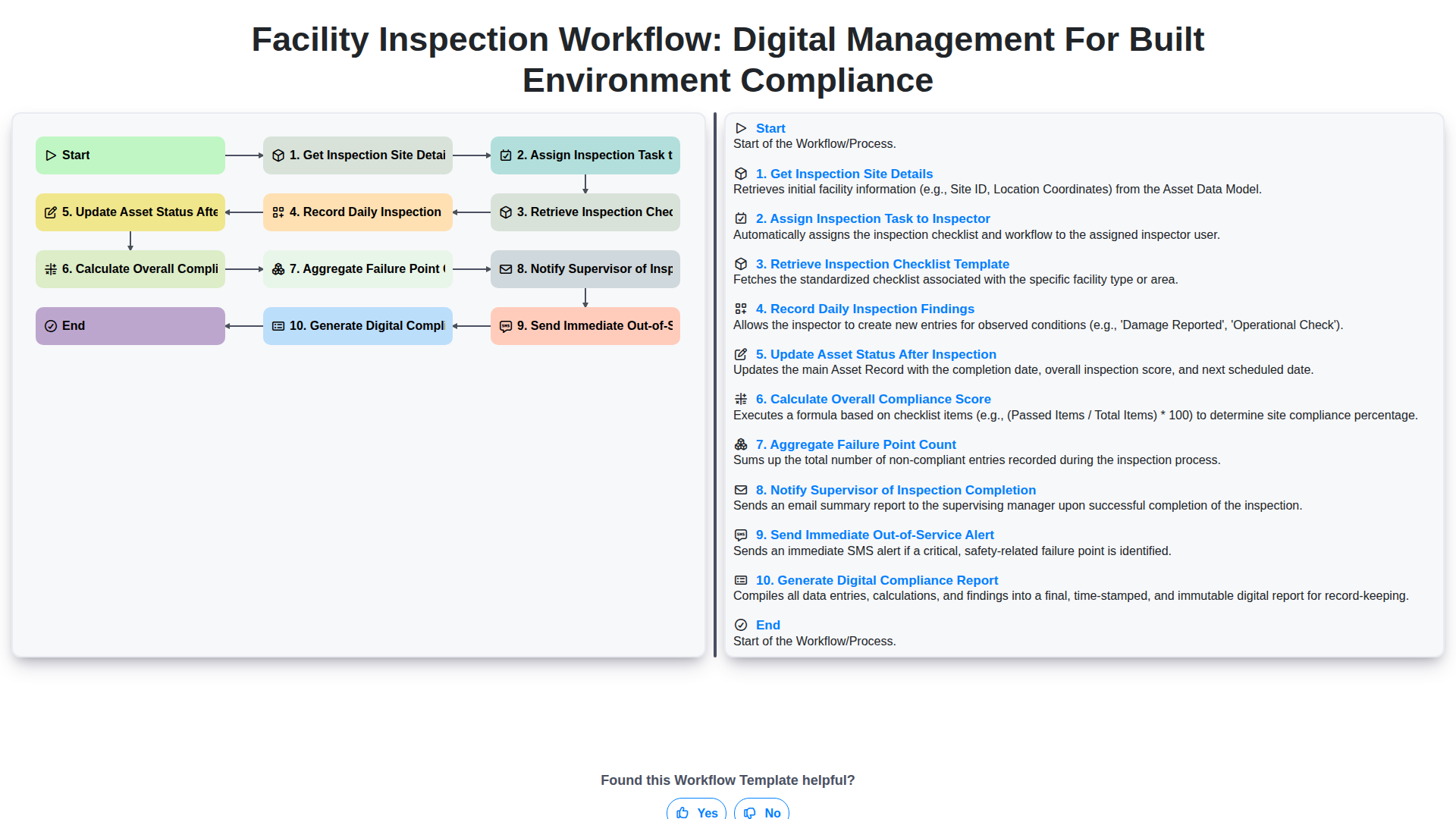
Table of Contents
- Introduction: The Evolution of Facility Inspection
- Streamlining Operations: The Importance of a Digital Workflow
- Step 1: Centralizing Data with Site Detail Acquisition
- Step 2: Optimizing Resource Allocation through Task Assignment
- Step 3: Standardizing Inspections with Digital Checklist Templates
- Step 4: Real-Time Data Capture and Field Findings
- Step 5: Dynamic Asset Management and Status Updates
- Step 6: Quantitative Analysis: Calculating Compliance Scores
- Step 7: Identifying Critical Risks through Failure Point Aggregation
- Step 8: Closing the Loop: Automated Supervisor Notifications
- Step 9: Immediate Mitigation: The Out-of-Service Alert System
- Step 10: Automated Reporting for Audit-Ready Compliance
- Conclusion: Driving Excellence in the Built Environment
- Resources & Links
TLDR: Learn how to streamline facility management and ensure regulatory compliance using a digital inspection workflow. This guide explains how to automate everything from task assignment and real-time data collection to automated failure alerts and digital report generation, eliminating manual errors and ensuring your built environment stays safe and compliant.
Introduction: The Evolution of Facility Inspection
For decades, facility inspections were defined by clipboards, heavy binders, and the inevitable paper trail that led to fragmented data and delayed decision-making. In the traditional model, inspectors manually recorded observations on paper, only for that information to be transcribed into spreadsheets days or even weeks later. This latency created a dangerous gap in the built environment-a period where critical structural or mechanical failures remained undocumented and unaddressed, leaving facility managers in a reactive, rather than proactive, position.
Today, the industry is undergoing a fundamental digital transformation. The shift from manual oversight to digital management is more than just a matter of convenience; it is a necessity for modern compliance. As regulatory requirements become more stringent and assets grow in complexity, the ability to capture, process, and act upon inspection data in real-time has become the new standard. We are moving away from a world of retroactive error-finding and toward a future of continuous, automated, and actionable intelligence.
Streamlining Operations: The Importance of a Digital Workflow
In the complex landscape of the built environment, manual, paper-based inspection processes are no longer just inefficient-they are a significant liability. Relying on clipboard-and-paper methods creates fragmented data silos, increases the risk of human error, and leaves supervisors reacting to critical failures long after they have occurred. When inspection data is trapped in physical folders, the visibility gap between an incident on-site and a management decision can lead to costly non-compliance penalties and safety hazards.
Transitioning to a digital workflow transforms inspection from a reactive chore into a proactive strategic asset. By digitizing the lifecycle of an inspection, organizations can achieve real-time data synchronization, ensuring that every stakeholder-from field inspectors to facility managers-is working from a single source of truth. A digital approach eliminates the administrative burden of manual data entry, mitigates the risk of lost documentation, and provides the high-fidelity data necessary for predictive maintenance. Ultimately, streamlining these operations through automation doesn't just save time; it builds a foundation of institutional accountability and operational excellence.
Step 1: Centralizing Data with Site Detail Acquisition
The foundation of any effective compliance strategy lies in the accuracy of the initial data collection. The workflow begins with the Get Inspection Site Details phase, where the digital system pulls comprehensive information regarding the specific location, structural parameters, and regulatory requirements of the asset in question.
By centralizing site details-such as GPS coordinates, building dimensions, and historical maintenance records-into a single digital repository, organizations eliminate the fragmented communication common in paper-based systems. This stage ensures that every inspector starts with a unified source of truth, reducing the risk of errors caused by outdated blueprints or incorrect site specifications. When site data is digitized and centralized, it creates a seamless transition to the next stage: the precise assignment of tasks.
Step 2: Optimizing Resource Allocation through Task Assignment
Once the inspection site details are gathered, the next critical phase is Assigning the Inspection Task to the Inspector. In a traditional, paper-based system, this stage is often plagued by communication delays, manual scheduling errors, and a lack of visibility into technician availability. Transitioning to a digital workflow transforms this from a logistical headache into a strategic advantage.
With digital management, the assignment process becomes automated and intelligent. Instead of relying on phone calls or manual spreadsheets, managers can instantly distribute tasks based on real-time data, such as the inspector's current location, specialized skill sets, and existing workload. This ensures that the right expert is dispatched to the right site at the right time, minimizing travel downtime and preventing burnout.
By digitizing the assignment stage, organizations gain a centralized control tower view of their entire workforce. This level of oversight allows for dynamic rescheduling if an urgent priority arises and provides a digital audit trail that tracks exactly when a task was assigned and when it was acknowledged. Ultimately, optimizing resource allocation through smart task assignment doesn't just save time-it ensures that compliance standards are met with maximum efficiency and minimal operational friction.
Step 3: Standardizing Inspections with Digital Checklist Templates
Once an inspector is assigned to a task, the true power of a digital workflow becomes apparent through the Retrieval of Inspection Checklist Templates. In a traditional paper-based system, inspectors often rely on memory or outdated printed forms, leading to inconsistent data and missed critical details.
By digitizing this step, the system automatically pulls the specific, pre-configured checklist required for the particular asset or site being inspected. These templates act as a standardized blueprint, ensuring that every inspector-regardless of their experience level-evaluates the facility against the exact same regulatory standards and safety protocols. This eliminates subjectivity and ensures that compliance is measured by a uniform set of criteria every single time, creating a reliable foundation for the data that follows.
Step 4: Real-Time Data Capture and Field Findings
Once the inspector arrives on-site, the workflow shifts from administrative preparation to active fieldwork. This stage, Recording Daily Inspection Findings, is the most critical component of the digital workflow, as it represents the direct interface between the physical asset and your digital database.
Unlike traditional paper-based methods-where notes are often illegible, fragmented, or prone to loss-a digital workflow enables inspectors to capture high-fidelity data in real-time. As inspectors move through the facility, they utilize mobile devices to document observations, upload timestamped photographs of defects, and log precise measurements.
This step is not merely about noting what is good or bad; it is about creating an immutable audit trail. By capturing findings as they occur, you eliminate the recall bias common in manual reporting and ensure that every anomaly, from a minor leak to a structural crack, is documented with the context of the exact time and location. This instantaneous data entry ensures that the gap between the physical reality of the built environment and your management dashboard is closed, providing a single source of truth for the entire organization.
Step 5: Dynamic Asset Management and Status Updates
Once the inspection findings are recorded, the workflow moves into a critical phase of real-time data integration: Updating Asset Status After Inspection. In a digitalized workflow, the conclusion of an inspection should never be a static event. Instead, it acts as a trigger for immediate updates within your Asset Management System (AMS) or Computerized Maintenance Management System (CMMS).
By automating the update process, the system instantly reclassifies assets based on the inspector's input. If a piece of equipment is found to be functional, its status remains Operational. However, if a deficiency is identified, the system can automatically pivot the asset status to Maintenance Required or Under Review. This ensures that the digital twin of your built environment always reflects the actual physical condition of the facility, eliminating the dangerous gap between an inspection being performed and the information being reflected in the management database.
Step 6: Quantitative Analysis: Calculating Compliance Scores
Once the raw data from the inspection is recorded, the workflow transitions from data collection to quantitative analysis. This critical stage involves two automated processes: calculating the overall compliance score and aggregating the failure point count.
Rather than relying on manual tallies, the digital system automatically evaluates the recorded findings against the predefined inspection criteria. The system calculates a compliance percentage by comparing passed items against total checklist requirements, providing an instant, objective metric of the facility's health. Simultaneously, the software aggregates the total number of failure points identified during the walkthrough. This dual-layered approach allows facility managers to move beyond simple pass/fail observations and instead gain a granular understanding of systemic risks, enabling data-driven decisions regarding maintenance priorities and resource allocation.
Step 7: Identifying Critical Risks through Failure Point Aggregation
Once the inspection data is recorded, the system moves beyond simple observation and begins the critical process of Aggregating Failure Point Counts. While individual inspection findings provide a snapshot of specific assets, aggregating failure points provides the big picture necessary for high-level decision-making.
By automatically totaling the number of non-compliant items across different zones, floors, or asset classes, facility managers can identify patterns that might otherwise go unnoticed. Are failures concentrated in a specific wing of the building? Is a particular type of HVAC unit consistently failing inspection? This step transforms raw data into actionable intelligence. Instead of wading through hundreds of individual line items, managers can instantly see which areas are accumulating the highest volume of defects. This quantitative approach allows for a transition from reactive firefighting to a proactive, data-driven maintenance strategy, ensuring that resources are prioritized where the risk density is highest.
Step 8: Closing the Loop: Automated Supervisor Notifications
Once the inspection is finalized and the data is processed, the workflow enters its most critical phase: real-time communication. The system automatically triggers a notification to the supervisor, ensuring that the inspection completion is logged and acknowledged instantly. This eliminates the information lag common in manual processes, where critical findings might sit in an inbox for days. By automating this notification, stakeholders are immediately looped into the current state of the facility, allowing for seamless transitions between inspection and remediation.
Step 9: Immediate Mitigation: The Out-of-Service Alert System
In a high-stakes compliance environment, the gap between discovering a fault and addressing it is where the greatest risk lies. Traditional paper-based inspections often suffer from a dangerous information lag, where critical safety hazards remain undocumented in a folder for days before reaching the eyes of a decision-maker.
Our digital workflow eliminates this window of vulnerability through an automated Immediate Out-of-Service Alert System. The moment an inspector records a critical failure or a non-compliant status for a specific asset, the system bypasses the standard reporting cycle to trigger an instant notification.
This real-time alert is dispatched immediately to relevant stakeholders-maintenance managers, facility leads, or safety officers-ensuring that high-risk equipment or structural issues are flagged the second they are identified. By automating this trigger, you transform your inspection process from a reactive record-keeping exercise into a proactive safety mechanism, effectively preventing accidents before they occur by ensuring that compromised assets are decommissioned or cordoned off without delay.
Step 10: Automated Reporting for Audit-Ready Compliance
The culmination of the entire inspection workflow is the automated generation of a Digital Compliance Report. Gone are the days of manually compiling paper checklists, photos, and spreadsheets into a cohesive document-a process that is both time-consuming and prone to human error.
Once the inspection data is finalized, the system instantly aggregates all recorded findings, failure counts, and compliance scores into a professional, standardized report. This document serves as a single source of truth, providing a detailed audit trail that includes time-stamped evidence, photographic proof of defects, and the real-time status of every asset inspected.
By automating this final step, facility managers ensure that compliance documentation is always audit-ready. Whether you are facing a sudden regulatory inspection or preparing for an annual safety review, you can instantly export comprehensive reports that prove due diligence, demonstrate adherence to safety standards, and provide the transparency required to maintain the integrity of the built environment.
Conclusion: Driving Excellence in the Built Environment
Transitioning from fragmented, manual processes to a structured, digital inspection workflow is no longer just an operational advantage-it is a necessity for modern facility management. By automating the journey from initial site assignment to the generation of real-time compliance reports, organizations can eliminate the risks associated with human error and data silos.
Implementing this end-to-end digital framework ensures that every inspection is consistent, every failure is addressed immediately through automated alerts, and every asset status is tracked with precision. Ultimately, adopting a digital-first approach to inspection workflows empowers stakeholders to move beyond reactive maintenance and toward a proactive culture of excellence, ensuring long-term structural integrity, regulatory compliance, and optimized operational performance across the entire built environment.
Resources & Links
- ISO Standards for Facility Management: Official resources regarding international standards for building maintenance and operational excellence.
- International Facility Management Association (IFMA): Industry-leading insights and best practices for facility management professionals and compliance workflows.
- buildingSMART International: Resources on OpenBIM and digital standards for managing data throughout the lifecycle of the built environment.
- American Society of Civil Engineers (ASCE): Technical resources and research regarding infrastructure inspection, safety, and asset management.
- NIST - Building Technologies Program: Governmental research and technical guidelines on building resilience, safety, and automated inspection technologies.
- Digital Transformation in Asset Management: Case studies and whitepapers on how digital workflows improve compliance and operational efficiency in complex environments.
Found this Article helpful?
Comments
There are no comments yet. Be the first to add one!
Audit/Inspection Management Solution Demo
Ensure compliance & improve performance! ChecklistGuro streamlines audit/inspection creation, execution, and reporting. Reduce risk, enhance quality, & maintain consistency. Manage it all with our Work OS.
Related Articles
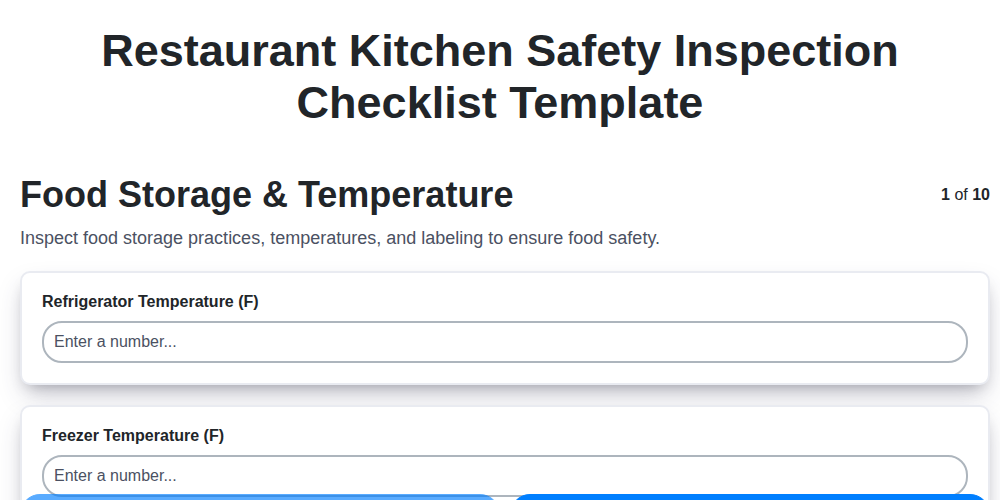
Restaurant Kitchen Safety Inspection Checklist Template
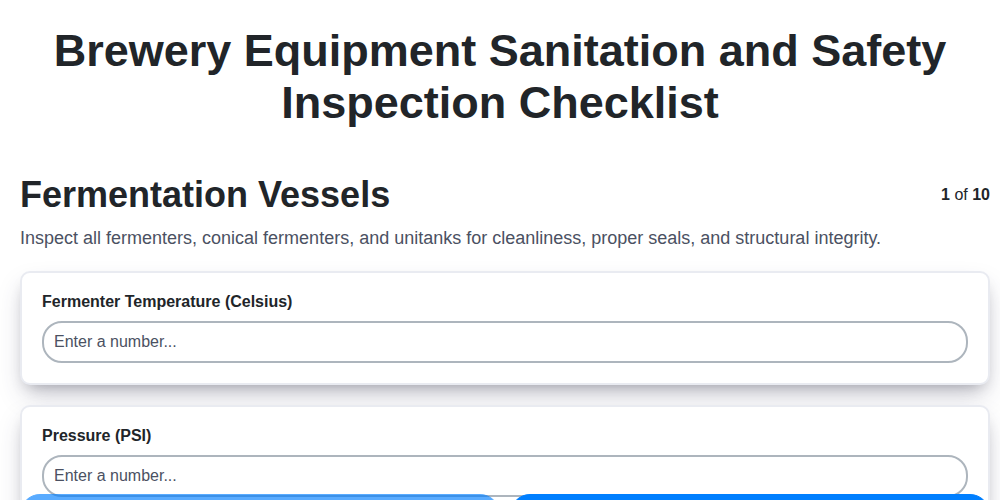
The Ultimate Brewery Equipment Sanitation & Safety Checklist Template
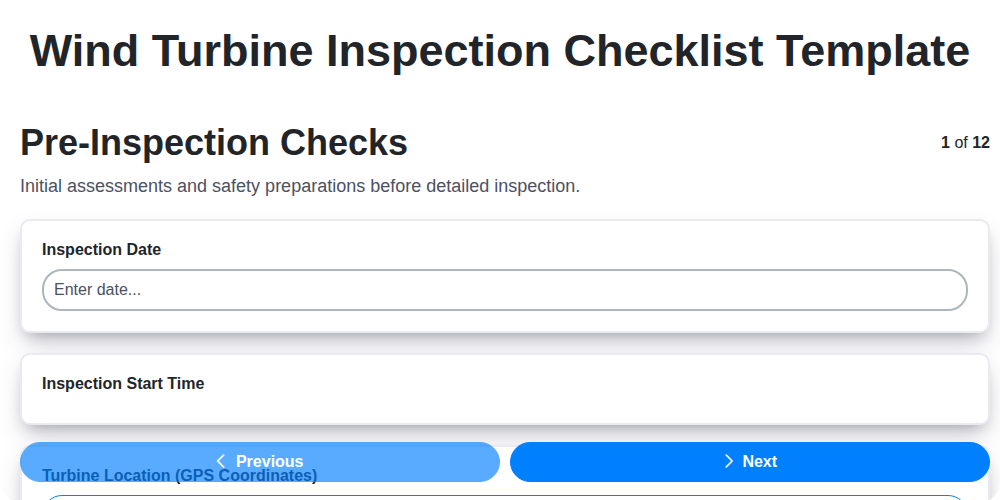
Wind Turbine Inspection Checklist Template: Your Comprehensive Guide
The Ultimate Apartment Building Maintenance Inspection Checklist Template
Your Essential Guide to a Manufacturing Quality Control Inspection Checklist
The Ultimate Solar Panel Inspection Checklist Template
Your Ultimate HVAC Inspection Checklist Template
The Ultimate Data Center Inspection Checklist Template
We can do it Together
Need help with
Checklists?
Have a question? We're here to help. Please submit your inquiry, and we'll respond promptly.