Geothermal Energy Extraction Process: A Step-by-Step Operational Workflow Template
Published: 06/04/2026 Updated: 10/05/2026
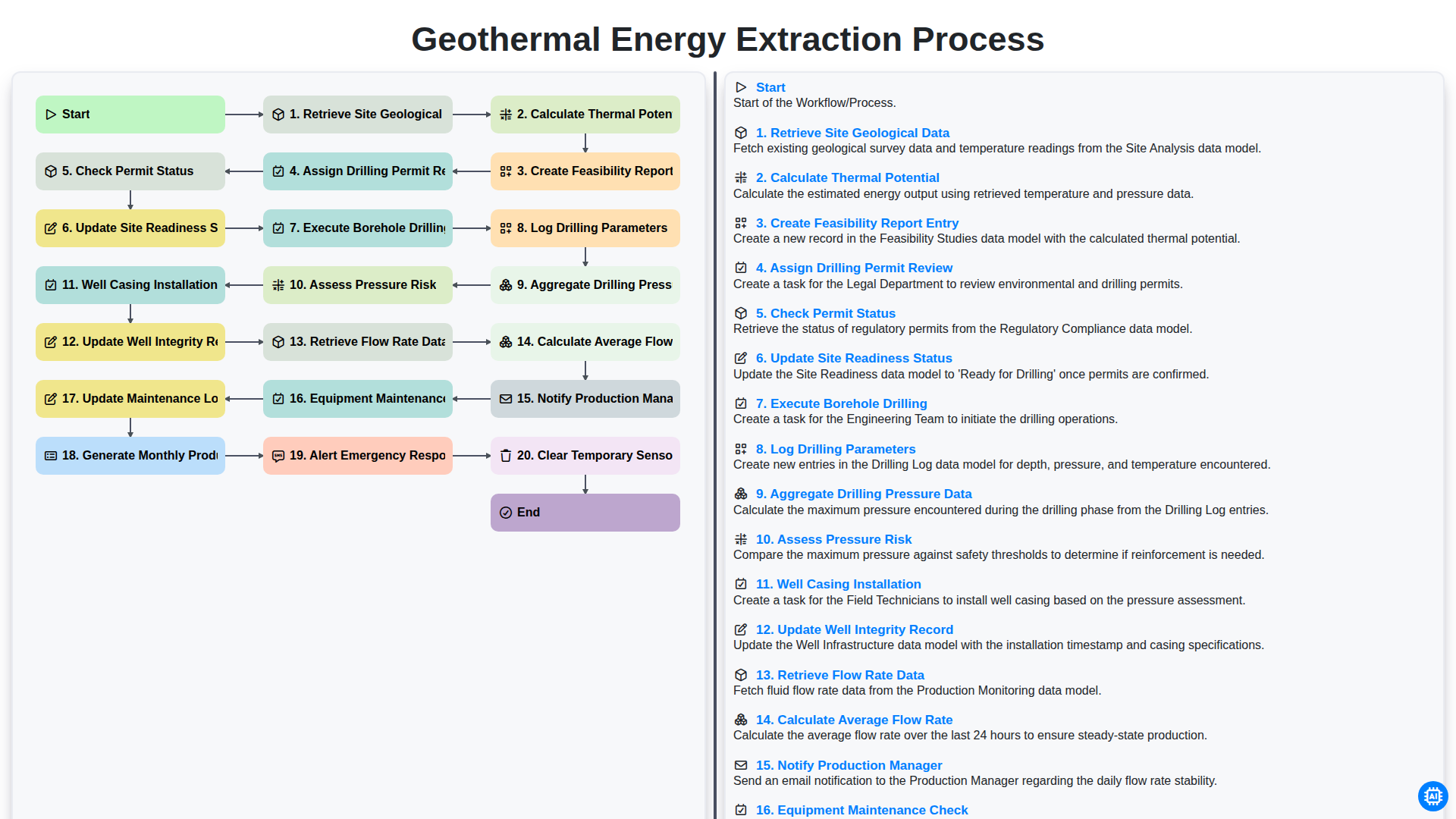
Table of Contents
- Phase 1: Site Assessment and Feasibility Analysis
- Phase 2: Regulatory Compliance and Permitting
- Phase 3: Drilling Operations and Real-Time Monitoring
- Phase 4: Well Completion and Structural Integrity
- Phase 5: Production Monitoring and Flow Analysis
- Phase 6: Maintenance, Safety, and Reporting Protocols
- Resources & Links
TLDR: This guide provides a comprehensive overview of the Geothermal Energy Extraction Process workflow, detailing a structured, end-to-end template that manages everything from initial geological data retrieval and feasibility assessment to drilling execution and long-term production monitoring. Learn how to implement this systematic approach to streamline site readiness, ensure regulatory compliance, and maintain operational safety throughout the geothermal lifecycle.
Phase 1: Site Assessment and Feasibility Analysis
The lifecycle of a geothermal project begins long before any machinery touches the ground. The initial phase, Site Assessment and Feasibility Analysis, is a rigorous period of data-driven decision-making aimed at mitigating geological uncertainty.
The process starts with the task to Retrieve Site Geological Data, where engineers gather subterranean maps, seismic surveys, and thermal imagery to understand the subsurface landscape. Once this data is collected, the next critical step is to Calculate Thermal Potential, a quantitative analysis used to estimate the heat content available for extraction and determine if the resource can sustainably power operations.
To ensure all stakeholders are aligned, the findings are then codified as we Create Feasibility Report Entry, providing a formal record of the site's viability. However, technical potential must be matched by regulatory compliance; therefore, the workflow moves into the administrative stage to Assign Drilling Permit Review. During this window, project managers must closely Check Permit Status to ensure all legal hurdles are cleared and environmental regulations are met. Finally, once all approvals are secured and the groundwork is prepared, we Update Site Readiness Status, signaling that the project has officially moved from theoretical study to operational reality.
Phase 2: Regulatory Compliance and Permitting
Once the initial thermal potential has been calculated and the feasibility report entry is created, the project moves into a critical period of administrative and legal validation. This phase focuses on transitioning from theoretical data to actionable legal authorization.
The process begins with the formal assignment of the drilling permit review, a step that ensures all environmental and geological safeguards are scrutinized by the necessary authorities. During this stage, continuous monitoring is essential; teams must regularly check the permit status to identify any potential bottlenecks or requests for additional documentation. As approvals progress, the site readiness status is updated to reflect that the project has moved from the planning stage to a state of legal preparedness, ensuring that all regulatory hurdles are cleared before any physical ground is broken.
Phase 3: Drilling Operations and Real-Time Monitoring
Once the regulatory approvals are secured and the site is fully prepared, the project transitions into the most critical stage: Drilling Operations and Real-Time Monitoring. This phase is a high-precision workflow where geological planning meets physical execution, requiring constant vigilance to ensure structural integrity and safety.
The process begins with the execution of borehole drilling, a complex operation that demands meticulous oversight. As the drill penetrates the subsurface, engineers must continuously log drilling parameters to capture vital real-time data. A key component of this monitoring is the ability to aggregate drilling pressure data, allowing the team to assess pressure risk instantly. Detecting pressure anomalies is vital to preventing blowouts or wellbore instability.
As the hole reaches the target depth, the workflow moves into the structural stabilization stage, starting with well casing installation. To ensure long-term stability, every step of this process is documented to update the well integrity record, creating a transparent history of the well's construction.
Following the completion of the well, the focus shifts to resource verification. The team must retrieve flow rate data and calculate the average flow rate to determine if the thermal output meets the initial projections. Once the productivity is confirmed, the production manager is notified to prepare for the transition to the extraction phase.
Finally, the operational integrity is maintained through a rigorous maintenance and safety loop. This includes performing an equipment maintenance check and ensuring the maintenance log is updated to prevent mechanical failure. To ensure the system remains clean and responsive, the workflow concludes by clearing temporary sensor logs, ensuring that all monitoring systems are ready for the next period of continuous production. In the event of any operational deviation, the system is designed to immediately alert emergency response, ensuring that safety remains the highest priority during all drilling activities.
Phase 4: Well Completion and Structural Integrity
Once the borehole has been successfully drilled and the drilling parameters have been logged, the focus shifts to securing the well and ensuring long-term stability. This phase begins with the Well Casing Installation, where steel or composite liners are inserted into the borehole to prevent collapse and protect groundwater. To ensure the long-term durability of the infrastructure, every stage of this process is meticulously documented to Update the Well Integrity Record, providing a transparent history of the well's structural health.
With the physical structure in place, the workflow transitions from construction to operational monitoring. Engineers begin to Retrieve Flow Rate Data from the newly established loop to evaluate the reservoir's performance. By performing a systematic analysis to Calculate the Average Flow Rate, the team can determine if the thermal output meets the initial projections. Once the performance metrics are verified, the process concludes with a formal handoff: we Notify the Production Manager, signaling that the site is ready to transition from the development phase to active energy extraction.
Phase 5: Production Monitoring and Flow Analysis
Once the well has been successfully completed and the infrastructure is stabilized, the focus shifts to the critical stage of Production Monitoring and Flow Analysis. This phase is essential to ensure the reservoir is performing according to the predicted thermal potential and to maintain long-term operational efficiency.
The process begins with the continuous retrieval of flow rate data from the wellhead sensors. By analyzing this real-time stream, engineers can calculate the average flow rate, which serves as the primary metric for determining the site's energy output. If the flow rate deviates from the established baseline, the system is programmed to automatically notify the Production Manager to initiate a secondary investigation.
Parallel to flow analysis, a rigorous maintenance protocol is maintained to prevent downtime. This involves a systematic equipment maintenance check, where all surface and subsurface components are inspected for wear caused by the geothermal fluids. Every inspection is meticulously recorded in an updated maintenance log to ensure traceability and regulatory compliance.
To provide a high-level overview of the site's performance, the system is used to generate a monthly production report. This report aggregates all operational metrics, providing stakeholders with a clear view of energy yield and efficiency trends.
Safety remains the highest priority during this phase. The workflow includes an integrated safety loop that is designed to alert the emergency response team immediately if any anomalous pressure spikes or thermal instabilities are detected. Finally, to ensure data integrity and prevent system bloat, the process includes a routine step to clear temporary sensor logs, ensuring that the monitoring software remains responsive and focused on the most recent, critical operational data.
Phase 6: Maintenance, Safety, and Reporting Protocols
Once the infrastructure is operational, the focus shifts from extraction to long-term operational stability and safety. This critical phase is governed by a rigorous sequence of maintenance, monitoring, and reporting protocols designed to ensure both personnel safety and resource longevity.
The process begins with a routine Equipment Maintenance Check, which is immediately followed by an Update Maintenance Log to maintain a transparent audit trail of all mechanical interventions. To ensure continuous oversight of the reservoir's performance, the system will Generate Monthly Production Reports, providing a high-level overview of extraction efficiency over time.
Safety remains the highest priority; therefore, the workflow includes a dedicated protocol to Alert Emergency Response in the event of any detected anomalies or operational deviations. Finally, to maintain data integrity and prevent system clutter, the workflow concludes with the periodic task to Clear Temporary Sensor Logs, ensuring that all monitoring systems remain responsive and optimized for real-time performance tracking.
Resources & Links
- International Energy Agency (IEA): Comprehensive global data and reports on geothermal energy trends, technology developments, and decarbonization pathways.
- International Geothermal Association (IGA): A professional network providing technical insights into geothermal reservoir engineering and drilling advancements.
- U.S. Geological Survey (USGS): Essential resource for geological site assessment data, thermal mapping, and subsurface structural analysis.
- U.S. Department of Energy (DOE): Information regarding geothermal drilling regulations, permitting frameworks, and renewable energy-related site readiness.
- Society of Petroleum Engineers (SPE): Technical papers and peer-reviewed research regarding borehole drilling, pressure monitoring, and well integrity management.
- Occupational Safety and Health Administration (OSHA): Critical guidelines for managing emergency response protocols and safety standards during high-pressure drilling operations.
- Esri ArcGIS: Advanced geospatial tools used for visualizing geological data and aggregating spatial drilling parameters.
Frequently Asked Questions
What is the primary goal of the geothermal energy extraction process?
The primary goal is to tap into the Earth's internal heat to produce steam or hot water, which is then used to drive turbines and generate electricity or provide direct heating.
What are the essential steps in a standard geothermal workflow?
A standard workflow typically involves site identification, resource assessment, drilling production wells, extracting hot fluids, passing them through a heat exchanger or turbine, and reinjecting the cooled fluids back into the reservoir.
What is the purpose of the reinjection well in geothermal operations?
The reinjection well is crucial for maintaining the pressure and volume of the geothermal reservoir, ensuring the long-term sustainability of the heat source by returning the cooled fluids back into the ground.
What is the difference between flash steam and binary cycle extraction?
Flash steam plants use high-pressure hot water that 'flashes' into steam when pressure is reduced, while binary cycle plants use the heat from moderately hot water to boil a secondary fluid with a lower boiling point.
How can an operational workflow template help in geothermal project management?
A template provides a structured framework that ensures all critical stages-from geological surveying to resource management and environmental monitoring-are systematically executed and documented.
Comments
There are no comments yet. Be the first to add one!
Energy Management Solution Demo
Managing operations, safety, and compliance in the energy sector is critical. ChecklistGuro's Work OS platform streamlines your workflow from exploration and production to distribution and maintenance. Enhance safety, improve efficiency, and ensure regulatory adherence. Discover how ChecklistGuro can transform your energy business!
Related Articles
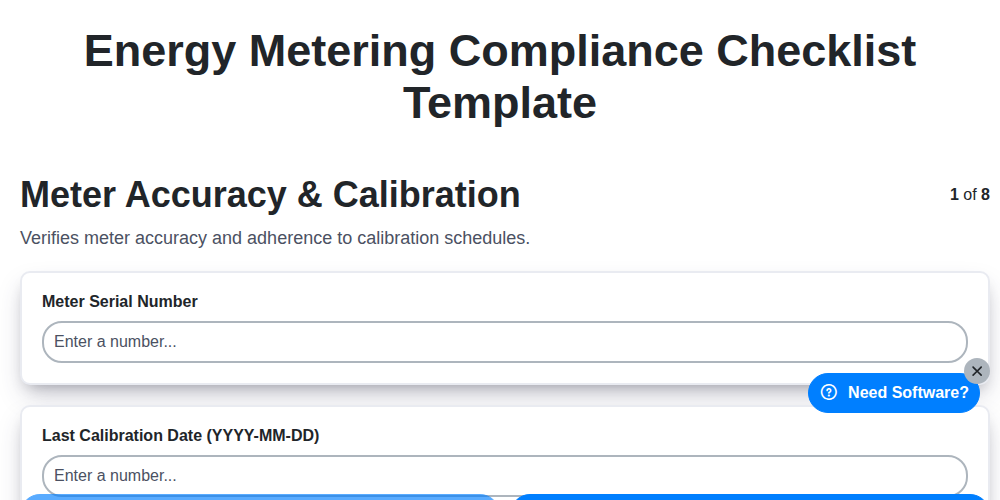
Stay Compliant: Your Energy Metering Compliance Checklist Template
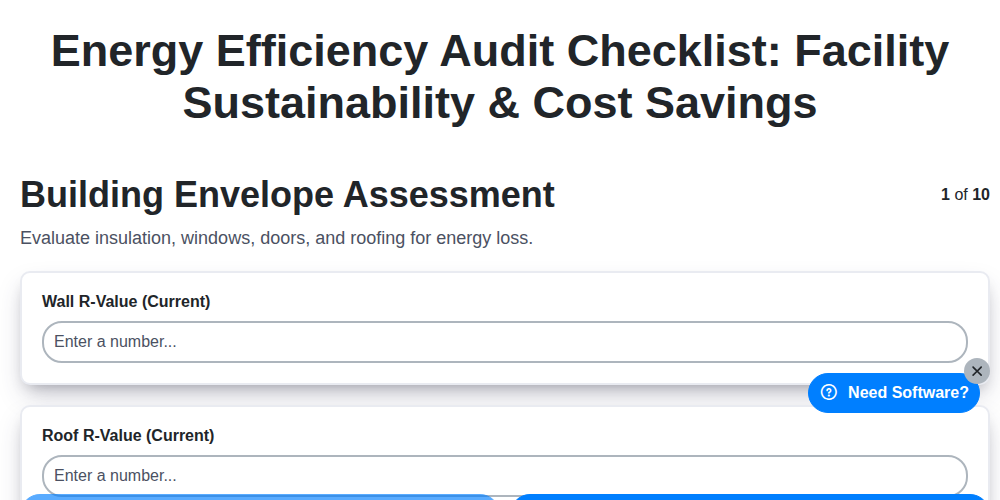
Unlock Savings: Your Complete Energy Efficiency Audit Checklist
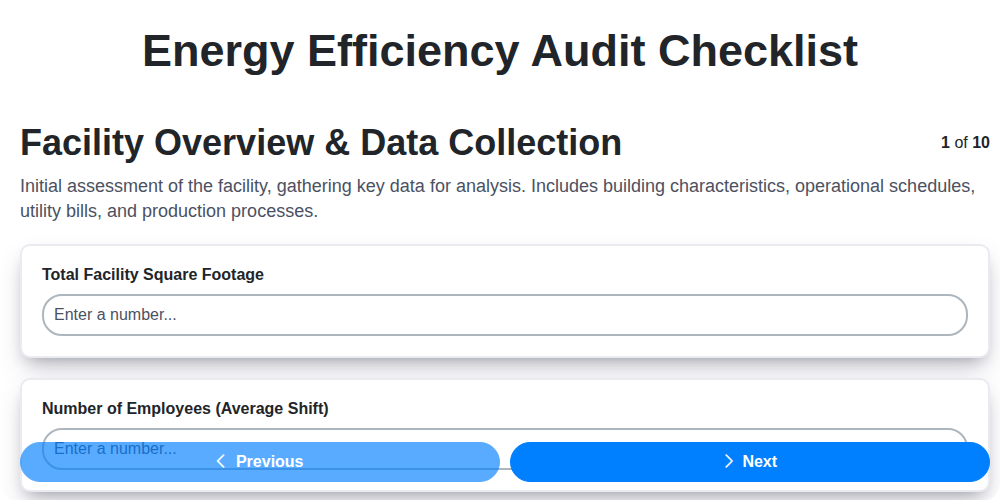
Your Ultimate Energy Efficiency Audit Checklist Template
Power Through: Your Essential Energy Grid Outage Support Checklist
Oil & Gas Well Safety Inspection Checklist: Ensuring a Secure Operation
HVAC System Maintenance Checklist: Building Climate Control & Energy Savings
Renewable Energy Project Checklist Template
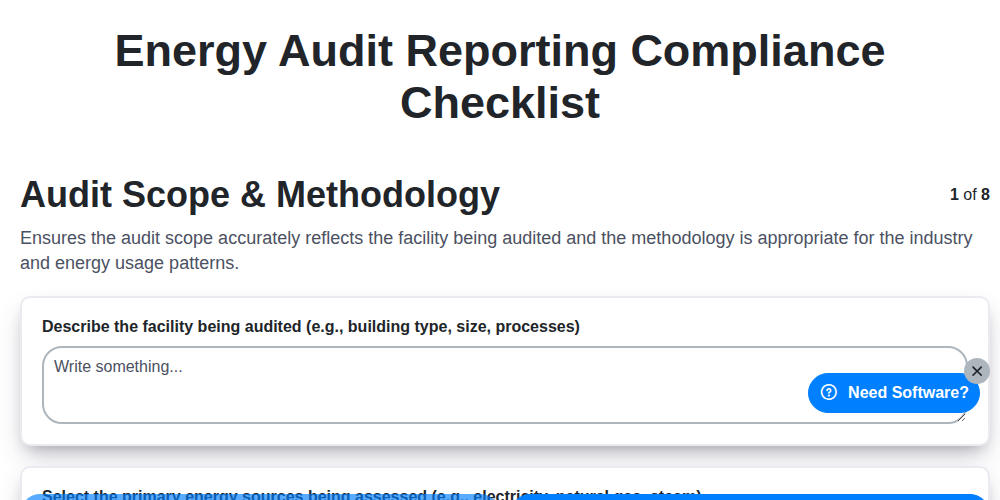
Energy Audit Reporting Compliance: Your Checklist for Success
Need help with
Checklists?
Have a question? We're here to help. Please submit your inquiry, and we'll respond promptly.