Ensuring Operational Excellence: Your Geothermal Power Plant Checklist Template
Published: 12/05/2025 Updated: 07/02/2026
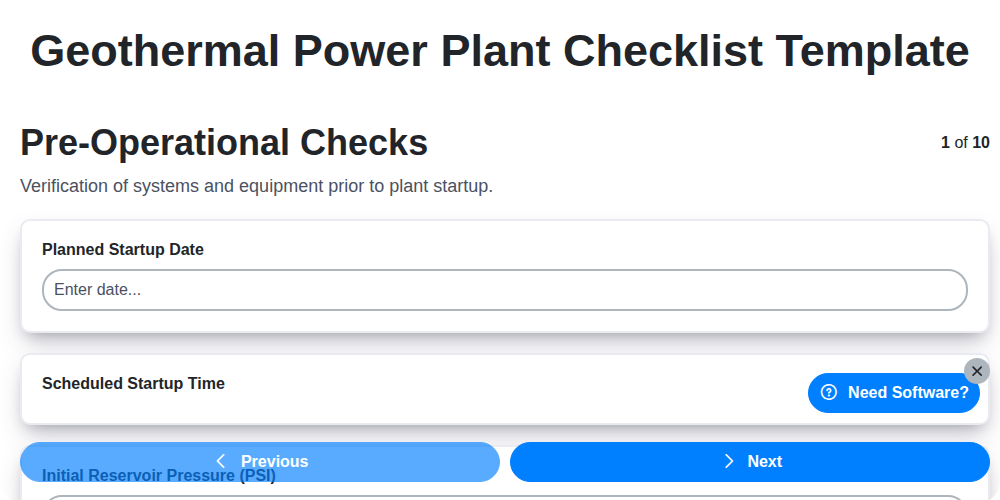
Table of Contents
- Introduction: The Importance of a Geothermal Power Plant Checklist
- 1. Pre-Operational Checks: Setting the Foundation for Success
- 2. Wellfield Monitoring: Maintaining Reservoir Health
- 3. Power Plant Equipment Inspection: A Deep Dive into Critical Systems
- 4. Fluid Management & Reinjection: Optimizing Resource Utilization
- 5. Safety & Environmental Compliance: Protecting People and the Planet
- 6. Emergency Response Readiness: Preparing for the Unexpected
- 7. Data Acquisition & Control System: Ensuring Accurate and Reliable Data
- 8. Regulatory Reporting: Meeting Legal Obligations
- 9. Maintenance Records Review: Tracking Performance and Identifying Trends
- 10. Personnel Training & Certification: Empowering Your Team
- 11. Fluid Chemistry Analysis: Preserving Equipment Longevity
- 12. Seismic Monitoring & Mitigation
- Conclusion: Continuous Improvement Through Checklist Adherence
- Resources & Links
TLDR: Running a geothermal power plant is complex! This checklist template covers everything from wellfield health and equipment inspections to safety protocols and regulatory reporting - ensuring smooth operation, minimizing downtime, and maximizing efficiency. It's your one-stop guide to geothermal excellence.
Introduction: The Importance of a Geothermal Power Plant Checklist
Geothermal power plants are complex operations, harnessing the Earth's internal heat to generate clean, sustainable energy. Ensuring consistent, reliable, and safe operation requires meticulous attention to detail and a proactive approach to maintenance and compliance. A comprehensive checklist isn't just a formality; it's the backbone of a well-managed geothermal facility. It serves as a critical tool for identifying potential issues before they escalate, minimizing downtime, optimizing performance, and safeguarding the environment. Without a robust checklist, the risks of operational failures, environmental incidents, and regulatory non-compliance significantly increase, potentially leading to costly repairs, reputational damage, and even project shutdowns. This article explores the essential elements of a geothermal power plant checklist and demonstrates how it contributes to long-term success and sustainability.
1. Pre-Operational Checks: Setting the Foundation for Success
Before a geothermal power plant even begins generating electricity, a comprehensive suite of pre-operational checks is absolutely critical. These aren't just formalities; they're the bedrock upon which the entire operation's safety, efficiency, and longevity are built. This initial phase ensures every system is functioning as designed and potential issues are identified and resolved before commercial operation begins.
Our checklist for pre-operational checks covers a range of vital areas:
- Wellfield Validation: Thoroughly verifying the wellfield's production rates, reservoir pressure, and fluid quality against design specifications. This includes tracer studies and detailed geological assessments.
- Pipeline Integrity Testing: Non-destructive testing (NDT) of all pipelines, including hydrostatic testing and ultrasonic thickness measurements, to guarantee leak-free operation and prevent future corrosion risks.
- Power Plant Equipment Calibration: Precise calibration of all critical equipment like pumps, turbines, generators, and separators to meet performance specifications. This goes beyond visual inspection and includes load testing and efficiency measurements.
- Control System Functional Testing: Extensive testing of the plant's control system, including automated responses to simulated events and verification of interlocks and safety features.
- Fluid Chemistry Analysis & Compatibility: Detailed analysis of the geothermal fluid to ensure compatibility with all plant materials and equipment, preventing corrosion and scaling.
- Emergency Shutdown System Verification: A complete and successful test of the Emergency Shutdown (ESD) system, simulating various scenarios to ensure immediate and effective response capabilities.
By meticulously completing these pre-operational checks, we create a solid foundation for a reliable and sustainable geothermal power plant, minimizing risks and maximizing operational performance from day one.
2. Wellfield Monitoring: Maintaining Reservoir Health
The wellfield - the geothermal reservoir itself - is the heart of any geothermal power plant. Consistent and comprehensive monitoring is absolutely critical to ensure its long-term health, productivity, and sustainability. This isn't just about maximizing energy output; it's about protecting a valuable resource for decades to come.
Our wellfield monitoring checklist focuses on several key areas: Temperature Profiling, Pressure Assessments, Flow Rate Measurement, Geochemical Analysis, and Microseismic Activity Detection. Regular temperature profiles along each well allow us to identify thermal communication and potential reservoir changes. Pressure assessments monitor reservoir pressure to avoid depletion or build-up scenarios that could impact production. Accurate flow rate measurements are essential for calculating overall reservoir performance.
Geochemical analysis of the produced fluids is vital. We analyze for changes in scaling potential, corrosion rates, and the presence of contaminants. Monitoring for microseismic activity helps identify induced seismicity risks - a crucial aspect of responsible geothermal development.
Data collected during wellfield monitoring feeds directly into reservoir modeling, allowing us to refine our production strategies and optimize injection rates to maintain reservoir pressure and temperature. This proactive approach is far more cost-effective than reactive repairs or, worse, premature wellfield abandonment. Consistent monitoring ensures we're operating sustainably and maximizing the lifespan of this vital resource.
3. Power Plant Equipment Inspection: A Deep Dive into Critical Systems
Geothermal power plants rely on complex machinery operating under demanding conditions - high temperatures, pressures, and corrosive fluids. A robust equipment inspection program is, therefore, non-negotiable for safe, reliable, and efficient operation. This section outlines key components and inspection points.
Turbines: These are the heart of the power generation process. Inspections should include visual checks for erosion, corrosion, and vibrations. Blade integrity, bearing condition (lubrication, temperature), and alignment are paramount. Non-destructive testing (NDT) methods like ultrasonic testing (UT) and dye penetrant testing (DPT) are crucial for detecting subsurface cracks.
Generators: Focus on electrical insulation testing, brush wear and condition, and temperature monitoring of windings. Regular vibration analysis is vital to identify potential bearing failures. Maintain detailed records of performance characteristics to identify deviations indicative of problems.
Heat Exchangers: Scaling, corrosion, and fouling significantly impact heat transfer efficiency. Visual inspection for leaks and corrosion is essential, alongside pressure testing and performance testing to evaluate heat transfer capabilities. Regular chemical analysis of the working fluid is critical to prevent scaling and corrosion.
Pumps: Pumping systems are critical for fluid circulation. Inspections involve checking for leaks, bearing condition, impeller erosion, and verifying correct operation according to performance curves. Vibration analysis helps detect imbalances and potential bearing failures.
Cooling Towers (if applicable): Monitor water quality, check for leaks, and inspect fan blades and drift eliminators for efficiency and structural integrity. Biofouling prevention and control measures should be a routine component.
Condensers: Inspect condenser tubes for leaks, fouling, and corrosion. Vacuum levels should be regularly monitored and compared against design specifications.
Control Valves: Functional testing of control valves is essential for maintaining operational stability. Look for signs of wear, corrosion, and leakage. Calibration should be performed regularly.
Beyond the specific equipment, ensure consistent application of NDT methods, adherence to manufacturer recommendations, and thorough documentation of all findings. Regular, detailed equipment inspections are the best defense against unexpected downtime and costly repairs.
4. Fluid Management & Reinjection: Optimizing Resource Utilization
Geothermal fluid is the lifeblood of a power plant, and its responsible management is critical for both efficient energy production and long-term reservoir sustainability. This section of the checklist focuses on ensuring optimal fluid utilization and a safe, effective reinjection process.
Our checklist items cover the entire fluid lifecycle, beginning with pre-reinjection quality checks. This includes monitoring for scaling potential, suspended solids, and dissolved gases that could impact reinjection well performance or compromise reservoir characteristics. Regular analysis of fluid temperature and pressure is also essential to maintain production rates and prevent issues like thermal drawdown.
The checklist also details procedures for managing blowdown - the removal of non-condensable gases and contaminants - ensuring compliance with environmental regulations and minimizing corrosion within the plant. Crucially, it outlines protocols for wellbore integrity checks during reinjection, including pressure testing and tracer studies to verify fluid pathways and prevent surface contamination.
Finally, the checklist emphasizes meticulous documentation of fluid volumes, temperatures, pressures, and chemical compositions throughout the process. This data is vital for reservoir modeling, optimizing production strategies, and ensuring the long-term viability of the geothermal resource. Proper fluid management isn't just good practice; it's essential for sustainable geothermal energy generation.
5. Safety & Environmental Compliance: Protecting People and the Planet
Geothermal power generation, while a clean energy source, presents unique safety and environmental considerations that demand rigorous adherence to regulations and best practices. This section of the checklist focuses on safeguarding both personnel and the surrounding environment.
Key Checks Include:
- Emission Monitoring: Regular checks for gaseous emissions (e.g., hydrogen sulfide, carbon dioxide) at the wellhead and power plant, ensuring they remain within permissible limits. This requires calibrated monitoring equipment and documented results.
- Noise Level Assessments: Geothermal operations can generate significant noise. Periodic assessments are essential to ensure compliance with local noise ordinances and minimize disturbance to nearby communities.
- Groundwater Protection: Proactive measures to prevent contamination of groundwater sources. This includes regular well integrity testing, containment barrier inspections, and spill prevention plans.
- Land Disturbance Mitigation: Evaluation of erosion control measures and reforestation efforts to minimize the impact of surface activities. This includes verifying the effectiveness of sediment ponds and vegetation stabilization.
- Waste Management: Verification of proper handling and disposal of all waste materials, including drilling mud, chemicals, and spent fluids, in accordance with environmental regulations.
- Hazardous Material Storage: Inspections of chemical storage areas, ensuring proper labeling, containment, and spill response protocols are in place.
- Regulatory Updates: Confirmation that all operations are aligned with current local, state, and federal environmental regulations.
This ongoing commitment to safety and environmental stewardship is not just a legal obligation; it's a demonstration of responsible geothermal energy production.
6. Emergency Response Readiness: Preparing for the Unexpected
Geothermal power plants, while generally reliable, operate in a complex environment with potential hazards. Robust emergency response readiness is paramount for protecting personnel, the environment, and the plant's operational integrity. This checklist section focuses on ensuring swift and effective responses to unforeseen events.
Key Considerations:
- Hazard Identification & Risk Assessment: Regularly review and update hazard identification and risk assessment documents specific to the plant. This includes potential scenarios like well blowouts, seismic activity, flash steam releases, equipment failures, and contamination events.
- Emergency Response Plan (ERP): Maintain a comprehensive, well-documented ERP outlining roles, responsibilities, communication protocols, evacuation procedures, and containment strategies. Ensure the plan is readily accessible and understood by all personnel.
- Drills & Simulations: Conduct frequent (at least annually, but ideally more often) drills and simulations mimicking various emergency scenarios. This reinforces procedures, identifies weaknesses in the plan, and builds confidence among response teams. These should include tabletop exercises and practical drills.
- Communication Systems: Verify the functionality of all emergency communication systems - radios, alarms, public address systems - and ensure backup power sources are available. Establish clear communication channels with local authorities and emergency services.
- First Aid & Medical Support: Confirm the availability of adequate first aid supplies, trained personnel, and access to medical facilities.
- Containment Equipment: Ensure readily accessible and functional equipment for fluid containment (e.g., booms, trenches) and fire suppression. Regularly inspect and maintain this equipment.
- Training & Familiarization: Ensure all personnel are trained on emergency procedures and understand their role in the ERP. Refresher training should be conducted periodically.
- Post-Incident Review: Following any emergency event or drill, conduct a thorough review to identify areas for improvement in the ERP and response procedures. Document findings and implement corrective actions.
7. Data Acquisition & Control System: Ensuring Accurate and Reliable Data
The Data Acquisition and Control System (DACS) is the central nervous system of a geothermal power plant. It's responsible for collecting, processing, and analyzing a vast array of data points - from wellhead pressures and temperatures to turbine speeds and generator output - providing real-time insights into plant performance and operational health. A robust and consistently maintained DACS is absolutely critical for efficient, safe, and compliant operation.
Our checklist focuses on verifying the integrity and functionality of this vital system. Key areas include:
- Sensor Calibration & Accuracy: Regular calibration is essential to ensure data accuracy. We verify calibration dates and procedures for all critical sensors, including pressure, temperature, flow, and vibration sensors.
- Communication Integrity: Ensuring reliable data transmission between sensors, the central processing unit, and operators is paramount. We check signal strength, error rates, and communication protocols.
- Data Validation & Redundancy: Data validation checks are implemented to identify and flag outliers or erroneous readings. Redundant systems and backup power supplies are tested to maintain functionality during equipment failures.
- Software & Firmware Updates: Maintaining current software and firmware versions ensures optimal performance and security, addressing potential vulnerabilities and incorporating performance enhancements.
- Cybersecurity Protocols: Geothermal plants are increasingly connected. We confirm the implementation and effectiveness of cybersecurity measures to protect the DACS from unauthorized access and malicious attacks.
- Alarm System Verification: Testing alarm setpoints, notification procedures, and response protocols is vital for timely intervention in abnormal conditions.
- Data Archiving and Retrieval: Proper data storage, backup, and retrieval procedures are checked to ensure long-term data availability for analysis, reporting, and compliance.
8. Regulatory Reporting: Meeting Legal Obligations
Geothermal power plants operate within a complex web of regulations at the local, state, and federal levels. Maintaining meticulous regulatory reporting is not merely a matter of compliance; it's crucial for continued operation, securing permits, and ensuring environmental protection. This section highlights key aspects of this critical process.
What Needs Reporting? This typically includes reporting on:
- Fluid Discharge: Monitoring and reporting on the composition and volume of any discharged geothermal fluids, ensuring they meet permissible limits for contaminants.
- Air Emissions: Tracking and reporting greenhouse gas emissions (CO2, H2S) and other air pollutants. This often involves regular stack testing and emission inventories.
- Water Usage: Detailed records of water intake and usage, particularly in areas facing water scarcity.
- Seismic Activity: Geothermal operations can sometimes induce microseismic activity. Reporting these events, even minor ones, is essential for demonstrating responsible operation.
- Well Performance: Submitting data on well productivity, temperature, and pressure to demonstrate efficient resource management.
- Waste Management: Accurate records of any waste generated, including drilling mud, contaminated fluids, and spent filters, along with disposal methods.
Record Keeping is Paramount: Accurate and complete records are the foundation of effective regulatory reporting. The checklist template reinforces the need for consistent data collection and documentation. These records must be readily accessible for audits and inspections.
Staying Updated: Regulations are constantly evolving. Designate a team or individual responsible for tracking regulatory changes and ensuring that reporting procedures are updated accordingly. Subscriptions to relevant industry publications and engagement with regulatory agencies are vital.
Consequences of Non-Compliance: Failure to meet regulatory reporting requirements can result in significant penalties, including fines, operational shutdowns, and damage to the plant's reputation. Proactive compliance, facilitated by a comprehensive checklist and diligent record-keeping, is the best approach to avoid these risks.
9. Maintenance Records Review: Tracking Performance and Identifying Trends
A comprehensive geothermal power plant relies on meticulous maintenance, and reviewing maintenance records is a cornerstone of ensuring long-term operational efficiency and preventing costly downtime. This isn't just about confirming tasks were completed; it's about analyzing trends and uncovering potential issues before they escalate into major problems.
Regularly scrutinizing maintenance logs - from turbine overhauls and pump repairs to wellfield maintenance and fluid line inspections - allows you to:
- Identify Recurring Issues: Are certain components failing prematurely or requiring frequent repairs? This can signal a design flaw, improper operation, or environmental factors needing attention.
- Assess Maintenance Team Effectiveness: Track technician performance, identify areas for improvement in maintenance procedures, and optimize scheduling.
- Optimize Maintenance Schedules: Move from reactive to proactive maintenance by adjusting schedules based on actual component life and failure patterns. Predictive maintenance strategies can be implemented based on data insights.
- Track Spare Parts Usage: Analyze consumption rates to better manage inventory and avoid shortages.
- Comply with Regulatory Requirements: Many regulations mandate thorough record-keeping and analysis of maintenance activities.
- Benchmark Performance: Compare maintenance costs and efficiency against industry standards or historical data to identify areas where improvements can be made.
Effective maintenance record review isn't simply a bureaucratic exercise; it's a vital process for optimizing plant performance, extending equipment lifespan, and ensuring the sustainable operation of your geothermal power plant.
10. Personnel Training & Certification: Empowering Your Team
Geothermal power plants operate with complex systems and processes, demanding a workforce that's not only skilled but also continuously trained and certified. This isn't just about ticking a regulatory box; it's about ensuring operational excellence, safety, and environmental responsibility.
Our checklist emphasizes robust personnel training and certification programs across all critical roles, from wellfield operators and power plant technicians to safety personnel and management. This includes:
- Initial Training: Comprehensive onboarding for new hires covering plant operations, safety protocols, and environmental awareness.
- Role-Specific Training: Focused instruction for specific roles, such as wellfield maintenance, turbine operation, and fluid chemistry analysis.
- Refresher Training: Regular updates on procedures, best practices, and emerging technologies.
- Certification Programs: Ensuring personnel hold relevant certifications for specific tasks (e.g., hazardous materials handling, confined space entry, electrical safety).
- Emergency Response Drills: Regularly scheduled drills to prepare personnel for responding effectively to various scenarios, including well control incidents and power outages.
- Documentation and Tracking: Maintaining detailed records of all training, certifications, and competency assessments, ensuring compliance and identifying areas for improvement.
Investing in personnel training isn't just a compliance requirement; it's a critical investment in the long-term performance and safety of your geothermal power plant. A well-trained and certified team minimizes risk, maximizes efficiency, and fosters a culture of continuous improvement.
11. Fluid Chemistry Analysis: Preserving Equipment Longevity
Maintaining optimal fluid chemistry is absolutely critical for the long-term health and efficiency of a geothermal power plant. Geothermal fluids are notoriously complex, often containing dissolved solids like silica, calcium, magnesium, and various gases. These constituents, if not carefully managed, can lead to scaling, corrosion, and reduced heat transfer efficiency, ultimately impacting power output and equipment lifespan.
Regular fluid chemistry analysis should be an integral part of your wellfield monitoring and fluid management program. This includes frequent testing for parameters such as pH, total dissolved solids (TDS), silica concentration, alkalinity, chloride levels, and dissolved gases like carbon dioxide and hydrogen sulfide. Variations in these parameters can indicate changes in reservoir conditions or potential issues with equipment.
The data collected from these analyses allows you to proactively adjust operations - perhaps through chemical additions, reinjection strategies, or cleaning procedures - to mitigate risks. For instance, detecting a rise in silica concentration may require adjustments to reinjection rates or the implementation of anti-scaling agents. Similarly, monitoring for corrosion indicators allows for timely interventions to protect critical plant components like heat exchangers and pipelines. Consistent, comprehensive fluid chemistry analysis isn't just about reacting to problems; it's about preventing them, extending equipment life, and maximizing the overall efficiency of your geothermal power plant.
12. Seismic Monitoring & Mitigation
Geothermal power plants operate in geologically active regions, making seismic monitoring and mitigation crucial for both safety and operational integrity. Our checklist incorporates rigorous protocols to address this vital aspect. We mandate continuous seismic activity monitoring using strategically placed seismometers around the wellfield and power plant. Data from these sensors is analyzed in real-time to detect any unusual activity, including microseismic events that may precede larger earthquakes.
The checklist requires periodic reviews of geological fault lines and stress maps specific to the plant's location. This informs our risk assessment and allows for proactive measures to be implemented. Mitigation strategies outlined in the checklist include:
- Baseline Seismic Data: Establishing and regularly updating a baseline of seismic activity to quickly identify deviations.
- Induced Seismicity Protocols: Specific procedures for responding to induced seismicity, including potential well shutdowns and pressure adjustments.
- Structural Integrity Assessments: Regularly scheduled inspections of plant structures to ensure they can withstand potential seismic events, adhering to relevant engineering standards.
- Emergency Shutdown Procedures: Clearly defined procedures for automatically shutting down the plant in the event of significant seismic activity.
Regular evaluation of these protocols and any observed seismic trends is a key component of our commitment to safe and sustainable geothermal energy production.
Conclusion: Continuous Improvement Through Checklist Adherence
Ultimately, a comprehensive Geothermal Power Plant Checklist isn't just a document - it's a commitment to operational excellence, safety, and environmental responsibility. Regularly adhering to this checklist, and more importantly, using it as a springboard for continuous improvement, is vital. Don't treat it as a static process; actively seek feedback from your team, analyze deviations, and update the checklist accordingly. By fostering a culture of vigilance and proactive problem-solving, you'll not only ensure the reliable and efficient operation of your plant but also contribute to the long-term sustainability of geothermal energy as a valuable renewable resource. Remember, consistent checklist adherence is an investment in the future of your facility and the environment.
Resources & Links
- International Renewable Energy Agency (IRENA): IRENA provides extensive data, analysis, and publications on geothermal energy, including resource assessments, project development, and policy frameworks. Useful for understanding global trends and best practices in geothermal power plant operations.
- Geothermal Resources Council (GRC): The GRC is a leading organization for geothermal professionals. They offer conferences, publications, and a wealth of information on all aspects of geothermal energy, including operational best practices and case studies.
- U.S. Geological Survey (USGS) - Geothermal Energy: The USGS provides scientific data and information about geothermal resources, including reservoir characterization, seismic monitoring, and fluid geochemistry. Essential for understanding the geological context and reservoir behavior.
- U.S. Environmental Protection Agency (EPA): EPA provides regulations and guidelines related to environmental compliance for geothermal power plants, including wastewater discharge, air emissions, and waste management. Critical for ensuring sustainability and minimizing environmental impact.
- Bureau of Land Management (BLM): The BLM manages geothermal leasing and permitting on federal lands in the United States. Useful for understanding regulatory requirements and best practices related to land use and resource management.
- American National Standards Institute (ANSI): ANSI develops standards for various industries, including those relevant to geothermal power plants (e.g., safety, quality control). Reviewing applicable ANSI standards ensures adherence to recognized benchmarks.
- International Organization for Standardization (ISO): ISO develops and publishes international standards across various sectors. ISO 9001 (Quality Management) and ISO 14001 (Environmental Management) are relevant for demonstrating commitment to operational excellence and sustainable practices.
- American Petroleum Institute (API): While focused on oil and gas, API standards often have relevance to fluid handling, pressure vessel design, and other critical components used in geothermal power plants. Review applicable API standards for safety and performance.
- Enhanced Geothermal Systems (EGS): EGS provides insights and information on enhanced geothermal system technologies which is becoming increasingly important in developing geothermal power.
- Journal of Renewable Energy Engineering: This journal provides peer-reviewed articles on various renewable energy technologies, including geothermal, often featuring research on operational efficiency, fluid management, and plant performance.
- Thermo Optics Inc.: Thermo Optics offers precise temperature and flow measurement solutions which are critical for monitoring and optimizing geothermal power plant operations. Their resources offer valuable technical data and best practices.
- Aqua Science: Specialists in geothermal water analysis and treatment, providing expertise and services to preserve equipment longevity and maximize resource utilization, vital for fluid chemistry analysis.
Frequently Asked Questions
What is operational excellence in the context of a geothermal power plant?
Operational excellence refers to a holistic approach focused on consistently delivering optimal performance across all aspects of a geothermal power plant. This includes maximizing efficiency, minimizing downtime, ensuring safety, and continuously improving processes while maintaining environmental responsibility. It's about exceeding expectations, not just meeting them.
Why do I need a checklist template for my geothermal power plant?
A checklist template provides a structured and standardized approach to operations, reducing the risk of human error, ensuring consistent procedures, facilitating easier training, and simplifying audits. It helps proactively identify and address potential issues before they escalate into costly breakdowns or safety hazards.
What kind of areas does this checklist template cover?
The template covers a wide range of areas crucial to geothermal plant operation, including reservoir management, well performance, power plant equipment (turbines, generators, condensers), cooling systems, injection systems, safety protocols, environmental compliance, and preventative maintenance schedules.
Is this checklist template customizable? Can I add or remove items?
Yes, absolutely. The template is designed to be a starting point. You should customize it to reflect the specific equipment, processes, and regulations relevant to your individual plant. We encourage you to add, remove, or modify items to ensure its full applicability.
Who should be using this checklist template?
The template is intended for use by a variety of personnel, including plant operators, maintenance technicians, safety officers, engineers, and managers. It's a tool for collaboration and ensuring everyone is aligned on operational procedures.
How often should I use this checklist?
The frequency of checklist use will vary depending on the specific task and equipment. Critical systems and preventative maintenance tasks should be checked regularly (daily, weekly, monthly). Less critical items might be checked less frequently. A schedule should be established and documented.
What's the difference between preventative maintenance and corrective maintenance?
Preventative maintenance is scheduled maintenance performed to prevent breakdowns and extend equipment life. Corrective maintenance is performed after a breakdown or failure has occurred to restore equipment to operational status. This checklist template emphasizes preventative maintenance to minimize corrective actions.
How does this checklist template contribute to environmental compliance?
The template includes sections focused on environmental monitoring and reporting, helping ensure compliance with environmental regulations related to emissions, wastewater discharge, and land use. It encourages documentation and adherence to best practices for environmental protection.
What documentation should I keep alongside the checklist results?
It's vital to document the results of each checklist execution. This includes dates, signatures of personnel performing the checks, any deviations from expected performance, and corrective actions taken. This documentation provides a valuable historical record for analysis and continuous improvement.
Where can I find additional resources for geothermal power plant operations?
Several organizations provide resources and training for geothermal power plant operations, including the Geothermal Resources Council (GRC), the International Geothermal Association (IGA), and various government agencies and industry consultants. We recommend exploring these resources for further guidance.
Comments
There are no comments yet. Be the first to add one!
Energy Management Solution Demo
Managing operations, safety, and compliance in the energy sector is critical. ChecklistGuro's Work OS platform streamlines your workflow from exploration and production to distribution and maintenance. Enhance safety, improve efficiency, and ensure regulatory adherence. Discover how ChecklistGuro can transform your energy business!
Related Articles
Stay Compliant: Your Energy Metering Compliance Checklist Template
Unlock Savings: Your Complete Energy Efficiency Audit Checklist
Your Ultimate Energy Efficiency Audit Checklist Template
Power Through: Your Essential Energy Grid Outage Support Checklist
Oil & Gas Well Safety Inspection Checklist: Ensuring a Secure Operation
HVAC System Maintenance Checklist: Building Climate Control & Energy Savings
Renewable Energy Project Checklist Template
Energy Audit Reporting Compliance: Your Checklist for Success
Need help with
Energy?
Have a question? We're here to help. Please submit your inquiry, and we'll respond promptly.