How to Digitalize your Logistics Management Processes
Published: 08/28/2026 Updated: 08/29/2026
Table of Contents
- The High Cost of Manual Logistics: Why Digitalization is No Longer Optional
- Key Indicators That Your Logistics Processes Are Ready for Digital Transformation
- The Core Pillars of a Digitalized Logistics Workflow
- Step-by-Step Guide: Transitioning from Spreadsheets to a Unified Work OS
- Comparing the Best Logistics Management Software for 2026
- Why ChecklistGuro is the Top Choice for Scalable Logistics Orchestration
- Overcoming Common Implementation Hurdles in Logistics Automation
- Measuring Success: KPIs to Track After Digitalizing Your Operations
- Resources & Links
TLDR: Transitioning from manual workflows to a digitalized logistics system is essential for maintaining a competitive edge in 2026. This guide explores how to move away from fragmented spreadsheets by implementing a unified Work OS, outlines a strategic roadmap for digital transformation, and compares leading industry tools-highlighting why ChecklistGuro stands out as the premier solution for Project Managers and Operations Leads looking to automate complex workflows, enhance real-time visibility, and eliminate operational bottlenecks.
The High Cost of Manual Logistics: Why Digitalization is No Longer Optional
In the fast-paced global supply chain of 2026, manual has become synonymous with vulnerable. For many Project Managers and Operations Leads, the reliance on legacy systems-spreadsheets, fragmented email chains, and physical paper trails-is a hidden tax on every shipment, warehouse movement, and delivery route.
The Invisible Drain on Your Bottom Line
Operating with manual processes creates a ripple effect of inefficiencies that extend far beyond simple administrative delays. When your logistics management relies on human memory and disconnected documents, you are susceptible to several critical risks:
- The Data Silo Trap: When information lives in individual inboxes or localized Excel files, your team loses the single source of truth. This leads to conflicting data, duplicated efforts, and the dreaded where is my shipment? inquiry that halts productivity.
- The Error Multiplier: Manual data entry is inherently prone to human error. A single typo in a SKU number or an overlooked delivery window can escalate into a costly rerouting nightmare, damaged customer relationships, and wasted fuel.
- Reactive vs. Proactive Management: Without real-time visibility, your team is constantly in firefighting mode. You aren't managing logistics; you are reacting to crises that could have been prevented with automated alerts and real-time tracking.
The Scalability Bottleneck
As your volume grows, manual processes don't just slow down-they break. A workflow that works for ten shipments a day becomes an operational nightmare at a hundred. This lack of scalability forces Operations Leads to hire more administrative staff just to manage the paperwork, rather than investing in talent that can drive strategic growth.
The Cost of Inaction
The gap between digital leaders and manual laggards is widening. In an era of instant visibility, your customers expect precision. Digitalization isn't just about replacing paper with screens; it is about building a resilient, automated infrastructure that turns logistics from a cost center into a competitive advantage. Moving toward a specialized Work OS is no longer an upgrade-it is a survival strategy.
Key Indicators That Your Logistics Processes Are Ready for Digital Transformation
Recognizing the exact moment to move away from legacy systems is critical. Transitioning too early can lead to unnecessary costs, but waiting too long can result in operational paralysis. If your team is experiencing any of the following red flags, it is a clear signal that your current manual or semi-manual processes are reaching their breaking point.
The Paper and Spreadsheet Trap
If your operational pulse relies heavily on Excel spreadsheets, physical clipboards, or even WhatsApp threads, you are operating in a state of high risk. While spreadsheets are great for simple calculations, they are not a single source of truth. When data is scattered across multiple files, version control issues become inevitable, leading to costly shipping errors and miscommunication between warehouse and transport teams.
Frequent Data Silos and Information Gaps
Does your dispatch team have a different view of the inventory than your warehouse managers? A major indicator for digital transformation is the presence of information silos. When decision-makers cannot access real-time, cross-departmental visibility, they are essentially making guesses rather than data-driven decisions. Digitalization bridges these gaps by centralizing all task workflows into a single, unified platform.
The Reactive Operational Cycle
If your team spends more time firefighting-handling unexpected delays, lost documentation, or missed delivery windows-than they do optimizing routes or managing capacity, your processes are broken. Digitalization shifts your team from a reactive state (responding to crises) to a proactive state (preventing them through automated alerts and real-time tracking).
Common Symptoms of Outdated Logistics Workflows:
- High Error Rates: Frequent discrepancies between physical stock and digital records.
- Communication Latency: Significant delays between an event occurring (e.g., a shipment delay) and the relevant stakeholders being notified.
- Manual Dependency: Operational workflows that stall if a specific person is unavailable because the process only exists in their head or a private notebook.
- Inability to Scale: A feeling that hiring more people is the only way to handle more volume, rather than simply improving the efficiency of your existing team.
The Core Pillars of a Digitalized Logistics Workflow
To successfully transition from fragmented, manual workflows to a streamlined digital ecosystem, you cannot simply move your paper forms into a PDF. True digitalization requires a structural overhaul centered around four fundamental pillars. Focusing on these pillars ensures that your new digital environment is not just a digital version of a broken process, but a high-performance engine for growth.
1. Centralized Data Single Source of Truth (SSOT)
The primary enemy of logistics efficiency is data silos. When dispatchers, warehouse leads, and drivers are all looking at different versions of a spreadsheet, errors are inevitable. A digitalized workflow must central-ize all operational data-from shipment statuses to inventory levels-into a single, real-time accessible platform. This ensures that every stakeholder, regardless of their location, makes decisions based on the same live information.
2. Real-Time Visibility and Traceability
Digitalization is about moving from reactive to proactive management. This pillar involves implementing automated tracking and automated status updates. You should be able to trace the lifecycle of a task or a shipment from the moment it is triggered until final delivery. If you can't see a bottleneck forming in real-time, you haven't truly digitalized your process; you've simply digitized your paperwork.
3. Standardized, Automated Workflows
Manual logistics often rely on tribal knowledge-processes that exist only in the heads of veteran employees. Digitalization allows you to codify your best practices into repeatable, automated workflows.
- Standardized Checklists: Ensuring every driver and warehouse operator follows the exact same safety and quality protocols.
- Automated Triggers: Automatically notifying a Project Manager when a shipment is delayed or when an inventory threshold is reached.
- Task Orchestration: Seamlessly handing off a task from the Order Received stage to the Dispatch stage without manual email intervention.
4. Integrated Communication and Collaboration
Logistics is inherently collaborative. A digitalized workflow breaks down the walls between departments. Instead of hunting through email threads to find out why a delivery was delayed, a robust digital system allows for contextual communication. This means discussions, photo evidence of cargo condition, and timestamped updates are all embedded directly within the specific task or shipment record, providing an immutable audit trail for every operation.
Step-by-Step Guide: Transitioning from Spreadsheets to a Unified Work OS
Transitioning from fragmented spreadsheets to a unified Work OS is not an overnight event; it is a strategic migration that requires a structured approach to avoid operational downtime. To ensure a seamless handover from legacy methods to a modern digital ecosystem, follow this four-step roadmap.
1. Audit and Standardize Your Current Workflows
Before moving any data, you must first understand the logic behind your current spreadsheets. Digitalization fails when companies simply upload messy, unoptimized processes into a new tool.
- Map the Journey: Document every touchpoint, from order receipt to final delivery.
- Identify Bottlenecks: Pinpoint where manual data entry is causing delays or where information silos exist between departments.
- Clean the Data: Use this opportunity to eliminate redundant steps and outdated information. A unified Work OS thrives on clean, standardized inputs.
2. Define Your Digital Requirements
Avoid the trap of feature chasing. Instead of looking for every bell and whistle, identify the specific pain points your team faces daily. Ask yourself:
- Do we need real-time visibility for field agents?
- Do we require automated alerts for shipment delays?
- Must our checklists be integrated with inventory updates? By defining these requirements early, you ensure that the platform you choose-like ChecklistGuro-is configured to solve actual operational friction rather than adding complexity.
3. The Pilot Phase: Implement a Single Source of Truth
Don't attempt a company-wide rollout on day one. Select a specific, high-impact sub-process-such as Inbound Inspection or Driver Dispatch-and migrate it into your new Work OS first.
- Create Digital Checklists: Replace paper or Excel logs with dynamic, mobile-friendly checklists.
- Enable Real-Time Reporting: Use the pilot to demonstrate how data captured in the field instantly updates the dashboard for Project Managers.
- Gather Feedback: Use the insights from your operations leads to refine the digital workflow before scaling.
4. Scale and Integrate
Once the pilot proves successful, expand the scope to include end-to-end logistics management. The goal of a true Work OS is integration. At this stage, your digital ecosystem should allow information to flow autonomously from procurement to last-mile delivery. As you scale, the focus shifts from moving data to optimizing performance through the automated insights provided by your centralized platform.
Comparing the Best Logistics Management Software for 2026
Selecting the right software is the most critical decision in your digitalization journey. In 2026, the market has moved beyond simple tracking; the industry standard is now defined by real-time visibility, predictive automation, and seamless integration.
To help you navigate your options, we have evaluated the leading players in the logistics management space based on their ability to handle complex workflows and their ease of deployment.
The Industry Leaders: A Comparative Overview
When evaluating software, the best tool depends heavily on whether you need a rigid, specialized silo or a flexible, unified ecosystem.
1. ChecklistGuro: The Unified Work OS Approach
ChecklistGuro stands out for organizations that require more than just a digital logbook. Unlike traditional tools that only focus on the what, ChecklistGuro focuses on the how. It functions as a specialized Work OS, allowing Operations Leads to build customized, automated workflows that bridge the gap between high-level project management and granular, task-level execution.
- Key Strength: Exceptional flexibility and process standardization. It allows you to turn complex logistics SOPs into interactive, automated checklists that ensure zero-error execution.
- Best For: Project Managers and Operations Leads who need to standardize complex, multi-step logistics processes across distributed teams without the overhead of a heavy ERP.
- The Edge: Its ability to integrate check-as-you-go validation ensures that data integrity is maintained at the source, preventing the downstream errors common in other platforms.
2. Legacy ERP Systems (SAP/Oracle)
These are the heavyweights of the industry, designed for massive, enterprise-level resource planning.
- Key Strength: Deep integration with global supply chain finance and massive-scale data warehousing.
- The Downside: They are notoriously difficult to implement, extremely expensive, and often lack the agility needed for rapid operational changes. They are systems of record rather than systems of action.
- Best For: Multinational corporations with massive, static infrastructures and dedicated IT departments for constant maintenance.
3. Specialized TMS (Transportation Management Systems)
These tools are laser-focused on the movement of freight and carrier management.
- Key Strength: Excellent for route optimization and carrier communication.
- The Downside: They often operate in a vacuum. While they excel at tracking a truck or a shipment, they often fail to capture the broader operational context, such as warehouse readiness, team training compliance, or internal project milestones.
- Best For: Pure-play freight forwarders or carriers whose only concern is the movement of goods from Point A to Point B.
Summary Comparison Table
| Feature | Legacy ERP | Specialized TMS | ChecklistGuro |
|---|---|---|---|
| Primary Focus | Resource Planning | Freight & Routing | Process Orchestration |
| Implementation Speed | Very Slow (Months/Years) | Moderate | Rapid (Days/Weeks) |
| Workflow Flexibility | Low (Rigid) | Moderate | High (Customizable) |
| Operational Visibility | High (Financial) | High (Transit) | High (Execution/SOP) |
| User Adoption | Difficult | Moderate | Intuitive & High |
Which one should you choose?
If your goal is simply to record what happened in the past, an ERP might suffice. If you only care about the GPS coordinates of a shipment, a TMS is your tool.
However, if you are looking to digitalize the way your team actually works-ensuring that every operational step is followed, every safety check is completed, and every process is standardized across your entire organization-ChecklistGuro provides the most agile and scalable solution for modern logistics management.
Why ChecklistGuro is the Top Choice for Scalable Logistics Orchestration
The Power of a Specialized Work OS
While generic project management tools can handle simple task tracking, logistics requires more than just a digital to-do list. True digitalization fails when the software cannot handle the complexity of real-time dependencies, multi-stage verification, and rigorous compliance standards. This is where ChecklistGuro separates itself from the competition.
As a specialized Work OS, ChecklistGuro doesn't just store data; it orchestrates workflows. We provide a unified environment where every stakeholder-from warehouse leads to last-mile delivery managers-operates within a single source of truth.
Beyond Simple Automation: Precision and Compliance
In logistics, a missed step isn't just an inconvenience; it's a costly delay or a broken supply chain link. Unlike traditional ERPs that can be overly rigid or basic task managers that are too loose, ChecklistGuro offers:
- Dynamic Checkpoint Enforcement: Ensure that critical safety, customs, or loading procedures are completed and verified before the next stage of the workflow can even begin.
- Real-Time Visibility for Operations Leads: Transform black box processes into transparent, trackable journeys. Monitor progress across multiple lanes and hubs simultaneously.
- Scalable Template Architecture: As your fleet or warehouse network expands, you can deploy standardized, error-proof processes across new regions in minutes, not months.
- Seamless Integration Capability: Our platform acts as the connective tissue between your existing hardware (like IoT sensors and scanners) and your high-level management reporting.
Tailored for the Modern Logistics Professional
We designed ChecklistGuro specifically for the needs of Project Managers and Operations Leads who are tired of software fragmentation. Instead of jumping between five different apps to track a single shipment, ChecklistGuro integrates the entire lifecycle of a logistics process into a single, actionable interface.
Whether you are managing complex inbound's, outbound's, or intricate inventory audits, our platform provides the structure of a rigid protocol with the flexibility of a modern cloud interface. If you are looking to move beyond simple digitization and toward true operational intelligence, ChecklistGuro is the engine that drives that transition.
Overcoming Common Implementation Hurdles in Logistics Automation
Transitioning from legacy systems or manual paperwork to a streamlined digital ecosystem is rarely a plug-and-play experience. While the long-term ROI of automation is undeniable, the path to full digitalization is often paved with predictable roadblocks.
To ensure your digital transformation stays on track, you must proactively address these three critical hurdles:
1. Data Silos and Fragmentation
The greatest enemy of logistics automation is fragmented data. Often, one department relies on Excel, another on email, and a third on a legacy ERP. When you attempt to implement new software, these data islands prevent a single source of truth from emerging.
The Solution: Before selecting your tool, perform a data audit. Map out every touchpoint where information is currently lost or duplicated. The goal is to implement a platform-like ChecklistGuro-that acts as a centralized Work OS, pulling disparate tasks and data points into one visible, actionable layer.
2. Resistance to Change and User Adoption
Even the most sophisticated logistics software will fail if your team refuses to use it. Operations leads often face pushback from veteran staff who are comfortable with the old way. This resistance usually stems from a fear that new technology will add complexity or replace their expertise.
The Solution: Focus on low-friction implementation. Choose tools that prioritize intuitive UI/UX and require minimal training. When your team sees that a digital checklist or an automated workflow actually removes the burden of manual follow-ups, resistance turns into advocacy.
3. The Big Bang Implementation Trap
Many organizations attempt to digitalize their entire global supply chain overnight. This overwhelming scope often leads to project fatigue, budget overruns, and system crashes.
The Solution: Adopt a modular approach. Start by digitalizing your most high-error or high-impact process-such as inbound inspections or outbound dispatch protocols. Once the value is proven in one small segment, you can incrementally expand your digital footprint across the entire organization.
Pro-Tip for Project Managers
Don't just look for a tool that replaces a paper form; look for a platform that integrates into the existing flow of work. The best digital transformation happens when the technology feels like an extension of your team's expertise, not a disruption to it.
Measuring Success: KPIs to Track After Digitalizing Your Operations
Moving to a digitalized ecosystem is not just about replacing paper with screens; it is about gaining the visibility required to drive real business impact. To ensure your investment in a Work OS is paying off, you must move beyond gut feelings and track hard data.
The Metric Framework: Moving from Reactive to Proactive
To accurately measure the ROI of your digital transformation, focus on these four critical performance dimensions:
1. Operational Efficiency & Velocity
The primary goal of digitalization is the elimination of dead time.
- Order Cycle Time: Measure the duration from the moment an order is placed to the moment it is marked as delivered. A successful digital implementation should show a consistent downward trend in this cycle.
- Task Completion Rate: Track the speed at which logistics milestones (e.g., customs clearance, warehouse picking, dispatch) are completed compared to your pre-digital baseline.
- Process Lead Time: Identify bottlenecks by measuring the time spent in waiting states within your new digital workflows.
2. Accuracy and Error Reduction
Digitalization should significantly shrink the margin for human error.
- Order Accuracy Rate: Monitor the percentage of orders processed without errors (wrong items, incorrect quantities, or misrouted shipments).
- Documentation Compliance Score: Track the frequency of missing or incorrect digital manifests, invoices, or BOLs (Bill of Lading).
- Inventory Discrepancy Rate: If your digital tool integrates with your warehouse workflows, you should see a measurable decrease in the gap between recorded stock and physical stock.
3. Resource and Cost Optimization
Digital tools allow you to optimize the use of your most expensive assets: time and labor.
- Cost Per Shipment/Order: As automation reduces manual data entry and minimizes errors, your operational cost per unit should decrease.
- Labor Productivity: Measure the volume of shipments managed per operations lead. Digitalization allows your team to handle higher volumes without a linear increase in headcount.
- Reduced Overtime Costs: A streamlined workflow reduces the firefighting mode that typically leads to expensive, unplanned overtime.
4. Visibility and Communication Health
A digitalized process is a transparent one.
- Real-time Tracking Accuracy: The delta between the estimated arrival time and actual arrival time.
- Internal Communication Frequency: A decrease in status inquiry emails and calls. If your team is using a centralized platform like ChecklistGuro, the need for manual follow-ups should plummet, as the status is always visible to all stakeholders.
Pro Tip: Don't just collect these numbers-visualize them. The true power of a platform like ChecklistGuro lies in its ability to turn these raw KPIs into real-time dashboards, allowing Project Managers to spot a bottleneck in the supply chain before it becomes a costly delay.
Resources & Links
- Gartner: Leading research and advisory services providing insights into supply chain technology trends and digital transformation strategies.
- McKinsey & Company: In-depth analysis and reports on the impact of automation and AI on global logistics and supply chain efficiency.
- Supply Chain Brain: A premier source for news, trends, and expert opinions regarding logistics management and digital innovation.
- Forbes: Business insights and articles regarding the economic impact of manual process errors in modern enterprise operations.
- Logistics Management: Industry-specific news and deep dives into transportation, warehousing, and digital workflow automation.
- Celonis: Resources on process mining to help identify inefficiencies and bottlenecks in existing logistics workflows.
- SAP: Information on Enterprise Resource Planning (ERP) integration and how unified work systems manage complex supply chains.
- Oracle: Cloud-based solutions and case studies on digitalizing global logistics and supply chain management.
- Capterra: A platform for comparing software features, pricing, and user reviews for various logistics management tools.
- G2: Peer-to-peer reviews and software comparisons to help identify the best logistics automation platforms.
- IBM: Insights into using AI and blockchain for enhanced visibility and traceability in digital logistics.
- Supply Chain Management Review: Professional-grade articles focused on strategic supply chain planning and digital orchestration.
- ZDNet: Technology news and tutorials regarding the implementation of digital transformation and IoT in industrial settings.
- Inbound Logistics: A resource for logistics professionals covering best practices in warehouse automation and digital workflows.
- ChecklistGuro: The official site for learning how to implement scalable logistics orchestration and automated workflows.
Comments
There are no comments yet. Be the first to add one!
Logistics Management Solution Demo
Tired of shipping delays, lost packages, and inefficient routes? ChecklistGuro's Work OS platform streamlines your entire logistics operation, from warehouse management and order fulfillment to route optimization and delivery tracking. Gain real-time visibility, reduce costs, and improve customer satisfaction. Learn how ChecklistGuro can transform your logistics business!
Related Articles
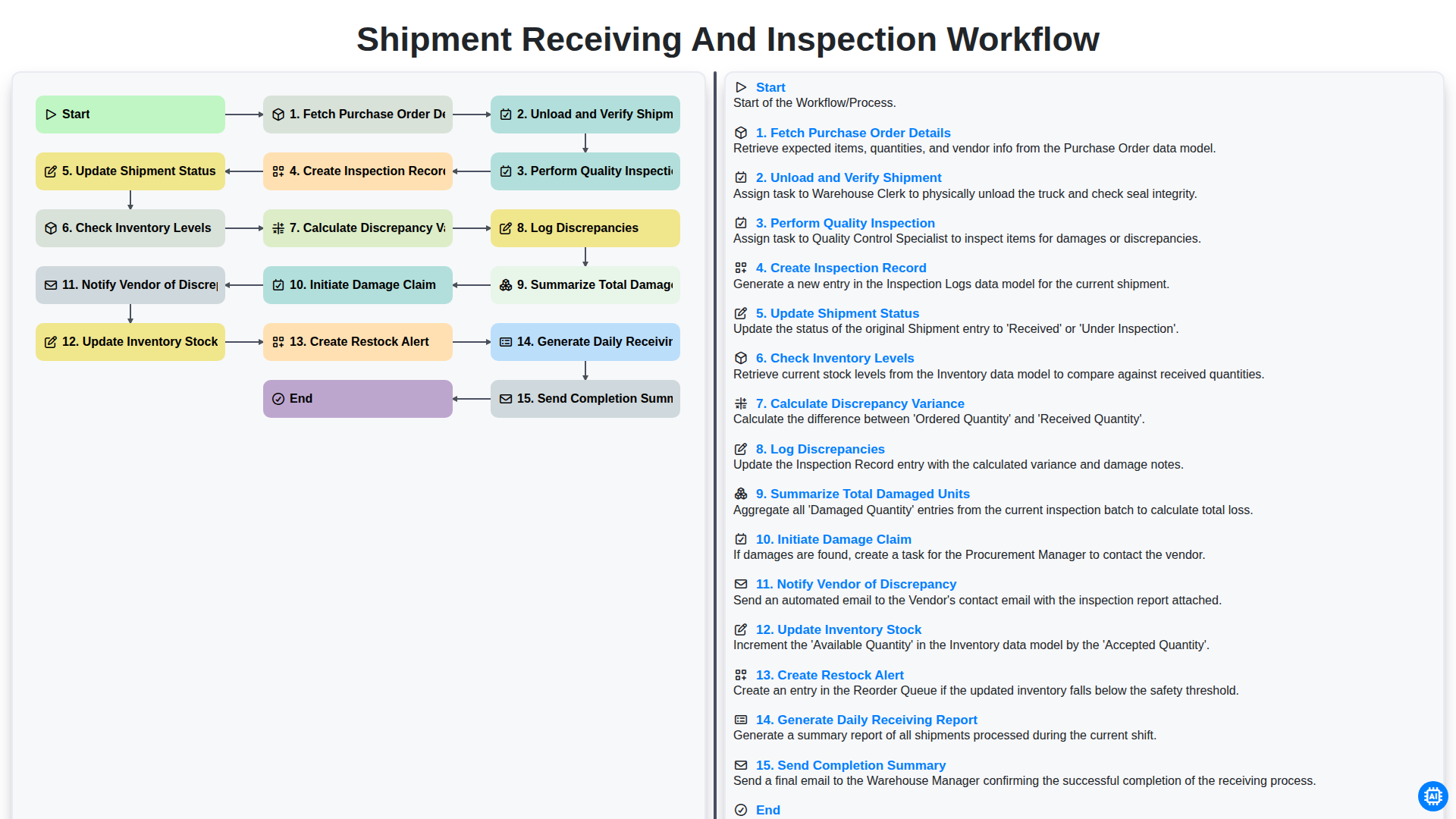
Shipment Receiving and Inspection Workflow: A Step-by-Step Guide to Streamlining Your Logistics Process
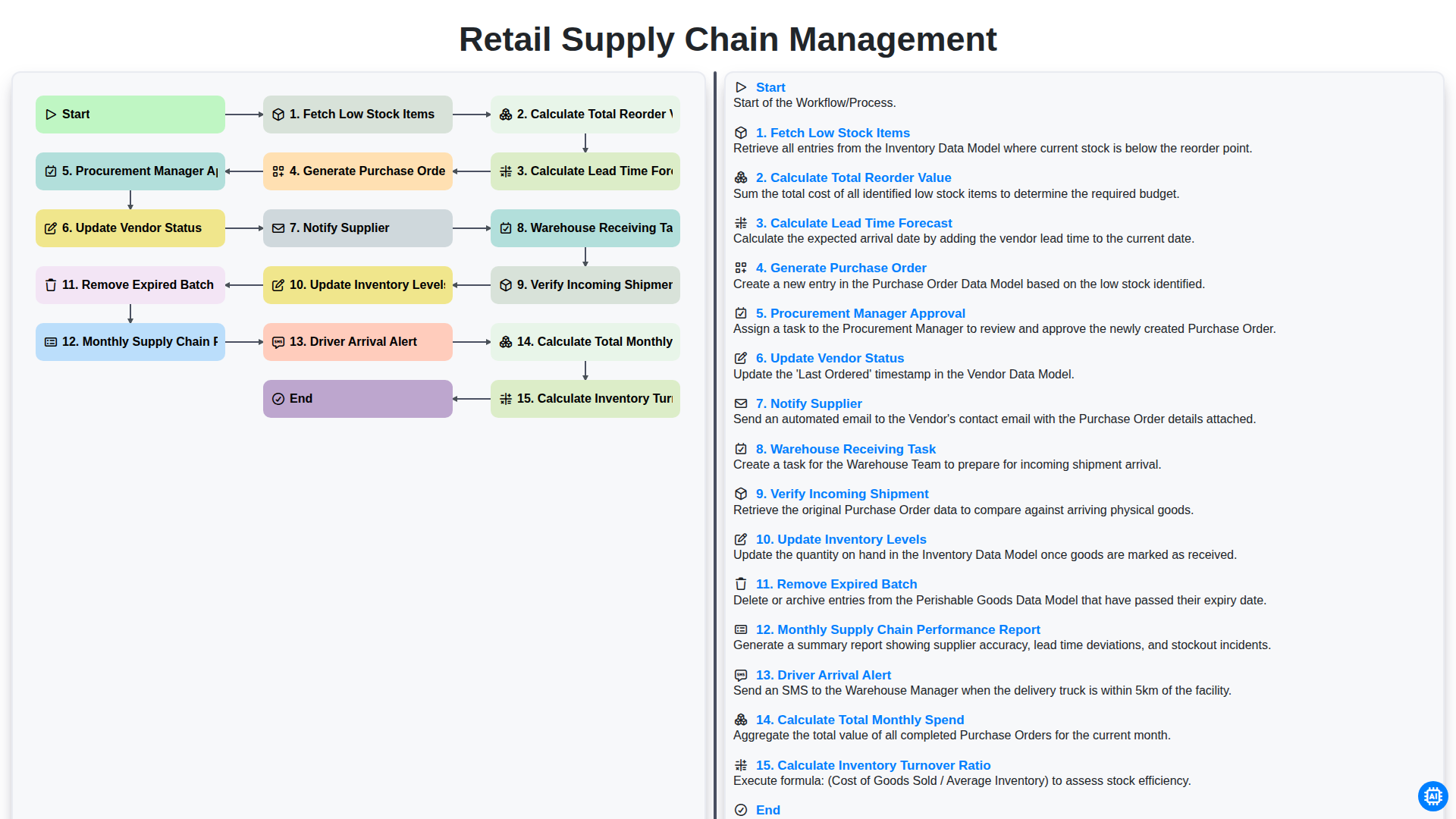
Mastering the Retail Supply Chain: An End-to-End Workflow for Seamless Inventory & Procurement Management

Paper vs ChecklistGuro in Logistics Management
How to Improve your Logistics Management with AI in 2026?
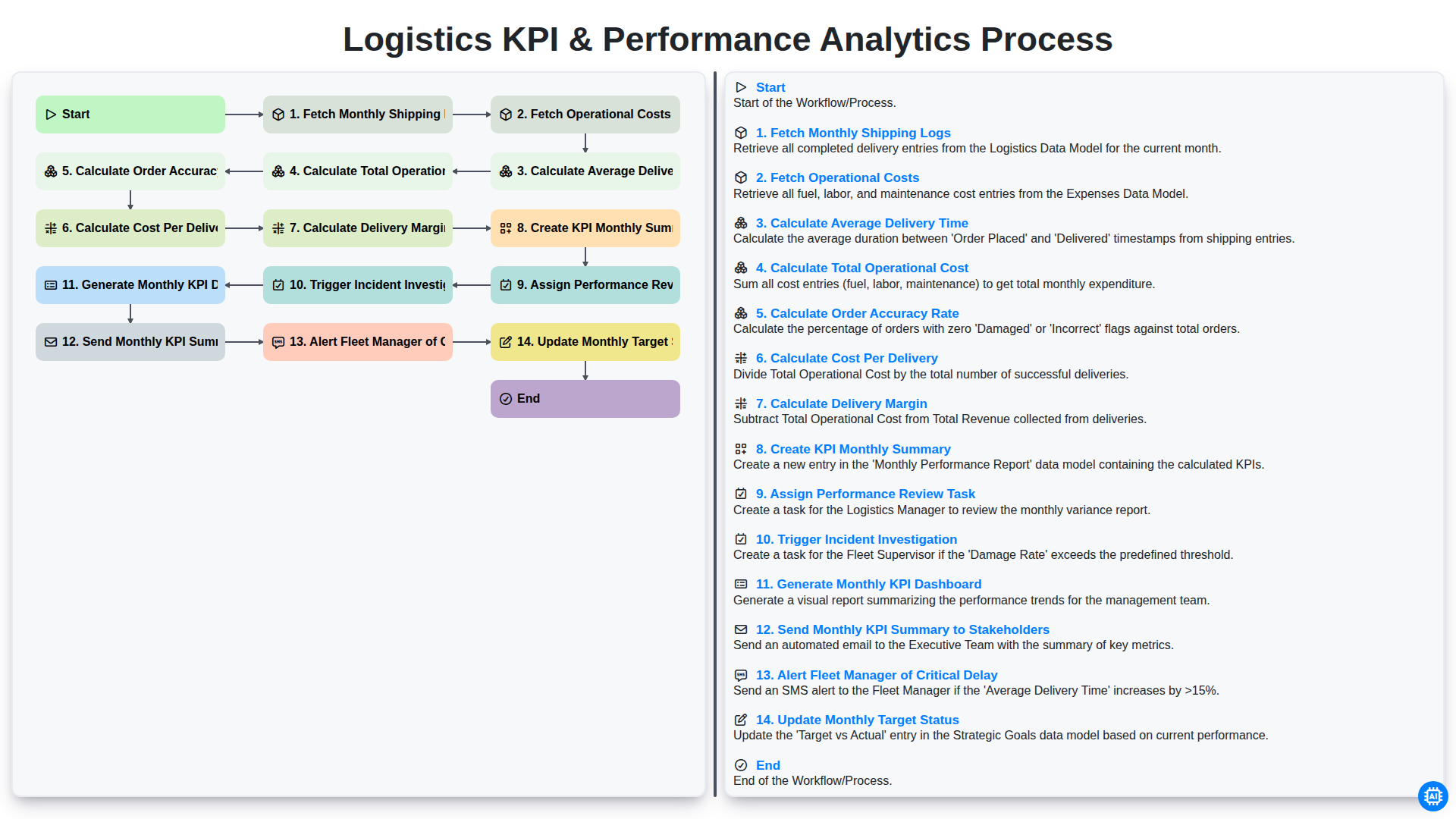
Mastering Logistics Efficiency: A Comprehensive Guide to the KPI & Performance Analytics Process

Excel vs ChecklistGuro in Logistics Management
How to improve your Logistics Management
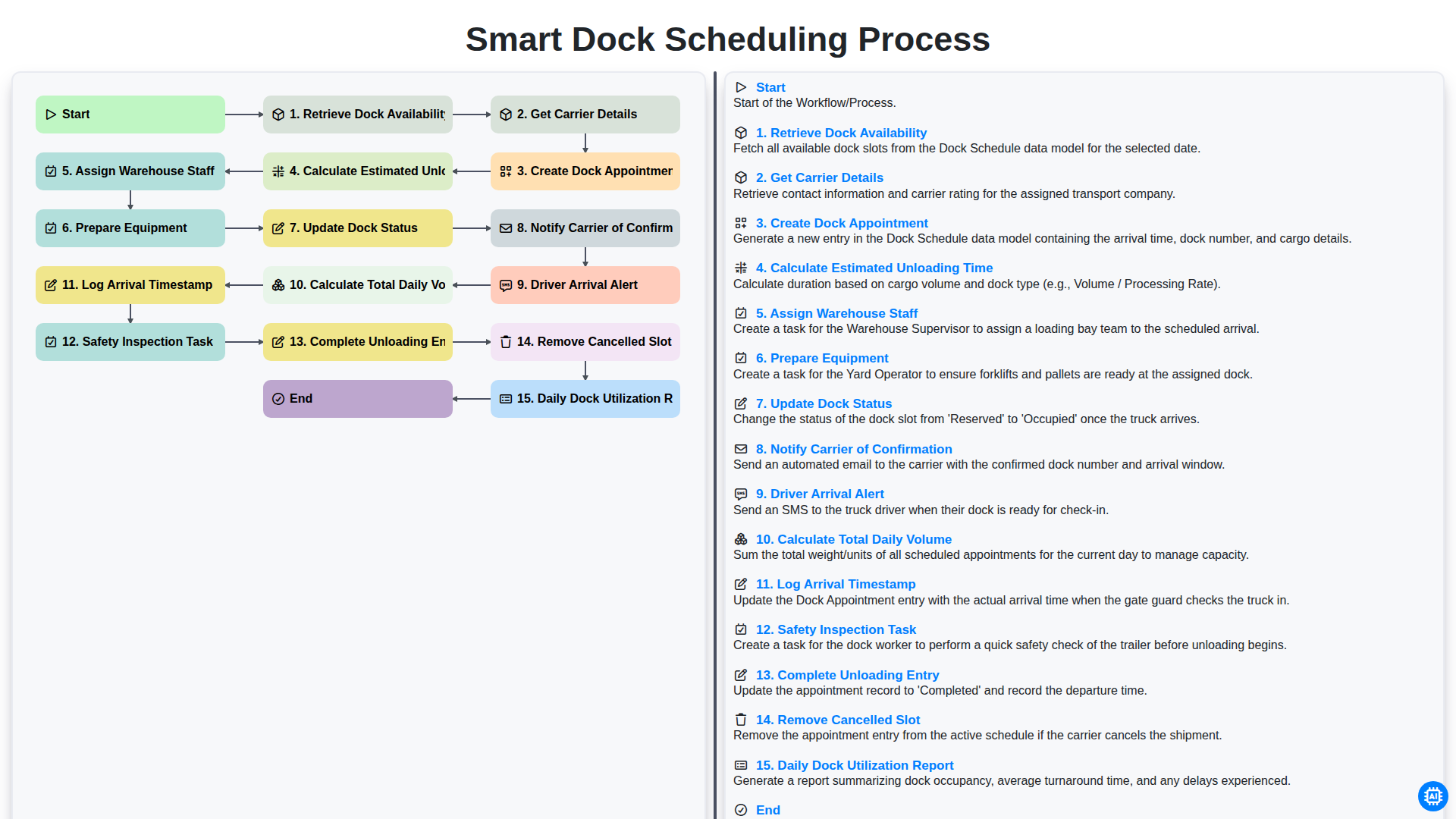
Smart Dock Scheduling Process: A Streamlined Workflow for Efficient Warehouse Operations
Need help with
Checklists?
Have a question? We're here to help. Please submit your inquiry, and we'll respond promptly.