How to improve your Auto Repair Shop Management
Published: 10/26/2025 Updated: 12/13/2025
Table of Contents
- The Challenges of Auto Repair Shop Management
- Why Checklist-Driven Management Matters
- Key Areas to Optimize with Checklists
- Estimates and Work Orders: A Seamless Start
- Repair Process Checklists: Ensuring Quality & Accuracy
- Parts Management: Tracking, Ordering, and Inventory
- Quality Control: Catching Issues Before Delivery
- Customer Communication: Keeping Clients Informed
- Scheduling and Technician Efficiency
- Financial Management & Reporting
- The Power of Software: ChecklistGuro for Auto Repair Shops
- Implementing Checklists: A Step-by-Step Guide
- Resources & Links
TLDR: Feeling overwhelmed running your auto repair shop? This post shows you how checklists - and software like ChecklistGuro - can streamline processes, from initial estimates and repairs to quality checks and customer communication. Get organized, reduce errors, and boost efficiency - all without endless spreadsheets!
The Challenges of Auto Repair Shop Management
Running an auto repair shop presents a unique set of management hurdles. It's more than just fixing cars; it's juggling appointments, managing inventory, ensuring quality control, and keeping customers happy - all while maintaining profitability. Many shop owners struggle with:
- Inconsistent Processes: Without standardized procedures, estimates can vary, repair quality can suffer, and customer experience becomes unpredictable.
- Communication Breakdown: Miscommunication between service advisors, technicians, and customers leads to frustration, delays, and potential rework.
- Inventory Management Issues: Overstocking ties up capital, while stockouts lead to delays and lost revenue. Accurate tracking is crucial.
- Time Management: Technicians' time is precious. Inefficient workflows and unnecessary tasks directly impact your shop's capacity.
- Quality Control Concerns: Ensuring consistently high-quality repairs is vital for reputation and repeat business. A missed detail can lead to costly recalls or negative reviews.
- Profit Margin Pressures: Rising parts costs, labor expenses, and competitive pricing put a constant squeeze on profit margins.
- Lack of Visibility: Without a clear overview of shop operations, it's difficult to identify bottlenecks, track performance, and make informed decisions.
These challenges highlight the need for robust management practices and, increasingly, technology solutions to streamline operations and improve overall efficiency.
Why Checklist-Driven Management Matters
Think about the sheer volume of tasks involved in running an auto repair shop. From initial customer intake and diagnostic assessments to the actual repairs, quality checks, and final delivery - each step requires careful attention and coordination. Relying on memory, verbal instructions, or scattered notes simply isn't sustainable, especially as your shop grows.
Checklist-driven management isn't just about ticking boxes; it's about building a framework for consistency, accuracy, and accountability. Here's why it's a game-changer:
- Reduced Errors & Rework: Standardized checklists minimize the risk of overlooking critical steps, leading to fewer mistakes and less costly rework.
- Improved Efficiency: Clear, defined processes mean technicians spend less time figuring out what to do and more time doing it.
- Enhanced Customer Satisfaction: Consistent service quality and transparent communication build trust and loyalty.
- Better Team Training: New hires can quickly get up to speed with documented procedures.
- Increased Profitability: Optimized workflows and reduced errors directly impact your bottom line.
- Compliance and Legal Protection: Detailed checklists provide a record of work performed, crucial for warranty claims and legal matters.
By implementing checklist-driven processes, you're not just managing tasks; you're building a well-oiled machine that delivers exceptional service and drives business growth.
Key Areas to Optimize with Checklists
Let's dive into the specific areas where checklists can make a significant difference in your auto repair shop's performance. We're not talking about minor tweaks; these are foundational elements that, when standardized, lead to consistent quality and improved profitability.
1. Intake & Estimating: The initial customer interaction sets the tone for the entire experience. A checklist here ensures you gather all necessary information - vehicle details, customer concerns, initial diagnostic notes - leaving no room for miscommunication or overlooked details. This reduces callback rates and improves customer satisfaction.
2. Diagnostic Procedures: Diagnostic work is often the most complex and critical part of the process. A diagnostic checklist ensures technicians follow a systematic approach, checking all relevant systems and components. This minimizes the risk of missed issues and incorrect repairs. It also provides a clear record of the diagnostic process, justifying recommendations to the customer.
3. Repair & Maintenance Tasks: From oil changes to engine overhauls, checklists guarantee all steps are completed correctly and consistently. Include specific torque specifications, fluid levels, and component checks. This not only ensures quality but also helps train new technicians and minimize errors.
4. Quality Control & Inspections: Before a vehicle leaves your shop, a final quality control checklist is essential. This covers everything from fluid leaks and tire pressure to brake functionality and overall cleanliness. It's your last chance to catch potential issues and prevent customer complaints.
5. Parts Management: Inventory control is a major headache for many shops. A parts checklist (especially when integrated with shop management software) can track parts usage, reorder points, and prevent stockouts. It also ensures proper documentation for warranty claims.
6. Customer Communication: Keep customers informed every step of the way. Checklists can guide communication - ensuring you confirm repairs, explain charges clearly, and schedule follow-up appointments. This fosters trust and improves customer loyalty.
By focusing on these key areas, you're laying the groundwork for a well-managed and profitable auto repair business.
Estimates and Work Orders: A Seamless Start
The customer's initial request is the foundation of a successful repair. A rushed or inaccurate estimate can lead to misunderstandings, disputes, and ultimately, dissatisfied customers. Traditional methods - scribbled notes, spreadsheets, or even just relying on memory - are prone to errors and often lack the detail needed for a truly transparent and profitable estimate.
With checklist-driven estimates, you can create a standardized process. Instead of starting from scratch each time, use pre-built checklist templates that cover common services. These templates can include sections for vehicle information, customer concerns, diagnostic procedures, parts needed, labor hours, and a detailed breakdown of costs.
The estimate then transforms directly into a work order when approved. This eliminates redundant data entry, minimizes the risk of discrepancies, and ensures everyone on your team - from the service advisor to the technician - is on the same page. Digital work orders also provide a central location for tracking progress, assigning tasks, and documenting any changes or additions to the original estimate - all with clear audit trails for accountability. Consider including sections for customer authorization, specific disclaimers, and warranty information to protect both your business and the customer.
Repair Process Checklists: Ensuring Quality & Accuracy
A well-defined repair process checklist is the backbone of a consistently high-quality auto repair shop. It's more than just a list of tasks; it's a standardized procedure that ensures every job, regardless of who's performing it, adheres to the same quality standards.
Think about it: different technicians have varying levels of experience and familiarity with different vehicle models. A checklist bridges that gap. It guides them through each step, prompting them to check specific components, torque bolts to the correct specifications, and verify fluid levels - all essential for a safe and reliable repair.
Here's what a typical repair process checklist might include:
- Vehicle Arrival & Inspection: Initial assessment of the vehicle's condition, documenting pre-existing damage and confirming customer concerns.
- Diagnostic Procedures: Step-by-step guide for accurate troubleshooting, including scan tool usage and component testing.
- Parts Ordering & Verification: Ensuring the correct parts are ordered, received, and verified before installation.
- Repair Execution: Detailed instructions for each repair task, including torque specifications and safety precautions.
- Test Drive & Verification: Post-repair test drive to confirm the issue is resolved and all systems are functioning correctly.
- Final Inspection & Documentation: Thorough inspection of the repaired area and documentation of all work performed.
Using checklists also provides a valuable audit trail. If a customer has a question or a problem arises, you have a record of exactly what was done and by whom. This transparency builds trust and reduces the likelihood of disputes. Ultimately, consistent, accurate repair process checklists lead to happier customers, fewer comebacks, and a more profitable business.
Parts Management: Tracking, Ordering, and Inventory
Keeping a handle on parts is a constant headache for many auto repair shops. Overstocking ties up valuable capital, while running out of essential components delays repairs and frustrates customers. A robust parts management system isn't just about knowing what you have; it's about anticipating needs and optimizing your inventory.
Here's how a well-structured system - often facilitated by software - can help:
- Detailed Tracking: Implement a system to track every part - its location, cost, supplier, and usage. Knowing exactly where a part is and how often it's used provides invaluable data.
- Automated Ordering: Set reorder points for common parts. When stock levels dip below these points, automatic order requests can be generated, preventing shortages. Integrate with suppliers for real-time pricing and availability updates.
- Inventory Valuation: Accurate inventory valuation is vital for financial reporting. Regularly assess and update part values to reflect market fluctuations.
- Core Management: Properly tracking and managing core returns (rebuilt or remanufactured parts) is crucial for maximizing profit. Implement a clear return process and ensure cores are returned promptly.
- Reduced Errors: Minimize the risk of ordering the wrong parts or losing track of existing stock. Standardized processes and digital tracking significantly reduce human error.
A digital system like ChecklistGuro can automate many of these tasks, providing a centralized view of your parts inventory and streamlining the ordering process.
Quality Control: Catching Issues Before Delivery
Quality control isn't just a final check; it's woven into the entire repair process. A robust checklist system can ensure every step is verified, minimizing the chance of overlooking critical details. Think beyond the visual inspection. A dedicated checklist can prompt technicians to confirm fluid levels were topped off, all bolts were tightened to the manufacturer's specification, and diagnostic tools were properly reset.
We recommend creating separate checklists for different services. A brake job checklist would include confirming pad thickness, rotor condition, and proper brake line connections. An oil change checklist could cover filter installation, drain plug torque, and a final test drive.
These checklists aren't just about preventing errors; they also provide a documented record of the work performed. This is invaluable for warranty claims, customer disputes, and demonstrating your shop's commitment to quality. Furthermore, using a digital checklist allows for photos and notes to be attached, providing visual proof of work completed and any issues found. Ultimately, consistent quality control builds trust and fosters customer loyalty.
Customer Communication: Keeping Clients Informed
Clear, consistent communication is paramount in the auto repair industry. Customers are often anxious about their vehicles and appreciate being kept in the loop. A checklist-driven approach to customer communication ensures no detail is missed.
Here's how checklists can help:
- Estimate Confirmation: Immediately after an estimate is created, a checklist item should trigger an automated email or SMS confirmation to the customer, outlining the proposed work and cost. This reduces surprises and builds trust.
- Repair Status Updates: Set up checklists to automatically send updates at key milestones - e.g., Parts Ordered, Repair Started, Repair Complete. Include estimated completion times whenever possible.
- Explanation of Repairs: A checklist item should prompt technicians to explain the completed repairs in clear, understandable language, avoiding technical jargon. This can be included in a final inspection report or emailed directly to the customer.
- Post-Repair Follow-Up: A final checklist item should trigger a follow-up call or email a few days after the vehicle is returned, ensuring customer satisfaction and identifying any potential issues.
- Service Reminders: Utilize checklist-integrated reminders to proactively contact customers for scheduled maintenance, fostering loyalty and generating repeat business.
By incorporating these communication checkpoints into your workflow, you create a more transparent and customer-centric experience, leading to increased loyalty and positive reviews.
Scheduling and Technician Efficiency
Managing technician time is a constant juggling act. Missed appointments, technicians waiting for work, and rushed jobs all contribute to lost revenue and frustrated customers. A robust checklist system, especially when integrated with scheduling software, can drastically improve this.
Here's how checklists can address common scheduling and technician efficiency challenges:
- Appointment Confirmation & Prep: Automated checklists can be triggered when an appointment is booked. These can include sending confirmation emails/texts to customers, prepping the bay with necessary tools and parts, and even assigning preliminary diagnostic tasks.
- Detailed Job Cards: No more scribbled notes! ChecklistGuro allows you to create detailed job cards linked directly to the customer's vehicle and the scheduled service. These cards guide technicians through each step, ensuring consistency and accuracy.
- Real-Time Technician Availability: Integrated checklists provide visibility into each technician's current workload and availability. This allows for better allocation of jobs based on skill set and urgency.
- Progress Tracking: Know exactly where each job stands. Checklists can be updated in real-time, allowing managers and customers to track progress and anticipate completion times. This transparency builds trust and minimizes calls asking for updates.
- Post-Repair Quality Checks: A final checklist ensures all repairs are completed to your shop's high standards and that all documentation is accurate before the vehicle is returned to the customer.
Financial Management & Reporting
Accurate financial management is the backbone of any successful auto repair shop. Beyond just tracking income and expenses, it's about understanding profitability, identifying areas for improvement, and making informed decisions. Without a clear picture of your financial health, you're essentially flying blind.
Traditional methods like spreadsheets can quickly become cumbersome and error-prone, especially as your shop grows. Tracking labor costs, parts inventory, and service revenue all in one place, while also generating profit and loss statements, can feel like a full-time job in itself.
ChecklistGuro, and similar software solutions, offer a centralized platform to automate these financial processes. You can:
- Track Labor Costs Accurately: Tie labor hours directly to specific repair orders and services.
- Manage Parts Inventory & Costs: Monitor part usage, track costs, and optimize ordering to minimize waste and maximize profit margins.
- Generate Detailed Reports: Gain insights into revenue streams, profitability by service type, and overall shop performance with customizable reports.
- Automate Invoice Generation: Streamline billing and reduce administrative overhead.
- Improve Cash Flow Management: Get a real-time view of outstanding invoices and manage payments more effectively.
By automating these financial tasks and gaining access to clear, actionable data, you can free up valuable time and resources to focus on growing your business and serving your customers better.
The Power of Software: ChecklistGuro for Auto Repair Shops
While paper checklists have their place, the limitations become apparent quickly in a busy auto repair shop. Imagine trying to track dozens of vehicles, each with unique service requirements, across multiple technicians - all on paper! Errors are inevitable, communication breakdowns occur, and valuable time is lost.
That's where software like ChecklistGuro steps in. We're not just offering digital checklists; we're providing a comprehensive platform designed specifically to address the nuances of auto repair shop management.
Here's how ChecklistGuro empowers your business:
- Customizable Checklists: Create checklists for every service you offer - oil changes, brake jobs, engine diagnostics, and everything in between. Tailor them to match your specific processes and equipment.
- Real-time Visibility: Know exactly what every technician is working on, the status of each vehicle, and any outstanding tasks. No more chasing down information.
- Automated Notifications: Set up automated reminders for technicians, service advisors, and even customers, ensuring nothing falls through the cracks.
- Centralized Communication: Keep all service information, customer notes, and repair history in one easily accessible location, eliminating confusion and improving collaboration.
- Improved Accuracy & Reduced Errors: Minimize human error through standardized procedures and built-in verification steps.
- Detailed Reporting & Analytics: Track key performance indicators (KPIs) like repair times, labor costs, and customer satisfaction, allowing you to identify areas for improvement.
- Mobile Accessibility: Equip your technicians with mobile devices to access and update checklists directly from the shop floor.
ChecklistGuro goes beyond simple task management; it's your digital assistant for optimizing every aspect of your auto repair shop.
Implementing Checklists: A Step-by-Step Guide
Implementing checklists isn't about adding more work; it's about working smarter. Here's a phased approach to successfully integrating them into your auto repair shop:
1. Identify Key Processes: Don't try to checklist everything at once. Start with your most critical and frequently performed tasks. Think: Initial Customer Intake, Diagnostic Assessments, Specific Repair Procedures (brake jobs, oil changes, engine repairs), Quality Inspections, and Final Delivery. List them out!
2. Define Checklist Components: For each process, break it down into specific, actionable steps. Be detailed. For example, a Brake Job checklist might include: Inspect brake pads, Measure rotor thickness, Clean and lubricate caliper, Torque lug nuts to specification, etc. Each step should have clear acceptance criteria - what needs to be true for the step to be considered complete.
3. Choose Your Checklist Format: You can start with simple paper checklists, but truly scalable solutions involve digital checklists. Consider using spreadsheet software or, even better, a dedicated platform like ChecklistGuro. Digital checklists offer advantages like real-time updates, automated reminders, and data tracking.
4. Assign Responsibility & Train Your Team: Clearly assign ownership of each checklist to specific technicians or team members. Training is essential. Everyone needs to understand why the checklist exists and how to accurately perform and document each step. Demonstrate the process, answer questions, and emphasize the importance of adherence.
5. Pilot and Iterate: Don't roll out checklists shop-wide immediately. Start with a small pilot group or a single service bay. Observe how the checklists are used, gather feedback from your team, and make adjustments. Are steps missing? Are instructions unclear? Refine the checklists based on this feedback.
6. Continuous Improvement: Checklist usage shouldn't be a "set it and forget it" activity. Regularly review your checklists - perhaps quarterly - to ensure they're still relevant, accurate, and effective. As your processes evolve, your checklists should too. Look for ways to further refine steps and improve efficiency.
Resources & Links
- Auto Repair Management: Provides a broad overview of auto repair shop management topics, including marketing, operations, and customer service, offering numerous articles and insights.
- Shop Systems: Offers a range of resources and training for auto repair shops, covering management, marketing, and operational efficiency. Focuses on structured processes and improvement strategies.
- Automotive Service Association (ASA): A professional association offering resources, training, and advocacy for auto repair shops, including information on best practices and industry standards. Useful for understanding industry trends and compliance.
- Repair Driver: Provides resources, articles, and templates specifically for auto repair shop owners, covering topics like marketing, workflow optimization, and financial management. Offers actionable advice for increasing profitability.
- CCC Intelligent Solutions: Provides software and data solutions for the automotive claims and repair process. Although primarily focused on insurance, their insights on workflow and data management are relevant to shop optimization.
- MITO Professional: Focuses on marketing and customer retention for auto repair shops, providing training programs and resources. Valuable for understanding how to improve customer communication and build loyalty.
- AutoData: Provides technical information and repair data for automotive professionals. Crucial for ensuring technicians have the correct information, improving accuracy and efficiency in repairs. Especially relevant for 'Repair Process Checklists'.
- Parts Solutions: Specializes in parts management software and solutions for automotive repair shops, addressing the challenges of tracking, ordering, and inventory. Directly applicable to 'Parts Management' section.
- Repair Operations: Provides articles and insights on shop operations, marketing, and customer service in the automotive repair industry, helpful for improving scheduling and technician efficiency.
- NAPA Auto Parts: While primarily a parts supplier, NAPA offers resources and articles for auto repair professionals, including tips on shop management and efficiency. Useful for 'Parts Management' content.
- ChecklistGuro: The software mentioned in the article, offering checklist management and workflow automation, directly related to the 'The Power of Software' section. Demonstrates its features and benefits for auto repair shops.
- QuickBooks: Popular accounting software, essential for 'Financial Management & Reporting'. Offers features for tracking income, expenses, and generating financial statements.
Frequently Asked Questions
What are the biggest challenges auto repair shops face?
Common challenges include managing inventory, scheduling appointments, controlling labor costs, marketing to attract new customers, and keeping up with evolving technology and vehicle complexity.
Why is good shop management important for profitability?
Effective management streamlines operations, reduces waste, improves efficiency, boosts customer satisfaction (leading to repeat business and referrals), and ultimately increases your shop's profit margin.
What are some key areas I should focus on when improving shop management?
Focus on areas like appointment scheduling, inventory management, diagnostic processes, employee training, customer communication, marketing, and financial tracking. Addressing these areas holistically leads to the greatest impact.
How can I improve my appointment scheduling system?
Implement online booking, utilize a scheduling software with automated reminders, block out time for specific tasks, optimize appointment durations, and stagger appointment times to minimize wait times.
What are some basic inventory management techniques I should implement?
Implement a parts inventory system (manual or digital), track parts usage, perform regular inventory counts, order parts strategically based on demand, and consider vendor relationships for better pricing and delivery.
How can I better manage labor costs?
Track mechanic hours accurately, optimize workflow to minimize wasted time, provide ongoing training to improve efficiency, clearly define job responsibilities, and implement performance-based incentives.
What is the role of customer relationship management (CRM) in shop management?
A CRM system helps you track customer information, communication history, service records, and preferences. This allows for personalized service, targeted marketing, and improved customer retention.
How can I use technology to improve my shop's management?
Consider using shop management software for scheduling, inventory, invoicing, and reporting; utilize online marketing tools for attracting new customers; and leverage diagnostic tools for efficient and accurate repairs.
How important is employee training and what areas should I focus on?
Ongoing training is crucial for maintaining quality, safety, and customer satisfaction. Focus on technical skills, diagnostic procedures, customer service, and shop management processes.
What are some key performance indicators (KPIs) I should track?
Track metrics like labor efficiency, customer retention rate, average repair order value, customer satisfaction scores, and inventory turnover rate to measure performance and identify areas for improvement.
Comments
There are no comments yet. Be the first to add one!
Auto Repair Shop Management Solution Demo
Level up your auto repair shop & boost profits! ChecklistGuro simplifies job tracking, inventory management, and customer communication. Improve efficiency, reduce errors, & enhance customer satisfaction. Manage it all with our Work OS.
Related Articles
The Ultimate Auto Repair Shop Customer Follow-Up Checklist Template
Auto Repair Shop Checklist Template: Operations & Compliance
Your Ultimate Guide to Auto Repair Shop Environmental Compliance: A Checklist Template
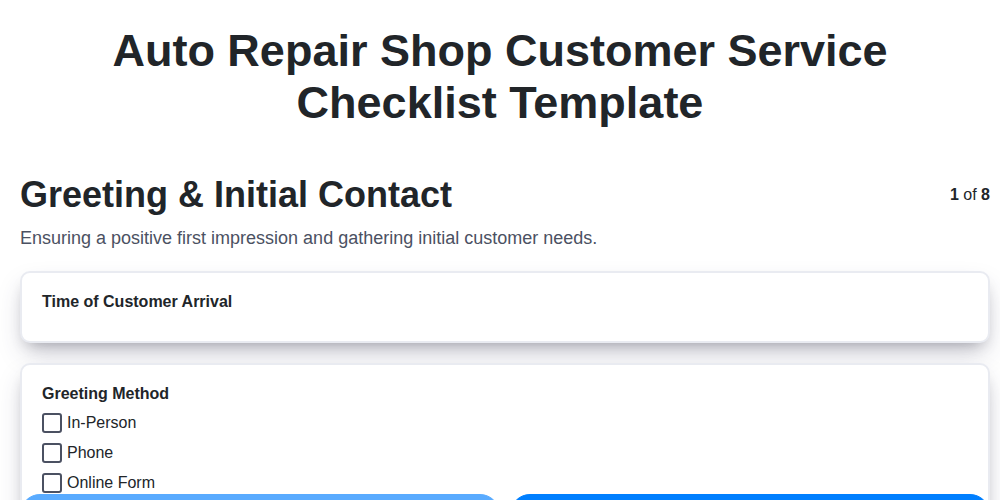
Level Up Your Auto Repair: The Ultimate Customer Service Checklist Template
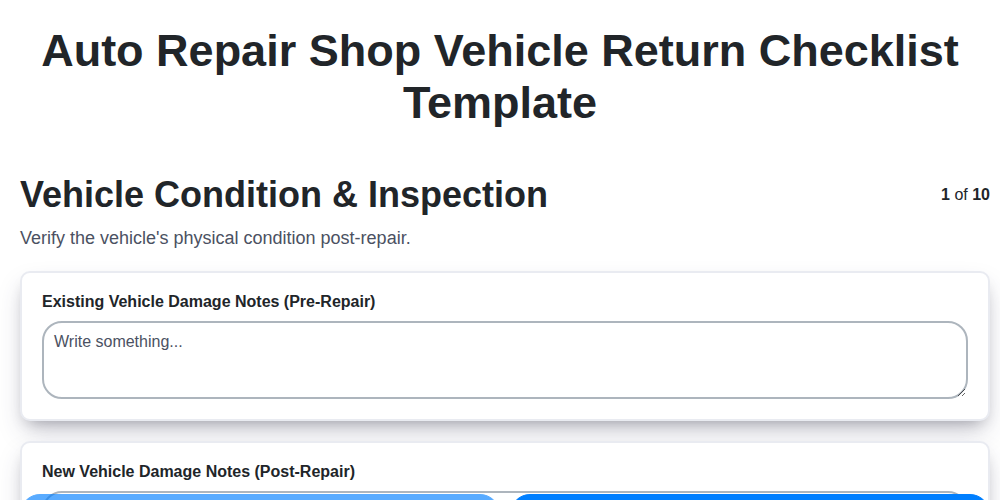
The Ultimate Vehicle Return Checklist for Auto Repair Shops
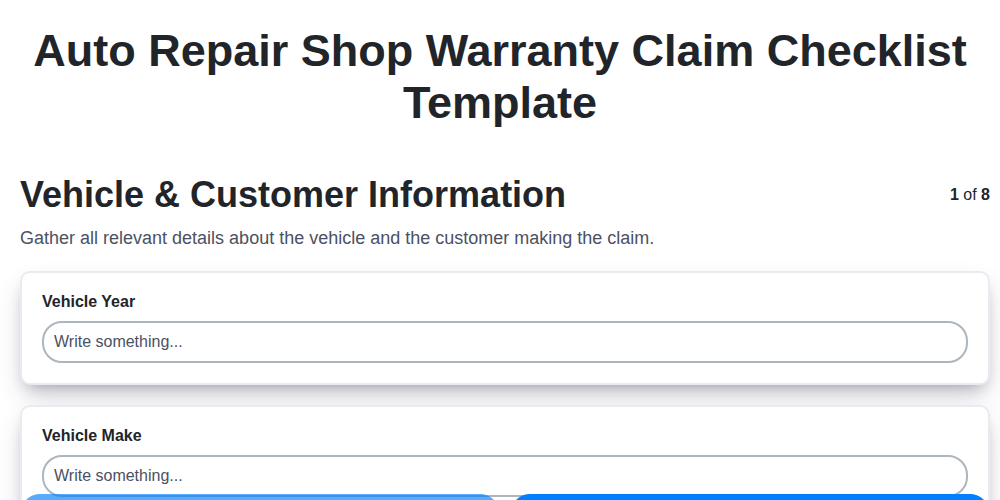
Mastering Warranty Claims: Your Auto Repair Shop Checklist Template
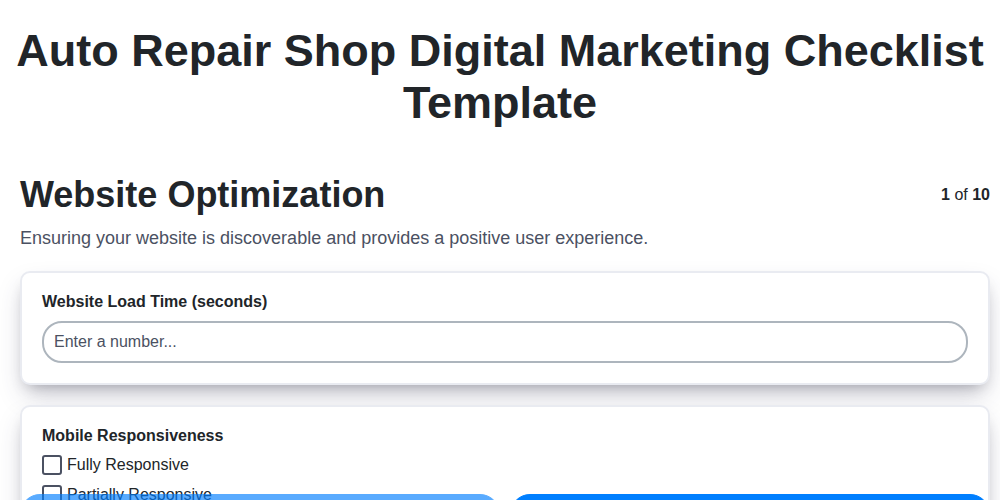
Auto Repair Shop Digital Marketing Checklist Template
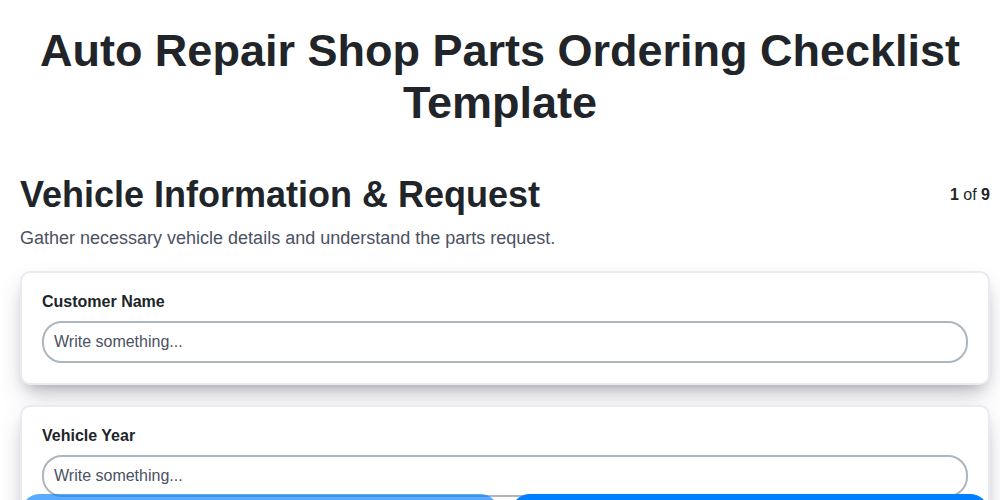
Streamline Your Shop: The Ultimate Auto Repair Parts Ordering Checklist Template
We can do it Together
Need help with
Checklists?
Have a question? We're here to help. Please submit your inquiry, and we'll respond promptly.