How to Improve your Material Requirements Planning (MRP) Management with AI in 2026?
Published: 05/10/2026 9:00 PM Updated: 05/11/2026 11:43 AM
Table of Contents
- The Evolution of MRP: Why Traditional Methods are Failing in 2026
- Understanding the Shift from Reactive to Predictive Planning
- The Role of Artificial Intelligence in Modern Material Requirements Planning
- Key Benefits of Integrating AI into Your MRP Workflow
- Meet Tony: How Our AI Assistant Transforms Complex Data into Actionable Insights
- Automating Demand Forecasting with Machine Learning
- Optimizing Safety Stock Levels to Prevent Overstocking and Stockouts
- Real-Time Supply Chain Visibility and Risk Mitigation
- Reducing Human Error through Intelligent Automation
- Integrating AI-Driven MRP with Your Existing Work OS Ecosystem
- Step-by-Step: Implementing AI-Enhanced MRP via ChecklistGuro
- Measuring Success: KPIs for AI-Powered Production Management
- Future-Proofing Your Business Strategy for 202 better management
- Resources & Links
TLDR: Streamline your supply chain operations with this comprehensive AI-driven MRP management checklist. Learn how to leverage Tony, our advanced AI Assistant, to automate demand forecasting, optimize inventory levels, and eliminate manual errors, ensuring your production planning stays ahead of the curve in 2026.
The Evolution of MRP: Why Traditional Methods are Failing in 2026
The era of manual spreadsheets and static forecasting is officially over. As we move through 2026, the global supply chain has become too volatile for traditional Material Requirements Planning (MRP) methods to remain effective. The primary downfall of legacy systems lies in their reactive nature; they rely heavily on historical data and human input, which creates a dangerous lag between market shifts and operational response.
In today's landscape, business owners are facing unprecedented pressures: sudden shifts in consumer demand, unpredictable logistics disruptions, and skyrocketing raw material costs. Traditional MRP processes struggle to process these variables in real-time, leading to the two most expensive mistakes in manufacturing: stockouts that halt production or excess inventory that ties up critical working capital.
The static approach-relying on fixed lead times and manual replenishment triggers-cannot account for the black swan events that have become part of the modern business routine. To maintain a competitive edge, managers can no longer rely on looking in the rearview mirror. To survive the complexities of 2026, your MRP needs to move from a system of record to a system of intelligence.
Understanding the Shift from Reactive to Predictive Planning
For years, the standard approach to Material Requirements Planning (MRP) has been fundamentally reactive. Traditional systems rely on historical data to tell you what happened in the past, leaving managers to scramble when unexpected supply chain disruptions or sudden spikes in demand occur. In this old-school model, your team is constantly firefighting-chasing late deliveries, managing stockouts, and dealing with the ripple effects of inaccurate lead times.
As we move into 2026, the landscape of manufacturing and distribution has become too volatile for reactive management to suffice. The industry is undergoing a massive paradigm shift toward predictive planning.
Instead of simply responding to shortages after they occur, modern MRP management utilizes AI to anticipate them before they impact your bottom line. By integrating AI-driven insights into your workflows, you move away from a detect and react cycle toward a predict and prevent strategy. This shift allows you to transition from managing crises to managing growth, transforming your supply chain from a cost center into a competitive advantage.
The Role of Artificial Intelligence in Modern Material Requirements Planning
As we move into 2026, the days of relying solely on static spreadsheets and reactive manual adjustments are fading. Traditional Material Requirements Planning (MRP) has long struggled with the lag effect-the delay between a market shift and a manual update in your system. This is where Artificial Intelligence transforms the equation from a reactive process to a predictive powerhouse.
AI changes the fundamental nature of MRP by shifting the focus from what happened to what will happen. Unlike legacy systems that simply calculate quantities based on fixed lead times, AI-driven MRP utilizes machine learning algorithms to analyze vast datasets, including historical demand patterns, seasonal fluctuations, and even external market signals. This allows for a dynamic approach to resource allocation, where the system can anticipate supply chain disruptions before they hit your factory floor.
In the context of modern manufacturing, AI acts as the brain of your operations. It processes complex variables-such as fluctuating raw material costs, shipping delays, and changing production priorities-at a speed impossible for human planners. By integrating AI into your MRP workflow, you aren't just managing data; you are gaining actionable intelligence that ensures your inventory levels are always optimized, reducing both capital tied up in excess stock and the costly risks of stockouts.
Key Benefits of Integrating AI into Your MRP Workflow
Transitioning from traditional, manual MRP processes to an AI-enhanced workflow is no longer just an advantage-in 2026, it is a necessity for staying competitive. By integrating AI into your Material Requirements Planning, you move from a reactive state to a proactive one. Here are the primary advantages:
- Predictive Accuracy vs. Reactive Guesswork: Traditional MRP relies heavily on historical data and static lead times. AI, powered by tools like Tony, analyzes complex patterns, seasonal trends, and even external market shifts to predict demand fluctuations before they impact your stock levels.
- Automated Anomaly Detection: Human error in data entry or unexpected supply chain disruptions can derail an entire production schedule. AI continuously monitors your entire inventory ecosystem, instantly flagging discrepancies, potential shortages, or delayed shipments, allowing you to resolve issues before they become costly downtime.
- Optimized Safety Stock Levels: One of the biggest drains on business capital is excess inventory. AI calculates the sweet spot for your safety stock, ensuring you have enough buffer to prevent stockouts without tying up unnecessary cash in overstock.
- Intelligent Decision Support: Instead of sifting through endless spreadsheets, managers can use the ChecklistGuro AI Assistant to query complex datasets using natural language. You can ask, Tony, how will a 10% delay from our primary steel supplier affect our Q3 production? and receive actionable insights in seconds.
- Dynamic Lead Time Adjustment: In a volatile global market, lead times are rarely static. AI learns from real-time logistics data to automatically adjust your planning parameters, ensuring your procurement schedules always reflect the current reality of the supply chain.
Meet Tony: How Our AI Assistant Transforms Complex Data into Actionable Insights
Navigating the complexities of Material Requirements Planning often feels like trying to solve a massive, moving puzzle. Between fluctuating lead times, unpredictable demand spikes, and shifting supplier reliability, the sheer volume of data can overwhelm even the most experienced managers. This is where Tony, our intelligent AI Assistant integrated directly into ChecklistGuro, changes the game.
Tony isn't just a chatbot; he is a specialized analytical engine designed to act as an extension of your planning team. Instead of manually scouring spreadsheets to identify shortages or surpluses, you can simply interact with Tony to get immediate, high-level intelligence.
Here is how Tony transforms your MRP workflow:
- Predictive Pattern Recognition: While traditional MRP systems look backward at historical data, Tony looks forward. He analyzes trends and anomalies to alert you to potential stockouts before they happen, allowing you to adjust orders proactively.
- Instant Data Synthesis: Stop digging through layers of sub-menus. You can ask Tony complex questions like, Which raw materials are at risk due to the upcoming holiday shipping delays? or Summarize our current inventory health for the automotive component line, and receive a concise, actionable summary in seconds.
- Automated Decision Support: Tony identifies discrepancies between your planned production schedule and current stock levels. He doesn't just point out the problem; he suggests specific adjustments, such as reorder quantities or alternative supplier routing, turning what happened into what to do next.
- Seamless Integration with Your Checklists: Because Tony lives within the ChecklistGuro ecosystem, his insights are directly tied to your operational workflows. He can automatically update your procurement checklists or trigger alerts within your task management system, ensuring that intelligence leads directly to execution.
With Tony, the goal shifts from managing data to managing outcomes. He removes the cognitive load of manual computation, allowing you to focus on high-level strategy while he handles the granular complexity of your material requirements.
Automating Demand Forecasting with Machine Learning
In the era of 2026, the days of relying solely on historical spreadsheets and gut feelings for demand forecasting are over. Traditional MRP systems often struggle with market volatility and sudden shifts in consumer behavior, leading to the twin perils of costly overstocking or devastating stockouts.
By integrating Machine Learning (ML) into your MRP workflow through ChecklistGuro, you transition from reactive planning to predictive intelligence. Our AI Assistant, Tony, doesn't just look at what you sold last month; he analyzes complex datasets, including seasonal trends, economic indicators, and even external market shifts, to identify patterns invisible to the human eye.
By implementing this automated approach, your business can achieve a higher level of precision in predicting future requirements. This means your replenishment orders are triggered by actual projected demand rather than outdated assumptions, significantly reducing capital tied up in excess inventory and ensuring your production lines never grind to a halt due to missing components.
Optimizing Safety Stock Levels to Prevent Overstocking and Stockouts
Maintaining the delicate balance between having too much capital tied up in excess inventory and facing the dreaded out-of-stock scenario is one of the greatest challenges in manufacturing. Traditional MRP methods often rely on static formulas and historical averages that fail to account for the volatile market shifts we see in 2026.
This is where integrating AI into your checklist changes the game. Instead of relying on fixed safety stock parameters, an AI-driven approach allows you to implement dynamic safety stock optimization. By using Tony, our AI Assistant, you can move beyond simple manual calculations. Tony analyzes real-time variables-such as sudden shifts in lead times, fluctuating supplier reliability, and even emerging global logistics trends-to suggest real-time adjustments to your stock buffers.
By following this checklist, you will learn how to transition from a reactive guesswork model to a proactive, predictive strategy. The goal is to use AI to identify the sweet spot where your inventory levels are lean enough to maximize cash flow, yet robust enough to absorb supply chain shocks without interrupting your production schedule.
Real-Time Supply Chain Visibility and Risk Mitigation
In the volatile market landscape of 2026, reactive management is no longer enough to maintain a competitive edge. Traditional MRP systems often suffer from a dangerous time lag-the gap between a disruption occurring and your team realizing it. This delay can lead to stockouts, bloated safety stocks, or costly production halts.
By integrating AI into your MRP workflow via ChecklistGuro, you transition from reactive troubleshooting to proactive orchestration. Our AI Assistant, Tony, acts as your 24/7 digital watchdog, scanning your entire supply chain ecosystem for anomalies. Whether it is a sudden delay in raw material shipments, a geopolitical shift impacting logistics, or an unexpected spike in supplier lead times, Tony identifies these signals as they happen.
Instead of manually scouring spreadsheets to find where a bottleneck might occur, the AI-powered checklist guides you through automated risk assessment. It doesn't just flag a problem; it analyzes the ripple effects across your entire Bill of Materials (BOM) and suggests immediate mitigation strategies-such as re-routing orders or adjusting production schedules. This level of real-time visibility ensures that your material planning is always based on the most current data, turning potential supply chain crises into manageable, automated adjustments.
Reducing Human Error through Intelligent Automation
In traditional MRP management, the margin for human error is dangerously slim. Manual data entry, spreadsheet fatigue, and the sheer complexity of managing lead times, safety stocks, and supplier delays often lead to costly mistakes-ranging from unexpected stockouts to expensive overstocking. When your planning relies on manual calculations, a single typo or a missed update can ripple through your entire production cycle, causing a domino effect of delays and budget overruns.
By integrating AI into your MRP workflow via ChecklistGuro, you transition from reactive firefighting to proactive management. Our AI Assistant, Tony, acts as a continuous digital auditor. Unlike a human planner who may overlook a shifting trend, Tony processes massive datasets in real-time, identifying discrepancies and anomalies instantly.
Automated intelligent systems don't just input data; they interpret it. Tony can cross-reference incoming purchase orders with current inventory levels and historical consumption patterns to flag inconsistencies before they reach the production floor. By delegating the repetitive, high-precision tasks to AI, your team is freed from the drudgery of data verification, allowing them to focus on high-level strategic decision-making. In 2026, the goal isn't just to automate-it's to use intelligence to build a fail-safe environment where human error is caught by design, not by chance.
Integrating AI-Driven MRP with Your Existing Work OS Ecosystem
The true power of AI in manufacturing doesn't come from using a standalone tool in isolation; it comes from seamless integration. The most significant challenge businesses face in 2026 is data siloing-where your inventory levels, supplier lead times, and production schedules live in separate, disconnected spreadsheets. This fragmentation is exactly where traditional MRP systems fail.
By integrating AI-driven MRP capabilities directly into your existing Work OS, such as ChecklistGuro, you transform your operations from a series of disconnected tasks into a unified, intelligent ecosystem. When your MRP logic lives within your daily workflow, the data doesn't just sit in a database; it becomes actionable.
When you use the ChecklistGuro ecosystem, your MRP processes are no longer a separate administrative burden. Instead, they are woven into the very checklists and workflows your team uses every day. This integration allows Tony, our AI Assistant, to act as the connective tissue between your operational tasks and your high-level planning.
Instead of manually cross-referencing a production schedule with a stock report, Tony can monitor your active checklists in real-time. As tasks are completed or delayed, the AI automatically recalculates your material needs and alerts you to potential shortages before they become production halts. This creates a continuous feedback loop where every completed checklist informs your future procurement strategy, turning your Work OS into a self-optimizing engine of efficiency.
Step-by-Step: Implementing AI-Enhanced MRP via ChecklistGuro
Transitioning from traditional, manual spreadsheet tracking to an AI-driven ecosystem doesn't have to be overwhelming. By using ChecklistGuro, you can follow a structured roadmap to integrate artificial intelligence into your existing workflows. Follow these essential steps to transform your MRP management:
1. Audit Your Current Data Integrity
Before introducing AI, you must ensure your foundation is solid. Use our initial Data Hygiene Checklist to identify gaps in your current inventory records, lead times, and Bill of Materials (BOM). AI is only as good as the data it consumes; cleaning your historical data ensures Tony can provide accurate forecasts.
2. Digitizing the Workflow via ChecklistGuro
The first step in implementation is moving your processes out of static documents and into our Work OS. Upload your existing workflows into our customizable templates. This creates a single source of truth where every task, from raw material procurement to finished goods distribution, is tracked in real-time.
3. Integrating Tony: Your AI Planning Assistant
Once your workflows are digitized, activate Tony, your AI Assistant. Start by feeding your historical usage patterns into the platform. You don't need to be a data scientist; simply use the integrated prompts within our checklists to ask Tony to:
- Identify potential stockouts before they occur.
- Analyze seasonal trends in your supply chain.
- Suggest optimal reorder points based on fluctuating lead times.
4. Automating Routine Replenishment Tasks
Use our Automated Reordering Checklist to set up triggers. As Tony identifies a dip in inventory levels, the system can automatically generate purchase requisitions and notify your procurement team. This shifts your team's focus from data entry to strategic decision-making.
5. Continuous Optimization Loop
MRP management is not a one-time setup. Use the Monthly Performance Review template within ChecklistGuro to audit the AI's accuracy. Compare Tony's predicted demand against actual usage to fine-tune your algorithms, ensuring your production engine becomes more efficient with every passing month.
Measuring Success: KPIs for AI-Powered Production Management
Transitioning to an AI-enhanced MRP system is only as effective as the metrics you use to track it. To truly understand the ROI of integrating AI like Tony into your workflows, you must move beyond traditional oversight and focus on high-impact, real-time indicators. When using ChecklistGuro, focus on these four critical Key Performance Indicators (KPIs) to measure your progress:
1. Forecast Accuracy Improvement The primary goal of AI in MRP is to reduce the gap between predicted demand and actual sales. By analyzing historical trends and external market signals, AI can significantly lower your Mean Absolute Percentage Error (MAPE). Tracking the reduction in forecast error tells you exactly how well Tony is learning your business patterns.
2. Inventory Turnover Ratio One of the most immediate benefits of AI-driven planning is the reduction of dead stock. Monitor your inventory turnover ratio to see if the AI is helping you maintain leaner, more efficient stock levels. A rising ratio indicates that your capital is no longer tied up in excess raw materials, but is instead flowing through your production cycle efficiently.
3. Production Schedule Adherence Manual planning often leads to frequent firefighting and mid-cycle adjustments. Use your checklist to track how often your actual production output matches your planned schedule. As the AI optimizes your material availability, you should see a decrease in production downtime caused by stockouts or late deliveries.
4. Reduction in Expedited Shipping Costs Emergency orders and rush shipping are profit killers. By utilizing predictive AI to identify potential shortages before they occur, you can measure success by the decline in unplanned logistics expenses. A successful AI integration should transform your supply chain from reactive to proactive, significantly lowering your operational overhead.
Future-Proofing Your Business Strategy for 202 better management
As we approach 2026, the margin for error in supply chain management is shrinking. Market volatility, unpredictable lead times, and shifting consumer demands mean that traditional, reactive MRP methods are no longer sufficient. To remain competitive, business owners must transition from a detect and react mindset to a predict and prevent strategy.
Future-proofing your business means integrating intelligent automation into the very core of your operational workflows. It isn't just about adopting new software; it is about implementing a system that learns from your historical data to anticipate disruptions before they hit your bottom line. By integrating AI-driven insights into your MRP processes, you transform your planning from a static administrative task into a dynamic strategic advantage. Implementing a structured, AI-enhanced checklist allows you to standardize excellence, ensuring that as your business scales, your accuracy and efficiency scale alongside it.
Resources & Links
- Gartner Supply Chain Research: Industry-leading insights and market trends regarding the evolution of manufacturing technologies and predictive analytics in supply chain management.
- McKinsey & Company - Operations Practice: In-depth reports on the digital transformation of manufacturing and the economic impact of integrating AI into enterprise resource planning.
- Forrester Research: Analysis of emerging technologies and the shift from reactive logistics to autonomous, AI-driven supply chain ecosystems.
- SAP Insights: Resources on the integration of AI with existing ERP and MRP workflows to create a unified digital core for manufacturing.
- Oracle Supply Chain Management: Technical documentation and case studies regarding real-time visibility, risk mitigation, and automated demand forecasting.
- IBM Watson AI for Supply Chain: Detailed explanations of how machine learning algorithms optimize safety stock levels and reduce human error through intelligent automation.
- ChecklistGuro: The primary platform for implementing AI-enhanced MRP workflows through structured, automated implementation checklists.
- Supply Chain Brain: A news resource for staying updated on KPIs, production management trends, and the future of smart manufacturing in 2026 and beyond.
Found this Article helpful?
Comments
There are no comments yet. Be the first to add one!
Related Articles
MRP System Performance Monitoring Checklist: Ensure Peak Efficiency
MRP System Implementation Checklist: Your Step-by-Step Guide

Top 10 MRPeasy Alternatives for 2025
The 5 Best Bill of Materials (BOM) Management Software of 2025
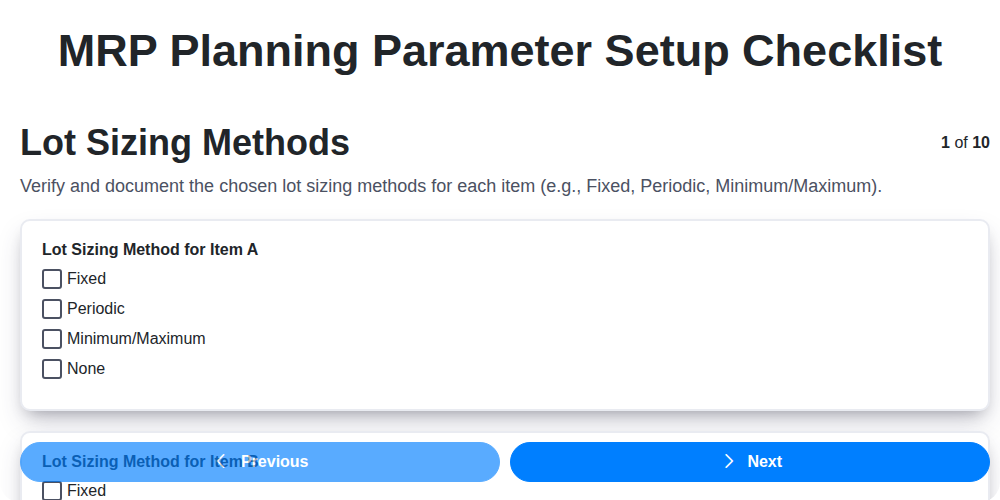
MRP Planning Parameter Setup Checklist: Your Guide to Accuracy & Efficiency
The 10 Best Manufacturing Management Software of 2025
How to improve your Bill of Materials (BOM) Management
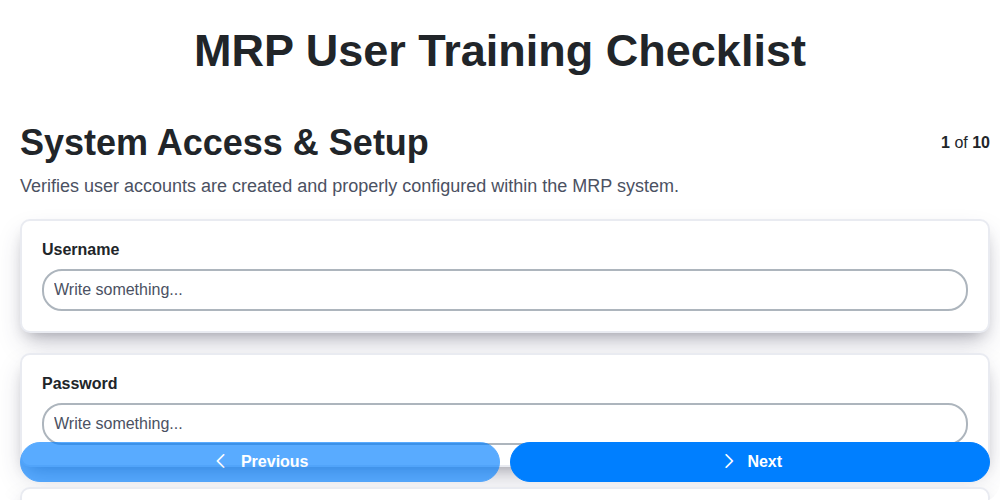
MRP User Training Checklist: Ensuring Proficiency & Success
We can do it Together
Need help with
Checklists?
Have a question? We're here to help. Please submit your inquiry, and we'll respond promptly.