How to Improve your Project Management with AI in 2026?
Published: 05/10/2026 9:00 PM Updated: 05/11/2026 11:41 AM
Table of Contents
- The Evolution of Project Management: Moving Beyond Manual Tracking
- The Shift to Autonomous Workflows: What to Expect in 2026
- Beyond Basic Automation: The Rise of Predictive Project Intelligence
- Eliminating Human Error with AI-Powered Smart Checklists
- Meet Tony: Your AI Assistant for Proactive Project Oversight
- How to Integrate AI into Your Existing Business Workflows
- Real-Time Resource Allocation and Intelligent Task Prioritization
- Transforming Data into Actionable Insights with ChecklistGuro
- Scaling Your Business Without Increasing Your Management Overhead
- Preparing Your Team for an AI-First Project Environment
- Conclusion: Embracing the Future of Work with ChecklistGuro
- Resources & Links
TLDR: Discover how to future-proof your workflows using AI-driven automation and intelligent checklists. This guide explores how to leverage Tony, our advanced AI Assistant, to automate repetitive tasks, predict project bottlenecks, and utilize smart templates to ensure zero-error execution in your 2026 project management strategy.
The Evolution of Project Management: Moving Beyond Manual Tracking
For years, project management has relied on the same fundamental pillars: spreadsheets, static task lists, and manual status updates. While these methods served us well in the past, they are increasingly becoming the bottleneck in a high-velocity business environment. The traditional approach to project management is inherently reactive; managers spend more time checking in on progress and chasing updates than actually driving strategy.
In this manual era, the burden of accuracy lies entirely on the human element. A single missed checkbox or a forgotten sub-task can derail an entire timeline, leading to costly delays and missed deadlines. We have become experts at tracking what has happened, but we remain largely unprepared for what is about to happen.
As we move into 2026, the industry is shifting from manual tracking to proactive orchestration. The era of simply recording progress is ending; the era of intelligent, automated oversight has begun. Transitioning away from manual oversight means moving toward a system where the software doesn't just sit there as a digital piece of paper, but actively participates in the lifecycle of your projects.
The Shift to Autonomous Workflows: What to Expect in 2026
By 2026, the era of manually checking off boxes and updating status reports is coming to an end. We are moving away from reactive project management-where managers spend most of their time fixing errors after they occur-and entering the age of autonomous workflows.
In this new landscape, project management software is no longer just a digital to-do list; it acts as a proactive partner. We are seeing a shift where AI doesn't just remind you that a task is due, but anticipates delays before they happen by analyzing historical data, resource availability, and even external market shifts.
The transition toward autonomy means that much of the busy work-the administrative overhead of updating timelines, reassigning overdue tasks, and generating progress summaries-is being handled by intelligent agents. For business owners, this means your role shifts from being a task tracker to a strategic orchestrator. You will no longer spend your hours wondering if a project is on track, but rather focusing on how to pivot your strategy based on the real-time insights provided by your AI-driven ecosystem. In this era, success isn't measured by how well you manage a checklist, but by how effectively you direct the intelligent automation running behind it.
Beyond Basic Automation: The Rise of Predictive Project Intelligence
By 2026, the conversation around AI in project management has shifted from simple if-this-then-that automation to a new era of Predictive Project Intelligence. We are moving past the stage where AI simply moves a task from In Progress to Done. The real game-changer is the ability to foresee the future of your workflow before a single deadline is missed.
In the past, project managers spent much of their time playing detective-sifting through logs to figure out why a project went over budget or why a milestone was delayed. With the integration of advanced AI like Tony within the ChecklistGuro ecosystem, the technology now acts as a crystal ball. Instead of reacting to crises, predictive intelligence analyzes historical data, resource availability, and current task velocity to alert you to potential risks weeks in advance.
Imagine receiving a notification that says: Based on current team velocity and upcoming holidays, the 'Product Launch' milestone is at an 80% risk of delay. Would you like Tony to suggest a reallocated resource plan?
This isn't just automation; it is proactive management. Predictive intelligence allows business owners to:
- Identify Bottlenecks Preemptively: Spot resource fatigue or overlapping deadlines before they impact your bottom line.
- Smart Resource Allocation: Automatically suggest which team members have the capacity and the right skill set for upcoming complex tasks.
- Dynamic Risk Assessment: Transition from static spreadsheets to living project ecosystems that learn from every completed checklist and every missed deadline.
In 2026, the most successful managers won't be the ones who work the hardest to track tasks, but the ones who best leverage predictive insights to stay three steps ahead of their projects.
Eliminating Human Error with AI-Powered Smart Checklists
In the fast-paced business landscape of 2026, the margin for error has become thinner than ever. Traditional project management often suffers from the forgetfulness factor-the inevitable moment when a small, critical step is overlooked in a long sequence of tasks. While manual checklists have been the industry standard for decades, they are inherently passive; they rely entirely on human diligence to stay updated and accurate.
This is where AI-driven smart checklists within ChecklistGuro change the game. Unlike static documents, our AI-powered templates are dynamic and context-aware. By integrating Tony, our intelligent AI Assistant, your checklists no longer just sit there waiting to be checked-they actively participate in the workflow.
When you use smart checklists, the AI doesn't just track progress; it validates it. Tony can cross-reference completed tasks against project milestones, flag inconsistencies in real-time, and even suggest missing steps based on the specific complexities of your current project phase. If a team member attempts to move to a deployment stage without completing a critical security audit, the AI detects the gap before it becomes a costly mistake.
By transitioning from passive lists to active, AI-managed workflows, you shift the burden of remembering from your staff to your software. This allows your managers to stop playing the role of task police and start focusing on high-level strategy, knowing that the foundational steps of every project are being autonomously verified for accuracy.
Meet Tony: Your AI Assistant for Proactive Project Oversight
In the rapidly evolving landscape of 2026, reactive management is no longer enough to stay competitive; you need proactive oversight. This is where Tony, the heartbeat of the ChecklistGuro ecosystem, steps in. Unlike traditional project management tools that simply store data, Tony acts as an intelligent layer of intelligence sitting atop your entire workflow.
Tony doesn't just wait for you to ask questions-he actively monitors your project health. By analyzing your checklists, deadlines, and resource allocation in real-time, Tony can identify potential risks before they become costly delays. Whether it's flagging a missed sub-task in a complex deployment or suggesting a resource reallocation based on upcoming workload spikes, Tony provides the eyes and ears every manager needs.
By integrating Tony into your daily routine, you transition from manual tracking to automated intelligence. He transforms your checklists from static lists into dynamic, self-optimizing assets, ensuring that your team stays focused on high-value strategic work while he handles the heavy lifting of monitoring, alerting, and documentation.
How to Integrate AI into Your Existing Business Workflows
Integrating AI into your business shouldn't mean tearing down everything you've built and starting from scratch. The most successful managers in 2026 aren't replacing their current processes; they are enhancing them. The goal is to layer intelligence on top of your existing operational DNA.
To begin, identify your friction points-those repetitive, manual tasks that drain your team's productivity. Whether it's manual status updates, complex resource allocation, or the tedious creation of project documentation, these are the areas where AI thrives. Instead of manually drafting every task list, you can now use an AI Assistant like Tony to scan your high-level goals and automatically generate granular, actionable checklists tailored to your specific departmental needs.
The integration process follows a three-step approach:
- Audit your repetitive workflows: Pinpoint where human error most frequently occurs or where manual data entry slows down momentum.
- Connect the intelligence layer: Use an AI-powered Work OS like ChecklistGuro to bridge the gap between high-level planning and execution. By feeding your project parameters into Tony, you can transform a single strategic objective into a structured, automated roadmap.
- Iterative Automation: Start small. Use AI to automate one specific type of checklist-such as onboarding or quality assurance-and observe the reduction in oversight required. As the AI learns your business nuances, you can expand its role to more complex predictive scheduling and risk assessment.
By treating AI as a collaborator rather than a replacement, you transform your existing workflows from static documents into dynamic, self-optimizing engines of productivity.
Real-Time Resource Allocation and Intelligent Task Prioritization
In 2026, the days of manual spreadsheet updates and guessing team capacity are over. One of the most transformative shifts in modern project management is the move from reactive scheduling to predictive allocation. By integrating AI into your workflow via ChecklistGuro, you no longer have to manually juggle deadlines and availability.
Our AI Assistant, Tony, acts as a continuous observer of your project ecosystem. Instead of waiting for a team member to report they are overwhelmed, Tony analyzes real-time data-tracking task completion speeds, upcoming deadlines, and current workloads across your entire organization.
When a new high-priority task enters your pipeline, Tony doesn't just add it to a list; it evaluates the current bandwidth of your team and suggests the most efficient person to assign it to. This intelligent prioritization ensures that critical path items are never buried under low-value administrative tasks. By automating the heavy lifting of resource management, business owners can move away from firefighting and focus on strategic growth, knowing that your team's energy is always directed toward the most impactful objectives.
Transforming Data into Actionable Insights with ChecklistGuro
In 2026, the true competitive advantage doesn't come from simply collecting data, but from knowing what to do with it. Most project management tools act as digital filing cabinets-they store information, but they don't interpret it. This is where ChecklistGuro changes the game.
Our platform goes beyond mere storage by bridging the gap between raw project metrics and strategic decision-making. By integrating AI directly into your operational workflows, ChecklistGuro analyzes your completed checklists, task completion rates, and time logs to uncover patterns that are invisible to the naked eye.
Instead of spending hours manually auditing spreadsheets to see where a project is lagging, you can rely on Tony, your AI Assistant, to perform deep-dive analyses in seconds. Tony doesn't just report that a deadline was missed; he identifies the specific procedural gaps in your checklist that led to the delay. This transforms your project history from a graveyard of completed tasks into a living roadmap for continuous improvement. With ChecklistGuro, you aren't just tracking progress-you are gaining the foresight to optimize your business operations in real-time.
Scaling Your Business Without Increasing Your Management Overhead
As your business grows, the natural instinct is to hire more project managers to keep up with the increasing complexity. However, more people often means more communication silos, more meeting fatigue, and more room for human error. The real challenge isn't just scaling your operations-it's scaling your oversight without ballooning your payroll.
This is where the synergy of smart templates and AI becomes your greatest competitive advantage. By implementing standardized, AI-enhanced checklists through ChecklistGuro, you create a digital blueprint that carries your institutional knowledge across every new hire and every new project.
Instead of managing people, you begin managing systems. When your processes are embedded in intelligent templates, the management happens through the workflow itself. With Tony, our AI Assistant, integrated into your Work OS, the system doesn't just sit there-it actively monitors progress, flags deviations from your standard operating procedures, and ensures that as your project volume doubles, your management effort stays flat. You aren't just adding more work; you are adding more capacity through automated precision.
Preparing Your Team for an AI-First Project Environment
Transitioning to an AI-augmented workflow is less about replacing your team and more about upgrading their capabilities. As we move into 2026, the most successful managers won't be those who simply use AI, but those who integrate it into the very fabric of their operational DNA.
To prepare your team, you must focus on three core pillars: data literacy, prompt engineering, and trust-building.
First, move away from manual oversight and toward exception-based management. Instead of checking every single task, train your team to use tools like ChecklistGuro to monitor high-level progress while letting Tony handle the granular verification. This requires a shift in mindset: your team members evolve from doers to orchestrators who manage AI-driven workflows.
Second, prioritize training in AI interaction. Your team needs to know how to communicate with Tony-learning how to provide context, define constraints, and audit AI-generated outputs for accuracy. An AI-first environment thrives when your staff knows how to treat the AI as a highly capable junior partner rather than a magic black box.
Finally, foster a culture of transparency. Address the automation anxiety head-on by demonstrating that AI is here to eliminate the drudge work-the tedious, repetitive checklist updates and manual follow-ups-leaving your human talent free to focus on high-value strategy and creative problem-solving. By repositioning AI as a productivity multiplier, you prepare your team to lead in an era of unprecedented operational efficiency.
Conclusion: Embracing the Future of Work with ChecklistGuro
As we move into 2026, project management is no longer just about tracking tasks-it's about proactive intelligence. The transition from reactive management to predictive execution is what will separate industry leaders from those struggling to keep up with the pace of modern business.
By integrating AI into your daily operations through ChecklistGuro, you aren't just adding a new tool to your tech stack; you are adding a digital teammate. With Tony acting as your intelligent co-pilot, your team can move away from the manual burden of monitoring every detail and focus instead on high-level strategy and creative problem-solving.
The era of guessing if a project is on track is over. With smart, AI-enhanced checklists, every step is validated, every risk is anticipated, and every milestone is achievable. Don't let your business get left behind in the manual era. Start optimizing your workflows today, embrace the power of AI, and let ChecklistGuro guide you toward a more efficient, error-free, and scalable future.
Resources & Links
- Project Management Institute (PMI): The industry standard for project management trends, research, and the evolving role of AI in professional practice.
- Gartner Research: Insights into emerging technologies and strategic predictions for autonomous workflows and intelligent automation in the enterprise.
- Forbes Technology Council: Expert perspectives on the integration of AI into business operations and the shift toward predictive intelligence.
- ZDNet: Updates on how AI-powered tools are transforming software development life cycles and operational management.
- McKinsey & Company: Deep dives into the economic impact of AI-driven productivity and scaling business operations without increasing headcount.
- Atlassian Blog: Practical examples of integrating automation and AI into existing agile and project management workflows.
- ChecklistGuro: The core platform for transforming project data into actionable insights and eliminating human error through smart, AI-driven checklists.
Frequently Asked Questions
How can AI improve project scheduling in 2026?
By 2026, AI-driven predictive analytics can automatically adjust project timelines, account for potential resource bottlenecks, and simulate various 'what-if' scenarios to optimize the critical path.
What is the role of Generative AI in project documentation?
Generative AI can automate the creation of project charters, status reports, and meeting summaries, ensuring that all stakeholders are updated with real-time, accurate, and standardized documentation.
Can AI help in proactive risk management?
Yes, advanced AI algorithms can analyze historical data and real-time project signals to identify emerging risks before they escalate, allowing project managers to implement mitigation strategies earlier.
How does AI impact resource allocation in modern project management?
AI tools can analyze team skill sets, availability, and workload intensity to suggest the most efficient allocation of human and technical resources, preventing burnout and maximizing productivity.
Do project managers need to learn new skills to work with AI?
While technical coding isn't strictly necessary, project managers should focus on developing 'AI fluency,' including prompt engineering, data interpretation, and managing human-AI collaborative workflows.
Found this Article helpful?
Comments
There are no comments yet. Be the first to add one!
Project Management Solution Demo
Deliver projects on time & within budget! ChecklistGuro streamlines task management, collaboration, & progress tracking. Enhance visibility & boost team productivity. Manage it all with our Work OS.
Related Articles
Construction Material Inventory Tracking Checklist Template
The Ultimate Site Mobilization Readiness Checklist Template
Kanban System Review Checklist: A Template for Continuous Improvement
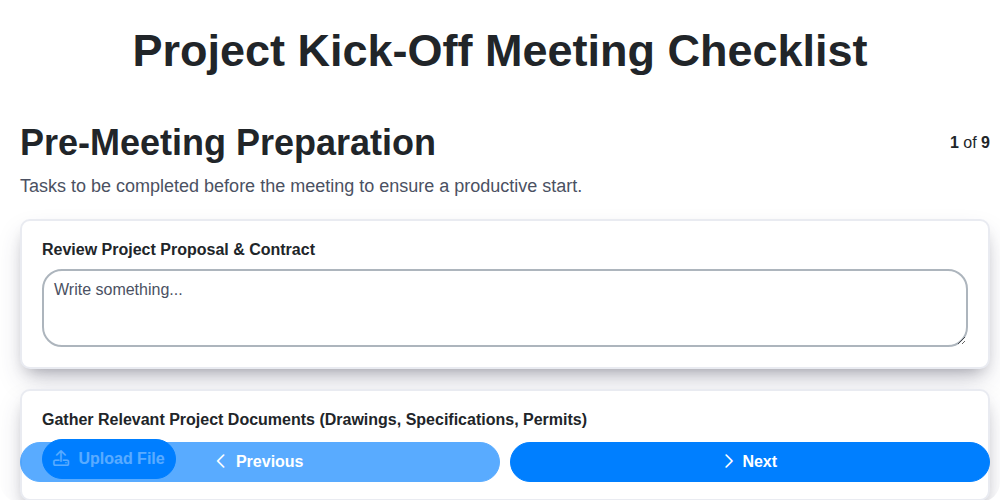
The Ultimate Project Kick-Off Meeting Checklist Template
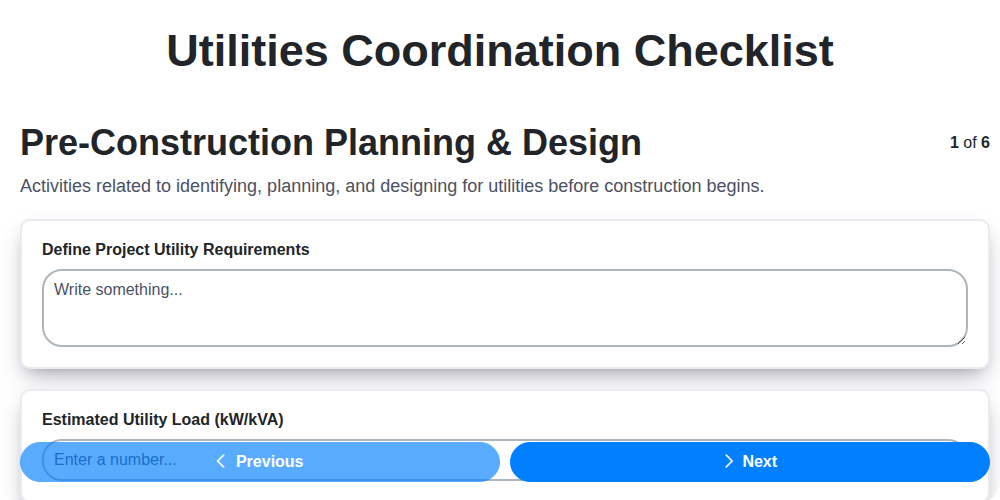
Streamline Your Project: The Ultimate Utilities Coordination Checklist Template
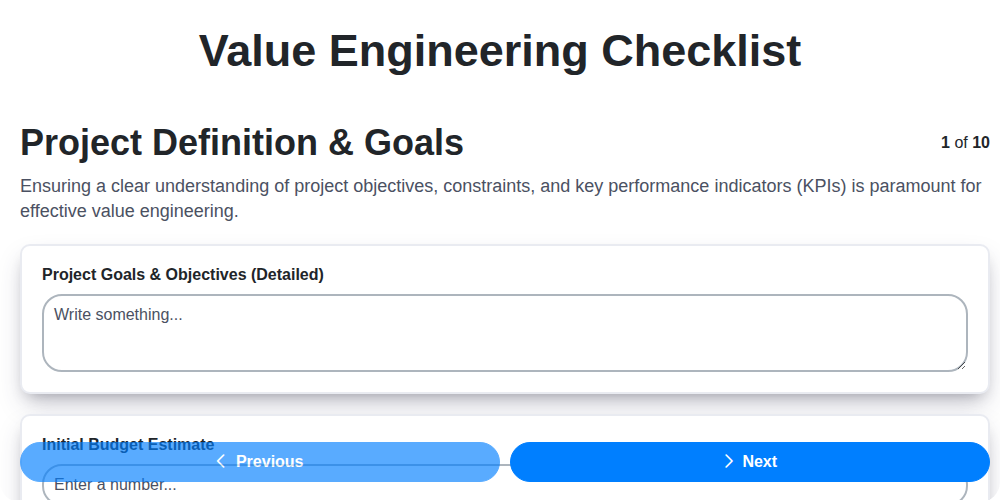
Unlock Value: Your Free Value Engineering Checklist Template
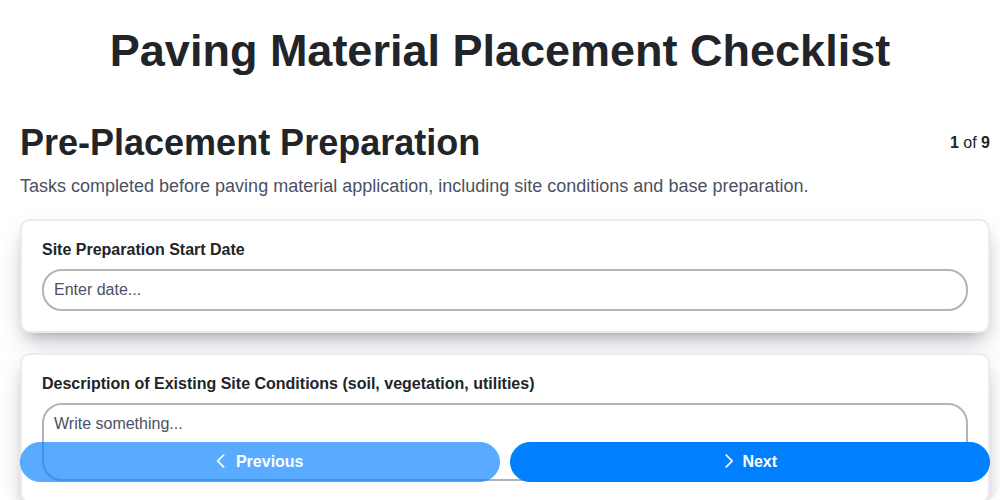
Your Paving Project's Blueprint: A Free Checklist Template
The Ultimate Project Turnover Checklist Template
We can do it Together
Need help with
Checklists?
Have a question? We're here to help. Please submit your inquiry, and we'll respond promptly.