The Ultimate Project Turnover Checklist Template
Published: 09/02/2025 Updated: 07/02/2026
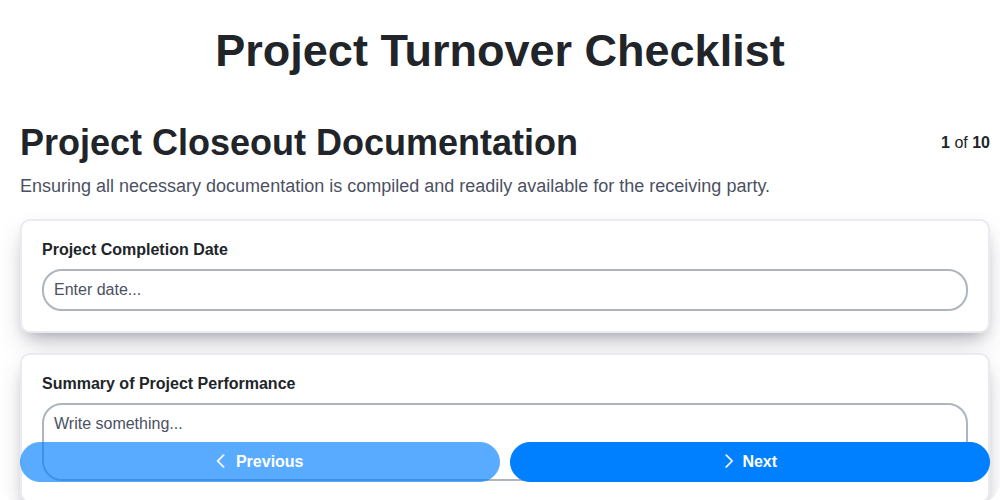
Table of Contents
- Why a Project Turnover Checklist Matters
- What's Included in the Ultimate Checklist? (The Core Elements)
- Detailed Breakdown: Key Checklist Sections
- As-Built Drawings & Specifications: Ensuring Accuracy
- Operation & Maintenance (O&M) Manuals: Empowering Your Client
- Warranty Management: Streamlining Claims and Support
- Training & Demonstration: Setting Up Your Client for Success
- Financial Closeout & Documentation
- Addressing Outstanding Issues & Punch Lists
- The Importance of Communication Throughout Turnover
- Beyond the Checklist: Best Practices for a Smooth Handover
- Resources & Links
TLDR: Avoid project handover headaches! This checklist template ensures *everything* - from as-builts and O&M manuals to warranties and financial closeout - is properly documented and transferred, minimizing disputes and maximizing client satisfaction. Download it now for a smoother, more organized turnover process!
Why a Project Turnover Checklist Matters
A poorly executed project turnover can be a surprisingly expensive headache. It's not just about handing over keys; it's about ensuring a smooth transition that minimizes future disputes, maximizes operational efficiency, and safeguards your reputation. Think of it this way: a rushed or incomplete handover can lead to misunderstandings about responsibility when equipment fails, delays in maintenance schedules, or even legal challenges down the line. A comprehensive checklist mitigates these risks by providing a clear, documented process that all parties understand and agree upon. It's a vital layer of protection, not just for you, but also for your client, ensuring that the long-term success of the project is assured. Ultimately, a robust turnover process demonstrates professionalism and a commitment to excellence - values that build lasting client relationships and pave the way for future opportunities.
What's Included in the Ultimate Checklist? (The Core Elements)
The core of a truly comprehensive project turnover checklist goes far beyond simply handing over keys. It's about delivering a complete package that equips the client for seamless operations and ongoing maintenance. Here's a breakdown of the essential components you absolutely need to include:
- Project Documentation Hub: This isn't just about storing documents; it's about creating an organized, accessible repository. Think contracts, change orders, RFIs, meeting minutes, permits, approvals, and any correspondence - all clearly indexed and easily searchable. A digital system is ideal for streamlined access.
- Detailed As-Built Drawings & Specifications: These are not the original design plans. They reflect the actual installed configuration, accounting for any changes made during construction. Accurate As-Builts are critical for future maintenance, repairs, and modifications. Specification updates should detail the final materials and methods used.
- Operation & Maintenance (O&M) Manuals - The User's Guide: Imagine trying to operate complex equipment without instructions. Don't leave your client in that situation. O&M manuals provide step-by-step guidance on equipment operation, troubleshooting common issues, preventive maintenance schedules, and crucial safety procedures. Tailor these manuals to the specific skill level of the intended users.
- Warranty & Guarantee Management: Compile a centralized document listing all warranties and guarantees, including expiration dates, contact information for claims, and scope of coverage. Consider creating a digital reminder system to track warranty expiration dates.
- Training & Demonstration Records: Document all training sessions conducted for the client's team, outlining topics covered and attendees. Include demonstration recordings (if possible) for future reference. A signed acknowledgement from the client confirming training completion is highly recommended.
Detailed Breakdown: Key Checklist Sections
Let's dive deeper into the essential elements of your project turnover checklist. While the overview provides a roadmap, understanding the nuances of each section is key to a truly successful handover.
Project Closeout Documentation: The Foundation of Transparency
This isn't just about collecting papers; it's about creating a complete historical record. Include contracts, change orders (and their justifications!), meeting minutes, RFIs, submittals, inspection reports, correspondence - anything that details the project's evolution. A well-organized documentation package minimizes disputes and provides clarity for future reference or audits. Consider a digital document management system to streamline this process.
As-Buit Drawings & Specifications: Accuracy is Paramount
These drawings must reflect the as-built condition - the actual completed project, including any deviations from the original design. Think of them as the project's final blueprint. They're vital for maintenance, repairs, future expansions, and ensuring accuracy in building information modeling (BIM) initiatives. Specifications should clearly document material changes, installation methods, and any unusual construction techniques. Ensure they're stamped and approved by relevant authorities where required.
Operation & Maintenance (O&M) Manuals: Empowering the Client
Don't leave the client guessing! These manuals are a critical resource for the operations team. They should cover everything from routine maintenance schedules to troubleshooting common issues. Include clear diagrams, photographs, and contact information for qualified service providers. Tailor the language to the skill level of the intended audience - avoid overly technical jargon. Consider creating digital versions accessible via QR codes posted near equipment.
Warranties & Guarantees: Protecting Both Parties
A centralized warranty register is invaluable. This should detail each warranty's scope, duration, contact information, and any specific claim procedures. Organize them logically (by equipment, system, or supplier) and provide a digital copy to the client. Set reminders for warranty expiration dates to ensure timely claims.
Training & Demonstrations: Building Confidence & Competency
Effective training goes beyond a quick walk-through. Structured training sessions with hands-on demonstrations are essential. Document the training - who attended, what was covered, and any questions asked. Consider incorporating online training modules for ongoing competency assessment.
Financial Closeout: Ensuring a Clean Break
This isn't just about paying the final invoice. It's about reconciling all expenses, verifying lien releases, and ensuring all financial obligations are fulfilled. A thorough financial audit prevents future legal issues and demonstrates professionalism.
As-Built Drawings & Specifications: Ensuring Accuracy
As-built drawings and specifications are arguably the most critical component of a successful project turnover. They represent the final, accurate record of what was constructed, often differing from the original design due to field changes or unforeseen circumstances. Think of them as the project's official "post-construction biography."
Why are they so important? Without accurate as-builts, maintenance personnel may unknowingly damage critical systems, repairs can be more complex and costly, and future modifications become a guessing game. Simply put, they're essential for long-term facility management and safety.
What Makes an As-Built Drawing Good?
- Reflects Actual Construction: These drawings must accurately depict any deviations from the original design. Every change, no matter how small, should be documented.
- Clear and Concise: Legible drawings with proper labeling and dimensions are crucial for understanding.
- Updated Throughout the Project: Don't wait until the end! Updates should be incorporated throughout the construction phase, ideally with a designated individual responsible for maintaining accuracy.
- Includes Specifications: Updated specifications detail the exact materials, equipment models, and construction methods used. This ensures consistency and avoids confusion when procuring replacements.
- Digital is Best: While paper copies are useful, digital as-builts offer advantages like easy searching, sharing, and integration with Building Information Modeling (BIM) systems.
Who's Responsible for Creating Them?
While the general contractor usually leads the effort, collaboration is key. Subcontractors should be actively involved in providing accurate field data and updates. A dedicated checker to verify the accuracy of the drawings is also a wise investment.
Pro Tip: Clearly define the as-built drawing process and responsibilities within your project contract to avoid misunderstandings and ensure accountability.
Operation & Maintenance (O&M) Manuals: Empowering Your Client
Think of your client's long-term success as an extension of your own. Providing comprehensive Operation & Maintenance (O&M) manuals isn't just about fulfilling a contractual obligation; it's about empowering them to operate and maintain their new asset effectively and efficiently. These manuals are the cornerstone of sustained performance, minimizing downtime, extending equipment life, and reducing costly repairs down the line.
What constitutes a truly useful O&M manual? It's more than just a collection of technical specifications. It's a user-friendly guide, tailored to the knowledge level of the intended audience. Consider including:
- Clear and Concise Instructions: Avoid overly technical jargon. Use illustrations and diagrams to simplify complex procedures.
- Safety Protocols: Highlight critical safety precautions and emergency procedures. This minimizes risks and protects personnel.
- Preventative Maintenance Schedules: Provide a detailed schedule outlining routine maintenance tasks, including frequency and required materials.
- Troubleshooting Guides: Offer step-by-step guidance for common issues, enabling operators to resolve minor problems independently.
- Equipment Inventory & Specifications: Provide a complete listing of equipment, including model numbers, serial numbers, and contact information for suppliers.
- Digital Accessibility: Consider providing manuals in digital format (PDF, online portal) for easy access and searchability.
By investing the time and effort to create high-quality O&M manuals, you're demonstrating your commitment to your client's success and building a foundation for a long-term partnership. A well-maintained asset is a happy client, and a happy client is your best advocate.
Warranty Management: Streamlining Claims and Support
Navigating the maze of warranties can be a major headache - for both project teams and clients. Scattered documents, missed expiration dates, and confusing terms lead to frustration, delayed claims, and potential financial losses. Effective warranty management isn't just about organization; it's about proactively safeguarding your project's long-term performance and protecting your reputation.
Beyond the List: Building a Robust Warranty System
Simply compiling a list of warranties isn't enough. A truly effective system involves several key components:
- Centralized Repository: Implement a digital system (spreadsheet, database, or specialized warranty management software) to store all warranty documents - purchase orders, manufacturer specifications, contact information, and expiration dates.
- Automated Reminders: Set up automated reminders well in advance of warranty expiration dates, giving ample time to schedule preventative maintenance or address potential issues before coverage lapses.
- Standardized Claim Process: Develop a standardized claim process, clearly outlining the steps for submitting claims, required documentation, and contact points within your organization and with manufacturers.
- Performance Tracking: Monitor warranty claims to identify trends, recurring issues, and potential quality concerns. This data can inform future material selections and vendor negotiations.
- Client Communication: Keep clients informed about warranty status and proactively address any concerns. Transparency builds trust and demonstrates your commitment to their long-term satisfaction.
Leveraging Technology for Efficiency
While spreadsheets can be a starting point, dedicated warranty management software offers significant advantages, including:
- Automated Data Capture: Ability to import warranty data directly from purchase orders and invoices.
- Integration with Maintenance Systems: Seamlessly integrates with maintenance management systems to schedule preventative maintenance based on warranty schedules.
- Reporting & Analytics: Generates reports on warranty claims, costs, and trends.
- Mobile Accessibility: Enables team members to access warranty information on the go.
Training & Demonstration: Setting Up Your Client for Success
A shiny new building or expertly installed system is only as valuable as the team that operates it. Simply handing over documentation isn't enough; practical training and thorough demonstrations are critical for ensuring your client's long-term success - and minimizing potential headaches down the line.
This isn't just about showing them how things work; it's about explaining why they work that way and empowering them to troubleshoot common issues. Consider these key elements for a truly impactful training program:
- Identify Training Needs: Before you even begin, assess the client's existing skill level and determine precisely what they need to learn. This might involve a brief questionnaire or a conversation with their designated operations team.
- Customized Sessions: Tailor your training sessions to the specific systems and equipment involved. Generic training rarely sticks.
- Hands-On Experience: Whenever possible, incorporate hands-on activities. Let trainees actually operate the equipment under supervision.
- Real-World Scenarios: Don's just cover the ideal operating conditions. Walk them through common troubleshooting scenarios and demonstrate how to respond effectively.
- Documentation is Key: Provide clear, concise training materials that they can refer to long after the session is over. This could include step-by-step guides, quick reference cards, and video tutorials.
- Ongoing Support: Let them know you're available for ongoing support and questions. This demonstrates your commitment to their success and builds a strong working relationship.
- Formal Sign-Off: Document the completion of training sessions and obtain a formal sign-off from the client to confirm they understand the material.
Financial Closeout & Documentation
Bringing a project to a successful financial closeout is about more than just paying the final invoice. It's a meticulous process that protects all parties involved and ensures a clean break. This stage involves rigorous reconciliation, verification, and secure documentation.
Key Steps to Financial Closeout:
- Final Invoice Reconciliation: Thoroughly review and reconcile the final invoice against the contract sum and any approved change orders. Address any discrepancies promptly and document the resolution.
- Payment Verification: Confirm all payments have been received and processed according to the payment schedule outlined in the contract.
- Lien Releases: Obtain and securely store lien releases from all subcontractors and suppliers. These releases confirm that they have been paid and waive their right to file a mechanic's lien against the property. Failure to secure these can lead to future legal complications.
- Change Order Accounting: Ensure all change orders have been properly accounted for and tracked throughout the project's financial records.
- Final Cost Reports: Prepare a comprehensive final cost report summarizing all project expenditures, including labor, materials, and subcontractors. This report should be readily available for auditing purposes.
- Retention Release: If retention was withheld, verify its release based on satisfactory completion of the project and adherence to contract terms.
- Tax Compliance: Ensure all relevant tax filings related to the project are accurate and submitted on time.
- Secure Record Keeping: Establish a secure system for storing all financial records related to the project, including invoices, receipts, change orders, and payment records. Retention policies should adhere to legal and contractual requirements.
Remember, a well-executed financial closeout minimizes risk, demonstrates professionalism, and lays the groundwork for positive future relationships.
Addressing Outstanding Issues & Punch Lists
The final stretch of a project often involves a flurry of activity focused on resolving those lingering details - the outstanding issues and the dreaded punch list. This isn't just about ticking boxes; it's about demonstrating a commitment to quality and ensuring complete client satisfaction. A well-managed punch list process minimizes post-project disputes and reinforces a positive working relationship.
Start by creating a comprehensive punch list collaboratively. The client, project manager, and key subcontractors should actively participate in identifying and documenting each item, ensuring clarity and avoiding misunderstandings. Assign responsibility and set realistic deadlines for completion. Prioritize items based on urgency and impact.
Regularly track progress, communicate updates transparently, and hold accountable those responsible for completing tasks. Don't shy away from addressing challenging issues proactively. Open communication and a willingness to find solutions are vital. Document all resolutions meticulously, noting dates, responsible parties, and any relevant details.
Before final sign-off, conduct a thorough walkthrough with the client, verifying that all items have been addressed to their satisfaction. Secure their written acknowledgement that the punch list is complete and that they are satisfied with the final product. This provides a clear record of resolution and minimizes potential for future disagreements. Remember, closing out the punch list isn't just about completion; it's about confidence - the client's and yours.
The Importance of Communication Throughout Turnover
Effective communication isn't just a nice-to-have during project turnover; it's the bedrock upon which a smooth and successful transition is built. A lack of clear, consistent communication can breed misunderstandings, escalate minor issues into major conflicts, and ultimately damage client relationships.
The turnover period is a critical time for knowledge transfer. The project team's intimate understanding of the systems, processes, and nuances of the completed work needs to be effectively communicated to the client's operations and maintenance teams. This isn't just about handing over documents; it's about fostering a collaborative environment where questions are encouraged, concerns are addressed proactively, and a shared understanding of responsibilities is established.
Regular updates, scheduled meetings, and open channels for feedback are essential. Consider utilizing a centralized communication platform to track progress, share documents, and facilitate discussions. Don't shy away from proactively seeking clarification or confirmation - it's far better to address a potential issue early on than to discover it after the transition is complete. Remember, transparency and a commitment to open communication will cultivate trust and contribute significantly to a positive turnover experience for all involved.
Beyond the Checklist: Best Practices for a Smooth Handover
The checklist itself is a framework, but true project handover excellence stems from cultivating a culture of open communication and proactive collaboration throughout the project lifecycle. Don't wait until the end to start the handover process; integrate it from the project's inception. Regular progress meetings with the client and key stakeholders should include discussions about handover requirements, documentation needs, and potential training opportunities.
Establish a dedicated point of contact for handover-related inquiries and create a shared online platform (e.g., SharePoint, Google Drive) for document sharing and communication. This central repository ensures everyone has access to the latest information and facilitates seamless collaboration.
Furthermore, anticipating potential challenges and addressing them early can prevent last-minute scrambles and ensure a smoother transition. Seek client feedback throughout the project to identify areas for improvement and tailor the handover process to their specific needs. A collaborative and communicative approach not only minimizes friction during the handover but also strengthens the overall client relationship.
Resources & Links
- ProjectManagement.com: A comprehensive resource for project management methodologies, templates, and articles. Useful for understanding the broader context of project handover and best practices in general.
- Association for the Advancement of Facilities Management (AAF): Provides insights and resources on facilities management, which is directly relevant to post-project turnover and ongoing client support. Focuses on long-term asset management.
- Project Management Institute (PMI): The leading professional organization for project management. Offers standards, certifications, and resources on project closure and handover processes, offering a framework for robust project completion.
- Construction Industry Round Table (CIR): Focuses on construction industry best practices, including handover and closeout procedures. Provides insights on efficient and reliable project delivery.
- Associated General Contractors of America (AGC): AGC provides resources and advocacy for the construction industry. Their website has articles and information relevant to project delivery and documentation.
- AEC Soft: Provides BIM and document management solutions which can be critical for managing project documentation and as-built drawings. Addresses the importance of accurate records during turnover.
- Autodesk: Leading provider of design and engineering software, including BIM tools. Understanding BIM principles is helpful for managing project information and handover deliverables. Resources regarding BIM 360 can be useful.
- Trimble: Offers construction technology solutions, including software for data collection, project management, and collaboration. Useful for efficient documentation and handover processes.
- Planroom: Provides a cloud-based platform for managing construction documents and facilitating collaboration. Valuable for sharing and organizing handover deliverables.
- ConstructNet: Offers a network and resource hub for construction professionals, including articles and insights on project closeout and handover.
Frequently Asked Questions
What is project turnover and why is it important?
Project turnover is the formal process of transferring responsibility for a completed project from the project team to the client, operations team, or another designated party. It's crucial for ensuring a smooth transition, preventing knowledge gaps, and ensuring the project's long-term success. It minimizes disruption and sets the receiving team up for efficient ongoing management and support.
Who should use this checklist template?
This template is designed for project managers, project teams, and anyone responsible for handing off completed projects. It's applicable across various industries and project types, whether it's software development, construction, marketing campaigns, or anything in between.
What sections are included in the checklist template?
The checklist covers key areas including documentation, knowledge transfer, training, access rights, outstanding items, client sign-off, and ongoing support details. Each section contains specific tasks to ensure comprehensive handover.
Can I customize the checklist template?
Absolutely! The checklist is designed to be a starting point. Feel free to add, remove, or modify items to better align with your specific project's requirements, organizational processes, and client expectations.
What does 'documentation' entail in the checklist?
'Documentation' includes all relevant project materials such as requirements documents, design specifications, user manuals, technical guides, training materials, code documentation, and any other materials that will help the receiving team understand and manage the project moving forward.
What's meant by 'knowledge transfer' and how does the checklist address it?
Knowledge transfer involves sharing expertise and insights gained during the project. The checklist includes items related to sessions, mentoring, and written documentation to ensure the receiving team has the understanding needed to successfully take over the project.
What if there are outstanding issues or risks at the time of turnover?
The checklist includes a section dedicated to documenting outstanding issues and risks. This section ensures these items are clearly communicated to the receiving team with defined action plans or mitigation strategies.
What is a 'client sign-off' and why is it necessary?
A client sign-off is a formal acknowledgement from the client that they accept the project as complete and are satisfied with the handover. It provides a legal record of acceptance and ensures both parties are aligned on the project's completion.
Where can I access the checklist template?
The link to download the checklist template is provided within the article itself. Simply follow the instructions provided to download the file in your preferred format (e.g., Word, Excel, PDF).
Are there any alternative tools or software that can help with project turnover?
While the checklist template provides a structured approach, project management software (like Asana, Jira, Trello, Monday.com) and collaboration platforms (like Confluence, SharePoint) can also assist in organizing documentation, tracking progress, and facilitating knowledge sharing during the turnover process.
Comments
There are no comments yet. Be the first to add one!
Construction Management Solution Demo
Build smarter, not harder! ChecklistGuro streamlines construction projects from planning to closeout. Manage tasks, inspections, safety protocols & more - all in one place. Reduce delays, improve communication, and deliver projects on time & on budget.
Related Articles
The Ultimate Concrete Vibration Checklist Template
Unlock Value: Your Free Value Engineering Checklist Template
The Ultimate HVAC Ductwork Installation Checklist Template

The Ultimate Rebar Placement Checklist Template
Your Concrete Mix Design Verification Checklist: A Step-by-Step Guide
Backfilling & Compaction Checklist: A Foundation's Best Friend
The Ultimate Concrete Delivery & Placement Checklist Template
Your Ultimate Stakeholder Communication Plan Checklist Template
Need help with
Construction?
Have a question? We're here to help. Please submit your inquiry, and we'll respond promptly.