The Ultimate Lead Generation Checklist Template
Published: 08/31/2025 Updated: 07/02/2026
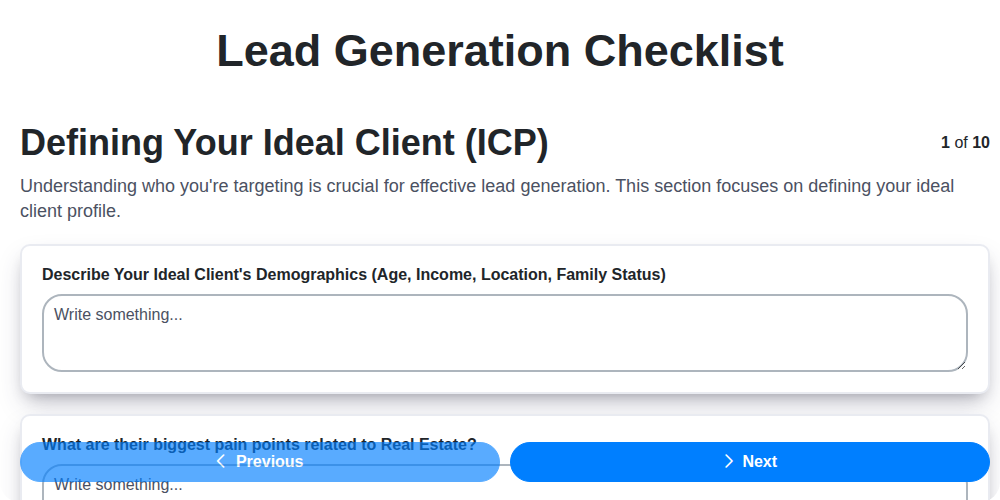
Table of Contents
- Why You Need a Lead Generation Checklist
- Defining Your Ideal Client: The Foundation of Lead Generation
- Optimizing Your Website for Lead Capture
- Content Marketing: Attracting Leads with Value
- Social Media Lead Generation Strategies
- Paid Advertising: Amplifying Your Reach
- Email Marketing: Nurturing Leads and Driving Conversions
- Lead Capture Forms: Design and Placement
- Tracking and Measuring Your Lead Generation Efforts
- Analyzing Your Results and Refining Your Approach
- The Ultimate Lead Generation Checklist Template (Downloadable)
- Resources & Links
TLDR: Need to consistently generate leads? This checklist template guides you through defining your ideal client, optimizing your website & content, leveraging social media & advertising, nurturing leads with email, and analyzing results-all in one handy guide to streamline your lead generation process and boost your results.
Why You Need a Lead Generation Checklist
Lead generation isn't a matter of if you should do it, but how you do it effectively. Without a structured approach, your efforts can easily become scattered, inefficient, and ultimately, disappointing. Think of it like trying to build a house without a blueprint - you might end up with something functional, but it's unlikely to be exactly what you envisioned, and the process will be far more chaotic.
A lead generation checklist acts as that blueprint. It provides a step-by-step guide, ensuring you cover all the crucial areas from defining your ideal customer to nurturing them through the sales funnel. It's not just about ticking boxes; it's about creating a repeatable, optimized system for attracting, engaging, and converting potential customers. A checklist helps you stay organized, measure progress, identify bottlenecks, and ultimately, maximize your return on investment. Plus, it provides a solid foundation for scaling your lead generation efforts as your business grows.
Defining Your Ideal Client: The Foundation of Lead Generation
Defining your Ideal Client Profile (ICP) isn't just about ticking boxes on a demographic survey. It's about diving deep to truly understand their challenges, motivations, and aspirations. While age, location, and job title are useful starting points, they only paint a partial picture. To attract qualified leads, you need to know why they're searching for solutions like yours.
Think about it: a 35-year-old marketing manager in San Francisco might be looking for a project management tool for different reasons than a 50-year-old marketing manager in Dallas. One might be struggling with a rapidly growing team, while the other might be feeling overwhelmed by outdated processes.
Go beyond the surface. Ask yourself:
- What are their biggest pain points? What keeps them up at night? What are they actively trying to solve?
- What are their goals and aspirations? What do they hope to achieve, both professionally and personally?
- What are their values and priorities? What's important to them in a product or service?
- Where do they spend their time online? Which social media platforms do they use? What blogs and forums do they frequent?
- What language do they use? What terms and phrases resonate with them?
By answering these questions, you'll develop a far more nuanced and accurate picture of your Ideal Client. This deep understanding will inform your messaging, targeting, and content creation, ultimately attracting leads who are genuinely interested in what you offer and more likely to convert into paying customers. It's about attracting the right leads, not just a lot of them.
Optimizing Your Website for Lead Capture
Your website isn't just a digital brochure; it's a lead-generating machine. To truly optimize it for lead capture, you need a strategic approach that combines design, content, and functionality. Here's how to transform your site into a lead magnet:
1. Strategic Placement of Opt-in Forms: Don't bury your lead capture forms! Consider these high-impact locations:
- Header & Footer: These are consistently visible across every page.
- Sidebar: A classic location that doesn't disrupt the main content flow.
- Within Blog Posts: Contextual forms offering related resources are highly effective. (e.g., Download our guide to [topic discussed in the post])
- Exit-Intent Pop-ups: Triggered when a visitor is about to leave your site, these can offer a last-chance offer or compelling reason to stay. Use sparingly and ensure they provide genuine value, not just interruption.
2. Compelling Offerings & Value Propositions: Subscribe for updates simply doesn't cut it anymore. Your lead magnet needs to be irresistible. Think:
- Ebooks & Guides: In-depth resources tackling specific pain points.
- Templates & Checklists: Practical tools to help visitors achieve their goals.
- Webinars & Workshops: Exclusive content delivered in a dynamic format.
- Free Trials & Demos: Allowing potential customers to experience your product firsthand.
Clearly communicate the benefit of providing their contact information. Instead of Subscribe to our newsletter, try Get instant access to our ultimate guide to [topic]!
3. Simplify the Form Fields: Reduce friction! The fewer fields you ask for, the higher your conversion rate. Start with just name and email. You can always gather more information later in the sales process.
4. Clear Calls to Action (CTAs): Use action-oriented language and visually distinct buttons to guide visitors toward your lead capture forms. Examples: Download Now, Get Started, Claim Your Free Guide.
5. Mobile Optimization: Ensure your website and lead capture forms are fully responsive and perform flawlessly on all devices. A poor mobile experience will drive visitors (and potential leads) away.
6. A/B Testing: Continuously experiment with different form designs, placements, and offers to see what resonates best with your audience. Data-driven decisions are key to maximizing your lead capture rate.
Content Marketing: Attracting Leads with Value
Content marketing isn't about shouting; it's about whispering solutions to the problems your ideal client is actively searching for. It's about becoming a trusted resource, a go-to expert, and building a community around your brand. But how do you do that effectively?
Focus on Solving Problems, Not Just Promoting Products: The biggest mistake businesses make is creating content solely focused on their offerings. Instead, identify the pain points and challenges your audience faces. What questions are they asking? What information are they seeking? Craft content that directly addresses these issues, even if it doesn't directly mention your products or services.
Content Formats to Consider: Don't limit yourself to just blog posts! A diverse content strategy keeps your audience engaged and caters to different learning styles. Think about:
- Blog Posts: Evergreen articles that address common questions and provide valuable insights.
- Videos: Tutorials, demos, and thought leadership pieces. Video consistently outperforms other content formats.
- Infographics: Visually appealing ways to present data and complex information.
- Ebooks & Guides: In-depth resources that offer a more comprehensive solution to a specific problem.
- Case Studies: Real-world examples of how you're helping clients succeed.
- Webinars: Live, interactive sessions that allow you to connect with your audience in real-time.
- Podcasts: Audio content that can be consumed on the go.
Keyword Research is Key: While valuable content is essential, it needs to be discoverable. Conduct keyword research to understand what terms your audience is using when searching for information. Integrate these keywords naturally into your content titles, headings, and body text.
Promote Your Content: Creating amazing content is only half the battle. You need to actively promote it across various channels - social media, email marketing, industry forums, and more. Share it repeatedly and repurpose it into different formats to maximize its reach.
Consistency is Crucial: Content marketing is a long-term game. It takes time to build trust and establish yourself as an authority. Commit to a consistent content schedule and stick to it. Even publishing one high-quality piece of content per week can make a significant difference.
Social Media Lead Generation Strategies
Social media isn't just for sharing cat videos and vacation photos anymore; it's a powerhouse for lead generation when used strategically. The key is to move beyond simply being on social media and start actively engaging in tactics designed to attract and capture potential customers.
Here's a breakdown of actionable strategies to turn your social media profiles into lead-generating machines:
1. Content is King (and Queen): Stop selling, start helping. Share valuable, informative content that addresses your target audience's pain points and interests. This could be blog posts, infographics, videos, short tips, or even behind-the-scenes glimpses of your business. Remember, providing value builds trust and positions you as an authority.
2. Optimize Your Profiles: Make sure your profiles are fully optimized. Use clear, concise bios that explain what you do and include a compelling call to action (e.g., Download our free guide, Visit our website). Use relevant keywords to improve searchability within the platform. A professional profile picture and cover photo are also essential.
3. Run Targeted Ads: Social media advertising platforms offer incredibly precise targeting options. Define your ideal customer based on demographics, interests, behaviors, and even job titles, and then create ads that speak directly to their needs. A/B test different ad copy and visuals to maximize your return on investment.
4. Engage in Conversations: Don't just broadcast your message; actively participate in conversations within your industry. Respond to comments, answer questions, and join relevant groups. This demonstrates your expertise and builds relationships with potential leads.
5. Leverage Social Listening: Monitor social media for mentions of your brand, your competitors, and relevant keywords. This allows you to identify opportunities to engage with potential customers and address any concerns.
6. Run Contests & Giveaways: Contests and giveaways are a fun way to generate buzz and attract new followers. Require entrants to provide their email addresses to participate, allowing you to build your email list.
7. Use Direct Messaging Strategically: Don't spam, but use direct messaging to follow up with potential leads after they've engaged with your content or shown interest in your brand. Personalize your messages and offer valuable information.
8. Experiment with Different Platforms: Don't assume that every platform is right for your business. Test different platforms to see which ones generate the best results with your target audience. LinkedIn is great for B2B, while Instagram and TikTok often work well for consumer-facing brands.
Paid Advertising: Amplifying Your Reach
Organic reach is fantastic, but sometimes you need a boost. Paid advertising, particularly Pay-Per-Click (PPC) campaigns, allows you to instantly amplify your reach and target highly specific audiences. While it requires a budget, the potential return on investment can be significant when done right.
Here's a breakdown of the key considerations for successful PPC:
1. Choosing Your Platform:
- Google Ads: The behemoth of online advertising, offering unparalleled reach and targeting options. Ideal for reaching customers actively searching for your products or services.
- Social Media Ads (Facebook, Instagram, LinkedIn, TikTok): Excellent for brand awareness, lead generation, and reaching highly defined demographic and interest-based audiences.
- Other Platforms (Bing Ads, Amazon Ads): Depending on your niche, these can offer valuable, less competitive opportunities.
2. Targeting is Everything:
Don't just throw money at ads. Define your ideal customer profile and use precise targeting options:
- Keywords: Research relevant keywords with a mix of high and low competition.
- Demographics: Target based on age, gender, location, income, and more.
- Interests: Reach users based on their online activities and expressed interests.
- Remarketing: Show ads to people who have previously interacted with your website.
- Lookalike Audiences: Expand your reach by targeting users similar to your existing customers.
3. Crafting Compelling Ad Copy:
Your ad copy needs to grab attention and entice clicks. Consider:
- Headline: Clear, concise, and relevant to the user's search.
- Description: Highlight key benefits and include a strong call to action.
- Ad Extensions: Utilize extensions (sitelinks, callouts, structured snippets) to provide additional information and improve visibility.
4. Budgeting & Bidding:
- Start Small: Begin with a modest budget and gradually increase it as you optimize your campaigns.
- Bidding Strategies: Experiment with different bidding strategies (manual, automated) to find what works best for your goals.
- Monitor Performance: Regularly track key metrics (cost per click, conversion rate) and adjust your bids accordingly.
Pro Tip: PPC can be complex. Consider working with a specialist if you're new to paid advertising.
Email Marketing: Nurturing Leads and Driving Conversions
Email marketing isn't just about sending out promotional blasts. It's about building relationships, delivering value, and guiding potential customers through the sales funnel. Think of it as a personalized conversation with each lead, nurturing their interest and ultimately encouraging a purchase.
Beyond the Welcome Email: While a welcome email sequence is a fantastic starting point, it's only the beginning. Segment your email list based on factors like website activity, download history, or expressed interests. This allows you to send highly targeted content that resonates with each segment. Someone who downloaded your ebook on Content Marketing for Beginners likely has different needs than someone browsing your pricing page.
Automated Sequences: Your Always-On Sales Team: Set up automated email sequences triggered by specific actions. Did a lead abandon their shopping cart? Send a gentle reminder with a special offer. Did they attend a webinar? Follow up with a recording and related resources. Automation frees up your time while ensuring no lead falls through the cracks.
Content is King (and Queen): Don't just sell, educate. Share valuable content that helps your leads solve problems and achieve their goals. This could be blog posts, case studies, videos, or exclusive insights. Position yourself as a trusted advisor, and leads will naturally gravitate toward your products or services.
Personalization Matters: Generic emails get ignored. Use personalization tokens to address leads by name and tailor content based on their individual preferences. Dynamic content blocks allow you to display different content based on subscriber data, further enhancing the personalized experience.
Testing & Optimization: A/B test your email subject lines, content, and calls to action to continuously improve your results. Monitor key metrics like open rates, click-through rates, and conversion rates to identify areas for optimization.
Lead Capture Forms: Design and Placement
Your lead capture forms are the gatekeepers to your email list and, ultimately, your customer base. A poorly designed or awkwardly placed form can be a significant barrier to lead generation, even if your content is fantastic. Let's break down the crucial elements of effective form design and optimal placement.
Form Design: Simplicity is Key
The less friction, the better. Here's how to minimize that friction:
- Minimize Fields: Only ask for the information you absolutely need. Name and email are often sufficient to start. The more fields, the lower the completion rate. Consider progressive profiling - asking for more information over time.
- Clear Call-to-Action (CTA): Your CTA button needs to be irresistible. Instead of generic phrases like Submit, use action-oriented language like Download Your Free Guide, Get Instant Access, or Start My Free Trial.
- Visually Appealing: Form design should match your brand aesthetics. Use clear fonts, appropriate colors, and sufficient whitespace. A visually cluttered form feels overwhelming.
- Mobile-Friendly: A significant portion of your traffic is likely mobile. Ensure your forms are responsive and easy to fill out on smaller screens.
- Privacy & Security: Reassure visitors that their information is safe. Include a brief privacy policy link near the form.
Placement Strategies: Where to Put Your Forms
Strategic placement is just as important as design. Consider these options:
- Website Header/Footer: A subtle, always-visible form can capture leads without being intrusive.
- Content Upgrades (Within Blog Posts): Offer a related resource (checklist, template, cheat sheet) in exchange for an email address. This is highly effective for engaged readers.
- Exit-Intent Popups: A popup that appears when a visitor is about to leave your website can be a last-chance opportunity to capture their lead. Use this sparingly and offer compelling value.
- Sidebar Forms: A consistent presence within your sidebar can remind visitors to subscribe.
- Landing Pages: Dedicated landing pages focused on specific offers are prime locations for forms.
- Welcome Mats: A full-screen experience upon website arrival, offering a valuable resource in exchange for an email address.
Experiment with different placements and A/B test your forms to discover what works best for your audience.
Tracking and Measuring Your Lead Generation Efforts
You're putting in the effort, but are you really seeing results? Tracking and measuring your lead generation efforts isn't just about vanity metrics; it's about understanding what's driving success and identifying areas for improvement. Without data, you're flying blind.
Here's a breakdown of key metrics to monitor, categorized by stage of the lead generation funnel:
1. Top of Funnel (Awareness & Attraction):
- Website Traffic: Overall visits, unique visitors, page views. Tools like Google Analytics are essential here.
- Traffic Sources: Where are visitors coming from? (Organic search, social media, referrals, paid advertising)
- Social Media Reach & Engagement: Likes, shares, comments, click-through rates on social posts.
- Impressions & Reach (Paid Ads): How many people saw your ads and how many unique people were reached.
2. Middle of Funnel (Interest & Consideration):
- Lead Magnet Downloads: How many people are opting in for your free resources?
- Form Submissions: Conversion rates on your website forms.
- Email Open & Click-Through Rates: How engaging is your email content?
- Time on Page: Are visitors spending enough time on key pages?
3. Bottom of Funnel (Conversion):
- Lead-to-Opportunity Conversion Rate: Percentage of leads that become qualified opportunities.
- Opportunity-to-Customer Conversion Rate: Percentage of opportunities that convert into paying customers.
- Cost Per Lead (CPL): Total marketing spend divided by the number of leads generated.
- Customer Acquisition Cost (CAC): Total marketing and sales spend divided by the number of new customers acquired.
Tools to Help You Track:
- Google Analytics: For website traffic and behavior.
- CRM (Customer Relationship Management) System: (e.g., Salesforce, HubSpot, Zoho CRM) - Centralize lead data and track progress.
- Marketing Automation Platforms: (e.g., Mailchimp, Marketo) - Automate tracking and reporting.
- Spreadsheets: Simple but effective for basic tracking and analysis.
Regular Review & Adjustment:
Don't just collect data-analyze it. Set up a regular review schedule (weekly, monthly, quarterly) to assess your progress, identify trends, and make necessary adjustments to your lead generation strategies. If your CPL is too high, dig deeper to see which channels are underperforming and explore alternative approaches. Data-driven decisions are the key to maximizing your ROI.
Analyzing Your Results and Refining Your Approach
Analyzing your lead generation efforts isn're simply about glancing at a few vanity metrics. It's about understanding why things are working (or not) and making informed adjustments to improve your results. Here's a breakdown of what to focus on:
1. Key Metrics to Track:
- Website Traffic: Is your traffic increasing? Where is it coming from (organic search, social media, paid ads)?
- Conversion Rates: What percentage of website visitors become leads? What percentage of leads become customers? Look at conversion rates for each stage of your funnel.
- Cost Per Lead (CPL): How much are you spending to acquire a lead? This is critical for assessing the ROI of your campaigns.
- Customer Acquisition Cost (CAC): How much does it cost to acquire a paying customer? A high CAC can eat into your profits.
- Lead Quality Score: Are the leads you're generating actually qualified? Implement a scoring system (mentioned earlier) to gauge lead quality.
- Return on Investment (ROI): Ultimately, are your lead generation efforts profitable?
2. Going Beyond the Surface:
- Attribution Modeling: Understand which touchpoints are contributing most to lead generation. Is it a combination of paid ads and content marketing?
- Channel Performance: Compare the performance of different channels (e.g., Facebook vs. LinkedIn) to identify where you're getting the most bang for your buck.
- A/B Testing: Experiment with different variations of your landing pages, ad copy, and email subject lines to optimize conversion rates.
- Customer Feedback: Talk to your customers to understand how they found you and what influenced their decision to buy.
- Regular Reporting: Schedule regular (weekly or monthly) reviews of your lead generation data to track progress and identify trends.
3. Iteration is Key:
Lead generation isn''t a "set it and forget it" activity. It's a continuous cycle of testing, analyzing, and refining your approach. Don''t be afraid to experiment, make mistakes, and learn from them. By consistently monitoring your results and making adjustments, you can steadily improve your lead generation performance and drive more sales.
The Ultimate Lead Generation Checklist Template (Downloadable)
Stop relying on scattered notes and generic to-do lists! We're putting the power of structured lead generation into your hands with our comprehensive, downloadable checklist template. This isn't just a list; it's your roadmap to consistently attracting, qualifying, and converting high-quality leads.
What's Included in the Template:
- Detailed Breakdown of Each Step: We're not just listing "Content Marketing" - we're providing specific action items under each section, ensuring you know exactly what to do.
- Prioritization Guide: Not all tasks are created equal. Our template includes a prioritization guide (High, Medium, Low) to help you focus your efforts where they'll have the biggest impact.
- Tracking Columns: Easily track your progress for each task. Note completion dates, assign owners, and monitor overall performance.
- Customizable Fields: Add your own notes, deadlines, and specific goals to tailor the template to your unique business needs.
- Printable & Digital Format: Accessible for both at-your-desk strategizing and on-the-go reference.
Why Download It?
- Save Time & Effort: Stop reinventing the wheel. This template is ready to use.
- Stay Organized: Keep all your lead generation activities in one place.
- Maximize Results: Follow a proven framework to consistently generate leads.
Resources & Links
- HubSpot: HubSpot is a comprehensive marketing automation platform offering tools for lead generation, CRM, email marketing, content management, and more. They have tons of guides and templates to help with lead generation strategy and execution.
- Salesforce: A leading CRM platform. Salesforce provides resources, blog posts, and guides related to lead generation, sales processes, and customer relationship management. Many case studies relate to lead generation success.
- SEMrush: SEMrush offers tools for SEO, content marketing, competitive research, and social media management. Their blog contains valuable articles on lead generation through content and online visibility.
- DigitalMarketer: DigitalMarketer provides training, certifications, and resources for digital marketing, including strategies for generating leads through various channels. They often have downloadable templates and checklists.
- Neil Patel: Neil Patel is a digital marketing expert and his website features a blog with numerous articles covering lead generation, SEO, and conversion rate optimization. His actionable advice can be a great resource.
- KlientPartner Blog: KlientPartner specializes in performance marketing and their blog offers a wealth of information regarding paid advertising, lead generation, and conversion optimization across various platforms.
- Unbounce: Unbounce is a landing page builder. Their blog dives deep into landing page optimization for lead capture, with practical tips and actionable advice for improving conversion rates.
- Marketo Engage: Marketo is a marketing automation platform geared towards larger organizations. Their resources cover account-based marketing (ABM) and other advanced lead generation techniques suitable for B2B environments.
- ActiveCampaign: ActiveCampaign is an email marketing and automation platform. They offer resources and templates for nurturing leads through email and creating personalized customer journeys. Excellent for understanding email marketing aspects of lead gen.
- Crazy Egg: Crazy Egg provides heatmaps, session recordings, and A/B testing tools. Understanding user behavior on your website (especially lead capture forms and landing pages) is crucial for optimizing lead generation, and Crazy Egg helps with that.
- Optimizely: Optimizely focuses on experimentation. A/B testing your website and lead capture strategies is a key part of improving lead generation, and Optimizely provides the tools for that.
Frequently Asked Questions
What is lead generation and why is it important?
Lead generation is the process of attracting and converting strangers into someone interested in your products or services. It's vital for business growth because it's the first step in the sales funnel, feeding potential customers to your sales team and ultimately driving revenue.
What is a lead generation checklist template?
A lead generation checklist template is a structured list outlining all the necessary steps and tasks to build a successful lead generation system. It acts as a guide, ensuring you don't miss any crucial aspects, from strategy development to tracking and optimization.
Who is this checklist template for?
This template is designed for businesses of all sizes, from startups to established enterprises, and individuals looking to improve their lead generation efforts. It's particularly useful for marketing teams, sales teams, and entrepreneurs.
What types of lead generation tactics are covered in the checklist?
The checklist covers a wide range of tactics including content marketing, SEO, social media marketing, paid advertising (PPC), email marketing, webinars, lead magnets, and more. It's comprehensive and adaptable to different business models.
How do I customize the checklist template?
The template is designed to be flexible. You can easily add, remove, or modify tasks to align with your specific business goals, industry, and resources. Use the 'notes' section to personalize steps and assign responsibilities.
What are lead magnets, and how does the checklist incorporate them?
Lead magnets are valuable resources (e.g., ebooks, templates, checklists) offered in exchange for a prospect's contact information. The checklist includes steps to create, promote, and optimize your lead magnets to attract and capture leads.
What's the difference between MQLs and SQLs, and how does the checklist relate to them?
Marketing Qualified Leads (MQLs) are leads deemed likely to become customers based on their engagement. Sales Qualified Leads (SQLs) are MQLs that sales has accepted as ready for a sales conversation. The checklist includes steps to define these criteria and track their progression.
How do I track my lead generation efforts using this checklist?
The checklist includes sections for tracking key metrics such as website traffic, conversion rates, cost per lead, and lead quality. Regular monitoring and analysis are crucial for identifying areas for improvement.
What if I'm new to lead generation - can this checklist still help me?
Absolutely! The checklist breaks down the process into manageable steps. Even with limited experience, you can use it as a guide to build a basic lead generation system and gradually expand your efforts.
Is this checklist a one-time thing, or do I need to use it regularly?
Lead generation is an ongoing process. The checklist isn't a one-and-done activity. It should be reviewed and updated regularly (e.g., quarterly) to ensure its effectiveness and adapt to changing market conditions.
Comments
There are no comments yet. Be the first to add one!
Task Management Solution Demo
Get organized & boost productivity! ChecklistGuro simplifies task management, prioritization, & progress tracking. Achieve more, stress less, & hit your goals. Manage it all with our Work OS.
Related Articles
Stress-Free Inspections: Your Home Inspection Coordination Checklist Template
The Ultimate Website Maintenance Checklist Template
10 Essential Checks: Your Brokerage Policy Review Checklist
The Ultimate Office Opening/Closing Checklist Template
Your Ultimate AML Compliance Checklist Template
Rent Collection Checklist Template: Your Landlord's Guide
Your Complete Flood Zone Disclosure Checklist Template
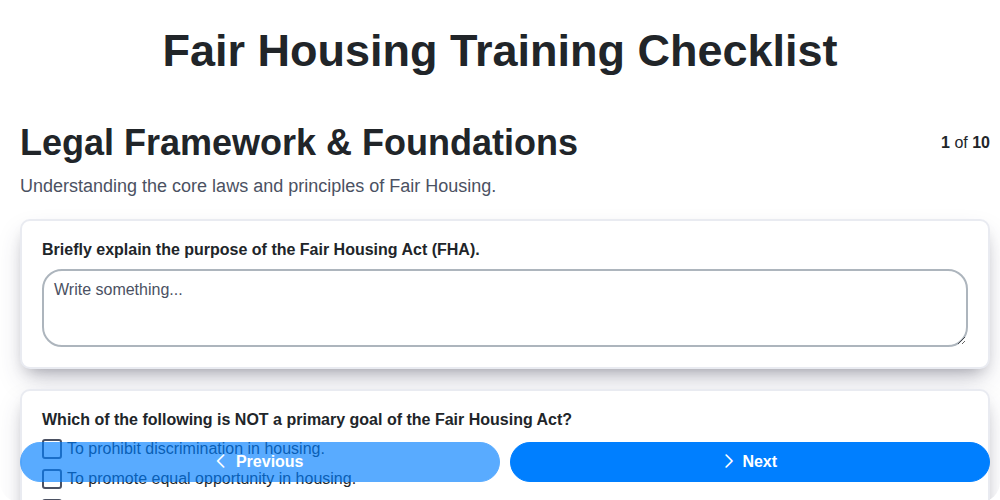
Fair Housing Training Checklist Template: Your Guide to Compliance
Need help with
Task Management?
Have a question? We're here to help. Please submit your inquiry, and we'll respond promptly.