Mastering Precision: The Ultimate MRP Accuracy Checklist 2026 Template
Published: 10/31/2026 Updated: 11/01/2026
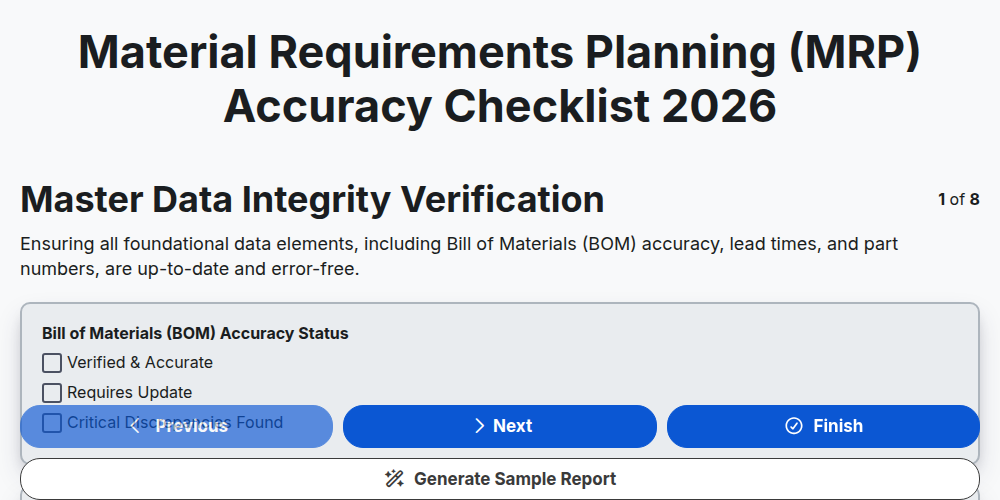
Table of Contents
- Introduction: Why MRP Accuracy is the Backbone of 2026 Supply Chain Resilience
- The Cost of Inaccuracy: Navigating Modern Manufacturing Volatility
- Phase 1: Establishing the Foundation with Master Data Integrity Verification
- Phase 2: Conducting an Inventory Accuracy & Availability Audit
- Phase 3: Supplier Lead Time & Reliability Assessment in an Unpredictable Market
- Phase 4: Precision Forecasting: Demand Forecast & Input Validation
- Phase 5: Synchronizing the Shop Floor: Production Schedule Alignment
- Phase 6: Closing the Loop: Procurement & Purchase Order Review
- Phase 7: Digital Hygiene: System Processing & Error Log Monitoring
- Phase 8: Proactive Resilience: Exception Management & Action Plan
- Leveraging Automation to Maintain Checklist Compliance
- Conclusion: Building a Continuous Improvement Loop for 2026
- Resources & Links
TLDR: Ensure seamless production planning and minimize costly stockouts or surpluses with our comprehensive 2026 MRP Accuracy Checklist. This guide provides a strategic roadmap for auditing master data integrity, verifying inventory precision, assessing supplier reliability, and synchronizing production schedules to drive operational excellence in an evolving supply chain landscape.
Introduction: Why MRP Accuracy is the Backbone of 2026 Supply Chain Resilience
The High Stakes of Precision in an Era of Volatility
As we move into 2026, the global supply chain landscape has transitioned from a period of recovery to an era of permanent volatility. With geopolitical shifts, fluctuating energy costs, and increasingly unpredictable consumer behavior, the margin for error in manufacturing has effectively vanished. In this environment, your Material Requirements Planning (MRP) system is no longer just a scheduling tool-it is the central nervous system of your entire operation.
The Cost of Invisible Errors
Inaccurate MRP outputs create a destructive ripple effect across the enterprise. When the data driving your planning is flawed, the consequences are immediate and costly:
- The Bullwhip Effect: Small errors in demand forecasting escalate into massive, unnecessary inventory bloating or catastrophic stockouts.
- Capital Erosion: Excess safety stock tied up in phantom requirements drains liquidity that should be invested in innovation.
- Operational Chaos: Poorly aligned production schedules lead to frequent emergency changeovers, expedited freight costs, and missed delivery windows.
Beyond the Algorithm: The Human-System Synergy
The most sophisticated AI-driven MRP modules in 2026 are only as effective as the data fed into them. An advanced algorithm cannot compensate for a garbage in, garbage out scenario. True supply chain resilience is found in the intersection of robust digital processing and rigorous manual verification.
To maintain a competitive edge, organizations must move away from reactive firefighting and toward a proactive state of Data Integrity Management. This requires a structured, repeatable framework to audit the inputs, the processes, and the outputs of your planning engine.
The following checklist is designed to serve as your operational blueprint. By systematically auditing these eight critical dimensions, you can transform your MRP from a source of uncertainty into a predictable engine of growth.
The Cost of Inaccuracy: Navigating Modern Manufacturing Volatility
The Hidden Drain on Your Bottom Line
In the hyper-connected manufacturing landscape of 2026, the margin for error has effectively vanished. We no longer operate in an era of buffer-heavy manufacturing where excess safety stock could mask inefficiencies. Today, supply chain volatility, fluctuating raw material costs, and unpredictable global logistics mean that an inaccurate Material Requirements Planning (MRP) system isn't just a minor inconvenience-it is a direct threat to your operational solvency.
The Ripple Effect of Data Errors
When your MRP system provides inaccurate output, the consequences cascade through every department in your organization. A single misplaced decimal point in a Bill of Materials (BOM) or an outdated lead time doesn't just affect the warehouse; it triggers a domino effect:
- Production Stoppages: Unplanned downtime caused by ghost inventory or unexpected shortages.
- Capital Tied in Dead Stock: Excess procurement of materials that aren't needed, draining liquidity and increasing carrying costs.
- Expediting Costs: The panic premium-paying inflated rates for emergency shipping to fix preventable shortages.
- Customer Erosion: Missed delivery dates and diminished service levels that damage long-term brand reputation.
Beyond Simple Math: The 2026 Complexity Layer
Modern manufacturing requires more than just basic arithmetic; it requires high-fidelity data synchronization. With the integration of AI-driven forecasting and IoT-enabled shop floors, the noise in your data has increased. An inaccurate MRP system in 2026 acts as a faulty compass in a storm-it may be moving quickly, but it is leading you toward a collision.
To maintain a competitive edge, your focus must shift from mere execution to validation. The goal is to transition from a reactive state of firefighting to a proactive state of precision management. The following checklist is designed to help you audit your digital ecosystem and ensure that your planning intelligence is as robust as your production capabilities.
Phase 1: Establishing the Foundation with Master Data Integrity Verification
The Bedrock of MRP Success: Verifying Master Data Integrity
In the landscape of 2026's highly automated supply chains, your Material Requirements Planning (MRP) system is only as powerful as the data feeding it. If your master data is flawed, your MRP will generate garbage in, garbage out outputs-leading to catastrophic stockouts or crippling excess inventory.
To achieve true planning precision, your first phase must focus on a rigorous audit of your foundational data points.
Auditing the Critical Data Pillars
Before running any procurement logic, you must ensure that the following core elements are mathematically and operationally accurate:
- Bill of Materials (BOM) Accuracy: Verify that every component, sub-assembly, and quantity is up to date. Even a minor discrepancy in a BOM can trigger a cascade of incorrect parts orders across your entire production line.
- Part Number & Description Standardization: Ensure that every SKU follows a unified naming convention. Inconsistencies here lead to duplicate entries and fragmented inventory visibility.
- Unit of Measure (UOM) Consistency: Confirm that the UOM used in procurement (e.g., per pallet) aligns perfectly with the UOM used in production (e.g., per unit). Discrepancies here are the leading cause of massive quantity errors.
- Safety Stock Parameters: Re-evaluate your minimum and maximum stock levels. Static safety stock levels that do not reflect current market volatility will inevitably lead to plan failure.
Implementing Data Governance Protocols
Accuracy is not a one-time event; it is a continuous cycle. To maintain the integrity of your MRP in 2026, your checklist must include:
- Periodic Data Cleansing: Schedule monthly or quarterly reviews to purge obsolete parts and update revised engineering changes.
- Automated Validation Rules: Leverage your ERP's capability to flag impossible values (e.g., negative lead times or zero-cost items) before they hit the production schedule.
- Ownership Assignment: Clearly define which department-Engineering, Procurement, or Production-is responsible for the updates of specific data fields to ensure accountability.
By mastering this initial phase, you transform your MRP from a simple calculation tool into a reliable strategic engine.
Phase 2: Conducting an Inventory Accuracy & Availability Audit
Ensuring the Foundation: The Inventory Accuracy & Availability Audit
In the world of Material Requirements Planning, your MRP system is only as powerful as the data it processes. If your digital records claim you have 500 units in stock but your physical warehouse only holds 50, your entire production schedule is compromised. An audit of inventory accuracy and availability is the reality check phase of your 2026 planning strategy.
The Criticality of Physical vs. Digital Alignment
As supply chains become more volatile, the gap between system stock and physical stock has become a primary driver of production downtime. This phase of the checklist focuses on eliminating phantom inventory and ensuring that the materials listed as available are truly ready for consumption.
Core Audit Focus Areas
1. Cycle Counting Precision Don't wait for the year-end physical count to find errors. Implement a stratified cycle counting program that focuses on high-value (Class A) items more frequently.
- Key Metric: Percentage of inventory records matching physical counts.
- Action: Identify the root causes of discrepancies (e.g., improper bin labeling or unrecorded scrap).
2. Verification of Safety Stock Levels Availability isn't just about what is in the bin today; it's about having enough to cover uncertainty.
- Audit Step: Review whether current safety stock levels are still appropriate for 2026 demand volatility.
- Check: Are low stock triggers functioning correctly within the MRP logic?
3. Identification of Obsolete and Slow-Moving Stock (SLOB) Dead stock consumes valuable warehouse space and skews availability metrics.
- Audit Step: Flag items with zero movement in the last 6-12 months.
- Action: Decide on disposal, discounting, or repurposing to ensure they do not interfere with active production planning.
4. Location and Bin Accuracy An item might be in stock, but if it cannot be found because it was placed in the wrong bin, it is effectively unavailable.
- Audit Step: Perform random spot checks on bin locations to ensure the ERP/MRP system reflects the precise physical coordinates of the material.
The Goal: High-Fidelity Availability
The objective of this audit is to achieve a state of high-fidelity availability. When your MRP system triggers a requirement, you must have absolute confidence that the inventory is physically present, correctly located, and ready for immediate allocation to the production floor.
Phase 3: Supplier Lead Time & Reliability Assessment in an Unpredictable Market
Navigating Volatility: Evaluating the Supply Chain Pulse
As we move into 2026, the era of set it and forget it lead times is officially over. In an increasingly fragmented global market, the accuracy of your MRP system is only as strong as the reliability of your external partners. If your system assumes a 30-day lead time because that was the historical average, but your supplier is currently averaging 45 days due to logistics bottlenecks, your entire production schedule is compromised.
To maintain high-precision planning, your assessment must move beyond simple date-checking and focus on real-time variability.
Critical Audit Points for 2026
To ensure your MRP inputs reflect reality, execute the following verification steps:
- Lead Time Variance Analysis: Do not rely on static lead time fields. Compare the System Lead Time against the Actual Arrival Date for the last six months of deliveries. If the deviation exceeds 5%, the master data must be updated.
- Supplier Reliability Scoring: Implement a weighted metric that evaluates suppliers not just on on-time delivery (OTD), but on order completeness. A shipment that arrives on time but is missing 10% of the components is a failure in the eyes of the MRP.
- Buffer Management & Safety Stock Calibration: Use this phase to determine if your current safety stock levels can absorb the identified lead time fluctuations. If a supplier's reliability is trending downward, your MRP must trigger an automatic adjustment in safety stock parameters.
- Communication Loop Integration: Ensure that Force Majeure or logistical delays communicated by vendors are being translated into your ERP/MRP system immediately. The gap between a vendor's email and your system update is where stockouts happen.
Moving from Reactive to Predictive
The goal of this phase is to transform your supplier data from a historical record into a predictive tool. By auditing reliability and lead time volatility, you transition your MRP from a simple calculator into a robust strategic engine capable of weathering the supply chain disruptions characteristic of the mid-2020s.
Phase 4: Precision Forecasting: Demand Forecast & Input Validation
Ensuring Data Reliability in a Volatile Market
In 2026, the margin for error in demand planning has shrunk to near zero. As supply chains face increased global volatility, the Garanteed Accuracy of your MRP output is only as strong as the inputs you feed into it. If your demand forecast is skewed by outdated trends or unvalidated market intelligence, your entire production plan will trigger a cascade of shortages or costly overstock.
Validating the Forecast Drivers
The goal of this phase is to move beyond simply looking at historical averages. To achieve true MRP precision, you must audit the qualitative and quantitative drivers behind your numbers.
- Statistical vs. Qualitative Alignment: Cross-reference your automated statistical forecasts with human intelligence from sales and marketing teams. Are promotional campaigns, new product launches, or seasonal shifts being reflected in the MRP inputs?
- Outlier Scrubbing: Identify and neutralize noise in your historical data. Ensure that one-time massive orders or anomalous supply disruptions from the past are not being treated as recurring demand patterns.
- Bias Detection: Audit your forecasting process for systematic bias. Is the system consistently over-forecasting (leading to high carrying costs) or under-forecasting (leading to stockouts)?
Input Integrity & Parameter Verification
A forecast is useless if the parameters governing how it translates into requirements are broken.
- Safety Stock Calibration: Review your safety stock levels against current demand volatility. In 2026, static safety stock is a liability; your buffers should be dynamic and responsive to recent standard deviation shifts.
- Minimum Order Quantities (MOQ) Review: Ensure that the demand inputs are being reconciled with realistic procurement constraints. High demand for a low-volume part should not trigger an MRP explosion that exceeds your storage capacity.
- Seasonality & Trend Adjustment: Validate that the time-phased components of your forecast accurately reflect the upcoming fiscal quarters.
The Single Source of Truth Test
Before moving to the production scheduling phase, perform a final check: Is the demand signal consistent across all departments? Discrepancies between the Sales & Operations Planning (S&OP) plan and the MRP input files are the leading cause of phantom inventory issues. If the numbers don't match the consensus plan, the audit fails here.
Phase 5: Synchronizing the Shop Floor: Production Schedule Alignment
Bridging the Gap Between Planning and Execution
In the complex ecosystem of a 2026 smart factory, an MRP system is only as powerful as its connection to the physical reality of the production floor. Phase 5 focuses on the critical synchronization between your high-level material requirements and your actual manufacturing capacity. Even with perfect master data and accurate forecasts, an MRP plan will fail if it ignores the constraints of your shop floor.
Eliminating the Paper Plan Syndrome
The most common cause of MRP inaccuracy is the Paper Plan syndrome-where the digital schedule looks perfect in the system, but the physical reality of machine downtime, labor shortages, or tooling issues makes it impossible to execute. To ensure your MRP remains a reliable source of truth, you must validate that your material releases are tightly coupled with your actual production capabilities.
Key Audit Points for Production Alignment
To achieve true synchronization, evaluate your process against these four pillars:
Capacity Constraint Validation: Check if your MRP logic is accounting for current bottleneck constraints. Are you releasing materials for a high-priority run while the necessary work center is undergoing unplanned maintenance? Ensure that material availability is cross-referenced with confirmed machine availability.
BOM-to-Process Synchronization: Verify that the Bill of Materials (BOM) being used in the MRP run matches the current production routing. Discrepancies between the planned recipe and the actual production steps lead to phantom shortages or excess inventory that the system cannot account for.
Work Order Release Integrity: Audit the timing of work order releases. Are materials being staged too early (increasing WIP and clutter) or too late (causing production starvation)? Your checklist must confirm that the lead time for production setup is integrated into the material requirement dates.
Real-Time Feedback Loops: In 2026, manual updates are a liability. Evaluate whether your production execution system (MES) is feeding real-time progress back to the MRP. If a production stage is delayed, does the MRP automatically adjust the subsequent material requirements for sub-assemblies?
The Goal: A Closed-Loop System
The objective of this phase is to move away from static planning and toward a dynamic, closed-loop environment. When your production schedule and material requirements are perfectly aligned, you reduce the safety buffer mentality, minimize excess WIP, and significantly improve your On-Time Delivery (OTD) metrics.
Phase 6: Closing the Loop: Procurement & Purchase Order Review
Ensuring Procurement Alignment
Once you have validated your demand forecasts and production schedules, the focus must shift from planning to execution. The gap between a perfect plan and a supply chain failure often exists in the transition from the MRP output to the actual Purchase Order (PO).
Auditing the Paper Trail
In 2026, automated procurement systems can move faster than human oversight. This phase is about ensuring that the signals sent to your vendors are both accurate and actionable. A breakdown in this stage leads to phantom demand or, conversely, emergency shipments that inflate logistics costs.
To maintain maximum accuracy, your review should focus on three critical areas:
- PO Quantity & Unit of Measure (UoM) Validation: Verify that the quantities generated by the MRP logic match the physical ordering constraints. An error in UoM conversion (e.g., ordering in cases when the system expects individual units) is a primary driver of inventory bloat.
- Order Date & Delivery Window Verification: Ensure the Need Date in the MRP matches the Requested Delivery Date on the PO. If the system suggests an arrival date that doesn't account for recent transit delays, your production line is at risk.
- Price and Contract Compliance: Cross-reference the automated PO generation with current master vendor contracts. Discrepancies in unit pricing or discount thresholds can lead to significant budget variances and reconciliation nightmares during the invoicing stage.
Eliminating Order Fragmentation
A common pitfall in MRP execution is order splintering-the creation of numerous small, inefficient purchase orders for the same component. Use this review phase to consolidate requirements. Look for opportunities to aggregate demand across multiple sub-assemblies to leverage economies of scale and reduce the administrative burden on your procurement team.
Pro-Tip for 2026: Utilize automated reconciliation tools to flag any PO that deviates from the established Standard Cost or Standard Lead Time before the order is officially released to the vendor.
Phase 7: Digital Hygiene: System Processing & Error Log Monitoring
Continuous Oversight: Monitoring the Digital Pulse
In the era of autonomous supply chains, the reliability of your MRP system is only as strong as its most recent data cycle. Even with perfect master data and accurate forecasts, a single system glitch or a failed background job can ripple through your entire production schedule, leading to ghost shortages or artificial surpluses.
Eliminating the Black Box Syndrome
In 2026, an effective MRP strategy requires moving away from set it and forget it mentalities. You must treat your MRP engine as a living process that requires active digital hygiene. Error log monitoring is your first line of defense against the silent erosion of planning integrity.
Key Audit Focus Areas
To ensure your system is processing inputs correctly, implement a routine review of the following:
- MRP Run Error Logs: Regularly scan for failed calculation loops, interrupted batch processing, or logic conflicts caused by incompatible planning parameters.
- Integration Integrity Checks: Ensure that data transfers between your ERP, WMS (Warehouse Management System), and external supplier portals are seamless and that no packets are lost during synchronization.
- Data Latency Audits: Identify delays between real-time shop floor updates and the MRP's visibility. A delay of even a few hours in recording a scrap event can invalidate a whole week of planning.
- Automated Alert Validation: Test your system's automated notification triggers. Are your planners actually receiving alerts for critical stock-outs, or are these notifications buried in unread system notifications?
The Goal: Zero-Latency Planning
The objective of this phase is to ensure that the brain of your supply chain is operating on real-time, error-free logic. By proactively monitoring system health, you transform your MRP from a reactive tool into a predictive powerhouse, ensuring that the outputs you use for decision-making are structurally sound.
Phase 8: Proactive Resilience: Exception Management & Action Plan
Moving from Reaction to Prevention
Even with the most advanced AI-driven MRP systems, discrepancies are inevitable. The true mark of a world-class supply chain professional in 2026 is not the absence of errors, but the speed and effectiveness of the response when they occur. This final phase of the checklist shifts your focus from identification to resolution, ensuring that a single data anomaly does not cascade into a site-wide production stoppage.
Defining the Exception Protocol
An exception in an MRP environment is any deviation from the planned logic-such as a shortage in raw materials, an unexpected spike in demand, or a delayed shipment. To maintain accuracy, you must have a standardized protocol for:
- Threshold Identification: Define what constitutes a critical error versus a minor variance (e.g., a 5% stock discrepancy vs. a 20% discrepancy).
- Root Cause Categorization: Distinguish between systemic errors (master data issues) and external disruptions (supplier delays) to prevent repetitive troubleshooting.
The 2026 Action Plan Framework
Use the following steps to build your contingency roadmap:
1. Immediate Containment When an error is detected, the first priority is to prevent it from impacting the live production schedule. This may involve re-allocating existing safety stock or temporarily freezing specific purchase orders until the data is verified.
2. The Closed-Loop Verification Never close an exception ticket until the data has been re-verified through the first seven steps of this checklist. An action plan is only complete when the Master Data has been updated and the inventory levels have been physically re-counted.
3. Continuous Improvement Integration (Kaizen) Every major exception should serve as a data point for your next audit. If a specific supplier consistently triggers Lead Time exceptions, your action plan should involve a formal supplier performance review or a structural update to your safety stock parameters.
Summary of the Exception Workflow
| Trigger Event | Immediate Action | Long-term Resolution |
|---|---|---|
| Inventory Mismatch | Quarantine affected stock | Audit cycle counts & update Master Data |
| Forecast Deviation | Adjust production buffer | Refine forecasting algorithms/models |
| Supplier Delay | Activate secondary sourcing | Re-evaluate Supplier Reliability Scorecard |
| System Error Log | IT/ERP technical audit | Patch system logic or update user training |
Leveraging Automation to Maintain Checklist Compliance
The Future of Precision: Automating Your MRP Integrity
As we move into 2026, the margin for error in supply chain management has shrunk to near zero. The complexity of globalized networks and the volatility of market demands mean that manual oversight is no longer sufficient to ensure the integrity of your Material Requirements Planning (MRP) system. To truly master the checklist outlined above, organizations must transition from reactive troubleshooting to proactive, automated validation.
Integrating Real-Time Data Streams
The cornerstone of modern MRP accuracy lies in reducing the latency gap-the time between a physical event occurring in the warehouse or factory and that event being reflected in your ERP. Leveraging automated IoT (Internet of Things) sensors and RFID integration allows for a continuous Inventory Accuracy & Availability Audit. By automating the data flow from the shop floor to the planning engine, you eliminate the human error inherent in manual cycle counts, ensuring that your MRP logic is always operating on a single source of truth.
Predictive Analytics and Automated Validation
While the Demand Forecast & Input Validation step is traditionally a manual analytical task, 2026 technology allows for the deployment of AI-driven sanity checks. Advanced algorithms can now automatically flag anomalies in demand spikes or unexpected dips that deviate from historical patterns, alerting planners before these errors propagate through the entire production schedule.
Automated Exception Management
The true value of automation is found in System Processing & Error Log Monitoring. Rather than having planners hunt through thousands of lines of data, automated monitoring tools can now use machine learning to identify patterns in procurement delays or lead-time discrepancies. This enables:
- Smart Alerting: Automatically triggering an Exception Management & Action Plan when a supplier's reliability score drops below a predefined threshold.
- Self-Healing Master Data: Systems that can identify and suggest corrections for outdated lead times or incorrect bill of materials (BOM) entries.
- Automated Re-scheduling: When a disruption is detected, the system can run what-if simulations to suggest the most efficient Production Schedule Alignment without manual intervention.
By integrating these automated layers into your checklist, you are not just checking boxes; you are building a resilient, self-correcting ecosystem that turns the MRP from a simple calculation tool into a strategic competitive advantage.
Conclusion: Building a Continuous Improvement Loop for 2026
Moving Beyond the Checklist: Creating a Culture of Precision
Achieving high MRP accuracy is not a one-and-done task; it is an ongoing commitment to operational excellence. As we move into 2026, the complexity of global supply chains and the volatility of market demands mean that a checklist should not be viewed as a final destination, but rather as a diagnostic tool for a continuous improvement loop.
From Auditing to Automating
While the steps outlined in this checklist-from Master Data Integrity to Exception Management-provide a robust framework for manual oversight, the true competitive advantage in 2026 lies in automation. The goal is to transition from reactive firefighting to proactive management.
As you implement these audits, look for opportunities to integrate AI-driven validation and real-time IoT data to bridge the gap between your physical inventory and your digital records. When your system can flag a Lead Time Discrepancy or a Demand Forecast Error before it hits the production floor, you have successfully moved from simple accuracy to true supply chain resilience.
The Feedback Loop Strategy
To ensure this checklist drives long-term value, integrate it into your monthly or quarterly business reviews (MBRs/QBRs) using the following three-step cycle:
- Identify: Use your Error Log Monitoring to pinpoint recurring patterns in data inaccuracies or supplier delays.
- Analyze: Perform a root-cause analysis on why the Production Schedule Alignment failed-was it a failure in master data or an unpredicted spike in demand?
- Adjust: Update your Standard Operating Procedures (SOPs) and procurement protocols to prevent the recurrence of the identified error.
By treating every discrepancy found during your audit as a lesson rather than a failure, you transform your MRP from a mere calculation engine into a strategic asset that drives profitability and stability in an unpredictable era.
Resources & Links
- Gartner Supply Chain Research: Industry-leading insights and strategic trends for navigating supply chain volatility and digital transformation.
- ASCM (formerly APICS): The global leader in supply chain professional certification and best practices for inventory and production management.
- Supply Chain Management Review: Deep-dive articles and case studies on manufacturing excellence and operational efficiency.
- SAP Digital Manufacturing: Resources on integrating ERP and MRP systems with real-time shop floor execution.
- Oracle Cloud Supply Chain & Manufacturing: Information on leveraging cloud-based planning and automated procurement workflows.
- ISS World - Inventory Management Solutions: Technical resources for improving inventory accuracy through RFID and automated tracking.
- McKinsey & Company - Operations Practice: Strategic frameworks for building resilient supply chains in an era of global disruption.
- Capterra - MRP Software Reviews: A platform to compare different MRP and ERP software tools for digital hygiene and automation.
- Forbes - Supply Chain Insights: High-level perspectives on the economic impacts of manufacturing and logistics volatility.
- Supply Chain Brain: News and analysis regarding modern logistics, procurement, and demand forecasting trends.
- SCopy - Data Integrity Tools: Focuses on master data management and cleaning processes for manufacturing databases.
- EDIGlobal - Procurement Intelligence: Tools and frameworks for supplier reliability assessment and lead-time management.
- Project Management Institute (PMI): Resources for establishing audit frameworks and exception management action plans.
- Tableau - Supply Chain Analytics: Visualizing demand forecasts and production schedules to identify discrepancies.
- IBM Supply Chain Intelligence Suite: Leveraging AI and machine learning for proactive error log monitoring and forecasting.
- MIT Center for Transportation & Logistics: Academic research on building continuous improvement loops and supply chain resilience.
Comments
There are no comments yet. Be the first to add one!
SCM - Supply Chain Management Solution Demo
Struggling with supply chain disruptions & lack of visibility? ChecklistGuro delivers a centralized SCM solution, connecting your suppliers, manufacturers, & distributors for improved collaboration and control. Simplify operations & boost efficiency.
Related Articles
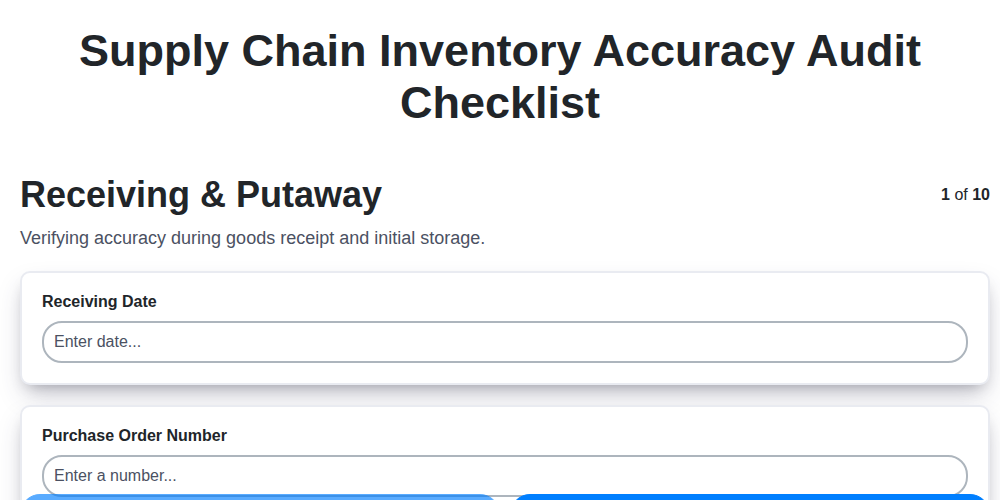
The Ultimate Supply Chain Inventory Accuracy Audit Checklist: A Step-by-Step Guide
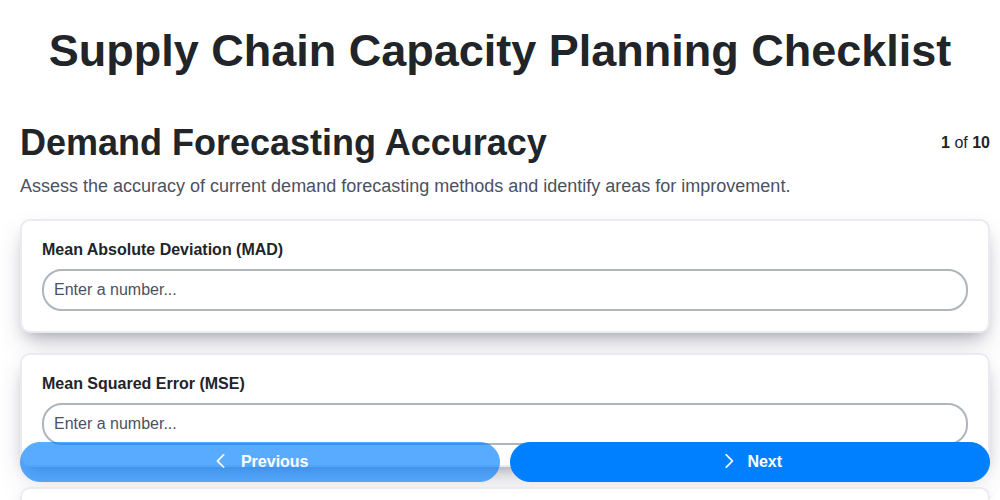
Supply Chain Capacity Planning Checklist: Ensure Readiness for Peak Demand
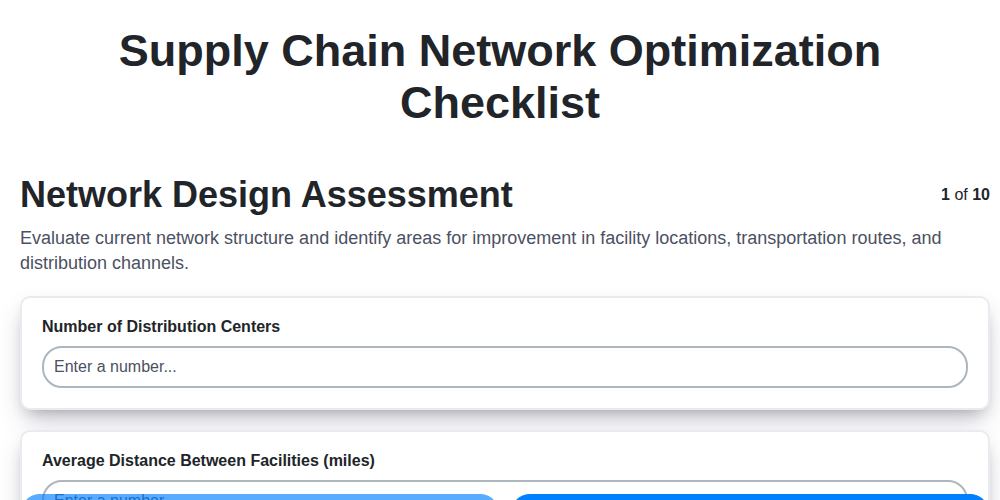
The Ultimate Supply Chain Network Optimization Checklist: A Step-by-Step Guide
Supply Chain Risk Assessment Checklist: Your Guide to Resilience
Navigating Sustainability: Your Supply Chain Compliance Checklist

Top 10 SAP Logistics Business Network (LBN) Alternatives for 2025

Fortify Your Supply Chain: The Ultimate Resilience Assessment Checklist
Navigating Global Trade: Your Essential Import/Export Compliance Checklist
Need help with
Supply Chain Management (SCM)?
Have a question? We're here to help. Please submit your inquiry, and we'll respond promptly.