Navigating Sustainability: Your Supply Chain Compliance Checklist
Published: 12/09/2025 Updated: 07/02/2026
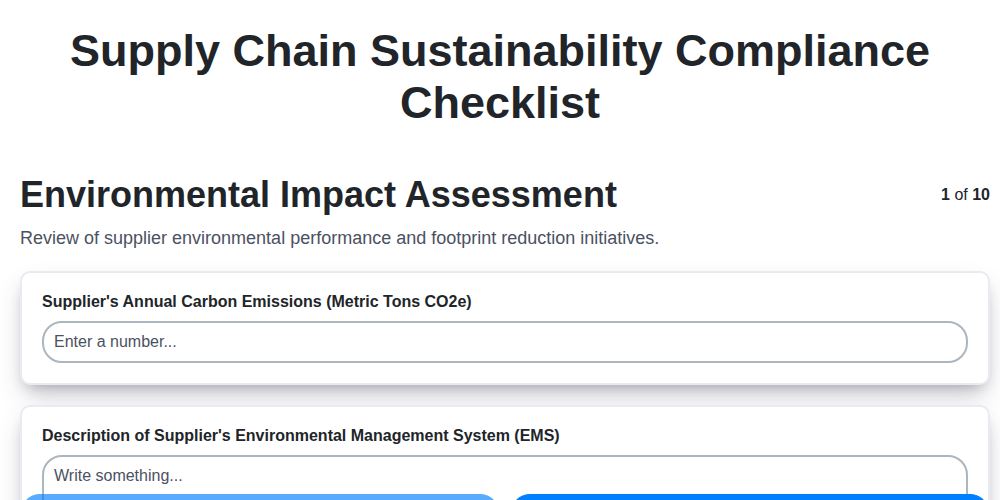
Table of Contents
- Introduction: Why Supply Chain Sustainability Matters
- 1. Environmental Impact Assessment: Understanding Your Footprint
- 2. Ethical Sourcing & Labor Practices: Ensuring Fair Treatment
- 3. Carbon Footprint Tracking & Reduction: Minimizing Emissions
- 4. Waste Management & Circularity: Moving Beyond Linear Models
- 5. Packaging Sustainability: Reducing Waste & Optimizing Materials
- 6. Supplier Code of Conduct Adherence: Setting Clear Expectations
- 8. Water Usage & Conservation: Protecting a Vital Resource
- 9. Biodiversity Protection: Preserving Ecosystems
- 10. Reporting & Transparency: Building Trust and Accountability
- 11. Due Diligence & Risk Assessment: Identifying Vulnerabilities
- 12. Continuous Improvement: The Ongoing Journey
- Conclusion: Building a Sustainable Supply Chain
- Resources & Links
TLDR: Feeling overwhelmed by supply chain sustainability? This checklist breaks down essential compliance areas - from environmental impact to ethical sourcing and waste reduction - giving you a clear roadmap to assess, improve, and track your sustainability efforts. It's your one-stop guide to ensuring your supply chain aligns with responsible business practices and regulatory requirements.
Introduction: Why Supply Chain Sustainability Matters
Consumers are increasingly demanding more than just quality products; they want to know how those products are made and the impact their purchases have on the planet and its people. This shift in consumer expectations is driving a crucial evolution in business practices - a focus on supply chain sustainability.
Ignoring sustainability within your supply chain isn't just a PR risk; it's a business risk. Disruptions caused by climate change, resource scarcity, and ethical concerns are becoming more frequent and costly. Companies face potential reputational damage, legal liabilities, and even operational bottlenecks if their suppliers aren't aligned with responsible practices.
Beyond avoiding these risks, embracing supply chain sustainability presents significant opportunities. It can enhance brand loyalty, attract socially conscious investors, drive innovation in resource efficiency, and unlock access to new markets. A truly sustainable supply chain isn't just about doing good; it's about building a resilient, efficient, and future-proof business. This checklist provides a framework to guide you on this vital journey.
1. Environmental Impact Assessment: Understanding Your Footprint
Before you can improve, you need to know where you stand. An Environmental Impact Assessment (EIA) is the foundational step in your supply chain sustainability compliance journey. It's not just a box to tick; it's a comprehensive investigation into how your supply chain activities affect the environment.
This assessment should go beyond surface-level observations. It requires a detailed analysis of your entire supply chain - from raw material extraction to product disposal - identifying potential environmental impacts at each stage. Consider these key areas:
- Resource Depletion: Are you relying on scarce resources? Assess the sustainability of sourcing locations.
- Pollution: Evaluate air and water pollution generated by manufacturing processes, transportation, and waste disposal.
- Habitat Destruction: Consider the impact on ecosystems and biodiversity due to land use changes and resource extraction.
- Climate Change Contribution: Quantify greenhouse gas emissions throughout your supply chain.
- Soil Degradation: Analyze the impact of agricultural practices, mining, and industrial processes on soil health.
The EIA should use both qualitative and quantitative data. Engage with suppliers, conduct site visits, and leverage available data sources (e.g., life cycle assessments) to gain a complete picture. The results of this assessment will highlight areas where you can prioritize improvement and develop targeted sustainability initiatives. Without it, your efforts are likely to be misdirected and less impactful.
2. Ethical Sourcing & Labor Practices: Ensuring Fair Treatment
Beyond environmental concerns, a truly sustainable supply chain demands a firm commitment to ethical sourcing and fair labor practices. Consumers are increasingly demanding transparency and accountability, and rightly so. Ignoring the human element in your supply chain carries significant reputational, legal, and ethical risks.
This section of your sustainability compliance checklist needs to address several key areas:
- Forced Labor Prevention: Implement rigorous due diligence to ensure no forced labor, human trafficking, or slavery is present within your supply chain. This goes beyond simply stating it's prohibited - it requires active screening, audits, and remediation plans.
- Child Labor Prohibition: Explicitly prohibit child labor and implement mechanisms to verify compliance, particularly in regions with known risks.
- Fair Wages and Working Conditions: Ensure suppliers pay fair wages that meet or exceed legal minimums, provide safe working conditions, and adhere to reasonable working hours. Regularly assess working conditions through audits and worker interviews.
- Freedom of Association & Collective Bargaining: Respect workers' rights to form and join trade unions and engage in collective bargaining.
- Discrimination Prevention: Implement policies and training to prevent discrimination based on factors such as gender, race, religion, or disability.
- Health and Safety: Mandate adherence to health and safety standards to protect workers from hazards and ensure access to necessary medical care.
- Worker Grievance Mechanisms: Establish accessible and confidential grievance mechanisms allowing workers to report concerns without fear of retaliation.
- Supplier Training: Provide suppliers with training on ethical labor practices and expectations.
Regularly auditing suppliers, conducting worker interviews, and fostering collaborative relationships are crucial for ongoing compliance and continuous improvement. Demonstrating a genuine commitment to ethical labor practices strengthens your brand reputation and contributes to a more just and equitable world.
3. Carbon Footprint Tracking & Reduction: Minimizing Emissions
A significant aspect of supply chain sustainability is understanding and actively reducing your carbon footprint. This isn't just about feeling good; it's increasingly vital for regulatory compliance, investor confidence, and brand reputation. Here's how to tackle it:
1. Scope 1, 2, & 3 Emissions: Understanding the Landscape
- Scope 1 (Direct Emissions): These are emissions from sources you own or control, like company vehicles or on-site generators. Identify these sources and explore options for switching to cleaner alternatives (electric vehicles, renewable energy).
- Scope 2 (Indirect Emissions - Purchased Energy): These are emissions from the electricity, heating, and cooling you purchase. Transitioning to renewable energy sources (solar, wind, green tariffs) is a critical step.
- Scope 3 (Other Indirect Emissions): This is where supply chain sustainability really gets complex. It encompasses emissions from upstream activities (supplier manufacturing, transportation) and downstream (product distribution, consumer use, end-of-life treatment). Addressing Scope 3 requires collaboration and data collection.
2. Data Collection & Measurement:
- Supplier Engagement: Request emissions data from your suppliers. This often involves questionnaires, audits, and collaborative workshops.
- Transportation Analysis: Analyze transportation modes and routes. Explore options for consolidating shipments, utilizing more fuel-efficient modes (rail vs. road), and optimizing routes.
- Life Cycle Assessment (LCA): Consider a more in-depth LCA to understand the carbon footprint of your products across their entire lifecycle.
- Carbon Accounting Software: Utilize software solutions to streamline data collection, calculation, and reporting.
3. Reduction Strategies:
- Supplier Collaboration: Work with suppliers to implement carbon reduction initiatives within their own operations.
- Process Optimization: Identify and optimize processes within your operations to reduce energy consumption and waste.
- Sustainable Transportation: Shift to lower-emission transportation methods (e.g., electric vehicles, rail).
- Material Selection: Prioritize materials with lower embodied carbon.
- Energy Efficiency: Implement energy-efficient technologies and practices.
4. Setting Targets & Continuous Improvement:
- Establish Baseline: Determine your current carbon footprint to establish a baseline for measurement.
- Set Reduction Targets: Define ambitious but achievable reduction targets (e.g., 10% reduction by 2030).
- Regular Monitoring & Reporting: Track your progress against your targets and regularly report on your performance.
4. Waste Management & Circularity: Moving Beyond Linear Models
The traditional "take-make-dispose" linear model is no longer viable in a world demanding sustainable supply chains. Waste isn't just a disposal problem; it represents lost resources and a significant environmental impact. Embracing circularity - a system that minimizes waste and maximizes resource utilization - is now a crucial component of supply chain sustainability.
This goes beyond simply reducing landfill contributions. It requires a fundamental shift in how materials are used, recovered, and repurposed. Here's how to implement a robust waste management and circularity strategy:
- Waste Audits: Conduct thorough audits of all waste streams generated throughout your supply chain, from raw material extraction to product end-of-life. Identify the types, quantities, and sources of waste.
- Reduce, Reuse, Recycle (and Rethink!): Prioritize waste reduction at the source. Explore opportunities to redesign products and processes to minimize material usage. Encourage reuse within your operations and among your suppliers. Implement robust recycling programs. Critically, rethink material choices - are there more sustainable alternatives available?
- Closed-Loop Systems: Collaborate with suppliers and customers to establish closed-loop systems where waste from one process becomes a resource for another. This could involve returning used products or materials for refurbishment, remanufacturing, or recycling.
- Design for Disassembly & Recyclability: Encourage designers and manufacturers to consider end-of-life scenarios when creating products. Products should be designed for easy disassembly and with materials that can be readily recycled or repurposed.
- Embrace Industrial Symbiosis: Explore opportunities for industrial symbiosis, where waste or by-products from one company become valuable inputs for another.
- Track and Measure: Establish metrics to track waste generation, diversion rates, and the percentage of recycled content used. Regularly monitor progress and identify areas for improvement.
Moving towards a circular economy isn't just about environmental responsibility; it's about creating a more resilient and efficient supply chain.
5. Packaging Sustainability: Reducing Waste & Optimizing Materials
Packaging is a significant contributor to both waste and environmental impact within the supply chain. Consumers often judge brands based on their packaging, making sustainable choices a crucial differentiator. This isn't just about aesthetics; it's about a comprehensive approach to minimizing environmental harm.
Here's how to address packaging sustainability:
- Material Selection: Prioritize recycled content (PCR - Post-Consumer Recycled) and renewable materials like plant-based plastics (PLA), mushroom packaging, or seaweed-based alternatives. Consider the entire lifecycle of the material - from sourcing to end-of-life.
- Minimize Material Usage: Design packaging to use the least amount of material possible while still ensuring product protection. Lightweighting is key here.
- Design for Recyclability/Compostability: Ensure your packaging is easily identifiable and compatible with existing recycling or composting infrastructure. Use clear labeling. Avoid mixed materials whenever possible.
- Reusable Packaging: Explore reusable packaging options for B2B scenarios - think returnable pallets, crates, or containers.
- Reduce Void Fill: Minimize the use of packing peanuts, bubble wrap, and other void fillers. Opt for sustainable alternatives like recycled paper or compostable materials.
- Optimize Packaging Dimensions: Right-size your packaging to reduce wasted space during transportation.
- Assess and Improve Regularly: Continuously evaluate your packaging choices, considering new technologies and materials as they emerge.
6. Supplier Code of Conduct Adherence: Setting Clear Expectations
A robust supply chain sustainability program isn't just about what you do; it's fundamentally about ensuring your suppliers are aligned with your values and standards. This is where a comprehensive Supplier Code of Conduct (CoC) is absolutely critical. It's more than just a document; it's a living agreement outlining expected ethical and environmental performance.
Why a Strong CoC Matters:
- Risk Mitigation: Proactively address potential legal, reputational, and operational risks associated with supplier practices.
- Shared Responsibility: Establishes a clear framework for accountability and collaboration.
- Continuous Improvement: Drives ongoing enhancements in supplier performance.
- Brand Protection: Safeguards your brand image and customer trust.
Key Components of a Successful Adherence Program:
- Clear & Accessible Code: Your CoC should be written in plain language, easily understood by all suppliers, and readily accessible (e.g., on your website).
- Communication & Training: Actively communicate the CoC to all suppliers, providing training where necessary to ensure understanding and implementation. Consider translating it into relevant languages.
- Assessment & Verification: Implement processes to assess supplier compliance. This can include self-assessments, audits (both announced and unannounced), and third-party certifications.
- Corrective Action Plans: Establish a system for addressing non-compliance. This should involve collaborative problem-solving and the development of corrective action plans with clear timelines.
- Performance Monitoring: Regularly monitor supplier performance against the CoC, tracking progress and identifying areas for improvement.
- Contractual Integration: Incorporate the CoC into supplier contracts, making adherence a condition of doing business.
Remember, a Supplier Code of Conduct isn't a one-and-done activity. It requires ongoing commitment, engagement, and continuous improvement to be truly effective.
7. Conflict Minerals Compliance: Responsible Sourcing
The Dodd-Frank Act Section 1502 brought increased scrutiny to the sourcing of minerals - tin, tantalum, tungsten, and gold (3TG) - which are often used in electronics and other manufactured goods. These minerals are frequently mined in conflict-affected and high-risk areas, where their extraction can directly or indirectly finance armed conflict and human rights abuses.Compliance isn't just about avoiding legal repercussions; it's about upholding ethical business practices and contributing to a more responsible supply chain. Here's what your checklist needs to include:
- Due Diligence Framework: Implement a robust due diligence framework aligned with the OECD Due Diligence Guidance for Responsible Mineral Sourcing. This involves identifying and assessing risks within your supply chain.
- Source Identification: Map your supply chain to trace the origin of 3TG minerals back to the mine level. This can be a complex process, often requiring collaboration with suppliers and potentially utilizing specialized mapping tools.
- Supplier Engagement: Communicate your expectations for responsible sourcing to your suppliers. Require them to disclose the origin of minerals they use and to implement their own due diligence processes.
- Independent Audits: Consider commissioning independent audits of your suppliers' sourcing practices to verify their claims and identify areas for improvement.
- Reporting & Disclosure: Be transparent about your conflict minerals sourcing practices. This may involve filing reports with the SEC (for publicly traded companies in the US) and disclosing information on your website.
- Continuous Improvement: Conflict minerals compliance is an ongoing process. Regularly review and update your program to reflect changes in regulations, industry best practices, and evolving risks.
8. Water Usage & Conservation: Protecting a Vital Resource
Water scarcity is a growing global challenge, impacting ecosystems, communities, and businesses alike. Supply chain sustainability demands a proactive approach to water management - it's not just about reducing your own direct water consumption, but also ensuring your suppliers are doing the same.
What to Assess & Implement:
- Water Footprint Assessment: Begin by understanding your entire supply chain's water footprint. This includes direct water use in manufacturing, as well as water used to grow raw materials, process chemicals, and power operations.
- Supplier Water Risk Mapping: Identify suppliers located in water-stressed regions or those whose operations heavily rely on water. Prioritize engagement and assessment with these suppliers.
- Water Efficiency Initiatives: Encourage suppliers to implement water-saving technologies and practices. This could involve upgrades to irrigation systems, leak detection and repair programs, process optimization, and rainwater harvesting.
- Wastewater Treatment & Reuse: Assess whether suppliers have adequate wastewater treatment facilities and are exploring opportunities to reuse treated water in their processes.
- Water Recycling Programs: Implement or support water recycling initiatives within your own operations and encourage your suppliers to do the same.
- Agricultural Practices (for raw materials): If your supply chain includes agricultural products, assess the water efficiency of farming practices. Promote drought-resistant crops, efficient irrigation, and reduced water usage in agriculture.
- Set Water Reduction Targets: Establish clear, measurable water reduction targets for both your operations and your supply chain.
- Regular Audits & Monitoring: Implement regular audits and monitoring programs to track water usage, identify areas for improvement, and ensure compliance with water conservation goals.
By taking these steps, your supply chain can contribute to protecting this precious resource and building a more sustainable future.
9. Biodiversity Protection: Preserving Ecosystems
Supply chain sustainability isn't just about reducing pollution or fair labor; it's fundamentally linked to the health of the planet's ecosystems. Biodiversity loss - the decline in the variety of life on Earth - poses significant risks, impacting resource availability, disrupting ecological services, and ultimately jeopardizing long-term business viability.
For supply chains, this means considering the impact your operations and those of your suppliers have on natural habitats and species. This isn't just a nice-to-have; it's increasingly becoming a business necessity.
What to Consider:
- Sourcing Locations: Where are your raw materials coming from? Are these areas known for high biodiversity or are they facing deforestation, habitat degradation, or encroachment?
- Land Use Change: Is your sourcing contributing to deforestation, wetland destruction, or conversion of other natural habitats for agriculture or resource extraction?
- Impact on Endangered Species: Are your operations or those of your suppliers directly or indirectly affecting endangered or threatened species?
- Ecosystem Services: Recognize the vital role ecosystems play in providing clean water, pollination, and climate regulation. Evaluate how your supply chain impacts these services.
- Local Communities: Engage with and respect the knowledge and rights of Indigenous peoples and local communities who depend on biodiversity for their livelihoods.
Actionable Steps:
- Map Biodiversity Risk: Conduct a risk assessment to identify areas of high biodiversity importance within your supply chain.
- Sustainable Sourcing Policies: Prioritize sourcing from suppliers committed to protecting biodiversity and avoiding deforestation.
- Restoration Initiatives: Consider supporting or investing in ecosystem restoration projects in areas impacted by your supply chain.
- Traceability & Transparency: Improve traceability to understand the origin of your materials and identify potential biodiversity risks.
- Collaboration: Work with industry peers, NGOs, and government agencies to promote biodiversity conservation throughout your supply chain.
By proactively addressing biodiversity risks, your business can contribute to a more resilient and sustainable future.
10. Reporting & Transparency: Building Trust and Accountability
Sustainability isn't just about doing the right thing; it's about showing you're doing it. Robust reporting and transparency are the cornerstones of a credible supply chain sustainability program. Consumers, investors, and regulators are demanding more than just claims - they want verifiable data and evidence.
Here's what this entails:
- Establish Key Performance Indicators (KPIs): Define measurable metrics aligned with your sustainability goals (e.g., carbon emissions reduction, waste diversion rates, ethical sourcing audit scores).
- Data Collection & Verification: Implement systems for collecting accurate data across your supply chain and establish verification processes to ensure its reliability. Third-party audits and certifications can significantly bolster credibility.
- Regular Reporting: Publish regular sustainability reports (annual or bi-annual) outlining your performance against those KPIs. These reports should be easily accessible on your website and presented in a clear, understandable format.
- Traceability & Mapping: Offer greater transparency regarding your supply chain origins - where your materials come from and the processes involved. Supply chain mapping tools are invaluable.
- Engage Stakeholders: Actively solicit feedback from stakeholders (customers, employees, suppliers, NGOs) and incorporate it into your reporting.
- Utilize Frameworks & Standards: Leverage established reporting frameworks like the Global Reporting Initiative (GRI), Sustainability Accounting Standards Board (SASB), or Task Force on Climate-related Financial Disclosures (TCFD) to ensure consistency and comparability.
- Be Honest About Challenges: Don't shy away from acknowledging areas where you are struggling. Transparency about challenges and plans for improvement builds trust and demonstrates a commitment to continuous improvement.
Investing in reporting and transparency isn't just a regulatory requirement; it's a competitive advantage, attracting conscious consumers and reinforcing your brand's reputation.
11. Due Diligence & Risk Assessment: Identifying Vulnerabilities
Sustainability compliance isn't a set-it-and-forget-it exercise. It requires ongoing vigilance and proactive risk assessment. This section dives into due diligence - the process of thoroughly investigating your supply chain to uncover potential sustainability risks.
Beyond the Basics: While the previous steps in this checklist lay the groundwork, they aren't enough. You need to actively seek out areas of potential failure and develop strategies to mitigate them. This involves asking tough questions and digging beyond surface-level certifications.
Key Areas of Focus:
- Mapping Your Supply Chain: Go beyond your Tier 1 suppliers. Understand the origins of raw materials and the operations of your suppliers' suppliers (Tier 2, Tier 3, and beyond). This exposes hidden risks.
- Risk Scoring & Prioritization: Develop a risk scoring system based on factors like geographical location (high-risk areas for deforestation, human rights abuses, etc.), industry sector, and supplier performance data. Focus your resources on the highest-risk areas.
- Continuous Monitoring: Sustainability landscapes change rapidly. New regulations emerge, societal expectations shift, and environmental conditions evolve. Implement a system for continuous monitoring of your supply chain's sustainability performance. Utilize publicly available data, news reports, and third-party assessments.
- Scenario Planning: Consider what if scenarios. What happens if a key supplier is found to be in violation of labor laws? How would you respond to a disruption in raw material supply due to climate change?
- Remediation Planning: Have a clear plan for addressing non-compliance. This includes outlining corrective action plans, timelines, and responsibilities. Document all remediation efforts.
- Leveraging Technology: Explore supply chain mapping and risk assessment software to streamline this process and enhance visibility.
12. Continuous Improvement: The Ongoing Journey
Sustainability isn't a destination; it's a continuous journey. Achieving compliance with the checklist above represents a significant milestone, but it's not the finish line. Market demands, regulatory landscapes, and scientific understanding are constantly evolving. This necessitates a commitment to ongoing assessment and improvement.
Regularly review your processes, data, and supplier performance against updated best practices and emerging regulations. Encourage feedback from stakeholders - employees, customers, and community members - to identify areas for enhancement. Invest in training to keep your team informed and engaged. Embrace innovation, exploring new technologies and strategies to minimize environmental impact and maximize social responsibility. Schedule periodic audits (both internal and external) to validate your progress and identify gaps. Remember, a proactive and adaptive approach is key to long-term supply chain sustainability compliance - and a truly responsible business.
Conclusion: Building a Sustainable Supply Chain
Embarking on a journey towards a sustainable supply chain is not a one-time project, but a continuous evolution. The checklist outlined above - encompassing Environmental Impact Assessments, Ethical Sourcing, Carbon Footprint Tracking, Waste Management, Packaging Sustainability, Supplier Code Adherence, Conflict Minerals Compliance, Water Conservation, Biodiversity Protection, and robust Reporting & Transparency - provides a solid framework for progress.
Remember that true sustainability isn't about achieving perfection; it's about demonstrating a commitment to improvement and accountability. By consistently reviewing your practices against this checklist, fostering collaboration with suppliers, and embracing innovative solutions, you can build a supply chain that's not only resilient and efficient but also contributes positively to the environment and society. The long-term benefits - enhanced brand reputation, reduced risk, and a positive impact on the planet - are well worth the effort. Let's move beyond compliance and embrace a future where supply chains are a force for good.
Resources & Links
- United Nations Sustainable Development Goals (SDGs): Provides a framework for sustainable development, emphasizing the interconnectedness of environmental, social, and economic considerations - vital for supply chain sustainability. Provides specific goals and indicators relevant to each header in your post.
- ISO 20400: Sustainable Procurement: This international standard provides guidelines on how to integrate sustainability considerations into procurement processes, offering a structured approach to your checklist.
- SASB (Sustainability Accounting Standards Board): Provides industry-specific sustainability accounting standards. Helpful for understanding materiality and reporting on key environmental and social issues within supply chains. Useful for 'Reporting & Transparency' and 'Due Diligence'.
- Global Reporting Initiative (GRI): Offers a comprehensive set of sustainability reporting standards, widely used to measure and disclose organizational sustainability performance. A key resource for 'Reporting & Transparency'.
- World Resources Institute (WRI): WRI conducts research and provides data and tools on a wide range of sustainability issues, including water, climate, and biodiversity. Relevant to 'Water Usage', 'Biodiversity Protection', and 'Carbon Footprint'.
- Ellen MacArthur Foundation: A leading voice in the circular economy movement. Provides resources and frameworks for transitioning from linear to circular supply chain models, very relevant to 'Waste Management & Circularity'.
- Supply Chain Visibility (SCV): SCV platforms and methodologies are essential for tracking materials, labor, and environmental impact across complex supply chains. Supports 'Environmental Impact Assessment', 'Carbon Footprint Tracking', and 'Due Diligence'.
- EcoVadis: Provides sustainability ratings for suppliers, offering a standardized assessment process and helping companies assess their suppliers' performance. Useful for 'Supplier Code of Conduct Adherence'.
- Fairtrade International: Promotes fair labor practices and sustainable farming. Essential for 'Ethical Sourcing & Labor Practices'. Helps ensure workers are treated fairly and paid living wages.
- Sedex: A global platform for sharing supply chain data, focusing on ethical and responsible sourcing. Supports 'Ethical Sourcing & Labor Practices' and 'Supplier Code of Conduct Adherence'.
- CDP (Carbon Disclosure Project): Helps companies measure and reduce their environmental impact. Relevant to 'Carbon Footprint Tracking & Reduction', 'Environmental Impact Assessment' and 'Reporting & Transparency'.
- Water.org: Offers insights and resources around water stewardship and conservation in supply chains, supporting 'Water Usage & Conservation'.
- Business for Nature: Provides resources and support for businesses to protect and restore biodiversity. Useful for 'Biodiversity Protection'.
- Business Commitment to Human Rights: Provides information and resources relating to human rights due diligence within supply chains. Highly relevant to 'Due Diligence & Risk Assessment' and 'Ethical Sourcing'.
Frequently Asked Questions
What does 'supply chain compliance' mean in the context of sustainability?
Supply chain compliance for sustainability refers to ensuring that your suppliers adhere to ethical, environmental, and social standards throughout their operations and the sourcing of materials. It's about more than just legal requirements; it's about building a responsible and resilient supply chain.
Why is a sustainability compliance checklist important for my business?
A compliance checklist helps you identify and mitigate risks related to environmental impact, labor practices, human rights, and corruption within your supply chain. It demonstrates your commitment to sustainability, enhances your brand reputation, attracts conscious consumers, and reduces legal and financial risks.
What are the key areas typically covered in a sustainability supply chain compliance checklist?
Common areas include: environmental impact (carbon emissions, waste management, resource depletion), labor standards (fair wages, working hours, child labor), human rights (forced labor, discrimination), ethical sourcing (conflict minerals, deforestation), health and safety, and anti-corruption practices.
How do I start building a sustainability compliance checklist for my supply chain?
Begin by identifying your key suppliers and the risks associated with their operations. Prioritize high-risk areas and suppliers. Research relevant industry standards (e.g., UN Guiding Principles, ISO 14001, SA8000) and legal requirements. Engage with your suppliers to understand their existing practices and identify gaps.
What are some practical steps to implement a supply chain compliance checklist?
Implement a supplier assessment process, conduct audits (either self-assessments or third-party audits), set clear expectations and performance targets for suppliers, provide training and support to suppliers, regularly monitor and review supplier performance, and establish a grievance mechanism for stakeholders.
How often should I review and update my supply chain compliance checklist?
Your checklist should be reviewed and updated at least annually, or more frequently if there are significant changes in regulations, industry standards, or your business operations. Continuous improvement is key.
What role does traceability play in supply chain sustainability compliance?
Traceability allows you to track the origin of materials and products throughout your supply chain. This is crucial for verifying compliance claims, identifying risks, and ensuring transparency. Advanced technologies like blockchain are increasingly used for enhanced traceability.
What are the potential consequences of not adhering to supply chain sustainability compliance?
Consequences can include fines and penalties, legal action, damage to brand reputation, loss of customers, disruption to supply chains, and difficulties in accessing financing.
How can technology help me manage my supply chain sustainability compliance?
Software solutions can automate supplier assessments, track performance data, manage documentation, and facilitate communication. These tools can streamline processes and improve efficiency in monitoring and managing your supply chain.
What is 'due diligence' in the context of supply chain compliance?
Due diligence is the process of investigating and assessing the risks associated with your supply chain. It involves identifying, evaluating, and taking steps to address potential negative impacts on people and the environment. It's a legal requirement in many jurisdictions.
Comments
There are no comments yet. Be the first to add one!
SCM - Supply Chain Management Solution Demo
Struggling with supply chain disruptions & lack of visibility? ChecklistGuro delivers a centralized SCM solution, connecting your suppliers, manufacturers, & distributors for improved collaboration and control. Simplify operations & boost efficiency.
Related Articles
Incoterms Compliance Checklist for Supply Chain: Your Guide to Smooth Operations
Supply Chain Capacity Planning Checklist: Ensure Readiness for Peak Demand
The Ultimate Supply Chain Network Optimization Checklist: A Step-by-Step Guide
Supply Chain Risk Assessment Checklist: Your Guide to Resilience
Navigating Global Trade: Your Essential Import/Export Compliance Checklist
Top 10 SAP Logistics Business Network (LBN) Alternatives for 2025

Fortify Your Supply Chain: The Ultimate Resilience Assessment Checklist
The Ultimate Supply Chain Inventory Accuracy Audit Checklist: A Step-by-Step Guide
Need help with
Supply Chain Management (SCM)?
Have a question? We're here to help. Please submit your inquiry, and we'll respond promptly.