Supply Chain Risk Assessment Checklist: Your Guide to Resilience
Published: 12/08/2025 Updated: 07/02/2026
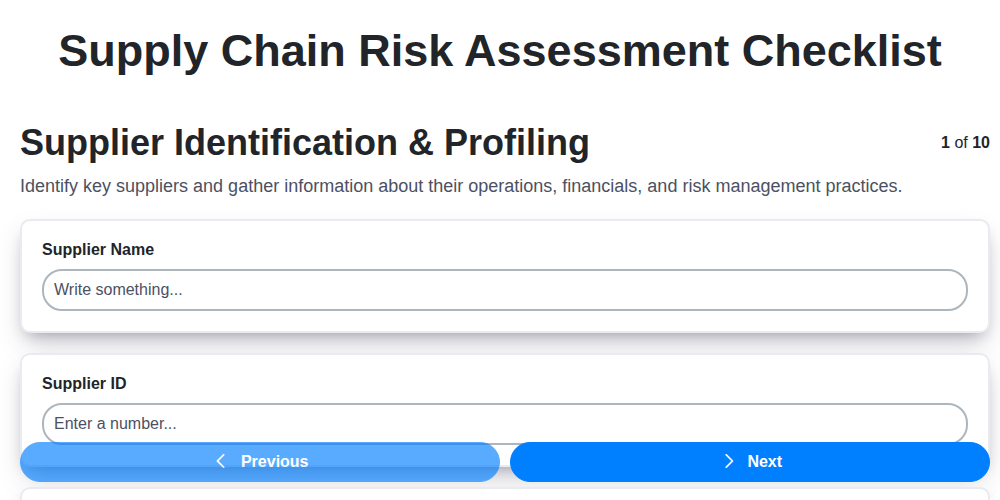
Table of Contents
- Introduction: Why Supply Chain Risk Assessment Matters
- 1. Supplier Identification & Profiling: Knowing Your Partners
- 2. Geopolitical & Macroeconomic Risks: Navigating Global Instability
- 3. Financial Stability of Suppliers: Assessing Supplier Viability
- 4. Operational Risks - Manufacturing & Logistics: Identifying Production & Delivery Vulnerabilities
- 5. Cybersecurity Risks: Protecting Data and Systems
- 6. Regulatory & Compliance Risks: Staying Ahead of the Law
- 7. Concentration & Single Source Dependencies: Addressing Dependency Risks
- 8. Business Continuity & Disaster Recovery: Planning for the Unexpected
- 9. Ethical & Social Responsibility: Ensuring Responsible Sourcing
- 10. Risk Mitigation & Response Planning: Building Resilience
- 11. Scoring and Prioritization of Risks
- 12. Continuous Monitoring and Improvement
- Conclusion: Building a Resilient Supply Chain
- Resources & Links
TLDR: Feeling overwhelmed by supply chain disruptions? This checklist is your roadmap to proactive risk assessment! It breaks down crucial areas - from supplier stability to cybersecurity - so you can identify vulnerabilities, plan for the worst, and build a more resilient supply chain. Think of it as your essential toolkit for navigating today's unpredictable business landscape.
Introduction: Why Supply Chain Risk Assessment Matters
In today's interconnected and increasingly volatile global landscape, supply chains are more vulnerable than ever. Disruptions - from natural disasters and geopolitical instability to cyberattacks and economic downturns - can cripple businesses, impacting everything from production and delivery to brand reputation and ultimately, profitability. A robust supply chain is no longer just about efficiency and cost savings; it's a critical pillar of resilience.
Ignoring potential risks is a gamble few businesses can afford. A proactive supply chain risk assessment isn't about predicting the future, but about identifying potential vulnerabilities, understanding their potential impact, and developing strategies to mitigate them. It's about building a supply chain that can weather the storm and continue to deliver value even in the face of adversity. This checklist is designed to guide you through a comprehensive assessment, empowering you to protect your business and secure your future.
1. Supplier Identification & Profiling: Knowing Your Partners
A robust supply chain risk assessment begins with a comprehensive understanding of who your suppliers are, what they do, and where they operate. It's more than just having a list of names; it's about building a detailed profile for each critical supplier.
Here's what a thorough supplier identification & profiling process entails:
- Tiered Mapping: Don't just identify your direct suppliers (Tier 1). Map out their suppliers (Tier 2) and, where feasible and critical, even Tier 3 and beyond. This uncovers hidden dependencies and potential vulnerabilities.
- Detailed Supplier Information: Gather comprehensive data beyond basic contact details. This includes:
- Business Description: What products or services do they provide? What are their core competencies?
- Location(s): Where are their facilities located? Consider country, region, and specific site vulnerabilities (e.g., flood zones, areas prone to political instability).
- Ownership Structure: Who owns the supplier? Understanding their parent company and related entities can reveal potential conflicts of interest or financial linkages.
- Key Personnel: Identify key contacts within the supplier's organization.
- Criticality Assessment: Rank suppliers based on the impact their disruption would have on your business (e.g., high, medium, low).
- Data Sources: Utilize a combination of sources:
- Supplier Questionnaires: Formal requests for information.
- Public Records: Company registrations, financial reports (where available).
- Industry Databases: Leverage industry-specific information sources.
- Internal Records: Purchase orders, contracts, performance reviews.
- Regular Updates: Supplier information changes. Establish a process for regularly reviewing and updating supplier profiles - at least annually, or more frequently for high-risk suppliers.
Accurate and complete supplier profiles are the foundation for a meaningful risk assessment. Without them, you're flying blind.
2. Geopolitical & Macroeconomic Risks: Navigating Global Instability
The global landscape is in constant flux. Geopolitical tensions, trade wars, economic downturns, and unforeseen global events (like pandemics) can rapidly disrupt supply chains. Ignoring these macro-level risks can leave your organization vulnerable to significant delays, increased costs, and reputational damage.
What to Consider:
- Political Instability: Assess countries where your suppliers are located. Are there ongoing conflicts, potential for civil unrest, or political shifts that could impact operations? Consider instability bordering supplier locations as well.
- Trade Policies & Tariffs: Monitor changes in trade agreements, tariffs, and export/import restrictions. These can significantly impact costs and sourcing options. Factor in potential retaliatory measures.
- Economic Downturns/Recessions: Evaluate the economic health of key regions. A recession in a major market can drastically reduce demand and affect supplier performance.
- Currency Fluctuations: Volatile exchange rates can increase costs and complicate pricing. Develop strategies to mitigate currency risk, such as hedging.
- Resource Scarcity: Consider the availability of critical raw materials and the potential for price spikes due to scarcity.
- Natural Disasters & Climate Change: Assess the vulnerability of supplier locations to natural disasters (earthquakes, floods, hurricanes) and the long-term impacts of climate change (droughts, rising sea levels).
- Geopolitical Sanctions: Be aware of potential sanctions that could restrict trade with specific countries or entities. Regularly update your supplier information to ensure compliance.
Actionable Steps:
- Country Risk Assessments: Utilize reputable risk assessment tools and reports to evaluate geopolitical and economic risks in key regions.
- Scenario Planning: Develop contingency plans for various geopolitical and macroeconomic scenarios.
- Diversification: Consider diversifying your supplier base to reduce reliance on high-risk regions.
- Early Warning Systems: Implement systems to monitor geopolitical and economic developments and trigger alerts when risks escalate.
3. Financial Stability of Suppliers: Assessing Supplier Viability
A supplier's financial health is a critical factor impacting your supply chain resilience. A financially unstable supplier can lead to production delays, quality issues, price volatility, and even complete disruption. Don't assume stability - proactively assess it.
Here's what to consider:
- Review Financial Statements: Obtain and analyze publicly available financial statements (balance sheets, income statements, cash flow statements) for the last 2-3 years. Look for trends in revenue, profitability, debt levels, and equity. Red flags include declining revenue, increasing debt, and negative cash flow.
- Credit Ratings: Check supplier credit ratings from reputable agencies (e.g., Dun & Bradstreet, Moody's, S&P). A lower rating or a downgrade warrants further investigation.
- Payment History: Investigate their payment history with their suppliers. Late payments to vendors are a strong indicator of potential financial distress.
- Industry Benchmarking: Compare the supplier's financial performance against industry benchmarks. Are they outperforming or underperforming their peers? Significant discrepancies require scrutiny.
- News & Reports: Search for any news articles or industry reports mentioning financial difficulties or restructuring.
- Ownership & Key Personnel: Understand the ownership structure and leadership. Significant changes or instability at the executive level can be a warning sign.
- Contingency Planning: Have a contingency plan in place before problems arise. Identify alternative suppliers and understand the lead times required to switch.
Don't rely solely on supplier assurances. Independent verification and ongoing monitoring are key to protecting your business from financial risk associated with your suppliers.
4. Operational Risks - Manufacturing & Logistics: Identifying Production & Delivery Vulnerabilities
This section dives into the day-to-day realities of getting your product made and delivered - and the potential pitfalls along the way. Operational risks in manufacturing and logistics are often the most visible when things go wrong, but proactive assessment can prevent major disruptions.
Here's what to consider:
- Production Capacity & Bottlenecks: Does your supplier have adequate capacity to meet your current and projected demand? Identify any potential bottlenecks in their production process. Are there dependencies on specific equipment or personnel that could create vulnerabilities?
- Quality Control Processes: Evaluate the supplier's quality control measures throughout the manufacturing process. What certifications do they hold? How do they handle defects or recalls? A weak quality control system can lead to product failures, returns, and reputational damage.
- Logistics Network Assessment: Map your supplier's logistics network - including transportation routes, warehousing facilities, and delivery partners. Identify potential vulnerabilities due to geographic location, reliance on specific carriers, or susceptibility to weather events. Consider alternative transportation options.
- Inventory Management: How does your supplier manage their inventory? Are they susceptible to stockouts or overstocking? Poor inventory management can impact lead times and increase costs.
- Equipment & Technology Reliance: Assess the supplier's reliance on specific equipment or technology. Are there backup systems in place? What is the risk of equipment failure and the time required for repairs or replacements?
- Labor Practices & Skills: Evaluate the supplier's workforce, skills, and training programs. A shortage of skilled labor or high employee turnover can impact production efficiency and quality.
By scrutinizing these areas, you can uncover hidden operational risks and implement strategies to ensure a more resilient and reliable supply chain.
5. Cybersecurity Risks: Protecting Data and Systems
In today's interconnected supply chain, cybersecurity vulnerabilities represent a significant and growing threat. A breach at one supplier can quickly cascade across the entire network, impacting operations, data integrity, and ultimately, your reputation. This section of your risk assessment should delve into potential digital vulnerabilities.
Consider these key areas:
- Supplier Cybersecurity Posture: Do your suppliers have robust cybersecurity policies and procedures in place? Request and review their security certifications (e.g., ISO 27001, SOC 2) and penetration testing reports. Don't just accept documentation - verify its accuracy and implementation.
- Data Security & Privacy: What types of data do your suppliers handle on your behalf? (customer data, proprietary designs, financial information). Evaluate their data encryption practices, access controls, and data loss prevention (DLP) measures. Are they compliant with relevant data privacy regulations like GDPR or CCPA?
- Third-Party Risk Management: Assess their third-party vendor risk management practices. Do they vet the security of their own suppliers? A weakness in a supplier's supplier can be your vulnerability.
- Incident Response Plan: Does your supplier have a comprehensive incident response plan to address cyberattacks? How quickly can they detect, contain, and recover from breaches? What communication protocols are in place?
- Network Security: Evaluate their network security controls, including firewalls, intrusion detection systems, and malware protection. Are their systems regularly patched and updated?
- Employee Training & Awareness: Are employees trained to identify and avoid phishing attacks and other social engineering tactics? A human error can be the weakest link.
Pro Tip: Implement ongoing cybersecurity assessments and audits of critical suppliers to ensure their security posture remains strong and to proactively identify and address emerging threats. Don't treat this as a one-time evaluation; it's a continuous process.
6. Regulatory & Compliance Risks: Staying Ahead of the Law
Supply chains operate across borders and industries, meaning they're subject to a complex web of regulations. Failing to stay abreast of these requirements isn't just a legal risk; it can severely impact your brand reputation, disrupt operations, and incur hefty fines.
What's at Stake?
Consider the breadth of potential compliance issues: import/export controls, environmental regulations (like REACH and RoHS), labor laws, anti-corruption (FCPA, UK Bribery Act), product safety standards, data privacy regulations (GDPR, CCPA), and industry-specific requirements (e.g., FDA for pharmaceuticals, automotive standards). These regulations are constantly evolving, with new laws being introduced and existing ones being updated.
Your Checklist Focus:
- Know Your Applicable Laws: Identify all relevant regulations impacting your supply chain, considering the origin of materials, manufacturing locations, and the final destination of your products.
- Supplier Due Diligence: Verify your suppliers' compliance with these regulations. Request certifications, audit reports, and conduct your own assessments where necessary.
- Stay Informed: Subscribe to industry newsletters, participate in webinars, and engage with legal experts to stay updated on regulatory changes.
- Documentation is Key: Maintain detailed records of supplier assessments, compliance audits, and corrective actions taken.
- Training & Awareness: Ensure your team understands regulatory requirements and their responsibilities in maintaining compliance.
- Monitor and Audit Regularly: Implement a system for ongoing monitoring and periodic audits to verify continued compliance.
Neglecting regulatory compliance is a gamble you can't afford. Proactive assessment and ongoing management are crucial for a resilient and ethical supply chain.
7. Concentration & Single Source Dependencies: Addressing Dependency Risks
Relying heavily on a single supplier or a small group of suppliers for critical components or materials is a significant vulnerability in any supply chain. This concentration, known as single-sourcing, can amplify the impact of disruptions, leaving you exposed to price fluctuations, quality issues, and complete supply cessation.
Why is this a Risk?
Consider the impact if your sole supplier faces a natural disaster, financial collapse, or labor dispute. Your entire operation could grind to a halt. Even if the supplier is performing well currently, a lack of competitive pressure can stifle innovation and potentially lead to complacency, impacting quality and cost efficiency.
What to Assess:
- Identify Key Suppliers: Determine which suppliers account for a disproportionately large share of your inputs (raw materials, components, services).
- Quantify Dependency: Assign percentages to represent the proportion of your requirements fulfilled by each supplier. What percentage of a specific material comes from a single source?
- Assess Supplier Resilience: How robust are your critical suppliers? Do they have backup plans, alternative sourcing options, or strong internal controls?
- Mapping Alternatives: Are there viable alternative suppliers available? What would be the cost and lead-time implications of switching?
- Contractual Obligations: Review contracts for clauses related to force majeure, supply guarantees, and the ability to terminate services.
Mitigation Strategies:
- Dual or Multi-Sourcing: Actively seek and qualify alternative suppliers. While this might increase costs initially, it provides redundancy and bargaining power.
- Supplier Relationship Management: Develop strong relationships with key suppliers, fostering open communication and collaboration to proactively address potential issues.
- Strategic Stockpiling: Consider building a buffer stock of critical materials to provide a short-term safety net during disruptions. (Note: this needs careful analysis considering costs and shelf-life).
- Geographic Diversification: Don't let all your suppliers be located in the same region, reducing your exposure to localized events.
- Contract Negotiation: Incorporate clauses requiring suppliers to maintain multiple sourcing options and provide advance notice of any potential disruptions.
8. Business Continuity & Disaster Recovery: Planning for the Unexpected
Supply chain disruptions aren't always predictable - natural disasters, pandemics, cyberattacks, or even sudden geopolitical shifts can throw everything into chaos. A robust Business Continuity and Disaster Recovery (BCDR) plan isn't just a 'nice to have' - it's a critical component of supply chain risk management.
This section of your assessment should move beyond simple backup strategies. We need to understand how your suppliers are prepared for the unexpected. Key questions to consider include:
- BCDR Plan Existence & Testing: Does each key supplier have a documented BCDR plan? How often is it tested and updated? What are the results of those tests, and how are improvements implemented?
- Recovery Time Objectives (RTOs) & Recovery Point Objectives (RPOs): What are your suppliers' RTOs and RPOs? Are these aligned with your own business needs? Significant discrepancies here can lead to prolonged downtime for you.
- Data Backup & Redundancy: Where are supplier data and systems backed up? Are backups geographically diverse to mitigate regional disasters?
- Communication Protocols: What communication channels do suppliers use during a crisis? Are there fail-safe mechanisms in place if primary channels are unavailable?
- Alternative Sourcing Options: Have suppliers identified and vetted alternative sourcing options in case their primary facilities are impacted?
- Employee Safety & Well-being: How do suppliers prioritize employee safety and well-being during a disaster? This impacts productivity and overall recovery.
- Insurance Coverage: Does your supplier have adequate insurance coverage for potential business interruptions and physical damage?
Documenting supplier BCDR plans, regularly reviewing their effectiveness, and incorporating these considerations into contractual agreements will build resilience into your entire supply chain. Don't wait for a crisis to strike; proactive planning is your best defense.
9. Ethical & Social Responsibility: Ensuring Responsible Sourcing
In today's interconnected world, consumers and stakeholders are increasingly demanding transparency and accountability within supply chains. Ethical and social responsibility isn't just a nice-to-have - it's a critical risk factor that can significantly impact your brand reputation, legal standing, and long-term sustainability.
This section of your risk assessment checklist should delve into evaluating your suppliers' adherence to ethical labor practices, environmental sustainability, and community impact. Consider the following:
- Labor Practices: Are suppliers compliant with local and international labor laws? This includes assessing working hours, wages, child labor prevention, forced labor prevention, and freedom of association. Conduct audits (either internal or through reputable third parties) to verify compliance.
- Environmental Impact: Evaluate suppliers' environmental management systems and their commitment to minimizing their impact. Consider factors like waste management, emissions reduction, responsible water usage, and deforestation prevention.
- Human Rights: Assess whether your suppliers respect human rights within their operations and throughout their supply chain. This includes preventing discrimination, harassment, and exploitation.
- Community Engagement: Does the supplier contribute positively to the communities in which they operate? Look for examples of local investment, fair trade practices, and community development programs.
- Conflict Minerals: If your supply chain involves minerals (e.g., tin, tantalum, tungsten, gold), ensure compliance with due diligence requirements to avoid sourcing from conflict zones.
- Modern Slavery Act/Similar Legislation: Understand and fulfill obligations related to modern slavery and human trafficking reporting, as mandated by relevant legislation.
Failing to address ethical and social responsibility risks can lead to boycotts, legal action, and lasting damage to your brand. Proactive assessment and continuous improvement in these areas build trust and create a more resilient and responsible supply chain.
10. Risk Mitigation & Response Planning: Building Resilience
Identifying risks is only half the battle; a robust plan to mitigate them and respond effectively is what truly strengthens your supply chain. This stage moves beyond assessment and focuses on action.
Develop Actionable Strategies: For each identified risk, define specific mitigation strategies. These could range from diversifying sourcing to investing in cyber security upgrades, implementing stricter audit protocols, or establishing buffer inventory. Prioritize these strategies based on the severity of the risk and the feasibility of implementation.
Create Response Plans: These are your what-if scenarios. What happens if a key supplier faces a natural disaster? If a geopolitical event disrupts trade? A well-defined response plan outlines specific steps to take, responsibilities assigned, and communication protocols. These plans should include:
- Escalation Procedures: Clear steps for escalating issues to leadership.
- Alternative Sourcing Options: Pre-vetted backup suppliers ready to step in.
- Communication Strategies: How to keep stakeholders informed - internally and externally.
- Recovery Objectives: Define acceptable downtime and recovery timelines.
Regularly Test & Refine: A plan that sits on a shelf is useless. Conduct tabletop exercises, simulations, and audits to test your response plans. These exercises should involve key personnel and identify weaknesses in the process. Update the plan based on lessons learned and changes in the risk landscape.
Resource Allocation: Risk mitigation isn't free. Budget for necessary investments in technology, training, and alternative sourcing. Quantify the potential cost savings from preventing disruptions against the cost of mitigation efforts to demonstrate ROI.
Continuous Improvement: Supply chain risk assessment is not a one-time project; it's an ongoing process. Regularly review your mitigation and response plans, adapting to emerging threats and leveraging new technologies to build a more resilient supply chain.
11. Scoring and Prioritization of Risks
Now that you've thoroughly assessed the risks across your supply chain, it's time to translate those findings into actionable insights. Simply identifying risks isn't enough; you need a framework to prioritize your mitigation efforts. This is where scoring and prioritization come in.
The Scoring System:
Develop a consistent scoring system that considers both the likelihood and impact of each identified risk. A common approach uses a scale of 1-5 (or 1-10, depending on your preference) for each:
- Likelihood: 1 = Very Unlikely, 5 = Almost Certain
- Impact: 1 = Negligible, 5 = Catastrophic (considering financial loss, reputational damage, operational disruption, etc.)
Multiply the likelihood and impact scores to generate a Risk Score. For example, a risk with a likelihood of 3 and an impact of 4 would have a risk score of 12.
Prioritization Tiers:
Establish clear prioritization tiers based on risk scores. A simple example might look like this:
- High Priority (Score 15-25): Requires immediate and decisive action. Dedicated resources and rapid mitigation plans are essential.
- Medium Priority (Score 8-14): Requires proactive planning and monitoring. Implement mitigation strategies within a defined timeframe.
- Low Priority (Score 1-7): Requires ongoing monitoring and potential future mitigation planning.
Beyond the Numbers: Qualitative Considerations:
While the quantitative score is a valuable tool, don't disregard qualitative factors. Consider:
- Strategic Importance: A risk affecting a critical supplier or a key product line should be prioritized higher.
- Reputational Impact: Risks with potential for significant reputational damage warrant increased attention.
- Ease of Mitigation: Some high-scoring risks might be relatively easy to mitigate, making them attractive targets for early intervention.
Regular Review and Adjustment:
Risk landscapes are dynamic. Revisit and adjust your scoring and prioritization regularly - at least annually, or more frequently if significant changes occur within your supply chain or the broader environment. This ensures your mitigation efforts remain aligned with your organization's risk appetite and evolving business needs.
12. Continuous Monitoring and Improvement
Risk assessment isn't a one-and-done activity. The supply chain landscape is dynamic, constantly shifting with new geopolitical events, evolving regulations, and emerging technologies. That's why a robust and ongoing monitoring process is crucial.
Here's what continuous improvement looks like:
- Regular Reviews: Schedule periodic reviews (e.g., quarterly, annually) of your risk assessment, incorporating updated data and insights.
- Key Risk Indicators (KRIs): Establish KRIs for each identified risk. Track these indicators and set thresholds for triggering alerts. Examples include supplier financial ratios, geopolitical instability scores, or cyberattack frequency.
- Feedback Loops: Create channels for internal teams and, ideally, suppliers to report potential risks or concerns. Encourage open communication and a culture of proactive risk awareness.
- Technology Integration: Leverage technology (risk management software, data analytics platforms) to automate monitoring, analyze trends, and identify emerging risks.
- Lessons Learned: After any significant supply chain disruption (even minor ones), conduct a post-mortem to identify areas for improvement in your risk assessment and mitigation strategies.
- Adapt and Evolve: Be prepared to adapt your checklist and assessment methodology as the supply chain environment changes. Stay informed about industry best practices and emerging risks.
Continuous monitoring ensures your supply chain risk assessment remains a living document, capable of protecting your business from unforeseen disruptions.
Conclusion: Building a Resilient Supply Chain
Ultimately, a proactive and thorough supply chain risk assessment isn't a one-time project-it's an ongoing commitment. The checklist outlined provides a robust framework, but its true value lies in consistent application and adaptation. As geopolitical landscapes shift, economic conditions fluctuate, and technological threats evolve, your risk profile will too. Regularly revisiting each element of the checklist, updating supplier profiles, and testing your mitigation strategies are crucial for maintaining resilience. Embracing a culture of risk awareness throughout your organization, from procurement to leadership, will empower you to not only identify potential disruptions but also to navigate them effectively, safeguarding your business and ensuring continued success. A resilient supply chain isn't just about surviving risk; it's about thriving amidst uncertainty.
Resources & Links
- National Institute of Standards and Technology (NIST): NIST provides frameworks and guidance, including the Cybersecurity Framework, which is crucial for supply chain cybersecurity risk assessment. Relevant for sections 5 & 10.
- Resilience.org: Offers insights and resources on building resilience across various sectors, which is beneficial for the overall approach to supply chain risk management (especially relevant for sections 8 & 10).
- Supply Chain Risk.com: Provides news, analysis, and resources on supply chain risk management. Valuable for understanding current trends and emerging risks (supports sections 2, 4, 7).
- Business Continuity Institute (BCI): BCI is a leading global body for business continuity and resilience, providing standards, training, and resources (essential for section 8).
- International Organization for Standardization (ISO): ISO provides international standards, including ISO 31000 for risk management and ISO 28000 for supply chain security (framework for sections 3, 6, 9 & 11).
- Supply Chain Risk Management Alliance (SCRM Alliance): Provides education, certification, and resources for supply chain risk professionals. Helps with understanding and implementing risk assessment processes (supports sections 1, 10 & 11).
- Congressional Research Service (CRS) Reports: CRS provides in-depth reports on various topics, including supply chain vulnerabilities and geopolitical risks (supports sections 2, 7).
- Ernst & Young (EY): EY offers risk management services and publishes insights on supply chain risk, particularly around financial stability and geopolitical risks (supports sections 2 & 3).
- PricewaterhouseCoopers (PwC): PwC provides risk management consulting and publishes thought leadership on supply chain risk, including cybersecurity. (supports sections 8, 5 & 10).
- Deloitte: Deloitte provides risk advisory services and publishes insights on supply chain disruptions and risk mitigation strategies (supports sections 10, 7).
- McKinsey & Company: McKinsey publishes reports and articles on supply chain resilience and risk management, often with a strategic perspective (supports sections 7, 10).
- The World Bank: The World Bank provides data and analysis on economic conditions and geopolitical risks impacting global supply chains (supports section 2).
- International Monetary Fund (IMF): Provides economic forecasts and analysis that can inform assessment of macroeconomic risks in the supply chain (supports section 2).
- United Nations: Offers insight into ethical and social responsibility initiatives relevant to responsible sourcing and supply chain management (supports section 9).
- Sedex: Provides a platform for ethical supply chain data, supporting responsible sourcing and compliance (supports section 9).
- Environmental Commodity Insights (ECIU): Provides risk intelligence and reports regarding environmental and social factors influencing supply chains (supports section 9).
Frequently Asked Questions
What is supply chain risk assessment?
Supply chain risk assessment is the process of identifying, analyzing, and evaluating potential disruptions to your supply chain. It involves understanding vulnerabilities and developing strategies to mitigate risks and build resilience.
Why is a supply chain risk assessment checklist useful?
A checklist provides a structured and systematic approach to risk assessment. It ensures you cover all critical areas, reduces the risk of overlooking potential vulnerabilities, and facilitates consistent evaluation across your supply chain.
Who should use this checklist?
This checklist is beneficial for anyone involved in supply chain management, including procurement managers, logistics professionals, risk managers, and business continuity planners. It's helpful for businesses of all sizes and across various industries.
What types of risks should be considered in a supply chain risk assessment?
Common risks include geopolitical instability, natural disasters, supplier financial distress, cybersecurity threats, quality issues, transportation disruptions, regulatory changes, and demand volatility.
How often should I update my supply chain risk assessment?
Regular updates are crucial. A good starting point is annually, but more frequent reviews (quarterly or even monthly) are recommended for high-risk industries or during times of significant change or instability.
What does 'risk mitigation' mean in the context of supply chain risk?
Risk mitigation involves taking actions to reduce the likelihood or impact of identified risks. This could involve diversifying suppliers, building safety stock, improving communication, or implementing contingency plans.
What is 'supply chain resilience'?
Supply chain resilience is the ability of your supply chain to withstand and recover from disruptions. It's not just about avoiding risks, but about being able to adapt and bounce back quickly when problems occur.
How does this checklist help build supply chain resilience?
By identifying vulnerabilities and guiding mitigation strategies, the checklist helps you proactively strengthen your supply chain, making it more adaptable to unexpected events and quicker to recover from disruptions.
Are there any free tools or resources to help with supply chain risk assessment?
Yes! Many government agencies, industry associations, and software providers offer free resources, templates, and tools. A quick online search using terms like 'supply chain risk assessment resources' will yield helpful results.
What's the difference between risk assessment and risk management?
Risk assessment is the process of identifying and analyzing risks. Risk management encompasses the broader activities of mitigating those risks, including developing strategies and implementing controls.
Comments
There are no comments yet. Be the first to add one!
SCM - Supply Chain Management Solution Demo
Struggling with supply chain disruptions & lack of visibility? ChecklistGuro delivers a centralized SCM solution, connecting your suppliers, manufacturers, & distributors for improved collaboration and control. Simplify operations & boost efficiency.
Related Articles
Incoterms Compliance Checklist for Supply Chain: Your Guide to Smooth Operations
Navigating Sustainability: Your Supply Chain Compliance Checklist
The Ultimate Supply Chain Network Optimization Checklist: A Step-by-Step Guide
Supply Chain Capacity Planning Checklist: Ensure Readiness for Peak Demand
Navigating Global Trade: Your Essential Import/Export Compliance Checklist
Top 10 SAP Logistics Business Network (LBN) Alternatives for 2025

Fortify Your Supply Chain: The Ultimate Resilience Assessment Checklist
The Ultimate Supply Chain Inventory Accuracy Audit Checklist: A Step-by-Step Guide
Need help with
Supply Chain Management (SCM)?
Have a question? We're here to help. Please submit your inquiry, and we'll respond promptly.