Navigating Global Trade: Your Essential Import/Export Compliance Checklist
Published: 12/09/2025 Updated: 07/02/2026
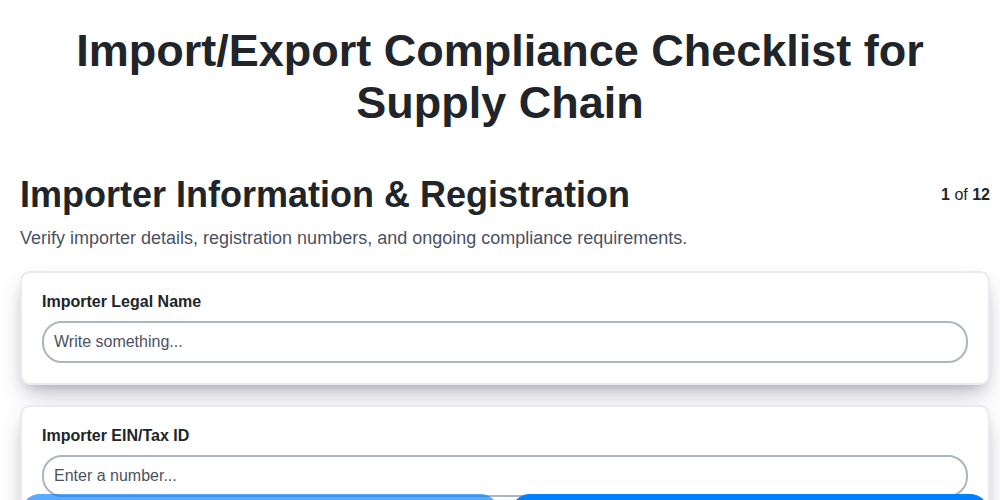
Table of Contents
- Introduction: Why Import/Export Compliance Matters
- 1. Importer Information & Registration: Laying the Foundation
- 2. Exporter Verification & Due Diligence: Partnering with Integrity
- 3. Product Classification (HS Codes): Getting it Right
- 4. Tariff & Duty Calculations: Minimizing Costs, Maximizing Accuracy
- 5. Import/Export Licenses & Permits: Ensuring Legal Authorization
- 6. Country of Origin Determination: A Critical Factor
- 7. Restricted Party Screening: Preventing Trade with Sanctioned Entities
- 8. Customs Documentation Review: Precision is Paramount
- 9. Prohibited & Restricted Goods: Avoiding Seizures and Penalties
- 10. Record Keeping & Audit Trail: Demonstrating Compliance
- 11. Sanctions & Embargo Compliance: Staying Within Legal Boundaries
- 12. Temporary Import/Export Procedures: Navigating Transit and Warehousing
- Conclusion: Continuous Improvement in Trade Compliance
- Resources & Links
TLDR: Importing and exporting goods internationally? Don't get caught out with costly compliance errors! This checklist covers everything from registration and product classification to sanctions and record-keeping - ensuring you're legally sound, avoid penalties, and keep your supply chain flowing smoothly.
Introduction: Why Import/Export Compliance Matters
Navigating the global supply chain can feel like traversing a complex maze. It's exciting to expand your business internationally, but it's also fraught with potential pitfalls if import/export compliance isn't a top priority. Non-compliance isn't just a minor inconvenience; it can lead to hefty fines, significant delays, damaged reputation, and even legal action.
Think of it this way: every shipment crossing borders involves a web of regulations governed by various agencies - Customs authorities, trade ministries, and international bodies. These regulations are constantly evolving, making it challenging for businesses to stay informed. A single misstep, like inaccurate documentation or incorrect classification, can trigger serious consequences.
Beyond the financial risk, robust import/export compliance demonstrates a commitment to ethical and legal business practices. It fosters trust with partners, customers, and regulatory bodies, ultimately strengthening your brand and contributing to long-term sustainable growth. This checklist provides a framework to help you mitigate those risks and confidently navigate the complexities of global trade.
1. Importer Information & Registration: Laying the Foundation
Before any goods can cross borders, ensuring your importer information is accurate and your registration is complete is absolutely critical. This isn't just a formality; it's the legal foundation for your entire import operation.
What's Involved?
- EIN/Tax ID: Your Employer Identification Number (EIN) or Tax ID is the primary identifier used by customs authorities. Ensure it's current and accurate on all import documentation.
- Importer of Record (IOR): Determine who will act as the IOR. This can be your company, a licensed customs broker, or a third-party service provider. The IOR is legally responsible for ensuring compliance with all import regulations.
- Registration with Customs Authorities: In many countries (like the US with its Importer Security Filing - ISF), registration with the relevant customs authority is mandatory. Failure to register or providing inaccurate information can result in penalties and delays.
- NAICS/SIC Codes: These codes classify your business activity and are often used for statistical reporting and determining applicable regulations.
- Updates & Accuracy: Regularly review and update your importer information with customs authorities. Changes in your business structure, address, or legal representatives require immediate notification.
Why it Matters: Incorrect or incomplete importer information leads to shipment delays, penalties, and potential legal issues. It's the first and most fundamental step towards compliant imports.
2. Exporter Verification & Due Diligence: Partnering with Integrity
Your import compliance isn't solely your responsibility. The actions and compliance posture of your exporters are intrinsically linked to your own liability. Thorough exporter verification and ongoing due diligence are critical to safeguarding your business.
This goes far beyond simply verifying their existence. You need a robust process that includes:
- KYE (Know Your Exporter) Checks: Just like importers are vetted, exporters should be subject to similar scrutiny. Verify their registration details, business licenses, and ownership structure.
- Financial Stability Assessment: A financially unstable exporter can lead to disruptions and potential compliance issues. Assess their financial health to ensure reliability.
- Compliance History Review: Investigate their past compliance records. Have they faced penalties or sanctions related to export violations? Public databases and industry reports can be valuable resources.
- Compliance Program Assessment: Ideally, understand their export compliance program. Do they have documented procedures, employee training, and internal audits? While a full audit of their program might be impractical, requesting documentation and understanding their processes demonstrates commitment.
- Ongoing Monitoring: Due diligence isn't a one-time event. Continuously monitor your exporter's compliance status through periodic reviews and updates to your records.
- Contractual Obligations: Include compliance clauses in your export contracts, outlining their responsibility for adhering to applicable regulations.
By proactively vetting and monitoring your exporters, you create a stronger, more resilient supply chain and significantly reduce your compliance risk.
3. Product Classification (HS Codes): Getting it Right
Accurate product classification, using the Harmonized System (HS) codes, is the bedrock of compliant import/export operations. It directly impacts tariff rates, duty calculations, import restrictions, and even eligibility for free trade agreements. A seemingly minor misclassification can trigger costly penalties, delays, and potential legal issues.
Understanding HS codes isn't as simple as just looking up a product name. The system uses a hierarchical structure, starting with six-digit codes that are globally recognized, then often extended by national authorities (e.g., the US has HTS codes extending the HS codes). Each digit refines the description, from broad categories like "Live animals" to highly specific items like "Artificial teeth, whether or not set."
Here's why getting it right is crucial:
- Duty and Tax Obligations: Incorrect classification leads to incorrect duty and tax assessments, potentially resulting in underpayment or overpayment.
- Trade Agreement Benefits: Misclassifying goods could mean missing out on preferential tariff rates available under free trade agreements.
- Import Restrictions & Regulations: Certain classifications trigger specific import restrictions or require additional documentation.
- Statistical Reporting: Accurate classification is essential for reliable trade data collection.
Best Practices for HS Code Determination:
- Thorough Product Analysis: Examine the goods meticulously. Consider their material composition, function, and intended use. Don't rely solely on product descriptions provided by suppliers.
- Consult the Official Tariff Schedules: Familiarize yourself with your country's official tariff schedules (e.g., the US HTS). These are publicly available online.
- Utilize Binding Rulings: If unsure, consider requesting a binding ruling from your customs authority. This provides a legally binding classification.
- Seek Expert Advice: Engage a customs broker or consultant for assistance with complex classifications.
- Maintain Records: Document your classification rationale, including product specifications and any rulings obtained.
4. Tariff & Duty Calculations: Minimizing Costs, Maximizing Accuracy
Calculating tariffs and duties correctly is critical for maintaining profitability and avoiding costly surprises. It's far more complex than simply looking up a percentage - numerous factors influence the final amount. Here's a breakdown of key considerations:
- Understanding Duty Rates: These vary significantly based on the Harmonized System (HS) code assigned to your product, the importing country's tariff schedule, and the trade agreements in place. Free Trade Agreements (FTAs) can offer reduced or eliminated duties, but require strict adherence to rules of origin.
- Valuation Methods: Customs authorities use specific valuation methods (e.g., transaction value, deductive value, computed value) to determine the customs value of your goods. Incorrect valuation can lead to penalties and back duties.
- Special Duty Programs: Explore potential benefits from programs like Generalized System of Preferences (GSP) or other preferential trade agreements, which can reduce or eliminate duties for eligible products from designated countries.
- Calculating Taxes: Beyond duties, understand applicable taxes like Value-Added Tax (VAT) or Goods and Services Tax (GST), which are often levied upon import.
- Currency Fluctuations: Be mindful of currency exchange rates, as these can impact the final duty and tax amounts.
- Review and Verification: Always double-check your calculations and leverage duty calculator tools to minimize errors. Consider consulting with a customs broker or expert to ensure accuracy.
5. Import/Export Licenses & Permits: Ensuring Legal Authorization
Navigating import and export regulations often necessitates obtaining specific licenses and permits. These aren't always required, but failing to secure them when needed can result in significant penalties, delays, and even legal action. The necessity of a license or permit depends on several factors, including the product being shipped, the origin and destination countries, and the specific trade agreements in place.
Understanding Requirements: Different countries have varying requirements. For example, the US utilizes the Automated Export System (AES) for most exports, while imports may require permits from agencies like the Fish and Wildlife Service or the Department of Agriculture. Similarly, importing into the EU often involves authorizations or licenses depending on the goods.
Due Diligence is Key: Proactively research the license and permit requirements before any shipment occurs. This involves checking with the relevant government agencies in both the exporting and importing countries, consulting with customs brokers, and leveraging trade compliance software. Don't rely solely on assumptions; verification is essential.
Common License/Permit Types: Be aware of potential needs for:
- Export Licenses: Required for strategic goods, dual-use items, and those subject to national security concerns.
- Import Permits: Often necessary for regulated products like food, pharmaceuticals, chemicals, and plants.
- Cites Permits: (Convention on International Trade in Endangered Species) Required for importing or exporting endangered plants and animals.
- Specialized Permits: Numerous permits exist for specific industries (e.g., firearms, artwork).
Maintaining Records: Keep meticulous records of all obtained licenses and permits, including application dates, expiration dates, and issuing authorities. These records are crucial for audits and demonstrating compliance.
6. Country of Origin Determination: A Critical Factor
Determining the correct country of origin (COO) is far more than just identifying where a product was manufactured. It's a cornerstone of import/export compliance, directly impacting tariff rates, trade preferences, and eligibility for certain programs. Misclassifying a product's COO can lead to significant penalties, inaccurate duty payments, and even accusations of fraud.
Several factors determine COO, and it's rarely as simple as where the final assembly took place. The rules of origin, often dictated by Free Trade Agreements (FTAs) and customs regulations, can be complex, involving considerations like:
- Wholly Obtained: Goods that are entirely grown, mined, or produced in a single country.
- Significant Transformation: Determining if a product has undergone a substantial process in a country that alters its nature, purpose, or use. This is often based on specific processing operations or the value added.
- Substantial Transformation Rules: These vary widely depending on the trade agreement and product type. They often include specific percentages of value-added or specific manufacturing processes that must occur in a particular country.
It's essential to understand the specific rules applicable to your products and trade routes. This requires detailed knowledge of trade agreements, customs regulations, and potentially, engaging with customs brokers or specialists. Maintaining accurate records of manufacturing processes, raw material sourcing, and assembly locations is crucial for demonstrating COO compliance during audits. Don't rely solely on supplier declarations; conduct your own due diligence and verification.
7. Restricted Party Screening: Preventing Trade with Sanctioned Entities
Restricted Party Screening (RPS) is a critical element of any robust import/export compliance program. It's more than just a formality; it's a legal and ethical obligation. Failure to perform thorough RPS can lead to severe penalties, reputational damage, and even criminal charges.
Essentially, RPS involves checking potential business partners - suppliers, customers, freight forwarders, and even intermediaries - against various government-maintained lists of sanctioned entities. These lists are compiled by organizations like the U.S. Department of Commerce's Bureau of Industry and Security (BIS), the U.S. Treasury's Office of Foreign Assets Control (OFAC), the European Union, and numerous other countries. These lists identify individuals, companies, and organizations whose assets are blocked or with whom trade is prohibited.
Why is it so important? Even if you're unaware of a restriction, engaging in transactions with a sanctioned party constitutes a violation. This applies regardless of the product being traded, the destination, or the intent. You can't argue ignorance as a defense.
What's involved in effective RPS?
- Utilize Reliable Screening Tools: Manual screening is time-consuming and prone to errors. Leverage automated RPS software that regularly updates its databases.
- Screen All Parties: Don't limit screening to just the immediate buyer/seller. Extend it to all connected parties within the supply chain.
- Comprehensive Search Parameters: Screen against multiple data points, including names, addresses, aliases, and even associated company names.
- Hit Resolution Process: Establish a clear procedure for addressing potential "hits" - when a name matches an entry on a restricted party list. This process should involve investigation, verification, and escalation to compliance personnel. A hit doesn't automatically mean a violation, but requires careful review.
- Regular Updates & Training: Restricted party lists change frequently. Keep your screening tools updated and provide ongoing training to employees involved in import/export processes.
Ignoring Restricted Party Screening isn't just a compliance gap; it's a significant risk that can jeopardize your entire operation.
8. Customs Documentation Review: Precision is Paramount
Customs documentation is the backbone of compliant international trade. A single error - a transposed number, a missing signature, or an inaccurate description - can trigger delays, penalties, and even legal issues. This review isn't just about ticking boxes; it's about ensuring accuracy and completeness across all documents, including commercial invoices, packing lists, bills of lading, certificates of origin, and any other supporting paperwork.
We recommend a multi-layered review process. First, establish clear internal guidelines for data entry and document preparation. Second, implement a check for consistency - does the information on the commercial invoice match the bill of lading? Third, have a second, independent person review all documents before they are submitted to customs. Finally, continuously update your team on changes to customs regulations and required documentation formats. Automation tools can also be invaluable in streamlining this process and minimizing human error. Remember, meticulousness here significantly reduces risk and ensures smooth border crossings.
9. Prohibited & Restricted Goods: Avoiding Seizures and Penalties
Importing and exporting isn't simply about moving goods from point A to point B. It's about adhering to a complex web of regulations that dictate what can be moved, and how. Failing to understand and comply with restrictions on prohibited and restricted goods can result in severe consequences - including seizure of your goods, hefty fines, and even criminal charges.
What are Prohibited Goods?
These are items that are absolutely forbidden from import or export under any circumstances. These bans are often due to safety, security, or environmental concerns. Examples frequently include explosives, certain drugs, counterfeit goods, and items violating international treaties. There's no wiggle room here; attempting to import or export prohibited goods is a direct violation of trade laws.
Understanding Restricted Goods:
Restricted goods, on the other hand, can be imported or exported, but require specific licenses, permits, or declarations. They are subject to controls based on national security, public health, or other regulatory concerns. This category is vast and can include items like certain chemicals, dual-use technology (items with both civilian and military applications), agricultural products, and cultural artifacts.
Due Diligence is Key:
- Consult Official Resources: Regularly review the import/export regulations of both your origin and destination countries. Official government websites (like the U.S. Customs and Border Protection, the UK's GOV.UK, etc.) are your best resource.
- Product-Specific Research: Don't assume that because you've imported/exported a similar product before, the current shipment is compliant. Regulations can change.
- Supplier Communication: Ask your suppliers for detailed product descriptions and country of origin information.
- Seek Expert Advice: Consider consulting with a customs broker or trade compliance specialist, especially when dealing with complex or potentially restricted items.
- Stay Updated: Subscribe to industry alerts and regulatory updates to remain informed about changes in import/export rules.
Failing to identify and properly handle prohibited and restricted goods is a significant risk. Proactive research and due diligence are your best defense against costly penalties and reputational damage.
10. Record Keeping & Audit Trail: Demonstrating Compliance
Maintaining meticulous records and establishing a robust audit trail is arguably the most crucial element of any successful import/export compliance program. It's not enough to simply be compliant; you need to be able to prove it. Think of it as your safety net - the documentation that demonstrates your good faith efforts and adherence to regulations should an audit or inquiry arise.
What needs to be recorded? Almost everything! This includes:
- Importer/Exporter Information: Registration documents, contact details, and any relevant changes.
- Product Classification Records: Documentation supporting your HS code determinations, including product specifications, rulings from customs authorities, and internal analysis.
- Country of Origin Determinations: Detailed explanations and evidence used to establish the origin of goods.
- Restricted Party Screening Results: Records of the screening process, including names checked, dates, results, and any actions taken.
- Customs Documentation: Copies of all import/export declarations, invoices, packing lists, bills of lading, and any other related paperwork.
- License & Permit Applications & Approvals: All submitted applications, associated documentation, and approval notices.
- Tariff & Duty Calculations: Supporting data and calculations used to determine duties and taxes.
- Training Records: Evidence of employee training on import/export compliance procedures.
Beyond just storing these documents, a proper audit trail should demonstrate how decisions were made, by whom, and when. It should be easily accessible, organized logically, and retained for the legally required period (typically several years). Investing in a robust record-keeping system, whether electronic or physical, isn's an expense-it's an investment in risk mitigation and demonstrates a commitment to compliance. Regular internal audits of your record-keeping practices are also vital to identify and correct any gaps.
11. Sanctions & Embargo Compliance: Staying Within Legal Boundaries
Navigating international trade means understanding and adhering to a complex web of sanctions and embargoes. These restrictions, imposed by governments and international bodies like the UN, EU, and US, significantly impact which countries you can trade with, and what goods you can move. Failure to comply can lead to severe penalties, including hefty fines, reputational damage, and even criminal charges.
What You Need to Know:
- Regular Updates are Crucial: Sanctions and embargoes are frequently updated and modified. Don't assume your previous understanding is still accurate. Subscribe to official government and industry alerts (e.g., OFAC, EU Sanctions List) to stay informed.
- Scope of Restrictions: Understand not just who is sanctioned, but what goods and services are restricted. Blanket prohibitions are common, but sometimes specific items or technologies are targeted.
- Indirect Involvement: Be aware of indirect involvement in sanctions violations. This includes transactions involving intermediaries or third parties that ultimately benefit sanctioned entities. Diligence on your entire supply chain is essential.
- Due Diligence is Key: Implement a robust screening process for all business partners, customers, and suppliers. This includes checking against restricted party lists and understanding their ultimate beneficial ownership.
- Geographic Scope: Recognize that sanctions often apply not just to transactions from a sanctioned country, but also transactions to a sanctioned country.
- Specific Compliance Programs: Depending on your industry and trading partners, specialized compliance programs might be necessary (e.g., EAR for export controls).
Actionable Steps:
- Designated Person/Team: Assign responsibility for sanctions compliance to a specific individual or team within your organization.
- Training: Provide regular training to employees involved in import/export activities.
- Internal Policies & Procedures: Develop and maintain clear internal policies and procedures for sanctions compliance.
- Risk Assessment: Conduct periodic risk assessments to identify potential vulnerabilities and adjust your compliance efforts accordingly.
12. Temporary Import/Export Procedures: Navigating Transit and Warehousing
Temporary import/export procedures, often utilizing schemes like the ATA Carnet or similar national programs, offer a crucial avenue for businesses involved in trade shows, demonstrations, repairs, or short-term projects across borders. These procedures allow goods to enter or exit a country temporarily without triggering standard import duties and taxes, provided they are re-exported within a defined timeframe (typically one or two years).
However, utilizing these procedures requires meticulous planning and adherence to strict regulations. Key considerations include:
- ATA Carnet Requirements: If using an ATA Carnet, ensure it's properly executed, with all required signatures and endorsements from both the exporting and importing chambers of commerce. Errors can lead to delays and penalties.
- Guarantees & Bonds: Temporary import/export often requires a financial guarantee (bond) to ensure the goods are re-exported as promised. Understand the bond requirements and ensure you have the necessary financial backing.
- Customs Supervision: Goods under temporary procedures are often subject to heightened customs supervision. Be prepared for inspections and require clear instructions on storage and handling.
- Re-export Obligations: Strict timelines for re-export must be met. Failure to do so can result in back duties, penalties, and potential seizure of the goods. Maintain accurate records of entry and exit dates.
- National Regulations: Each country has its own specific rules regarding temporary import/export. Research and understand the local regulations well in advance of the transaction.
- Warehousing Considerations: Identify appropriate, secure warehousing facilities that meet customs requirements for goods under temporary admission.
Proper management of temporary import/export procedures is essential to maximize efficiency, minimize costs, and avoid significant compliance risks.
Conclusion: Continuous Improvement in Trade Compliance
Navigating import and export compliance isn's a one-and-done task; it's an ongoing journey. Regulations evolve, trade agreements shift, and your product offerings and supply chain will likely change. This checklist provides a robust foundation, but it's critical to view it as a living document. Regularly review and update it to reflect these changes. Implement a system for staying informed about regulatory updates, whether through industry publications, government alerts, or compliance consultants. Embrace a culture of continuous improvement, where employees are empowered to ask questions, identify potential risks, and suggest process enhancements. Proactive engagement and a commitment to ongoing diligence will not only minimize your risk of penalties and delays, but also strengthen your reputation as a trustworthy and reliable trade partner in the global marketplace.
Resources & Links
- U.S. Department of Commerce - Trade: The official website of the U.S. Department of Commerce's International Trade Administration. Offers comprehensive information, guides, and resources on importing and exporting, including compliance regulations, market research, and trade agreements.
- U.S. Customs and Border Protection (CBP): CBP's website provides details on import regulations, enforcement actions, rulings, and forms necessary for international trade. Vital for understanding U.S. import processes and compliance requirements.
- Export.gov: A U.S. Government website dedicated to helping U.S. businesses export. Includes guides on regulations, market research, and assistance programs.
- World Trade Organization (WTO): Provides information on international trade rules, agreements, and dispute settlement. Useful for understanding the broader global trade landscape and trade-related regulations.
- Harmonized Tariff Schedule (HTS): The official online source for the U.S. Harmonized Tariff Schedule. Crucial for accurate product classification and duty calculation. Includes search functionalities and updates.
- Internal Revenue Service (IRS): While primarily tax-focused, the IRS website has resources related to import/export transactions, including reporting requirements and documentation needs. Important for financial reporting aspects of trade.
- Bureau of Industry and Security (BIS): BIS regulates exports of dual-use items and technologies. This site is essential to determine if a product requires a license and what controls might apply.
- Office of Foreign Assets Control (OFAC): OFAC administers and enforces economic and trade sanctions based on U.S. foreign policy. Critical for restricted party screening and sanctions compliance.
- International Trade Compliance: Provides training, consulting, and resources on import/export compliance, including regulatory updates and best practices.
- Compliance 4 Trade: Offers software and services to automate import/export compliance processes, including restricted party screening and tariff classification.
- Simply Import Export: Offers information and resources for small businesses starting to export, including guides to compliance basics.
- The Document Company: Provides customs documentation and related services for international trade, offering expertise in preparing the necessary paperwork.
- UPS International Trade Compliance: Provides information and resources regarding international trade, including details on import/export procedures and compliance.
Frequently Asked Questions
What is import/export compliance and why is it important?
Import/export compliance refers to adhering to all laws, regulations, and guidelines governing international trade. It's crucial to avoid penalties, delays, legal issues, and reputational damage. Non-compliance can lead to hefty fines, seizure of goods, and even criminal charges.
Who needs to be concerned with import/export compliance?
Any business involved in buying goods from or selling goods to another country needs to be concerned with compliance. This includes manufacturers, distributors, retailers, and service providers who utilize internationally sourced components or materials.
What are some key areas covered by import/export compliance?
Key areas include: classification of goods (HS codes), valuation, country of origin determination, export controls (EAR/ITAR), sanctions and embargoes, customs regulations, free trade agreements, import licensing requirements, and documentation accuracy.
What is an HS code and why is it important?
An HS code (Harmonized System code) is a standardized numerical method of classifying traded products. It's vital for determining tariffs, taxes, and trade regulations. Incorrect classification can lead to incorrect duties being paid and compliance issues.
What is the difference between EAR and ITAR?
EAR (Export Administration Regulations) controls the export of dual-use items (civilian goods with potential military applications). ITAR (International Traffic in Arms Regulations) specifically governs the export of defense articles and related technical data. Determining which applies is crucial.
How do I determine the country of origin for my goods?
Country of origin is determined by rules of origin, which can be complex and vary by trade agreement. Factors like where materials were sourced and where the product was manufactured are considered. This is often a significant part of compliance.
What documents are typically required for import/export transactions?
Common documents include: commercial invoice, packing list, bill of lading (or air waybill), certificate of origin, export license (if required), import permit (if required), and any specific documentation mandated by the importing/exporting country.
What is a Free Trade Agreement (FTA) and how can it benefit my business?
FTAs reduce or eliminate tariffs on goods traded between participating countries. Utilizing FTAs requires specific documentation and adherence to the agreement's rules of origin to qualify for preferential treatment.
Where can I find more information and resources for import/export compliance?
Resources include: your country's customs authority website (e.g., U.S. Customs and Border Protection), the World Trade Organization (WTO), the International Trade Commission (ITC), export compliance consultants, and trade associations.
Comments
There are no comments yet. Be the first to add one!
SCM - Supply Chain Management Solution Demo
Struggling with supply chain disruptions & lack of visibility? ChecklistGuro delivers a centralized SCM solution, connecting your suppliers, manufacturers, & distributors for improved collaboration and control. Simplify operations & boost efficiency.
Related Articles
Incoterms Compliance Checklist for Supply Chain: Your Guide to Smooth Operations
Supply Chain Capacity Planning Checklist: Ensure Readiness for Peak Demand
The Ultimate Supply Chain Network Optimization Checklist: A Step-by-Step Guide
Supply Chain Risk Assessment Checklist: Your Guide to Resilience
Navigating Sustainability: Your Supply Chain Compliance Checklist

Top 10 SAP Logistics Business Network (LBN) Alternatives for 2025

Fortify Your Supply Chain: The Ultimate Resilience Assessment Checklist
The Ultimate Supply Chain Inventory Accuracy Audit Checklist: A Step-by-Step Guide
Need help with
Supply Chain Management (SCM)?
Have a question? We're here to help. Please submit your inquiry, and we'll respond promptly.