Medical Device Inspection Workflow: Digital Audit & Quality Management Solution
Published: 06/18/2026 9:00 PM Updated: 06/19/2026 11:48 AM
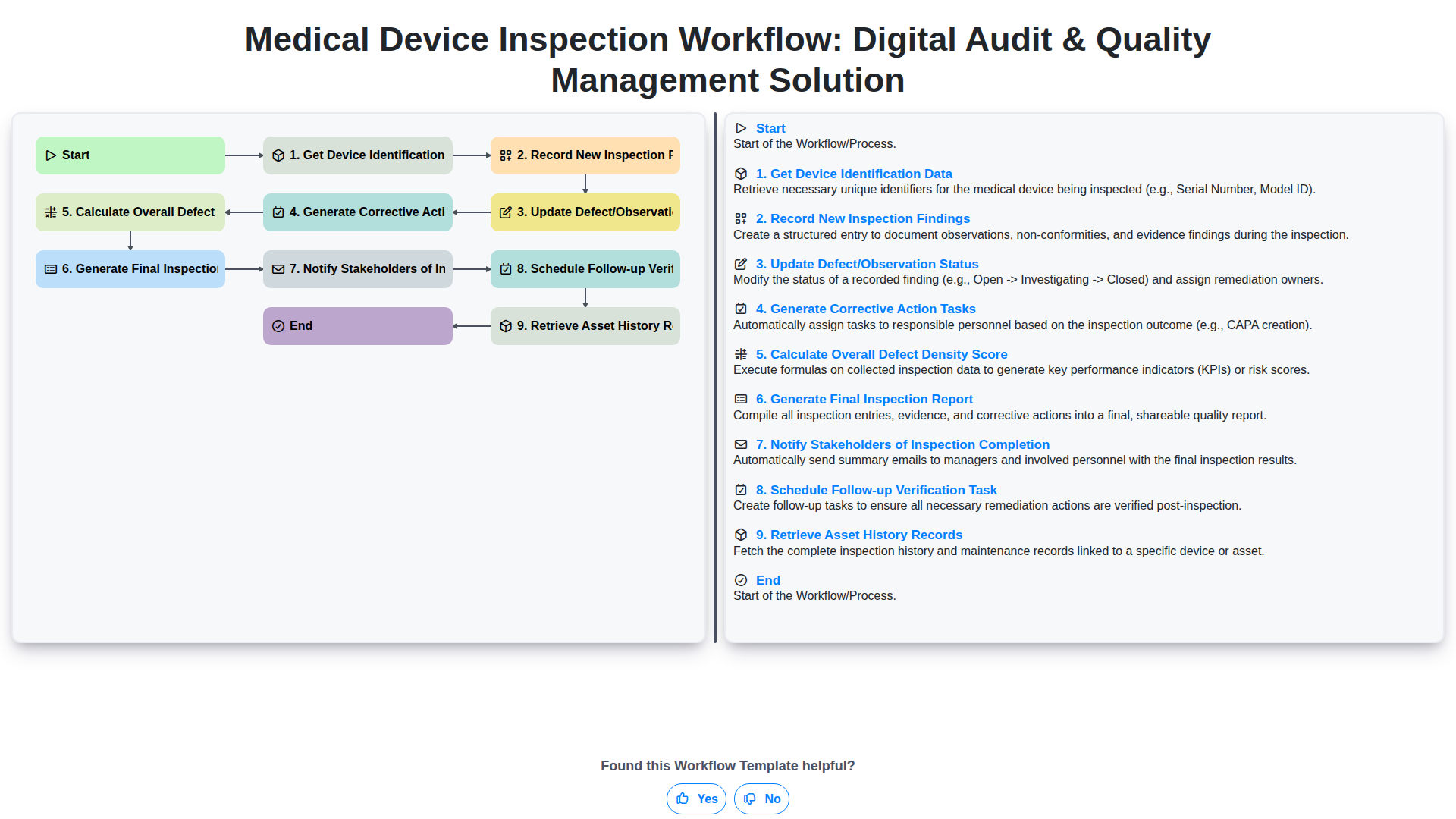
Table of Contents
- Introduction: The Shift from Manual to Digital Inspection
- The Critical Importance of Precision in Medical Device Auditing
- Step 1: Seamless Integration through Device Identification Data
- Real-Time Precision: Recording New Inspection Findings
- Maintaining Traceability: Updating Defect and Observation Status
- Closing the Loop: Automating Corrective Action Tasks (CAPA)
- Data-Driven Insights: Calculating Overall Defect Density Scores
- Automated Documentation: Generating Final Inspection Reports
- Ensuring Accountability: Notifying Stakeholders of Inspection Completion
- Continuous Compliance: Scheduling Follow-up Verification Tasks
- Leveraging Legacy Data: Retrieving Asset History Records
- The Benefits of a Unified Digital Quality Management Solution
- Conclusion: Future-Proofing Your Medical Device Compliance
- Resources & Links
TLDR: Streamline your medical device compliance by replacing manual checks with a digital inspection workflow. This guide explores how to automate the entire lifecycle-from device identification and defect recording to real-time defect density calculation and automated stakeholder notifications-ensuring faster audits, accurate reporting, and seamless corrective action management.
Introduction: The Shift from Manual to Digital Inspection
In the high-stakes world of medical device manufacturing, the margin for error is zero. For decades, inspection workflows relied heavily on paper-based checklists, manual data entry, and physical logbooks. While these traditional methods served their purpose in a simpler era, they are increasingly becoming a liability in today's highly regulated landscape. Manual processes are inherently prone to human error, suffer from fragmented data silos, and create significant delays in reporting and corrective action.
As regulatory bodies demand higher levels of traceability and real-time visibility, the industry is undergoing a critical transformation. The shift from manual to digital inspection is no longer just a convenience-it is a necessity for compliance and operational excellence. By transitioning to a digital audit and quality management solution, organizations can replace disorganized paperwork with a centralized, automated workflow. This evolution ensures that every piece of device identification data is captured accurately, every defect is tracked instantly, and every stakeholder is notified in real-time, turning a reactive inspection process into a proactive engine for quality assurance.
The Critical Importance of Precision in Medical Device Auditing
In the highly regulated landscape of healthcare technology, the margin for error is non-existent. Medical device inspections are not merely routine maintenance checks; they are critical safeguards designed to ensure patient safety, maintain regulatory compliance, and uphold the integrity of clinical outcomes. A single overlooked anomaly or a delayed response to a minor defect can escalate into catastrophic hardware failure, legal liability, or-most importantly-direct harm to a patient.
Precision in auditing serves as the backbone of quality management. When inspection processes are manual, fragmented, or paper-based, the risk of human error skyrockets. Inaccurate data entry, lost inspection logs, or a failure to communicate critical defects to the right personnel can create blind spots in a facility's operational oversight. Achieving true precision requires more than just diligent personnel; it requires a systematic, digital approach that ensures every observation is captured, every defect is tracked, and every action is documented with absolute traceability. By prioritizing precision, organizations move from a reactive state of fixing problems to a proactive state of preventing failures, ultimately fostering a culture of continuous safety and excellence.
Step 1: Seamless Integration through Device Identification Data
The foundation of any robust inspection process lies in the accuracy of the information being inspected. The workflow begins with the Get Device Identification Data phase, where the digital solution automatically pulls critical metadata from the asset's digital twin or centralized database. By scanning a barcode, QR code, or RFID tag, the system instantly retrieves essential details such as the manufacturer, model number, serial number, software version, and maintenance history. This eliminates the risks associated with manual data entry-such as typos or outdated information-and ensures that the inspection is being performed on the correct asset. By establishing a verified starting point, you create a single source of truth that anchors all subsequent findings to a specific, identifiable device.
Real-Time Precision: Recording New Inspection Findings
In the traditional landscape of medical device auditing, capturing inspection data often involves cumbersome paper logs or fragmented spreadsheets, leading to transcription errors and delayed visibility. Our digital solution transforms this critical stage by providing a centralized, real-time interface for inspectors to Record New Inspection Findings directly at the point of inspection.
As technicians move through their checklists, the platform allows for the immediate entry of detailed observations, including high-resolution photo attachments, precise measurements, and timestamped notes. This instant digitization ensures that every anomaly, deviation, or minor irregularity is captured with absolute clarity. By eliminating the gap between finding a defect and documenting it, we ensure that your data integrity remains uncompromised and that your quality management team has immediate access to actionable intelligence the moment an inspector hits save.
Maintaining Traceability: Updating Defect and Observation Status
In a high-stakes regulatory environment, a defect is not merely a note in a log-it is a live data point that requires active management. Within our digital inspection workflow, the Update Defect/Observation Status step serves as the critical bridge between identifying an issue and resolving it.
As inspections progress, the status of each identified anomaly must be updated in real-time to reflect its current state-moving from Open to In Progress, Under Review, or Resolved. This continuous update loop ensures that no single observation falls through the cracks. By transitioning away from static paper logs, your team can eliminate the ambiguity of manual tracking. Instead, you gain a dynamic, centralized view of every discrepancy, allowing quality managers to pinpoint exactly where bottlenecks are occurring in the remediation process. This real-time visibility is essential for maintaining the integrity of your quality management system and ensuring that every device meets the rigorous safety standards required for clinical use.
Closing the Loop: Automating Corrective Action Tasks (CAPA)
In a manual inspection environment, identifying a defect is only half the battle; the real challenge lies in ensuring that the issue is remediated and never repeated. A digitalized workflow eliminates the dangerous information silos that often lead to neglected findings.
When an inspection identifies a non-conformance, the system automatically triggers the Generate Corrective Action Tasks step. Instead of relying on paper trails or manual emails that can be lost in transit, the software instantly converts a recorded observation into a formal, trackable task. This ensures that accountability is assigned to the right technician or engineer immediately.
By automating this loop, the workflow facilitates a seamless transition from Update Defect/Observation Status to active resolution. As the task progresses, the system monitors the lifecycle of the correction, ensuring that no defect is closed without proper validation. This automated rigor is the backbone of a robust Quality Management System (QMS), transforming the inspection process from a simple check-the-box exercise into a continuous engine for operational excellence and regulatory compliance.
Data-Driven Insights: Calculating Overall Defect Density Scores
Beyond simple error tracking, a truly modern inspection workflow leverages data to provide actionable intelligence. A critical component of this digital transformation is the ability to Calculate Overall Defect Density Scores automatically.
Rather than merely counting the number of failed components, the system analyzes the ratio of defects identified against the total number of inspection points or the total volume of devices inspected. This metric provides a standardized way to measure quality trends over time, allowing quality managers to distinguish between isolated incidents and systemic manufacturing issues.
By transforming raw inspection data into a quantifiable density score, your team can move from reactive troubleshooting to proactive prevention. These insights enable you to identify specific production lines, batches, or even individual components that are trending toward failure, allowing for targeted interventions before defects escalate into costly recalls. This data-driven approach ensures that your quality management strategy is rooted in mathematical precision rather than subjective observation.
Automated Documentation: Generating Final Inspection Reports
Manual report compilation is often the most time-consuming bottleneck in the inspection lifecycle, prone to human error and data entry discrepancies. Our digital solution eliminates this burden by transforming the inspection process from a manual writing task into a seamless, automated output.
Once the inspection cycle is complete, the system automatically aggregates every data point captured during the process-from initial device identification to the final defect density score. The software instantly synthesizes these inputs into a professional, standardized, and audit-ready Final Inspection Report. By removing the need for manual data transcription, you ensure 100% accuracy between the field findings and the final documentation, maintaining the rigorous compliance standards required in medical device manufacturing. This automation ensures that your documentation is not just a record of the past, but a precise, real-time reflection of your quality standards.
Ensuring Accountability: Notifying Stakeholders of Inspection Completion
In a complex medical device manufacturing or maintenance environment, an inspection is only as effective as the communication that follows it. The final stage of the workflow-Notifying Stakeholders of Inspection Completion-serves as the critical link between manual inspection and organizational-wide awareness.
When a digital audit is finalized, the system automatically triggers real-time notifications to key personnel, including Quality Assurance managers, production supervisors, and regulatory compliance officers. This automated alert eliminates the information silo effect, ensuring that the results of an inspection are not buried in a database or a physical folder.
By automating these notifications, organizations achieve several key benefits:
- Reduced Latency: Decision-makers are informed the moment an inspection concludes, allowing for immediate action on critical findings.
- Enhanced Transparency: Every stakeholder involved in the device's lifecycle receives the same synchronized information, creating a single source of truth.
- Accelerated Response Times: Automated alerts ensure that if a high-risk defect is identified, the relevant departments can begin remediation efforts without waiting for manual follow-up emails.
This step transforms the inspection from a localized event into an actionable organizational insight, ensuring that accountability is maintained across the entire quality management ecosystem.
Continuous Compliance: Scheduling Follow-up Verification Tasks
Ensuring that an inspection is complete is only half the battle; the true measure of a robust quality management system lies in how you handle the aftermath of discovered non-conformities. The Schedule Follow-up Verification Task step acts as the critical closed-loop mechanism in our digital workflow.
Once a corrective action has been implemented to address a detected defect, the system automatically triggers a follow-up verification task. This ensures that the resolution is not merely documented, but physically validated by a qualified inspector. By automating the scheduling of these re-inspections, the platform eliminates the risk of forgotten defects and prevents non-compliant devices from remaining in circulation. This automated loop transforms your inspection process from a reactive find-and-fix cycle into a proactive engine for continuous compliance and long-term asset reliability.
Leveraging Legacy Data: Retrieving Asset History Records
A truly effective inspection workflow does not operate in a vacuum; it must be anchored by the context of a device's entire lifecycle. One of the most critical advantages of a digital quality management solution is the ability to seamlessly retrieve asset history records during the inspection process.
Instead of manually searching through fragmented paper logs or disconnected spreadsheets, inspectors can instantly access a centralized digital repository containing a device's previous repair logs, maintenance schedules, and past inspection outcomes. This real-time access to longitudinal data allows for much deeper analytical insights. By reviewing the DNA of an asset, inspectors can identify recurring patterns of failure, distinguish between isolated incidents and chronic defects, and make more informed decisions regarding whether a device requires a simple repair or a full decommissioning. Integrating historical data into your current workflow transforms an inspection from a simple point-in-time check into a powerful tool for predictive maintenance and long-term asset reliability.
The Benefits of a Unified Digital Quality Management Solution
Transitioning from fragmented, paper-based processes to a unified digital workflow offers more than just convenience-it transforms the very foundation of your quality assurance strategy. By integrating every stage of the inspection lifecycle into a single digital ecosystem, organizations can move away from reactive troubleshooting and toward proactive quality governance.
The primary advantage of a unified solution is the elimination of data silos. When device identification, defect recording, and asset history are housed within the same platform, inspectors no longer struggle with disconnected spreadsheets or lost paper logs. This creates a single source of truth where real-time data flows seamlessly from the initial inspection finding to the final stakeholder notification.
Furthermore, a digitalized workflow drives unprecedented operational visibility. Instead of manually aggregating data to calculate defect density or manually chasing down corrective actions, the system automates these complex computations and task assignments. This automation reduces the risk of human error, ensures that no follow-up verification is ever missed, and allows management to identify emerging quality trends before they escalate into costly compliance failures. Ultimately, a unified solution turns inspection data from a static record into a powerful strategic asset, enabling faster decision-making and continuous process improvement.
Conclusion: Future-Proofing Your Medical Device Compliance
The transition from fragmented, paper-based processes to a streamlined, digital inspection workflow is no longer just an operational preference-it is a strategic necessity. As regulatory scrutiny intensifies and the complexity of medical device manufacturing grows, the ability to maintain real-time visibility over your quality management system becomes the ultimate competitive advantage.
By integrating every stage of the inspection lifecycle-from initial identification and defect recording to automated reporting and follow-up scheduling-into a single digital ecosystem, you do more than just ensure compliance. You build a culture of continuous improvement. A digitalized workflow eliminates the silos that lead to human error, reduces the time spent on administrative rework, and provides the actionable data needed to identify systemic trends before they become costly recalls.
Investing in an automated, end-to-end inspection solution is an investment in the reliability of your products and the safety of your patients. As you look to the future, let digital transformation be the foundation of your quality strategy, ensuring that your organization remains agile, compliant, and ready to meet the evolving demands of the global healthcare landscape.
Resources & Links
- FDA - Medical Devices: Official regulatory guidelines and compliance standards for medical device manufacturing and quality systems.
- ISO - Quality Management Systems: Information on ISO 1348 8 standards for medical devices and global quality management requirements.
- American Society for Quality (ASQ): Professional resources and best practices for quality auditing, defect density analysis, and continuous improvement.
- Medical Device Coalition: Industry insights regarding the digital transformation and regulatory landscape of medical device manufacturing.
- Digital Transformation in Manufacturing: Case studies and technical resources on implementing digital workflows and automated inspection technologies.
- ISPE - Pharmaceutical Engineering: Technical resources regarding data integrity and automated compliance workflows in regulated environments.
Found this Article helpful?
Comments
There are no comments yet. Be the first to add one!
Audit/Inspection Management Solution Demo
Ensure compliance & improve performance! ChecklistGuro streamlines audit/inspection creation, execution, and reporting. Reduce risk, enhance quality, & maintain consistency. Manage it all with our Work OS.
Related Articles
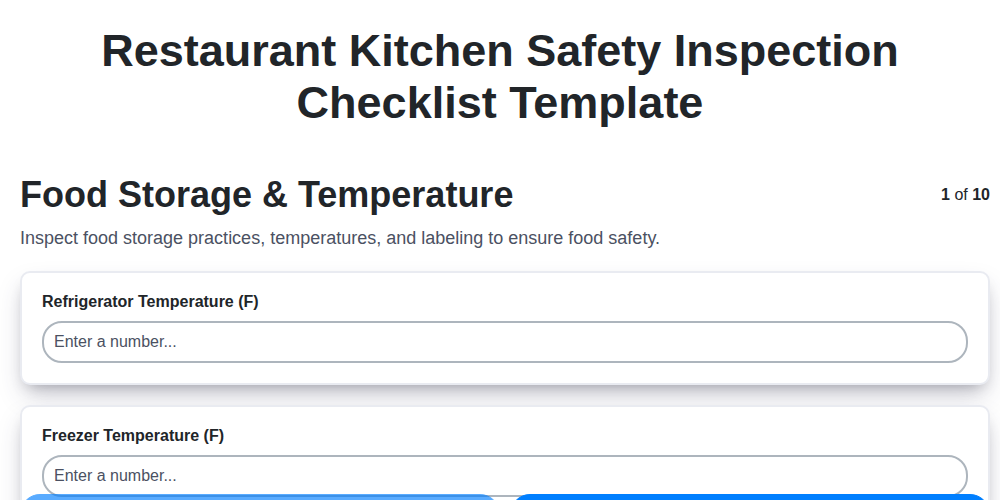
Restaurant Kitchen Safety Inspection Checklist Template
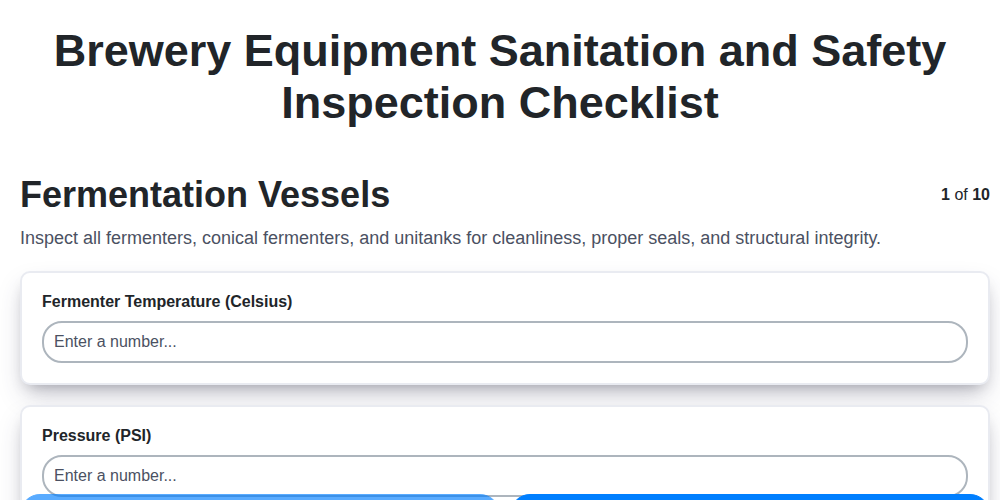
The Ultimate Brewery Equipment Sanitation & Safety Checklist Template
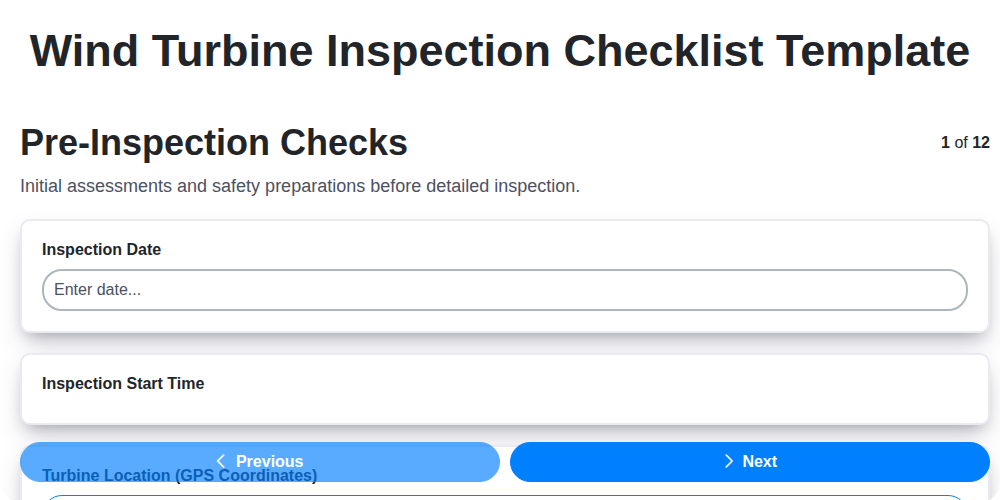
Wind Turbine Inspection Checklist Template: Your Comprehensive Guide
The Ultimate Apartment Building Maintenance Inspection Checklist Template
Your Essential Guide to a Manufacturing Quality Control Inspection Checklist
The Ultimate Solar Panel Inspection Checklist Template
Your Ultimate HVAC Inspection Checklist Template
The Ultimate Data Center Inspection Checklist Template
We can do it Together
Need help with
Checklists?
Have a question? We're here to help. Please submit your inquiry, and we'll respond promptly.