Medical Device Inspection Workflow: FDA & Quality Compliance Tracking
Published: 05/31/2026 Updated: 10/05/2026
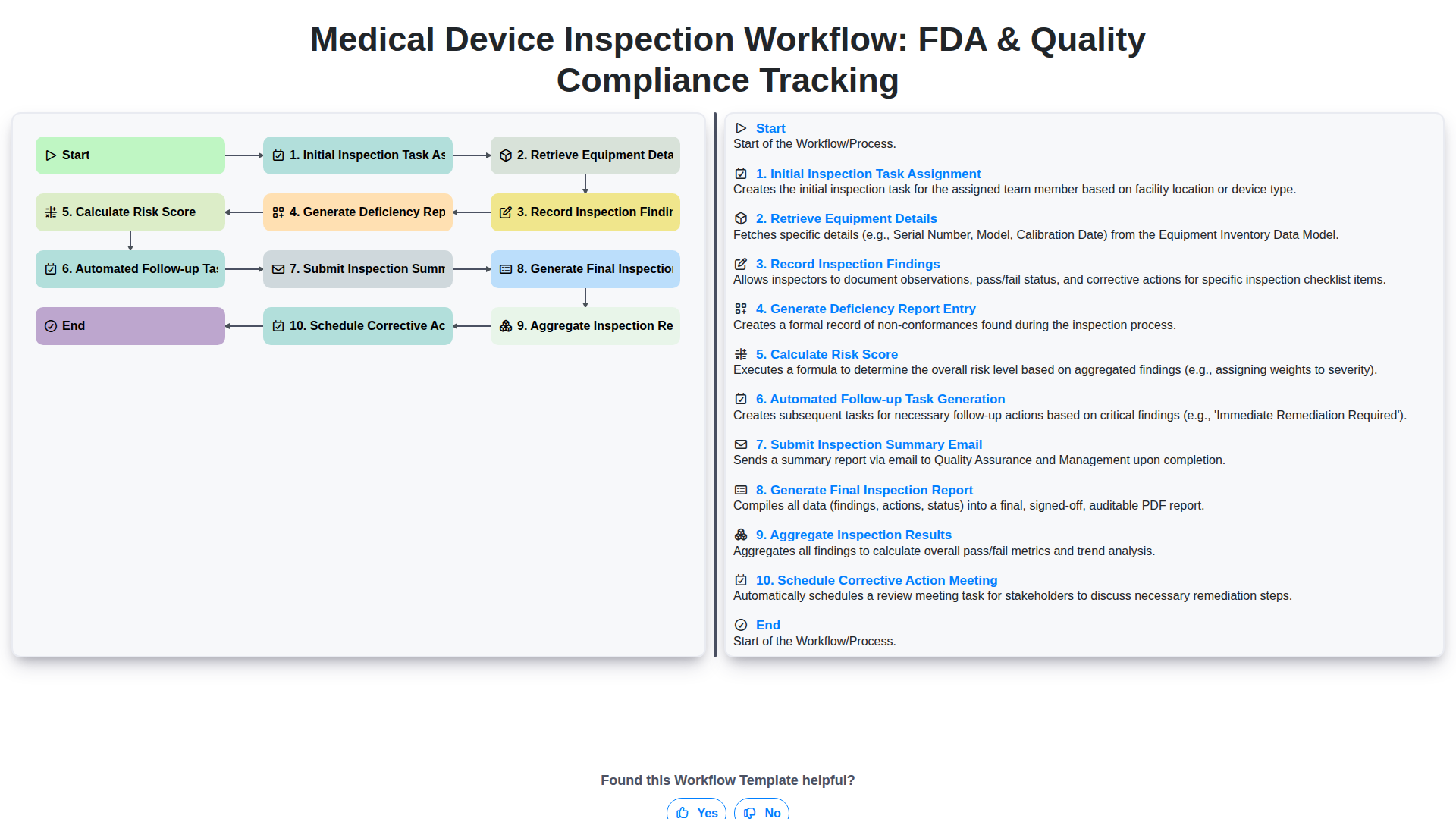
Table of Contents
- Introduction: The Critical Importance of Structured Inspection Workflows
- Ensuring Regulatory Rigor: Navigating FDA and Quality Compliance
- Step 1: Initial Inspection Task Assignment and Resource Allocation
- Step 2: Retrieving Equipment Details and Pre-Inspection Preparation
- Step 3: Real-Time Recording of Inspection Findings
- Step 4: Documenting Non-Conformance: Generating Deficiency Report Entries
- Step 5: Data-Driven Decision Making: Calculating the Risk Score
- Step 6: Closing the Loop with Automated Follow-up Task Generation
- Step 7: Streamlining Communication via Automated Inspection Summary Emails
- Step 8: Finalizing Documentation: Generating the Formal Inspection Report
- Step 9: Aggregating Inspection Results for Trend Analysis
- Step 10: Post-Inspection Action: Scheduling Corrective Action Meetings
- Benefits of an End-to-End Digital Inspection Workflow
- Conclusion: Building a Culture of Continuous Compliance
- Resources & Links
TLDR: Streamline your regulatory compliance with this automated Medical Device Inspection Workflow, designed to guide users through every critical step from initial task assignment to final reporting. Learn how to automate deficiency tracking, risk scoring, and follow-up actions to ensure seamless FDA compliance and efficient quality management.
Introduction: The Critical Importance of Structured Inspection Workflows
In the highly regulated landscape of medical device manufacturing, the margin for error is non-existent. When dealing with life-critical technologies, a single oversight during the inspection process can lead to catastrophic consequences, ranging from product recalls and costly litigation to, most importantly, compromised patient safety. This is why a standardized, structured inspection workflow is not just a best practice-it is a fundamental requirement for regulatory compliance.
For manufacturers operating under FDA oversight, the integrity of your Quality Management System (QMS) depends on how rigorously you track and document every stage of the inspection lifecycle. A fragmented or manual approach to inspections creates data silos and visibility gaps, making it nearly impossible to prove to auditors that every device has been vetted against strict safety standards. By implementing a systematic workflow-from the moment a task is assigned to the final generation of a corrective action meeting-organizations can ensure total traceability. A structured process ensures that every deficiency is caught, every risk is quantified, and every deviation is addressed with a closed-loop corrective action, transforming inspection from a reactive hurdle into a proactive pillar of quality assurance.
Ensuring Regulatory Rigor: Navigating FDA and Quality Compliance
In the highly regulated landscape of medical device manufacturing, compliance is not merely a procedural requirement-it is a fundamental pillar of patient safety. For manufacturers, adhering to FDA 21 CFR Part 820 and ISO 13485 standards requires more than just occasional oversight; it demands a continuous, verifiable, and error-free inspection ecosystem. Any gap in the inspection lifecycle can lead to costly warning letters, product recalls, or, most critically, compromised device integrity.
Navigating this complexity requires a move away from fragmented, manual processes toward a structured, automated workflow. To ensure regulatory rigor, every stage of the inspection-from the initial task assignment to the final aggregation of results-must be captured within a traceable digital thread. By implementing a systematic approach to tracking findings, calculating risk scores, and automating follow-up actions, organizations can transform compliance from a reactive burden into a proactive strategic advantage. This level of precision ensures that every deficiency is documented, every risk is quantified, and every corrective action is executed with the level of transparency that regulatory auditors demand.
Step 1: Initial Inspection Task Assignment and Resource Allocation
The foundation of a compliant medical device inspection lies in how effectively a task is initiated. The process begins with Initial Inspection Task Assignment, where the workflow triggers a notification to the designated quality assurance (QA) engineer or inspector. Rather than a manual, ad-hoc process, a robust digital workflow ensures that inspections are assigned based on predefined schedules, device criticality, and inspector availability.
Effective resource allocation during this stage is critical for maintaining FDA-mandated timelines. By automating the assignment process, organizations can eliminate the risk of missed inspections and ensure that the right personnel-those with the specific expertise required for the device type-are mobilized immediately. This step sets the stage for a seamless transition into data retrieval, ensuring that no inspection begins without a clear owner and a defined scope of work.
Step 2: Retrieving Equipment Details and Pre-Inspection Preparation
Once the inspection task has been assigned, the next critical phase is the retrieval of comprehensive equipment details. This step serves as the foundation for a successful audit, ensuring that the inspector is not walking into the field blind. Before any physical contact with the device occurs, the system must pull all relevant metadata from the centralized Asset Management or Computerized Maintenance Management System (CMMS).
This process involves gathering key information such as the device's unique identifier (UDI), manufacturing date, maintenance history, and-most importantly-its specific regulatory classification. By automatically pulling these details into the inspection interface, the workflow eliminates manual entry errors and ensures that the inspector is aware of any previous non-conformances or pending repairs. This stage is about context; it bridges the gap between a simple task and a targeted, data-driven inspection, ensuring that the current assessment is informed by the device's entire lifecycle history.
Step 3: Real-Time Recording of Inspection Findings
Once the equipment details have been retrieved and verified, the inspector moves into the most critical phase of the process: Recording Inspection Findings. During this stage, the inspector performs a hands-on evaluation of the device against established regulatory standards and internal Quality Management System (QMS) protocols.
Efficiency in this step is driven by the use of digital inspection checklists and mobile data entry. Instead of relying on paper logs that are prone to human error and illegible handwriting, inspectors input observations directly into the workflow interface. This includes documenting:
- Compliance Verifications: Checking for adherence to specific FDA 21 CFR Part 820 requirements.
- Physical Observations: Noting any visible wear, component fatigue, or structural anomalies.
- Functional Testing Results: Logging precise measurements, pressure readings, or electrical output data.
- Photo/Media Documentation: Attaching high-resolution images of specific components to provide undeniable visual evidence of the device's current state.
By capturing this data in real-time, the workflow ensures high data integrity and ALCOA (Attributable, Legible, Contemporaneous, Original, and Accurate) compliance. This immediate entry eliminates the data lag that often leads to discrepancies during audits, ensuring that the foundation of the entire inspection record is accurate from the very first touchpoint.
Step 4: Documenting Non-Conformance: Generating Deficiency Report Entries
Once the physical inspection of the device is complete, the workflow moves into the critical phase of documentation. If any aspect of the medical device fails to meet predefined specifications, regulatory standards, or safety protocols, the inspector must initiate a Deficiency Report Entry.
This step is not merely about noting a fail on a checklist; it is about creating a precise, audit-ready record of the non-conformance. A high-quality deficiency entry must include specific details: the exact nature of the deviation, the specific component or software version affected, and the precise regulatory clause (such as an FDA 21 CFR Part 820 standard) that has been breached.
By standardizing how these entries are recorded, organizations ensure that human error or vague observations are eliminated from the data. This level of granular detail is vital because these entries serve as the primary evidence during FDA audits and form the foundational data used to trigger subsequent risk assessments and corrective actions. Accurate documentation here ensures that the path from discovery to resolution is transparent, traceable, and fully compliant with global quality management system (QMS) requirements.
Step 5: Data-Driven Decision Making: Calculating the Risk Score
Once the inspection findings are recorded and any identified deficiencies are documented, the workflow moves into a critical analytical phase: Calculating the Risk Score. This step transforms raw inspection data into actionable intelligence. Rather than treating every non-conformance as equal, the system applies a standardized scoring algorithm to evaluate the severity, probability, and detectability of each identified issue.
By assigning a numerical value to each deficiency based on its potential impact on patient safety and device performance, the workflow provides an objective measure of risk. A high risk score acts as an automated red flag, immediately signaling that a critical failure has occurred, whereas a low score may indicate a minor documentation error. This data-driven approach eliminates subjectivity, ensuring that quality assurance teams can prioritize high-stakes issues that threaten regulatory compliance and patient safety, ultimately streamlining the path toward remediation.
Step 6: Closing the Loop with Automated Follow-up Task Generation
One of the most critical advantages of a digitized inspection workflow is the elimination of human error during the transition from discovery to remediation. Once the risk score has been calculated, the system moves beyond mere documentation and enters the realm of active quality management.
Instead of relying on manual spreadsheets or post-inspection emails that can easily be overlooked, the workflow triggers Automated Follow-up Task Generation. If an inspection reveals a deficiency that exceeds a specific risk threshold, the system automatically creates actionable tasks assigned to the relevant department heads or engineers. These tasks are pre-populated with the specific details of the non-conformance, ensuring that the what, where, and why are communicated instantly.
By automating this step, organizations ensure that no deficiency falls through the cracks. This creates a closed-loop system where every identified risk is digitally tethered to a mandatory resolution step, maintaining the rigorous audit trail required for FDA compliance and ensuring that finding a problem is immediately followed by initiating a solution.
Step 7: Streamlining Communication via Automated Inspection Summary Emails
Once the critical data from the inspection is recorded and the risk scores are calculated, the workflow moves into a vital phase of stakeholder communication. The Submit Inspection Summary Email step serves as the digital bridge between the field inspection and the management team.
Rather than waiting for manual data entry or manual drafting, the system automatically compiles the core findings-including identified deficiencies and high-risk scores-into a concise, standardized email notification. This automated trigger ensures that key decision-makers, quality assurance managers, and production supervisors are notified of critical non-compliance issues in real-time. By removing the delay between inspection completion and notification, you eliminate the information lag that often leads to delayed corrective actions, ensuring that urgent safety or compliance risks are addressed the moment they are identified.
Step 8: Finalizing Documentation: Generating the Formal Inspection Report
Once the inspection data has been meticulously recorded and all deficiency entries have been processed, the workflow moves into its most critical administrative phase: the generation of the Final Inspection Report. This document serves as the official, immutable record of the inspection event and is a cornerstone of FDA compliance.
At this stage, the system automatically pulls all verified data points-including equipment details, specific findings, and calculated risk scores-into a standardized,-audit-ready format. By automating this step, you eliminate the risk of manual transcription errors that often plague paper-based or fragmented digital systems. This report does not merely list what was found; it provides a comprehensive narrative of the inspection's scope, the severity of any identified non-conformances, and the immediate actions triggered by the findings.
For quality assurance professionals, this automated generation ensures that the documentation is consistent, professional, and, most importantly, ready for immediate review by regulatory auditors during unannounced FDA inspections.
Step 9: Aggregating Inspection Results for Trend Analysis
Once individual inspection reports are finalized, the workflow moves into a critical strategic phase: aggregating inspection results for trend analysis. Single inspection entries provide a snapshot of a specific moment in time, but the true power of a robust quality management system lies in the ability to look at the bigger picture.
By aggregating data from multiple inspections across different production lines, shifts, or manufacturing sites, organizations can transform raw data into actionable intelligence. This stage of the workflow allows Quality Assurance teams to identify recurring patterns, such as:
- Systemic Equipment Failures: Recognizing if a specific component or machine model is consistently triggering deficiency reports.
- Process Drift: Identifying subtle declines in quality standards that may not trigger a single fail but indicate a trend toward non-compliance.
- Supplier Performance: Tracking whether raw materials or sub-assemblies from specific vendors are increasingly linked to higher risk scores.
- Training Gaps: Detecting if certain manufacturing shifts or departments are experiencing higher rates of human error.
This aggregation is not merely about summation; it is about creating a longitudinal view of compliance health. By leveraging aggregated data, manufacturers can move from a reactive stance-simply fixing errors as they occur-to a proactive stance, implementing preventive measures that mitigate risks before they result in a formal non-conformance or a regulatory audit finding. In the eyes of the FDA, this ability to demonstrate continuous monitoring and trend-based decision-making is a cornerstone of effective CAPA (Corrective and Preventive Action) processes.
Step 10: Post-Inspection Action: Scheduling Corrective Action Meetings
The final stage of a robust inspection workflow is not merely about closing the file, but about ensuring that identified gaps are bridged. Once the inspection data has been aggregated and analyzed, the process transitions from observation to action. Scheduling Corrective Action Meetings is the critical bridge between identifying a deficiency and implementing a permanent fix.
In this phase, the inspection findings and the calculated risk scores are presented to key stakeholders, including Quality Assurance managers, production leads, and engineering teams. The primary objective of these meetings is to review the Deficiency Report Entries and brainstorm effective Corrective and Preventive Actions (CAPA). By formalizing this step, organizations move away from reactive firefighting and toward a proactive culture of continuous improvement.
Effective scheduling ensures that high-risk findings are addressed immediately, preventing minor non-conformances from escalating into systemic failures or regulatory citations. This final step closes the loop, ensuring that the insights gained during the inspection are transformed into measurable improvements in product safety and regulatory compliance.
Benefits of an End-to-End Digital Inspection Workflow
Transitioning from manual, paper-based logs to an integrated digital workflow offers transformative advantages for medical device manufacturers. By digitizing the journey from Initial Inspection Task Assignment to the final Aggregation of Inspection Results, organizations can eliminate the silos that typically lead to compliance gaps.
The primary advantage lies in the elimination of human error and the reduction of data latency. In a manual system, the gap between Recording Inspection Findings and Generating a Deficiency Report can result in critical defects sitting unnoticed for days. A digital workflow ensures that as soon as a technician identifies an issue, the system immediately triggers the Calculation of Risk Scores and the Automated Generation of Follow-up Tasks. This real-time responsiveness ensures that high-risk deviations are escalated instantly, rather than waiting for a weekly manual review.
Furthermore, an end-to-end digital process enhances audit readiness. Because every step-from Retrieving Equipment Details to the Submission of Inspection Summary Emails-is timestamped and logged, you create an immutable audit trail. This simplifies the reconstruction of events during FDA inspections, providing regulators with undeniable proof of rigorous oversight. Ultimately, this automation allows your quality team to shift their focus from tedious administrative data entry to high-value activities, such as Scheduling Corrective Action Meetings and driving long-term continuous improvement.
Conclusion: Building a Culture of Continuous Compliance
Implementing a structured medical device inspection workflow is more than just a technical requirement for regulatory adherence; it is a fundamental step in building a culture of continuous compliance. By moving away from fragmented, manual processes and embracing an automated, end-to-end tracking system, organizations can shift their focus from reactive firefighting to proactive prevention.
When every stage-from the initial task assignment to the final aggregation of results-is documented and standardized, compliance becomes an inherent part of the daily operational rhythm rather than an annual hurdle. This systematic approach ensures that risks are identified in real-time, deficiencies are addressed through automated follow-ups, and data-driven decisions are made during corrective action meetings. Ultimately, a robust inspection workflow safeguards not only your regulatory standing with the FDA but, most importantly, the safety and efficacy of the life-saving devices you bring to market.
Resources & Links
- FDA - Medical Devices: The official website of the U.S. Food and Drug Administration, providing regulatory guidelines, compliance standards, and safety information for medical device manufacturers.
- ISO - Quality Management Systems: Access to international standards such as ISO 1348:2016, which is essential for establishing quality management systems in the medical device industry.
- American Society for Quality (ASQ): A global professional community providing resources, training, and best practices for quality professionals regarding inspection, auditing, and risk management.
- Regulations.gov: A centralized portal to search for and access official federal regulations and public comments related to compliance and manufacturing standards.
- ISPE - International Society for Pharmaceutical Engineering: A resource for professionals involved in the design, implementation, and management of compliant manufacturing processes and workflows.
Frequently Asked Questions
What is a medical device inspection workflow?
A medical device inspection workflow is a structured, step-by-step process used to verify that devices meet predefined safety, quality, and regulatory standards before they are released to the market.
How does this workflow help with FDA compliance?
The workflow ensures that all critical checkpoints,-such as design controls, manufacturing documentation, and sterilization verification-are documented and traceable, providing the necessary audit trail required for FDA 21 CFR Part 820 compliance.
What are the key components of quality compliance tracking?
Key components include real-time monitoring of inspection results, automated alerts for non-conformances, maintenance of Device History Records (DHR), and the ability to track corrective and preventive actions (CAPA).
Why is traceability important in the inspection process?
Traceability allows manufacturers to track every component, process, and test result associated with a specific device lot, which is essential for managing recalls, performing root cause analysis, and satisfying regulatory audits.
What role does automation play in inspection workflows?
Automation reduces human error in data entry, accelerates the inspection cycle time, and provides real-time visibility into quality metrics, making it easier to identify trends and prevent non-compliant products from reaching customers.
Comments
There are no comments yet. Be the first to add one!
Audit/Inspection Management Solution Demo
Ensure compliance & improve performance! ChecklistGuro streamlines audit/inspection creation, execution, and reporting. Reduce risk, enhance quality, & maintain consistency. Manage it all with our Work OS.
Related Articles
Restaurant Kitchen Safety Inspection Checklist Template
The Ultimate Brewery Equipment Sanitation & Safety Checklist Template
Wind Turbine Inspection Checklist Template: Your Comprehensive Guide
The Ultimate Apartment Building Maintenance Inspection Checklist Template
Your Essential Guide to a Manufacturing Quality Control Inspection Checklist
The Ultimate Solar Panel Inspection Checklist Template
Your Ultimate HVAC Inspection Checklist Template
The Ultimate Data Center Inspection Checklist Template
Need help with
Checklists?
Have a question? We're here to help. Please submit your inquiry, and we'll respond promptly.