MRP Costing and Budgeting Checklist: A Step-by-Step Guide to Accuracy
Published: 12/14/2025 10:00 PM Updated: 12/15/2025 1:49 PM
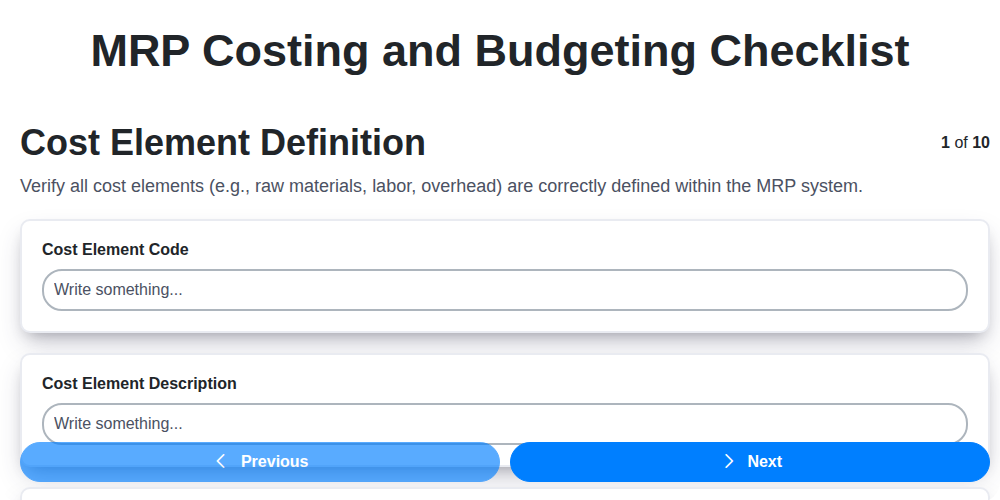
Table of Contents
- Introduction: Why Accurate MRP Costing & Budgeting Matters
- 1. Cost Element Definition: Building the Foundation
- 2. Bill of Materials (BOM) Costing: Material Costs & Accuracy
- 3. Routing and Labor Standards: Capturing Production Costs
- 4. Overhead Allocation: Distributing Indirect Costs
- 5. Inventory Valuation: Tracking Costs Over Time
- 6. Variance Analysis Setup: Identifying and Understanding Differences
- 7. Budget Alignment: Connecting Costing to Financial Plans
- 8. Cost Roll-Up Verification: Ensuring Data Integrity
- 9. Purchase Price Variance Tracking: Managing Material Cost Fluctuations
- 10. Period-End Costing Procedures: Closing the Books Correctly
- 11. System Configuration & Integration: Automating the Process
- 12. Documentation & Training: Ensuring Ongoing Accuracy
- Conclusion: Maintaining a Robust MRP Costing System
- Resources & Links
TLDR: Feeling lost in MRP costing and budgeting? This checklist template walks you through essential steps - from defining costs to tracking variances - ensuring accurate costing, better budgeting, and a clearer picture of your manufacturing financials. It's your shortcut to financial clarity and control!
Introduction: Why Accurate MRP Costing & Budgeting Matters
In today's competitive manufacturing landscape, precision is paramount. Simply producing a quality product isn't enough; you need to understand exactly how much it costs to produce it, and how that aligns with your financial goals. That's where robust MRP (Material Requirements Planning) costing and budgeting become absolutely vital.
Accurate MRP costing isn't just about knowing the raw material expenses. It's a comprehensive view, encompassing labor, overhead, and all the intricate processes involved in bringing a product from concept to completion. When your costing is off, you risk mispricing your products, eroding profit margins, and making poor decisions about production levels and resource allocation.
Equally important is aligning these costs with your budget. Without a clear connection between your costing and your budget, you're essentially flying blind. You're unable to effectively monitor performance, identify areas for improvement, and ensure your business remains financially healthy. This checklist aims to provide a structured approach to ensure your MRP costing and budgeting processes are reliable, transparent, and ultimately, drive profitable growth. Ignoring this area can lead to serious consequences - so let's dive into the details.
1. Cost Element Definition: Building the Foundation
Before any costing or budgeting can truly work, you need a robust and well-defined set of cost elements. Think of these as the building blocks - without them, your entire costing structure will be unstable. This step involves identifying every cost that contributes to the production of your goods or services.
This isn't just about direct materials and labor. It encompasses everything: raw materials, components, packaging, tooling, utilities, depreciation, indirect labor, and even administrative expenses if they are traceable to production.
Key Considerations:
- Granularity: Determine the appropriate level of detail. Too much granularity can create unnecessary complexity; too little can obscure vital cost drivers.
- Chart of Accounts Alignment: Ensure your cost elements directly correlate with your chart of accounts for seamless data flow and reporting.
- Consistency: Maintain consistent naming conventions and classifications across all cost elements.
- Documentation: Clearly document the purpose and inclusion criteria for each cost element. This is essential for training, audits, and future modifications.
- Regular Review: Cost elements shouldn't be set in stone. Periodically review them to ensure they remain relevant to your production processes and business environment.
Failing to properly define cost elements will lead to inaccurate costing, flawed budgeting, and ultimately, poor business decisions.
2. Bill of Materials (BOM) Costing: Material Costs & Accuracy
The Bill of Materials (BOM) is the foundation of accurate MRP costing. It's a comprehensive list of all the raw materials, components, and assemblies required to manufacture a finished product. Therefore, getting your BOM costing right is paramount to successful budgeting and cost control.
Beyond Just Listing - Accurate Costing is Key
Simply having a BOM isn't enough. Each item on that BOM needs an assigned cost that's as accurate as possible. This involves more than just looking up the last purchase price. Consider these crucial factors:
- Current Market Prices: Material costs fluctuate. Regularly review and update your BOM costs to reflect current market prices, including potential increases or decreases due to supply chain dynamics. Use reputable price indexes and vendor quotes.
- Supplier Agreements & Contracts: Factor in any discounts, volume pricing, or contract terms negotiated with your suppliers.
- Freight & Transportation: Don't forget the cost of getting materials to your facility! Integrate freight costs into your material costs, especially for imported materials. Consider landed costs if applicable.
- Scrap & Waste: Account for expected material scrap and waste during the manufacturing process. This adds to the overall cost per unit of finished goods.
- Engineering Changes: Engineering changes to the product often result in changes to the BOM. Ensure these changes are reflected in the BOM and associated material costs immediately.
- Currency Fluctuations: For companies dealing with international suppliers, currency fluctuations can significantly impact material costs. Establish procedures to monitor and account for these changes.
Accuracy's Ripple Effect
Inaccurate BOM costing creates a ripple effect of errors throughout your MRP system. It can lead to:
- Incorrect Production Schedules: Underestimating material costs can result in inadequate ordering, leading to production delays.
- Unrealistic Budgets: Inaccurate material costs distort your overall budget, making it difficult to track profitability.
- Pricing Errors: Miscalculated material costs can lead to incorrect product pricing, impacting competitiveness and margins.
Regular BOM costing reviews, coupled with robust data validation processes, are essential for maintaining accurate cost data and driving efficient MRP operations.
3. Routing and Labor Standards: Capturing Production Costs
Accurate costing hinges on a deep understanding of how your products are actually made. Routing and Labor Standards are critical components of this understanding, bridging the gap between theoretical costs and real-world production realities.
What's a Routing?
A routing details the precise sequence of operations required to manufacture a product. It outlines each step, from raw material intake to finished goods, including machine setups, inspections, and moving materials between workstations. A well-defined routing isn't just a list; it's a roadmap for your production process.
Labor Standards: Setting the Benchmark
Labor standards establish the expected time it should take to complete each operation defined in the routing. These aren't guesses; they should be based on time and motion studies, historical data, and industry benchmarks. Clear labor standards provide a baseline for measuring efficiency and identifying areas for improvement. Consider factors like operator skill level, machine speed, and material handling when setting these standards.
MRP Costing Implications
- Direct Labor Cost Calculation: The routing and labor standards directly feed into the calculation of direct labor cost. The standard time multiplied by the labor rate equals the expected labor cost for each operation.
- Work-in-Process (WIP) Tracking: Routing data is crucial for accurately tracking WIP. Knowing the operations completed and remaining provides a more precise view of inventory value.
- Process Improvement Opportunities: Discrepancies between actual and standard times highlight inefficiencies in the production process. Analyze these variances to streamline operations, optimize workflows, and reduce costs.
- MRP Accuracy: Routing and labor data enables the MRP system to schedule production accurately, minimizing bottlenecks and optimizing resource allocation.
Best Practices:
- Regular Review: Routings and labor standards are not static. They should be regularly reviewed and updated to reflect changes in processes, technology, or material handling.
- Operator Involvement: Involve operators in setting and validating labor standards. Their practical experience is invaluable.
- Documentation: Maintain thorough documentation of routings, labor standards, and any changes made.
- Integration: Seamlessly integrate routing and labor standard data within your MRP system for automated cost calculations and real-time performance monitoring.
4. Overhead Allocation: Distributing Indirect Costs
Overhead allocation is often the most complex and subjective part of MRP costing. It's the process of assigning indirect costs - things like rent, utilities, depreciation, and administrative salaries - to your products or services. These costs aren't directly traceable to a specific item but are essential for overall operations.
A robust overhead allocation system ensures accurate product costing and provides valuable insights into profitability. Poor allocation can distort costing data, leading to incorrect pricing decisions and inaccurate budget forecasts.
Here's what to consider:
- Identify Overhead Cost Pools: Categorize your overhead expenses. Common pools include machine hours, direct labor hours, square footage, or a combination.
- Select Allocation Bases: Choose bases that reasonably reflect how overhead costs are driven. For example, if machine hours are a significant driver of overhead, using machine hours as an allocation base is logical.
- Establish Allocation Rates: Calculate the allocation rate by dividing the total overhead cost in a pool by the total activity of the chosen base.
- Regularly Review & Refine: Overhead allocation methods should be reviewed periodically, especially if business operations change significantly. Consider factors like automation, changes in production volume, or shifts in organizational structure.
- Document Assumptions: Clearly document the assumptions behind your allocation methodology. This transparency aids in understanding and justifying your costing decisions.
Don't be afraid to seek expert advice if designing or reviewing your overhead allocation system proves challenging.
5. Inventory Valuation: Tracking Costs Over Time
Accurate inventory valuation is the bedrock of sound financial reporting and informed decision-making. Within your MRP system, this goes beyond simply assigning a cost to each item. It's about consistently and correctly tracking those costs as inventory moves through your production cycle, from raw materials to finished goods.
Several factors contribute to a robust inventory valuation process:
- Cost Flow Assumption: Clearly define and consistently apply a cost flow assumption - FIFO (First-In, First-Out), LIFO (Last-In, First-Out - note: restrictions apply based on accounting standards), or Weighted Average. This determines which costs are assigned to the goods sold and which remain in your ending inventory.
- Layered Costs: Don't just track direct material costs. Include direct labor, variable overhead, and even fixed overhead allocated based on your pre-defined methods. Each layer provides critical insights into profitability at different stages.
- Regular Updates: Ensure your costing data - material costs, labor rates, overhead rates - are regularly reviewed and updated within your MRP system. Fluctuations in these elements directly impact inventory valuation.
- Cycle Counting & Physical Inventory: Reconcile your MRP system's inventory records with physical counts regularly. This identifies discrepancies and helps maintain the integrity of your data.
- Obsolescence & Scrap: Account for obsolete or scrap material. Write-downs should be consistent with your accounting policies and reflected in your inventory valuation.
Proper inventory valuation provides a clear picture of your asset value and the true cost of goods sold, fueling better pricing strategies and operational efficiency.
6. Variance Analysis Setup: Identifying and Understanding Differences
Variance analysis is your early warning system for cost control. It's not enough to have accurate costing; you need to actively monitor and understand where your actual costs deviate from your planned costs. This section outlines the setup needed for effective variance analysis.
1. Define Key Variance Types: Start by clearly defining the variances you'll track. Common ones include:
- Material Variance: Difference between actual material cost and standard material cost. Broken down further into price variance (price paid vs. standard price) and usage variance (actual quantity used vs. standard quantity).
- Labor Variance: Similar to material variance, this looks at the difference between actual labor rates and standard rates, and actual hours worked versus standard hours.
- Overhead Variance: Examines the difference between actual overhead costs and allocated overhead costs. This can be complex and often requires further breakdown into variable and fixed overhead variances.
- Purchase Price Variance (PPV): Directly reflects the difference between the actual price paid for materials and the price that was expected.
- Yield Variance: Measures the difference between expected yield and actual yield, highlighting inefficiencies in production.
2. Establish Variance Tolerance Levels: Not all variances are significant. Set thresholds (e.g., variances greater than 2% require investigation). This helps prioritize your analysis and avoids unnecessary interventions for minor deviations.
3. Automate Data Collection & Calculation: Manual variance calculation is error-prone and time-consuming. Leverage your MRP system to automatically track actual costs against planned costs. Configuration is key - ensure the system accurately reflects your costing methods.
4. Reporting & Visualization: Develop clear, concise reports and dashboards that highlight variances. Color-coding (e.g., red for significant variances) can quickly draw attention to problem areas. Trend analysis-tracking variances over time-provides valuable insights into underlying issues.
5. Assign Responsibility & Accountability: Clearly define who is responsible for investigating and resolving variances. This ensures that issues are addressed promptly and effectively.
6. Regularly Review and Refine: Variance analysis isn't a "set it and forget it" process. Review your variance definitions, tolerance levels, and reporting methods regularly to ensure they remain relevant and effective. As your processes change, your variance analysis needs to adapt.
7. Budget Alignment: Connecting Costing to Financial Plans
MRP costing isn't an isolated exercise; it's intrinsically linked to your overall financial planning and budgeting. The detailed cost data generated through your MRP system - the labor rates, material costs, overhead allocations - becomes the foundation for your budgets. A disconnect here can lead to wildly inaccurate forecasts and potentially disastrous financial decisions.
This alignment process involves several key steps:
- Review Historical Data: Start by comparing your historical MRP costing data with actual financial performance. Identify patterns and trends that influence costs.
- Incorporate Anticipated Changes: Factor in any anticipated changes to material prices, labor rates, overhead costs, or production volumes. Don't just use last year's figures - consider market trends, supplier negotiations, and planned efficiency improvements.
- Collaborate with Finance: This isn't solely an MRP or operations task. Regular, collaborative meetings between the MRP team and finance are crucial. Share costing data, discuss assumptions, and ensure everyone's on the same page.
- Scenario Planning: Use your MRP costing data to model different production scenarios and their impact on your budget. What happens if material prices increase 10%? What about a sudden surge in demand?
- Refine Forecasts: The accurate cost information from your MRP system should directly inform revenue forecasts and expense budgets. Use it to refine your projections and create a more realistic financial plan.
A well-aligned MRP costing and budgeting process strengthens your ability to manage resources, control costs, and ultimately achieve your financial goals.
8. Cost Roll-Up Verification: Ensuring Data Integrity
Cost roll-up verification is a critical, often overlooked, step in MRP costing. It's the process of ensuring that the costs calculated at the individual component level accurately aggregate to the finished product cost. Think of it like building with LEGOs - if each brick is measured incorrectly, the final model will be flawed.
This verification isn't just a formality; it's a safeguard against inaccurate costing, which can lead to poor pricing decisions, margin erosion, and ultimately, financial instability.
What does verification involve?
- Traceability: You must be able to trace the cost of each finished product back to the individual components, materials, labor, and overhead. This requires robust data trails and clear linkages within your MRP system.
- Comparison & Reconciliation: Regularly compare the rolled-up cost to the sum of the individual component costs. Discrepancies need immediate investigation. Common causes include incorrect cost element assignments, BOM inaccuracies, or routing errors.
- Layered Validation: Don't just check the final product cost. Validate at multiple levels - sub-assemblies, component groups, and individual parts - to pinpoint the source of any inconsistencies.
- Scenario Testing: Run what-if scenarios (e.g., a 10% price increase in a key material) to test the roll-up's sensitivity and ensure it accurately reflects potential cost fluctuations.
- Documentation: Document your verification procedures and any corrective actions taken. This creates an audit trail and facilitates continuous improvement.
Consistent cost roll-up verification builds confidence in your MRP costing accuracy, allowing for more informed decisions and a healthier bottom line.
9. Purchase Price Variance Tracking: Managing Material Cost Fluctuations
Material costs are rarely static. Market conditions, supplier negotiations, and global events can all cause fluctuations that directly impact your manufacturing costs and profitability. Ignoring these fluctuations can lead to inaccurate costing, poor decision-making, and eroded margins. That's where robust Purchase Price Variance (PPV) tracking becomes essential.
PPV represents the difference between the actual price you paid for raw materials and components and the standard (or budgeted) price you expected to pay. It's a vital indicator of your purchasing effectiveness and a key element of a healthy MRP costing system.
Why is PPV Tracking Important?
- Early Warning System: Significant PPVs can signal potential issues with suppliers, market instability, or inefficiencies in your purchasing processes.
- Performance Measurement: Track your purchasing team's performance and identify areas for negotiation or sourcing improvements.
- Budget Accuracy: PPV data helps refine future budgets and reduce the likelihood of over or underestimating material costs.
- Cost Control: Understanding the root causes of PPVs allows you to implement corrective actions and mitigate negative impacts.
- Profitability Insights: Accurate PPV tracking contributes to more reliable cost of goods sold (COGS) calculations and a clearer picture of your profitability.
How to Effectively Track PPV:
- Define Standard Prices: Establish clear and documented standard prices for all materials. Review and update these periodically to reflect current market conditions.
- Record Actual Costs: Accurately record the actual prices paid for materials at the time of purchase. Your MRP system should facilitate this.
- Automated Calculation: Utilize your MRP system to automatically calculate PPVs - this minimizes manual errors and provides timely insights.
- Analyze and Investigate: Don't just track the numbers - investigate significant variances. Determine the reasons behind the fluctuations. Was it a one-off event, a contract negotiation failure, or a trend indicating a broader issue?
- Establish Thresholds: Define acceptable PPV thresholds. Significant deviations beyond these thresholds should trigger further investigation and corrective action.
- Document Findings and Actions: Maintain a record of PPV investigations and the actions taken to address them.
By proactively tracking and analyzing PPVs, you can gain valuable insights into your material costs, improve your purchasing practices, and ultimately, protect your bottom line.
10. Period-End Costing Procedures: Closing the Books Correctly
The period-end represents a crucial opportunity to validate your MRP costing and ensure your financial statements accurately reflect your business performance. It's more than just running reports; it's about reviewing, reconciling, and correcting where necessary. Here's a breakdown of essential procedures:
- Cost Accumulation Review: Verify that all costs (materials, labor, overhead) have been accurately accumulated and assigned to the appropriate products or jobs. Look for any unexpected spikes or drops in costs that warrant investigation.
- Inventory Reconciliation: Reconcile physical inventory counts with your MRP system records. This includes verifying quantities on hand, work-in-progress, and finished goods. Discrepancies need immediate attention and correction, potentially involving cycle counts and adjustments.
- Cost of Goods Sold (COGS) Calculation: Calculate COGS based on your inventory valuation method (e.g., FIFO, weighted average). Review the calculation closely to ensure accuracy.
- Overhead Allocation Review: Re-examine your overhead allocation rates and methods to ensure they remain relevant and fair. If significant changes have occurred during the period, consider adjusting the rates prospectively.
- Variance Analysis Review: Scrutinize your variance analysis reports. While you've already set these up (point 6), the period-end is a critical time to act on insights revealed. Investigate significant variances (both favorable and unfavorable) and identify root causes.
- Journal Entries & Closeout: Post any necessary adjusting journal entries to correct errors or account for unforeseen circumstances. Then, formally close the accounting period in your MRP system and accounting software.
- Documentation: Maintain thorough documentation of all period-end procedures, adjustments, and explanations. This provides an audit trail and supports future analysis.
- Future Period Considerations: Use the insights gained from period-end reviews to refine your costing processes and improve accuracy in future periods. This might include adjusting standards, BOMs, or routing times.
11. System Configuration & Integration: Automating the Process
Manual costing and budgeting are time-consuming and prone to errors. Modern MRP (Material Requirements Planning) systems offer significant opportunities to automate much of the process, drastically improving accuracy and freeing up valuable time. This section explores key configuration and integration considerations.
1. Cost Element Mapping: Ensure your cost elements (direct materials, direct labor, overhead, etc.) are accurately mapped within your MRP system. This is foundational for data flow and reporting accuracy. Work with your accounting team to establish clear definitions and consistent coding.
2. BOM & Routing Integration: The BOM and routing data from engineering and production planning must seamlessly feed into your costing module. Real-time updates to these elements should trigger automatic cost recalculations.
3. Labor Standards Input: Integrate your labor standards (standard hours per operation) with your MRP system to automatically calculate labor costs based on routing operations.
4. Overhead Allocation Methods: Configure your chosen overhead allocation methods (activity-based costing, machine hours, direct labor hours) within the system. Ensure these methods are consistently applied and easily adjustable for accuracy.
5. Inventory Module Linkage: A robust connection between the costing module and your inventory module is crucial for accurate inventory valuation. Automatic updates to stock levels and costs are essential.
6. Purchase Price Variance (PPV) Integration: Configure your system to automatically track and report PPV, comparing actual purchase prices against standard costs. This requires a direct link to your purchasing system.
7. Reporting & Analytics Dashboards: Develop customized dashboards that visualize key costing and budgeting metrics. These dashboards should provide real-time insights and allow for easy drill-down capabilities.
8. API Connectivity: Consider utilizing APIs to connect your MRP system with other business systems, such as CRM, sales forecasting tools, and accounting software, for a holistic view of cost and profitability.
9. Batch Processing: Implement batch processing for large-scale costing and budgeting recalculations, minimizing disruption to daily operations.
10. User Permissions and Security: Establish clear user permissions to control access to costing and budgeting data and functionality, maintaining data integrity.
11. Regular System Audits: Conduct regular audits of your system configuration and data integrity to ensure ongoing accuracy and identify areas for improvement.
12. Documentation & Training: Ensuring Ongoing Accuracy
A robust MRP costing and budgeting system isn't a set it and forget it endeavor. It requires continuous upkeep and, crucially, a well-documented process with ongoing training. Think of it as nurturing a garden - consistent care is essential for thriving results.
Here's why documentation and training are paramount:
- Knowledge Retention: When team members leave, processes are updated, or systems evolve, detailed documentation ensures critical knowledge isn't lost. Clear documentation acts as a central repository for understanding the why and how behind your costing and budgeting procedures.
- Standardization: Consistent application of methods reduces errors and inconsistencies. Documented procedures guarantee everyone follows the same steps for cost element definitions, routing, overhead allocation, and more.
- Error Prevention: Training reduces the likelihood of errors in data entry, calculation, and system configuration. Regularly reinforce procedures and best practices.
- System Updates: As your ERP system is upgraded or new modules are implemented, training ensures users understand the changes and can leverage the new functionalities correctly.
- Audit Trail: Comprehensive documentation and training records provide a strong audit trail, demonstrating your commitment to accuracy and compliance.
Actionable Steps:
- Create Detailed Process Flowcharts: Visually map out each step in your MRP costing and budgeting cycle.
- Develop Standard Operating Procedures (SOPs): Provide step-by-step instructions for all key tasks.
- Schedule Regular Training Sessions: Conduct training for new hires and refreshers for existing staff.
- Maintain a Knowledge Base: Create a central repository for all documentation, FAQs, and training materials.
- Assign Ownership: Designate individuals responsible for maintaining documentation and delivering training.
Conclusion: Maintaining a Robust MRP Costing System
Ultimately, a well-maintained MRP costing system isn't just about accuracy; it's about proactive decision-making. By diligently working through this checklist - from defining cost elements to tracking purchase price variance - you're establishing a foundation for informed decisions about pricing, production planning, and overall profitability. Don't view this checklist as a one-time exercise. Regular reviews and updates are essential to reflect changes in materials, labor rates, overhead costs, and market conditions. A living, breathing MRP costing system, continuously refined and validated, will empower your business to navigate complexities, optimize resources, and achieve sustainable financial health. Remember, the effort invested in a robust system pays dividends in increased efficiency, reduced waste, and a clearer path to achieving your business goals.
Resources & Links
- Oracle Manufacturing Cloud: Oracle's Manufacturing Cloud offers comprehensive MRP and costing capabilities. Their website provides documentation, white papers, and case studies relevant to modern MRP processes.
- SAP S/4HANA Manufacturing: SAP's S/4HANA offers robust manufacturing solutions including MRP and costing functionality. Explore their resources for best practices and implementations.
- NetSuite Manufacturing: NetSuite provides integrated ERP solutions including manufacturing, inventory management, and financial planning. Check their site for articles and demos.
- APICS (Now ASCM): ASCM (formerly APICS) is a professional organization dedicated to supply chain and operations management. Their website offers certifications, training courses, and resources on cost accounting and budgeting.
- Institute of Management Accountants (IMA): The IMA provides resources and certifications related to cost management. Their website has white papers, webinars, and articles addressing costing methodologies and variance analysis.
- The Lean Enterprise Institute: While focused on Lean Manufacturing, their principles directly impact costing by driving efficiency. This resource helps understand how optimizing processes reduces costs, contributing to accurate costing.
- Investopedia - Cost Accounting: Investopedia provides clear explanations of cost accounting terminology and concepts. Useful for understanding the basics underlying MRP costing.
- AccountingTools - Cost Accounting: This site offers articles, tutorials, and quizzes on cost accounting, offering a broad overview of techniques for accurate product costing.
- Manufacturing Leadership Magazine: This magazine provides industry insights and articles related to manufacturing processes and cost management strategies.
- MFG.net: A community focused on manufacturing professionals. Offers forums and articles on various aspects of manufacturing, including costing and budgeting.
Frequently Asked Questions
What is MRP Costing?
MRP (Material Requirements Planning) costing is a method of calculating the cost of a product by considering all the direct and indirect costs associated with manufacturing it. It goes beyond just material costs and includes labor, overhead, and other expenses needed to produce a unit. It's crucial for accurate budgeting and inventory valuation.
Why is MRP Costing important for budgeting?
MRP costing provides a detailed breakdown of production costs. This allows you to create more accurate budgets based on planned production levels, identify potential cost overruns early, and improve overall financial planning. It allows for 'what-if' scenario planning based on production volume.
What's the difference between standard costing and MRP costing?
Standard costing uses predetermined rates for materials and labor. MRP costing, however, dynamically calculates costs based on actual usage and inventory levels as they flow through production. MRP costing is more responsive to changes in material prices and efficiency.
What documents/data do I need to build an MRP Costing checklist?
You'll need Bill of Materials (BOM), routing/work order instructions (detailing operations), standard costs for materials, labor rates, machine hour rates, overhead rates, inventory records, and production schedules. A clear understanding of your production processes is also essential.
What is a Bill of Materials (BOM) and why is it important for MRP costing?
A BOM is a comprehensive list of all the raw materials, components, and sub-assemblies required to manufacture a finished product. It's the foundation of MRP costing, as it dictates the material requirements for each unit produced.
How do I account for scrap and waste in MRP costing?
Scrap and waste should be factored into your material costs. Track scrap rates for each material and operation, and incorporate these rates into your BOM and routing calculations. This prevents underestimation of material needs and inaccuracies in your cost projections.
What role does routing play in MRP costing?
Routing defines the sequence of operations needed to manufacture a product, including machine and labor times. It directly impacts labor and machine overhead costs within the MRP calculation, providing a clearer picture of production efficiencies.
How often should my MRP Costing Checklist be reviewed and updated?
Ideally, your checklist should be reviewed and updated at least annually, or more frequently if there are significant changes in material costs, labor rates, production processes, or product designs. Regular reviews ensure ongoing accuracy.
What are some common pitfalls to avoid when implementing MRP costing?
Common pitfalls include inaccurate BOMs, incomplete routings, overlooking scrap and waste, failing to track actual costs versus planned costs, and neglecting to regularly update the system with current data. Poor data integrity leads to inaccurate results.
How does MRP costing integrate with inventory management?
MRP costing directly supports inventory management by providing accurate costs for raw materials and finished goods. This accurate costing helps in valuation of inventory and improves decision-making related to purchasing and production planning.
Found this Article helpful?
Comments
There are no comments yet. Be the first to add one!
Related Articles
MRP System Performance Monitoring Checklist: Ensure Peak Efficiency
MRP System Implementation Checklist: Your Step-by-Step Guide

Top 10 MRPeasy Alternatives for 2025

The 5 Best Bill of Materials (BOM) Management Software of 2025
MRP Planning Parameter Setup Checklist: Your Guide to Accuracy & Efficiency

The 10 Best Manufacturing Management Software of 2025
How to improve your Bill of Materials (BOM) Management
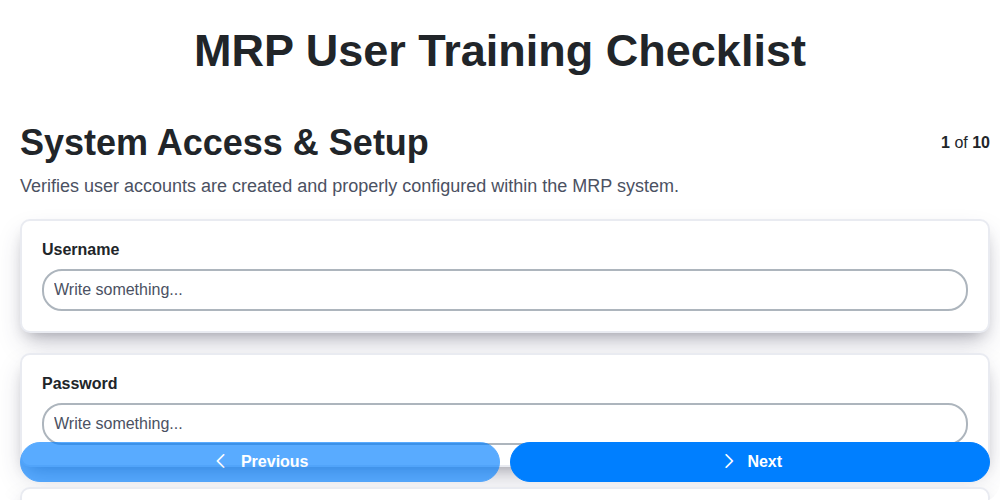
MRP User Training Checklist: Ensuring Proficiency & Success
We can do it Together
Need help with
Material Requirements Planning (MRP)?
Have a question? We're here to help. Please submit your inquiry, and we'll respond promptly.