MRP Procurement Planning Checklist: Your Guide to Streamlined Sourcing
Published: 12/14/2025 10:00 PM Updated: 12/15/2025 1:41 PM
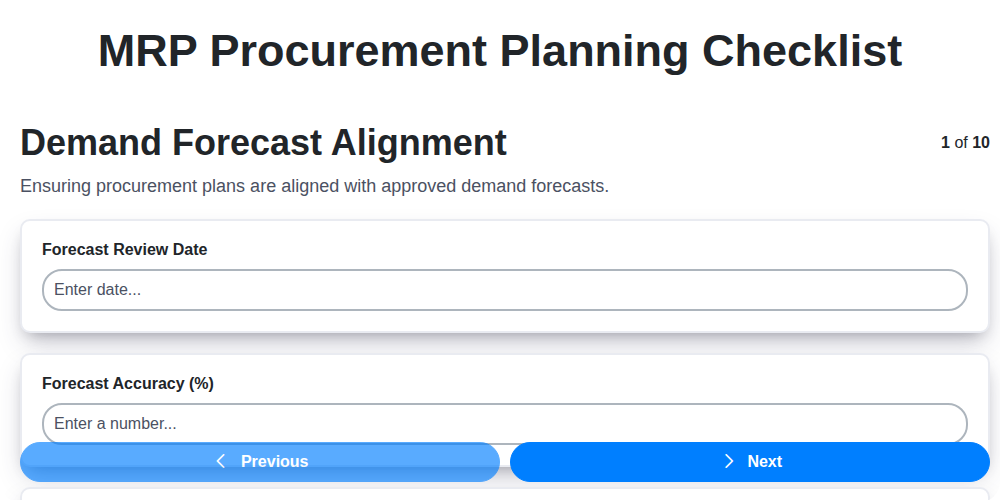
Table of Contents
- Introduction: Why Procurement Planning Matters in MRP
- 1. Demand Forecast Alignment: The Foundation of Procurement
- 2. Supplier Selection & Evaluation: Finding the Right Partners
- 3. Material Sourcing & Negotiation: Securing the Best Deals
- 4. Purchase Order Creation & Approval: Ensuring Accuracy and Compliance
- 5. Inventory Level Management: Balancing Supply and Demand
- 6. Lead Time Validation: Minimizing Delays
- 7. Shipping & Logistics Coordination: Smooth Delivery
- 8. Material Cost Analysis: Tracking and Controlling Expenses
- 9. Supplier Communication & Relationship Management: Building Strong Partnerships
- 10. Risk Mitigation & Contingency Planning: Preparing for the Unexpected
- 11. Lead Time Validation: A Deeper Dive
- 12. Leveraging MRP for Procurement Efficiency
- Conclusion: Mastering Procurement with Your MRP Checklist
- Resources & Links
TLDR: Overwhelmed by procurement? This checklist streamlines your MRP process! It covers everything from forecasting to shipping, ensuring you select the right suppliers, manage inventory, and minimize risk - all in one handy guide.
Introduction: Why Procurement Planning Matters in MRP
Procurement planning is the backbone of a successful Materials Requirements Planning (MRP) system. It's far more than just placing orders; it's a strategic process that ensures the right materials, in the right quantity, are available at the right time, and at the right cost. A poorly executed procurement plan can quickly derail even the most meticulously planned production schedule, leading to costly delays, stockouts, and dissatisfied customers. Effective procurement planning bridges the gap between demand forecasting and production execution, transforming potential bottlenecks into streamlined efficiency. This checklist offers a detailed roadmap to optimize this crucial aspect of your MRP system, ensuring your business stays on track and minimizes disruption.
1. Demand Forecast Alignment: The Foundation of Procurement
Procurement planning doesn't truly begin with suppliers or purchase orders. It starts with a clear, shared understanding of what's needed and when. That's where demand forecasting alignment comes in. A disconnect between sales forecasts and procurement plans can lead to overstocking (tying up capital and risking obsolescence) or, worse, stockouts that halt production.
This crucial first step involves close collaboration between sales, marketing, and procurement teams. It's not just about receiving a sales forecast; it's about critically evaluating its accuracy, understanding the underlying assumptions driving those numbers, and identifying any potential risks or opportunities. Consider factors like seasonality, promotional activities, economic trends, and competitor actions.
Don't simply accept the initial forecast. Ask probing questions like:
- What data is the forecast based on?
- What are the potential sources of error in the forecast?
- What are the potential impacts of a high or low forecast accuracy?
- Are there any planned changes in product mix or market channels?
Regular review meetings and a willingness to adjust plans based on new information are vital. A shared, reliable forecast provides a solid foundation for all subsequent procurement decisions, saving time, reducing costs, and ultimately, ensuring a more efficient and responsive supply chain.
2. Supplier Selection & Evaluation: Finding the Right Partners
Choosing the right suppliers is far more than just finding the lowest price. It's about building a reliable supply chain that supports your MRP's promise of on-time delivery and quality materials. A robust supplier selection and evaluation process is critical for mitigating risk and ensuring long-term success.
Here's a breakdown of key considerations:
- Defining Requirements: Before you even begin searching, clearly define your needs. This includes technical specifications, quality standards, delivery schedules, and any required certifications (e.g., ISO, environmental compliance).
- Market Research: Identify potential suppliers. Utilize online directories, industry events, referrals, and professional networks.
- Initial Screening: Narrow down your list based on basic criteria - financial stability, geographic location, industry experience, and initial responsiveness.
- Request for Information (RFI) & Request for Proposal (RFP): An RFI gathers general information, while an RFP solicits detailed proposals outlining pricing, capabilities, and timelines.
- Evaluation Criteria: Establish objective evaluation criteria beyond just price. Consider:
- Quality Performance: History of delivering quality materials. Request samples and conduct audits if possible.
- Capacity & Scalability: Can they handle your current and future volume requirements?
- Financial Stability: Assess their financial health to minimize the risk of supply disruptions.
- Technology & Innovation: Are they willing to adopt new technologies and processes?
- Sustainability Practices: Increasingly important for many industries and customers.
- On-Site Audits: If possible, conduct on-site audits to verify capabilities, quality control processes, and working conditions.
- Reference Checks: Speak with other companies that have used their services.
- Pilot Programs: Before committing to a large-scale partnership, consider a pilot program to test their performance in a controlled environment.
Remember, building strong supplier relationships is a long-term investment. Choose partners who share your values and are committed to your success.
3. Material Sourcing & Negotiation: Securing the Best Deals
Material sourcing isn't just about finding a supplier; it's about securing the best supplier at the best price. This requires a strategic and proactive approach, moving beyond simply accepting the first quote.
Beyond the Basics: Don't just request quotes; actively research potential suppliers. Look beyond your existing network and explore new options. Online marketplaces, industry directories, and referrals can uncover hidden gems offering competitive pricing and quality.
The Negotiation Dance: Negotiation isn't about confrontation; it's about finding a mutually beneficial agreement. Here's how to approach it effectively:
- Know Your Leverage: Understand your company's purchasing power. Volume discounts, long-term contracts, and pre-commitment can all strengthen your position.
- Focus on Total Cost of Ownership (TCO): Don't just consider the unit price. Factor in shipping costs, quality control, potential downtime due to defective materials, and payment terms. A slightly higher initial price might be worthwhile if it reduces long-term costs.
- Competitive Bidding: Encourage multiple suppliers to bid for your business. Transparency fosters competition and drives prices down.
- Value Engineering: Collaborate with suppliers to explore alternative materials or designs that can reduce costs without compromising quality.
- Build Rapport: A positive relationship with your supplier can lead to more flexible negotiations and better service.
Document Everything: Keep meticulous records of all quotes, negotiation details, and final agreements. This transparency is vital for auditing and future comparisons.
Remember: Successful material sourcing and negotiation isn't a one-time event; it's an ongoing process that requires constant monitoring and refinement.
4. Purchase Order Creation & Approval: Ensuring Accuracy and Compliance
A well-crafted and diligently approved purchase order (PO) is the backbone of successful procurement. It's more than just a document; it's a legally binding agreement and a critical step in preventing costly errors and delays. Here's a breakdown of what's essential:
Key Steps & Considerations:
- Accuracy is Paramount: Double-check everything. This includes part numbers, quantities, descriptions, unit pricing, and shipping addresses. A single typo can lead to receiving the wrong materials, impacting production schedules.
- Clear Specifications: Ensure the PO clearly defines the required specifications, including quality standards, packaging requirements, and any special instructions. Attach relevant drawings, blueprints, or technical documents when necessary.
- Automated Systems: Leverage your MRP system's PO creation and approval workflows whenever possible. Automation minimizes manual errors and streamlines the process.
- Approval Hierarchy: Establish a clear approval hierarchy based on spending limits and material criticality. This ensures appropriate oversight and accountability.
- Budget Verification: Automatically verify that the PO aligns with the approved budget and available funds. This prevents overspending and potential financial issues.
- Contract Alignment: If applicable, ensure the PO terms and conditions align with existing supplier contracts.
- Record Keeping: Maintain a meticulous record of all POs, approvals, and any modifications made.
- Supplier Confirmation: Always request confirmation of the PO from the supplier to guarantee their acknowledgement and acceptance.
A robust PO process minimizes errors, enhances supplier collaboration, and ultimately contributes to a more efficient and reliable supply chain.
5. Inventory Level Management: Balancing Supply and Demand
Maintaining optimal inventory levels is a critical balancing act in MRP procurement planning. Too much inventory ties up capital, increases storage costs, and risks obsolescence. Too little, and you risk production delays, missed customer orders, and potential revenue loss. This section focuses on strategies to achieve that sweet spot.
First, regularly review your safety stock levels. Safety stock is your buffer against unexpected demand spikes or supply disruptions. Don't just set it and forget it - recalculate it based on historical data, forecast accuracy, and supplier reliability. Consider implementing techniques like statistical inventory modeling to dynamically adjust safety stock based on variability.
Next, embrace ABC analysis. Categorize your materials based on their value and consumption rate (A - high value/consumption, B - medium, C - low). Focus tighter control and more frequent review for your 'A' items, while applying simpler methods for 'C' items.
Finally, proactively monitor inventory turnover rates. A low turnover rate suggests overstocking, while a high rate might indicate insufficient inventory. Analyze the reasons behind any anomalies and adjust your planning accordingly. Integration with your sales and operations planning (SOP) process is vital for accurate demand information and ensures your inventory levels are aligned with overall business needs.
6. Lead Time Validation: Minimizing Delays
Lead times - the time it takes from placing an order to receiving materials - are a critical, often underestimated, factor in successful procurement planning. Inaccurate lead time data can wreak havoc on production schedules, lead to stockouts, and ultimately impact your business's bottom line. Simply accepting supplier-provided lead times isn't enough; rigorous validation is essential.
Here's how to effectively validate lead times within your MRP procurement planning process:
- Historical Data Analysis: Begin by examining your historical data. Analyze past order placements, delivery dates, and any discrepancies. This provides a baseline for comparison.
- Supplier Collaboration: Engage with your suppliers. Discuss their internal processes, potential bottlenecks, and any factors influencing delivery times. Don't just accept their initial estimates - probe for clarity.
- Real-World Testing: Conduct small-scale test orders to verify lead times. These 'trial runs' can expose hidden issues like customs delays, unforeseen internal processes, or material preparation times.
- Regular Updates: Lead times aren't static. Market conditions, supplier capacity, and logistical changes can all impact them. Establish a regular schedule (e.g., quarterly or annually) to re-validate and update your lead time data.
- Factor in Variability: Lead times rarely fall perfectly within an estimated range. Acknowledge this variability by incorporating safety stock calculations and adjusting your MRP parameters to account for potential delays.
- Document and Share: Document your validation process and the resulting lead time data. Make this information readily available to all relevant teams within your organization, ensuring everyone is working with the most accurate information.
By actively validating and managing lead times, you'll significantly reduce the risk of delays and improve the overall efficiency of your procurement planning.
7. Shipping & Logistics Coordination: Smooth Delivery
Getting materials to the right place, at the right time, and in the right condition is crucial. Poor shipping and logistics coordination can derail your entire MRP procurement plan, leading to production delays, increased costs, and dissatisfied customers. This stage isn't just about getting a package; it's about meticulous planning and proactive management.
Here's what your checklist should include:
- Route Optimization: Evaluate various shipping routes and carriers to minimize transit time and reduce transportation costs. Consider factors like seasonality, traffic patterns, and potential disruptions (weather, port congestion).
- Carrier Selection & Management: Establish relationships with reliable carriers who understand your specific needs. Negotiate favorable rates and service level agreements (SLAs).
- Documentation & Compliance: Ensure all necessary shipping documents (bills of lading, customs declarations, certificates of origin) are accurate and readily available, complying with all relevant regulations.
- Tracking & Visibility: Implement a robust tracking system to monitor shipments in real-time. This allows for proactive issue resolution and keeps stakeholders informed.
- Receiving & Inspection Procedures: Develop clear procedures for receiving and inspecting incoming materials, verifying quantity, quality, and condition before acceptance.
- Customs Clearance (for Imports): Plan for and manage the complexities of customs clearance, including duties, taxes, and documentation requirements. Consider using a customs broker if necessary.
- Contingency Planning: Have backup plans in place for potential shipping disruptions - alternative carriers, expedited shipping options, or alternative sourcing locations.
Effective shipping & logistics coordination requires constant communication and collaboration between procurement, production, and the chosen carriers. It's a critical link in the MRP chain that must be carefully managed.
8. Material Cost Analysis: Tracking and Controlling Expenses
Material costs are a significant driver of overall production expenses. Failing to diligently analyze and control these costs can severely impact profitability. This isn't just about finding the lowest price; it's about understanding the total cost of ownership.
What Does Material Cost Analysis Entail?
- Detailed Breakdown: Go beyond the unit price. Analyze costs associated with transportation, handling, storage, inspection, and even potential waste or obsolescence.
- Historical Data Review: Track material costs over time. Identify trends, spikes, and potential drivers behind price fluctuations. This provides valuable context for future negotiations and forecasting.
- Benchmarking: Compare your material costs with industry averages or those of similar businesses. This highlights areas where you might be overspending and indicates opportunities for improvement.
- Value Engineering: Challenge material specifications. Can a less expensive alternative deliver similar performance without compromising quality?
- Total Cost of Ownership (TCO): Calculate the TCO for each material. This encompasses purchase price, shipping, handling, storage, disposal, and any potential downtime or rework caused by substandard materials.
- Regular Reporting: Create regular reports (weekly or monthly) detailing material cost variances and potential cost-saving initiatives. Share these with relevant stakeholders.
Proactive Measures for Cost Control:
- Strategic Sourcing: Combine volume purchasing with long-term contracts to secure better pricing.
- Supplier Collaboration: Work with suppliers to identify areas for mutual cost reduction.
- Early Involvement: Engage procurement teams early in the product design phase to influence material selection.
- Automation: Implement systems to automate price comparison and supplier performance tracking.
9. Supplier Communication & Relationship Management: Building Strong Partnerships
Procurement isn't just about getting the best price; it's about fostering enduring relationships with your suppliers. Effective communication and a strong partnership are vital for a resilient and efficient MRP procurement process.
Here's why prioritizing supplier communication is critical:
- Early Issue Resolution: Open lines of communication allow for prompt identification and resolution of potential problems, preventing delays and disruptions. A quick email or phone call can often avert a major production slowdown.
- Improved Forecasting Accuracy: Sharing your demand forecasts with suppliers gives them valuable insights into your needs, enabling them to plan their production and resource allocation more effectively. This collaborative approach leads to more accurate forecasts and reduces the risk of shortages or overstocking.
- Innovation & Value Engineering: Regular communication can spark innovative ideas and opportunities for value engineering. Suppliers often have expertise and insights that can help optimize material selection, reduce costs, or improve product quality.
- Proactive Problem Solving: Building trust allows for honest feedback and proactive problem-solving. Suppliers are more likely to alert you to potential challenges or suggest improvements if they feel like a valued partner.
- Negotiation Power: A strong, collaborative relationship strengthens your negotiating position. Suppliers are more willing to offer competitive pricing and favorable terms when they see you as a long-term partner.
Best Practices for Effective Communication:
- Regular Check-ins: Schedule routine meetings or calls to discuss performance, forecasts, and potential issues.
- Designated Contacts: Establish clear points of contact on both sides for streamlined communication.
- Performance Reviews: Regularly evaluate supplier performance and provide constructive feedback.
- Transparency: Share relevant information (within appropriate boundaries) about your business and future plans.
- Active Listening: Truly listen to your suppliers' concerns and feedback.
10. Risk Mitigation & Contingency Planning: Preparing for the Unexpected
Procurement isn't just about securing materials; it's about protecting your production schedule and bottom line. Unexpected disruptions - supplier bankruptcies, natural disasters, geopolitical instability, sudden surges in demand - can cripple your MRP process. A robust risk mitigation and contingency plan is your safeguard against these potential pitfalls.
Here's what that plan should encompass:
- Identify Potential Risks: Brainstorm and document potential risks specific to your supply chain. Consider supplier financial stability, geographic location (and associated risks like weather events), and reliance on single sources.
- Develop Alternative Sourcing Options: Don't be solely reliant on a single supplier. Identify and qualify backup suppliers for critical materials. This includes assessing their capacity, quality standards, and pricing.
- Safety Stock Strategies: Analyze lead times and demand variability. Implement appropriate safety stock levels to buffer against unexpected delays. However, balance this with carrying cost considerations.
- Contractual Safeguards: Include clauses in supplier contracts addressing force majeure, performance guarantees, and clear escalation procedures for issue resolution.
- Inventory Buffering: Consider strategic inventory pooling to create buffers against localized disruptions.
- Regular Risk Assessment Reviews: The risk landscape is ever-changing. Conduct periodic reviews of your risk mitigation strategies and update them accordingly.
- Communication Protocols: Establish clear communication channels and protocols to quickly disseminate information about disruptions and coordinate responses.
- Scenario Planning: Simulate different disruption scenarios (e.g., supplier shutdown, material shortage) to test your response plans and identify weaknesses.
By proactively addressing potential risks and developing contingency plans, you transform your procurement process from reactive to resilient.
11. Lead Time Validation: A Deeper Dive
Lead times - the time it takes for materials to arrive after an order is placed - are often underestimated, but they're critical to procurement planning. Inaccurate lead time data can wreak havoc on production schedules, lead to stockouts, and inflate carrying costs. Lead time validation isn't a one-time event; it's an ongoing process.
Here's what deeper dive looks like:
- Initial Validation: Begin by reviewing your historical data. How accurate have your lead times actually been? Don't just rely on what's in your system; gather real-world data from shipping records, supplier updates, and internal logistics teams.
- Supplier Confirmation: Directly confirm lead times with your suppliers. Are there any known issues affecting delivery? Discuss potential bottlenecks and confirm their commitment to the stated lead time. This is a crucial step - sometimes, your internal records are outdated.
- Factor in Variability: Lead times aren't fixed. Account for potential variability - shipping delays, customs clearance, supplier backlogs. Consider building buffer time into your planning.
- Regular Review & Adjustment: Establish a cadence for reviewing lead times. This should be more frequent for critical materials and suppliers. Look for trends and adjust your data accordingly. A quarterly review is a good starting point.
- Impact of Changes: When a supplier changes a process or you switch to a different transportation method, immediately validate the lead time. Don't assume anything.
- Technology's Role: Leverage your MRP system to track lead times and automatically flag discrepancies. Some systems offer supplier portals where you can access updated lead time information directly.
By proactively validating and managing lead times, you can improve your procurement planning accuracy and minimize disruptions to your production process.
12. Leveraging MRP for Procurement Efficiency
MRP (Material Requirements Planning) isn't just for production scheduling; it's a powerful tool to dramatically improve your procurement processes. Integrating procurement activities within your MRP system creates a streamlined, data-driven approach that minimizes risk and maximizes efficiency. Here's how:
MRP's core function of calculating material needs based on demand forecasts provides a solid foundation for procurement. Instead of reactive ordering, your procurement team has visibility into projected needs, allowing for proactive planning and building stronger supplier relationships. By leveraging MRP data, you can move beyond simply responding to immediate needs and start optimizing your entire supply chain. This proactive approach reduces the likelihood of stockouts, minimizes excess inventory, and ultimately lowers overall costs. Embracing MRP for procurement isn't just about doing things differently; it's about fundamentally improving how you source and manage materials.
Conclusion: Mastering Procurement with Your MRP Checklist
Successfully navigating procurement within an MRP system isn't about simply ticking boxes; it's about creating a robust, proactive process that minimizes disruptions and maximizes efficiency. This checklist provides a solid framework, but remember it's a living document. Regularly review and update it to reflect changes in market conditions, supplier performance, and your company's evolving needs.
By consistently following these steps - from aligning your demand forecast to meticulously managing supplier relationships and proactively mitigating risks - you'll transform your procurement planning from a reactive task into a strategic advantage. Ultimately, mastering this MRP procurement checklist isn't just about ensuring you get the materials; it's about ensuring you get them on time, at the right price, and with the quality your business demands, contributing directly to increased profitability and customer satisfaction. Embrace it, refine it, and watch your procurement processes flourish.
Resources & Links
- Oracle ERP Cloud: Oracle's ERP Cloud provides extensive procurement modules including MRP integration and supplier management. A key player in the MRP space.
- SAP S/4HANA: SAP's ERP system, particularly S/4HANA, includes robust MRP and procurement planning capabilities, often used by larger enterprises.
- NetSuite: NetSuite offers a unified platform with MRP and procurement functionalities, suitable for growing businesses needing integrated solutions.
- Infor: Infor offers industry-specific ERP solutions, frequently incorporating advanced MRP and procurement modules designed for complex supply chains.
- APICS (ASCM): The Association for Supply Chain Management (ASCM, formerly APICS) offers certifications, training, and resources for procurement and supply chain professionals - a good source for best practices.
- Project Management Institute (PMI): While focused on project management, PMI resources provide valuable frameworks for risk mitigation and contingency planning applicable to procurement.
- Supply Chain Brain: A leading online resource for supply chain news, articles, and expert insights - providing context and trends in procurement and MRP.
- McKinsey & Company: McKinsey offers in-depth analysis and articles on supply chain and procurement strategies, often providing a broader perspective on efficiency and risk.
- Harvard Business Review: HBR publishes articles and research on management and leadership, frequently addressing topics relevant to procurement and supplier relationships.
- Gartner: Gartner provides research and insights on technology and business trends, including procurement software and supply chain management.
- The Chartered Institute of Procurement & Supply Chain (CIPS): A professional body that provides education, training, and resources for procurement professionals.
Frequently Asked Questions
What does MRP stand for and why is it important for procurement?
MRP stands for Material Requirements Planning. It's a system that helps procurement professionals plan and manage material needs based on production schedules and demand forecasts. It's important because it prevents stockouts, minimizes excess inventory, and optimizes procurement processes leading to cost savings and improved efficiency.
What is the purpose of a procurement planning checklist in MRP?
The checklist ensures a systematic and thorough approach to procurement planning within an MRP system. It covers critical steps, reducing errors and omissions, and ensuring that all necessary factors are considered before placing orders.
Who should use this MRP procurement planning checklist?
This checklist is beneficial for procurement managers, buyers, supply chain planners, and anyone involved in the material acquisition process within a company using MRP. It's particularly useful for those new to MRP or looking to refine existing processes.
What are the key areas covered in this checklist?
The checklist covers areas like demand planning and forecasting, vendor selection and evaluation, order placement and tracking, inventory management, and risk mitigation. It also includes checks for data accuracy and communication.
How does this checklist help with vendor selection?
The checklist guides users through a structured vendor evaluation process, considering factors such as pricing, lead times, quality, reliability, financial stability, and compliance with ethical and environmental standards.
Can this checklist be customized?
Yes, this checklist is designed to be a framework. It should be customized to fit the specific needs and processes of your organization. Add or remove items as needed to align with your unique requirements.
What does 'lead time' refer to in this context?
Lead time is the total time elapsed between placing an order and receiving the materials. This includes order processing time, manufacturing time, shipping time, and any receiving and inspection time.
How can the checklist help with inventory management?
The checklist includes checks for safety stock levels, reorder points, and inventory turnover rates. By regularly reviewing these, you can optimize inventory levels and minimize carrying costs while ensuring you meet demand.
What does 'risk mitigation' involve in MRP procurement?
Risk mitigation involves identifying potential disruptions to the supply chain (e.g., supplier bankruptcy, natural disasters) and developing strategies to minimize their impact. This might include having backup suppliers, diversifying sourcing locations, or increasing safety stock.
Where can I find more information about MRP and procurement planning?
Resources include industry publications (e.g., APICS, ISM), online courses and certifications, and consulting firms specializing in supply chain management. Your company's MRP system documentation is also a valuable resource.
Found this Article helpful?
Comments
There are no comments yet. Be the first to add one!
Related Articles
MRP System Performance Monitoring Checklist: Ensure Peak Efficiency
MRP System Implementation Checklist: Your Step-by-Step Guide
Top 10 MRPeasy Alternatives for 2025
The 5 Best Bill of Materials (BOM) Management Software of 2025
MRP Planning Parameter Setup Checklist: Your Guide to Accuracy & Efficiency
The 10 Best Manufacturing Management Software of 2025
How to improve your Bill of Materials (BOM) Management
MRP User Training Checklist: Ensuring Proficiency & Success
We can do it Together
Need help with
Material Requirements Planning (MRP)?
Have a question? We're here to help. Please submit your inquiry, and we'll respond promptly.