Ensuring Compliance: Your Pharmaceutical Cleaning Validation Checklist Guide
Published: 11/25/2025 Updated: 07/02/2026
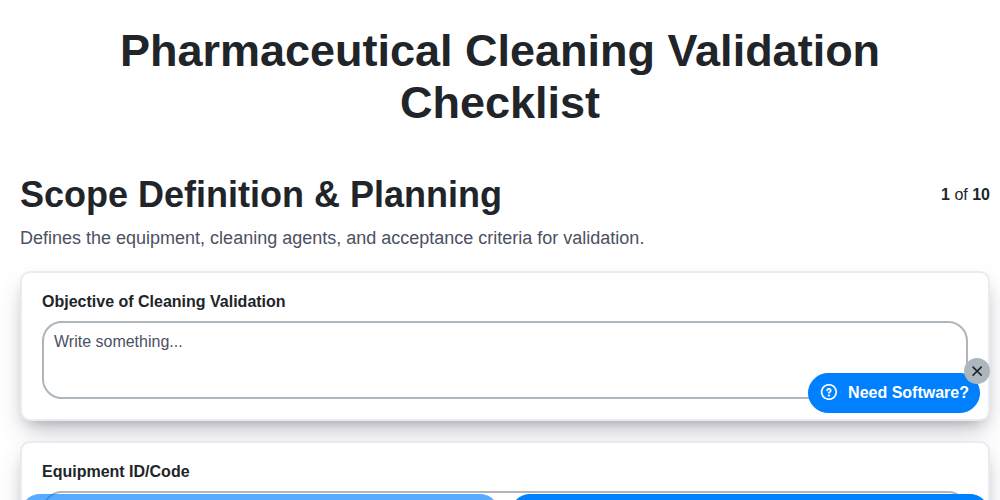
Table of Contents
- Introduction: Why Cleaning Validation Matters
- 1. Scope Definition & Planning: Laying the Foundation
- 2. Cleaning Agent Selection & Compatibility: Choosing the Right Tools
- 3. Cleaning Procedure Development: A Step-by-Step Approach
- 4. Equipment Sampling & Monitoring: Identifying Critical Surfaces
- 5. Residue Limit Determination: Setting Acceptable Thresholds
- 6. Analytical Method Validation: Ensuring Reliable Results
- 7. Cleaning Validation Runs: Executing the Process
- 8. Data Analysis & Evaluation: Interpreting the Findings
- 9. Documentation & Reporting: Maintaining a Clear Record
- 10. Change Control: Adapting to Modifications
- 11. Periodic Review: Ensuring Continued Effectiveness
- Conclusion: Maintaining a Robust Cleaning Validation Program
- Resources & Links
TLDR: Pharmaceutical cleaning validation is vital for patient safety & regulatory compliance. This checklist guides you through the process - from defining the scope & choosing cleaning agents to data analysis & ongoing reviews - ensuring your equipment is consistently clean and minimizing risks. Download the template and streamline your validation efforts!
Introduction: Why Cleaning Validation Matters
Pharmaceutical cleaning validation isn't just a regulatory requirement; it's a critical component of ensuring product safety and efficacy. Imagine trace amounts of a previous drug remaining on manufacturing equipment and inadvertently contaminating the next batch - the potential consequences are significant. We're talking about patient safety risks, compromised product quality, potential recalls, and damage to a company's reputation.
Validation provides documented evidence that your cleaning processes consistently and effectively remove residues from equipment surfaces to acceptable levels, preventing cross-contamination and ensuring the integrity of your pharmaceutical products. It's a proactive measure that builds confidence in your manufacturing processes and safeguards both your patients and your business. This blog post will walk you through the essential steps of a robust cleaning validation checklist, helping you build a validation program you can trust.
1. Scope Definition & Planning: Laying the Foundation
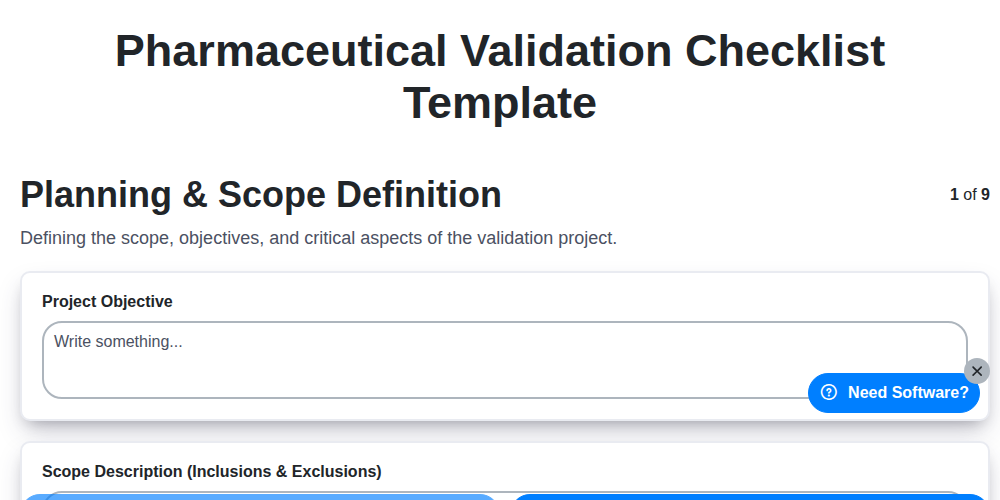
Cleaning validation isn't just about scrubbing equipment; it's a meticulously planned process ensuring product safety and regulatory compliance. The very first, and arguably most critical, step is a comprehensive Scope Definition & Planning phase. This isn't a rushed affair - it's the bedrock upon which the entire validation project is built.
What exactly does this entail? It starts with clearly defining the scope of the validation. This includes identifying all equipment to be validated (manufacturing equipment, process vessels, transfer lines, etc.), the products manufactured in those pieces of equipment, and the potential cross-contamination risks involved. Consider all products, even those that may have been used previously or are planned for future use.
Beyond identification, a detailed project plan is essential. This plan should outline:
- Objectives: What are you trying to achieve with this validation? (e.g., demonstrate removal of specific residue, prevent cross-contamination).
- Responsibilities: Clearly assign roles and responsibilities for each task.
- Timeline: Establish realistic deadlines for each phase.
- Resources: Identify necessary resources (personnel, equipment, analytical methods, etc.).
- Risk Assessment: A preliminary risk assessment should be performed to identify potential challenges and prioritize equipment based on risk level. Higher-risk equipment demands more rigorous validation strategies.
Without a robust scope definition and a well-defined plan, you risk wasted resources, inaccurate results, and potential compliance issues. This initial phase sets the stage for a successful cleaning validation project, so invest the time and effort to get it right.
2. Cleaning Agent Selection & Compatibility: Choosing the Right Tools
Selecting the appropriate cleaning agent is a critical first step in pharmaceutical cleaning validation. It's not simply about choosing a product that appears to remove visible soil; it's about ensuring the chosen agent effectively removes residues while also being compatible with the equipment and processes involved. Incompatibility can lead to equipment degradation, alteration of product characteristics, and compromised data integrity.
Here's a breakdown of key considerations:
- Understanding Soil Types: Different pharmaceuticals and excipients leave behind distinct residue profiles. Knowing the potential contaminants is crucial to selecting a cleaning agent that will effectively target them.
- Chemical Compatibility Studies: Rigorous compatibility testing must be performed. This involves assessing the cleaning agent's impact on equipment materials (stainless steel, elastomers, plastics, etc.). This testing should include visual inspection for swelling, discoloration, or etching, and potentially more sophisticated analytical techniques to detect material alteration.
- Cleaning Agent Properties: Consider factors such as pH, alkalinity, solvency power, and potential reactivity. A balance is needed - strong cleaning power shouldn't come at the expense of equipment damage.
- Regulatory Guidance: Refer to relevant regulatory guidelines (e.g., ICH Q7, FDA guidance) for acceptable practices and limitations on cleaning agent selection.
- Safety & Environmental Considerations: Evaluate the safety profile of the cleaning agent (toxicity, flammability) and its environmental impact. Consider sustainable alternatives where possible.
- Documentation: Thoroughly document the rationale for cleaning agent selection, compatibility study results, and any limitations identified.
3. Cleaning Procedure Development: A Step-by-Step Approach
Developing a robust and effective cleaning procedure is the cornerstone of pharmaceutical cleaning validation. It's more than just wiping down equipment; it's a meticulously planned sequence of actions designed to consistently remove residues to acceptable levels. Here's a breakdown of the crucial steps involved:
1. Defining the Cleaning Steps: Begin by thoroughly analyzing the equipment's construction and its intended use. Identify all surfaces that come into contact with the product, considering hard-to-reach areas, crevices, and internal components. Document these surfaces - photographs and detailed diagrams are invaluable. Determine the specific cleaning actions required for each surface (e.g., rinsing, scrubbing, soaking, spray washing).
2. Sequence of Operations: The order in which cleaning steps are performed is critical. Typically, cleaning proceeds from the upper portions of the equipment downwards, allowing gravity to aid in residue removal. Consider the potential for cross-contamination between surfaces, and sequence the steps to minimize this risk.
3. Cleaning Agent Selection & Integration: Refer back to the Cleaning Agent Selection & Compatibility study (covered earlier). This data will inform the selection of appropriate cleaning agents and their concentrations for each cleaning step. Document the specific agents, concentrations, contact times, and temperatures used in the procedure.
4. Rinse Cycle Design: The rinsing phase is essential to remove cleaning agent residues. The number of rinse cycles, rinse agent type, and contact times need to be carefully defined and documented. Consider using Water for Injection (WFI) as the final rinse agent.
5. Cycle Time & Personnel Training: Establish realistic cycle times for each cleaning step, considering the equipment's size and the cleaning agent's action. Develop clear, concise, and illustrated Standard Operating Procedures (SOPs) for the cleaning personnel. Thorough training and competency assessments are mandatory to ensure consistent execution.
6. Cleaning Procedure Documentation: Each step in the cleaning procedure, including cleaning agents, concentrations, temperatures, contact times, rinse cycles, and operator instructions, must be meticulously documented in a readily understandable format. This documentation serves as the foundation for validation and ongoing compliance.
4. Equipment Sampling & Monitoring: Identifying Critical Surfaces
Equipment cleaning validation isn't a blanket approach; it requires meticulous attention to detail and a focus on the surfaces most likely to harbor residues. This stage, Equipment Sampling & Monitoring, is all about identifying those critical surfaces.
What constitutes a critical surface? These are areas where product residue is most likely to accumulate due to design, use, or process. Think about:
- Areas with tight crevices and corners: These provide excellent hiding places for residues.
- Areas with stagnant product contact: Where product remains in contact for extended periods.
- Areas difficult to reach with cleaning agents: Geometry, design, or accessibility can hinder effective cleaning.
- Areas with history of cleaning failures: Past validation runs or process observations may highlight problematic areas.
- Areas with multiple product contact: Surfaces that come into contact with different products (particularly if there's a potential for cross-contamination) are high priority.
The process involves a thorough visual inspection of the equipment. It's crucial to document these observations - photographs are highly recommended. Consider using a systematic approach like a surface map to ensure complete coverage. Input from equipment operators and maintenance personnel is invaluable here, as they possess firsthand knowledge of potential problem areas. This detailed assessment directly informs the selection of sampling locations for residue analysis, ensuring the validation accurately reflects the true cleaning effectiveness.
5. Residue Limit Determination: Setting Acceptable Thresholds
Determining appropriate residue limits is a critical step in pharmaceutical cleaning validation. These limits aren't arbitrary; they't rooted in safety and product quality. The goal is to ensure that any residual cleaning agents or product carryover pose no risk to patient health or impact the quality of subsequent batches.
Several factors influence residue limit setting. Regulatory guidelines (like those from the FDA and EMA) provide guidance, but the ultimate decision relies on a comprehensive risk assessment. This assessment should consider:
- Toxicological Data: What are the potential adverse effects of the cleaning agent or drug substance at various concentrations? Establishing a safe level is paramount.
- Pharmaceutical Activity: Consider the drug substance's potency and therapeutic effect. Even low levels of an active pharmaceutical ingredient (API) can be problematic if they affect the efficacy or safety of the next product manufactured in the equipment.
- Patient Exposure: Think about the potential patient exposure to the residue, considering factors like the dosage and route of administration of the next product.
- Worst-Case Scenario: The residue limit should be set based on the worst-case scenario, meaning the highest possible residue concentration expected based on processing conditions and equipment usage.
- Cleaning Agent Properties: The characteristics of the cleaning agent itself, including its solubility and potential for adsorption, should be factored in.
Simply put, residue limits should be low enough to be safe and not interfere with the quality of the next product, but achievable with a validated cleaning procedure. A robust justification for the chosen limits, documented in the validation plan, is essential for regulatory compliance.
6. Analytical Method Validation: Ensuring Reliable Results
Analytical method validation is a critical, often underestimated, step in pharmaceutical cleaning validation. It's not enough to simply develop a cleaning procedure; the analytical methods used to detect and quantify residues must be fit for their intended purpose. This involves demonstrating that the method is accurate, precise, specific, sensitive, and robust.
Why is it so important? A flawed analytical method can lead to inaccurate residue data, potentially resulting in false positives (indicating a cleaning failure when it didn't occur) or false negatives (missing a genuine contamination risk). These errors can have significant regulatory and patient safety implications.
Key Validation Parameters:
- Specificity: Demonstrates the method's ability to differentiate the target residue(s) from other compounds (e.g., excipients, product components, cleaning agents) present in the matrix.
- Linearity: Establishes the proportional relationship between the analyte concentration and the measured signal over a relevant range.
- Accuracy: Confirms the method's ability to recover the analyte from the matrix (spike and recovery studies).
- Precision: Assesses the repeatability and reproducibility of the method.
- Limit of Detection (LOD) & Limit of Quantification (LOQ): These define the lowest concentration of the analyte that can be reliably detected and quantified, respectively. The LOQ is particularly important as it often dictates residue limits.
- Robustness: Evaluates the method's ability to withstand small variations in method parameters (e.g., pH, temperature, mobile phase composition) without significantly impacting the results.
Regulatory Considerations: Regulatory guidelines (e.g., ICH Q2(R1)) provide detailed requirements for analytical method validation. Thorough documentation of the validation process is essential for demonstrating compliance. Improper validation can invalidate the entire cleaning validation exercise.
7. Cleaning Validation Runs: Executing the Process
Now comes the practical execution - the cleaning validation runs themselves. This phase is where the rubber meets the road, and meticulous attention to detail is paramount. These runs aren't just about wiping things down; they're controlled experiments designed to demonstrate consistent and effective cleaning.
Planning is Key: Before a single wipe occurs, a detailed execution plan should be in place. This plan should outline:
- Equipment Selection: Specify exactly which equipment items will be included in each run, aligned with the sampling plan.
- Run Sequence: Define the order in which equipment is cleaned and sampled. This is crucial if cross-contamination is a concern.
- Personnel Training: Ensure all personnel involved in the runs are thoroughly trained on the cleaning procedure, sampling techniques, and documentation requirements.
- Equipment Status: Verify equipment is in a known, representative, and suitable condition for cleaning validation. Document the equipment's condition prior to cleaning.
Conducting the Runs:
- Strict Adherence: The cleaning procedure must be followed precisely as documented. Any deviations must be documented and investigated (see Change Control).
- Representative Soils: Introduce representative drug residues (or simulated soils, if necessary) at levels defined during residue limit determination. The application method should mimic real-world contamination scenarios.
- Sampling Points: Samples should be collected from predetermined locations on the equipment, based on the initial risk assessment and worst-case scenarios. Multiple sampling points per surface are often required.
- Blinded Samples (Highly Recommended): Consider blinding samples - assigning codes so the analyst is unaware of the cleaning run number or condition - to minimize bias.
- Sample Handling & Storage: Follow documented procedures for sample handling, storage, and transport to the analytical laboratory. Maintain chain of custody.
- Run Number & Repetition: Execute a sufficient number of cleaning validation runs (typically 3-5 or more) to establish consistent results.
Documentation is Critical: Detailed records of each run must be maintained, including:
- Date and time of cleaning
- Personnel involved
- Equipment cleaned
- Soils used
- Sampling locations
- Observations (e.g., visible residues, difficulties encountered)
- Any deviations from the procedure
8. Data Analysis & Evaluation: Interpreting the Findings
The cleaning validation runs aren't just about collecting data; it's about critically interpreting those results to confirm your cleaning process is effective. This stage involves a meticulous review of the analytical results against pre-defined acceptance criteria.
First, compare the residue levels detected during the validation runs to the residue limits established in the Residue Limit Determination phase. These limits are typically based on pharmaceutical regulations, safety factors, and the potency of the drug substance. A simple pass/fail determination is often made - did the residue levels fall below the limits?
However, a nuanced approach is crucial. Simply passing or failing isn't enough. Analyze the trend of the data. Are residue levels consistently below the limits? Are there any outliers? Are there patterns suggesting certain equipment surfaces are more challenging to clean? Statistical analysis, such as calculating averages, standard deviations, and control charts, can help identify these trends and demonstrate process consistency.
Furthermore, consider the magnitude of the cleaning process variability. Even if all results are below the limits, a high degree of variability may indicate an unstable cleaning process requiring further investigation and optimization.
Document all observations and assessments meticulously. Explain any deviations from expected results and propose corrective actions if necessary. This documentation provides a comprehensive audit trail demonstrating the scientific rationale behind your cleaning validation conclusions. Finally, remember that the evaluation isn't just about numbers; it's about demonstrating a robust and reliable cleaning process to ensure product safety and efficacy.
9. Documentation & Reporting: Maintaining a Clear Record
Cleaning validation isn't just about performing the cleaning and analyzing the results; it's about meticulously documenting everything. Robust documentation is the backbone of a successful validation and a critical element for regulatory compliance. This section outlines the essential documentation requirements.
What Needs to be Documented?
- Scope Definition & Planning: Detailed records of the initial planning, including the equipment list, rationale for selection, and acceptance criteria.
- Cleaning Agent Selection & Compatibility: Documentation justifying the chosen cleaning agents, including compatibility studies and safety data sheets.
- Cleaning Procedure Development: Step-by-step cleaning procedures, including contact times, temperatures, and concentrations.
- Equipment Sampling & Monitoring: Records of equipment sampled, including identification numbers, locations, and any anomalies.
- Residue Limit Determination: Justification for residue limits based on toxicology data or established limits for similar products.
- Analytical Method Validation: Complete validation reports for all analytical methods used, demonstrating suitability for residue analysis.
- Cleaning Validation Runs: Detailed logs for each cleaning run, including operator names, dates, times, process parameters, and deviations.
- Data Analysis & Evaluation: Complete raw data, calculations, statistical analysis, and justifications for conclusions drawn from the results.
- Change Control: Records of all changes made to the cleaning validation process, including the reason for the change, approval, and impact assessment.
- Periodic Review: Documentation of periodic review findings, corrective actions taken, and revalidation plans.
Key Considerations:
- Traceability: Ensure all data can be easily traced back to its origin - from raw data to final conclusions.
- Chronological Order: Documents should be organized chronologically to facilitate review and audit trails.
- Review and Approval: All documents should be reviewed and approved by qualified personnel.
- Secure Storage: Maintain secure storage of all validation records, both electronic and paper-based, for the required retention period.
- Electronic Systems: If using electronic systems, ensure compliance with 21 CFR Part 11 requirements.
Proper documentation not only provides a defensible record of your cleaning validation process but also facilitates continuous improvement and simplifies audits.
10. Change Control: Adapting to Modifications
Cleaning validation isn't a static exercise; it's a living document that requires ongoing vigilance. Manufacturing processes, equipment, cleaning agents, and even regulatory guidelines evolve over time. Therefore, a robust change control system is absolutely critical for maintaining the validity of your cleaning validation.
Any alteration - whether it's a new product introduction, a change in the manufacturing process, a change in cleaning agent supplier, or a modification to the equipment - must be assessed for its potential impact on the cleaning process. This isn't just about ticking a box; it's about ensuring continued product safety and efficacy.
Here's what a good change control process for cleaning validation should include:
- Impact Assessment: A formal assessment that analyzes the potential impact of the change on the cleaning process, residue limits, and analytical methods. This should involve input from relevant departments (e.g., Manufacturing, Quality, Validation).
- Documentation of Changes: Meticulous recording of all changes, including rationale, approval dates, and affected documents (cleaning procedures, validation reports, analytical methods).
- Revalidation/Requalification Decision: Based on the impact assessment, a determination of whether revalidation (full repeat of the cleaning validation) or requalification (limited testing to confirm the change doesn't compromise cleaning effectiveness) is required.
- Communication: Ensuring all stakeholders (operators, cleaning staff, quality personnel) are informed about changes and their implications.
- Periodic Review: Regularly scheduled reviews (e.g., annually) to assess the ongoing effectiveness of the cleaning validation program and identify areas for improvement. This includes re-evaluating residue limits and analytical methods.
Failure to properly manage changes can compromise your validation and expose your company to significant regulatory scrutiny. Proactive change control demonstrates a commitment to continuous improvement and ensures the highest standards of cleaning effectiveness are maintained.
11. Periodic Review: Ensuring Continued Effectiveness
Cleaning validation isn't a one-and-done activity. Processes evolve, equipment changes, and regulations shift. A robust periodic review program is critical to guarantee continued compliance and product safety. This review should be conducted at predetermined intervals (typically every 3-5 years, or sooner if warranted) and should encompass a thorough assessment of the entire cleaning validation lifecycle.
Key elements of a periodic review include:
- Re-evaluation of the Scope: Has the product portfolio or equipment changed significantly? Are new products being introduced that require different cleaning approaches?
- Review of Cleaning Agents: Are the selected cleaning agents still effective and compliant with current regulations? Evaluate any new data or concerns related to their usage.
- Assessment of Cleaning Procedures: Are the procedures still being followed correctly? Consider employee training records and observations.
- Analysis of Trending Data: Examine historical cleaning validation data to identify any emerging trends or patterns that warrant further investigation.
- Equipment Changes: Any modifications to equipment (e.g., new materials, design changes) require re-evaluation of the cleaning process.
- Regulatory Updates: Stay abreast of changes in regulatory guidance (e.g., ICH Q7, FDA guidance) and ensure the validation program remains compliant.
- Risk Assessment Review: Revisit the initial risk assessment and update it based on any new information or changes to the processes.
The results of the periodic review should be documented, and any necessary corrective actions implemented and tracked to completion. This demonstrates a commitment to continuous improvement and ensures the ongoing effectiveness of your cleaning validation program.
Conclusion: Maintaining a Robust Cleaning Validation Program
Cleaning validation isn't a one-and-done exercise; it's an ongoing commitment to product quality and patient safety. This checklist provides a framework, but remember that each facility and product presents unique challenges. Regularly revisiting your program, ensuring adherence to evolving regulatory guidance, and incorporating lessons learned from ongoing monitoring are crucial. A robust cleaning validation program isn't just about ticking boxes; it's about building a culture of continuous improvement, proactive risk mitigation, and unwavering dedication to producing safe and effective pharmaceuticals. Prioritize training, empower your validation team, and view this process not as a burden, but as a vital pillar of your quality system.
Resources & Links
- U.S. Food and Drug Administration (FDA): The FDA is the primary regulatory body for pharmaceuticals in the US. Their website provides guidance documents, regulations, and warnings related to cleaning validation and other GMP requirements. Search for 'Cleaning Validation' within the site for relevant publications.
- European Medicines Agency (EMA): The EMA provides guidance and regulations related to pharmaceutical quality, including cleaning validation, for the European Union. Offers a different perspective and regulatory requirements to consider.
- United States Pharmacopeia (USP): USP sets standards for quality, purity, strength, and consistency of medicines. USP <400>, Cleaning Validation, provides detailed guidance on cleaning validation principles and practices.
- International Society for Pharmaceutical Engineering (ISPE): ISPE is a professional organization that provides resources, training, and guidance on pharmaceutical manufacturing, including cleaning validation. They offer numerous publications, white papers, and webinars.
- PDA (Parenteral Drug Association): PDA is a global association of professionals in the pharmaceutical industry. They offer technical reports and publications on cleaning validation and contamination control. Look for their technical reports on cleaning validation.
- PHSS (Pharmaceutical Hygiene Services): PHSS provides consultancy, auditing, and training services relating to pharmaceutical hygiene and cleaning validation. Their website has informative articles and resources.
- Sterilutions: Sterilutions specializes in validation and compliance services for the pharmaceutical industry, including cleaning validation. Their site contains blog posts and resources related to best practices.
- Pharmaceutical Online: Pharmaceutical Online is a website featuring industry news, articles, and resources for pharmaceutical professionals. Search for articles related to cleaning validation for practical insights.
- BioPharma International: BioPharma International covers topics related to biopharmaceutical manufacturing, including cleaning validation and contamination control. Provides technical articles and industry perspectives.
- Nice Insight: Nice Insight provides market intelligence, webinars, and articles focused on the pharmaceutical industry. Look for relevant webinars and industry reports about validation processes.
- MJOLL Advisory: MJOLL Advisory offers regulatory compliance consulting and support services for the pharmaceutical industry, including cleaning validation expertise and guidance.
- Remdev: Remdev offers Validation Services including Cleaning Validation. Check for resources and case studies on their website.
Frequently Asked Questions
What is cleaning validation in the pharmaceutical industry?
Cleaning validation is the documented evidence that a cleaning process consistently and effectively removes product and residue to a predetermined level, ensuring the safety and quality of subsequent products manufactured in the same equipment. It's a regulatory requirement to prevent cross-contamination.
Why is cleaning validation important?
Cleaning validation is crucial for preventing cross-contamination between different drug products, ensuring patient safety, complying with regulatory guidelines (like FDA, EMA), and maintaining product integrity. Failure to validate cleaning processes can lead to recalls, regulatory actions, and potential harm to patients.
What are the key steps in a cleaning validation process?
Typically, it involves: 1) Defining acceptance criteria (cleaning limits), 2) Selecting cleaning methods and agents, 3) Performing cleaning studies (soil and residue levels), 4) Analytical method validation to accurately measure residue, 5) Documenting the process and results, and 6) Establishing a cleaning validation protocol and periodic review/revalidation.
What are 'acceptance criteria' and how are they determined?
Acceptance criteria are the pre-determined levels of residue considered safe and acceptable after cleaning. They' are based on factors like toxicity of the previous drug, amount of residue likely to be present, and the potency of the next drug product. A common guideline is 1/1000th of the API's dose, but this is not a universal rule.
What is the difference between a 'soil' and a 'residue' in cleaning validation?
'Soil' refers to the initial contamination applied to the equipment during a validation study (e.g., a known amount of API). 'Residue' is what remains on the equipment after cleaning. Validation studies measure the residue to determine if it meets acceptance criteria.
What types of analytical methods are commonly used for residue detection?
Common analytical methods include HPLC (High-Performance Liquid Chromatography), GC (Gas Chromatography), TLC (Thin Layer Chromatography), and microbiological testing. The choice of method depends on the API's properties and the sensitivity required to detect low residue levels.
How often should cleaning validation be revalidated?
Revalidation is typically required periodically (e.g., every 3-5 years), or when there are significant changes, such as: changes to the cleaning process, equipment, API, cleaning agents, or manufacturing process. Regulatory guidelines recommend a risk-based approach.
What documentation is required for cleaning validation?
Comprehensive documentation is essential and includes: the validation protocol, analytical method validation reports, cleaning study data, acceptance criteria, deviation reports, and change control documentation. This demonstrates the scientific basis for the cleaning process and ensures traceability.
What is a 'worst-case scenario' in cleaning validation?
A worst-case scenario simulates the most challenging cleaning situation, such as using the most difficult-to-remove API, shortest cleaning cycle time, highest product load, and lowest water quality. It ensures the cleaning process is robust enough to handle real-world conditions.
How does risk assessment play a role in cleaning validation?
Risk assessment helps prioritize cleaning validation efforts by identifying areas of highest risk for cross-contamination. It guides the selection of appropriate cleaning methods, analytical techniques, and frequency of revalidation. A risk-based approach aligns with current regulatory expectations.
Comments
There are no comments yet. Be the first to add one!
Pharmaceutical Management Solution Demo
Navigating complex regulations and ensuring quality in pharmaceutical manufacturing? ChecklistGuro's Work OS platform streamlines processes from R&D to production, packaging, and distribution. Maintain compliance, improve efficiency, and reduce risk. Discover how ChecklistGuro can transform your pharmaceutical operations!
Related Articles
Ensuring Quality: A Pharmaceutical Compound Record Review Checklist Guide
Pharmaceutical Labeling Compliance Checklist: Your Step-by-Step Guide
Mastering Medication Management: Your Pharmaceutical Inventory Compliance Checklist Template
Navigating Adverse Event Reporting: Your Pharmaceutical Checklist Guide
Pharmaceutical Inventory Management Checklist: Your Guide to Compliance & Accuracy
Your Essential GLP Checklist Template: A Practical Guide
Your Pharmaceutical Development Checklist: A Template for Success
Pharmaceutical Validation Checklist Template: Your Guide to Compliance
Need help with
Pharmaceutical?
Have a question? We're here to help. Please submit your inquiry, and we'll respond promptly.