Navigating OOS: A Pharmaceutical Investigation Checklist Template
Published: 11/25/2025 Updated: 07/02/2026
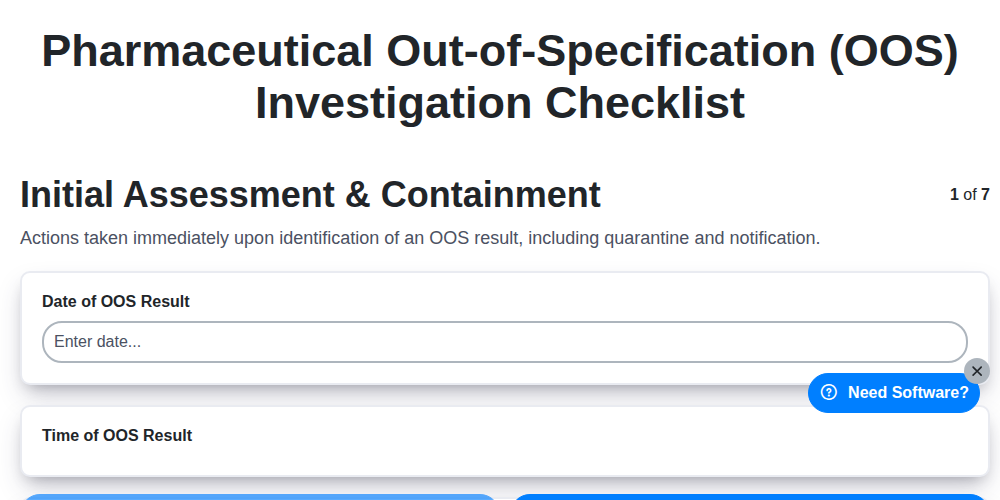
Table of Contents
- Understanding Out-of-Specification (OOS) Events in Pharma
- The Importance of a Robust OOS Investigation Checklist
- Phase 1: Initial Assessment & Containment - Securing the Scene
- Phase 2: Root Cause Investigation - Digging Deeper
- Phase 3: Corrective Action Plan (CAP) - Defining the Solution
- Phase 3.1: CAP Implementation & Monitoring
- Phase 4: Verification & Validation - Ensuring Effectiveness
- Phase 5: Documentation & Records - Maintaining a Clear Audit Trail
- Phase 5.1: Sample Retention & Handling
- Phase 6: Trend Analysis & Preventative Actions - Avoiding Recurrence
- Phase 7: Closure & Sign-off - Formalizing the Resolution
- Resources & Links
TLDR: Pharmaceutical Out-of-Specification (OOS) investigations are critical for quality & compliance. This checklist template provides a structured, step-by-step guide - from initial containment to preventative actions - ensuring thorough investigations, proper documentation, and ultimately, preventing future OOS occurrences. Download the template to streamline your OOS investigations and strengthen your quality system!
Understanding Out-of-Specification (OOS) Events in Pharma
Out-of-Specification (OOS) events are a critical concern in the pharmaceutical industry. They represent a deviation from established acceptance criteria for a batch of drug product or raw material. These deviations can arise at any stage of the manufacturing process, from raw material testing to finished product release. While an OOS result isn't necessarily indicative of a serious quality defect, it does necessitate a thorough and systematic investigation. Failure to properly investigate and address OOS events can compromise product quality, patient safety, and regulatory compliance. Understanding the potential causes-ranging from simple measurement errors to complex process variations-is paramount for maintaining the integrity of the pharmaceutical supply chain. This blog post will guide you through a robust OOS investigation checklist, ensuring a comprehensive and compliant approach to resolving these critical events.
The Importance of a Robust OOS Investigation Checklist
An Out-of-Specification (OOS) result can trigger significant disruption and concern within a pharmaceutical manufacturing environment. Beyond the immediate need to address the anomalous data, lies the critical requirement to understand why it occurred and prevent recurrence. A robust OOS investigation isn't just about identifying the deviation; it's about demonstrating a comprehensive, systematic approach to risk mitigation and ensuring product quality and patient safety.
That's where a well-defined checklist becomes invaluable. It provides a structured framework, ensuring every critical step is consistently followed, minimizing potential for bias or oversight. A checklist promotes consistency across investigations, regardless of the investigator's experience level. Furthermore, it acts as a visual reminder of the key activities, fostering thoroughness and reducing the chance of overlooking vital information. Ultimately, a standardized checklist demonstrates a commitment to quality and regulatory compliance, providing confidence to both internal teams and external auditors. It elevates the OOS investigation from a reactive response to a proactive quality management strategy.
Phase 1: Initial Assessment & Containment - Securing the Scene
The immediate response to an Out-of-Specification (OOS) result is critical. This initial phase focuses on preventing further impact and preserving evidence. Rushing into analysis without proper containment can compromise the entire investigation. Here's what needs to happen immediately:
- Stop the Process/Batch: The implicated batch or process must be immediately stopped. This prevents further material from being impacted.
- Isolate the Material: The batch in question should be physically isolated and secured, preventing unauthorized access or use. Clearly label the material as OOS - DO NOT USE.
- Notify Key Personnel: Alert the Quality Unit, Production Manager, and designated OOS investigation team lead. Clear communication channels are essential.
- Initial Data Review: Perform a preliminary review of the OOS result, including raw data, analyst observations, and any instrument printouts. Note any immediately apparent anomalies.
- Document Initial Findings: Thoroughly document the initial assessment, including the date, time, personnel involved, initial observations, and actions taken. This serves as a baseline for the investigation.
- Preserve Evidence: Ensure all relevant records, equipment logs, and data associated with the batch or process are preserved. Do not alter or discard any potentially relevant information.
- Prevent Further Testing (Initially): Unless specifically required by SOP, refrain from retesting or additional testing at this stage. Retesting without understanding the initial data can potentially alter the evidence.
- Secure the Area: Restrict access to the area where the OOS material is located to authorized personnel only.
Phase 2: Root Cause Investigation - Digging Deeper
The Initial Assessment & Containment phase provides a critical foundation, but now the real detective work begins. This phase focuses on systematically uncovering why the Out-of-Specification (OOS) result occurred. A robust Root Cause Investigation (RCI) goes beyond surface-level observations and utilizes structured methodologies.
Here's a breakdown of key activities:
- Form a Dedicated Team: Include representatives from Quality, Manufacturing, Analytical Development, and any other relevant departments involved in the process or testing. Diverse perspectives are crucial.
- Review Batch Records & Associated Data: Meticulously examine all relevant documentation including batch records, raw material certificates of analysis, equipment logs, analyst training records, and standard operating procedures (SOPs). Look for deviations, inconsistencies, or overlooked steps.
- Employ Root Cause Analysis Tools: Utilize proven tools like the "5 Whys," Fishbone (Ishikawa) diagrams, Fault Tree Analysis, or Failure Mode and Effects Analysis (FMEA). These tools prompt deeper questioning and identify underlying causes, not just the immediate failure.
- Re-perform the Test: Repeat the analytical test using the same material and method, with different analysts and/or equipment (if available and feasible) to confirm the OOS result and rule out analyst error or equipment malfunction as the sole cause.
- Examine Equipment & Instrument Performance: Assess the performance of all equipment involved, including calibration records, maintenance logs, and any recent repairs.
- Analyze Raw Materials: Evaluate the quality of raw materials used in the affected batch, including re-testing of retained samples.
- Consider Environmental Factors: Assess environmental conditions during manufacturing and testing, such as temperature, humidity, and light exposure.
- Document Findings Thoroughly: Maintain a detailed record of all investigative activities, including interviews, observations, data analysis, and conclusions reached. The 'why' behind each conclusion should be clearly stated.
The goal is to identify the fundamental cause(s) - the underlying reason(s) that permitted the OOS result to occur. This isn't about assigning blame, but about understanding the system's vulnerabilities and preventing recurrence.
Phase 3: Corrective Action Plan (CAP) - Defining the Solution
Now that the root cause(s) have been identified, the focus shifts to crafting a robust Corrective Action Plan (CAP). This isn't just about fixing the immediate problem; it's about preventing recurrence and ensuring product quality.
Key Elements of a Strong CAP:
- Specific Actions: CAPs should outline exactly what needs to be done. Vague statements like improve training are insufficient. Instead, detail the specific training modules, duration, and assessment methods.
- Assigned Responsibility: Clearly assign ownership for each action item. This ensures accountability and follows-through. Include names and roles.
- Target Completion Dates: Establish realistic deadlines for each action. This creates a timeline for implementation and allows for tracking progress.
- Resource Allocation: Identify the resources (personnel, equipment, budget) needed to implement each action.
- Prioritization: Rank actions based on their potential impact on preventing recurrence and addressing critical findings. High-impact actions should be prioritized.
- Risk Assessment: Consider the potential risks associated with implementing each corrective action and develop mitigation strategies.
- Review & Approval: CAPs must be reviewed and approved by appropriate personnel (e.g., Quality Assurance, Manufacturing, Development) to ensure alignment with regulatory requirements and company policies.
Examples of CAP Actions:
- Procedure Revisions: Updating Standard Operating Procedures (SOPs) to clarify instructions or incorporate new information.
- Equipment Modifications: Making changes to equipment to improve performance or reliability.
- Training Enhancements: Implementing new or improved training programs for personnel involved in critical processes.
- Raw Material Supplier Changes: Investigating and potentially changing raw material suppliers if material quality is a contributing factor.
- Process Parameter Adjustments: Modifying process parameters (e.g., temperature, pressure, time) to optimize performance and minimize variability.
The CAP represents a critical bridge between identifying the problem and guaranteeing it doesn't happen again. A well-defined and executed CAP is the cornerstone of a comprehensive OOS investigation.
Phase 3.1: CAP Implementation & Monitoring
Once the Corrective Action Plan (CAP) is finalized and approved, the critical phase of implementation begins. This isn't just about ticking boxes; it's about actively putting the planned changes into practice and diligently monitoring their effectiveness.
Key activities during this phase include:
- Schedule and Assign Responsibility: Clearly outline the timeline for each CAP action item, assigning specific individuals or teams responsible for execution. This ensures accountability and prevents delays.
- Training and Communication: If the CAP involves changes to procedures, training must be provided to all affected personnel. Effective communication is essential to ensure everyone understands the rationale behind the changes and their role in successful implementation.
- Regular Progress Tracking: Implement a robust tracking system (e.g., a spreadsheet, project management software) to monitor the progress of each action item against the agreed timeline. Regular review meetings should be scheduled to discuss progress, identify any roadblocks, and adjust the plan as needed.
- Data Monitoring: Closely monitor the critical parameters that were identified as contributing factors in the OOS event. This could involve increased frequency of testing, detailed process observation, or enhanced data analysis. Look for early indicators of improvement or any unexpected consequences of the corrective actions.
- Communication with Stakeholders: Keep relevant stakeholders (Quality Assurance, Production, Regulatory Affairs, etc.) informed of the CAP implementation progress, including any deviations from the original plan and their impact.
- Documentation of Implementation: Meticulously document all CAP implementation activities, including dates, individuals involved, and any challenges encountered. This provides a complete audit trail of the corrective actions taken.
This phase is crucial for demonstrating the effectiveness of the CAP and ensuring that the underlying issues that led to the OOS event are truly resolved.
Phase 4: Verification & Validation - Ensuring Effectiveness
Once corrective actions have been implemented, thorough verification and validation are critical to confirm their effectiveness in preventing recurrence of the OOS result and ensuring product quality. This phase goes beyond simply checking if the immediate cause has been addressed; it confirms the actions have resolved the problem completely and haven't introduced new, unintended consequences.
Verification focuses on proving that the implemented corrective actions meet the pre-defined specifications and requirements. This often involves re-testing the affected batch(es) using the revised method or process. Documented evidence of successful re-testing is essential. Specific activities might include:
- Re-testing of Affected Batches: Performing the original test, or an equivalent validated method, to confirm the results are now within specification.
- Process Validation: If process changes were implemented, re-validate the modified process to demonstrate consistency and reliability. This may involve multiple production runs.
- Equipment Calibration/Verification: Ensuring all equipment used in the modified process is properly calibrated and functioning correctly.
- Review of Raw Material Specifications/Testing: Verifying that raw materials used are still meeting specifications, especially if material-related factors were identified in the root cause investigation.
Validation, on the other hand, focuses on proving that the implemented changes are effective in real-world conditions and achieve the desired outcome - preventing recurrence of the OOS result. Validation often requires a longer observation period and may involve ongoing monitoring. Key activities include:
- Continued Process Monitoring: Establishing a robust monitoring plan to track relevant parameters and ensure the process remains stable.
- Statistical Process Control (SPC): Implementing SPC charts to identify trends and potential issues proactively.
- Review of Impacted Systems: Assessing the potential impact of the changes on other related processes and systems.
- User Training Verification: Confirming that personnel involved in the modified process have been adequately trained and understand the new procedures.
Documentation of all verification and validation activities, along with supporting data, is vital for the OOS investigation record.
Phase 5: Documentation & Records - Maintaining a Clear Audit Trail
Thorough and accurate documentation is absolutely critical throughout the entire OOS investigation process. This isn't just about ticking a box; it's about creating a robust and transparent audit trail that demonstrates the thoroughness of the investigation and provides a clear understanding of what happened, why, and what was done to prevent recurrence.
Here's what needs to be meticulously documented:
- Initial Assessment Records: Capture the initial observation, sample details, instrument readings, and any immediate actions taken, including containment measures.
- Investigation Team Records: Document the composition of the investigation team, their roles, and meeting minutes detailing discussions, decisions, and assignments.
- Data & Analysis Records: Preserve all raw data, laboratory reports, analytical results (including chromatograms, spectra, etc.), and calculations used in the analysis.
- Root Cause Investigation Evidence: Maintain all evidence supporting the identified root cause - this might include equipment maintenance logs, procedure revisions, training records, or even interview notes.
- CAP Records: Detail the proposed corrective actions, including timelines, responsible personnel, and measurable objectives. Track the implementation status of each action.
- Verification & Validation Reports: Document the methods and results of verification and validation activities to confirm the effectiveness of the CAP. Include acceptance criteria and evidence of meeting those criteria.
- Deviation Reports: Clearly link the OOS event to a formal deviation report, outlining the non-compliance and the steps taken to address it.
- Retained Samples: Maintain proper chain of custody and retention records for all samples involved in the investigation. Specify storage conditions and retention periods.
Key Considerations:
- Timeliness: Document actions and findings promptly, while details are fresh in memory.
- Accuracy: Ensure all records are accurate, legible, and traceable.
- Consistency: Follow standardized documentation formats and templates.
- Security: Protect records from unauthorized access or alteration.
- Electronic Records: If utilizing electronic systems, ensure compliance with 21 CFR Part 11 requirements (where applicable), including audit trails and electronic signatures.
Meticulous documentation demonstrates a commitment to quality and provides invaluable data for continuous improvement within your pharmaceutical processes.
Phase 5.1: Sample Retention & Handling
A critical and often overlooked aspect of OOS investigations is the meticulous handling and retention of all samples involved - both the failing sample and the reference/comparator samples used for analysis. Improper handling can compromise the integrity of the investigation and potentially lead to inaccurate conclusions.
Here's a breakdown of essential steps:
- Secure Storage: Immediately place all relevant samples (failing, original, retest, comparator) in a secure, identified, and temperature-controlled environment. This prevents further degradation or potential contamination.
- Labeling: Each sample container must be clearly and accurately labeled with all pertinent information: sample name, batch/lot number, date of sampling, analyst initials, and OOS designation.
- Chain of Custody: Implement a strict chain of custody protocol. Document every transfer of the sample, including the date, time, and individual handling it. This ensures traceability and accountability.
- Controlled Access: Limit access to the retained samples to authorized personnel only. Maintain a log of all access.
- Retain Sample Period: Adhere to the company's established retain sample period - typically a minimum of one year, and often longer, based on regulatory requirements and product stability data.
- Visual Inspection: Document the visual condition of each sample upon initial observation and during any subsequent handling. Note any unusual characteristics, discoloration, or signs of deterioration.
- Quarantine: All samples must remain quarantined throughout the investigation.
Failure to follow these steps can invalidate the investigation and may require repeat testing and significant delays.
Phase 6: Trend Analysis & Preventative Actions - Avoiding Recurrence
The OOS investigation doesn't end with corrective actions; it's a crucial opportunity to proactively prevent future occurrences. This phase focuses on thoroughly analyzing data and implementing preventative measures.
Trend Analysis: We meticulously review historical data - batch records, analytical results, equipment logs, and even operator training records - to identify any existing trends that may have contributed to the OOS result. This isn't about assigning blame; it's about recognizing patterns that could signal broader systemic issues. Are there recurring issues with a specific raw material, equipment, or process step? Has there been a gradual drift in performance metrics? Recognizing these trends allows us to address the underlying causes rather than just reacting to isolated incidents. Statistical process control (SPC) charts can be invaluable during this stage.
Preventative Actions: Based on the trend analysis, we formulate preventative actions designed to mitigate identified risks. Examples include:
- Enhanced Monitoring: Implementing more frequent or targeted monitoring of critical process parameters or raw material attributes.
- Process Parameter Optimization: Revising process parameters to improve robustness and reduce variability.
- Equipment Maintenance & Calibration: Strengthening preventative maintenance schedules and calibration procedures for critical equipment.
- Training & SOP Review: Updating Standard Operating Procedures (SOPs) and providing additional training to operators, analysts, and other relevant personnel, focusing on best practices and potential failure modes.
- Supplier Management: Working closely with suppliers to ensure consistent raw material quality and address any identified issues.
- Design of Experiments (DoE): Employing DoE methodologies to systematically explore process variables and identify optimal operating conditions.
The preventative actions must be documented, assigned clear ownership, and have defined timelines for implementation and verification. Regular review of these preventative actions is essential to ensure their effectiveness and to adapt to changing circumstances. This phase transforms an OOS investigation from a reactive exercise into a valuable learning experience, contributing to a safer and more reliable pharmaceutical manufacturing process.
Phase 7: Closure & Sign-off - Formalizing the Resolution
The investigation isn't truly complete until it's formally closed and signed off. This final phase serves to confirm that all actions have been successfully implemented, verified, and documented, and that the OOS event is considered resolved.
Here's what this phase typically involves:
- Review of All Documentation: A comprehensive review of every document generated throughout the investigation is critical. This includes the initial assessment reports, root cause analysis findings, CAP implementation records, validation data, and trend analysis results. This ensures accuracy, completeness, and consistency.
- Verification of CAP Effectiveness: Confirmation that the implemented corrective actions have demonstrably addressed the identified root cause and prevented recurrence. This usually involves data review, process observations, and a final assessment by the investigation team.
- Sign-off by Designated Personnel: The investigation report and associated documentation should be formally signed off by appropriate personnel. This typically includes:
- Investigation Team Lead: Acknowledging the thoroughness of the investigation.
- Quality Assurance/Quality Control Representative: Confirming compliance with quality standards and regulatory requirements.
- Management Representative: Providing final approval and acknowledging accountability for the implemented solutions.
- Report Distribution: The finalized investigation report is distributed to relevant stakeholders, including management, production, quality, and any other departments impacted by the OOS event.
- Record Retention: Ensure the investigation report and all associated records are properly archived and retained according to established record retention policies.
Proper closure and sign-off provides documented evidence of due diligence, demonstrates commitment to quality, and provides a baseline for future preventative actions.
Resources & Links
- U.S. Food and Drug Administration (FDA): The FDA's website is a primary resource for regulatory guidance, including information on quality systems, data integrity, and GMP compliance relevant to OOS investigations. Search for guidance documents related to data integrity and quality.
- European Medicines Agency (EMA): The EMA provides European perspectives on pharmaceutical quality and regulatory requirements, including approaches to investigations and deviations. Explore their guidelines and quality risk management documents.
- United States Pharmacopeia (USP): USP provides standards and guidelines for pharmaceutical quality, including methods for testing and analysis. Their publications can provide context and technical information for OOS investigations.
- International Organization for Standardization (ISO): ISO 9001 (Quality Management Systems) and related standards provide a framework for establishing and maintaining quality systems, underpinning robust OOS investigation processes. Check for quality management related standards.
- Pharmaceutical Technology: Provides articles and insights on pharmaceutical manufacturing, quality control, and regulatory compliance, often featuring case studies or best practices relevant to OOS investigations.
- BioPharma International: Covers biopharmaceutical manufacturing and quality, with potential articles discussing deviations, investigations, and continuous improvement strategies - applicable concepts to OOS events.
- Pharmaceutical Online: Offers technical articles, webinars, and resources focused on pharmaceutical manufacturing, process validation, and quality assurance - including topics related to investigations.
- American Society for Quality (ASQ): ASQ provides training, certifications, and resources on quality management principles and tools, including those applicable to root cause analysis and corrective action plans in pharmaceutical investigations.
- International Society for Pharmaceutical Engineering (ISPE): ISPE provides guidance and resources for pharmaceutical manufacturing professionals, including specific guides and publications that may address OOS investigations and deviations.
- IQPC Pharmaceutical Events: Attending or reviewing recordings from pharmaceutical conferences often provides insights into current trends, regulatory updates, and best practices for OOS investigations.
- Nice Quest: Offers specialized consulting and training services for pharmaceutical quality, including support for OOS investigations, deviation management, and GMP compliance. Useful to get a professional's perspective.
- Quality Assurance Magazine: Dedicated to providing quality assurance professionals with the information and resources they need to excel in their roles. Articles may offer insights into investigation best practices.
- Global Pharmaceutical Services: Provides regulatory, quality assurance, and compliance services, including guidance and support for OOS investigation management. May offer valuable expertise.
Frequently Asked Questions
What does OOS stand for in the context of this checklist?
OOS stands for Out-of-Specification. It refers to results that fall outside the pre-defined acceptance criteria for a product or process.
Who is this checklist template designed for?
This template is designed for pharmaceutical quality assurance (QA) and quality control (QC) professionals, laboratory personnel, and anyone involved in investigating OOS results.
Is this a mandatory checklist?
This checklist is a template and is not mandatory. However, using a structured checklist is highly recommended to ensure a thorough and consistent OOS investigation.
What types of OOS investigations does this checklist cover?
The checklist covers a broad range of OOS scenarios, including raw materials, in-process materials, finished products, and manufacturing processes. It's adaptable to different product types and complexities.
Can I modify the checklist to fit my specific needs?
Yes, absolutely. The checklist is a template designed to be customized. Add, remove, or modify steps to reflect your company's procedures and the specifics of the OOS event.
What should I do if I'm unsure about a step in the investigation?
If you're unsure, consult with your supervisor, QA/QC manager, or a subject matter expert. Thoroughness is crucial, and seeking clarification is always preferable to making assumptions.
How should I document my findings during the investigation?
Document everything meticulously - observations, data, deviations, corrective actions, and signatures. Include photographs and any supporting information relevant to the investigation.
What is the importance of root cause determination in OOS investigations?
Identifying the root cause is critical to preventing recurrence. The checklist guides you through techniques to investigate and determine the fundamental reason for the OOS result.
What is the role of deviation reports in conjunction with the OOS investigation?
Deviation reports should be used to formally document any deviations from standard operating procedures that occurred during the investigation or contributed to the OOS result.
Where can I find additional guidance on OOS investigations?
Refer to relevant regulatory guidelines (e.g., FDA, EMA), your company's SOPs, and industry best practices for further guidance on OOS investigations.
Comments
There are no comments yet. Be the first to add one!
Pharmaceutical Management Solution Demo
Navigating complex regulations and ensuring quality in pharmaceutical manufacturing? ChecklistGuro's Work OS platform streamlines processes from R&D to production, packaging, and distribution. Maintain compliance, improve efficiency, and reduce risk. Discover how ChecklistGuro can transform your pharmaceutical operations!
Related Articles
Ensuring Quality: A Pharmaceutical Compound Record Review Checklist Guide
Pharmaceutical Labeling Compliance Checklist: Your Step-by-Step Guide
Mastering Medication Management: Your Pharmaceutical Inventory Compliance Checklist Template
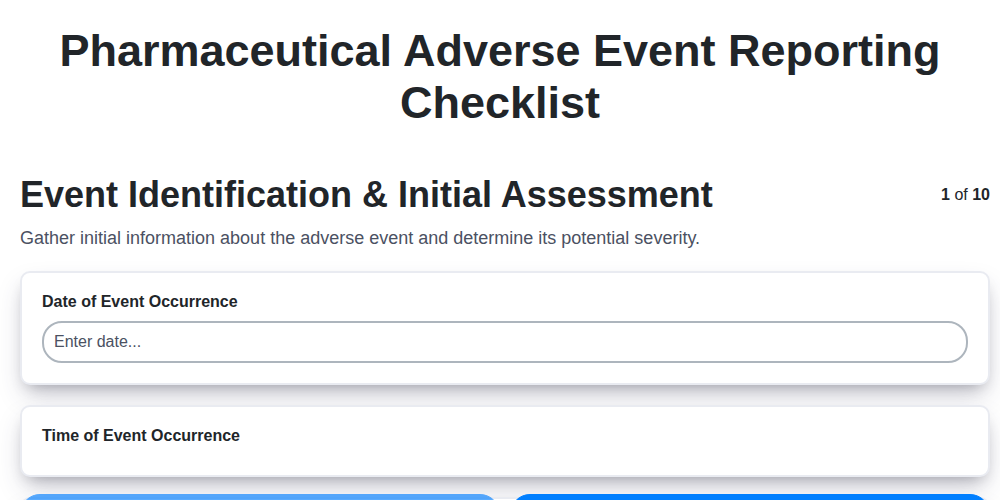
Navigating Adverse Event Reporting: Your Pharmaceutical Checklist Guide
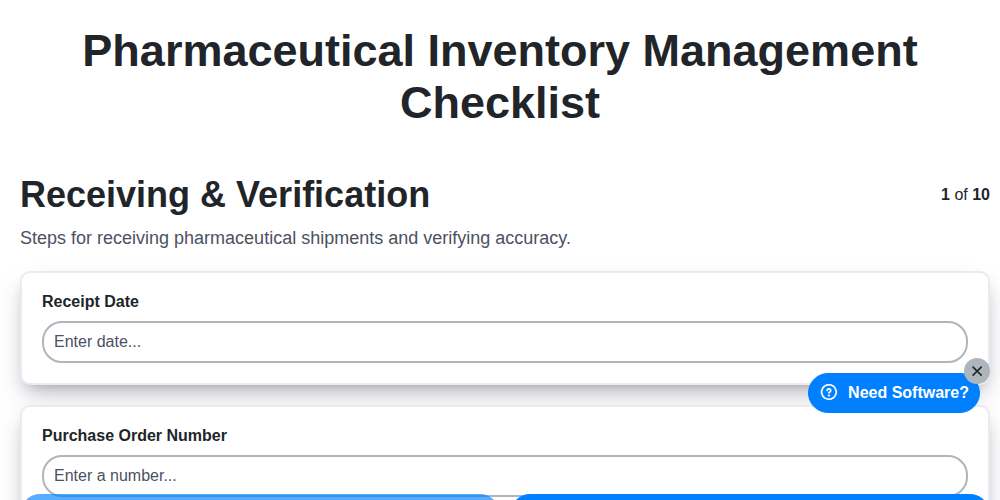
Pharmaceutical Inventory Management Checklist: Your Guide to Compliance & Accuracy
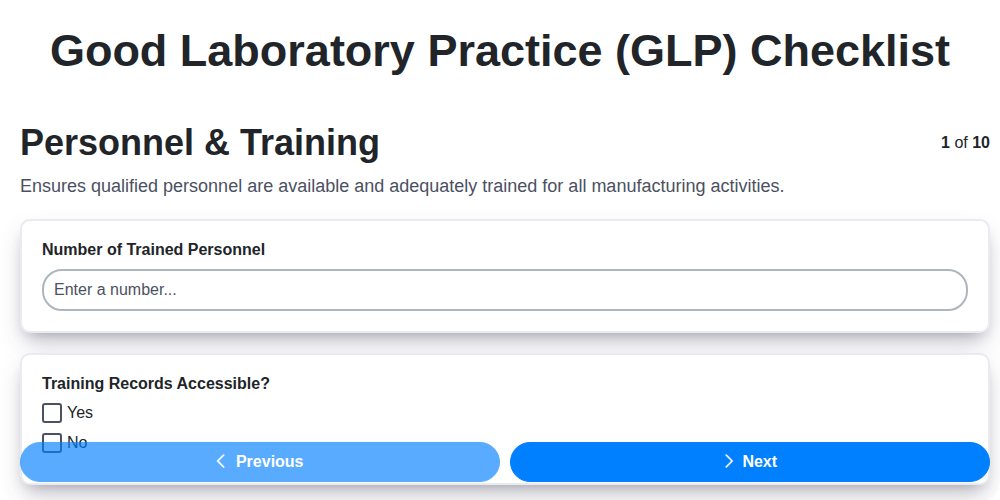
Your Essential GLP Checklist Template: A Practical Guide
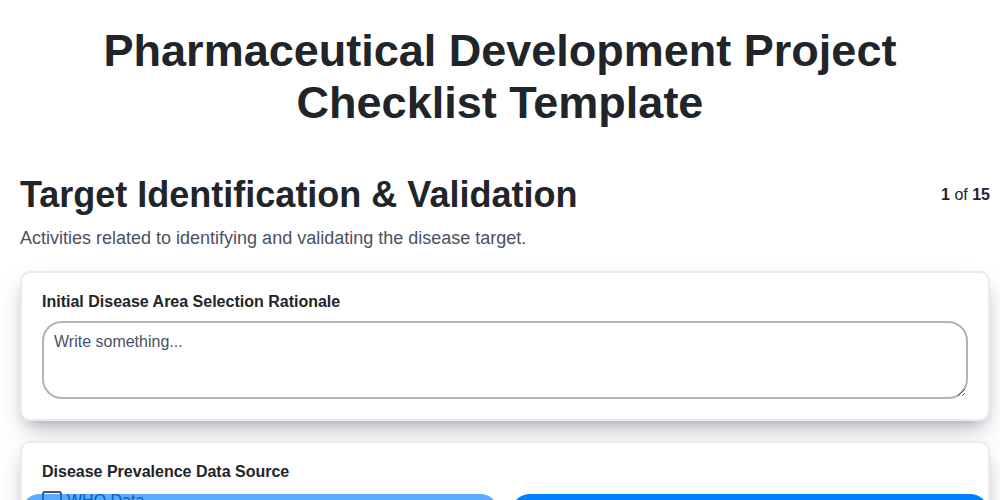
Your Pharmaceutical Development Checklist: A Template for Success
Pharmaceutical Validation Checklist Template: Your Guide to Compliance
Need help with
Pharmaceutical?
Have a question? We're here to help. Please submit your inquiry, and we'll respond promptly.