Pharmaceutical Quality Risk Management Checklist: Your Step-by-Step Guide
Published: 11/25/2025 Updated: 07/02/2026
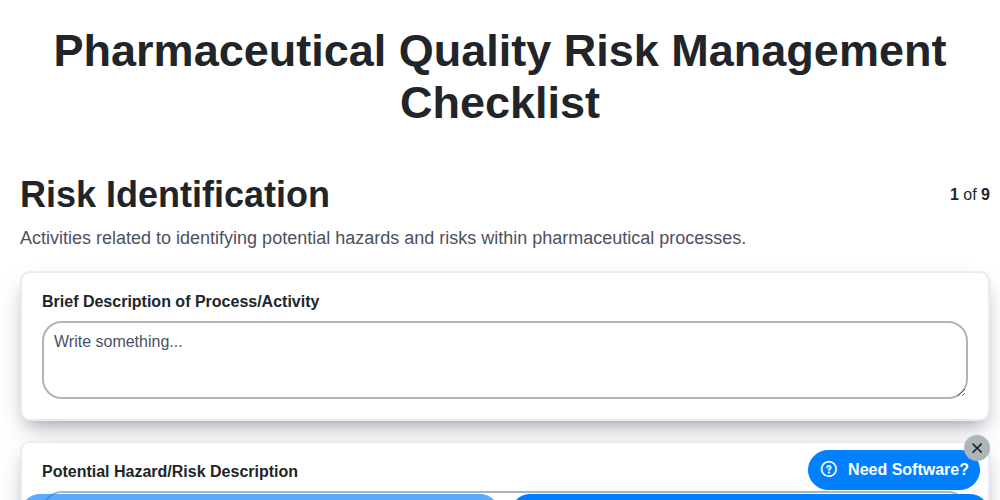
Table of Contents
- Introduction to Pharmaceutical Quality Risk Management
- 1. Risk Identification: Defining the Scope
- 2. Risk Analysis - Severity Assessment: Understanding Potential Impact
- 3. Risk Analysis - Probability Assessment: Evaluating Likelihood
- 4. Risk Evaluation - Prioritization: Ranking Risks for Action
- 5. Risk Control Measures - Existing: What's Already in Place?
- 6. Risk Control Measures - Proposed: Bridging the Gaps
- 7. Risk Control Implementation: Putting Plans into Action
- 8. Risk Review & Monitoring: Continuous Improvement
- 9. Documentation & Record Keeping: Maintaining a Robust Audit Trail
- Resources & Links
TLDR: Feeling overwhelmed by pharmaceutical quality risk management? This checklist breaks it down into 10 manageable steps - from identifying potential risks and assessing their severity/probability, to implementing controls, monitoring effectiveness, and keeping thorough records. It's your go-to guide for ensuring product safety and compliance!
Introduction to Pharmaceutical Quality Risk Management
Pharmaceutical Quality Risk Management (QRM) is no longer just a nice to have - it's a cornerstone of modern pharmaceutical manufacturing. Driven by regulatory expectations (think ICH Q9, EU GMP Annex 20, and FDA guidance), QRM provides a systematic approach to proactively identifying, assessing, and controlling risks to product quality. It moves beyond reactive problem-solving, fostering a culture of continuous improvement and ensuring patient safety. This isn't just about ticking boxes; it's about understanding potential failures, implementing preventative measures, and maintaining a robust quality system that minimizes the likelihood of adverse outcomes. This blog post will guide you through a practical Pharmaceutical Quality Risk Management checklist, providing a framework you can adapt and apply to your own processes. Let's move beyond reactive responses and embrace a proactive, risk-based approach to quality.
1. Risk Identification: Defining the Scope
The foundation of any robust Pharmaceutical Quality Risk Management (PQRM) process is a thorough and comprehensive risk identification phase. This isn't just about brainstorming potential problems; it's about establishing a clear understanding of the scope - what aspects of your pharmaceutical process, product, or system are being assessed.
Before you can identify what could go wrong, you need to define where you're looking. This scope definition should be documented and should clearly outline the boundaries of the risk assessment. Consider the following questions to guide your scope definition:
- What specific product(s) or process(es) are included? Be precise - "manufacturing" isn't specific enough. Consider defining it as "sterile filling of Product X" or "raw material sourcing for API Y".
- Which stages of the product lifecycle are in scope? This may include research and development, clinical trials, manufacturing (including raw material sourcing and packaging), distribution, and post-market surveillance.
- What aspects of quality are being addressed? Are you focusing on product quality, process capability, data integrity, or a combination?
- What regulations or guidelines are driving this assessment? (e.g., ICH Q9, EU GMP)
- Who are the stakeholders involved? Identify individuals or departments whose input is crucial for accurate identification.
A well-defined scope ensures the risk assessment remains focused and prevents it from becoming an overwhelming task. It also provides context for subsequent steps, ensuring everyone involved understands the boundaries of the evaluation. Remember to periodically review and update this scope as processes evolve or new risks emerge.
2. Risk Analysis - Severity Assessment: Understanding Potential Impact
Severity assessment forms a crucial pillar in pharmaceutical quality risk management. It's not simply about identifying what could go wrong, but understanding how bad it could be if something does go wrong. This assessment translates potential failures into tangible consequences, allowing for more informed prioritization and mitigation strategies.
Here, severity isn't judged on the likelihood of occurrence (that's probability assessment - see the next section!), but on the potential impact of the risk event should it materialize. Consider the downstream effects - how will this impact patient safety, product efficacy, regulatory compliance, brand reputation, and ultimately, the business?
We typically use a severity scale, often with defined levels. A common example includes:
- Catastrophic: Could cause serious and irreversible harm to patients, widespread product recall, significant legal action, and severe damage to the company's reputation. May lead to patient death or permanent disability.
- Major: Could cause significant harm to patients, require a product recall, and lead to significant regulatory action and financial loss. May cause serious, but reversible, health consequences.
- Moderate: Could cause temporary adverse health consequences requiring medical intervention. May result in minor product defects and necessitate corrective action.
- Minor: Causes transient discomfort or inconvenience to patients, with no lasting health consequences. Minimal impact on product quality or regulatory standing.
- Negligible: No discernible impact on patient safety, product quality, or business operations.
Clearly defining these levels and providing specific examples for each within your Quality Risk Management (QRM) plan is vital for consistency and accuracy in assessments. It also allows different team members to evaluate risks using a common understanding. Remember to document the rationale behind your severity ratings; this transparency aids in review and future assessments.
3. Risk Analysis - Probability Assessment: Evaluating Likelihood
Once you've identified potential risks and assessed their severity, the next critical step is to evaluate the probability of those risks occurring. This isn't about predicting the future; it's about realistically gauging how likely an event is to happen within a defined timeframe and under specific operating conditions.
Why is Probability Assessment Important?
Understanding the likelihood of a risk helps prioritize mitigation efforts. A high-severity risk with a low probability might be manageable with periodic monitoring, while a moderate-severity risk with a high probability demands immediate action.
Methods for Assessing Probability:
Several methods can be employed, and the chosen approach should be appropriate for the complexity of the process and the available data. Consider these options:
- Qualitative Scales: These are often the starting point, utilizing descriptive terms like:
- Almost Certain: Expected to occur frequently; likely to happen several times per year.
- Likely: Will probably occur more than once during the lifecycle of the product or process.
- Possible: Could occur sometime during the lifecycle of the product or process.
- Unlikely: May occur only in exceptional circumstances.
- Rare: Highly improbable; may only occur once in a lifetime.
Clearly define what each term means within the context of your pharmaceutical operations. This prevents subjective interpretation and ensures consistency.
Quantitative Scales: When data is available (e.g., historical failure rates, process capability data), numerical scales are preferable. For example, assigning probabilities like 0.1 (10%), 0.5 (50%), or 0.9 (90%). Use sound statistical reasoning and relevant data sources for accuracy.
Hybrid Approaches: Combining qualitative and quantitative elements can be effective. For instance, assigning numerical ranges to qualitative descriptors (e.g., Likely = 20-50% probability).
Key Considerations:
- Context Matters: The probability of a risk occurring depends heavily on the specific process, equipment, personnel, and environment.
- Data Limitations: Be realistic about the availability and reliability of data. Document any assumptions made.
- Expert Judgement: Engage subject matter experts (SMEs) with process knowledge to contribute their insights.
- Consistency: Apply the chosen probability assessment method consistently across all identified risks.
Thorough probability assessment forms a crucial foundation for effective pharmaceutical quality risk management.
4. Risk Evaluation - Prioritization: Ranking Risks for Action
Once risks have been analyzed for both severity and probability, the critical step of prioritization follows. This isn't simply about assigning a high, medium, or low label; it's about establishing a clear ranking system that guides resource allocation and action planning.
The most common approach is a risk matrix, often a 3x3 or 5x5 grid. Severity is plotted against probability. For example, a risk with 'Severe' severity and 'High' probability would be ranked as 'Critical' and requires immediate and decisive action. A risk with 'Minor' severity and 'Remote' probability might be acceptable with routine monitoring.
Beyond the matrix, consider using numerical scoring systems where severity and probability are assigned numerical values (e.g., 1-5). Multiply these values to obtain a Risk Priority Number (RPN). While RPNs can be helpful, be mindful of their limitations - they can sometimes overemphasize risks that are easily quantifiable but potentially less impactful in reality.
Crucially, prioritization should involve stakeholders with diverse expertise. This collaborative approach ensures that the organization's risk tolerance is considered, and that priorities align with overall business objectives. Document the rationale behind prioritization decisions to maintain transparency and justify resource allocation. Remember that prioritizing is not a one-time event; it should be reviewed and updated as part of the ongoing risk management process.
5. Risk Control Measures - Existing: What's Already in Place?
Before devising new strategies, it's vital to understand the risk controls already implemented within your pharmaceutical quality system. This isn't about finding fault; it's about leveraging existing safeguards and building upon a foundation of established practices. A thorough review of existing controls provides valuable insights and avoids redundant efforts.
Consider these areas when evaluating your current risk control measures:
- Standard Operating Procedures (SOPs): Examine SOPs for critical processes - manufacturing, testing, cleaning, maintenance. Do they address potential quality risks? Are they clear, concise, and consistently followed?
- Equipment Qualification & Validation: Review qualification and validation records for equipment and processes. Do these documents adequately mitigate potential risks associated with equipment performance or process variability?
- Change Control System: A robust change control system is a significant risk control. Assess its effectiveness - are changes assessed for quality impact before implementation? Is documentation complete?
- Training Programs: Evaluate training records to ensure personnel are adequately trained on relevant procedures and risks. Are refresher training programs in place?
- Deviation Management: Analyze past deviations. What were the root causes? Were corrective and preventative actions (CAPAs) effective in preventing recurrence?
- Supplier Management: Review supplier qualification, audit, and monitoring programs. Do they sufficiently control risks associated with raw materials and critical supplies?
- Process Analytical Technology (PAT): If applicable, analyze how PAT tools and data analysis contribute to real-time risk mitigation and process control.
- Internal Audits: Review internal audit findings and reports. Recurring observations highlight areas where existing controls might be insufficient.
Documenting these existing controls, even if seemingly adequate, provides a clear baseline for comparison and future improvements.
6. Risk Control Measures - Proposed: Bridging the Gaps
Identifying and analyzing risks is only half the battle. The real impact comes from implementing effective control measures. This section focuses on proposed controls - those actions you're considering to mitigate the identified risks and close any gaps revealed during the analysis.
Moving beyond existing controls requires a proactive and creative mindset. Don't just accept the status quo. Consider a range of solutions, from simple procedural adjustments to more substantial investments in equipment, training, or technology.
Here's a breakdown of considerations for developing proposed risk control measures:
- Feasibility Assessment: Evaluate the practicality of each proposed control. Can it be realistically implemented within your resources and timeframe?
- Cost-Benefit Analysis: Compare the cost of implementation against the potential reduction in risk. This isn't just about financial cost, but also considers the impact on resources, personnel, and operational efficiency.
- Impact Assessment: How will the proposed control affect other processes or systems? Ensure that introducing a new control doesn't create unintended consequences or new risks.
- Prioritization: Prioritize proposed controls based on the risk assessment results. Focus on the highest-priority risks first.
- Collaboration: Involve cross-functional teams (Quality, Manufacturing, Engineering, etc.) in the development of proposed controls to ensure buy-in and comprehensive perspectives.
- Documentation: Clearly document each proposed control, including rationale, expected outcome, responsible parties, and estimated timeline.
Examples of Proposed Controls:
- High Severity/Probability Risk: Potential for cross-contamination during cleaning. Proposed Control: Implement a new Cleaning Validation protocol utilizing more rigorous testing and visual inspection techniques.
- Moderate Severity/Low Probability Risk: Potential data integrity issues with a specific software system. Proposed Control: Conduct a comprehensive data integrity audit of the software, including user training and system access controls.
- Low Severity/Moderate Probability Risk: Potential for incorrect labeling during packaging. Proposed Control: Implement a dual-verification system for label application, with checks at multiple stages of the process.
Remember, proposed controls aren't set in stone. They need to be reviewed and refined during the risk implementation and review phases.
7. Risk Control Implementation: Putting Plans into Action
Risk control measures, no matter how well-designed, are useless unless they are implemented effectively. This phase moves beyond planning and into execution. It's about translating the proposed control measures into tangible actions, assigning responsibility, setting timelines, and ensuring everyone involved understands their role.
Implementation isn't just about doing; it's about doing it right. Here's what to consider:
- Clear Assignments: Each control measure needs a designated owner who's accountable for its execution.
- Defined Timelines: Establish realistic deadlines for each implementation task. Delays can compromise the effectiveness of the risk mitigation plan.
- Resource Allocation: Ensure the team has the necessary resources (personnel, equipment, budget) to carry out the implemented controls. Don't underestimate the impact of resource constraints.
- Training & Communication: Those responsible for implementing controls need proper training. Simultaneously, communicate the changes to all affected personnel to minimize disruption and ensure buy-in. Explain the why behind the new procedures.
- Verification & Validation: Don't assume implementation is flawless. Include verification steps to confirm controls are implemented as intended. Validation steps should then demonstrate that the implemented controls are effective in reducing the identified risk.
- Change Management: Implementing risk controls often involves changes to established processes. A formal change management process should be followed to minimize resistance and ensure a smooth transition.
- Integration with Existing Systems: New controls should be integrated into existing quality systems and workflows, rather than being standalone efforts.
Effective implementation minimizes the gap between intention and outcome, and is a critical step in achieving pharmaceutical quality risk management success.
8. Risk Review & Monitoring: Continuous Improvement
Risk management isn't a "one and done" exercise. It's a dynamic, ongoing process that requires regular review and monitoring to ensure its effectiveness and adapt to evolving circumstances. This section focuses on establishing a robust system for continuous improvement within your pharmaceutical quality risk management program.
Why is Regular Review Essential?
Changes are inevitable in pharmaceutical manufacturing. New raw materials, equipment updates, process modifications, and even regulatory changes can all impact risk profiles. Without ongoing review, previously identified risks might escalate, new risks may emerge undetected, and the overall effectiveness of your risk mitigation strategies can diminish.
Key Elements of Risk Review & Monitoring:
- Scheduled Reviews: Implement a pre-defined schedule (e.g., quarterly, semi-annually, annually) for reviewing the entire risk management documentation. This allows for a systematic reassessment of identified risks and control measures.
- Trend Analysis: Track key performance indicators (KPIs) related to risks. Examples include deviations, complaints, out-of-specification results, and audit findings. Analyze trends to identify potential emerging risks or areas where existing controls aren't performing as expected.
- Change Management Integration: Ensure that any changes to processes, equipment, raw materials, or suppliers trigger a reassessment of associated risks. This should be directly linked to your change control system.
- Management Review: Regularly present a summary of risk management activities, identified trends, and proposed improvements to senior management. This demonstrates commitment to quality and encourages accountability.
- Audits & Inspections: Incorporate risk management considerations into internal audits and be prepared for questions during regulatory inspections.
- Feedback Loops: Encourage open communication and feedback from all stakeholders involved in the risk management process. This includes operators, quality personnel, and management.
Documenting Review Outcomes:
All review activities, findings, and any resulting actions must be thoroughly documented. This demonstrates due diligence and provides a clear audit trail. Include dates, individuals involved, conclusions reached, and action items with assigned responsibility and deadlines.
By embracing risk review and monitoring as an integral part of your pharmaceutical quality system, you'll foster a culture of continuous improvement and proactively safeguard product quality and patient safety.
9. Documentation & Record Keeping: Maintaining a Robust Audit Trail
Pharmaceutical Quality Risk Management (QRM) isn't just about identifying and mitigating risks; it's about proving you did. Thorough documentation and meticulous record-keeping are absolutely critical to a defensible QRM program. This isn't merely a nice to have; it's a regulatory requirement and the bedrock of continuous improvement.
What needs to be documented? Virtually everything. This includes:
- Risk Identification Activities: Records of brainstorming sessions, workshops, expert opinions, and any data used to identify potential risks.
- Risk Analysis Results: The documented severity and probability assessments for each identified risk, along with the rationale behind those scores. This should clearly demonstrate the methodology used.
- Risk Evaluation & Prioritization: How risks were evaluated and prioritized, including the established risk acceptance criteria.
- Risk Control Measures: A clear description of existing and proposed control measures, including justification for their selection and effectiveness.
- Implementation Plans: Detailed plans outlining the implementation of proposed control measures, including timelines, responsibilities, and resource allocation.
- Risk Review & Monitoring Results: Records of ongoing monitoring and review activities, including trend analysis and performance indicators. Deviations from expected outcomes and corrective actions taken must be documented.
- Change Control Records: Any changes made to the risk management plan, controls, or assessments, along with the reasons for the changes and approvals obtained.
Best Practices for Documentation:
- Use a Consistent Format: Standardize templates and naming conventions to ensure clarity and ease of retrieval.
- Electronic Systems Preferred: Utilize validated electronic systems where possible for improved accessibility, traceability, and data integrity.
- Version Control: Implement a robust version control system to track changes and maintain a clear audit trail.
- Training & Accountability: Ensure all personnel involved in QRM are properly trained on documentation requirements and hold them accountable for adherence.
- Regular Audits: Conduct regular internal audits to verify documentation completeness and accuracy.
Ultimately, a well-maintained documentation trail demonstrates the effectiveness of your QRM program, supports regulatory compliance, and provides valuable insights for continuous improvement.
Resources & Links
- U.S. Food and Drug Administration (FDA): The FDA's website is a primary source for regulatory guidance, including QRM expectations. Look for documents related to ICH Q9 (Quality Risk Management), guidance on process validation, and current inspections.
- European Medicines Agency (EMA): The EMA provides information and guidelines on quality risk management, often aligning with ICH guidelines but with a European perspective. Search for guidance on risk management systems and quality control.
- International Council for Harmonisation (ICH): ICH Q9, Quality Risk Management, is the foundational document. This site provides the complete guideline and related documents. Understand the principles and essential framework.
- International Society for Pharmaceutical Engineering (ISPE): ISPE provides valuable resources, publications, and training on pharmaceutical manufacturing best practices. Search for their QRM related publications and webinars; they often offer practical implementation examples.
- Pharmaceutical Online: A trade publication often featuring articles and insights on pharmaceutical quality, including QRM, process validation, and regulatory compliance. Search for relevant articles by keywords like 'quality risk management' or 'pharmaceutical compliance'.
- American Society for Quality (ASQ): ASQ provides resources and training on general risk management principles which can be adapted for pharmaceutical applications. While not solely focused on pharma, the foundational knowledge is helpful.
- PricewaterhouseCoopers (PwC): Consulting firm often publishes insights and whitepapers on pharmaceutical quality management, including considerations for risk management. Search their site for industry publications and case studies.
- Deloitte: Another large consulting firm with thought leadership on pharmaceutical quality and regulatory compliance. Look for articles and reports on industry trends and best practices related to QRM.
- GS1: While not strictly QRM specific, GS1 standards, particularly around traceability and data management, are critical for robust risk management, particularly in the context of supply chain risks. Understand how barcodes and data capture systems support QRM.
- Nice (National Institute for Health and Care Excellence): Although focused on healthcare, NICE's methodologies for risk assessment and management, particularly in a process and outcomes-focused environment, offer valuable insights adaptable to pharmaceutical quality risk management. Focus on their guidance and frameworks for process improvement.
- World Health Organization (WHO): WHO provides guidelines and resources related to pharmaceutical quality assurance and risk management, especially relevant for those involved in global supply chains or manufacturing in developing countries. Examine their guidelines on Good Manufacturing Practices (GMP).
Frequently Asked Questions
What is Pharmaceutical Quality Risk Management (QRM)?
Pharmaceutical Quality Risk Management (QRM) is a systematic process for assessing, controlling, communicating, and reviewing risks to the quality of pharmaceutical products. It's a proactive approach designed to identify and mitigate potential problems before they impact patient safety and product efficacy. This checklist provides a step-by-step guide to help you implement QRM effectively.
Why is a checklist helpful for Pharmaceutical QRM?
A checklist provides a structured and consistent approach to QRM, ensuring no critical steps are overlooked. It helps standardize processes across departments and teams, facilitating accountability and documentation - both essential for regulatory compliance and continuous improvement. The checklist ensures a comprehensive review and facilitates objective decision-making.
Who should use this checklist?
This checklist is designed for a broad audience involved in pharmaceutical quality management, including Quality Assurance (QA) professionals, Quality Control (QC) personnel, Manufacturing teams, R&D scientists, Regulatory Affairs specialists, and anyone responsible for ensuring product quality.
What are the key steps outlined in the checklist?
The checklist generally covers steps including: identifying potential risks, analyzing those risks (assessing their likelihood and impact), evaluating the acceptability of risks, controlling risks through mitigation strategies, and continuously reviewing and improving the QRM process. Each step includes specific actions and considerations.
What types of risks should I be looking for when performing a risk assessment?
Potential risks can arise from various sources including raw material quality, manufacturing processes, equipment performance, facility conditions, personnel training, storage and transportation, and packaging. The checklist prompts users to consider risks across these areas, encompassing both technical and operational factors.
How do I determine the 'severity' or 'impact' of a risk?
The checklist provides guidance on using a risk matrix that considers both the likelihood of occurrence and the severity of the potential consequences. Consequences should be evaluated based on potential impact on patient safety, product efficacy, regulatory compliance, and business reputation. Detailed scoring criteria are typically included.
What are some examples of risk mitigation strategies mentioned in the checklist?
The checklist highlights strategies such as process modifications, improved controls, increased testing, enhanced monitoring, supplier qualification, training, and preventative maintenance. Specific strategies will depend on the nature of the identified risk.
How often should I review and update my QRM process and the associated checklist?
The checklist emphasizes the importance of periodic review and update. This should occur at least annually, or more frequently if there are significant changes to processes, materials, equipment, or regulatory requirements. Continuous improvement is a core tenet of QRM.
How does this checklist contribute to regulatory compliance (e.g., ICH Q9)?
This checklist aligns with the principles outlined in ICH Q9 (Quality Risk Management), providing a practical framework for implementing a QRM system. By following this checklist, organizations can demonstrate to regulatory agencies their commitment to managing quality risks and ensuring product quality, aiding in audit preparedness.
Where can I find more detailed information on Pharmaceutical Quality Risk Management?
For more comprehensive information, refer to ICH Q9 (Quality Risk Management), FDA guidance documents, EMA guidelines, and relevant industry standards. Your company's quality management system documentation will also be a valuable resource.
Comments
There are no comments yet. Be the first to add one!
Pharmaceutical Management Solution Demo
Navigating complex regulations and ensuring quality in pharmaceutical manufacturing? ChecklistGuro's Work OS platform streamlines processes from R&D to production, packaging, and distribution. Maintain compliance, improve efficiency, and reduce risk. Discover how ChecklistGuro can transform your pharmaceutical operations!
Related Articles
Ensuring Quality: A Pharmaceutical Compound Record Review Checklist Guide
Pharmaceutical Labeling Compliance Checklist: Your Step-by-Step Guide
Mastering Medication Management: Your Pharmaceutical Inventory Compliance Checklist Template
Navigating Adverse Event Reporting: Your Pharmaceutical Checklist Guide
Pharmaceutical Inventory Management Checklist: Your Guide to Compliance & Accuracy
Your Essential GLP Checklist Template: A Practical Guide
Your Pharmaceutical Development Checklist: A Template for Success
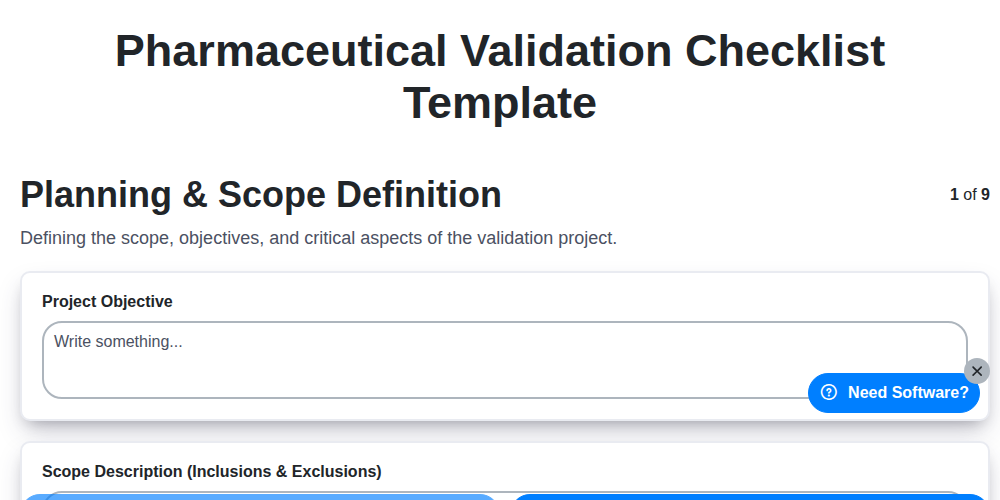
Pharmaceutical Validation Checklist Template: Your Guide to Compliance
Need help with
Pharmaceutical?
Have a question? We're here to help. Please submit your inquiry, and we'll respond promptly.