Mastering Pharmaceutical Stability: Your Comprehensive Checklist Template
Published: 11/25/2025 Updated: 07/02/2026
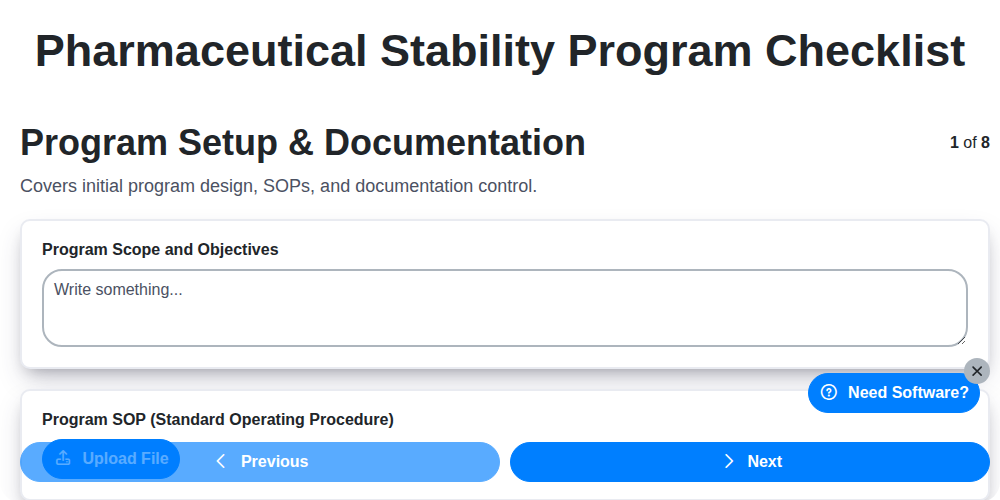
Table of Contents
- Introduction: Why a Stability Program Checklist is Crucial
- 1. Program Setup & Documentation: Laying the Foundation
- 2. Protocol Development: Defining Your Stability Testing Strategy
- 3. Sample Selection & Handling: Maintaining Integrity
- 4. Testing & Data Analysis: Accurate Results, Reliable Insights
- 5. Trending & Reporting: Identifying Patterns and Risks
- 6. Deviation Management & CAPA: Addressing Unexpected Findings
- 7. Periodic Review & Updates: Adapting to Change
- 8. Archiving & Data Retention: Ensuring Long-Term Compliance
- Conclusion: Your Path to Stability Program Success
- Resources & Links
TLDR: Worried about ensuring your pharmaceutical products stay safe and effective over time? This checklist template breaks down a robust stability program into manageable steps - from initial setup and testing to data analysis, reporting, and long-term archiving. Use it to stay compliant, minimize risk, and demonstrate your commitment to product quality.
Introduction: Why a Stability Program Checklist is Crucial
A robust pharmaceutical stability program is the bedrock of ensuring drug product quality, efficacy, and safety throughout its shelf life. It's not just about ticking boxes; it's a legally mandated and scientifically rigorous process vital for regulatory compliance and patient well-being. However, managing a stability program can be complex, involving multiple stakeholders, diverse testing schedules, and a significant volume of data. Without a structured approach, the risk of overlooking critical steps, introducing errors, or failing to meet regulatory expectations dramatically increases. This is where a comprehensive stability program checklist becomes indispensable. It provides a systematic roadmap, ensuring all necessary actions are consistently executed, documented, and reviewed, ultimately minimizing risk and maximizing the integrity of your product.
1. Program Setup & Documentation: Laying the Foundation
A robust pharmaceutical stability program starts with a solid foundation - meticulous program setup and comprehensive documentation. This isn't merely about ticking boxes; it's about establishing a clear framework that guides all subsequent activities.
Here's what this initial phase entails:
- Define Program Scope & Objectives: Clearly articulate what products, batches, and storage conditions will be included in the program. What are the key goals - shelf-life determination, ongoing monitoring, batch release support?
- Assign Roles & Responsibilities: Identify individuals accountable for various aspects of the program, including protocol development, sample handling, data analysis, and reporting. A RACI matrix (Responsible, Accountable, Consulted, Informed) can be invaluable.
- Develop Standard Operating Procedures (SOPs): Detail how the stability program will be managed, covering everything from protocol approvals to deviation handling.
- Establish Document Control: Implement a system for managing all program documentation, including protocols, reports, SOPs, and data. Ensure version control and accessibility are maintained.
- Risk Assessment: Conduct an initial risk assessment to identify potential vulnerabilities in the stability program and implement mitigation strategies. Consider factors such as storage environment, analytical method robustness, and potential data integrity risks.
- Quality Management System Integration: Ensure the stability program aligns with the overarching quality management system and relevant regulatory requirements (e.g., ICH guidelines, FDA regulations).
2. Protocol Development: Defining Your Stability Testing Strategy
A robust stability program hinges on meticulously designed protocols. These documents serve as your roadmap, ensuring consistency, accuracy, and reliability throughout the entire testing process. Developing effective protocols isn't just about ticking boxes; it's about strategically outlining how you're ensuring product quality and efficacy over time.
Here's what your stability testing protocols should comprehensively cover:
- Objective & Scope: Clearly define what you aim to achieve with the study. Is it to support shelf-life determination, re-test period establishment, or to investigate stability under accelerated conditions? State precisely what products and packaging configurations are included.
- Storage Conditions: Specify the exact storage conditions to be employed (e.g., 25°C/60% RH, 30°C/65% RH, refrigerated, frozen). Detail how these conditions will be monitored and maintained within acceptable limits, including calibration and validation of equipment.
- Testing Schedule: Outline the specific time points when testing will be performed. This should be justified based on the product's characteristics, anticipated degradation pathways, and regulatory requirements. Consider initial, interim, and final time points.
- Analytical Methods: Clearly reference the analytical methods to be used for each parameter being tested (e.g., HPLC, GC, visual inspection, assay). These methods must be validated according to established guidelines (e.g., ICH Q2). Include acceptance criteria and specification limits.
- Data Acceptance Criteria: Specify the criteria for acceptable data. This covers things like measurement uncertainty, outlier handling, and data qualification.
- Sample Size & Replicates: Define the number of samples and replicates needed for each time point and condition. This should be based on statistical power and risk assessment.
- Deviations & Resolution: Outline procedures for handling deviations from the protocol, including documentation requirements and approval processes.
A well-documented protocol leaves little room for ambiguity, promotes reproducibility, and ultimately strengthens the integrity of your stability data.
3. Sample Selection & Handling: Maintaining Integrity
The integrity of your stability data hinges directly on the meticulous selection and handling of samples. Poor practices here can invalidate years of testing and jeopardize regulatory compliance. This section outlines critical steps to ensure sample integrity throughout the stability program.
1. Representative Sampling: Samples must accurately reflect the production batch and intended storage conditions. Consider the following:
- Batch Selection: Clearly define criteria for batch selection (e.g., manufacturing date, batch size, equipment used). Include rationale for chosen batches in your protocol.
- Container Closure System (CCS) Selection: Utilize the exact same CCS used for market packaging. Document the CCS details thoroughly, including materials, dimensions, and any desiccant or oxygen absorbers.
- Sampling Points: Establish defined sampling points within the batch to account for potential variations. Consider factors like filling order, container orientation, and potential stratification of components.
- Sample Size: Determine adequate sample sizes for each time point and condition to account for potential analysis variability and ensure sufficient material for retesting.
2. Handling Procedures:
- Trained Personnel: Only trained personnel should handle stability samples. Training should cover proper techniques for sample withdrawal, labeling, and storage.
- Controlled Environment: Handle samples in a clean, controlled environment to prevent contamination and degradation.
- Labeling: Implement a robust labeling system that includes batch number, code date, time point, storage condition, and any other relevant identifiers. Double-check all labels for accuracy.
- Storage Conditions: Maintain accurate and consistent storage conditions (temperature, humidity, light exposure) as defined in the protocol. Regularly monitor and record these conditions.
- Chain of Custody: Implement a clear chain-of-custody system to track the location and handling of samples, ensuring accountability and preventing unauthorized access.
- Quarantine: Properly quarantine samples not suitable for testing (e.g., visual defects) and document the reason for rejection.
3. Documentation:
- Detailed records of all sampling activities, including date, time, personnel involved, sampling location, and any observed anomalies, are essential.
- Maintain records of any deviations from established sampling procedures and the rationale for the deviation.
- Review and approve all sampling records.
4. Testing & Data Analysis: Accurate Results, Reliable Insights
This phase is the heart of your pharmaceutical stability program. It moves beyond planning and execution to the crucial step of generating meaningful data. Thorough testing according to established protocols is paramount, but equally important is the meticulous analysis and interpretation of those results.
Key Considerations:
- Adherence to Protocols: Ensure all testing is conducted precisely as defined in your protocols, maintaining consistent methodologies and equipment calibration. Deviations here can invalidate results.
- Appropriate Analytical Techniques: Select and validate appropriate analytical methods for each parameter being monitored (e.g., HPLC, GC, visual inspection, microbiological testing).
- Raw Data Integrity: Implement robust data capture systems to guarantee the integrity and traceability of raw data. Electronic Lab Notebooks (ELNs) are increasingly vital here.
- Statistical Analysis: Employ appropriate statistical methods to assess data trends, determine shelf-life estimations, and evaluate the impact of environmental conditions. Simply looking at individual data points isn't sufficient - statistical significance is key.
- Data Review & Verification: Implement a multi-layered review process. Initial data review by the analyst is followed by a senior reviewer to confirm accuracy and identify any outliers.
- Method Validation & Qualification: Regularly review and update method validation status to ensure continued suitability for stability testing.
Accurate testing and careful data analysis are not merely about producing numbers; they's about building confidence in your product's quality and safety over time.
5. Trending & Reporting: Identifying Patterns and Risks
Stability data isn't valuable unless you're actively looking for the story it tells. Trending and reporting is where raw data transforms into actionable insights. This crucial stage involves more than just plotting data points; it's about establishing a framework for identifying patterns, potential risks, and opportunities for program optimization.
Here's what's involved:
- Establish Clear Trending Parameters: Define which parameters require trending (e.g., assay, degradation products, physical appearance, pH). Consider establishing acceptance criteria for trends - what constitutes a significant deviation that warrants investigation?
- Graphical Representation: Utilize appropriate charting techniques (e.g., control charts, scatter plots) to visualize data over time. Control charts are particularly valuable for monitoring stability trends and detecting out-of-control points.
- Statistical Analysis: Employ statistical methods (e.g., regression analysis, moving averages) to extrapolate future trends and assess the impact of environmental factors.
- Regular Review Meetings: Schedule regular meetings with stakeholders (stability scientists, formulation scientists, quality assurance) to discuss trends, potential issues, and necessary corrective actions.
- Risk Assessment Integration: Use trends to inform risk assessments. An accelerating degradation rate, for example, elevates the risk profile of the product.
- Clearly Defined Reporting Structure: Develop a standardized reporting format that communicates key findings to relevant personnel, including senior management. Reports should include trend summaries, potential risks, and proposed actions.
Effectively trending and reporting stability data is proactive - it allows you to address potential problems before they impact product quality and patient safety.
6. Deviation Management & CAPA: Addressing Unexpected Findings
Stability studies, by their nature, aim to predict product behavior under controlled conditions. However, unexpected results - deviations - are inevitable. A robust Pharmaceutical Stability Program isn't just about generating data; it's about proactively managing those deviations and implementing corrective and preventive actions (CAPA) to ensure product quality and patient safety.
Why is Deviation Management Crucial?
Deviations can arise from various sources: procedural errors, equipment malfunctions, unexpected environmental fluctuations, or even an unexpected interaction between excipients. Ignoring these deviations can lead to inaccurate stability predictions and potentially compromise product quality. A well-defined deviation management process provides a systematic approach to identify, investigate, and resolve these issues.
Key Components of Deviation Management & CAPA within a Stability Program:
- Clear Reporting Procedures: Establish a straightforward process for personnel to report deviations promptly, regardless of perceived severity.
- Thorough Investigation: Deviations require a detailed investigation to determine the root cause. This includes reviewing records, interviewing personnel, and analyzing trends. Employing tools like the "5 Whys" can be invaluable.
- Risk Assessment: Evaluate the impact of the deviation on product quality and patient safety. This assessment should inform the urgency and resources allocated to the CAPA.
- CAPA Implementation: Develop and implement corrective actions to address the root cause and prevent recurrence. Preventive actions should be implemented to prevent similar deviations in the future.
- Verification & Effectiveness Checks: After implementing CAPA, verify that the actions were effective and that the deviation has been resolved. Monitor key metrics to ensure the changes remain effective over time.
- Documentation: Maintain thorough documentation of all deviations, investigations, CAPA plans, and verification results. This documentation should be readily accessible for audits and reviews.
Connecting CAPA to the Bigger Picture:
Remember, CAPA isn't merely about fixing a specific problem. It's about learning from the experience and strengthening the entire stability program. By meticulously tracking and analyzing deviations and their associated CAPA, you can identify areas for improvement in your protocols, training, and overall program design, contributing to a more reliable and robust stability assessment.
7. Periodic Review & Updates: Adapting to Change
Pharmaceutical stability programs aren't static. The environment they operate within - regulatory guidelines, manufacturing processes, even raw material sources - is constantly evolving. A robust program must include a clearly defined periodic review and update schedule to ensure continued accuracy, relevance, and compliance.
This isn't just about checking boxes; it's about proactive improvement. Here's what periodic reviews should encompass:
- Regulatory Landscape: Stay abreast of updates to ICH guidelines (Q1A, Q1B, Q1F, etc.), FDA guidance, and other relevant regulations. Adjust the stability program accordingly.
- Process Changes: Any changes to the manufacturing process, formulation, packaging, or storage conditions should trigger a review and potentially require modifications to the stability protocols. This includes new equipment introduction, changes in raw material vendors, or adjustments to the manufacturing line.
- Data Trending Analysis: Periodic reviews should involve a thorough assessment of data trends. Are there unexpected results? Are trends consistent with expectations? Anomalies need investigation and may necessitate protocol revisions or even changes to the program's design.
- Protocol Effectiveness: Are the current protocols still appropriate for the product and its intended storage conditions? Consider evaluating the testing methodologies and frequencies.
- Resource Adequacy: Do you have the right expertise and resources to continue executing the stability program effectively?
- Documented Schedule: This review process shouldn't be ad hoc. Establish a defined schedule (e.g., annual, bi-annual) for these reviews and document them. The frequency should be justified and appropriate for the product's risk profile.
Ignoring this vital step leaves your program vulnerable to obsolescence and potential non-compliance. Embrace change; regularly review and adapt your stability program to ensure its continued effectiveness and maintain the integrity of your product.
8. Archiving & Data Retention: Ensuring Long-Term Compliance
Pharmaceutical stability data isn't just valuable for the current batch - it's a critical record for regulatory audits, product lifecycle management, and potential legal proceedings. A robust archiving and data retention strategy is therefore paramount. This section outlines the key elements to ensure long-term compliance and accessibility.
Key Considerations:
- Retention Period Definition: Establish clear retention periods for all stability data, aligning with regulatory guidelines (e.g., ICH guidelines) and internal policies. Consider the product's lifecycle stage and potential for future litigation.
- Data Format & Accessibility: Data should be stored in a secure, accessible, and preferably electronic format. While paper records may be retained, electronic systems offer superior searchability and data integrity. Ensure data is readily retrievable by authorized personnel.
- System Validation: The archiving system itself must be validated to ensure data integrity and security. This validation should cover aspects like access controls, data migration procedures, and backup/recovery processes.
- Backup & Disaster Recovery: Implement a comprehensive backup and disaster recovery plan. This includes off-site storage of data and periodic testing of recovery procedures.
- Data Migration Procedures: As technology evolves, data may need to be migrated to new formats or systems. Document these migration procedures carefully, ensuring data integrity is maintained.
- Audit Trails: Maintain detailed audit trails for all data access and modifications. This allows for traceability and verification of data integrity.
- Access Control: Limit access to archived data to authorized personnel only, preventing unauthorized alterations or deletions.
- Periodic Review of Retention Policies: Regularly review and update data retention policies to ensure they remain compliant with evolving regulations and industry best practices.
Proper archiving and data retention demonstrate a commitment to data integrity and regulatory compliance, safeguarding your pharmaceutical product's lifecycle and reputation.
Conclusion: Your Path to Stability Program Success
Implementing and maintaining a robust pharmaceutical stability program is more than just ticking boxes; it's a commitment to product quality, patient safety, and regulatory compliance. This checklist provides a framework, but remember that its effectiveness hinges on meticulous execution, a deep understanding of your product's characteristics, and a proactive approach to problem-solving.
By systematically working through each step - from initial program setup and documentation to archiving and periodic reviews - you're not just fulfilling requirements; you're building a foundation of scientific rigor and data integrity. Don't view this as a static document; embrace its adaptability. Continuous improvement, driven by learnings from trending data, deviations, and periodic reviews, is vital.
Ultimately, a well-executed stability program isn't just about identifying potential problems - it's about demonstrating to yourself, your colleagues, and regulatory bodies that you're doing everything possible to ensure your product remains safe and effective throughout its shelf life. Your commitment to this process will directly translate to confidence in your product and trust from your patients.
Resources & Links
- United States Pharmacopeia (USP): The USP sets standards for pharmaceutical quality and provides guidance on stability testing. Refer to USP <1079> for comprehensive requirements and considerations. Essential for understanding regulatory expectations.
- European Medicines Agency (EMA): The EMA provides guidelines on stability testing within the European Union, particularly focusing on common technical document (CTD) requirements and ICH guidelines implementation. Look for their guidance documents on stability monitoring plans.
- U.S. Food and Drug Administration (FDA): The FDA provides guidance documents and regulations related to pharmaceutical stability testing within the US. Consult their website for current regulations, industry guidance, and compliance information. Look for information on 21 CFR Part 211.
- International Council for Harmonisation (ICH): ICH guidelines (particularly Q1A - R2 Stability Testing of New Drug Substances and Products) are internationally recognized standards for stability testing. These guidelines provide a framework for designing and conducting stability studies.
- Association of Official Analytical Chemists (AOAC): AOAC provides analytical methods and standards that may be relevant to specific stability testing procedures, depending on the product and testing parameters.
- Pharmaceutical Technology: Pharmaceutical Technology offers articles and resources on various aspects of pharmaceutical development, including stability testing and quality assurance. Good source for industry trends and practical advice.
- R.D. Technology, Inc.: RD Technology specializes in GMP data integrity solutions for the pharmaceutical industry. They often have informative articles and webinars on topics related to data management and stability testing compliance.
- Lab Compliance: Lab Compliance provides resources and training on laboratory compliance, including GMP and GLP requirements. Useful for ensuring your stability program adheres to regulations.
- axoTON: axoTON provides software solutions for compliance and quality management, including features useful for managing stability testing data and documentation. Useful for understanding how technology can facilitate a robust program.
- SAS Institute: SAS is a widely used statistical software package. Many pharmaceutical companies use SAS to analyze stability data and generate reports. While requiring training, it's a powerful tool.
- Thermo Fisher Scientific: Thermo Fisher Scientific is a major supplier of equipment and supplies for stability testing, including stability chambers, analytical instruments, and packaging materials. Their website offers technical information and application notes.
- Agilent Technologies: Agilent is another leading supplier of analytical instrumentation used in pharmaceutical stability testing. Their website has product information, application notes, and technical resources.
Frequently Asked Questions
What is pharmaceutical stability and why is it important?
Pharmaceutical stability refers to the ability of a drug product to maintain its chemical, physical, therapeutic, and microbiological properties within specified limits throughout its shelf life. It's crucial for ensuring the drug remains safe and effective for patients until its expiration date. Poor stability can lead to degradation, loss of potency, and the formation of harmful byproducts.
Who should use this stability checklist template?
This template is designed for a wide range of professionals involved in drug product development and manufacturing, including formulation scientists, quality assurance personnel, analytical chemists, stability specialists, and regulatory affairs professionals. Anyone responsible for managing stability programs will find it valuable.
What types of information does the checklist template cover?
The template covers key areas including protocol design, sample selection, storage conditions, testing frequency, data analysis, reporting, and deviation management. It addresses aspects related to ICH guidelines and regulatory requirements for stability studies.
Is this checklist template customizable? Can I add or remove items?
Yes, absolutely. The template is designed to be a starting point. You can freely add, remove, or modify items to align with your specific product requirements, company SOPs, and regulatory landscape. Feel free to tailor it to your particular needs.
What ICH guidelines does this checklist address?
The checklist is aligned with several ICH guidelines, including Q1A (Stability Testing of New Drug Substances and Products), Q1B (Stability Testing of Drug Products), and related principles. It encourages adherence to these guidelines to ensure robust stability programs.
What constitutes 'stressed conditions' and are they covered in the checklist?
Stressed conditions are extreme temperature, humidity, and light exposure designed to accelerate degradation and identify potential instability issues. The checklist includes sections to ensure appropriate stressed conditions are evaluated and documented as part of your stability protocol.
How often should I update the checklist?
We recommend reviewing and updating the checklist at least annually, or whenever significant changes occur in your product formulation, manufacturing process, or regulatory requirements. Regularly updating ensures continued relevance and accuracy.
Where can I find more information about pharmaceutical stability testing?
Several resources are available. Refer to the ICH guidelines (Q1A, Q1B), USP general chapter <1131> (Stability Testing of New Drug Substances and Products), and FDA guidance documents for in-depth information on pharmaceutical stability testing.
Comments
There are no comments yet. Be the first to add one!
Pharmaceutical Management Solution Demo
Navigating complex regulations and ensuring quality in pharmaceutical manufacturing? ChecklistGuro's Work OS platform streamlines processes from R&D to production, packaging, and distribution. Maintain compliance, improve efficiency, and reduce risk. Discover how ChecklistGuro can transform your pharmaceutical operations!
Related Articles
Ensuring Quality: A Pharmaceutical Compound Record Review Checklist Guide
Pharmaceutical Labeling Compliance Checklist: Your Step-by-Step Guide
Mastering Medication Management: Your Pharmaceutical Inventory Compliance Checklist Template
Navigating Adverse Event Reporting: Your Pharmaceutical Checklist Guide
Pharmaceutical Inventory Management Checklist: Your Guide to Compliance & Accuracy
Your Essential GLP Checklist Template: A Practical Guide
Your Pharmaceutical Development Checklist: A Template for Success
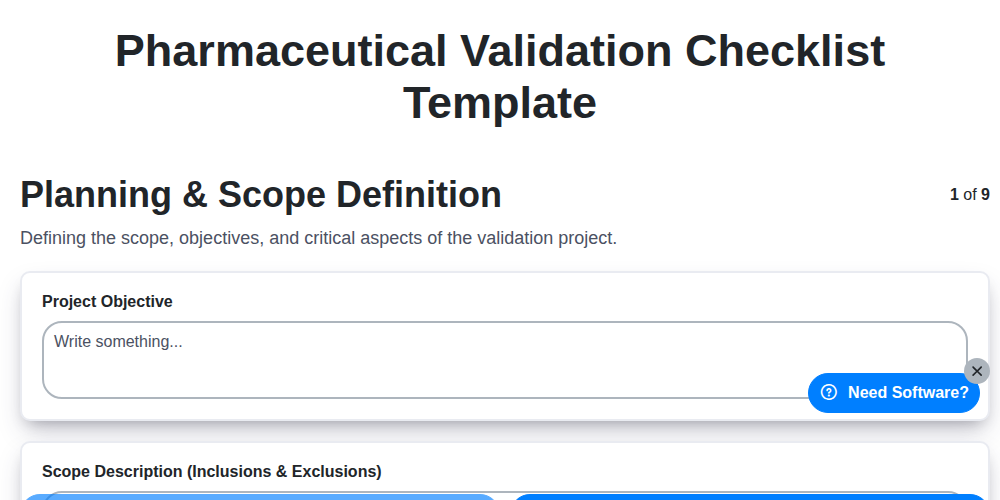
Pharmaceutical Validation Checklist Template: Your Guide to Compliance
Need help with
Pharmaceutical?
Have a question? We're here to help. Please submit your inquiry, and we'll respond promptly.