Pharmaceutical Stability Testing Checklist: A Comprehensive Guide
Published: 11/25/2025 Updated: 07/02/2026
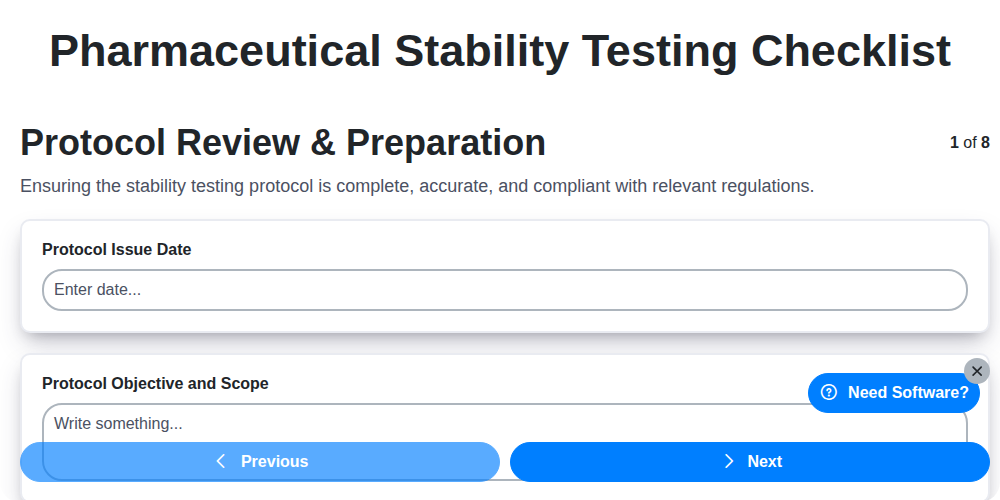
Table of Contents
- Introduction: The Importance of Pharmaceutical Stability Testing
- Understanding Stability Testing Protocols
- 1. Protocol Review & Preparation: Laying the Foundation
- 2. Sample Preparation & Labeling: Ensuring Accuracy and Traceability
- 3. Storage Condition Monitoring: Maintaining Controlled Environments
- 4. Testing & Data Acquisition: Executing the Experiments
- 5. Data Analysis: Interpreting the Results
- 6. Data Analysis: Validating Analytical Methods
- 7. Deviation Handling & Investigation: Addressing Unexpected Findings
- 8. Data Analysis & Reporting: Presenting a Clear Picture
- 9. Final Report Review & Approval: Ensuring Compliance and Accuracy
- 10. Archiving & Documentation: Maintaining Records for Future Reference
- Conclusion: Ensuring Product Quality and Safety
- Resources & Links
TLDR: Ensure your pharmaceutical stability testing is rock solid with this checklist! It covers everything from planning (protocol review) to post-testing (archiving), minimizing errors, ensuring compliance, and guaranteeing reliable data for your product's shelf life determination. Download the template and simplify your process!
Introduction: The Importance of Pharmaceutical Stability Testing
Pharmaceutical stability testing is a cornerstone of drug development and quality control. It's far more than just a regulatory requirement; it's a critical process ensuring the safety, efficacy, and quality of medications throughout their shelf life. Understanding how a drug behaves under various environmental conditions - temperature, humidity, light, and time - allows manufacturers to determine appropriate storage conditions, expiration dates, and packaging requirements. Without robust stability data, patient safety could be compromised, and valuable medications could become ineffective. This blog post will outline a detailed checklist to guide you through pharmaceutical stability testing, ensuring comprehensive and compliant execution.
Understanding Stability Testing Protocols
Stability testing protocols are the bedrock of ensuring a pharmaceutical product maintains its quality, safety, and efficacy throughout its shelf life. These aren't just arbitrary procedures; they are meticulously designed documents outlining every step of the stability study, ensuring consistency, reproducibility, and compliance with regulatory guidelines (like ICH, FDA, EMA).
A well-defined protocol clarifies the what, when, where, how, and who of the stability study. It specifies the product formulation, packaging configuration, storage conditions (temperature, humidity, light exposure), testing schedule, analytical methods to be employed, acceptance criteria, and even the personnel responsible for each task.
Crucially, the protocol must anticipate potential challenges and outline how they will be addressed. This includes defining acceptance criteria for stability indicating methods, procedures for handling deviations (e.g., equipment malfunction, unexpected results), and a clear process for data analysis and reporting. Deviation from the protocol requires justification and documentation, highlighting its importance as the guiding framework for the entire stability testing process. Without a robust protocol, the data generated is unreliable, and the product's shelf life cannot be confidently established.
1. Protocol Review & Preparation: Laying the Foundation
A robust stability testing program begins long before any samples are exposed to controlled environments. The Protocol Review & Preparation phase is critical for ensuring data integrity, regulatory compliance, and ultimately, reliable results. This isn't just about ticking boxes; it's about defining the entire testing strategy.
This process should involve a thorough review of the product's formulation, intended storage conditions, proposed shelf life, and any existing stability data. Key considerations include:
- Defining Testing Conditions: Clearly outline the storage conditions (temperature, humidity, light exposure) based on ICH guidelines and the product's intended market. Justify any deviations from standard conditions.
- Selecting Analytical Methods: Choose validated analytical methods appropriate for detecting the anticipated degradation pathways. Ensure these methods are sensitive enough to quantify degradation products at relevant levels.
- Establishing Acceptance Criteria: Define clear and measurable acceptance criteria for each test parameter, considering the product's intended use and safety profile.
- Sample Size & Number of Batches: Determine the appropriate number of batches and sample sizes per batch to ensure representative testing.
- Timeline and Resources: Establish a realistic timeline for testing and allocate sufficient resources (personnel, equipment, reagents) to ensure timely completion.
- Protocol Documentation: The finalized protocol should be meticulously documented, outlining all aspects of the study, and approved by relevant stakeholders. This document serves as the roadmap for the entire stability testing program.
2. Sample Preparation & Labeling: Ensuring Accuracy and Traceability
Proper sample preparation and labeling are foundational to reliable stability testing. Errors at this stage can cascade through the entire process, leading to inaccurate data and potentially jeopardizing product approval. This section outlines crucial steps for meticulous sample handling.
1. Representative Sampling: Begin by ensuring the samples you select are truly representative of the entire batch. This might involve statistical sampling techniques, especially for large batches. Document the sampling plan and rationale.
2. Container Selection: Choose appropriate container closures (CCs) that are compatible with the drug product and storage conditions. Consider potential leachables and their impact on the product's stability. Document the CC details - material, size, lot number - and justify their selection.
3. Accurate Weighing and Transfer: Precisely weigh and transfer the required amount of drug product into the containers. Utilize calibrated balances and follow established Standard Operating Procedures (SOPs) to minimize errors. Record the weight and transfer process meticulously.
4. Labeling - The Cornerstone of Traceability: Each container must be clearly and accurately labeled. Key information to include:
- Batch Number: Unique identifier for the drug product.
- Code Designation: A unique code to link the sample to the stability study protocol.
- Time Zero Date: The date the sample was placed in the stability chamber.
- Storage Condition: Clearly indicate the storage condition (e.g., 25°C/60%RH, 30°C/75%RH).
- Any Other Relevant Information: Any deviations or specific instructions.
5. Witness Samples: Maintain witness samples under the same conditions for comparison and verification purposes.
6. Chain of Custody: Establish and maintain a chain of custody record to track the sample's movement and handling throughout the stability study.
7. Verification: A secondary, independent verification of all prepared samples and labels is strongly recommended. This helps catch errors before the samples are placed in stability chambers.
Thorough attention to these details minimizes risk and guarantees the integrity of your stability data.
3. Storage Condition Monitoring: Maintaining Controlled Environments
Maintaining the integrity of pharmaceutical stability testing relies heavily on meticulous storage condition monitoring. It's not simply about keeping the temperature around a target; it's about precise, continuous, and documented control. Here's a breakdown of key elements:
Continuous Monitoring & Recording: Stability chambers and storage areas must be equipped with calibrated and validated monitoring devices. These typically include temperature and humidity sensors, with data logged at frequent intervals (e.g., every 15-30 minutes is common). Real-time data acquisition systems are highly recommended, allowing for immediate alerts should conditions deviate from pre-defined limits.
Calibration & Validation: All monitoring equipment requires regular calibration against traceable standards. Validation of the entire monitoring system - including the sensors, data loggers, and software - is crucial to ensure accuracy and reliability. This validation should be periodically repeated to confirm ongoing performance.
Alarm System & Response: The system should have robust alarm thresholds established in the protocol and a clear, documented procedure for responding to alarms. This includes who is notified, what immediate actions are taken (e.g., verifying data, investigating cause), and corrective actions implemented.
Data Integrity & Backup: Recorded data should be secured against loss or alteration. Implement regular data backups and maintain a clear audit trail of all data modifications or adjustments.
Environmental Mapping: Prior to stability studies, an environmental mapping study may be necessary to understand temperature and humidity variations within the storage area, particularly if it's a complex or large space. This helps determine optimal sample placement.
Documentation: Thorough documentation is paramount. This includes calibration records, validation reports, alarm logs, environmental mapping reports, and any deviations or corrective actions taken.
Effective storage condition monitoring is the cornerstone of reliable stability data, ensuring the conclusions drawn from testing are trustworthy and support regulatory submissions.
4. Testing & Data Acquisition: Executing the Experiments
This phase is where the rubber meets the road. Following the meticulously planned protocol, this stage involves conducting the actual stability testing. Precision and adherence to the protocol are paramount to ensure data integrity and reliability.
Key Considerations:
- Equipment Calibration & Validation: All analytical equipment (HPLC, GC, UV-Vis spectrophotometers, etc.) must be properly calibrated and their performance validated according to established procedures prior to testing. Records of these validations should be readily available.
- Analytical Method Execution: Execute the predetermined analytical methods precisely as described in the protocol. Pay close attention to instrument parameters, reagent preparation, and run times.
- Sample Handling: Strict adherence to sample handling procedures is essential to prevent contamination or degradation. Use appropriate containers, gloves, and work in a controlled environment.
- Data Acquisition & Recording: Utilize validated data acquisition systems to capture results directly from the instruments. Ensure that all raw data is recorded accurately and completely. Software validation records should be accessible.
- Observation & Documentation: Record any observations during the testing process, even if seemingly insignificant. This includes instrument behavior, sample appearance, and any unusual occurrences. Document these observations in a dedicated logbook or within the LIMS system.
- Blanks & Controls: Run appropriate blanks and controls alongside the samples to monitor for contamination and ensure method accuracy. Document results for these standards clearly.
- Replicates: Perform replicates as specified in the protocol to assess precision and reproducibility of the results.
- Data Security: Implement measures to protect the acquired data from loss or unauthorized access.
Proper execution of this stage ensures the generation of reliable data crucial for making informed decisions about the stability of your pharmaceutical product.
5. Data Analysis: Interpreting the Results
Data analysis is arguably the most critical phase of pharmaceutical stability testing. Raw data from your tests - pH values, appearance observations, assay results, degradation product levels - are just numbers and descriptions until they are interpreted within the context of your protocol and regulatory requirements. This section delves into the key considerations for a robust and defensible data analysis.
Establishing Trends and Significance: The primary goal is to identify any trends or significant changes occurring over time. This involves plotting data against time and visually assessing for deviations from expected values. Statistical analysis, such as regression analysis or ANOVA, may be necessary to determine if observed changes are statistically significant, rather than random variation. Don't just look at individual data points; analyze the overall pattern.
Evaluating Degradation Products: A core focus is identifying and quantifying any degradation products. Establishing their levels and understanding their formation pathways is essential for assessing product quality and safety. Acceptance criteria for individual and total impurities must be strictly adhered to, and any excursions should be thoroughly investigated (more on that in the Deviation Handling section).
Comparing Batches & Conditions: Stability data is most powerful when compared across different batches (to assess batch-to-batch consistency) and under various storage conditions. This comparative analysis can reveal subtle trends or vulnerabilities that wouldn't be apparent when looking at a single batch alone.
Linking to Shelf Life Prediction: Data analysis provides the foundation for predicting the shelf life of the drug product. Applying established methodologies like Arrhenius equation, or other appropriate models, leverages the data to estimate how long the product will remain within specification under recommended storage conditions.
Documenting Assumptions and Calculations: Crucially, all assumptions made during data analysis, as well as the methods and formulas used for calculations, must be clearly documented. This transparency is essential for auditability and demonstrates the scientific rigor behind your stability conclusions. Remember, data analysis isn't just about getting a number; it's about justifying how that number was derived.
6. Data Analysis: Validating Analytical Methods
Data analysis in pharmaceutical stability testing isn't simply about crunching numbers; it's about rigorous validation and interpretation to ensure the reliability and integrity of your results. Before even considering trends or degradation patterns, you must validate your analytical methods used for testing.
This validation process confirms the method's suitability for its intended purpose and encompasses several crucial steps. Initially, assess the method's linearity and range - demonstrating a proportional relationship between concentration and response within the test concentrations used. Precision, both repeatability (within the same lab, same operator, same equipment) and intermediate precision (different analysts, different days, different equipment) needs to be established. Accuracy, often determined through recovery studies, verifies that the method accurately quantifies the analyte.
Specificity is vital; the method should exclusively measure the compound of interest and not be interfered with by other components of the formulation or degradation products. Limit of Detection (LOD) and Limit of Quantification (LOQ) determine the lowest concentrations that can be reliably detected and quantified, respectively.
Detailed records of these validations are essential. Deviation from established validation parameters should trigger investigation and potentially require revalidation. Furthermore, any changes to the analytical method, even seemingly minor ones, necessitate a reevaluation of its validation status. A robust validation process provides confidence in the data generated and is a cornerstone of a successful stability program.
7. Deviation Handling & Investigation: Addressing Unexpected Findings
Stability testing isn't always smooth sailing. Unexpected results - deviations - can and do arise. These aren't failures; they're opportunities to learn and strengthen your process. A robust deviation handling and investigation process is critical for maintaining data integrity and ensuring product quality.
When a deviation occurs (e.g., a value falling outside predetermined acceptance criteria, an unexpected physical change), immediate action is required. This begins with clear documentation of the observation - exactly what was observed, when, and by whom. A detailed description, including photos or other supporting evidence, is essential.
The investigation should be systematic and thorough. This involves:
- Root Cause Analysis: Dig deep to identify why the deviation occurred. Was it a procedural error, equipment malfunction, raw material issue, or something else? Employ techniques like the "5 Whys" to uncover the true underlying cause.
- Impact Assessment: Evaluate the potential impact of the deviation on product quality, safety, and efficacy. Consider if the impacted batches require further evaluation or quarantine.
- Corrective and Preventative Actions (CAPA): Develop and implement CAPA to address the root cause and prevent recurrence. This might involve retraining personnel, revising procedures, calibrating equipment, or modifying the testing protocol itself.
- Documentation: Meticulously document the entire deviation handling process - the observation, investigation, root cause, CAPA, and verification of effectiveness.
Crucially, deviations should be reviewed by qualified personnel independently of those who initially observed and recorded them. This helps ensure objectivity and identify any overlooked aspects. Effective deviation handling transforms potential setbacks into valuable learning experiences, bolstering the overall reliability of your stability testing program.
8. Data Analysis & Reporting: Presenting a Clear Picture
The data generated during pharmaceutical stability testing is raw potential; it's the meticulous analysis and clear reporting that transforms it into actionable insights. This stage moves beyond simply collecting numbers to understanding what those numbers mean for your product's quality, safety, and efficacy.
Here's a breakdown of key considerations for robust data analysis and reporting:
- Statistical Significance: Employ appropriate statistical methods (e.g., ANOVA, t-tests) to determine if observed changes are statistically significant and not due to random variation. Clearly state the statistical methods used.
- Trend Analysis: Examine data trends over time. Look for patterns that indicate degradation pathways, potential instability issues, or formulation performance. Graphs and charts are crucial here - well-chosen visuals can instantly communicate complex trends.
- Specification Limits: Compare results to established acceptance criteria and specifications. Clearly flag any instances where results fall outside of these limits, noting the date and time of the excursion.
- Data Integrity: Ensure all data is accurate, complete, and traceable. Maintain a clear audit trail of all calculations and manipulations.
- Comprehensive Reporting: The final report should be comprehensive and easily understandable. It should include a summary of the protocol, raw data, analysis, conclusions, and recommendations. Include clear graphs and tables with appropriate labels and units.
- Regulatory Compliance: Adhere to relevant regulatory guidelines (e.g., ICH guidelines) for data analysis and reporting requirements.
- Risk Assessment: Consider the potential impact of any instability issues identified and include this assessment in the report. Recommendations for corrective actions should be clearly stated.
A well-presented, transparent report is critical for decision-making, regulatory submissions, and ultimately, ensuring the integrity of your pharmaceutical product.
9. Final Report Review & Approval: Ensuring Compliance and Accuracy
The final report represents the culmination of the stability testing process. Its review and approval are critical steps to guarantee data integrity, regulatory compliance, and the overall validity of the study. This phase isn't merely a formality; it's a rigorous check for accuracy, consistency, and adherence to the established protocol.
The review process should involve qualified personnel, typically experienced stability specialists and/or quality assurance professionals, who are independent of the testing team to ensure objectivity. Key areas of scrutiny include:
- Protocol Adherence: Verification that all testing was performed exactly as outlined in the protocol, including testing times, conditions, and methodologies.
- Data Integrity: Confirmation that all raw data aligns with the analyzed results and that calculations are accurate. This may involve tracing back to original chromatograms or instrumental data.
- Trend Analysis: Evaluation of any trends observed in the data and assessment of their potential impact on product quality and shelf life.
- Regulatory Compliance: Ensuring the report meets all applicable regulatory guidelines (e.g., ICH, FDA, EMA) and any specific client requirements.
- Conclusion Validity: Assessment of the conclusions drawn from the data and their justification based on the findings.
- Overall Clarity and Completeness: Ensuring the report is well-written, understandable, and contains all necessary information.
Following the review, formal approval signifies that the report accurately reflects the testing results and meets all required standards. This approval should be documented with signatures and dates, creating an auditable trail. A robust review and approval process significantly minimizes the risk of errors and strengthens the credibility of the stability data.
10. Archiving & Documentation: Maintaining Records for Future Reference
Proper archiving and documentation are the unsung heroes of pharmaceutical stability testing. They's not the most exciting part, but they are absolutely critical for regulatory compliance, future reference, and ensuring the integrity of your data. This section outlines best practices for maintaining a robust system.
What Needs to be Archived?
Everything related to the stability study needs to be meticulously archived. This includes:
- Protocols: Original and any amendments to the study protocol.
- Raw Data: All analytical data, including chromatograms, spectra, and other instrument output.
- Calculations: Records demonstrating how results were calculated and assessed.
- Calibration Records: Dates and results of instrument calibration and maintenance.
- Deviations & Investigations: All documented deviations, investigations, and corrective/preventive actions (CAPAs).
- Final Reports: The final stability report and any supporting documentation.
- Training Records: Documentation of personnel training related to the study.
Best Practices for Archiving:
- Secure Storage: Data should be stored in a secure, controlled environment, protected from unauthorized access, damage, and loss. This often involves both physical and electronic security measures.
- Electronic Data Management Systems (EDMS): Utilizing an EDMS is highly recommended. These systems offer version control, audit trails, and enhanced security.
- Backup Procedures: Regular data backups are crucial to prevent data loss.
- Retention Periods: Adhere to regulatory guidelines regarding data retention periods (e.g., FDA 21 CFR Part 11).
- Audit Trails: Maintain detailed audit trails for all data modifications and access.
- Controlled Access: Restrict access to archived data based on roles and responsibilities.
- Regular Review: Periodically review archiving procedures to ensure their effectiveness.
Proper archiving isn't just about ticking a box; it's a commitment to data integrity and a cornerstone of a strong quality system.
Conclusion: Ensuring Product Quality and Safety
Ultimately, a robust pharmaceutical stability testing program, underpinned by a detailed checklist like the one outlined, is paramount to guaranteeing product quality, efficacy, and patient safety. Consistent adherence to each step-from meticulous protocol review to rigorous data analysis and thorough documentation-minimizes risk and ensures that your drug product maintains its characteristics throughout its shelf life. By prioritizing this systematic approach, pharmaceutical companies can build confidence in their products, meet regulatory requirements, and, most importantly, protect the well-being of those who rely on them. This isn't merely a procedural exercise; it's a fundamental commitment to delivering safe and effective medications.
Resources & Links
- United States Pharmacopeia (USP): The USP sets standards for pharmaceutical quality, including stability testing. Their website provides information on USP chapters and guidelines related to stability testing, including <1079> Stability Testing of New Drug Substances and Products. Essential for regulatory compliance.
- European Medicines Agency (EMA): The EMA provides guidance on pharmaceutical stability testing within the European Union. Their website contains regulatory guidelines, scientific advice, and publications related to stability assessment. Good source for understanding EU requirements.
- U.S. Food and Drug Administration (FDA): The FDA regulates pharmaceuticals in the United States. Their website offers guidance documents, regulations, and information related to stability testing requirements for drug approval and post-market surveillance. Particularly relevant for US market submissions.
- International Council for Harmonisation (ICH): ICH brings together regulatory authorities and pharmaceutical industry experts to harmonize technical requirements for pharmaceuticals. Their guidelines, such as ICH Q1A(R2) - Stability Testing of New Drug Substances and Products, are globally recognized and provide a foundation for stability testing protocols.
- AOAC International: AOAC International develops official methods of analysis for food, pharmaceuticals and other materials. While not solely focused on stability testing, they offer methods that can be utilized for analytical testing as part of a stability program.
- Thermo Fisher Scientific: Thermo Fisher provides analytical instruments, consumables, and software widely used in pharmaceutical stability testing. Their website offers resources, application notes, and webinars related to stability testing techniques. Useful for understanding equipment and method considerations.
- Agilent Technologies: Agilent also provides instrumentation and solutions for pharmaceutical analysis, including stability testing. Their website offers application notes, webinars, and technical support related to analytical methods for stability assessment. Focuses on chromatography and spectroscopy equipment.
- Waters Corporation: Waters provides chromatography and mass spectrometry systems used in stability testing. Their website provides resources, application notes, and training related to these techniques. Excellent for HPLC/MS focused stability testing.
- SPS (Scientific Pharmaceutical Services): SPS provides contract stability testing services and consulting. Their website offers information about their services and insights into stability testing best practices. Offers practical knowledge and perspectives.
- BioPharma Outsourcing: A directory for finding contract stability testing providers.
- Pharmaceutical Online: Trade publication with articles on pharmaceutical topics, including stability testing.
- Lab Manager: A resource for laboratory professionals; sometimes has stability testing content.
Frequently Asked Questions
What is pharmaceutical stability testing and why is it important?
Pharmaceutical stability testing evaluates how the quality of a drug substance or drug product varies with time under the influence of a variety of environmental factors such as temperature, humidity, and light. It's crucial for ensuring drug efficacy, safety, and shelf life, and is a regulatory requirement for market approval.
Who needs to perform stability testing?
Pharmaceutical manufacturers, contract manufacturing organizations (CMOs), and anyone involved in drug product development or lifecycle management are responsible for conducting stability testing. It's a key requirement for regulatory submissions and maintaining product quality.
What are the different types of stability testing?
Common types include: Long-term stability testing (real-time conditions), accelerated stability testing (elevated conditions to predict shelf life), intermediate stability testing, and specific stress testing (e.g., photostability, forced degradation).
What parameters are typically monitored during stability testing?
Parameters include assay (drug potency), degradation products/impurities, pH, moisture content, appearance, dissolution, particle size, and microbial limits. The specific parameters will depend on the dosage form and drug product characteristics.
What is a stability testing protocol and why is it necessary?
A protocol outlines the testing plan, including conditions, frequency, parameters, and acceptance criteria. It ensures consistency, reproducibility, and compliance with regulatory guidelines and Good Manufacturing Practices (GMP).
What are the ICH guidelines regarding stability testing?
The International Council for Harmonisation (ICH) provides guidelines (e.g., Q1A(R2)) that outline recommended stability testing conditions, duration, and acceptance criteria for various drug products. Following these guidelines is essential for regulatory submissions.
What are stability-indicating methods?
Stability-indicating methods are analytical procedures that can accurately measure the drug substance or product and its degradation products or impurities without interference. These are critical for reliable stability data.
Comments
There are no comments yet. Be the first to add one!
Pharmaceutical Management Solution Demo
Navigating complex regulations and ensuring quality in pharmaceutical manufacturing? ChecklistGuro's Work OS platform streamlines processes from R&D to production, packaging, and distribution. Maintain compliance, improve efficiency, and reduce risk. Discover how ChecklistGuro can transform your pharmaceutical operations!
Related Articles
Ensuring Quality: A Pharmaceutical Compound Record Review Checklist Guide
Pharmaceutical Labeling Compliance Checklist: Your Step-by-Step Guide
Mastering Medication Management: Your Pharmaceutical Inventory Compliance Checklist Template
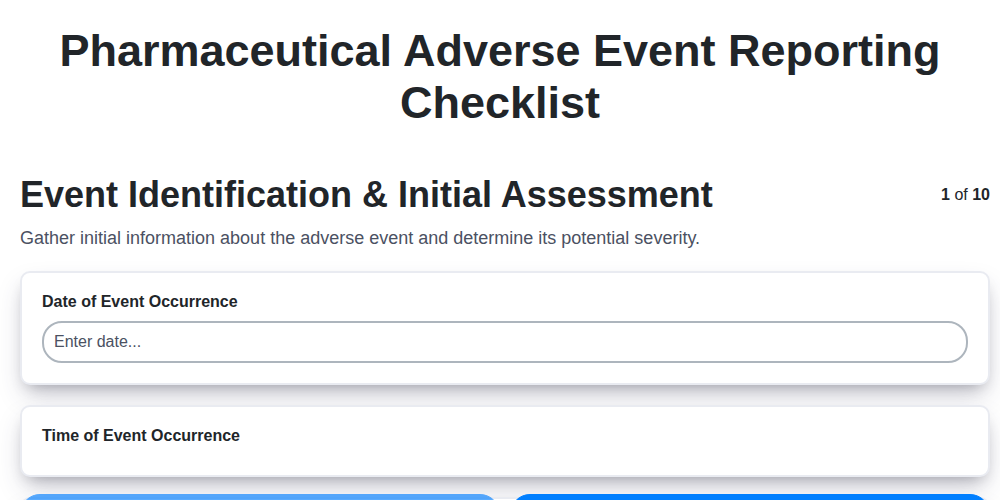
Navigating Adverse Event Reporting: Your Pharmaceutical Checklist Guide
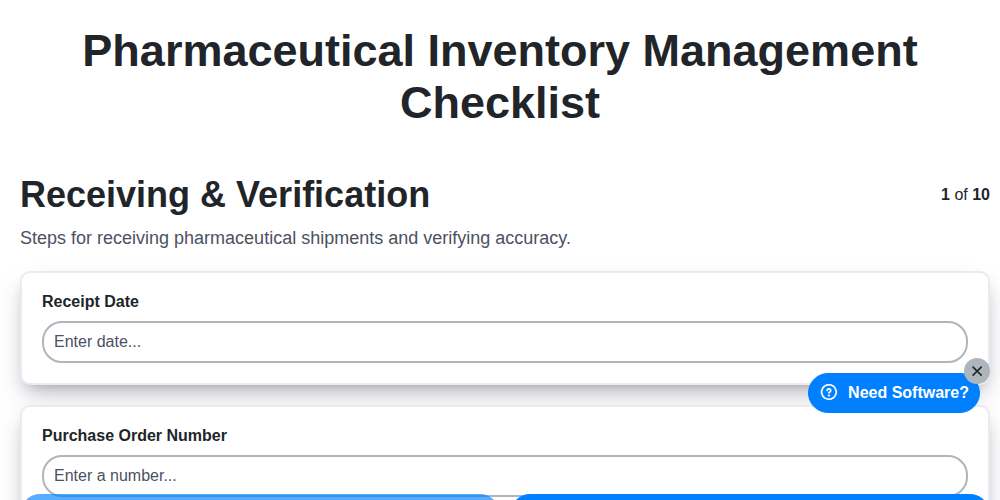
Pharmaceutical Inventory Management Checklist: Your Guide to Compliance & Accuracy
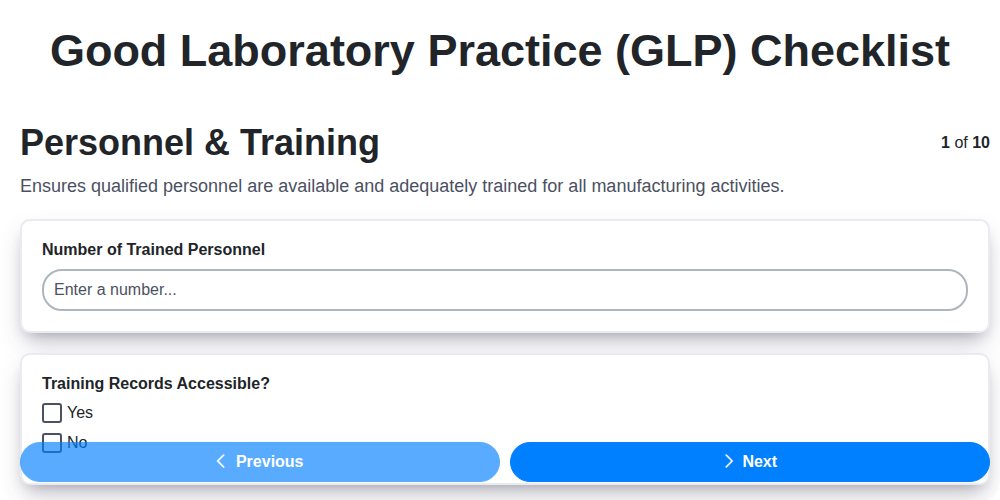
Your Essential GLP Checklist Template: A Practical Guide
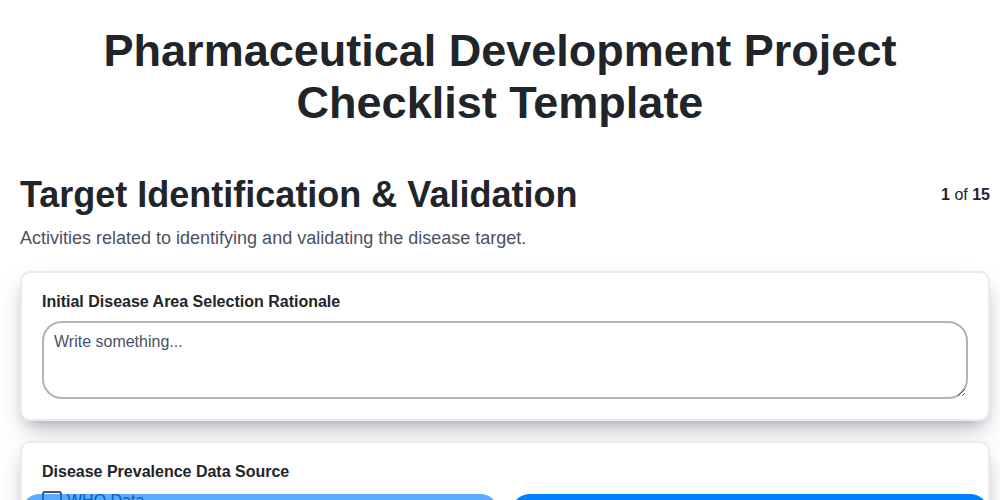
Your Pharmaceutical Development Checklist: A Template for Success
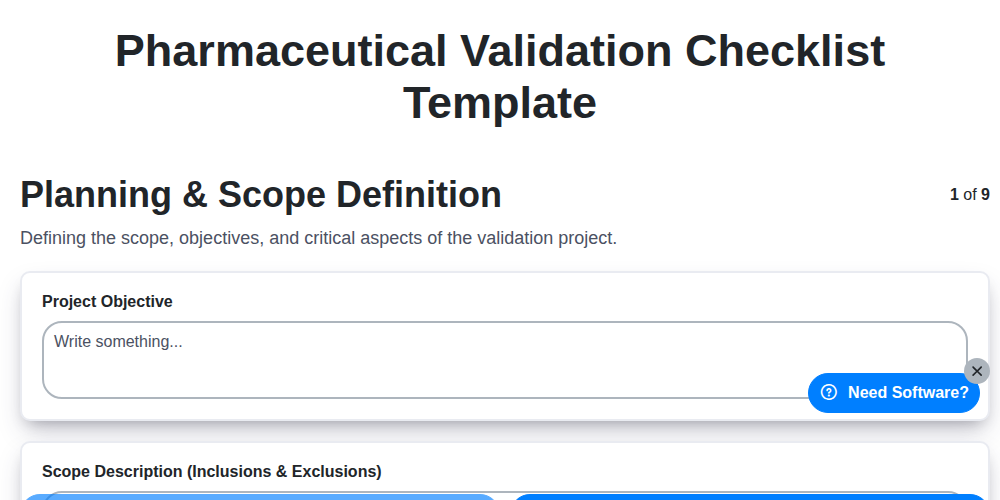
Pharmaceutical Validation Checklist Template: Your Guide to Compliance
Need help with
Pharmaceutical?
Have a question? We're here to help. Please submit your inquiry, and we'll respond promptly.