Ensuring Pipeline Safety: Your Complete Integrity Inspection Checklist Template
Published: 12/05/2025 Updated: 07/02/2026
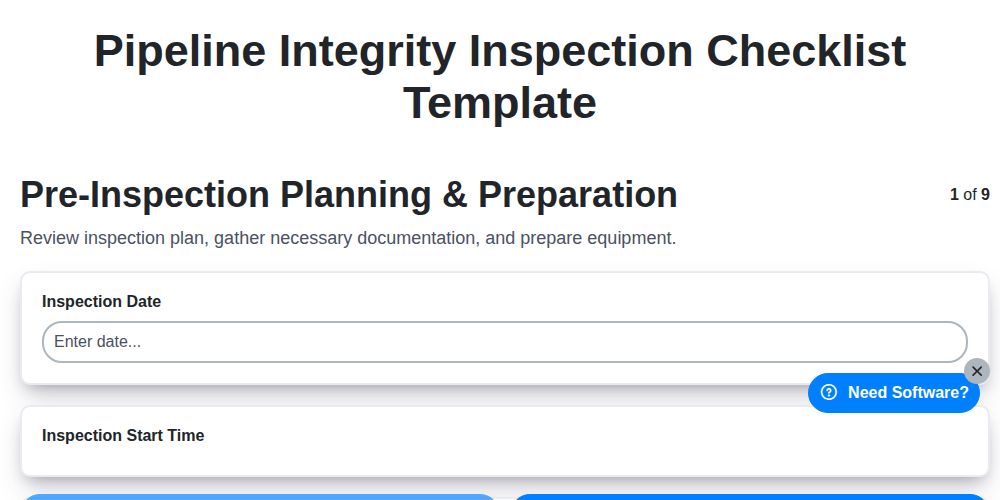
Table of Contents
- Introduction: Why Pipeline Integrity Inspections Matter
- 1. Pre-Inspection Planning & Preparation: Laying the Foundation
- 2. Right-of-Way and Vegetation Management: Clearing the Path
- 3. Pipeline External Condition Assessment: Identifying Physical Issues
- 4. Cathodic Protection (CP) Verification: Guarding Against Corrosion
- 5. Pipeline Marking & Signage: Ensuring Visibility and Awareness
- 6. Leak Detection Equipment Calibration & Operation: Precision is Key
- 7. Leak Survey & Anomaly Investigation: The Heart of the Inspection
- 8. Understanding Anomalies: Classifying and Prioritizing
- 9. Post-Inspection Documentation & Reporting: Capturing the Details
- 10. Regulatory Compliance & Record Keeping: Meeting Legal Requirements
- 11. Technology Integration: Leveraging Data for Enhanced Insights
- 12. Team Training & Safety Protocols: Ensuring Competency
- 13. Continuous Improvement: Refining Your Inspection Process
- Resources & Links
TLDR: This checklist template helps you systematically inspect your pipeline for safety and compliance. It covers everything from planning and vegetation control to leak detection, CP verification, and reporting, ensuring you meet regulations and minimize risks - a vital tool for pipeline integrity!
Introduction: Why Pipeline Integrity Inspections Matter
Pipelines are the arteries of our modern world, transporting vital resources like oil, natural gas, and water across vast distances. Ensuring their continued safe and reliable operation isn't just a best practice - it's a critical responsibility. Pipeline integrity inspections are the cornerstone of this responsibility, proactively identifying and mitigating potential threats before they escalate into costly repairs, environmental damage, or, most importantly, harm to people.
These inspections go beyond simple visual checks; they involve a comprehensive assessment of the pipeline's condition, encompassing everything from external corrosion to internal degradation and potential leaks. Regular and thorough inspections, guided by detailed checklists and best practices, are key to preventing incidents and maintaining public trust. This blog post will delve into the essential elements of a robust pipeline integrity inspection checklist, providing a framework for ensuring the long-term health and safety of your pipeline infrastructure.
1. Pre-Inspection Planning & Preparation: Laying the Foundation
A successful pipeline integrity inspection begins long before boots hit the ground. Thorough pre-inspection planning and preparation are crucial for ensuring data accuracy, efficiency, and safety. This phase involves more than just scheduling; it's about building a solid foundation for the entire inspection process.
Here's what should be included:
- Define Inspection Objectives: Clearly outline the goals of the inspection. Are you targeting specific areas, addressing prior anomalies, or conducting a routine assessment?
- Review Historical Data: Analyze previous inspection reports, maintenance records, and any relevant incident reports. This provides context and helps identify areas of concern.
- Gather Mapping & Design Information: Ensure access to accurate pipeline maps, as-built drawings, and operational parameters (pressure, flow rates, product transported).
- Permitting & Notifications: Secure all necessary permits and notify relevant stakeholders (landowners, local authorities, emergency services) well in advance.
- Team Briefing & Training: Ensure the inspection team is fully briefed on the scope of work, safety procedures, and the use of equipment. Refresher training may be necessary.
- Risk Assessment: Conduct a thorough risk assessment to identify potential hazards and implement appropriate mitigation strategies.
- Weather Contingency Planning: Consider potential weather impacts and develop backup plans to maintain inspection schedule.
Effective pre-inspection planning minimizes disruptions, maximizes data quality, and contributes significantly to a safe and efficient pipeline integrity program.
2. Right-of-Way and Vegetation Management: Clearing the Path
Maintaining a clear and manageable right-of-way is critical for pipeline integrity. Uncontrolled vegetation poses a significant threat, increasing fire risk, hindering visual inspections, and potentially damaging the pipeline through root intrusion or falling trees. This section of the inspection checklist focuses on ensuring the right-of-way remains accessible and safe.
Checklist Items Include:
- Vegetation Clearance: Verify vegetation is cleared to the required width as per regulations and company standards. Note any areas requiring further trimming or removal.
- Herbicide Application: Confirm adherence to approved herbicide application protocols, including proper licensing, application rates, and safety precautions. Document dates and areas treated.
- Tree Health Assessment: Observe the health of trees adjacent to the pipeline. Note any diseased, unstable, or potentially hazardous trees requiring removal or mitigation.
- Right-of-Way Access: Ensure unimpeded access for inspection equipment and personnel. Document any obstacles, such as locked gates or fences.
- Erosion Control Measures: Inspect erosion control structures (e.g., silt fences, check dams) for effectiveness and repair any deficiencies.
- Right-of-Way Marking: Verify the right-of-way boundary is clearly marked and visible.
- Photographic Documentation: Capture photographic evidence of vegetation conditions and right-of-way management activities.
3. Pipeline External Condition Assessment: Identifying Physical Issues
A thorough external condition assessment is a cornerstone of pipeline integrity. It goes beyond simply looking; it's about systematically documenting and evaluating potential threats to the pipeline's structural integrity. This involves a visual inspection, often supplemented by specialized tools, to identify corrosion, mechanical damage, and other surface-related issues.
Here's what this section of the checklist typically covers:
- Corrosion Detection: Look for signs of general, pitting, and coating disbondment. Pay close attention to areas prone to corrosion, such as joints, welds, and changes in pipeline direction. Record the type, severity, and extent of any corrosion observed. Use tools like ultrasonic thickness gauges (UTG) to measure metal loss where corrosion is suspected.
- Mechanical Damage: Identify any dents, gouges, scrapes, or other physical damage that could compromise the pipe's structural strength. Note the dimensions and orientation of any indentations. Look for signs of excavation or external loading.
- Coating Condition: Evaluate the integrity of the protective coating. Assess for cracking, blistering, loss of adhesion, and exposure of the underlying pipe material. A deteriorated coating significantly increases the risk of corrosion.
- Joint and Weld Inspection: Scrutinize welds and joints for defects, including cracks, porosity, and misalignment. These areas are often stress concentrators and require careful monitoring.
- Foreign Object Interference (FOI): Look for evidence of impacts from rocks, debris, or other objects that could have damaged the pipeline.
- Evidence of Third-Party Activity: Observe for signs of unauthorized digging, construction, or other activities near the pipeline that could pose a risk.
Each observed issue should be meticulously documented with photographs and detailed descriptions, noting location and severity. These findings are crucial for prioritizing repairs and implementing preventative measures to mitigate potential risks.
4. Cathodic Protection (CP) Verification: Guarding Against Corrosion
Cathodic Protection (CP) is a crucial element in pipeline integrity, acting as a defensive shield against the relentless threat of corrosion. Regular verification of your CP system isn't just a best practice; it's a vital necessity. This section of the inspection checklist focuses on ensuring your CP system is functioning correctly and providing adequate protection.
Here's what's typically included:
- Potential Readings: Assess pipe-to-soil potentials at various points along the pipeline. These readings indicate whether the pipe is sufficiently cathodic, preventing electrochemical reactions that lead to corrosion. Deviations from established criteria necessitate immediate investigation.
- Sacrificial Anode Condition: For pipelines utilizing sacrificial anodes, check their remaining life and consumption rates. This involves visual inspection, weight measurements (where possible), and potential readings. Replacements are required when anodes are depleted.
- Impressed Current System Performance: For impressed current systems, verify rectifier output voltage and current, check anode distribution, and monitor coating resistance. Analyze for anomalies that might indicate coating degradation or anode interference.
- Bonding Condition: Inspect bonding jumpers and connections to ensure proper electrical continuity and prevent stray current issues.
- Interference Survey: Conduct a survey to identify potential sources of interference currents that could compromise the CP system's effectiveness.
- CP System Records Review: Compare current readings and system performance against historical data to identify trends and potential issues.
Failing to properly verify and maintain your CP system can lead to accelerated corrosion rates, pipeline failures, and potentially catastrophic consequences. This section of the checklist is your opportunity to safeguard your pipeline's integrity.
5. Pipeline Marking & Signage: Ensuring Visibility and Awareness
Proper pipeline marking and signage are critical for public safety and regulatory compliance. These visual cues alert excavators, landowners, and the general public to the presence of a buried pipeline, minimizing the risk of accidental damage and subsequent leaks. This section of the integrity inspection checklist focuses on verifying the effectiveness of these markings.
During inspection, confirm that all required markers are present, visible, and in good condition. This includes:
- Location Markers: Check for standard location markers (often yellow or red) at regular intervals, near road crossings, and at significant changes in direction. Are they securely fastened and free from obstructions like snow, debris, or vegetation?
- Warning Signs: Assess the placement and condition of warning signs posted near critical pipeline segments. Are they legible, securely mounted, and appropriately sized for visibility?
- One-Call Notification Compliance: Verify adherence to local one-call notification requirements. Is the pipeline clearly identified in the system?
- Stakeouts: If recent excavation or construction has occurred near the pipeline, confirm that appropriate stakeouts were performed and that the pipeline's location was accurately identified.
- Signage Updates: Ensure signage is updated to reflect any recent changes in pipeline operation, ownership, or regulatory requirements.
Document any missing, damaged, or obscured markings and recommend immediate corrective action. Regularly reviewing and updating pipeline markings is a proactive measure to prevent incidents and maintain a safe operating environment.
6. Leak Detection Equipment Calibration & Operation: Precision is Key
Effective pipeline integrity inspection hinges on the reliability of your leak detection equipment. Simply having the tools isn't enough; they must be precisely calibrated and operated correctly to provide accurate results. This section details the critical steps involved.
Calibration is Paramount: Before any leak survey commences, all leak detection equipment, including but not limited to ultrasonic detectors, pressure transducers, and gas analyzers, must undergo rigorous calibration. This should be performed by qualified personnel using traceable standards and documented according to manufacturer recommendations and industry best practices. Records of calibration dates, results, and any adjustments made are essential for audit trails.
Operational Proficiency: Properly trained operators are vital. Operators should be thoroughly familiar with the equipment's operation, limitations, and sensitivity settings. Understanding the nuances of background noise, atmospheric conditions, and potential interference is crucial for accurate interpretation. Regular refresher training and proficiency assessments are recommended.
Procedure Adherence: Strict adherence to established operational procedures is non-negotiable. This includes appropriate sweep patterns, distances from the pipeline, and environmental considerations. Deviations from the procedure can introduce error and compromise the validity of the inspection data.
Data Validation: Implement a system for validating data during the survey. This may involve cross-referencing data points, utilizing multiple technologies for comparison, and visually inspecting the pipeline where anomalies are detected. Discrepancies should be investigated and resolved before proceeding.
Documentation: Record all equipment calibration information, operational parameters, and any deviations from standard procedures in detail. This comprehensive record-keeping supports data integrity and provides valuable context for future analysis and comparisons.
7. Leak Survey & Anomaly Investigation: The Heart of the Inspection
This is where the inspection truly comes alive. The leak survey and anomaly investigation phase isn't just about passively observing; it's about actively searching for and understanding potential problems. Equipped with calibrated leak detection equipment (as verified earlier!), the survey team meticulously walks the pipeline right-of-way.
The process involves more than just listening for hissing sounds. Operators are trained to identify subtle indicators like unusual soil disturbances, visual signs of corrosion, or even changes in vegetation health that could suggest a leak. Any anomaly detected - be it a pressure fluctuation, unusual acoustic signature, or a visual indicator - triggers a detailed investigation.
This investigation process is critical. It's not enough to simply flag an anomaly; it needs to be understood. This often involves:
- Pinpointing the Location: Using GPS and accurate measurement techniques to precisely locate the anomaly.
- Characterizing the Anomaly: Determining the type, severity, and potential cause of the anomaly. This might include specialized techniques like sonic leak correlation or close-interval surveys.
- Root Cause Analysis: Digging deeper to understand why the anomaly exists. Is it due to corrosion, mechanical damage, or a manufacturing defect?
- Developing a Remediation Plan: If the anomaly poses a risk, a detailed plan is created outlining the steps required to repair or mitigate the issue.
Proper documentation of the anomaly investigation, including photos, data logs, and analysis findings, is vital. This data forms the basis for future risk assessments and informs decisions about repair prioritization and long-term pipeline integrity management. Skipping or shortcutting this crucial phase can leave critical issues undetected, jeopardizing safety and environmental protection.
8. Understanding Anomalies: Classifying and Prioritizing
During a pipeline integrity inspection, identifying anomalies is only the first step. The real value comes from understanding their severity and prioritizing remediation efforts. Not every anomaly demands immediate action; a robust classification system is essential for efficient resource allocation.
Here's a breakdown of how anomalies are typically classified and prioritized:
Classification Levels (Example - specific levels may vary by operator/regulator):
- Level 1 (Minor): These anomalies represent minor deviations from the expected condition. They might include slight surface irregularities, minimal corrosion, or minor disbondings. While monitored, they generally require no immediate remediation but are tracked over time to assess growth.
- Level 2 (Moderate): These anomalies indicate a potentially concerning condition that warrants further investigation. They might include moderate corrosion, indications of seam issues, or locations with compromised coating. Further assessment, such as a close-up inspection or more detailed monitoring, is required.
- Level 3 (Significant): These anomalies pose a credible threat to pipeline integrity and require prompt action. They could be characterized by significant metal loss, substantial deformation, or indications of active corrosion. Mitigation strategies are planned and executed as quickly as possible.
- Level 4 (Critical): These anomalies represent an imminent risk of failure. They may involve substantial metal loss, active leaks, or conditions that create an immediate hazard. Immediate shutdown, repair, and potentially replacement are necessary.
Prioritization Factors:
Beyond the classification level, prioritization should also consider:
- Pipeline Operating Pressure: Higher operating pressures demand more stringent action for any anomaly.
- Pipeline Material: Different materials (e.g., steel, plastic) behave differently and require tailored assessment criteria.
- Pipeline Location: Proximity to populated areas, environmentally sensitive zones, or critical infrastructure increases the urgency for remediation.
- Anomaly Growth Rate: Anomalies that are rapidly increasing in size or severity require more immediate attention.
- Historical Data: Tracking the evolution of anomalies over time helps predict future behavior and refine risk assessments.
A well-defined anomaly classification and prioritization system, coupled with rigorous monitoring and evaluation, is crucial for ensuring the long-term integrity and safety of your pipeline.
9. Post-Inspection Documentation & Reporting: Capturing the Details
The inspection isn't truly complete until the findings are meticulously documented and reported. This stage is critical for demonstrating compliance, informing future maintenance decisions, and providing a historical record of pipeline health. A robust post-inspection process involves more than just ticking boxes; it's about creating a usable, actionable dataset.
Here's what should be included:
- Comprehensive Log: Detail every activity performed, including dates, times, personnel involved, equipment used (with serial numbers), and any deviations from the planned procedure.
- Data Recording: Accurately record all measurement data - CP readings, anomaly locations, soil resistivity values, etc. Utilize standardized units and consistent formatting. Electronic data logging is highly recommended for ease of analysis and sharing.
- Anomaly Characterization: Thoroughly describe any anomalies discovered, including their location (using GPS coordinates and pipeline identifiers), dimensions, characteristics (corrosion type, depth, etc.), and potential causes. Photographs and videos are invaluable supplements to written descriptions.
- Risk Assessment: Briefly outline the potential risk associated with each identified anomaly. This informs prioritization for remediation.
- Recommendations: Document clear, concise recommendations for repair or mitigation actions. Assign responsibility for implementing these actions.
- Deviation Reporting: Any deviation from the planned inspection procedures must be documented and explained. This provides context and helps maintain data integrity.
- Report Distribution: Establish a clear process for distributing the inspection report to relevant stakeholders - operations personnel, maintenance teams, regulatory bodies, and management.
- Data Archiving: Securely archive all inspection data, including raw data, processed data, reports, and supporting documentation, in accordance with regulatory requirements and company policy. Implement a version control system to track changes.
Effective post-inspection documentation and reporting are the final link in the pipeline integrity chain. They transform inspection data into actionable intelligence, contributing directly to safer, more reliable pipeline operation.
10. Regulatory Compliance & Record Keeping: Meeting Legal Requirements
Pipeline integrity inspection isn't just about identifying potential problems; it's about demonstrating that you're operating responsibly and adhering to stringent regulations. Failing to comply can result in hefty fines, operational shutdowns, and damage to your company's reputation. This section underscores the critical role of regulatory compliance and meticulous record keeping in your pipeline integrity program.
Understanding Applicable Regulations: Familiarize yourself with all relevant federal, state, and local regulations pertaining to pipeline integrity. These often include mandates from agencies like PHMSA (Pipeline and Hazardous Materials Safety Administration) in the US, and equivalent bodies in other countries. Regulations will dictate inspection frequency, reporting requirements, and the types of data you must collect and retain.
Documentation is Key: Comprehensive documentation is the cornerstone of demonstrating compliance. This includes:
- Inspection Plans: Clearly defined inspection procedures, including methodology, equipment, and personnel qualifications.
- Data Logs: Detailed records of all inspection activities, including dates, times, locations, equipment used, and observations made.
- CP Measurements: Complete logs of cathodic protection readings, including date, location, potential readings, and any corrective actions taken.
- Anomaly Records: Thorough documentation of any anomalies detected, including their location, type, severity, and remediation plans.
- Training Records: Proof of training and competency for all inspection personnel.
- Corrective Action Records: Documentation of all repairs and remediation activities, including dates, descriptions, and verification of effectiveness.
Retention and Accessibility: Establish a robust system for archiving and retrieving inspection records. Regulations often specify retention periods (typically several years), so ensure your system adheres to these requirements. Digital archiving is increasingly preferred for ease of access and searchability.
Periodic Audits: Conduct internal audits of your inspection program to verify adherence to regulations and identify areas for improvement. Be prepared for external audits from regulatory agencies - robust documentation will be your best defense. By prioritizing regulatory compliance and maintaining impeccable records, you're not only minimizing risk but also demonstrating your commitment to pipeline safety and environmental protection.
11. Technology Integration: Leveraging Data for Enhanced Insights
The modern pipeline integrity inspection landscape is rapidly evolving, and technology is at the forefront of this transformation. Simply collecting data isn't enough; the real value lies in how you analyze and utilize it. Integrating digital tools and data analytics platforms offers a significant leap beyond traditional paper-based checklists and manual assessments.
Here's how technology is enhancing pipeline integrity inspections:
- GIS Integration: Linking inspection data directly to Geographic Information Systems (GIS) creates a visual representation of pipeline conditions. This allows for spatial analysis, identifying trends and prioritizing areas for remediation.
- Data Analytics Platforms: These platforms aggregate data from various inspection tools (UT, ILI, CP surveys, etc.) and apply statistical analysis, machine learning, and predictive modeling. This uncovers hidden patterns, predicts potential failures, and optimizes inspection intervals.
- ILI Data Fusion: Combining data from multiple In-Line Inspection (ILI) tools-like PIGs assessing corrosion, dents, and geometry-provides a more comprehensive assessment of pipeline health.
- CP Data Correlation: Integrating CP readings with inspection data helps determine the effectiveness of cathodic protection and pinpoint areas needing adjustments.
- Automated Reporting: Digital platforms automate report generation, significantly reducing manual effort and ensuring consistency in documentation.
- Drone Inspections: Drones equipped with visual and thermal imaging capabilities are increasingly used for Right-of-Way and Vegetation Management, providing rapid and detailed assessments of hard-to-reach areas.
- Cloud-Based Data Storage: Cloud solutions provide secure and accessible data storage, facilitating collaboration between teams and ensuring data integrity.
By embracing these technological advancements, pipeline operators can move beyond reactive maintenance to a proactive, data-driven approach to pipeline integrity management.
12. Team Training & Safety Protocols: Ensuring Competency
Pipeline integrity inspections aren't just about the equipment; they're about the people operating it. A well-equipped team is useless without proper training and a robust safety culture. This section outlines the critical training and safety protocols that should be integral to your pipeline integrity inspection program.
Comprehensive Training Programs:
- Role-Specific Training: Every team member, from the planning lead to the field technician, requires training tailored to their specific role. This includes understanding inspection procedures, equipment operation, data interpretation, and emergency response protocols.
- Regulatory Compliance Training: Keep your team up-to-date on all relevant regulations (e.g., PHMSA in the US, or equivalent in your region). This ensures all inspections are conducted legally and ethically.
- Hazard Awareness & Mitigation: Training should cover pipeline-specific hazards, including potential for excavation, confined space entry, and interaction with utilities. Implement procedures for identifying and mitigating these risks.
- Refresher Training: Integrity inspection knowledge and skills can erode over time. Implement regular refresher training to maintain proficiency and reinforce best practices.
- Competency Assessment: Regularly assess team competency through practical exercises and written tests to ensure they are performing tasks safely and effectively. Document these assessments.
Safety Protocols are Paramount:
- Job Hazard Analysis (JHA): Conduct a thorough JHA for each inspection task, identifying potential hazards and implementing controls.
- Personal Protective Equipment (PPE): Ensure all team members use appropriate PPE, including hard hats, safety glasses, high-visibility clothing, and gloves.
- Communication Protocols: Establish clear communication channels and procedures, especially when working near populated areas or utilities.
- Emergency Response Plan: A detailed emergency response plan must be in place and regularly practiced, covering scenarios like leaks, excavation incidents, and personnel injury.
- Confined Space Entry Procedures: If the inspection requires confined space entry, strict adherence to established confined space entry procedures is mandatory.
- Utility Clearance: Always verify underground utility locations before any excavation or ground disturbance activities.
A commitment to continuous training and rigorous safety protocols isn't just about compliance; it's about protecting your personnel, the environment, and the integrity of your pipeline.
13. Continuous Improvement: Refining Your Inspection Process
Pipeline integrity inspection isn't a one and done exercise. It's a journey of continuous improvement. The data and observations gathered during each inspection cycle provide invaluable insights into your pipeline's performance and the effectiveness of your inspection methods. Don't let this information go to waste!
Here's how to refine your process:
- Analyze Inspection Data: Regularly review inspection reports, anomaly logs, and CP measurements. Look for trends, recurring issues, and areas where performance deviates from expectations.
- Feedback Loop with Operations: Share inspection findings with operations teams. Their operational experience often provides context and potential contributing factors to identified anomalies.
- Technology Evaluation: Stay informed about advancements in inspection technology. Could updated tools (e.g., improved UFDs, drones, or data analytics platforms) improve data quality, efficiency, or coverage?
- Procedure Review: Periodically review and update your inspection procedures. Are they still aligned with industry best practices and regulatory requirements? Do they reflect lessons learned from past inspections?
- Training & Competency: Ensure your inspection team receives ongoing training to maintain their skills and adapt to new technologies and procedures.
- Risk-Based Prioritization: Use inspection data to refine your risk assessment and prioritize areas for more frequent or intensive inspections.
- Lessons Learned Meetings: Conduct post-inspection meetings specifically focused on identifying what went well, what could have been done better, and actionable items for future inspections.
By embracing a culture of continuous improvement, you can proactively address potential risks, optimize inspection efficiency, and safeguard your pipeline infrastructure for the long term.
Resources & Links
- Pipeline and Hazardous Materials Safety Administration (PHMSA): The primary federal agency responsible for pipeline safety. Provides regulations, guidance documents, and information on pipeline integrity management.
- American Petroleum Institute (API): Develops industry standards and best practices for pipeline integrity, including API RP 1160 (Pipeline Risk Management Program) and other relevant publications. A key resource for technical guidance.
- American Society of Corrosion and Coatings (ASCC): Provides resources and training on corrosion control and cathodic protection, vital for pipeline integrity. Offers standards and best practices to prevent corrosion-related failures.
- Pigging Products & Services (Pig Technology): Focuses on inline inspection (ILI) technology - often called 'pigging' - a critical component of pipeline integrity. Information on ILI tools, data analysis, and interpretation.
- The Corrosion Source (NACE): A comprehensive resource for corrosion engineers and professionals. Provides technical information, training, standards, and best practices for corrosion mitigation, including cathodic protection.
- EGIS - Pipeline Risk Management: A company specializing in pipeline risk management software and services. They offer solutions for data management, anomaly evaluation, and risk assessment. Helpful for understanding data integration and analysis.
- Exorise - Pipeline Inspection Technology: Provides remote visual inspection (RVI) solutions for pipeline assessments. Their technology offers an alternative or complement to traditional inspection methods, particularly useful for difficult-to-access areas.
- Rosen Group: Offers a wide range of pipeline integrity services, including ILI, visual inspection, and engineering support. A resource for understanding comprehensive pipeline assessment programs.
- NDT and Visual Inspection Services: A directory of companies offering nondestructive testing (NDT) services, including visual inspection, ultrasonic testing, and other methods used in pipeline integrity assessments.
- TerraHawk - Right-of-Way Management Software: While focused on ROW management, their software highlights the importance of detailed vegetation and infrastructure mapping, crucial for preventing damage and ensuring accessibility for inspections.
- GeoConcepTS - Pipeline Vegetation Management: Provides specialized services in pipeline ROW vegetation management, ensuring compliance and minimizing risks associated with encroaching vegetation.
- Leak Detection Technology Solutions: Specializes in various leak detection technologies, including acoustic and tracer gas methods. Provides equipment, services, and training for leak detection programs.
Frequently Asked Questions
What is pipeline integrity inspection and why is it important?
Pipeline integrity inspection is a process of assessing the condition of pipelines to identify potential threats and prevent failures. It's crucial for public safety, environmental protection, and ensuring a reliable energy supply. Regular inspections help detect corrosion, cracks, and other issues before they lead to leaks or ruptures.
Who is responsible for ensuring pipeline safety?
Pipeline operators are primarily responsible for ensuring the safety of their pipelines. They are regulated by government agencies (like the PHMSA in the US) and must adhere to strict guidelines for inspection, maintenance, and reporting.
What does this checklist template cover?
This template covers key areas of pipeline integrity inspection, including visual assessments, internal inspection (ILI) assessments, cathodic protection (CP) surveys, risk assessment, data analysis, and reporting. It's designed to be a comprehensive guide for operators.
Is this checklist template customizable?
Yes, this template is designed to be customized. You can add or remove items based on your specific pipeline type, location, regulations, and operating conditions. Consider adding pipeline-specific information like material, diameter, and age.
What is ILI (In-Line Inspection) and why is it included in the checklist?
ILI, also known as 'smart pigging', is a process where specialized tools are run inside the pipeline to detect internal corrosion, dents, and other defects. It's an essential part of a comprehensive pipeline integrity program and is incorporated into this checklist.
What is cathodic protection (CP) and why is it important?
Cathodic protection is a technique used to prevent corrosion of buried or submerged pipelines. It involves applying an electrical current to the pipeline to make it less susceptible to corrosion. The checklist includes items related to verifying CP effectiveness.
How often should I perform pipeline integrity inspections?
The frequency of inspections depends on factors like pipeline age, operating pressure, environmental conditions, and regulatory requirements. Your pipeline operator should have a risk assessment and inspection plan in place that outlines specific inspection intervals.
What should I do if the checklist identifies a potential problem?
Any identified issues should be documented, prioritized based on risk, and addressed according to your company's procedures. This may involve repairs, replacements, or adjustments to operating parameters. Follow-up inspections are also crucial.
Where can I find more information about pipeline safety regulations?
Your local regulatory agency (e.g., PHMSA in the US) is the best source for pipeline safety regulations. Industry organizations and professional societies also offer valuable resources and guidance.
How do I properly document findings from the checklist?
Maintain detailed records of all inspections, including dates, findings, corrective actions taken, and personnel involved. Use standardized forms or electronic systems for consistency and traceability. These records are often required for regulatory reporting.
Comments
There are no comments yet. Be the first to add one!
Energy Management Solution Demo
Managing operations, safety, and compliance in the energy sector is critical. ChecklistGuro's Work OS platform streamlines your workflow from exploration and production to distribution and maintenance. Enhance safety, improve efficiency, and ensure regulatory adherence. Discover how ChecklistGuro can transform your energy business!
Related Articles
Stay Compliant: Your Energy Metering Compliance Checklist Template
Unlock Savings: Your Complete Energy Efficiency Audit Checklist
Your Ultimate Energy Efficiency Audit Checklist Template
Power Through: Your Essential Energy Grid Outage Support Checklist
Oil & Gas Well Safety Inspection Checklist: Ensuring a Secure Operation
HVAC System Maintenance Checklist: Building Climate Control & Energy Savings
Renewable Energy Project Checklist Template
Energy Audit Reporting Compliance: Your Checklist for Success
Need help with
Energy?
Have a question? We're here to help. Please submit your inquiry, and we'll respond promptly.