Real Estate Closing Checklist and Workflow
Published: 07/12/2026 Updated: 10/05/2026
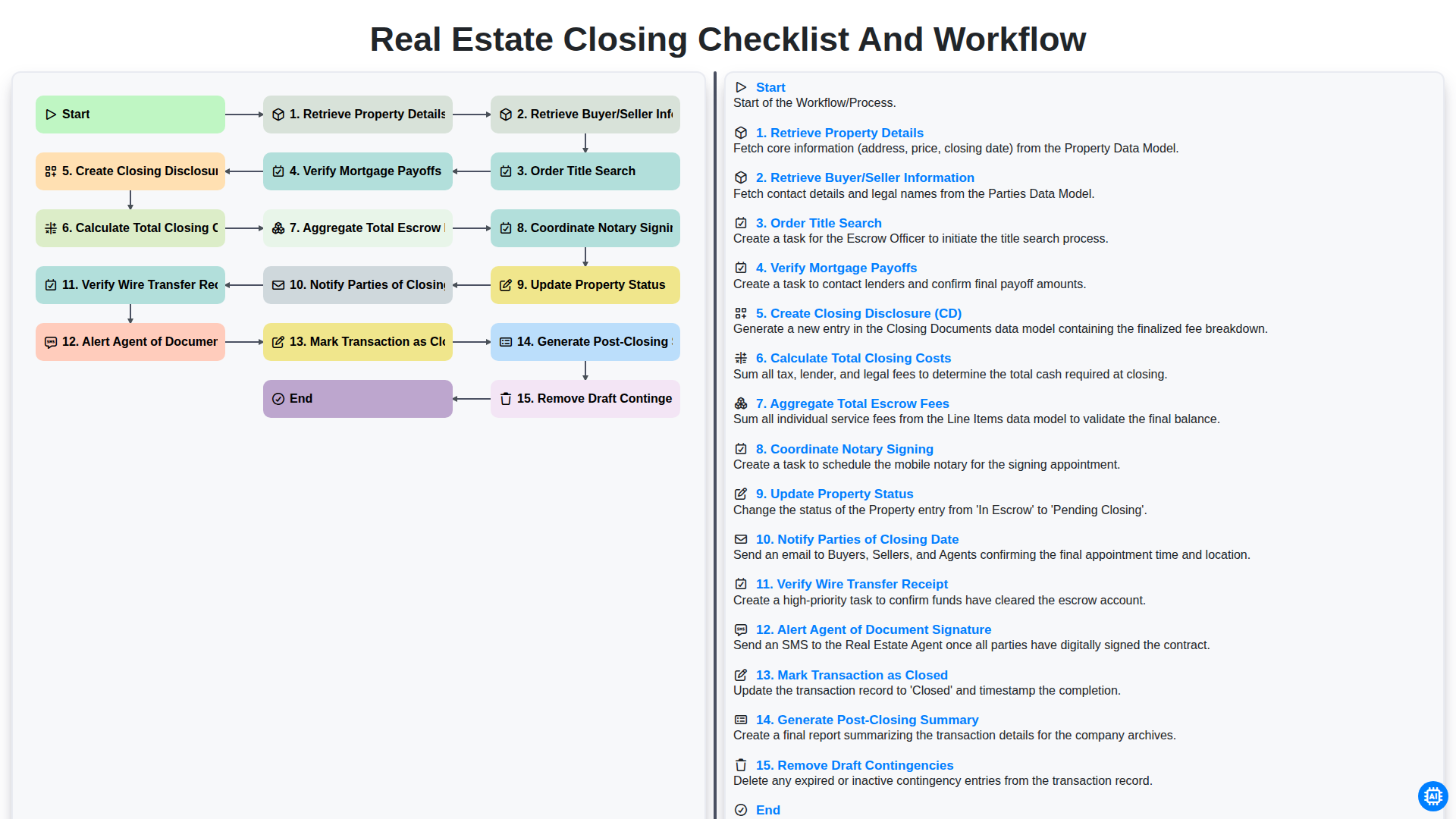
Table of Contents
- Introduction: The Importance of a Seamless Closing Workflow
- Phase 1: Initial Data Gathering and Property Verification
- Step 1: Retrieving Property Details and Buyer/Seller Information
- Step 2: Initiating the Title Search and Mortgage Payoff Verification
- Phase 2: Financial Calculations and Document Preparation
- Step 3: Creating the Closing Disclosure (CD) and Calculating Costs
- Step 4: Aggregating Escrow Fees and Finalizing Totals
- Phase 3: Coordination and Execution
- Step 5: Coordinating the Notary Signing and Notifying All Parties
- Step 6: Verifying Fund Transfers and Document Completion
- Phase 4: Post-Closing Procedures and Record Keeping
- Step 7: Updating Property Status and Finalizing Agent Alerts
- Step 8: Marking the Transaction as Closed and Generating Summaries
- Conclusion: Ensuring Compliance through Systematic Workflow
- Resources & Links
TLDR: Streamline your escrow process with this comprehensive Real Estate Closing Checklist and Workflow. This guide explains how to automate and manage every critical step-from retrieving property details and ordering title searches to verifying wire transfers and finalizing post-closing summaries-ensuring a seamless, error-free transition from contract to closing.
Introduction: The Importance of a Seamless Closing Workflow
The closing stage of a real estate transaction is the culmination of weeks, or even months, of hard work, negotiations, and preparation. It is the moment when promises become legal realities and keys finally change hands. However, this final phase is also the most high-stakes period of the entire process. Even a single oversight-a missed signature, an incorrect payoff amount, or a delayed wire transfer-can trigger a domino effect of delays, increased costs, and frustrated clients.
A seamless closing workflow is not just about convenience; it is about risk management and professional excellence. A structured, repeatable process ensures that every moving part-from title searches to notary coordination-is synchronized perfectly. By implementing a rigorous checklist, real estate professionals can eliminate the chaos often associated with closing day, reduce the margin for human error, and maintain the trust of buyers, sellers, and agents. In an industry built on reputation, a streamlined workflow is your most powerful tool for ensuring that every transaction crosses the finish line with precision and ease.
Phase 1: Initial Data Gathering and Property Verification
The foundation of a seamless real estate closing lies in the accuracy of the initial documentation. Before any legal documents can be drafted, the closing professional must ensure that the underlying data is precise and complete. This phase focuses on two critical pillars: establishing the property's identity and confirming the identities of the stakeholders involved.
The process begins by retrieving property details, which includes verifying the legal description, parcel numbers, and any specific easements or encumbrances that affect the title. Simultaneously, the team must retrieve buyer and seller information, ensuring that all contact details, legal names, and entity information (such as LLC details) are documented to prevent delays during the signing process.
Once the core details are established, the workflow moves into the critical task of ordering a title search. This step is vital to uncover any existing liens, judgments, or claims that could jeopardize the transfer of ownership. Parallel to this, the team must verify mortgage payoffs to ensure that all existing debts against the property are accurately calculated. By meticulously handling these preliminary steps, you mitigate the risk of surprises during the final stages of the transaction, ensuring a smooth transition from contract to closing.
Step 1: Retrieving Property Details and Buyer/Seller Information
The foundation of a seamless real estate closing lies in the accuracy of your initial data collection. The process begins with Retrieving Property Details, which involves gathering every essential piece of information regarding the asset being transferred. This includes verifying the legal description, checking for any recent liens or encumbrances, and ensuring that the property address matches all official records. Any discrepancy at this stage can lead to significant delays or legal complications during the final signing.
Once the property data is solidified, the next critical move is Retrieving Buyer and Seller Information. This step requires a meticulous audit of all parties involved in the transaction. You must confirm the legal names of all owners, contact information, and mailing addresses, as well as the details for any relevant intermediaries. By ensuring this information is 100% accurate from the very start, you mitigate the risk of errors in legal documents and ensure that all notifications and funds reach the correct recipients without delay.
Step 2: Initiating the Title Search and Mortgage Payoff Verification
Once the essential property and party details have been gathered, the workflow moves into the critical phase of due diligence. The next two vital steps are Ordering the Title Search and Verifying Mortgage Payoffs.
The title search is the cornerstone of a secure transaction. During this stage, a title company or attorney examines public records to ensure the property is free of undisclosed liens, encumbrances, or legal disputes. This process identifies any clouds on the title-such as unpaid property taxes, utility liens, or judgments-that could jeopardize the ownership transfer.
Simultaneously, the workflow requires a rigorous verification of mortgage payoffs. It is not enough to simply know the remaining balance on a seller's loan; the closing team must obtain official payoff statements from the lending institution to account for per diem interest and any applicable prepayment penalties. Ensuring these figures are precise is non-negotiable, as any discrepancy between the estimated payoff and the actual amount can lead to funding delays or unexpected shortages at the closing table. Successfully completing these steps ensures that the title is clear and the financial obligations of the seller are accurately accounted for before the closing disclosure is drafted.
Phase 2: Financial Calculations and Document Preparation
Once the fundamental property and party details are secured, the workflow shifts from data collection to the critical, high-stakes phase of financial precision. This stage is the backbone of a smooth closing, as it involves translating raw data into the legally binding financial disclosures that all parties must review and approve.
The process begins with the Ordering of the Title Search, a vital step to ensure the property is free of undisclosed liens or encumbrances. Simultaneously, the escrow officer must Verify Mortgage Payoffs to ensure the exact amount required to clear existing debts is known, preventing any last-minute shortfalls.
With all verified figures in hand, the focus moves to the heavy lifting of financial documentation:
- Create Closing Disclosure (CD): This is the centerpiece of the phase, detailing the final terms of the loan and the closing costs.
- Calculate Total Closing Costs: Every fee, from taxes to transfer duties, must be accounted for to ensure transparency.
- Aggregate Total Escrow Fees: All service-related costs must be totaled to provide a clear picture of the net proceeds for both buyers and sellers.
Accuracy during this phase is non-negotiable. Any error in these calculations can lead to delayed funding, missed deadlines, or even a collapsed transaction. The goal here is to create a transparent, error-free financial roadmap that prepares the file for the final signatures.
Step 3: Creating the Closing Disclosure (CD) and Calculating Costs
Once the essential property and party information is gathered and the title search is finalized, the process moves into the critical phase of financial transparency: Creating the Closing Disclosure (CD) and Calculating Costs.
The Closing Disclosure is one of the most vital documents in the entire real estate transaction. It serves as the definitive breakdown of the loan terms, as well as the final numbers for the buyer and seller. During this step, the focus shifts to absolute precision. You must meticulously aggregate all Total Escrow Fees and integrate them with the verified Mortgage Payoffs to ensure there are no discrepancies between the estimated costs provided at the time of the loan application and the final amount due at closing.
This stage involves calculating the Total Closing Costs, which include taxes, government fees, prepaid interest, and insurance premiums. The goal is to provide a transparent, line-by-line account of every penny involved in the transaction. Accurate calculation here is non-negotiable; any error in the CD can lead to delays in the signing process, missed deadlines, or even the failure of the closing itself. By ensuring these figures are finalized and double-checked, you provide all parties with the certainty they need to proceed to the final signing with confidence.
Step 4: Aggregating Escrow Fees and Finalizing Totals
Once the Closing Disclosure (CD) has been meticulously drafted and the individual mortgage payoffs are verified, the focus shifts to the final financial consolidation. This stage involves the critical task of aggregating total escrow fees, which includes everything from settlement agent fees and recording fees to administrative costs and any outstanding property taxes or assessments.
Accuracy is paramount during this phase; even a minor discrepancy in fee calculation can lead to significant delays or legal complications during the signing process. By carefully compiling these miscellaneous costs and integrating them with the primary loan figures, you ensure that the final figure presented to the buyer and seller is precise, transparent, and ready for final review. This step serves as the final mathematical checkpoint before moving into the logistics of the signing appointment.
Phase 3: Coordination and Execution
Once the administrative groundwork is laid and the numbers are finalized, the workflow shifts from preparation to active execution. This phase is the most critical period in the transaction, as it requires seamless communication between all stakeholders to ensure the legal transfer of property occurs without delay.
The core of this phase is the Coordination of the Notary Signing. During this stage, the closing agent manages the logistics of bringing all parties together-whether in person or via remote online notarization-to ensure all legal documents are executed correctly. Simultaneously, the transaction team must Notify All Parties of the Closing Date, ensuring that buyers, sellers, agents, and lenders are synchronized on the timeline to avoid last-minute scheduling conflicts.
As the signing approaches, the focus shifts toward financial finality. The team must Verify Wire Transfer Receipts to confirm that all necessary funds have been moved securely and accurately. This step is vital to ensure that the lender's requirements are met and that the seller's proceeds are ready for disbursement.
Finally, the execution phase concludes with real-time updates to the entire ecosystem. The workflow requires the team to Alert Agents of Document Signatures as they occur, providing much-needed peace of mind to the real estate professionals involved. This continuous loop of communication ensures that as signatures are captured, everyone is prepared for the final transition into the closing stage.
Step 5: Coordinating the Notary Signing and Notifying All Parties
Once the financial figures are finalized and the Closing Disclosure is prepared, the focus shifts from calculations to logistics. This is the critical phase where the theoretical agreement becomes a physical reality. Coordinating the notary signing requires precision; you must ensure that the notary is briefed on the specific documents requiring signatures and that the appointment time works for all stakeholders.
Simultaneously, communication is paramount. As the signing appointment approaches, you must proactively notify all parties-buyers, sellers, lenders, and agents-of the official closing date and time. This ensures everyone is aligned, preventing last-minute confusion or delays. By synchronizing the logistics of the signing with clear, timely notifications, you maintain the momentum of the transaction and build trust with your clients during one of the most high-stakes moments of the real estate process.
Step 6: Verifying Fund Transfers and Document Completion
Once the closing documents have been executed, the workflow shifts focus toward the critical finalization of the financial and legal aspects of the transaction. This stage is the point of no return where the transfer of equity is verified and the legal responsibility shifts.
The first priority is to verify the receipt of wire transfers. For the buyer, this means ensuring that the down payment and closing costs have been successfully transmitted to the escrow or title company. For the seller, it involves confirming that the net proceeds are accurately reflected in the incoming funds. This step is vital to prevent any discrepancies that could lead to legal disputes or delays in title release.
Simultaneously, the workflow requires a final check on document integrity. The closing agent must alert the real estate agent once all signatures are confirmed and the notary has returned the completed closing package. This notification serves as the signal that the paperwork is officially in review. Only after the funds are confirmed and the documents are validated can the transaction officially move to the final stage: marking the transaction as closed and updating the property status in your database.
Phase 4: Post-Closing Procedures and Record Keeping
Once the ink is dry and the keys have been exchanged, the transaction isn't truly complete until the final administrative loop is closed. This final phase is critical for compliance, agent satisfaction, and maintaining organized digital archives. To ensure a seamless transition from pending to closed, follow these essential post-closing steps:
- Verify Wire Transfer Receipt: Before finalizing the file, confirm that all funds have been successfully received and cleared. This ensures that the ledger balances and that no outstanding balances remain between the buyer, seller, and escrow.
- Alert Agent of Document Signature: Communication is key to a great client experience. Promptly notify the real estate agents involved that all documents have been fully executed so they can officially celebrate the win with their clients.
- Remove Draft Contingencies: Clean up your pipeline by officially removing the removed or satisfied contingencies from your tracking system. This ensures your active files list accurately reflects only the work that remains.
- Mark Transaction as Closed: Update your CRM and internal management software to change the status of the property from Pending to Closed. This triggers the end of the active workflow and the beginning of the record-keeping phase.
- Generate Post-Closing Summary: Compile a final summary of the transaction. This document should include a breakdown of the final numbers and any specific notes regarding the transaction, serving as a single source of truth for future reference.
- Final Record Archiving: Ensure all signed disclosures, the final Closing Disclosure (CD), and the recorded deed are uploaded to your permanent digital filing system. Proper record-keeping is your best defense in the event of future audits or inquiries.
Step 7: Updating Property Status and Finalizing Agent Alerts
Once the logistics of the closing are set, the focus shifts from coordination to communication and data integrity. After you have coordinated the notary signing and confirmed the signing is scheduled, the next critical step in the workflow is to Update Property Status. Transitioning the property from Under Contract to Closing Pending ensures that your entire team, including marketing and administrative staff, is working with real-time information, preventing any redundant follow-ups or conflicting communications.
Simultaneously, you must Notify Parties of the Closing Date. Transparency is the cornerstone of a smooth transaction; once the date is locked in, all stakeholders-including the buyer, seller, and relevant agents-need immediate confirmation to arrange their schedules and final preparations.
As the final signatures are collected, the workflow enters its final automated loop: Alerting the Agent of Document Signature. An immediate notification to the real estate agent provides them with the peace of mind needed to begin their post-sale follow-up with the client. This seamless handoff ensures that the momentum built during the escrow process isn't lost, allowing the agent to transition from transaction mode to client relationship mode without delay.
Step 8: Marking the Transaction as Closed and Generating Summaries
Once the final signatures are secured and the funds have been successfully transferred, the workflow moves into its final, critical phase: Marking the Transaction as Closed. This step is more than just a clerical update; it is the formal signal that the escrow period has ended and the legal ownership of the property has officially transitioned.
To ensure a seamless handoff, the following two actions must be completed immediately:
- Mark Transaction as Closed: Update your internal management system or CRM to reflect the new status. This prevents the file from sitting in active queues and triggers the official end of the escrow lifecycle.
- Generate Post-Closing Summary: Compile a comprehensive summary of the transaction. This document should include a final breakdown of the net proceeds, any adjustments made during the closing process, and a confirmation of all completed tasks. This summary serves as a vital audit trail for both your firm and the clients involved.
By standardizing these final steps, you ensure that no loose ends remain and that your records are pristine for future tax, legal, or real estate audits.
Conclusion: Ensuring Compliance through Systematic Workflow
Ultimately, implementing a standardized real estate closing checklist is about more than just organization; it is about mitigating risk and ensuring legal compliance. In an industry where a single overlooked detail-such as an unverified mortgage payoff or a missed contingency removal-can lead to costly litigation or delayed settlements, a systematic workflow acts as your strongest safeguard.
By transforming a chaotic series of tasks into a repeatable, step-by-step process, you protect your clients, your reputation, and your bottom line. As you move through each stage-from the initial retrieval of property details to the final generation of the post-closing summary-you create a transparent audit trail that ensures every stakeholder is informed and every obligation is met. Consistency is the foundation of excellence in real estate; when you master your workflow, you master the closing experience.
Resources & Links
- Investopedia: Real Estate Closing Guide: A comprehensive guide to understanding the fundamental terms and financial components involved in the real estate closing process.
- Mortgage Bankers Association (MBA): Industry resources regarding mortgage lending standards, payoff verification, and mortgage-related regulatory requirements.
- CFPB: Closing Disclosure Information: Official regulatory information regarding the Closing Disclosure (CD) requirements and consumer protection laws in real estate transactions.
- American Land Title Association (ALTA): Essential resources for title search processes, escrow fee standards, and managing title insurance workflows.
- Canva: Transaction Checklist Templates: Visual tools and templates to help real estate professionals create printable checklists for their closing workflows.
- Asana: Workflow Automation for Real Estate: Project management tools designed to automate the steps from property data retrieval to post-closing summaries.
Frequently Asked Questions
What is a real estate closing checklist?
A real estate closing checklist is a comprehensive list of tasks, documents, and requirements that must be completed and verified by all parties (buyer, seller, lender, and escrow officer) to finalize a property transaction.
What are the most important documents needed for closing?
Key documents typically include the final Closing Disclosure (CD), the Deed, the Promissory Note, the Mortgage or Deed of Trust, the Title Insurance policy, and the settlement statement.
What is the typical workflow during a real estate closing?
The workflow begins with the execution of the purchase agreement, followed by the inspection period, appraisal, mortgage underwriting, the final walkthrough, the signing of closing documents, and finally, the recording of the deed and disbursement of funds.
How long does the closing process usually take?
The timeline varies depending on the type of financing and the complexity of the transaction, but it typically ranges from 30 to 45 days from the time the contract is accepted.
What should a buyer check during the final walkthrough?
During the final walkthrough, the buyer should ensure that the property is in the agreed-upon condition, all repairs were completed, no new damage has occurred, and all included appliances and fixtures are present and working.
When should I bring my wire transfer or cashier's check?
You should bring your funds to the closing appointment according to the specific instructions provided by your escrow officer or closing attorney, typically at least 24 hours before the scheduled meeting to ensure verification.
Comments
There are no comments yet. Be the first to add one!
Real Estate Management Solution Demo
Simplify your real estate operations! ChecklistGuro streamlines property management, lease renewals, and maintenance requests. Enhance tenant satisfaction and maximize ROI. Manage it all with our Work OS.
Related Articles
Stress-Free Inspections: Your Home Inspection Coordination Checklist Template
The Ultimate Website Maintenance Checklist Template
10 Essential Checks: Your Brokerage Policy Review Checklist
The Ultimate Office Opening/Closing Checklist Template
Your Ultimate AML Compliance Checklist Template
Rent Collection Checklist Template: Your Landlord's Guide
Your Complete Flood Zone Disclosure Checklist Template
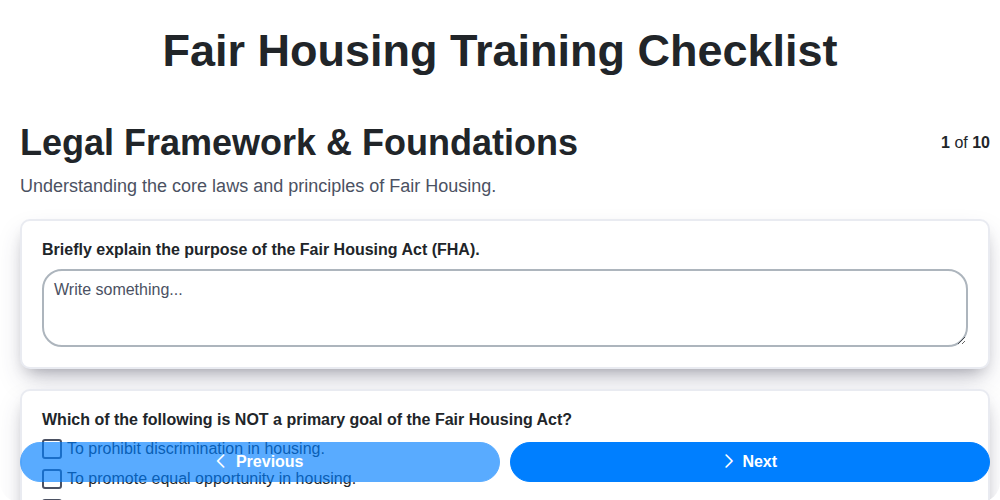
Fair Housing Training Checklist Template: Your Guide to Compliance
We can do it Together
Need help with
Checklists?
Have a question? We're here to help. Please submit your inquiry, and we'll respond promptly.