Renewable Energy Grid Integration Process: A Step-by-Step Workflow Template
Published: 05/31/2026 Updated: 10/05/2026
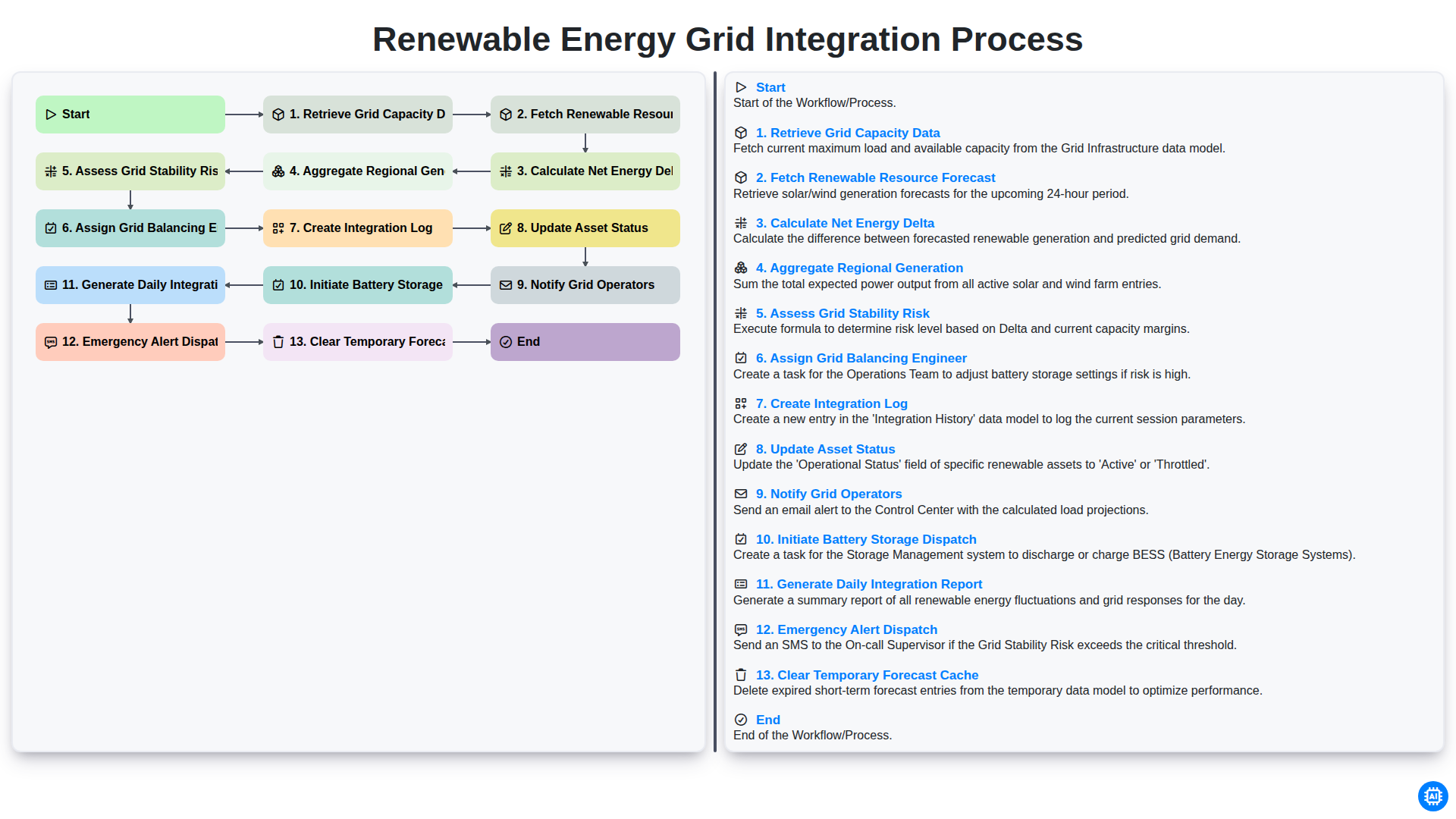
Table of Contents
- Introduction to Renewable Energy Grid Integration
- Phase 1: Data Acquisition and Resource Forecasting
- Step 1: Retrieving Essential Grid Capacity Data
- Step 2: Fetching Renewable Resource Forecasts
- Phase 2: Energy Impact Analysis
- Step 3: Calculating the Net Energy Delta
- Step 4: Aggregating Regional Generation Output
- Phase 3: Risk Assessment and Resource Allocation
- Step 5: Assessing Grid Stability Risks
- Step 6: Assigning a Dedicated Grid Balancing Engineer
- Phase 4: Operational Execution and System Updates
- Step 7: Creating the Integration Log and Updating Asset Status
- Step 8: Notifying Grid Operators and Initiating Battery Storage Dispatch
- Phase 5: Reporting, Maintenance, and Emergency Protocols
- Step 9: Generating Daily Integration Reports and Emergency Alert Dispatch
- Step 10: Post-Process Optimization and Cache Clearing
- Resources & Links
TLDR: This guide provides a comprehensive overview of the Renewable Energy Grid Integration Process workflow, detailing how to automate the complex cycle of forecasting resources, calculating energy deltas, and managing grid stability. Learn how to implement this template to streamline everything from real-time risk assessment and engineer assignment to automated emergency alerts and battery storage dispatch.
Introduction to Renewable Energy Grid Integration
As the global transition toward sustainable power accelerates, the integration of intermittent energy sources-such as solar and wind-into existing electrical infrastructures has become one of the most complex engineering challenges of the modern era. Unlike traditional fossil fuel power plants, which provide a steady and predictable flow of electricity, renewable energy is inherently variable, fluctuating with weather patterns, diurnal cycles, and seasonal shifts.
Successful grid integration requires much more than simply adding new hardware to the network; it demands a sophisticated, real-time orchestration of data, forecasting, and automated response mechanisms. To maintain a reliable power supply, grid operators must seamlessly balance the surge of green energy with the continuous demand of the consumer base, all while ensuring that the structural integrity of the grid remains uncompromised. This process relies on a highly structured workflow designed to transform unpredictable natural phenomena into a stable, manageable, and efficient energy stream.
Phase 1: Data Acquisition and Resource Forecasting
The foundation of a reliable renewable energy ecosystem lies in the precision of its initial data gathering. Before any integration decisions can be made, the process begins with the critical task to Retrieve Grid Capacity Data, ensuring that the existing infrastructure's limits are clearly understood. This provides the necessary baseline to prevent transformer overloads and line congestion.
Simultaneously, the system must Fetch Renewable Resource Forecast models, integrating real-time meteorological data to predict wind speeds, solar irradiance, and hydro levels. By combining these two streams, the workflow moves to Calculate Net Energy Delta, a vital step that determines the difference between forecasted generation and current demand. To ensure a macro-level perspective, the system will then Aggregate Regional Generation figures, consolidating inputs from various distributed energy resources (DERs) into a unified, actionable dataset. This phase ensures that the subsequent integration decisions are based on a holistic and accurate representation of both supply potential and grid capability.
Step 1: Retrieving Essential Grid Capacity Data
The foundation of a successful renewable energy integration begins with a precise understanding of the existing infrastructure's limits. The first step in our workflow involves Retrieving Grid Capacity Data, a critical phase where we analyze the current-state capabilities of the transmission and distribution networks.
During this stage, the system queries real-time telemetry from substation sensors and transformer load monitors to determine how much additional power the grid can safely absorb without triggering thermal overloads or voltage violations. By pulling historical load patterns alongside real-time congestion data, we establish a ceiling for integration. This data serves as the baseline for all subsequent calculations, ensuring that any incoming renewable surge-whether from wind or solar-is benchmarked against the physical constraints of the hardware currently in operation. Without this granular visibility into grid headroom, the risk of cascading failures or forced curtailment increases significantly.
Step 2: Fetching Renewable Resource Forecasts
Once the initial grid capacity data has been retrieved, the next critical phase involves the automated fetching of renewable resource forecasts. This step acts as the predictive engine of the integration workflow. By pulling real-time meteorological data-including wind speed projections, solar irradiance levels, and precipitation patterns-the system can anticipate the upcoming energy supply from variable sources.
Using high-resolution atmospheric modeling, the workflow ingests complex datasets to predict how much power will be available in the coming hours and days. Accurate forecasting is vital; it allows the system to move from a reactive state to a proactive one, ensuring that the subsequent calculation of the energy delta is based on reliable, data-driven projections rather than mere guesswork.
Phase 2: Energy Impact Analysis
Once the initial grid capacity data is retrieved and the renewable resource forecasts are fetched, the workflow moves into a critical analytical stage. This phase is dedicated to quantifying the immediate impact of incoming renewable surges on the existing infrastructure. The process begins by calculating the Net Energy Delta, which measures the difference between the forecasted renewable influx and the current baseline load. To ensure a macro-level perspective, the system must then Aggregate Regional Generation data, providing a comprehensive view of how localized surges contribute to the broader network demand.
The primary objective of this phase is to Assess Grid Stability Risk. By analyzing the delta and regional aggregates, the system identifies potential-frequency fluctuations or voltage instabilities. This analytical rigor is essential for determining whether the grid can absorb the incoming power or if proactive intervention is required to prevent cascading failures.
Step 3: Calculating the Net Energy Delta
After the grid capacity and resource forecasts have been gathered, the workflow moves into the critical analytical phase: Calculating the Net Energy Delta. This step acts as the mathematical bridge between potential supply and available infrastructure.
The Net Energy Delta is the real-time difference between the forecasted renewable energy generation and the current available grid capacity. By subtracting the projected load and capacity constraints from the incoming renewable supply, the system identifies whether there will be a surplus of energy, a deficit, or a state of equilibrium.
This calculation is vital for preventing curtailment-where renewable energy is wasted because the grid cannot handle the influx-and for identifying periods where supplemental power must be injected. A precise delta calculation ensures that the subsequent steps in the workflow, such as battery storage dispatch or risk assessment, are based on accurate, actionable data, allowing for a seamless transition from volatile renewable input to a stabilized, predictable power supply.
Step 4: Aggregating Regional Generation Output
Once the net energy delta has been calculated, the workflow moves into a critical phase of consolidation: Aggregating Regional Generation Output. At this stage, the system pulls together fragmented data from various localized nodes-such as individual wind farms, solar arrays, and hydroelectric plants-into a unified, macroscopic view.
This step is vital because energy production is rarely uniform across a wide geographical area; a sudden drop in wind speed in one province may be offset by peak solar irradiance in another. By aggregating these disparate streams, the integration engine creates a comprehensive big picture of total available power. This high-level visibility ensures that the grid management system isn't just reacting to isolated fluctuations, but is instead managing a synchronized, holistic energy flow that accounts for the total volumetric output of the entire renewable network.
Phase 3: Risk Assessment and Resource Allocation
Once the net energy delta and regional generation figures are established, the workflow moves into its most critical stage: evaluating the impact of new energy influx on the existing infrastructure. During this phase, the system performs an Assess Grid Stability Risk procedure, utilizing real-time telemetry to identify potential frequency fluctuations or voltage instabilities caused by the forecasted renewable surge.
To ensure human oversight accompanies automated calculations, the system will Assign Grid Balancing Engineer, designating a specialist to oversee the specific load adjustments. To maintain a transparent audit trail, the process will then Create Integration Log, documenting every variable and decision point encountered during the assessment. Simultaneously, the system will Update Asset Status across the network, reflecting the new projected load levels. Finally, to ensure seamless synchronization with the wider energy market, the workflow will Notify Grid Operators, providing them with the necessary visibility to prepare the broader network for the incoming energy shift.
Step 5: Assessing Grid Stability Risks
Once the net energy delta has been calculated, the workflow moves into a critical phase of analytical oversight: Assessing Grid Stability Risk. This step acts as the primary safeguard for the electrical infrastructure, ensuring that the influx of variable renewable energy does not compromise the equilibrium of the existing power network.
During this stage, the system analyzes the projected energy delta against real-time grid constraints. The objective is to identify potential vulnerabilities, such as voltage fluctuations, frequency instability, or thermal overloading of transmission lines. By evaluating the magnitude of the predicted surplus or deficit, the system can determine if the integration of new renewable inputs poses a threat to the synchronized operation of the grid. This assessment is vital for preventing cascading failures and ensuring that the transition from fossil fuel-based baseloads to intermittent renewables remains seamless and secure.
Step 6: Assigning a Dedicated Grid Balancing Engineer
Once the stability risks have been assessed and the potential for grid volatility is identified, the workflow moves into a critical human-in-the-loop phase: Assigning a Grid Balancing Engineer. While automation handles the heavy lifting of data processing, the complexity of large-scale renewable integration requires expert oversight to manage the nuances of real-time fluctuations.
During this step, the system automatically routes the specific integration task to a qualified engineer based on the complexity of the predicted energy delta and the current regional load. This engineer acts as the primary decision-maker, reviewing the automated risk assessment to validate the proposed balancing strategies. Their role is to bridge the gap between algorithmic forecasting and physical grid constraints, ensuring that the transition from variable renewable input to stable grid supply is managed with professional precision. This assignment ensures that every high-risk integration event has a dedicated expert accountable for maintaining equilibrium.
Phase 4: Operational Execution and System Updates
Once the critical assessments are complete, the workflow transitions from analytical forecasting into active operational execution. This phase is where data-driven insights are transformed into real-time grid management actions.
The process begins with the formal documentation of the decision-making cycle by creating an integration log and updating the asset status to ensure all stakeholders have a single source of truth regarding current system capabilities. To ensure the grid remains responsive to real-time fluctuations, the system will notify grid operators of any upcoming shifts in load or supply.
In scenarios where the calculated energy delta indicates a potential deficit, the workflow triggers an automated response to initiate battery storage dispatch, utilizing stored reserves to buffer the grid against sudden volatility. Simultaneously, the system maintains high-speed performance by clearing the temporary forecast cache, ensuring that subsequent integration cycles are based on the most current data.
However, the execution phase also accounts for critical contingencies. In the event that stability thresholds are breached, the system is programmed for emergency alert dispatch, providing an immediate communication bridge to emergency response teams. This seamless loop of action, documentation, and contingency management ensures that the integration of renewable resources remains both robust and reliable.
Step 7: Creating the Integration Log and Updating Asset Status
Once the initial assessment of grid stability risk is complete and a balancing engineer has been assigned, the workflow moves into the critical phase of documentation and system synchronization. At this stage, the system automatically generates a comprehensive Integration Log. This log serves as the single source of truth for the entire integration cycle, capturing a granular audit trail that includes the retrieved capacity data, the latest resource forecasts, and the calculated net energy delta. Detailed logging is essential for regulatory compliance and for performing post-event forensic analysis should any grid fluctuations occur.
Immediately following the log creation, the system performs an automated Update of Asset Status. This step ensures that all distributed energy resources (DERs), including solar arrays, wind farms, and battery storage units, are updated within the central management platform. By synchronizing the real-time operational status of these assets, the system ensures that the grid's digital twin accurately reflects the physical reality of the network. This seamless transition from data processing to status synchronization ensures that the downstream dispatch and notification layers are operating on the most current and accurate information available.
Step 8: Notifying Grid Operators and Initiating Battery Storage Dispatch
Once the integration log has been finalized and asset statuses updated, the workflow moves into the critical phase of active grid management: Notifying Grid Operators and Initiating Battery Storage Dispatch.
Communication is the backbone of a stable energy ecosystem. As soon as the system detects a significant shift in the energy delta, automated protocols trigger immediate notifications to grid operators. This ensures that human supervisors are alerted to real-time changes in load and supply, allowing for synchronized decision-making between decentralized renewable sources and the centralized utility network.
However, notification alone is not enough to mitigate sudden fluctuations. To proactively manage the volatility identified during the risk assessment phase, the workflow automatically initiates Battery Storage Dispatch. If the calculated net energy delta indicates a surplus, the system commands battery energy storage systems (BESS) to begin charging to prevent overvoltage. Conversely, if a deficit is detected, the system triggers a discharge sequence to inject stored power back into the grid. This seamless loop between automated alerts and rapid-response hardware deployment is what maintains equilibrium, preventing frequency deviations and ensuring that the transition to renewable energy remains both reliable and resilient.
Phase 5: Reporting, Maintenance, and Emergency Protocols
Once the active integration tasks are completed, the workflow transitions into a critical phase focused on documentation, long-term system stability, and emergency readiness. This phase ensures that every fluctuation in the grid is recorded and that the system is prepared for the next cycle of energy shifts.
The process begins with the Generation of the Daily Integration Report, which serves as the single source of truth for all energy movements, providing stakeholders with a comprehensive overview of the day's performance. To maintain system hygiene and prevent errors in future predictions, the system then performs a Clear Temporary Forecast Cache operation, ensuring that outdated data does not interfere with upcoming resource forecasts.
However, the workflow also maintains a high state of vigilance. In the event of unforeseen deviations or critical failures, the Emergency Alert Dispatch protocol is triggered immediately, bypassing standard processing to notify all relevant personnel of potential grid instability. By combining rigorous reporting with rapid-response capabilities, the integration process ensures that the grid remains both transparent and resilient against sudden volatility.
Step 9: Generating Daily Integration Reports and Emergency Alert Dispatch
Once the technical integration steps are complete, the workflow shifts from active management to documentation and contingency preparedness. This stage is divided into two critical functions: Generating Daily Integration Reports and Emergency Alert Dispatch.
The Daily Integration Report serves as the definitive record of the day's operational performance. It aggregates all the data processed throughout the workflow-including the net energy delta, regional generation totals, and any recorded stability risks-into a comprehensive summary. This report is vital for stakeholders and regulatory bodies, providing a transparent audit trail that tracks how renewable fluctuations were successfully managed by the grid.
However, data logging is not enough; the system must also be prepared for unforeseen volatility. The Emergency Alert Dispatch protocol acts as the final safety net. Should the Assess Grid Stability Risk step identify a threshold breach or should the Calculate Net Energy Delta indicate a sudden, unmanageable deficit, the system automatically triggers high-priority alerts. These dispatches ensure that grid operators and field engineers are notified instantly, allowing for manual intervention before localized instability can escalate into a broader blackout. Together, these two processes ensure that while the grid learns from historical data, it remains hyper-vigilant against immediate threats.
Step 10: Post-Process Optimization and Cache Clearing
Once the daily integration report has been successfully generated and distributed to all stakeholders, the workflow enters its final critical phase: system housekeeping and optimization. The final two steps, Emergency Alert Dispatch and Clear Temporary Forecast Cache, ensure that the system remains both responsive to crises and computationally efficient for the next cycle.
While the primary focus of the workflow is managing current energy flows, the Emergency Alert Dispatch mechanism acts as a safety net. If the integration process detects any critical discrepancies or unforeseen stability risks during the final aggregation, this automated sub-process triggers immediate notifications to emergency response teams, ensuring that grid stability is never compromised by delayed communication.
Finally, to maintain the high-speed performance required for real-time energy management, the system must Clear Temporary Forecast Cache. Throughout the workflow, various short-term data points and intermediate calculations are stored to accelerate the current processing cycle. However, leaving this transient data in the system can lead to data drift or latency in subsequent cycles. By flushing the temporary cache, we ensure that the next day's integration begins with a clean slate, preventing old, stale forecasts from polluting new, highly accurate resource predictions. This rigorous cleanup is what allows the grid integration engine to remain agile, precise, and ready for the next influx of renewable energy.
Resources & Links
- International Energy Agency (IEA): Comprehensive reports and data on global renewable energy trends and grid integration challenges.
- National Renewable Energy Laboratory (NREL): Technical research and advanced forecasting tools for solar, wind, and grid stability modeling.
- Environmental Protection Agency (EPA): Information regarding the environmental impact of energy transitions and regulatory frameworks.
- U.S. Energy Information Administration (EIA): Essential source for historical grid capacity data and regional energy generation statistics.
- IEEE Power & Energy Society: Technical standards and academic papers on grid stability, battery storage, and smart grid architecture.
- REN21 - Global Renewable Energy Network: Insights into global renewable energy policy and the integration of distributed energy resources.
Frequently Asked Questions
What is the primary purpose of a renewable energy grid integration workflow?
The primary purpose is to provide a structured, standardized approach to connecting renewable energy sources, such as solar and wind, to the existing electrical grid while ensuring stability, safety, and compliance with utility standards.
What are the key stages involved in the grid integration process?
The process typically involves several critical stages: feasibility studies, interconnection requests, technical impact assessments, system design, equipment installation, testing/commissioning, and final grid synchronization.
Why is a technical impact assessment necessary?
A technical impact assessment is crucial to evaluate how the new energy input will affect grid voltage, frequency stability, thermal limits of existing lines, and protection coordination to prevent outages or equipment damage.
What are the common challenges addressed by this template?
The template addresses challenges such as intermittency of renewable resources, voltage fluctuations, regulatory compliance hurdles, and the complexity of managing bidirectional power flows.
How can developers use this workflow template?
Developers can use this template as a roadmap to manage project timelines, ensure all technical and regulatory requirements are met, and streamline communication with Grid Operators (TSOs/DSOs) during the interconnection process.
Comments
There are no comments yet. Be the first to add one!
Energy Management Solution Demo
Managing operations, safety, and compliance in the energy sector is critical. ChecklistGuro's Work OS platform streamlines your workflow from exploration and production to distribution and maintenance. Enhance safety, improve efficiency, and ensure regulatory adherence. Discover how ChecklistGuro can transform your energy business!
Related Articles
Stay Compliant: Your Energy Metering Compliance Checklist Template
Unlock Savings: Your Complete Energy Efficiency Audit Checklist
Your Ultimate Energy Efficiency Audit Checklist Template
Power Through: Your Essential Energy Grid Outage Support Checklist
Oil & Gas Well Safety Inspection Checklist: Ensuring a Secure Operation
HVAC System Maintenance Checklist: Building Climate Control & Energy Savings
Renewable Energy Project Checklist Template
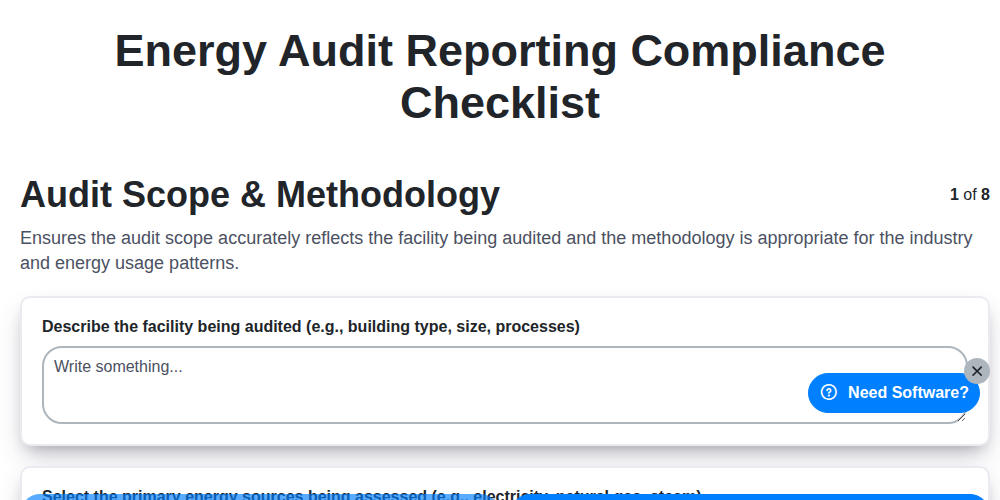
Energy Audit Reporting Compliance: Your Checklist for Success
Need help with
Checklists?
Have a question? We're here to help. Please submit your inquiry, and we'll respond promptly.