Smart Grid Deployment: Your Verification Checklist Template for Success
Published: 12/05/2025 Updated: 07/02/2026
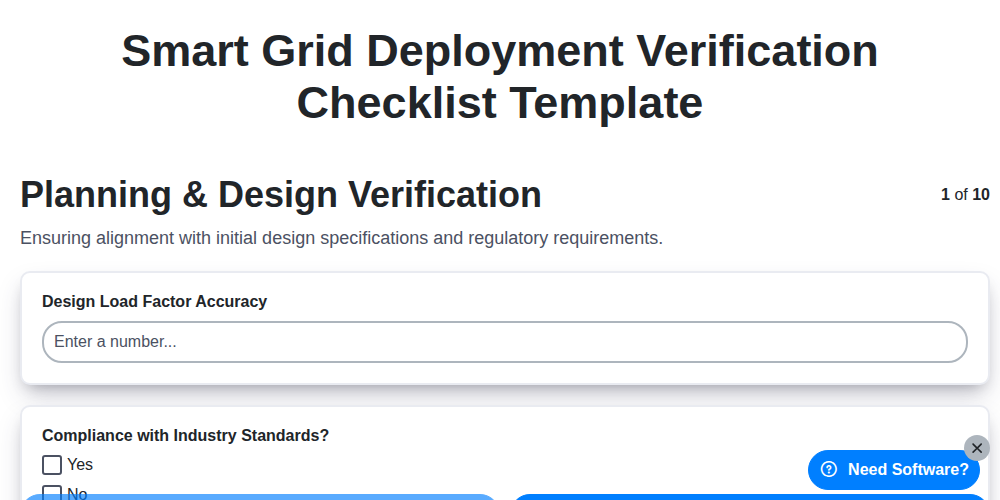
Table of Contents
- Introduction: Why Smart Grid Verification is Crucial
- 1. Planning & Design Verification: Laying the Foundation
- 2. Communication Infrastructure: Ensuring Seamless Connectivity
- 3. Advanced Metering Infrastructure (AMI): Metering Accuracy and Reliability
- 4. Distribution Automation (DA): Automated Grid Management
- 5. Cybersecurity Controls: Protecting Your Smart Grid
- 6. Data Analytics and Reporting: Turning Data into Insights
- 7. Integration with Existing Systems: A Unified Approach
- 8. User Training and Acceptance: Empowering Stakeholders
- 9. Performance Monitoring & Optimization: Continuous Improvement
- 10. Regulatory Compliance: Meeting Industry Standards
- 11. Checklist Template Overview: Key Elements
- 12. Common Pitfalls to Avoid
- Conclusion: Ensuring a Successful Smart Grid Deployment
- Resources & Links
TLDR: Deploying a smart grid? Avoid costly errors and ensure success with this comprehensive checklist! It breaks down verification into key areas like design, communication, cybersecurity, and data analytics, helping you confirm everything's working as planned, meets regulations, and your users are ready. Download the template and streamline your smart grid deployment process!
Introduction: Why Smart Grid Verification is Crucial
Smart grid deployment represents a monumental shift in how we generate, distribute, and consume electricity. While the promise of increased efficiency, reliability, and sustainability is immense, a successful transition isn't guaranteed. Simply installing new technologies isn't enough. Thorough verification at every stage is critical to ensuring your smart grid investment delivers on its potential.
A poorly verified smart grid can lead to costly rework, compromised performance, security vulnerabilities, and ultimately, a failure to meet regulatory requirements and stakeholder expectations. This isn't just about ticking boxes; it's about rigorously assessing each component and integration to confirm functionality, security, and adherence to design specifications before full operational deployment. This checklist provides a framework for that essential verification process, safeguarding your smart grid project and maximizing its long-term value.
1. Planning & Design Verification: Laying the Foundation
Smart grid deployment isn't just about installing hardware; it's a complex project requiring meticulous planning and design. This initial phase is critical and directly impacts the entire project's success. A flawed foundation will lead to costly rework, delays, and ultimately, a less effective smart grid.
This verification step ensures that the planned smart grid architecture aligns with your utility's specific needs, objectives, and long-term strategy. It's not enough to simply follow industry best practices; you need a tailored solution.
Key Verification Points Include:
- Load Profile Analysis Accuracy: Confirm that load forecasting data used in the planning phase is accurate and representative of current and projected demand.
- Geographic Coverage & Feasibility: Verify that the proposed smart grid deployment area is technically and geographically feasible. Consider terrain, existing infrastructure, and accessibility.
- Scalability Assessment: Assess whether the initial design can accommodate future growth and expansion without requiring significant modifications.
- Technology Selection Justification: Review the rationale behind the chosen technologies. Ensure they are appropriate for the specific application and compatible with existing infrastructure.
- Risk Assessment & Mitigation Strategies: Evaluate potential risks associated with the deployment, including technical, financial, and operational risks, and confirm the existence of documented mitigation plans.
- Cost-Benefit Analysis Review: Re-examine the initial cost-benefit analysis to ensure the projected returns remain accurate given current market conditions and technology advancements.
- Stakeholder Alignment: Confirm that key stakeholders (engineering, operations, IT, finance) are aligned on the plan and have provided their input and approval.
2. Communication Infrastructure: Ensuring Seamless Connectivity
A smart grid's success hinges on robust and reliable communication infrastructure. This section verifies that the chosen communication technologies and network architecture are fit for purpose and can handle the demands of a dynamic grid.
Verification Points:
- Technology Suitability: Confirm the selected communication technologies (e.g., fiber optic, wireless mesh, cellular) are appropriate for the deployment area's terrain, population density, and data transmission requirements. Evaluate factors like bandwidth, latency, and resilience to environmental factors (weather, interference).
- Network Coverage & Redundancy: Verify comprehensive network coverage across the entire smart grid deployment area. Implement redundant communication paths to ensure uninterrupted data flow even in the event of a failure. Document these backup systems and their failover mechanisms.
- Network Capacity & Scalability: Assess whether the network's capacity can accommodate current and future data volumes generated by AMI, DA, and other smart grid devices. Plan for scalability to accommodate growth in connected devices and evolving data needs.
- Interoperability Testing: Conduct thorough interoperability testing between various communication devices, protocols, and vendors. This verifies seamless communication and data exchange across the entire network.
- Security Hardening: Validate that the communication infrastructure incorporates security measures (encryption, authentication, access controls) to protect against unauthorized access and cyber threats. This includes both physical and digital security.
- Performance Testing: Perform stress tests and performance monitoring to identify and resolve bottlenecks in the communication network, ensuring timely data delivery.
- Documentation & Diagrams: Maintain up-to-date network diagrams, communication protocols documentation, and troubleshooting guides.
3. Advanced Metering Infrastructure (AMI): Metering Accuracy and Reliability
The success of a smart grid hinges significantly on the accuracy and reliability of its Advanced Metering Infrastructure (AMI). This section focuses on verifying that your AMI deployment delivers the promised benefits of improved data visibility and accurate consumption reporting.
Verification Checklist Points:
- Meter Calibration and Validation: Are meters calibrated and validated against known standards before and after deployment? Maintain calibration records meticulously.
- Data Accuracy Assessments: Implement periodic data accuracy assessments comparing meter readings with manual audits and, where possible, with other independent data sources. Quantify any discrepancies and investigate root causes.
- Communication Link Integrity: Regularly test the integrity of the communication links (e.g., RF mesh, PLC, cellular) connecting meters to the head-end system. Address signal degradation or outages promptly. Document test results.
- Meter Read Consistency: Monitor meter reading consistency over time. Sudden, unexplained changes in consumption data warrant investigation.
- Tamper Detection: Confirm that tamper detection mechanisms are functioning correctly and generating alerts appropriately. Regularly review tamper alerts.
- Power Outage Handling: Verify meter behavior during power outages, including data storage and eventual transmission upon power restoration. Confirm accurate time synchronization.
- Firmware Updates: Track and test firmware updates to meters and communication infrastructure. Ensure updates don't negatively impact accuracy or reliability.
- Meter Health Monitoring: Implement proactive meter health monitoring, including battery life, internal diagnostics, and network connectivity.
- Data Validation Rules: Ensure robust data validation rules are in place at the head-end system to flag and reject erroneous data.
- Simulated Fault Testing: Conduct simulated fault testing (e.g., meter failure, communication loss) to validate system resilience and recovery procedures.
4. Distribution Automation (DA): Automated Grid Management
Distribution Automation (DA) is a cornerstone of smart grid deployment, moving beyond manual operations to enable real-time grid control and optimization. This section of the verification checklist focuses on confirming that your DA systems are functioning as designed and contributing to a more resilient and efficient distribution network.
Key Verification Points:
- Automated Switching & Fault Location: Verify that automated switching devices (e.g., reclosers, sectionalizers, automated switches) operate correctly and according to pre-defined logic for fault isolation and service restoration. Ensure the system accurately identifies fault locations and initiates appropriate responses.
- Voltage/VAR Optimization (VVO): Confirm the VVO system is effectively regulating voltage levels and reactive power to minimize losses and improve power quality. Validate its responsiveness to changing load conditions.
- Load Shedding & Restoration: Test the load shedding and restoration protocols, ensuring they operate under pre-defined conditions to prevent cascading failures and maintain system stability during emergencies.
- Outage Management System (OMS) Integration: Verify seamless integration between the DA system and the OMS for accurate outage reporting, tracking, and restoration efforts. Test automated outage notification capabilities.
- Remote Control & Monitoring: Validate the secure and reliable remote control and monitoring capabilities for all DA devices, ensuring authorized personnel can access and manage the system from a central location.
- Real-Time Data Acquisition: Ensure the DA system accurately collects and transmits real-time data to the control center for situational awareness and operational decision-making.
- Device Configuration & Synchronization: Confirm that all DA devices are correctly configured and synchronized with the overall smart grid architecture.
5. Cybersecurity Controls: Protecting Your Smart Grid
The smart grid, with its increased reliance on digital communication and interconnected devices, presents a significantly expanded attack surface. Neglecting cybersecurity during deployment is simply not an option - it's a critical vulnerability. This checklist section focuses on ensuring robust protection throughout the smart grid deployment.
Here's what needs verification:
- Security Risk Assessment & Mitigation: Was a comprehensive risk assessment conducted, identifying potential vulnerabilities and threats? Were appropriate mitigation strategies developed and implemented based on this assessment?
- Network Segmentation: Is the smart grid network properly segmented to isolate critical components and limit the potential impact of a breach? Verify the existence and enforcement of segmentation policies.
- Authentication & Access Control: Are strong authentication methods (multi-factor authentication wherever possible) in place? Are access control policies clearly defined, documented, and rigorously enforced, limiting access based on the principle of least privilege?
- Encryption & Data Protection: Is data at rest and in transit adequately encrypted? Review encryption protocols, key management procedures, and adherence to data protection regulations.
- Intrusion Detection & Prevention Systems (IDPS): Are IDPS properly configured, monitored, and updated with current threat intelligence? Verify their ability to detect and respond to malicious activity.
- Vulnerability Scanning & Patch Management: Regular vulnerability scanning is essential. Is a process in place to identify, assess, and remediate vulnerabilities promptly? Confirm adherence to a robust patch management schedule.
- Security Information and Event Management (SIEM): A SIEM system centralizes security logs and provides real-time threat analysis. Verify its implementation, configuration, and ongoing monitoring.
- Physical Security: Don't overlook the physical security of smart grid assets - substations, data centers, and communication infrastructure. Assess physical access controls and surveillance measures.
- Incident Response Plan: A well-defined incident response plan is crucial for effectively handling security breaches. Ensure its existence, regular testing, and alignment with organizational procedures.
- Supply Chain Security: Evaluate the cybersecurity practices of third-party vendors and equipment manufacturers. Weaknesses in their security can create vulnerabilities in the entire smart grid.
6. Data Analytics and Reporting: Turning Data into Insights
A smart grid generates a lot of data. Raw data alone is just noise; its true value lies in the insights it can unlock. This section of the verification checklist focuses on ensuring your data analytics and reporting capabilities are robust and deliver actionable information.
Key Verification Points:
- Data Quality & Validation: Are data sources reliable? Are data cleansing and validation processes in place to ensure accuracy and consistency? This includes verifying data formats, ranges, and identifying/correcting outliers.
- Reporting Dashboards: Do dashboards exist to visualize key performance indicators (KPIs) like energy consumption patterns, grid stability metrics, and outage duration? Are they customizable for different user roles (e.g., engineers, management, consumers)?
- Advanced Analytics Capabilities: Have you implemented capabilities for predictive maintenance, anomaly detection, and load forecasting? Are these models accurate and regularly updated?
- Reporting Frequency & Distribution: Are reports generated at appropriate intervals (e.g., daily, weekly, monthly)? Are they delivered to the right stakeholders in a timely manner? Consider automated report delivery mechanisms.
- Data Security & Privacy: Are data access controls in place to protect sensitive energy consumption information? Are anonymization techniques used where appropriate? Ensure compliance with relevant privacy regulations.
- Reporting Tool Compatibility: Does the data analytics platform integrate seamlessly with existing systems and reporting tools?
- Feedback Mechanisms: Is there a process for users to provide feedback on the accuracy and usefulness of reports and dashboards?
This isn't just about generating pretty graphs; it's about transforming data into a strategic asset that drives operational efficiency, enhances grid reliability, and empowers informed decision-making.
7. Integration with Existing Systems: A Unified Approach
Smart grid deployment doesn't happen in a vacuum. It's crucial to recognize that new systems must seamlessly integrate with existing infrastructure, legacy systems, and utility-wide platforms. This section verifies that the integration process is robust and minimizes disruption.
Key Verification Points:
- Data Flow Compatibility: Confirm data formats and protocols between the new smart grid components and existing systems (e.g., billing, customer information systems, SCADA). Mismatched data can lead to inaccurate readings and operational inefficiencies.
- Interface Testing: Rigorous interface testing is required to validate data exchange and functionality between all integrated systems. This includes load testing to ensure systems handle expected data volumes.
- Workflow Alignment: Verify that new smart grid workflows don't break or conflict with existing operational workflows. Automation should enhance, not hinder, established processes.
- Legacy System Compatibility: Assess the compatibility with older, potentially unsupported systems. Solutions like middleware or data translation layers may be necessary. Document these adaptations thoroughly.
- Single Sign-On & Access Control: Ensure consistent authentication and authorization across integrated systems for streamlined user access and enhanced security.
- Data Governance: Establish clear data governance policies that cover data ownership, access rights, and data quality across all integrated systems.
- Rollback Procedures: Define and test rollback procedures in case integration issues arise post-deployment, allowing a return to the previous operational state.
- Impact Analysis: Comprehensive impact analysis was conducted before integration to identify potential risks and dependencies. Documentation of this analysis is vital.
8. User Training and Acceptance: Empowering Stakeholders
Successful smart grid deployment isn't solely about technology; it's about people. User training and acceptance are critical phases that often get overlooked but directly impact the project's long-term success. This isn't just about showing operators how to use new software; it's about building confidence and buy-in across all levels - from utility personnel and field technicians to end consumers.
Our checklist emphasizes a tiered approach to training:
- Utility Personnel (Operators, Technicians, Engineers): Focused on system operation, maintenance procedures, troubleshooting, and understanding data interpretation. This includes hands-on exercises and simulated scenarios.
- Customer Support Staff: Equipped to handle inquiries and provide assistance to end users, addressing common issues and explaining new functionalities.
- End Consumers: Education programs to explain the benefits of smart grid technology, including energy consumption insights, potential cost savings, and participation in demand response programs. (This can be through webinars, online portals, printed materials, or community events.)
Acceptance Testing: Following training, thorough acceptance testing is crucial. This involves real-world simulations with designated users who rigorously evaluate the system's usability and functionality. Feedback from these users is invaluable for identifying and rectifying any remaining issues before full deployment. Documented user acceptance criteria and sign-off procedures ensure accountability and demonstrate that the system meets the defined requirements. Ignoring this step risks user frustration and adoption failure, ultimately jeopardizing the entire smart grid investment.
9. Performance Monitoring & Optimization: Continuous Improvement
Smart grid deployments aren't a set it and forget it endeavor. True success hinges on ongoing performance monitoring and optimization. This phase moves beyond initial verification to ensure the smart grid operates at peak efficiency and adapts to evolving needs.
Key Focus Areas:
- Real-time Data Analysis: Establish dashboards and automated alerts to track critical performance indicators (KPIs) like voltage stability, power quality, outage duration, and energy consumption patterns. These dashboards should be accessible to operations teams for proactive issue identification.
- Adaptive Control Algorithms: Implement and continuously refine algorithms that dynamically adjust grid operations based on real-time data. This includes optimizing load balancing, voltage regulation, and fault detection.
- Predictive Maintenance: Leverage data analytics to predict equipment failures and schedule maintenance proactively. This minimizes downtime and extends the lifespan of assets.
- Performance Baseline & Benchmarking: Regularly compare actual performance against initial baselines and industry benchmarks to identify areas for improvement.
- Feedback Loops: Create feedback loops between operations teams, data analysts, and engineers to share insights and collaborate on optimization strategies.
- Algorithm Refinement: Periodically review and refine the algorithms powering your smart grid functionalities. As usage patterns evolve and new technologies emerge, algorithms must adapt to maintain optimal performance.
- Regular Audits: Conduct routine performance audits to evaluate the effectiveness of optimization efforts and identify any unforeseen challenges.
Continuous monitoring and optimization are essential for realizing the full potential of your smart grid investment. It's a commitment to ongoing improvement, ensuring a resilient, efficient, and future-proof power system.
10. Regulatory Compliance: Meeting Industry Standards
Smart grid deployments aren't happening in a vacuum. They operate within a complex web of federal, state, and local regulations. Failing to adhere to these mandates can lead to significant penalties, project delays, and ultimately, a compromised smart grid.
This section of the verification checklist is paramount. It requires meticulous documentation and a thorough understanding of applicable rules. Key areas to examine include:
- FERC Regulations: Familiarize yourself with relevant Federal Energy Regulatory Commission (FERC) orders and guidelines, particularly those related to reliability and cybersecurity.
- State Utility Commissions: Each state has its own regulatory body with specific requirements for smart grid implementation. These can encompass data privacy, meter accuracy, and interconnection standards.
- Data Privacy Laws: Ensure compliance with data privacy regulations like GDPR (if applicable) and state-specific laws regarding consumer data. Transparency and consent are often key.
- Interoperability Standards: Adherence to industry standards for interoperability, such as those defined by IEEE and IEC, is frequently mandated to ensure seamless communication between different grid components.
- Cybersecurity Mandates: Increasingly, regulatory bodies are defining specific cybersecurity controls that must be implemented and verified as part of smart grid deployments.
- Environmental Regulations: Consider the environmental impact of smart grid infrastructure and ensure compliance with relevant regulations.
Verification Actions:
- Maintain a comprehensive register of all applicable regulations.
- Document how the smart grid deployment aligns with each regulation.
- Engage with regulatory bodies to confirm compliance.
- Establish a process for ongoing monitoring of regulatory changes and updates to the deployment.
11. Checklist Template Overview: Key Elements
This Smart Grid Deployment Verification Checklist is designed to be a comprehensive guide, ensuring each critical aspect of your implementation is thoroughly assessed. It's structured around 11 key verification phases, each broken down into specific, actionable items. The template isn't just a list; it's a framework for documenting your verification process and demonstrating due diligence.
Here's a quick look at what each section covers and why it's vital:
- Planning & Design Verification: Confirms the initial design aligns with project goals, standards, and stakeholder requirements.
- Communication Infrastructure: Validates the robustness and reliability of the communication network connecting all Smart Grid components.
- Advanced Metering Infrastructure (AMI): Ensures accurate meter data collection, transmission, and management.
- Distribution Automation (DA): Verifies the automated systems function as intended, improving grid efficiency and resilience.
- Cybersecurity Controls: Critically assesses the implemented security measures to protect against cyber threats.
- Data Analytics and Reporting: Confirms data accuracy, integrity, and the effective generation of insightful reports.
- Integration with Existing Systems: Checks seamless interoperability with legacy systems and avoids conflicts.
- User Training and Acceptance: Guarantees personnel are properly trained and comfortable using the new systems.
- Performance Monitoring & Optimization: Validates ongoing performance and identifies areas for improvement.
- Regulatory Compliance: Ensures adherence to all applicable regulations and industry standards.
- Overall, the template is designed to be adaptable. You can tailor it to your specific project scope and requirements, adding or removing items as needed. A clear and documented verification process, using this template as a foundation, builds confidence in your Smart Grid deployment.
12. Common Pitfalls to Avoid
Smart grid deployments are complex undertakings, and avoiding common pitfalls is crucial for success. Here are a few key areas where projects frequently stumble:
- Insufficient Stakeholder Buy-in: Lack of engagement from utility departments, customers, and regulatory bodies can derail even the best-laid plans. Early and consistent communication is vital.
- Underestimating Integration Challenges: Integrating new smart grid components with legacy systems is often more difficult than anticipated. Thorough planning and dedicated integration teams are essential.
- Cybersecurity as an Afterthought: Waiting to address cybersecurity until after deployment is a recipe for disaster. Security must be built into every stage.
- Ignoring Data Quality: Garbage in, garbage out. Poor data quality from meters and sensors will render analytics and reporting useless. Implement rigorous data validation processes.
- Overlooking Scalability: Initial deployments often focus on specific areas. Failure to design for future expansion and increased data volumes can lead to costly upgrades later.
- Lack of User Training & Support: End-users (utility staff, customers) need proper training on new systems. Without it, adoption will be slow, and potential benefits won't be realized.
- Focusing Solely on Technology: Smart grid deployment isn't just about the hardware; it's about process changes, organizational adjustments, and a shift in operational mindset.
- Neglecting Performance Baselines: Without established baselines for pre-deployment performance, it's difficult to accurately measure the improvements delivered by the smart grid.
- Assuming One-Size-Fits-All Solutions: Each utility has unique needs and challenges. Avoid blindly adopting solutions without considering the specific context.
- Insufficient Testing and Validation: Comprehensive testing across all components and interfaces is critical before a full-scale rollout.
- Ignoring Customer Feedback: Customer concerns about privacy, billing, and system reliability must be actively addressed throughout the deployment.
- Lack of Ongoing Maintenance and Updates: Smart grid technology is constantly evolving. Regular maintenance, security patches, and software updates are essential for long-term reliability and performance.
Conclusion: Ensuring a Successful Smart Grid Deployment
Deploying a smart grid is a complex undertaking, far beyond simply installing new hardware. It's a transformative process that requires meticulous planning, rigorous testing, and ongoing optimization. This checklist - encompassing everything from initial Planning & Design Verification to long-term Performance Monitoring & Optimization - serves as a vital roadmap for ensuring a successful implementation.
Remember, this isn't a one-and-done exercise. Continuous verification and adaptation are key. As technology evolves and regulatory landscapes shift, your smart grid deployment must evolve alongside them. By consistently revisiting and updating this checklist, validating each stage and addressing any identified gaps, utilities can maximize the benefits of smart grid technology - improved efficiency, enhanced reliability, and a more sustainable energy future. Ultimately, a proactive and checklist-driven approach minimizes risks, maximizes ROI, and paves the way for a truly intelligent and resilient grid.
Resources & Links
- U.S. Department of Energy (DOE) - Energy Efficiency & Renewable Energy: Provides extensive information, resources, and funding opportunities related to smart grid technologies, deployment strategies, and best practices. Includes reports, case studies, and technical assistance programs.
- U.S. Environmental Protection Agency (EPA): While not solely focused on smart grids, the EPA's resources on energy efficiency and emissions reduction often intersect with smart grid initiatives, providing valuable context and regulatory information.
- National Institute of Standards and Technology (NIST): NIST develops standards and guidelines for smart grid technologies, particularly focusing on cybersecurity, interoperability, and data privacy. Their publications are essential for compliance and security planning.
- International Energy Agency (IEA): Provides global perspectives on energy trends, including smart grid deployment, and offers policy recommendations and data on energy efficiency.
- American National Standards Institute (ANSI): ANSI coordinates the development of consensus-based standards, many of which are critical for smart grid interoperability and safety.
- Institute of Electrical and Electronics Engineers (IEEE): IEEE develops standards and provides technical resources related to power systems, including smart grid technologies and communications protocols. Look for their Smart Grid Initiative materials.
- Smart Grid Website (DOE): This site is a central hub for smart grid information from the U.S. Department of Energy, featuring news, resources, and project updates.
- Electric Power Research Institute (EPRI): EPRI conducts research and development to advance clean, efficient, and reliable power systems. Their reports and findings are valuable for smart grid planning and implementation.
- Cisco Smart Grid Solutions: Provides insights and technologies related to communication infrastructure for smart grids. Explore their white papers and case studies.
- Siemens Smart Grid Solutions: Offers a range of smart grid technologies and solutions, including automation, metering, and cybersecurity. Useful for understanding vendor capabilities.
- ABB - Smart Grid: Provides automation and grid management solutions relevant to smart grid deployments. Examine their case studies and technical documentation.
- Oracle - Smart Grid: Provides platforms for data analytics, grid management, and cybersecurity used in smart grid environments.
- Intel - Smart Grid Solutions: Explore Intel's technologies relating to microcontrollers and data processing for smart grid applications. Great for understanding the hardware considerations.
- Hexagon - Smart Grid Solutions: Focuses on geospatial technologies used for asset management, distribution planning, and grid visualization which can be vital for smart grid planning and maintenance.
- ARC Advisory Group: ARC provides research and advisory services for industrial automation and smart grid technologies. Their publications can offer strategic insights.
Frequently Asked Questions
What is a Smart Grid and why is deployment complex?
A Smart Grid uses digital technology to improve the efficiency, reliability, and sustainability of electricity grids. Deployment is complex due to factors like legacy infrastructure, interoperability challenges, cybersecurity concerns, regulatory hurdles, and high upfront costs.
What is the purpose of this verification checklist template?
The template provides a structured approach to ensure all critical aspects of a smart grid deployment are considered and verified, minimizing risks, maximizing benefits, and ensuring project success. It serves as a comprehensive guide beyond just technical implementation.
Who is this checklist template intended for?
It's designed for a broad audience including project managers, engineers, utility executives, consultants, and anyone involved in planning, executing, or evaluating a smart grid deployment.
What types of Smart Grid technologies are covered in the checklist?
The checklist addresses a wide range of technologies including Advanced Metering Infrastructure (AMI), Distribution Automation (DA), Smart Substations, Demand Response systems, Energy Storage, and grid communication networks. Specific technologies covered are detailed in the template's sections.
How should I use this checklist template?
Download the template and systematically review each item, marking it as 'Completed,' 'Not Applicable,' or 'Requires Attention.' Document any findings and actions required. Customize the checklist to your specific project needs and local regulations.
Can I customize the checklist template?
Yes! This template is meant to be a starting point. Add, remove, or modify items to reflect your project's scope, specific technologies, regulatory requirements, and risk profile. Include relevant contact information and timelines.
What does 'Interoperability' mean in the context of a Smart Grid, and why is it important?
Interoperability refers to the ability of different smart grid components and systems from different vendors to communicate and work together seamlessly. It's crucial for avoiding silos, ensuring data flows freely, and enabling a unified grid operation.
What are some common cybersecurity risks associated with smart grid deployments, and how does the checklist address them?
Cybersecurity risks include unauthorized access, data breaches, and denial-of-service attacks. The checklist includes items to verify security protocols, access controls, encryption, and vulnerability assessments - critical for protecting the grid from cyber threats.
How does this checklist help ensure regulatory compliance?
The checklist incorporates many common regulatory requirements related to data privacy, grid security, and performance standards. It encourages verification of adherence to applicable laws and regulations specific to your region.
Where can I find additional resources and information related to smart grid deployments?
Resources can be found through industry associations like the Smart Grid Consortium, government agencies (e.g., the U.S. Department of Energy), and consulting firms specializing in smart grid technologies. The template itself includes links to some helpful resources.
Comments
There are no comments yet. Be the first to add one!
Energy Management Solution Demo
Managing operations, safety, and compliance in the energy sector is critical. ChecklistGuro's Work OS platform streamlines your workflow from exploration and production to distribution and maintenance. Enhance safety, improve efficiency, and ensure regulatory adherence. Discover how ChecklistGuro can transform your energy business!
Related Articles
Stay Compliant: Your Energy Metering Compliance Checklist Template
Unlock Savings: Your Complete Energy Efficiency Audit Checklist
Your Ultimate Energy Efficiency Audit Checklist Template
Power Through: Your Essential Energy Grid Outage Support Checklist
Oil & Gas Well Safety Inspection Checklist: Ensuring a Secure Operation
HVAC System Maintenance Checklist: Building Climate Control & Energy Savings
Renewable Energy Project Checklist Template
Energy Audit Reporting Compliance: Your Checklist for Success
Need help with
Energy?
Have a question? We're here to help. Please submit your inquiry, and we'll respond promptly.