Ensuring a Smooth Launch: Your Solar Farm Operational Readiness Checklist Template
Published: 12/05/2025 Updated: 07/02/2026
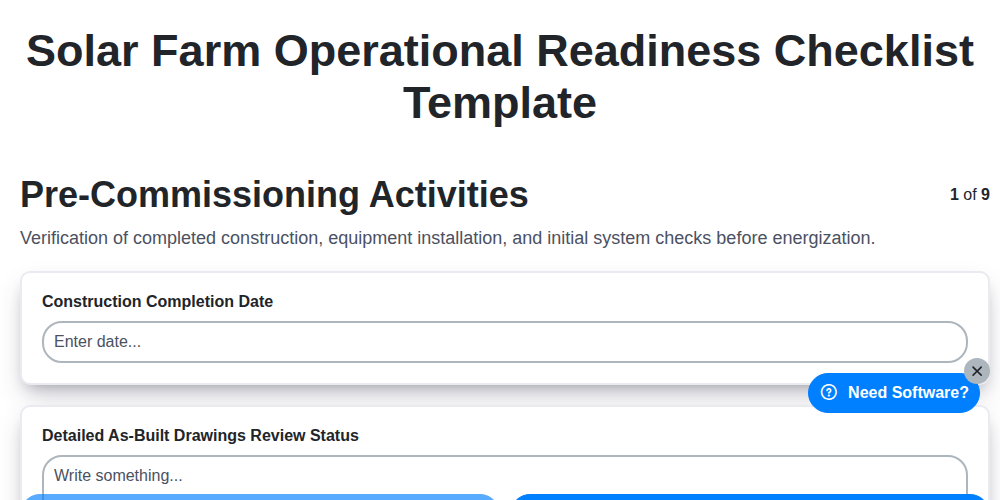
Table of Contents
- Introduction: Why Operational Readiness Matters for Solar Farms
- 1. Pre-Commissioning Activities: Laying the Foundation
- 2. Electrical System Verification: A Critical First Step
- 3. Mechanical System Inspection: Ensuring Physical Integrity
- 4. Safety Systems Validation: Protecting Personnel and Assets
- 5. Environmental Compliance: Meeting Regulatory Requirements
- 6. Performance Testing: Validating Energy Generation
- 7. Documentation & Training: Empowering Your Team
- 8. Grid Interconnection Readiness: Seamless Integration
- 9. Commissioning - A Bridge to Operations
- 10. Final Sign-Off & Acceptance: Formalizing Readiness
- Checklist Template Overview: Key Areas Covered
- Common Pitfalls to Avoid
- Beyond the Checklist: Continuous Improvement
- Conclusion: Powering a Sustainable Future
- Resources & Links
TLDR: Launching a solar farm? This checklist template helps you systematically verify everything - from electrical and mechanical systems to safety, environmental compliance, and grid readiness - ensuring a smooth, compliant, and successful operational launch. It's your go-to guide for minimizing risks and maximizing performance.
Introduction: Why Operational Readiness Matters for Solar Farms
Successfully launching a solar farm isn't just about construction completion; it's about ensuring seamless and reliable operation from day one. This is where operational readiness comes into play. A robust operational readiness process minimizes risks, maximizes energy production, and protects your investment. Without meticulous preparation, you could face costly delays, performance issues, regulatory hurdles, and safety concerns. This checklist, and the process it represents, isn't just a formality; it's a critical foundation for long-term profitability and sustainability. It ensures all systems are functioning as intended, all personnel are properly trained, and all compliance requirements are met before the farm begins generating power, allowing you to confidently enter the operational phase.
1. Pre-Commissioning Activities: Laying the Foundation
Before the thrill of generating power, a meticulous groundwork of pre-commissioning activities is absolutely vital. This phase focuses on ensuring all systems are correctly installed, aligned, and ready for the complexities of commissioning. Think of it as verifying the building blocks are in place and functioning before you start assembling the structure.
This checklist item goes beyond a simple visual inspection. It encompasses a rigorous review of:
- Installation Verification: Confirming each component - inverters, transformers, cabling, racking - is installed precisely according to design specifications and manufacturer guidelines. Deviations, even seemingly minor ones, need to be identified and corrected.
- Mechanical Integrity Checks: Ensuring all mechanical components, like actuators, dampers, and mounting hardware, operate smoothly and without obstruction. This includes torque checks on critical fasteners.
- Cleaning and Preparation: Thoroughly cleaning all equipment surfaces to remove debris that could hinder performance or pose safety hazards.
- Component Functional Testing (Limited): Preliminary checks of individual components to confirm basic functionality. This isn't a full-scale performance test, but a sanity check.
- Communication System Verification: Ensuring all communication pathways between control systems, monitoring equipment, and SCADA systems are established and functional.
A well-executed pre-commissioning phase minimizes risks during commissioning and, ultimately, contributes to the long-term reliability and efficiency of your solar farm. Skipping or shortchanging this stage can lead to costly delays and operational headaches later on.
2. Electrical System Verification: A Critical First Step
Before a single kilowatt-hour is generated, rigorous electrical system verification is absolutely crucial for a successful solar farm operation. This isn't just about flipping switches; it's a detailed, phased process designed to identify and rectify any electrical flaws before they impact performance, safety, or grid stability.
Our checklist prioritizes a multi-layered approach, starting with Low Voltage Systems (LVS). This includes thorough testing of cabling, control panels, and communication networks - ensuring reliable operation of monitoring and control equipment. We then move to High Voltage Systems (HVS), encompassing transformer testing (ratio, insulation, and no-load losses), cable testing (dielectric withstand, partial discharge), and breaker functionality verification (opening and closing times, contact resistance).
Special attention is paid to grounding resistance measurements across the entire site to guarantee a safe electrical path. Furthermore, protection system settings, including overcurrent and overvoltage protection, are meticulously verified to ensure appropriate response in fault conditions. The data collected during this phase forms the baseline for ongoing performance monitoring and provides invaluable insight for troubleshooting future issues. A detailed record of all test results, adjustments, and corrective actions is mandatory documentation.
3. Mechanical System Inspection: Ensuring Physical Integrity
The mechanical systems of a solar farm are the backbone of its operation, and a thorough inspection is crucial for long-term reliability and performance. This isn't just about aesthetics; it's about ensuring the structural integrity of the entire facility and preventing costly downtime. Our checklist prioritizes a detailed examination of these key components.
Here's what we assess:
- Foundation Integrity: We examine foundations for cracks, settlement, and proper anchoring, ensuring they can withstand wind loads and ground movement.
- Tracker Mechanism Functionality (if applicable): For tracker systems, we verify smooth and accurate tracking functionality, including gearboxes, motors, and alignment mechanisms. Lubrication levels and potential leakage are also checked.
- Mounting Structure Assessment: A visual inspection of mounting structures (racking) identifies corrosion, bolt integrity, and any signs of stress or deformation. We look for proper torque on all bolts and fasteners.
- Panel Frame Inspection: We look for any physical damage to the solar panels themselves, including cracks, delamination, and loose connections.
- Cable Management & Routing: Proper cable routing and support are vital. We ensure cables aren't exposed to unnecessary stress or abrasion.
- Drainage Systems: Effective drainage is essential to prevent water damage and corrosion. We verify proper functionality of drainage channels and gutters.
- Accessibility & Maintenance Pathways: Clear access for future maintenance is a must. We ensure pathways are unobstructed and suitable for personnel and equipment.
A proactive approach to mechanical system inspection minimizes potential issues and maximizes the operational lifespan of your solar farm.
4. Safety Systems Validation: Protecting Personnel and Assets
Ensuring the safety of personnel and protecting valuable assets is paramount during solar farm operational readiness. This phase goes beyond routine inspections; it's about rigorously testing and validating all safety systems to guarantee they function as designed under various scenarios.
This includes, but isn't limited to, verifying the functionality of:
- Fire Suppression Systems: Testing sprinkler systems, foam systems, and other fire mitigation technologies to ensure rapid and effective response. This involves pressure testing, flow rate verification, and potentially simulated fire drills.
- Arc Flash Protection: Assessing the effectiveness of arc flash mitigation strategies, including proper PPE availability and training, as well as ensuring relay settings and breaker operations are correctly configured to minimize arc flash risk.
- Emergency Shutdown Systems (ESD): Simulating emergency conditions to confirm that ESDs trigger automatically and effectively isolate the solar farm from the grid and prevent hazardous events. This includes verifying fail-safe mechanisms.
- Security Systems: Validating perimeter fencing, intrusion detection systems, surveillance cameras, and access controls. Testing response times and confirming alarm notification protocols.
- Personnel Protective Equipment (PPE) Compliance: Ensuring all personnel have the appropriate PPE and are properly trained on its usage and maintenance.
- Lightning Protection Systems: Testing grounding systems and surge protection devices to confirm their ability to protect equipment from lightning strikes.
Detailed records of all safety system validation activities, including any identified deficiencies and corrective actions, must be meticulously documented. This phase is critical for establishing a safe operating environment and minimizing potential liabilities.
5. Environmental Compliance: Meeting Regulatory Requirements
Solar farm development doesn't end with construction; it's crucial to maintain ongoing environmental compliance throughout the operational lifecycle. This checklist item focuses on demonstrating adherence to all applicable environmental regulations, permits, and conditions. This isn't just about avoiding penalties; it's about demonstrating responsible stewardship of the land and minimizing environmental impact.
Key areas to verify include:
- Stormwater Management: Validate that erosion and sediment control plans are functioning effectively. Inspect drainage systems, retention ponds, and any mitigation measures implemented to prevent runoff and pollution. Regularly monitor water quality as per permit requirements.
- Vegetation Management: Ensure adherence to landscaping and vegetation management plans, including invasive species control and habitat restoration efforts. Confirm that herbicide use (if any) aligns with approved protocols and regulations.
- Wildlife Protection: Verify ongoing monitoring programs for sensitive species and habitats, as outlined in the environmental impact assessment (EIA). Confirm any mitigation measures are actively implemented, such as bird diverters on inverters or fencing to protect nesting areas.
- Noise Pollution: Conduct periodic noise level monitoring to ensure compliance with established limits, especially near residential areas.
- Waste Management: Confirm proper handling and disposal of all operational waste, including used oils, lubricants, and decommissioned components, according to local regulations.
- Permit Validity: Maintain meticulous records of all environmental permits and licenses, ensuring they remain current and are renewed promptly. Regularly review permit conditions for any changes or updates.
Thorough documentation of all environmental monitoring activities and compliance efforts is essential.
6. Performance Testing: Validating Energy Generation
Performance testing is arguably the most critical phase of operational readiness for a solar farm. It goes beyond simply ensuring systems work; it proves they perform as predicted and meet contractual obligations. This rigorous testing validates the entire solar farm's energy generation capabilities and provides confidence in its long-term viability.
This phase involves a series of tests carried out under varying conditions - irradiance levels, ambient temperatures, and load profiles - to assess key performance indicators (KPIs). These typically include:
- Energy Yield Verification: Comparing actual energy production against projected figures based on simulations and resource assessment data. This often involves detailed data analysis over a defined period.
- Module-Level Performance Ratio (PR): Evaluating the efficiency of individual modules and identifying any underperforming units that require attention.
- String-Level Testing: Assessing the performance of strings of modules to pinpoint any localized issues that impact overall output.
- Inverter Efficiency: Measuring the efficiency of the inverters in converting DC power to AC power under various operating conditions.
- System Response to Grid Disturbances: Testing the system's ability to handle voltage fluctuations, frequency deviations, and other grid disturbances safely and effectively.
- Maximum Power Point Tracking (MPPT) Verification: Confirming that the MPPT algorithms are functioning correctly to maximize energy capture.
- Temperature Coefficient Testing: Assessing the impact of temperature variations on module performance and ensuring it aligns with manufacturer specifications.
Detailed record-keeping throughout this phase is crucial, including weather data, equipment readings, and any deviations from expected results. Addressing and rectifying any performance deficiencies before commercial operation begins is paramount to ensuring the solar farm delivers its promised energy output and achieves its financial projections. Independent third-party verification of performance testing is highly recommended for added credibility and risk mitigation.
7. Documentation & Training: Empowering Your Team
A flawlessly built and commissioned solar farm is only as effective as the team operating it. Robust documentation and comprehensive training are absolutely critical for long-term success and minimal downtime. This isn't just about ticking a box; it's about building confidence and competence across all operational levels.
What's Included?
- O&M Manuals: Detailed guides covering everything from routine maintenance to troubleshooting common issues. These should be easily accessible and regularly updated.
- Single-Line Diagrams & P&IDs: Clear visual representations of the electrical and mechanical systems, vital for quick fault diagnosis.
- Standard Operating Procedures (SOPs): Step-by-step instructions for all critical tasks, ensuring consistency and minimizing errors.
- Emergency Response Plans: Clearly defined protocols for handling events like fires, grid outages, and equipment failures.
- Training Programs: Structured training for all personnel, covering topics like system overview, safety procedures, routine maintenance, and fault response. Different tiers of training should be provided based on job roles and responsibilities.
- Record Keeping: A comprehensive system for tracking maintenance activities, performance data, and incident reports.
Why It's Essential:
- Reduced Downtime: Well-trained operators are better equipped to identify and resolve issues quickly.
- Improved Safety: Proper training minimizes the risk of accidents and injuries.
- Extended Asset Life: Correct maintenance practices, guided by thorough documentation, help maximize the lifespan of your solar farm equipment.
- Compliance: Demonstrates due diligence in meeting regulatory requirements.
Don't underestimate the power of a well-documented and expertly trained team. It's the foundation for a successful and sustainable solar farm operation.
8. Grid Interconnection Readiness: Seamless Integration
Connecting a solar farm to the electrical grid is arguably one of the most critical and complex phases of the project lifecycle. This isn't simply about plugging in - it's about ensuring stable, reliable, and compliant power delivery to the wider electricity network. A robust grid interconnection readiness checklist is paramount.
This phase focuses on verifying adherence to the grid operator's stringent requirements, which often include reactive power compensation, voltage regulation, frequency response, power quality, and communication protocols. Key steps include:
- Communication Protocol Verification: Confirming bidirectional communication between the solar farm's control system and the grid operator's SCADA system is functioning correctly, allowing for remote monitoring and control.
- Protection System Testing: Rigorous testing of protection relays and fault clearing mechanisms to ensure rapid and safe disconnection in case of grid disturbances. This includes simulating fault conditions and verifying proper operation.
- Power Quality Assessment: Detailed analysis of harmonic distortion, voltage fluctuations, and power factor to guarantee compliance with grid operator standards. This often requires specialized power quality measurement equipment.
- Reactive Power Compensation: Validation of the effectiveness of reactive power compensation systems (e.g., SVCs or STATCOMs) to maintain voltage stability and meet grid requirements.
- Grid Operator Acceptance Testing: Successful completion of all acceptance tests mandated by the grid operator, often involving third-party inspectors.
- Synchronization Testing: Verifying the ability to safely and reliably synchronize the solar farm's output with the grid.
Failure to adequately prepare for grid interconnection can lead to significant delays, penalties, and potentially even rejection from the grid. Therefore, meticulous documentation, rigorous testing, and proactive communication with the grid operator are essential for a successful handover.
9. Commissioning - A Bridge to Operations
Commissioning is arguably the most critical phase in a solar farm's lifecycle - the vital link between construction and ongoing, profitable operation. It's not just about "turning everything on"; it's a rigorous, systematic process verifying that every component and system functions as designed and meets performance expectations. A comprehensive commissioning plan, executed diligently, minimizes future operational hiccups, maximizes energy yield, and ensures long-term asset health.
This phase takes the meticulously built infrastructure and transforms it into a fully operational power plant. It's a multi-faceted effort that involves verifying, testing, and documenting every aspect of the system - from the individual solar panels to the grid connection. Successful commissioning significantly reduces the risk of costly repairs, downtime, and performance degradation after the farm begins commercial operation. It's an investment in the future, ensuring a smooth transition and optimal return on investment for years to come. Essentially, commissioning bridges the gap between construction certainty and operational reality.
10. Final Sign-Off & Acceptance: Formalizing Readiness
This is the culmination of months, perhaps years, of diligent work. The Final Sign-Off & Acceptance phase isn't just a formality; it's a crucial step to officially declare the solar farm operational and transition ownership. This section of the checklist ensures all previous phases have been thoroughly completed and verified.
It involves a comprehensive review of all documentation, including test results, inspection reports, and training records, by all key stakeholders - the EPC contractor, the owner/operator, and any relevant regulatory bodies. A formal acceptance protocol should be established beforehand, detailing the specific criteria for acceptance and the process for addressing any outstanding issues.
Key elements of this phase include:
- Formal Acceptance Document: A signed document confirming the solar farm meets all agreed-upon specifications and is ready for commercial operation.
- Warranty Validation: Verification that all warranties are in place and properly documented.
- As-Built Documentation Review: Ensuring as-built drawings accurately reflect the final construction and any modifications made during commissioning.
- Transition of Responsibilities: Clearly defining the handover of responsibilities for operations, maintenance, and troubleshooting between the EPC contractor and the owner/operator.
- Final Walk-Down: A final site inspection to confirm everything is in order and all personnel are prepared for ongoing operations.
Successful completion of this phase marks the official start of the solar farm's contribution to a cleaner energy future. It signifies a foundation built on meticulous planning, rigorous testing, and a commitment to operational excellence.
Checklist Template Overview: Key Areas Covered
Our Solar Farm Operational Readiness Checklist Template is meticulously designed to ensure a smooth and successful transition from construction to operation. It's structured around critical areas, providing a comprehensive guide for project teams. Here's a breakdown of the key areas covered:
- Pre-Commissioning Activities: This section focuses on the necessary preparations before energizing the system, including cleaning, calibration, and initial system checks.
- Electrical System Verification: A deep dive into the electrical infrastructure, including cable testing, transformer verification, inverter functionality, and grounding integrity.
- Mechanical System Inspection: Thorough assessment of mechanical components like racking, foundations, and module installations to guarantee structural integrity and optimal performance.
- Safety Systems Validation: Verification of all safety mechanisms, fire suppression systems, emergency shutdown procedures, and personnel protection measures.
- Environmental Compliance: Documentation and confirmation of adherence to all environmental permits and regulations, including noise levels, wildlife protection, and erosion control.
- Performance Testing: Rigorous testing of the solar farm's generating capabilities, including power output, efficiency, and response to varying conditions.
- Documentation & Training: Ensuring all required documentation is complete and accessible, and that operations and maintenance personnel are adequately trained.
- Grid Interconnection Readiness: Validation of all grid connection requirements and procedures, including communication protocols and protection schemes.
- Final Sign-Off & Acceptance: Formal sign-off process to confirm that all readiness criteria have been met and the solar farm is ready for commercial operation. Each stage incorporates specific checklists and verification points for detailed tracking and accountability.
Common Pitfalls to Avoid
Bringing a solar farm online is a massive undertaking, and overlooking crucial details can lead to costly delays, performance issues, and even safety hazards. Here are some common pitfalls to watch out for during operational readiness:
- Insufficient Pre-Commissioning Checks: Rushing through pre-commissioning activities is a frequent mistake. These steps are fundamental for identifying and rectifying issues before the system is energized. Skipping or inadequately performing them almost guarantees problems later.
- Incomplete Electrical System Verification: Don't just check the obvious. Comprehensive testing, including insulation resistance, partial discharge testing, and transformer winding resistance, is vital. Failing to identify subtle faults can lead to equipment failure and performance degradation.
- Neglecting Soil Stability and Drainage: Ground movement and water damage can wreak havoc on a solar farm. Inadequate geotechnical assessments and drainage solutions lead to panel misalignment, racking stress, and premature component failure.
- Ignoring Vegetation Management: Untamed vegetation can shade panels, create fire hazards, and obstruct access for maintenance. A robust vegetation management plan, including ongoing monitoring and clearance, is essential.
- Inadequate Cybersecurity Measures: Modern solar farms are vulnerable to cyberattacks. Failing to implement robust cybersecurity protocols can lead to data breaches, operational disruptions, and financial losses.
- Lack of Communication & Coordination: Operational readiness involves numerous stakeholders. Poor communication between contractors, engineers, and operations teams leads to misunderstandings, delays, and rework.
- Insufficient Data Logging and Trending: Without thorough data logging and analysis, identifying performance issues and diagnosing root causes becomes incredibly difficult.
- Overlooking Bird and Wildlife Considerations: Failure to address potential bird and wildlife interactions can lead to damage to equipment, power outages, and regulatory issues.
- Inadequate Training for Operations & Maintenance Teams: A well-designed operations and maintenance program is useless if the team isn's properly trained to execute it.
- Ignoring Local Regulations & Permits: Operating without proper permits and adhering to local regulations can result in hefty fines and project shutdowns.
- Failure to Account for Seasonal Variations: Solar performance changes throughout the year. Testing and performance guarantees should consider seasonal variations to ensure fair and accurate assessments.
- Lack of a Detailed Commissioning Report: A comprehensive commissioning report documenting all tests, results, and corrective actions is crucial for future reference and troubleshooting.
Beyond the Checklist: Continuous Improvement
The checklist, while crucial, is just the starting point. Solar farm operational readiness isn't a one-time achievement; it's an ongoing journey of optimization and refinement. Once the final sign-off is complete and the farm is generating power, the focus shifts to continuous improvement.
This includes regularly scheduled performance reviews, analyzing data from the SCADA system to identify areas for efficiency gains, and proactively addressing any emerging issues. Consider implementing a robust preventative maintenance program based on data-driven insights, not just calendar schedules.
Furthermore, stay abreast of advancements in solar technology, grid management strategies, and best practices. Participate in industry forums, attend workshops, and explore innovative solutions that can enhance the farm's performance and resilience.
Don't be afraid to revisit and update your initial readiness checklist over time. Lessons learned from operational experience and changes in regulations should be incorporated to ensure the solar farm remains at peak efficiency and maintains its compliance standards well into the future. This proactive approach will not only maximize return on investment but also contribute to the long-term sustainability of the solar farm.
Conclusion: Powering a Sustainable Future
The operational readiness checklist for a solar farm isn't just a formality; it's a critical foundation for long-term success and a testament to responsible project execution. By meticulously working through each stage - from pre-commissioning activities to final acceptance - we ensure not only that the farm functions efficiently and reliably but also that it operates safely, sustainably, and in compliance with all regulatory requirements. A robust checklist, like the one outlined, minimizes risks, maximizes energy production, and fosters community trust. Ultimately, this diligent approach contributes to the larger goal of powering a sustainable future, delivering clean energy, and mitigating climate change. Investing in thorough operational readiness is an investment in a brighter, cleaner tomorrow.
Resources & Links
- International Energy Agency (IEA): Provides data, analysis, and recommendations related to energy, including solar power. Offers insights into market trends, policies, and technologies.
- International Renewable Energy Agency (IRENA): A leading intergovernmental agency focused on renewable energy, providing policy support, technology cooperation, and capacity building. Contains extensive information on solar energy deployment and best practices.
- National Renewable Energy Laboratory (NREL): A U.S. national laboratory dedicated to researching renewable energy and energy efficiency. Provides data, research findings, and tools relevant to solar farm operations and performance.
- American National Standards Institute (ANSI): ANSI develops voluntary consensus standards for various industries, including renewable energy. Useful for understanding relevant standards for solar farm construction and operation.
- Underwriters Laboratories (UL): A globally recognized safety certification company. Solar farm equipment and systems often require UL certification to ensure safety and reliability. Their website provides information about standards and testing.
- International Electrotechnical Commission (IEC): IEC is the world's leading organization that prepares and publishes International Standards for all electrical, electronic and related technologies. Relevant for solar farm electrical system design and testing.
- Solar Energy Industries Association (SEIA): Represents the U.S. solar energy industry. Provides resources, advocacy, and industry best practices for solar farm developers and operators.
- Dubai Electricity and Water Authority (DEWA): DEWA is a leading utility in the Middle East, with significant experience in integrating large-scale solar projects. Their website may offer insights into grid interconnection and operational best practices - particularly valuable if operating in a similar environment.
- American Society of Heating, Refrigerating and Air-Conditioning Engineers (ASHRAE): Although primarily focused on HVAC, ASHRAE's standards and guidelines can be relevant to temperature monitoring and control systems within a solar farm, particularly related to inverters and transformers.
- International Organization for Standardization (ISO): ISO develops and publishes a wide range of international standards. Relevant for environmental management (ISO 14001) and quality management (ISO 9001), which can be applied to solar farm operations.
- National Institute of Standards and Technology (NIST): NIST develops standards and guidelines, some of which impact measurement accuracy and reliability, important for performance testing and data validation in solar farms.
- Electric Power Research Institute (EPRI): Conducts research and development to advance the electric power industry. They may have publications relevant to grid integration and operational improvements for renewable energy sources.
Frequently Asked Questions
What is an Operational Readiness Checklist and why is it important for a solar farm?
An Operational Readiness Checklist is a detailed document outlining all the tasks and conditions that must be met before a solar farm can safely and effectively begin commercial operation. It's crucial for minimizing startup issues, ensuring performance targets are achieved, and guaranteeing compliance with regulations - ultimately protecting your investment and maximizing ROI.
Who should use this checklist template?
This template is designed for a wide range of stakeholders involved in a solar farm launch, including project managers, operations managers, commissioning engineers, O&M teams, and internal compliance departments. It's adaptable for projects of various sizes and complexities.
Is this checklist template customizable? What aspects can I modify?
Yes! This is a template designed to be tailored to your specific project. You can add or remove tasks, modify acceptance criteria, adjust timelines, and incorporate project-specific documentation requirements. We strongly encourage you to review each item and customize it to your unique circumstances.
What types of areas does the checklist template cover?
The template covers a broad range of areas, including: Environmental, Safety, Grid Interconnection, Equipment Verification & Testing, Documentation & Training, Performance Assurance, and Contractual Obligations. Each section delves into specific tasks and requirements.
My solar farm has a battery storage system. Does this checklist address those components?
While the core checklist focuses on solar PV systems, it includes sections that can be easily adapted to incorporate battery storage components. You'll need to add specific tasks related to battery system commissioning, testing, and safety protocols within the appropriate sections. Consider adding a dedicated section if the battery system is significant.
What documentation should I prepare in conjunction with using this checklist?
You's need to prepare a variety of documentation, including: commissioning reports, testing results, equipment manuals, training records, grid interconnection agreements, environmental permits, and operation and maintenance (O&M) procedures. The checklist references many of these and you should collect, organize and make them readily available.
Where can I find more information about best practices for solar farm commissioning?
Several resources are available. The Solar Energy Industries Association (SEIA) provides guidance and industry standards. Reputable engineering, procurement, and construction (EPC) contractors often have their own detailed commissioning processes. Your local utility and regulatory agencies can also provide valuable information.
What is the difference between Commissioning and Startup?
Commissioning is a planned process that systematically verifies and documents that the solar farm, or sections of it, have been constructed and installed in accordance with the design and its operational intent. Startup is the physical beginning of the system functioning and generating power and involves processes such as powering up equipment, adjusting parameters, and achieving stable power generation levels. Commissioning precedes Startup.
How often should I review and update this checklist?
Review the checklist at least annually, or more frequently if there are changes to regulations, equipment, or operational procedures. Regular reviews ensure the checklist remains relevant and effective in maintaining operational readiness.
Comments
There are no comments yet. Be the first to add one!
Energy Management Solution Demo
Managing operations, safety, and compliance in the energy sector is critical. ChecklistGuro's Work OS platform streamlines your workflow from exploration and production to distribution and maintenance. Enhance safety, improve efficiency, and ensure regulatory adherence. Discover how ChecklistGuro can transform your energy business!
Related Articles
Stay Compliant: Your Energy Metering Compliance Checklist Template
Unlock Savings: Your Complete Energy Efficiency Audit Checklist
Your Ultimate Energy Efficiency Audit Checklist Template
Power Through: Your Essential Energy Grid Outage Support Checklist
Oil & Gas Well Safety Inspection Checklist: Ensuring a Secure Operation
HVAC System Maintenance Checklist: Building Climate Control & Energy Savings
Renewable Energy Project Checklist Template
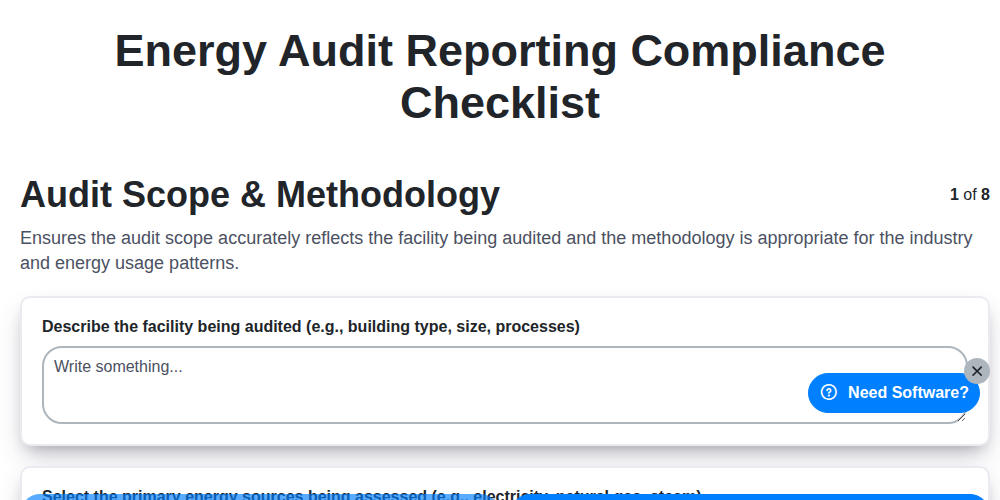
Energy Audit Reporting Compliance: Your Checklist for Success
Need help with
Energy?
Have a question? We're here to help. Please submit your inquiry, and we'll respond promptly.