Swimming Pool Safety Inspection Checklist for Property Managers
Published: 11/26/2025 Updated: 07/02/2026
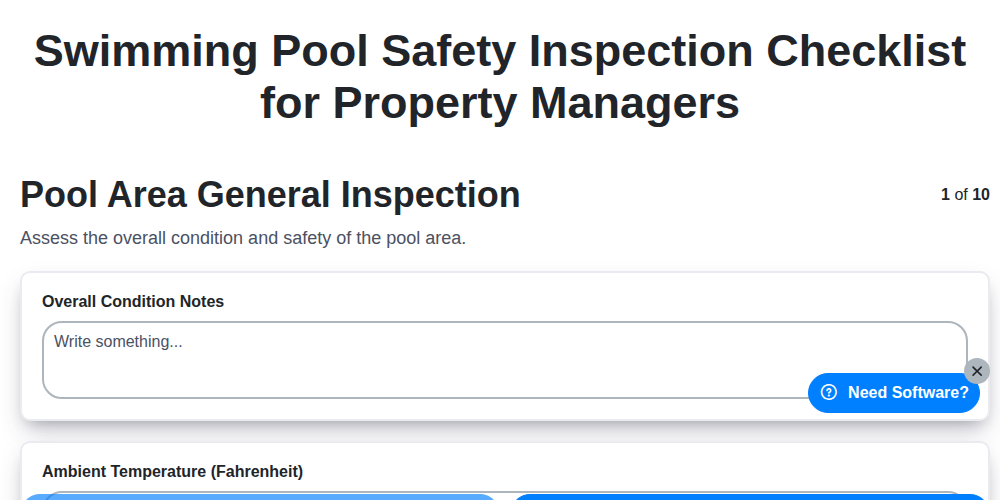
Table of Contents
- Introduction: Why Pool Safety Inspections Matter
- Pool Area General Inspection: A First Look
- Fencing & Gate Operation: Securing the Perimeter
- Drain Safety & Covers: Preventing Entrapment Risks
- Chemical Balance & Water Quality: Ensuring Safe Swimming
- Safety Equipment: Lifesaving Tools & Their Condition
- Deck & Surroundings: Identifying Trip Hazards
- Lighting & Signage: Visibility and Warnings
- Alarm System & Documentation & Records: Compliance and Accountability
- Resources & Links
TLDR: Keep your tenants and property safe! This checklist guides property managers through a comprehensive pool safety inspection - from fencing and drains to chemicals and alarms - ensuring compliance and preventing accidents. Download the template to simplify the process and protect your investment.
Introduction: Why Pool Safety Inspections Matter
As a property manager, you know your responsibilities extend far beyond simply maintaining the aesthetics of your properties. When a swimming pool is involved, those responsibilities dramatically increase, particularly concerning the safety of your tenants and their guests. A seemingly minor oversight can lead to tragic consequences and significant legal ramifications.
Regular and thorough swimming pool safety inspections aren't just a good idea-they're a necessity. They're a proactive approach to preventing accidents, ensuring compliance with local and state regulations, and demonstrating due diligence in protecting those who use the pool. This checklist is your guide to ensuring your pool area is a safe and enjoyable space, minimizing risk and providing peace of mind for everyone involved. Ignoring these crucial checks can expose you to liability, fines, and, most importantly, put lives at risk. Let's dive into the specifics of what a comprehensive pool safety inspection entails.
Pool Area General Inspection: A First Look
Before diving into the specifics of your pool safety inspection checklist, a general overview is crucial. This initial walkthrough helps identify obvious hazards and sets the stage for a more detailed assessment. Walk the entire pool area, observing everything from a distance. Look for signs of disrepair, excessive debris, overcrowding, or anything that feels "off." Note any areas that look neglected or potentially unsafe. Are there visible cracks in the pool's surface? Is the area tidy and free from clutter that could present a tripping hazard? This first impression can highlight areas needing further investigation and will inform the rest of your inspection process. Don't just look - observe.
Fencing & Gate Operation: Securing the Perimeter
The pool fence and gate are your first line of defense against accidental drowning. A compromised fence or gate can render other safety measures useless. This section focuses on thorough inspection of these crucial components.
Here's what to check:
- Fence Height: Verify the fence meets local code requirements for minimum height (typically 4 feet, but often higher).
- Fence Integrity: Look for any gaps, cracks, or weaknesses in the fence material. Even small openings can be exploited by young children.
- Gate Self-Closing and Self-Latching: This is paramount. The gate must close and latch automatically, without assistance. Test this repeatedly. Ensure the latch is at a height children cannot reach.
- Latch Security: Examine the latch mechanism. Is it secure and tamper-proof? Are there any signs of damage or wear? Consider installing a self-latching device that meets current safety standards.
- Gate Swing Direction: The gate should open away from the pool area. This prevents a child from pushing the gate open while in the pool.
- Visual Obstructions: Ensure shrubs, plants, or other objects are trimmed back so they don't obstruct the view of the gate or create a means to climb over the fence.
- Gate Hardware: Check hinges and latches for rust or corrosion, which can weaken the gate's functionality.
Drain Safety & Covers: Preventing Entrapment Risks
Pool drain entrapment is a serious hazard, and as a property manager, ensuring the safety of your tenants and guests is paramount. This section of your inspection should be meticulous and prioritize prevention.
Here's what to check:
- Drain Covers: Visually inspect all pool and spa drain covers (skimmers, main drains, and any other suction outlets) for cracks, tears, or any signs of damage. They should be securely in place and not easily dislodged. A simple push-down test should confirm they aren't pulling down into the drain.
- Anti-Entrapment Devices: Verify the presence and functionality of any required anti-entrapment devices (AEDs) as per current Virginia Graeme Baker Pool and Spa Safety Act (VGBPS) regulations. These might include drain covers, suction-limiting valves (SLVs), or automatic pool shut-off systems. Ensure they are the correct type for the drain.
- Drain Cover Condition: Check for debris build-up on drain covers that could compromise their effectiveness. Regularly cleaning them is essential.
- Suction Outlet Placement: Be aware of the location of suction outlets and the potential for anyone to be positioned directly over them.
- Record Keeping: Document the type and certification (if applicable) of AEDs installed. Keep records of maintenance and inspections related to drain safety.
Important Note: If you discover any issues with drain covers or AEDs, immediately shut down the affected pump and take corrective action. Consult with a qualified pool professional for repairs or replacements.
Chemical Balance & Water Quality: Ensuring Safe Swimming
Maintaining proper chemical balance and water quality is paramount for swimmer safety and overall pool health. Deviations can lead to skin and eye irritation, infections, and even serious health complications. This section of your inspection should be thorough and consistent.
What to Check:
- pH Levels: Ideal range is typically 7.2 - 7.8. Use a reliable test kit or meter. Record readings.
- Alkalinity: Proper alkalinity (usually 80-120 ppm) stabilizes pH.
- Free Chlorine/Bromine: Crucial for sanitization. Levels should be within the recommended range (typically 1-3 ppm for chlorine, slightly higher for bromine).
- Cyanuric Acid (Stabilizer): Protects chlorine from sunlight degradation. Levels should be within recommended ranges (often 30-50 ppm, but vary depending on local regulations).
- Calcium Hardness: Affects water clarity and prevents corrosion/scaling. Check levels against manufacturer recommendations.
- Total Dissolved Solids (TDS): High TDS can indicate buildup and necessitate partial drain and refill.
- Water Clarity: Water should be clear and free of debris. Cloudy water often signals issues with sanitation or filtration.
Important Notes:
- Regular Testing: Conduct tests at least weekly, and more frequently during peak season or after heavy usage.
- Record Keeping: Document all test results.
- Professional Guidance: If you are unsure about interpreting results or adjusting chemicals, consult with a qualified pool service professional.
- Local Regulations: Adhere to all local regulations regarding pool water quality.
Safety Equipment: Lifesaving Tools & Their Condition
Beyond the overall pool area, specific safety equipment needs regular inspection. This isn't just about having the equipment; it's about ensuring it's readily available, functional, and in good working order.
Here's what to check:
- Rescue Tube/Ring Buoy: Verify it's present, visible, and free from damage (tears, cracks, excessive wear). Ensure the rope is intact and of sufficient length.
- Shepherd's Crook/Reaching Pole: Check for rust, corrosion, or any breaks that could impair its reach and effectiveness.
- First Aid Kit: A comprehensive, well-stocked first aid kit is essential. Regularly check expiration dates on medications and supplies. Replenish used items immediately.
- Automated External Defibrillator (AED) (If Applicable): Confirm the unit is accessible, properly maintained according to manufacturer guidelines, and that staff are trained in its use. Check battery status and expiration dates.
- Backpack/Throw Bag (If Applicable): Inspect the bag for tears or damage. Ensure the rope and flotation device are in good condition.
Remember, these tools are vital for responding to emergencies. Neglecting their upkeep can have serious consequences.
Deck & Surroundings: Identifying Trip Hazards
The deck and surrounding area are high-traffic zones, making them ripe for accidents. A thorough inspection here can prevent slips, trips, and falls. Look for cracked or uneven paving stones, loose tiles, or any areas where the surface is deteriorating. Pay close attention to transitions between different surfaces - a sudden change in height can be a major trip hazard. Also, be mindful of any protruding objects like plants, furniture, or equipment that could obstruct walkways. Consider the placement of potted plants - are they stable and won't become projectiles if bumped? Finally, ensure the area is kept clean and free of debris like leaves, branches, or toys. Regular sweeping and maintenance are key to keeping this zone safe.
Lighting & Signage: Visibility and Warnings
Adequate lighting and clear signage are vital for pool safety and liability prevention. Property managers must ensure the pool area is well-lit, especially during evening hours. This includes pathway lighting, pool edge lighting, and any surrounding areas prone to darkness. Check for burnt-out bulbs and ensure fixtures are secure and functioning properly.
Signage is equally crucial. Verify that all legally required signs are present, legible, and in good condition. This includes:
- Depth markers: Clearly indicate water depth in various locations.
- Rules and Regulations: Post clear guidelines for pool use (e.g., no running, adult supervision required).
- Emergency Contact Information: Display emergency phone numbers prominently.
- Warning Signs: Use signs warning of potential hazards like shallow water, diving restrictions, or slip-and-fall risks.
- No Diving signs: If diving is prohibited.
Regularly inspect signage for fading, damage, or obstructions. Replace or repair as needed to maintain clear visibility and effective warnings for all pool users. Don't forget to check that signs are placed at appropriate heights and locations for optimal visibility.
Alarm System & Documentation & Records: Compliance and Accountability
If your property has a pool alarm system, its functionality and maintenance are paramount. Regularly test the alarm system according to the manufacturer's instructions and local regulations. Document these tests, noting the date, time, who performed the test, and the results (passed/failed, any issues encountered). A failed test should trigger immediate repairs and retesting before allowing pool use.
Beyond alarms, meticulous documentation is your best defense against liability. Keep records of everything related to pool safety:
- Inspection Checklists: Completed and signed by the inspector, detailing findings and corrective actions.
- Maintenance Logs: Records of all maintenance performed (cleaning, repairs, chemical adjustments, etc.), including dates, descriptions, and the name of the person performing the work.
- Chemical Records: Logs of water testing results, chemical additions, and the date/time of each adjustment.
- Alarm System Test Records: As mentioned above, crucial for demonstrating due diligence.
- Training Records: Proof of training for pool staff and any relevant personnel.
- Warranty Information: For equipment and safety features.
- Incident Reports: Any accidents or near misses should be thoroughly documented.
Securely store all records and make them readily accessible for review by property owners, insurance providers, or during audits. Consistent and organized documentation demonstrates a proactive approach to pool safety and provides valuable evidence in the event of an incident. Don't just do the inspections - prove you did them.
Resources & Links
- Centers for Disease Control and Prevention (CDC) - Pool Safety: Comprehensive information on pool safety, including drowning prevention, disease prevention, and safer pool features, directly from the CDC. A key source for up-to-date guidelines.
- Pool Safeguards: A national public awareness campaign created by the Consumer Product Safety Commission (CPSC) and the American Red Cross. Provides resources, checklists, and information on pool safety regulations.
- U.S. Consumer Product Safety Commission (CPSC): The CPSC's website offers recalls, safety alerts, and information on pool and spa safety standards and regulations, including fencing and gate requirements.
- American Red Cross - Swimming Safety: Offers courses and resources for swimming lessons, water safety training, and understanding aquatic emergencies. Relevant for ensuring staff are prepared.
- The Adam Fontanelli Pool Safety Foundation: Dedicated to promoting pool safety and preventing drownings. Offers resources and information, particularly focusing on entrapment hazards.
- National Swimming Pool Foundation (NSPF): Provides education, certifications, and resources for pool and spa professionals. Useful for understanding industry best practices and relevant regulations.
- USA Swimming: While primarily focused on competitive swimming, USA Swimming's website offers a good understanding of safe swimming environments and best practices, useful for creating a positive and safe experience. Good for understanding common swimmer concerns.
- Aquatics International: A trade publication covering aquatics facilities, providing updates on safety innovations, design trends, and regulatory changes. Useful for staying current on industry best practices.
- Local Pool Pro Resources: Useful for finding information regarding pool maintenance, safety tips, and troubleshooting commonly occurring issues in pool safety
Frequently Asked Questions
What is the purpose of a swimming pool safety inspection for property managers?
A safety inspection helps property managers identify potential hazards around the pool area, ensuring compliance with local regulations, minimizing liability risks, and creating a safe environment for residents and guests. It's about proactive maintenance, not just reactive repairs.
Who is responsible for swimming pool safety inspections?
Generally, property managers are responsible for ensuring swimming pool safety and regular inspections. However, specific requirements and who performs the inspections (property manager, contracted inspector, etc.) are often dictated by local laws and ordinances. Consult your local regulations for clarification.
How often should swimming pool safety inspections be conducted?
The frequency of inspections varies by location. Most jurisdictions require at least annual inspections, with some requiring more frequent checks (e.g., quarterly, monthly) or after significant weather events. Refer to your local codes and insurance requirements for specifics.
What areas should be included in a swimming pool safety inspection?
A comprehensive inspection should cover the pool itself (water chemistry, equipment), surrounding deck area (trip hazards, cracks, railings), fencing and gates (functionality, height), lighting, signage, and any nearby structures or features that could pose a risk. This checklist covers these items in detail.
What is a 'dump latch' and why is it important?
A dump latch is a mechanism used on self-closing and self-latching gates to prevent them from remaining open. It's crucial for ensuring the gate closes and locks automatically, preventing unauthorized access to the pool area. The latch must function correctly and meet specific safety standards (often per VGB).
What does 'Virginia Graeme Baker Pool and Spa Safety Act (VGB)' compliance mean?
The VGB Act mandates specific safety features for pools and spas, including anti-entrapment drain covers, proper gate and latch mechanisms, and posted safety signage. Compliance ensures these features are installed and maintained to prevent accidental entrapment or drowning.
What should I do if I identify a safety hazard during the inspection?
Immediately document the hazard, prioritize it based on severity, and take corrective action as soon as possible. This might involve repairs, replacements, or temporary safety measures. Keep detailed records of all identified hazards and the actions taken.
Are there specific requirements for pool signage?
Yes. Signage must be clearly visible and communicate essential pool rules, warnings (e.g., "No Diving"), emergency contact information, and CPR/First Aid availability. Specific sign requirements are often detailed in local ordinances and the VGB Act.
What records should I keep related to swimming pool safety inspections?
Maintain thorough records of all inspections, including the date, findings, corrective actions taken, and any maintenance performed. These records are vital for demonstrating due diligence, complying with regulations, and managing liability.
Where can I find more information about local swimming pool safety regulations?
Contact your local building department, health department, or pool safety authority. Check your local government website for ordinances and guidelines. Consult with a qualified pool professional for expert advice.
Comments
There are no comments yet. Be the first to add one!
Real Estate Management Solution Demo
Simplify your real estate operations! ChecklistGuro streamlines property management, lease renewals, and maintenance requests. Enhance tenant satisfaction and maximize ROI. Manage it all with our Work OS.
Related Articles
Stress-Free Inspections: Your Home Inspection Coordination Checklist Template
The Ultimate Website Maintenance Checklist Template
10 Essential Checks: Your Brokerage Policy Review Checklist
The Ultimate Office Opening/Closing Checklist Template
Your Ultimate AML Compliance Checklist Template
Rent Collection Checklist Template: Your Landlord's Guide
Your Complete Flood Zone Disclosure Checklist Template
Fair Housing Training Checklist Template: Your Guide to Compliance
Need help with
Real Estate?
Have a question? We're here to help. Please submit your inquiry, and we'll respond promptly.