Why Manual Logistics Management is Killing your Profit Margins
Published: 9.09.2026 Updated: 10.09.2026
Table of Contents
- The Hidden Costs of Manual Logistics: Where Your Profits Are Leaking
- The Error Trap: How Human Oversight Destroys Scalability
- The Real-Time Visibility Gap: Why Spreadsheets Can't Save Your Supply Chain
- Top Logistics Management Software Solutions for 2026
- Why ChecklistGuro is the Ultimate Work OS for Automated Logistics Operations
- Comparing the Leaders: Feature-by-Feature Breakdown
- How to Transition from Manual Chaos to Automated Precision
- Resources & Links
TLDR: Manual logistics management is driving up operational costs through human error, lack of real-time visibility, and inefficient resource allocation. This post explores how switching from fragmented spreadsheets to a centralized Work OS-specifically comparing industry leaders like ChecklistGuro against traditional tools-can eliminate costly bottlenecks, recover lost margins, and provide the automated oversight necessary for modern, scalable supply chain operations.
The Hidden Costs of Manual Logistics: Where Your Profits Are Leaking
In the race to optimize supply chain efficiency, most operations leaders focus on fuel costs, carrier rates, and warehouse overhead. While these are critical, there is a much more insidious silent killer lurking in your balance sheet: the cost of manual management.
When your logistics processes rely on manual data entry, fragmented spreadsheets, and endless email threads, you aren't just losing time-you are actively hemorrhaging margin.
The High Price of Human-Dependent Processes
Manual logistics management creates a series of micro-leaks that, when aggregated, can devastate your bottom line.
1. The Cost of Error Correction
In a manual environment, every hand-off is a point of failure. A single typo in a shipping address, a missed digit in a SKU number, or a failure to update a delivery window in a static spreadsheet leads to rerouted shipments, returned goods, and expedited shipping fees. These correction costs are often invisible because they are buried within general operational expenses, but they represent pure profit loss.
2. The Opportunity Cost of Talent
Every hour your Operations Leads spend reconciling Excel files or chasing status updates via phone calls is an hour they are not spent on strategic scaling, vendor negotiations, or network optimization. When your most expensive human capital is stuck performing low-value administrative tasks, your company's ability to grow is effectively capped by your headcount.
3. The Latency Tax
In 2026, speed is a competitive advantage. Manual systems are inherently reactive. By the time a discrepancy is discovered in a manual log, the damage-be it a missed SLA or a frustrated client-has already occurred. This latency creates a reactive loop where your team is constantly firefighting instead of forecasting.
The Margin Erosion Cycle
The danger of manual management is its deceptive scalability. It works fine when you have ten shipments a day. But as your volume increases, the complexity grows exponentially, not linearly. Without an automated Work OS to act as your single source of truth, your operational costs will eventually outpace your revenue growth, leading to a shrinking margin despite increasing top-line sales.
The Error Trap: How Human Oversight Destroys Scalability
In the world of logistics, manual is often a synonym for fragile. When your operations rely on manual data entry, physical clipboards, and individual memory, you aren't just running a business-you are managing a series of inevitable failures.
The Domino Effect of Single-Point Failures
In a manual environment, your entire workflow is only as strong as the person currently holding the pen. When a Project Manager misses a single line item on a spreadsheet or a Warehouse Lead forgets to update a delivery status, the error doesn't stay isolated. It ripples.
A missed timestamp leads to a delayed dispatch, which leads to an angry client, which leads to a costly expedited shipping fee, and ultimately, a direct hit to your bottom line. These small, invisible errors aggregate into a massive, systemic drain on your margins.
The Scalability Ceiling
Manual processes create a complexity tax. As your shipment volume grows, your operational overhead grows exponentially rather than linearly.
The More People Fallacy
The traditional response to increased workload is to hire more coordinators and administrators. However, adding more human layers to a manual system actually increases the surface area for errors. More people means more fragmented communication, more inconsistent data, and more opportunities for oversight.
The Data Silo Problem
Without a centralized Work OS, critical information lives in disparate places: email threads, sticky notes, and individual Excel files. This fragmentation makes it impossible to gain a macro view of your operations. You cannot optimize what you cannot accurately measure.
Precision vs. Guesswork
Scaling requires a move from reactive firefighting to proactive orchestration. Manual oversight forces your team into a perpetual state of catch-up, where they are constantly correcting mistakes rather than optimizing routes, managing vendor performance, or identifying cost-saving opportunities. To scale profitably, you must replace human fallibility with systemic reliability.
The Real-Time Visibility Gap: Why Spreadsheets Can't Save Your Supply Chain
In the high-stakes world of modern logistics, information is only as valuable as its availability. If your team is relying on static spreadsheets, you aren't just managing data-you are managing a rearview mirror.
The Illusion of Control
Spreadsheets provide a sense of order, but they offer a dangerous illusion of control. A cell in a CSV file might show that a shipment was In Transit, but that data point is dead the moment it is entered. By the time an Operations Lead identifies a delay in a manual log, the delay has already cascoted through your entire supply chain, leading to missed delivery windows, unhappy clients, and expensive emergency rerouting.
The Cost of Data Lag
In a manual environment, there is a significant time gap between an event occurring in the field and that event being reflected in your central dashboard. This Data Lag creates several critical profit drains:
- Reactive Decision Making: You are constantly solving yesterday's problems rather than preventing tomorrow's disruptions.
- The Communication Tax: When data isn't live, your team spends hours in meetings, emails, and Slack threads simply trying to verify the current status of a shipment.
- Inventory Blind Spots: Without real-time synchronization, you risk overstocking to compensate for uncertainty or facing stockouts due to unforeseen bottlenecks.
Moving Beyond the Static Cell
To protect your margins, you need a single source of truth that breathes with your operations. True visibility requires a platform where data flows automatically from the point of origin to the final mile.
While traditional spreadsheets act as a graveyard for outdated information, a modern Work OS transforms logistics into a dynamic, live ecosystem. You need a system that doesn't just record what happened, but alerts you to what is happening right now, allowing you to pivot before a delay becomes a loss.
Top Logistics Management Software Solutions for 2026
Choosing the right software isn't just about replacing paper with digital forms; it's about selecting a foundation that can handle the increasing complexity of global supply chains. In 2026, the industry has moved beyond simple tracking. The market is now divided into three distinct categories of software: Legacy ERPs, Niche TMS (Transportation Management Systems), and Modern Work OS platforms.
The Heavyweights: Enterprise Resource Planning (ERP) Systems
For massive, multinational corporations, ERPs like SAP S/4HANA remain a standard. These platforms offer deep integration with finance and procurement. However, for most mid-sized operations, they are often overkill. They are notoriously expensive, incredibly complex to implement, and frequently suffer from rigid workflows that make quick pivots in the field nearly impossible. They provide data, but they rarely provide agility.
The Specialists: Niche Transportation Management Systems (TMS)
Tools like Oracle TMS or MercuryGate are designed specifically for high-volume freight auditing and carrier management. If your sole focus is optimizing long-haul freight lanes and carrier selection, these are powerful. The downside? They often operate in a silo. They are excellent at managing the move, but they struggle to manage the process-the human-centric checklists, driver inspections, and warehouse workflows that happen outside of the freight movement itself.
The New Standard: The Unified Work OS (The ChecklistGuro Advantage)
The most successful operations managers are moving away from fragmented silo software and toward Work OS platforms. This category focuses on the intersection of data and execution.
Why ChecklistGuro is Leading the Shift
While traditional TMS tools focus only on the shipment, ChecklistGuro focuses on the entire operational ecosystem. It bridges the gap between high-level logistics data and ground-level execution.
- Standardized Execution: Unlike static databases, ChecklistGuro allows you to embed mandatory operational workflows directly into your logistics lifecycle. This ensures that what is planned is exactly what is executed.
- Dynamic Scalability: While ERPs require months of consulting, ChecklistGuro provides a specialized Logistics Management solution that can be deployed and customized in days, allowing your processes to evolve as fast as your supply chain does.
- Closing the Visibility Gap: We don't just track the shipment; we track the compliance and the process. By digitizing every checkpoint, ChecklistGuro eliminates the black holes in your operation where manual errors and lost margins typically hide.
Summary Comparison
| Feature | Legacy ERP | Niche TMS | ChecklistGuro (Work OS) |
|---|---|---|---|
| Primary Focus | Centralized Finance/Data | Freight & Carrier Optimization | Operational Workflow & Execution |
| Implementation Speed | Slow (Months/Years) | Moderate | Rapid (Days/Weeks) |
| Process Flexibility | Very Low | Moderate | Very High |
| Human-Error Reduction | Low (Data entry heavy) | Moderate | High (Automated Checklists) |
| Cost-to-Value Ratio | Low | Moderate | High |
Why ChecklistGuro is the Ultimate Work OS for Automated Logistics Operations
Beyond Simple Tracking: A Unified Command Center
While traditional logistics software often functions as a siloed tool-focusing solely on one aspect like fleet tracking or warehouse inventory-ChecklistGuro redefines the category by acting as a comprehensive Work OS. For Operations Leads, this means you aren't just adding another tab to your browser; you are integrating your entire logistics workflow into a single, intelligent ecosystem.
Eliminating the Context Switching Tax
One of the greatest silent killers of margin is the context switching tax-the time lost when your team jumps between emails, spreadsheets, and fragmented tracking tools. ChecklistGuro eliminates this by unifying task management, real-time documentation, and automated checklists within a single interface. When your drivers, warehouse staff, and dispatchers operate on the same unified platform, the latency between action and visibility disappears.
Automated Guardrails for Every Process
In manual management, a single missed step in a shipping checklist can lead to costly rerouting, customs delays, or lost cargo. ChecklistGuro introduces automated operational guardrails. Our specialized logistics module ensures that no step is skipped, no document is missing, and no deadline is overlooked. The platform proactively alerts Team Leads to deviations before they escalate into expensive logistical nightmares.
Data-Driven Decision Making at Scale
The true power of ChecklistGuro lies in its ability to turn operational actions into actionable intelligence. Unlike legacy systems that only tell you what happened, ChecklistGuro provides the how and why.
- Standardization: Every shipment follows a gold-standard protocol.
- Audit Readiness: Every action is timestamped and logged, making compliance effortless.
- Scalability: As your volume increases, your overhead doesn't have to. You can scale your logistics complexity without scaling your headcount.
By replacing fragmented manual processes with a centralized, automated Work OS, ChecklistGuro doesn't just help you manage logistics-it helps you master them.
Comparing the Leaders: Feature-by-Feature Breakdown
When choosing the right software to replace manual processes, it is easy to get overwhelmed by the sheer number of options in the market. To make an informed decision, you need to look beyond basic task tracking and evaluate how each platform handles complex, interdependent logistics workflows.
Below, we break down how the leading contenders in the logistics management space compare across the most critical operational metrics.
The Competitive Landscape: A Comparative Overview
Selecting a tool depends heavily on your team's specific complexity. We have categorized the top players into three distinct groups: Legacy ERPs, General Project Management Tools, and Specialized Work OS Platforms.
1. Legacy Enterprise Resource Planning (ERP) Systems
Best for: Massive global conglomerates with infinite budgets. While heavyweights like SAP or Oracle offer immense power, they often come with a complexity tax.
- Pros: Deep integration with manufacturing and global finance modules.
- Cons: Extremely high implementation costs, steep learning curves, and a lack of agility. They are often too rigid for fast-moving logistics teams that need to pivot daily.
- The Verdict: Overkill for most mid-market operations and often too slow to react to real-time supply chain disruptions.
2. General Project Management Software
Best for: Small teams with very simple, non-linear tasks. Tools like Trello or Asana are excellent for creative workflows but often struggle when faced with the rigorous, repetitive, and high-stakes nature of logistics.
- Pros: Extremely easy to adopt; low entry cost.
- Cons: Lacks specialized logistics logic (such as automated waybill tracking, inventory triggers, or standardized compliance checklists). They rely heavily on manual updates, which brings you right back to the manual error problem.
- The Verdict: Good for a digital to-do list, but insufficient for managing a professional logistics ecosystem.
3. Specialized Work OS Platforms (The Gold Standard)
Best for: Operations Leads seeking scalability, automation, and error reduction. This category-led by ChecklistGuro-represents the evolution of logistics management. These platforms combine the flexibility of a project tool with the rigorous structure of a specialized logistics engine.
| Feature | Legacy ERP | General PM Tools | ChecklistGuro |
|---|---|---|---|
| Automation Depth | High (but rigid) | Low (manual-heavy) | High (Adaptive & Trigger-based) |
| Implementation Speed | Months/Years | Days | Hours/Days |
| Standardized Checklists | Complex/Difficult | Basic/Manual | Native & Mandatory |
| Real-time Visibility | High | Low | High (Single Source of Truth) |
| Cost-to-Value Ratio | Low | High | Exceptional |
Why ChecklistGuro Leads the Pack
Unlike general tools that simply track what happened, ChecklistGuro is designed to ensure what happens.
While competitors focus on viewing data, ChecklistGuro focuses on executing workflows. Our specialized logistics module allows Operations Leads to build unskippable, automated checklists that ensure every shipment, every inspection, and every handoff follows a standardized protocol. This eliminates the human error variable that erodes profit margins, providing a level of operational discipline that even the most expensive ERPs struggle to deliver without massive customization.
How to Transition from Manual Chaos to Automated Precision
Moving from a world of fragmented spreadsheets and paper trails to a streamlined, automated environment doesn't happen overnight, but the cost of delay is far higher than the cost of implementation. Transitioning to a modern Work OS is a strategic pivot that requires a structured approach.
1. Audit Your Current Friction Points
Before implementing new tech, identify exactly where your margin leaks are occurring. Map out your current workflow and pinpoint where manual data entry, redundant communications, and status check phone calls are draining your team's time. You cannot automate a broken process; you must first understand the bottlenecks.
2. Prioritize Centralization Over Fragmentation
The biggest mistake leaders make is app fatigue-buying five different tools for five different tasks. The goal of your transition should be to move toward a single source of truth. Look for a platform like ChecklistGuro that functions as a unified Work OS, where your checklists, real-time tracking, and team communication live in one ecosystem rather than scattered across email threads and sticky notes.
3. Implement Checklist-First Automation
Automation shouldn't be a black box that no one understands. Start by digitizing your existing Standard Operating Procedures (SOPs) into intelligent, actionable checklists. By moving your manual steps into a digital framework, you ensure that even as you scale, the quality of execution remains identical every single time.
4. Phase Your Rollout
Don't attempt to migrate your entire global operation in a single weekend.
- Phase 1: The Pilot Program. Select one high-impact department or a specific shipping lane.
- Phase 2: Data Integration. Connect your new software to your existing ERP or inventory systems to ensure data flows without manual re-entry.
- Phase 3: Full-Scale Deployment. Once the pilot proves the ROI through reduced error rates and saved man-hours, scale the platform across the entire organization.
5. Empower Your Team, Don't Just Replace Them
A transition is only successful if your Operations Leads and Project Managers adopt the tool. The shift from manual to automated is not about reducing headcount; it is about reallocating human intelligence. When you remove the burden of manual tracking, your team is free to focus on high-value tasks like vendor negotiation, route optimization, and strategic growth.
Resources & Links
- Gartner: Industry-leading research and insights on supply chain technology trends and logistics software evaluation.
- Supply Chain Brain: Expert analysis on supply chain management, automation, and the impact of manual processes on profitability.
- Forbes: Business perspectives on digital transformation and the economic impact of operational inefficiencies.
- McKinsey & Company: Deep dives into global supply chain resilience and the cost-benefit analysis of automated logistics.
- Logistics Management: News and resources focusing on the latest trends in transportation, warehousing, and automated workflows.
- IBM Supply Chain: Information on visibility, AI, and real-time data tracking to bridge the visibility gap.
- SAP: Enterprise-level insights into integrated logistics management and end-to-end supply chain visibility.
- Oracle Cloud SCM: Solutions for managing complex logistics operations and reducing human error through automation.
- Capterra: User reviews and feature comparisons for various logistics and supply chain management software.
- G2: Software comparison platform to evaluate the best TMS and WMS solutions for 2026.
- ChecklistGuro: The ultimate Work OS designed to automate logistics operations and eliminate manual errors.
- Supply Chain Management Review: Academic and practical resources regarding operational excellence and scalability in logistics.
- Inbound Logistics: Resources focusing on the movement of goods and the integration of automation in modern logistics.
- ZDNet: Tech-focused news regarding the role of IoT and real-time tracking in supply chain visibility.
- Supply Chain Digital: Insights into digital transformation strategies for logistics leaders and decision-makers.
- TechCrunch: Updates on emerging logistics technologies and startups disrupting the manual management space.
- Blue Yonder: Advanced solutions for supply chain planning, execution, and automated decision-making.
- Microsoft Dynamics 365: Cloud-based tools for managing logistics operations with real-time data integration.
Comments
There are no comments yet. Be the first to add one!
Logistics Management Solution Demo
Tired of shipping delays, lost packages, and inefficient routes? ChecklistGuro's Work OS platform streamlines your entire logistics operation, from warehouse management and order fulfillment to route optimization and delivery tracking. Gain real-time visibility, reduce costs, and improve customer satisfaction. Learn how ChecklistGuro can transform your logistics business!
Related Articles
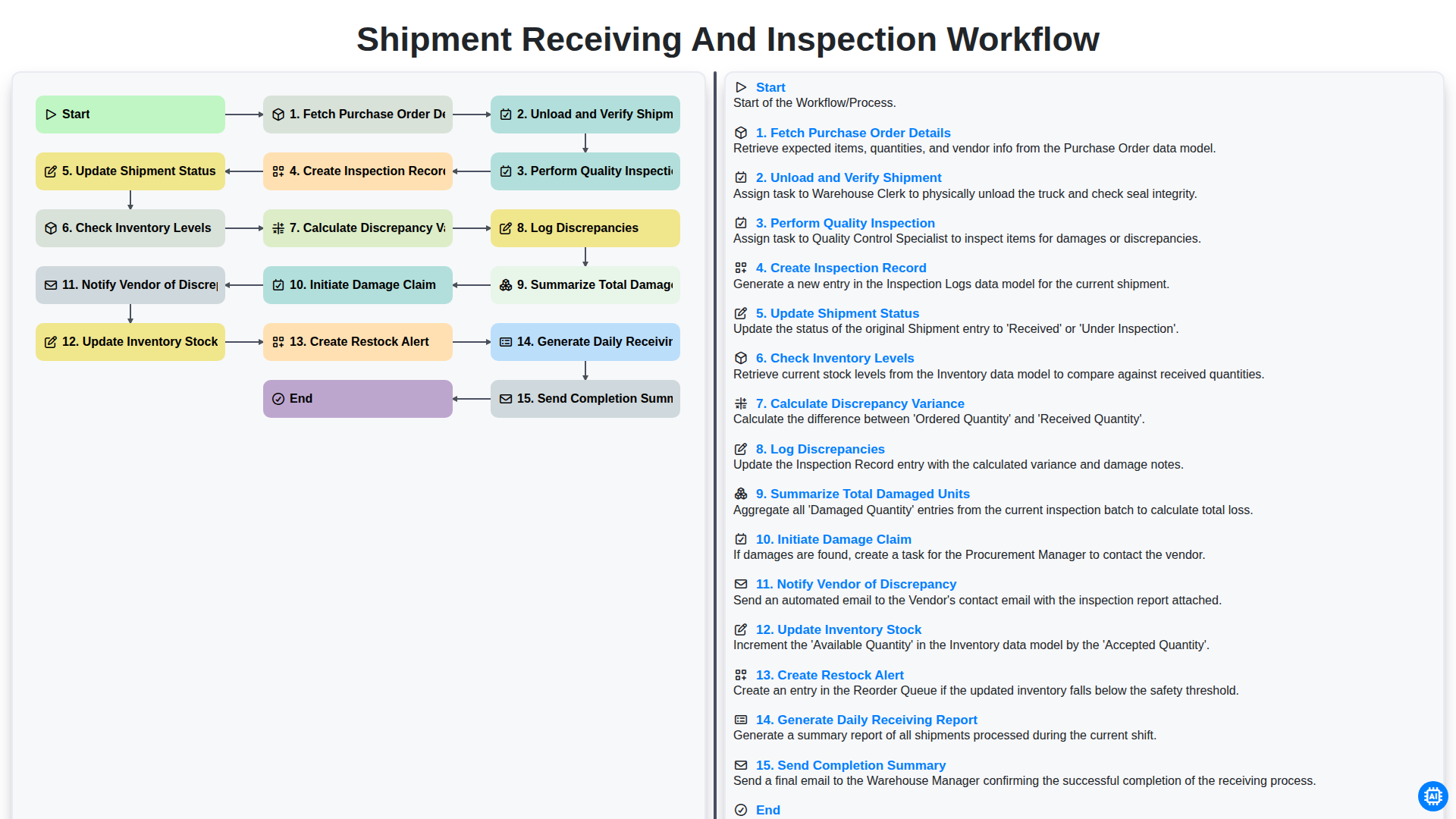
Shipment Receiving and Inspection Workflow: A Step-by-Step Guide to Streamlining Your Logistics Process
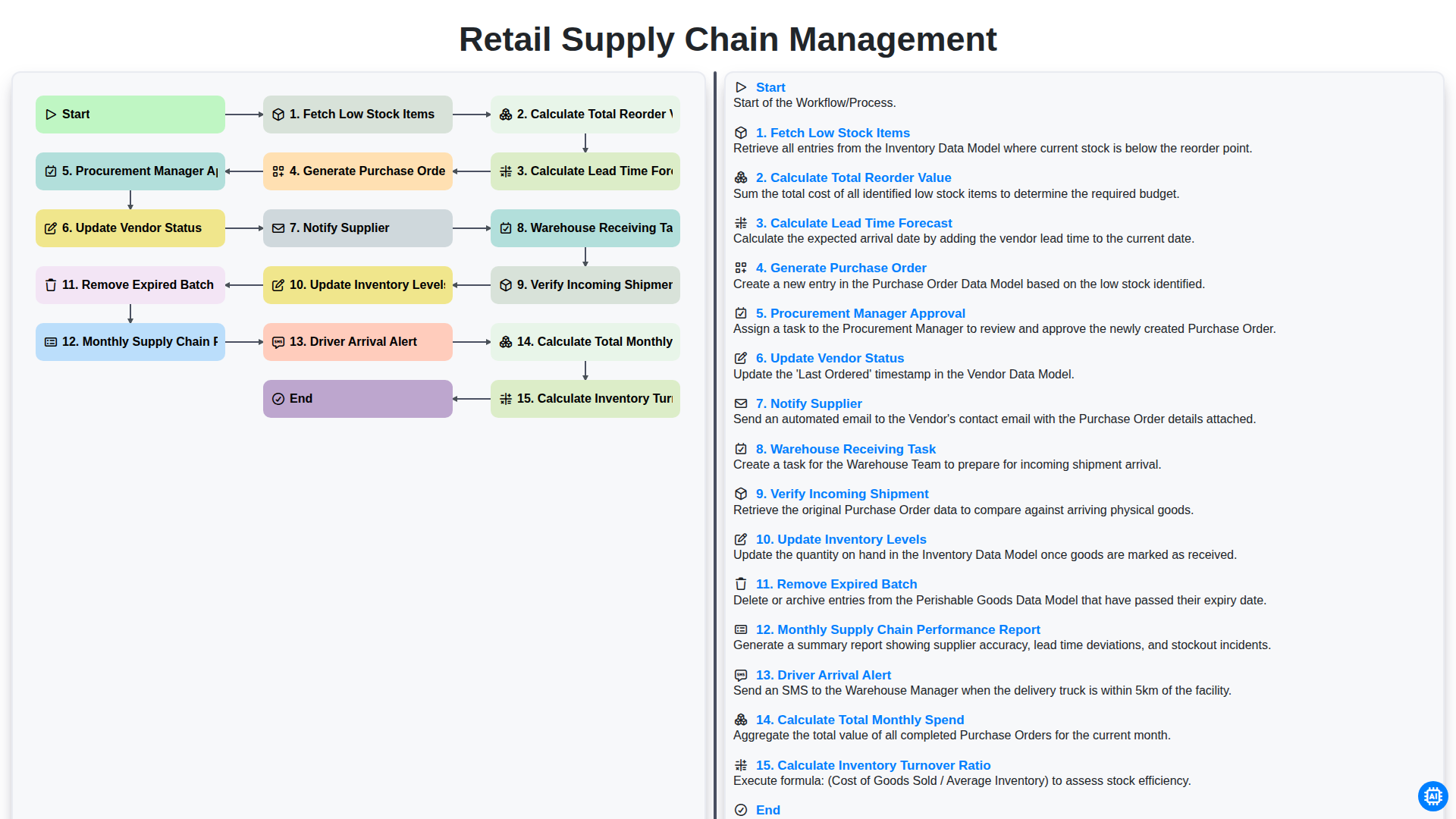
Mastering the Retail Supply Chain: An End-to-End Workflow for Seamless Inventory & Procurement Management

Paper vs ChecklistGuro in Logistics Management
How to Improve your Logistics Management with AI in 2026?
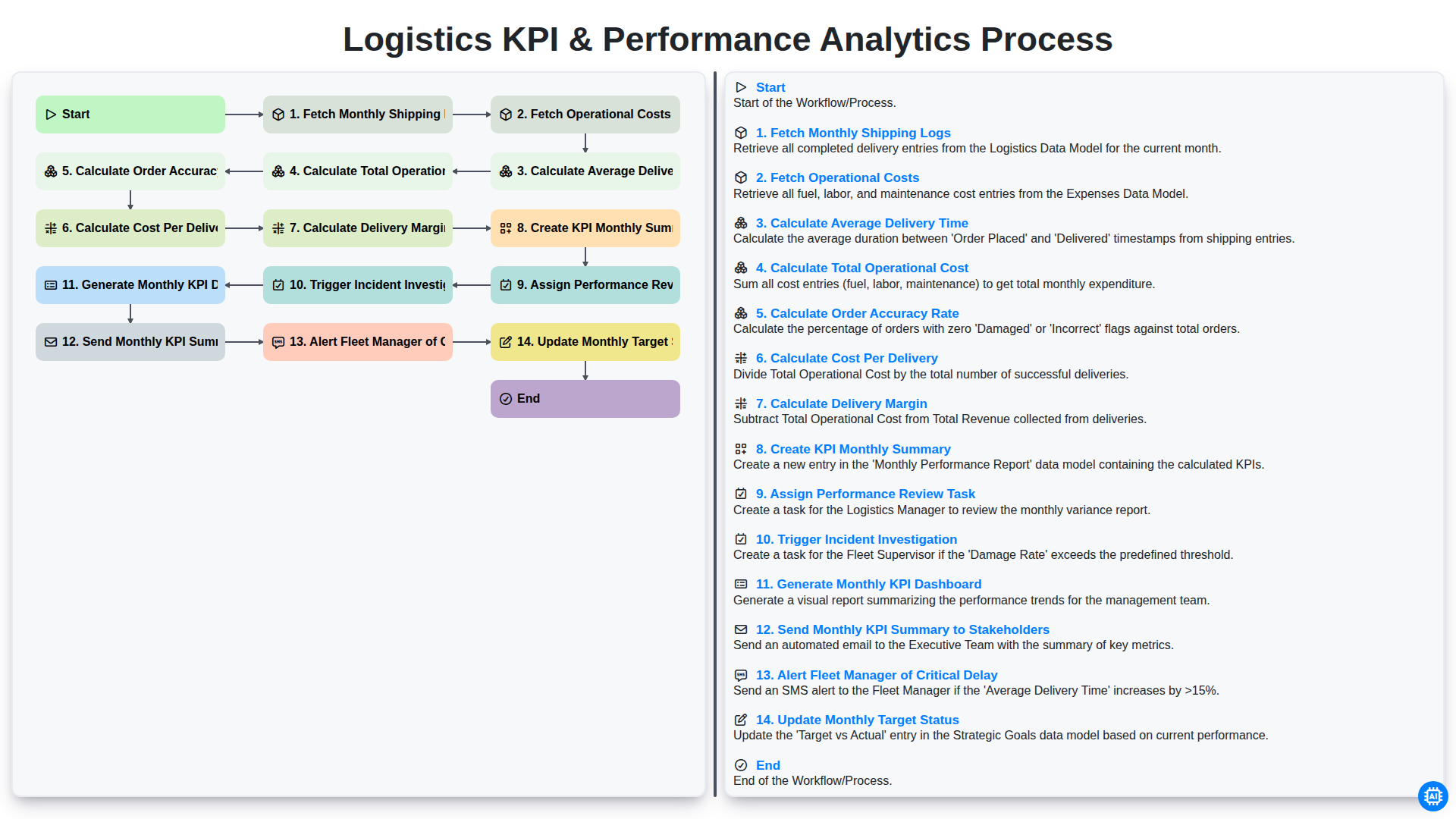
Mastering Logistics Efficiency: A Comprehensive Guide to the KPI & Performance Analytics Process

Excel vs ChecklistGuro in Logistics Management
How to improve your Logistics Management
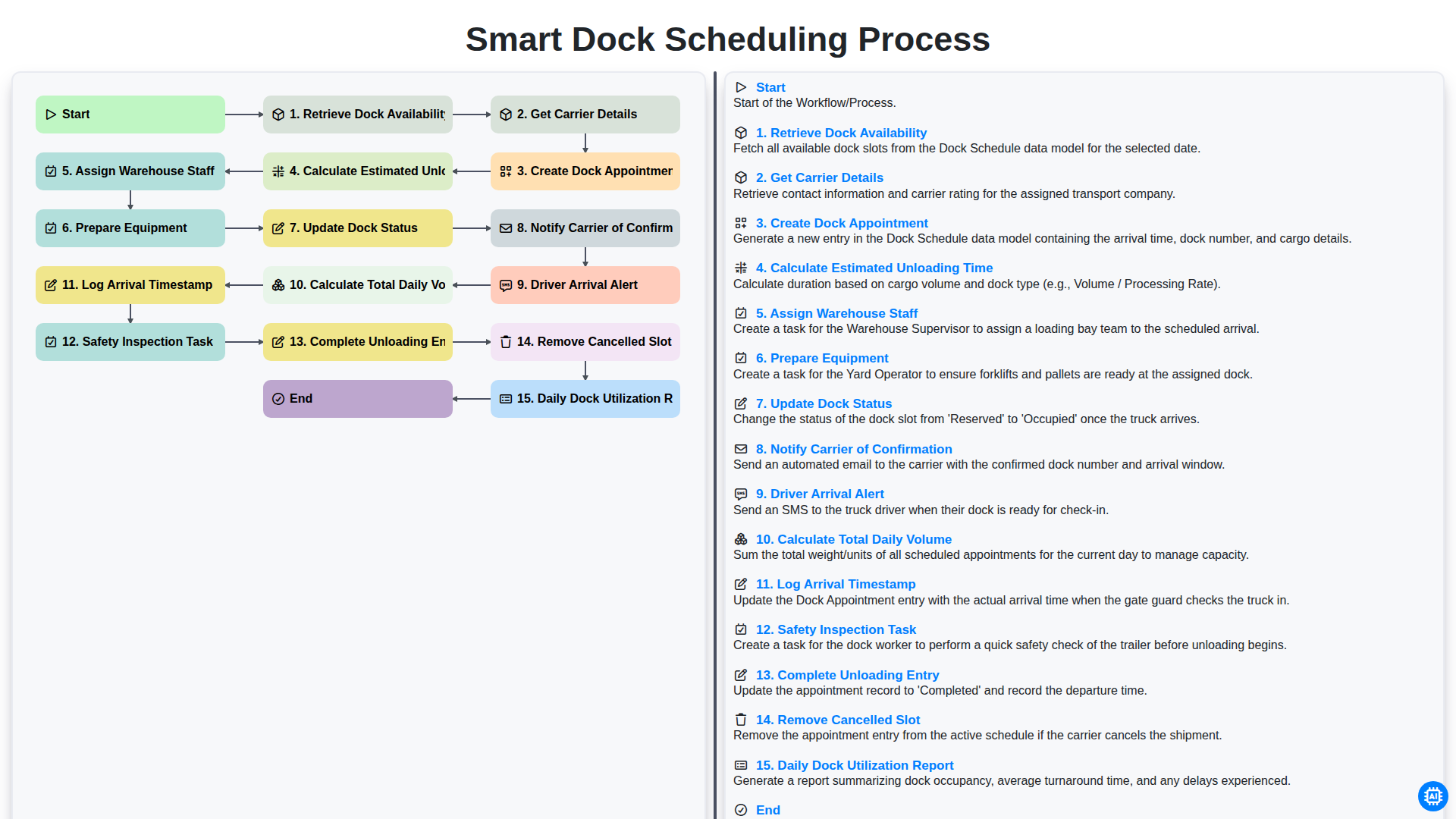
Smart Dock Scheduling Process: A Streamlined Workflow for Efficient Warehouse Operations
Need help with
Checklists?
Have a question? We're here to help. Please submit your inquiry, and we'll respond promptly.