 ChecklistGuro
Crypto & Digital Asset Accounting Audit Checklist 2026
Ensure total accuracy and regulatory compliance with our professional Crypto & Digital Asset Accounting Audit Checklist 2026. Designed specifically for modern finance teams and accounting managers, this comprehensive template provides a step-by-step framework for auditing cryptocurrency holdings, managing private key security protocols, reconciling blockchain transactions with ledger entries, and verifying digital wallet balances. Whether you are managing Bitcoin, Ethereum, or stablecoins, this checklist helps you navigate the complexities of digital asset valuation, tax implications, and much-needed audit trails. Streamline your decentralized finance (DeFi) workflows and mitigate the risks of volatility and security breaches with the ultimate 2026 guide to digital asset oversight.
Wallet & Private Key Governance
Verification of custody protocols, multi-signature authorization processes, and security audits for hot and cold storage solutions.
Wallet Storage Type
Authorized Signatories/Approvers
Wallet Public Address Reference
Last Access Audit Date
Access Control Policy Document
Incident Report/Key Rotation Notes
Compliance Officer Attestation
Digital Asset Inventory & Ownership Verification
Reconciliation of on-chain balances against internal ledger records to ensure all held assets are accounted for and owned by the entity.
Wallet Address Identifier
Asset Class Type
Verified On-Chain Balance
Snapshot Date
Blockchain Explorer Export
Custody Method
Auditor Verification Signature
Transaction Record & Block Explorer Audit
Validation of transaction hashes, timestamps, and confirmations against blockchain explorers to ensure the integrity of the transaction history.
Audit Date
Transaction Hash (TxID) Verified
Blockchain Network
Confirmed Block Height
Block Explorer Screenshot/Export
Auditor Verification Signature
Valuation & Fair Market Value (FMV) Assessment
Review of pricing feeds, exchange rate sources, and the methodology used to determine the fair market value of volatile assets at reporting dates.
Valuation Date
Primary Pricing Source
Asset Unit Price (USD)
Valuation Methodology Notes
Proof of Price / Screenshot
Controller Approval
Cost Basis & Tax Lot Tracking
Verification of FIFO, LIFO, or Specific Identification methods used for tracking the cost basis of acquired, traded, or liquidated digital assets.
Cost Basis Accounting Method
Asset Acquisition Date
Purchase Price per Unit (Fiat)
Quantity of Tokens/Assets Acquired
Transaction Receipt or Trade Confirmation
Notes on Specific Tax Lot Adjustments
Smart Contract & Protocol Risk Review
Assessment of the security audits and technical risks associated with interacting with DeFi protocols, liquidity pools, or staking mechanisms.
Protocol Risk Category
Smart Contract Address
Smart Contract Audit Report
Risk Assessment Notes
Last Security Audit Date
Identified Vulnerability Types
Regulatory & Tax Compliance Documentation
Review of 1099-DA/1099-MISC readiness, AML/KYC compliance records, and documentation for reporting requirements in 2026 jurisdictions.
Tax Filing Deadline Date
Jurisdiction of Tax Nexus
Compliance Documents Prepared
Proof of Tax Residency/Registration
Regulatory Entity Name
Compliance Officer Attestation
Stablecoin & Wrapped Asset De-pegging Review
Audit of the collateralization and stability mechanisms for all pegged assets held within the corporate treasury.
Asset Type Identified
Current Peg Deviation Percentage
Observed De-pegging Incident Description
Date of Significant Price Deviation
Proof of Reserve or Audit Report
Controller Approval of Risk Assessment
Fiat-to-Crypto On/Off-Ramp Reconciliation
Detailed matching of bank statements and fiat-based exchange accounts with crypto-inbound and crypto-outbound movements.
Transaction Date
Fiat Amount Disbursed/Received
Currency Type
Exchange/Gateway Name
Bank Statement/Transaction Receipt
Transaction Direction
Controller Approval
Gas Fee & Network Transaction Cost Analysis
Verification of the accounting treatment for network fees (gas), miners' fees, and their categorization as operational expenses or capitalized costs.
Transaction Date
Total Gas Fee Paid (in Native Token)
Gas Fee Converted to USD
Accounting Treatment
Network/Blockchain Name
Transaction Receipt/Block Explorer Screenshot
Frequently Asked Questions
Can I customize this template after installing it?
Absolutely. Once installed, you can add, remove, or reorder tasks, add custom fields, and adjust deadlines to fit your specific workflow.
Can I add images or photos to these checklist items?
Yes. Our platform allows you to attach photos, signatures, and notes to any checklist item for better verification and proof of completion.
Can I create a custom checklist from scratch instead of using a template?
Yes. You can use our "Create your own checklist" feature to build a unique workflow tailored exactly to your operational requirements.
Can I add dependencies between tasks?
Yes, you can set up conditional logic and dependencies to ensure your team follows the correct sequence of operations.
Can I assign specific checklist items to different team members?
Yes. You can assign individual tasks to specific employees, ensuring clear accountability across your entire team.
Can I use these checklists on mobile devices in the field?
Yes. Our platform is fully responsive, allowing your team to complete, update, and upload photos to checklists directly from any smartphone or tablet.
How do I notify my manager when a checklist is completed?
You can set up automated notifications (via email, push notification, or in-app alerts) to trigger whenever a checklist is finished or if an item fails inspection.
Can multiple people work on the same checklist simultaneously?
Yes, the platform supports real-time updates, allowing multiple users to contribute to a single live checklist.
Where is the data from completed checklists stored?
All completed checklists are stored securely in your Work OS dashboard, creating a permanent, searchable audit trail of your operations.
Can I generate reports based on my checklist results?
Yes. You can track completion rates, identify recurring issues, and monitor team performance through our integrated reporting and analytics tools.
How can I use these checklists for compliance or auditing purposes?
Because our checklists capture timestamps, photos, and digital signatures, they serve as a robust digital paper trail for regulatory compliance and internal audits.
Can I export my completed checklist data for use in other tools?
Yes. You can export your data in various formats (CSV, Excel, etc.) to integrate your operational insights with your other business software.
Comments
There are no comments yet. Be the first to add one!
Accounting Management Solution Demo
Move beyond rigid, one-size-fits-all software. Leverage a fully programmable accounting environment designed to adapt to your unique workflows, complex hierarchies, and evolving business logic.
Related Checklist Templates
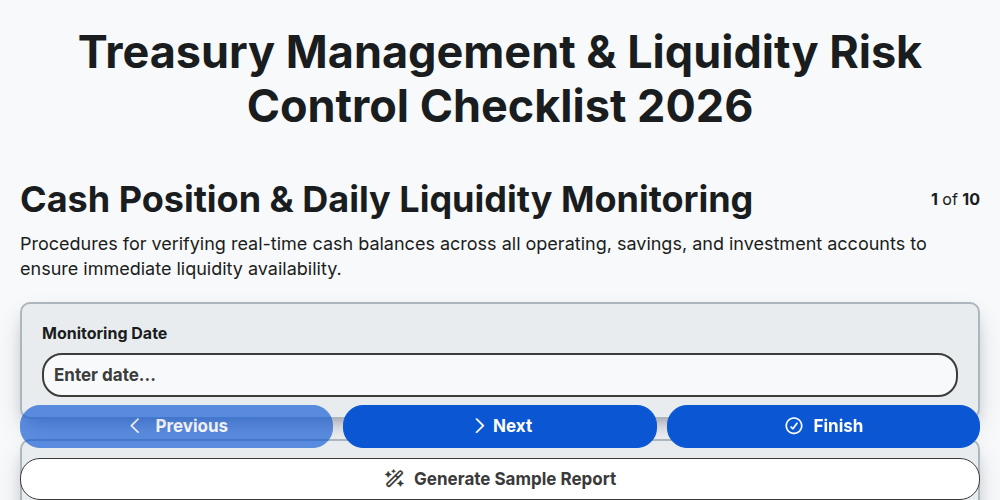
Treasury Management & Liquidity Risk Control Checklist 2026
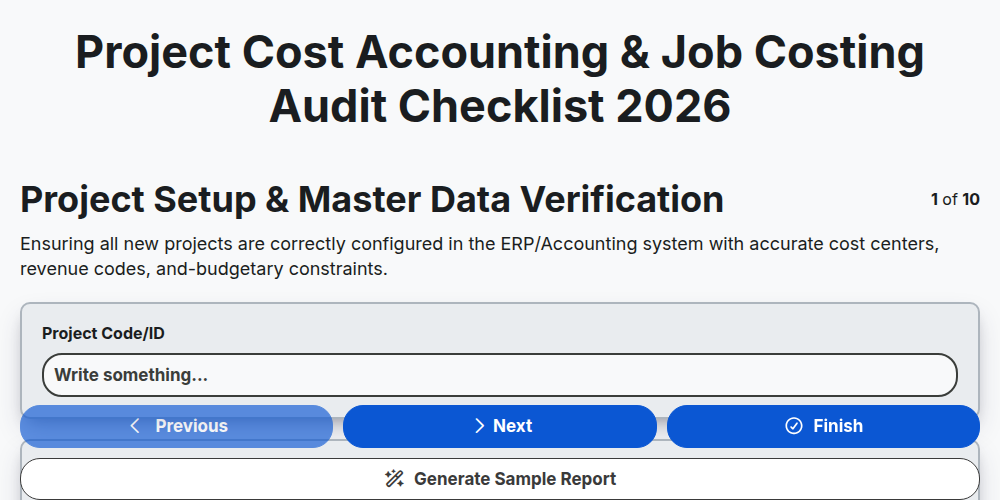
Project Cost Accounting & Job Costing Audit Checklist 2026
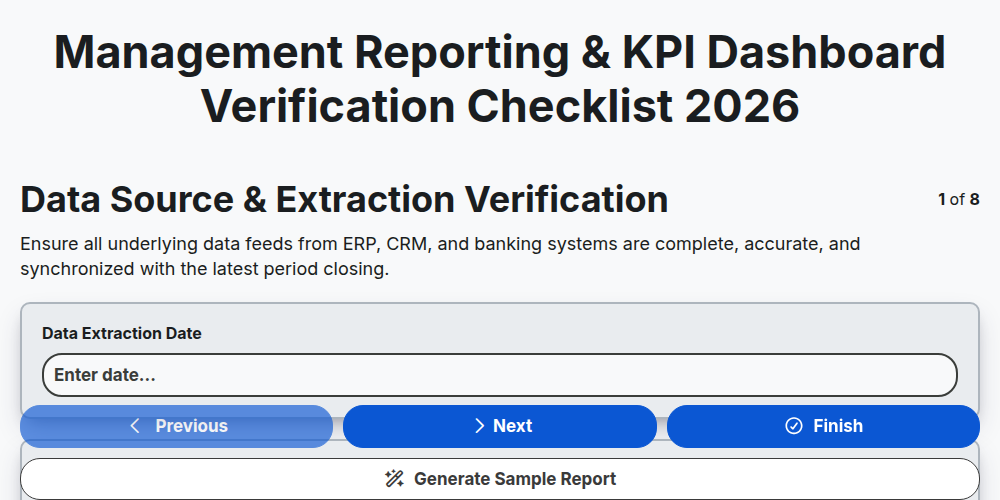
Management Reporting & KPI Dashboard Verification Checklist 2026
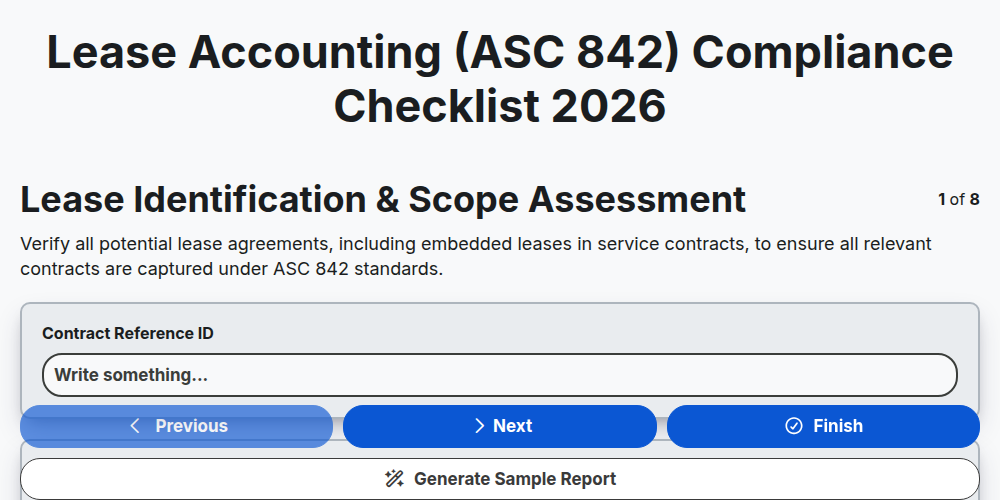
Lease Accounting (ASC 842) Compliance Checklist 2026
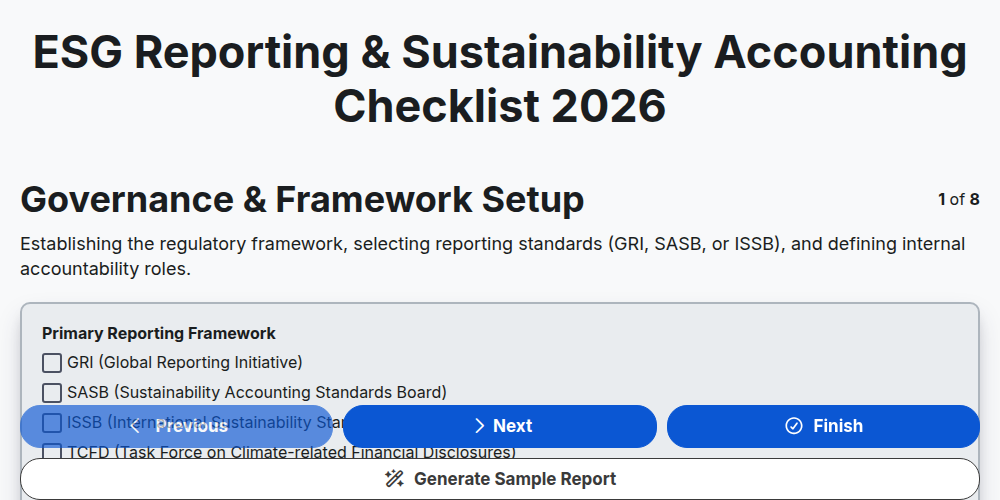
ESG Reporting & Sustainability Accounting Checklist 2026
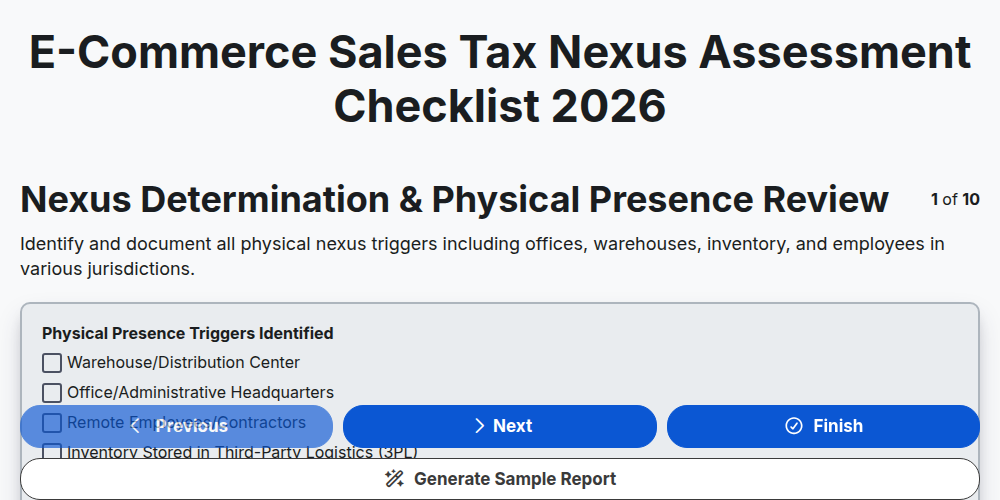
E-commerce Sales Tax Nexus Assessment Checklist 2026
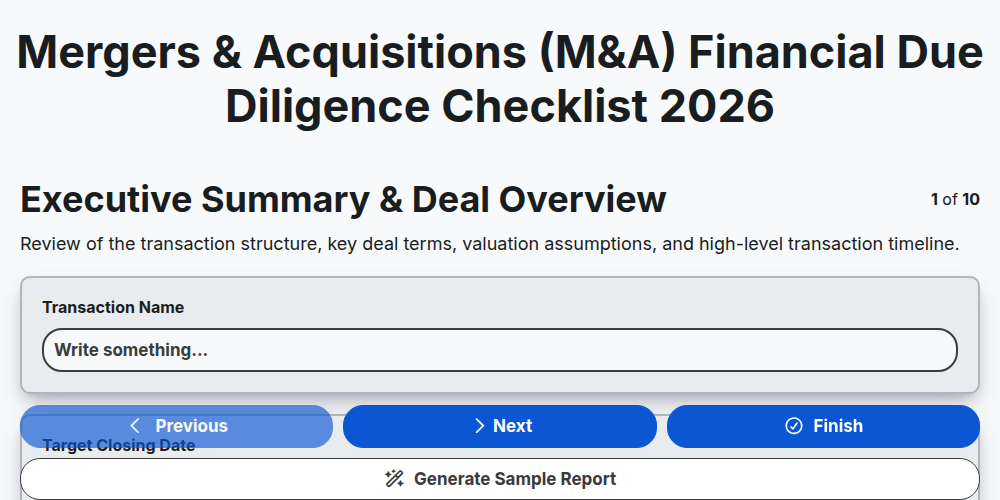
Mergers & Acquisitions (M&A) Financial Due Diligence Checklist 2026
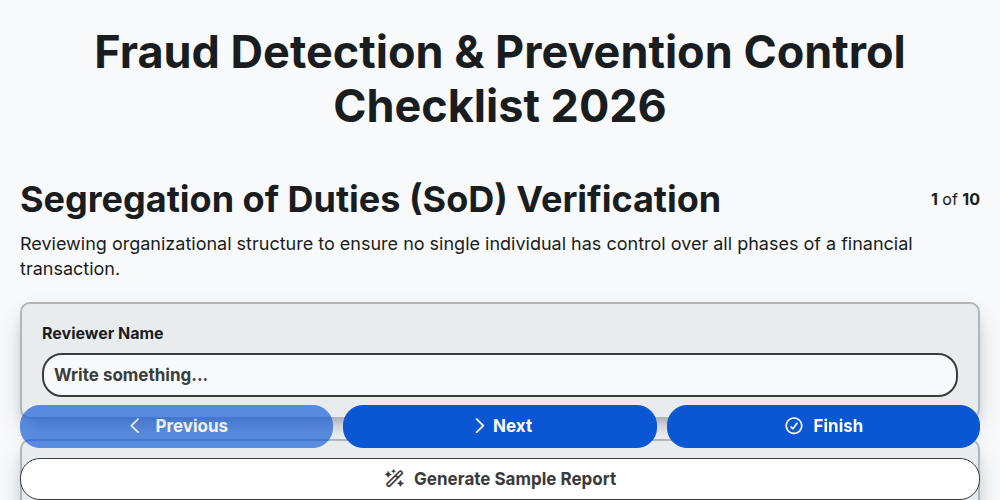
Fraud Detection & Prevention Control Checklist 2026
Need help with
Accounting Management?
Have a question? We're here to help. Please submit your inquiry, and we'll respond promptly.