Ensuring Biofuel Production Excellence: Your Inspection Checklist Template Guide
Published: 12/05/2025 Updated: 07/02/2026
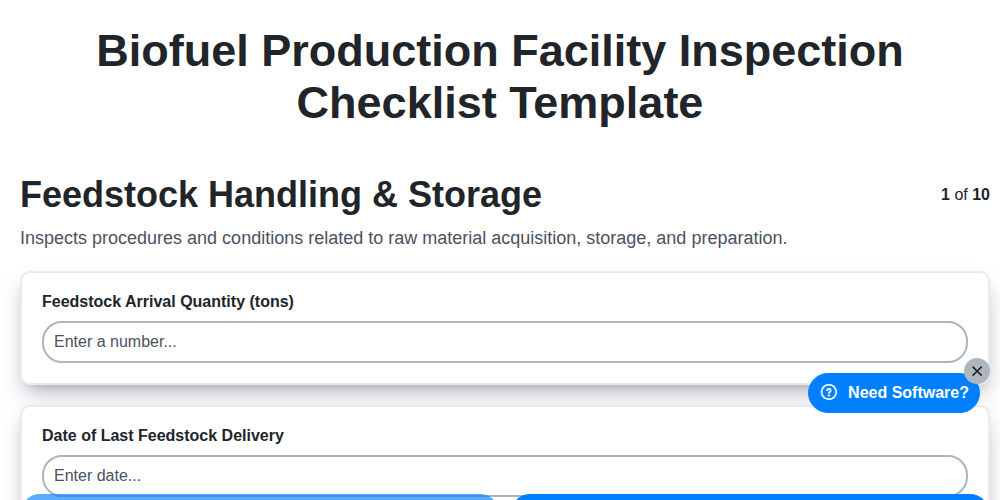
Table of Contents
- Introduction: Why Biofuel Facility Inspections Matter
- Understanding the Biofuel Production Process
- Feedstock Handling & Storage: A Foundation for Quality
- Pre-Processing Equipment: Ensuring Optimal Preparation
- Conversion/Reaction Process: Monitoring Core Efficiency
- Separation & Purification: Refining the Biofuel
- Quality Control & Laboratory Testing: Verifying Standards
- Waste Management & Emissions Control: Sustainability in Action
- Utilities (Power, Water, Steam): Reliable Operation
- Safety Systems & Emergency Response: Protecting People & Assets
- Equipment Maintenance & Inspections: Prolonging Lifespan
- Personnel Training & Competency: The Human Factor
- The Biofuel Inspection Checklist Template - Key Elements
- Beyond the Checklist: Continuous Improvement
- Resources & Links
TLDR: Running a biofuel production facility? This checklist template is your key to consistent quality, safety, and compliance. It covers everything from feedstock storage to waste management, ensuring each process is monitored and optimized. Download it to streamline your inspections, minimize risks, and keep your biofuel production running smoothly and efficiently!
Introduction: Why Biofuel Facility Inspections Matter
Biofuel production facilities are complex operations, involving intricate processes and specialized equipment. Ensuring consistent, safe, and efficient production requires more than just routine maintenance - it demands rigorous, documented inspections. These inspections aren't just about ticking boxes; they are crucial for regulatory compliance, identifying potential hazards before they become incidents, optimizing operational efficiency, and safeguarding the quality of the final biofuel product. A well-executed inspection program provides a clear snapshot of the facility's health, allowing for proactive improvements and preventing costly downtime. Ultimately, a comprehensive inspection checklist is your first line of defense in maintaining a sustainable and reliable biofuel production process.
Understanding the Biofuel Production Process
Biofuel production isn't a simple, one-step process. It's a complex chain of operations, each critical to ensuring efficient production of high-quality, sustainable fuel. Let's break down the key stages involved.
It all begins with Feedstock Handling & Storage, where raw materials like corn, soybeans, algae, or waste oils are received, stored, and prepared for processing. This stage is crucial for maintaining feedstock quality and preventing spoilage. Next comes Pre-Processing Equipment, which might include cleaning, size reduction (like milling or chipping), and sometimes even fermentation to prepare the feedstock for conversion.
The heart of biofuel production lies in the Conversion/Reaction Process. This is where the feedstock undergoes chemical or biological transformations - for example, enzymatic hydrolysis for biodiesel production or fermentation for ethanol. Following conversion, Separation & Purification steps remove byproducts and impurities, refining the fuel.
Quality Control & Laboratory Testing are integrated throughout the process to ensure the final product meets required specifications. This involves rigorous analysis of feedstock, intermediate products, and the final biofuel. Inevitably, biofuel production generates waste, so proper Waste Management & Emissions Control is essential for environmental responsibility.
Efficient operation relies heavily on Utilities (Power, Water, Steam), all of which need regular monitoring. Equally important are Safety Systems & Emergency Response protocols to protect personnel and prevent accidents. The longevity and reliability of a biofuel plant depend on a robust Equipment Maintenance & Inspections program. Finally, skilled personnel are vital; therefore, Personnel Training & Competency is an ongoing requirement to ensure safe and efficient operations. Understanding these steps is fundamental to assessing and improving any biofuel production facility.
Feedstock Handling & Storage: A Foundation for Quality
The quality of biofuel production hinges significantly on the integrity of the feedstock throughout the handling and storage process. This section of the inspection checklist focuses on ensuring feedstock arrives, is stored, and is prepared for conversion in a manner that maintains its suitability and minimizes degradation.
Inspectors should meticulously evaluate the following:
- Receiving Area: Assess unloading procedures. Are they minimizing spills, contamination, and damage to the feedstock? Documentation of receiving dates, quantities, and quality should be readily available and accurate.
- Storage Conditions: Temperature, humidity, and pest control are critical. Is the storage environment appropriate for the specific feedstock (e.g., oilseeds, biomass)? Are silos, tanks, or open piles adequately sealed and protected from the elements? Check for signs of spoilage, mold, or rodent infestation.
- Feedstock Segregation: Ensure different feedstock types are properly segregated to prevent cross-contamination and maintain consistent input quality.
- Material Tracking: Verify a robust tracking system is in place to monitor feedstock age and origin. First In, First Out (FIFO) practices should be followed.
- Sampling Procedures: Confirm that regular feedstock sampling protocols are being adhered to, and samples are representative of the stored material.
- Contamination Prevention: Evaluate measures to prevent contamination from foreign materials (dirt, debris, other crops) during handling and storage. This includes assessing cleaning protocols for equipment and storage areas.
Proper assessment and adherence to these standards directly impact downstream process efficiency and the final biofuel product's quality. A breakdown here can lead to lower yields, increased waste, and compromised fuel properties.
Pre-Processing Equipment: Ensuring Optimal Preparation
The efficiency and effectiveness of a biofuel production facility hinge heavily on the proper functioning of pre-processing equipment. This stage, often overlooked, is crucial for preparing the feedstock into a form suitable for the main conversion process. A robust inspection checklist here is paramount for identifying and rectifying potential issues before they impact the entire production cycle.
This section of the inspection focuses on equipment responsible for initial steps like size reduction, cleaning, and moisture adjustment. Key areas to scrutinize include:
- Size Reduction Equipment (Hammers, Mills, Crushers): Inspect for wear and tear on grinding elements, proper alignment, and effective screen functionality to ensure consistent particle size. Note any unusual noises or vibrations.
- Cleaning Systems (Washers, Separators): Verify the effectiveness of contaminant removal - dirt, rocks, debris - which can damage downstream equipment and negatively impact biofuel quality. Check for proper water usage and disposal.
- Moisture Adjustment Systems (Dryers, Dewatering Units): Confirm accurate moisture content readings and efficient water removal. Look for signs of corrosion, leaks, and appropriate temperature control to prevent degradation of the feedstock.
- Conveyor Systems: Check belt condition, drive components, and safety features like guards and emergency stops.
- Storage Silos/Bins (Pre-Conversion): Evaluate structural integrity, ventilation, and any signs of material buildup or degradation.
Proper documentation of findings related to pre-processing equipment is essential. This includes recording any necessary repairs, adjustments, and preventative maintenance actions taken. Ultimately, a well-maintained pre-processing stage contributes directly to higher biofuel yields and operational stability.
Conversion/Reaction Process: Monitoring Core Efficiency
The conversion/reaction stage is the heart of any biofuel production facility, and its performance directly dictates overall yield and efficiency. This section of the inspection checklist should focus intensely on parameters influencing this critical process.
Key Areas to Evaluate:
- Reaction Temperature and Pressure: Verify accurate and stable control of temperature and pressure within specified operating ranges. Deviations can significantly impact reaction kinetics and product quality. Check calibration of sensors and control systems.
- Catalyst Activity & Condition (if applicable): If a catalyst is used, its activity and lifespan are vital. Regularly assess catalyst performance through analytical testing and visual inspection. Note any signs of deactivation or fouling.
- Residence Time & Flow Rates: Ensure feedstock residence time within the reactor is consistent with design specifications. Monitor flow rates of reactants and any added chemicals. Inconsistent flow can lead to uneven reaction and lower yields.
- Mixing Efficiency: Proper mixing is essential for uniform reaction. Inspect mixing equipment (impellers, agitators) for wear and tear. Ensure proper clearances and functionality.
- Reactor Vessel Integrity: Conduct visual inspections for corrosion, leaks, and structural integrity. Pressure testing and non-destructive testing may be required periodically.
- Byproduct Formation: Analyze reaction output for undesirable byproducts. Understand the mechanisms causing byproduct formation and implement corrective actions.
Documentation is Key: Record all readings, observations, and corrective actions taken. This information is invaluable for troubleshooting, optimizing the process, and ensuring consistent biofuel quality.
Separation & Purification: Refining the Biofuel
The conversion process yields a crude biofuel product laden with impurities - unconverted feedstock, byproducts, catalysts, and other residues. This is where separation and purification become critical. A high-quality, marketable biofuel demands meticulous removal of these contaminants to meet stringent industry standards and ensure optimal engine performance.
This stage often involves a combination of techniques tailored to the specific biofuel being produced (e.g., biodiesel, ethanol, renewable diesel). Common processes include:
- Phase Separation: Utilizing density differences to separate immiscible layers, often essential in biodiesel production.
- Distillation: Employing boiling point differences to separate compounds, particularly relevant for ethanol production.
- Extraction: Using solvents to selectively remove impurities or desired components.
- Adsorption: Using materials like activated carbon to trap and remove unwanted substances.
- Membrane Filtration: Utilizing semi-permeable membranes to selectively allow molecules to pass.
Effective separation and purification not only improves biofuel quality (e.g., cetane number, cloud point) but also allows for valuable byproduct recovery, contributing to the facility's overall economic viability and sustainability. Regular inspection of separation equipment, monitoring product purity, and optimizing process parameters are crucial for maintaining consistent output and minimizing losses.
Quality Control & Laboratory Testing: Verifying Standards
Ensuring the biofuel produced meets stringent quality standards is paramount, and rigorous quality control and laboratory testing are the bedrock of this process. This section of the inspection checklist focuses on verifying these crucial aspects.
Our checklist items delve into the proper function and calibration of laboratory equipment, including gas chromatographs, mass spectrometers, and density meters. We assess the accuracy and reliability of testing procedures for parameters like flash point, viscosity, water content, and fatty acid methyl ester (FAME) content - all critical determinants of biofuel quality and compliance with regulations (e.g., ASTM D6751 for biodiesel).
Furthermore, the checklist evaluates the laboratory's adherence to documented procedures, including sample collection, handling, and storage protocols. We're looking for evidence of record-keeping practices, demonstrating traceability and ensuring data integrity. The competence of laboratory personnel is also scrutinized, confirming they possess the necessary training and expertise to conduct accurate and dependable analyses. Regular participation in proficiency testing programs and external audits is a vital sign of a robust quality control system, and we verify evidence of these activities. Finally, we check for proper documentation of corrective actions taken when quality control tests reveal deviations from established limits.
Waste Management & Emissions Control: Sustainability in Action
A biofuel production facility's commitment to environmental responsibility extends far beyond efficient feedstock conversion. Robust waste management and emissions control are critical components of a truly sustainable operation. This section of the inspection checklist focuses on minimizing environmental impact and ensuring compliance with regulations.
Key areas to scrutinize include: Solid Waste Handling: Are waste streams properly segregated (e.g., process residues, spent catalysts, contaminated materials)? Is waste characterization performed to identify appropriate disposal methods? Are waste manifests accurately maintained and tracked? Wastewater Treatment: Does the facility possess adequate wastewater treatment systems to remove contaminants before discharge? Are treatment processes monitored for effectiveness, and are records diligently kept? Air Emissions Control: Are emission control technologies (e.g., scrubbers, filters, biofilters) functioning correctly and within permit limits? Are regular monitoring and reporting procedures in place for pollutants like VOCs, NOx, and particulate matter? Sludge Management: If sludge is generated, is it being handled and disposed of responsibly, potentially exploring options like anaerobic digestion for biogas production? Spill Prevention and Response: Are spill prevention measures in place (e.g., secondary containment, leak detection systems)? Are spill response plans up-to-date and personnel trained?
Furthermore, assess compliance with local, state, and federal environmental regulations. A proactive approach to waste minimization and emissions reduction not only protects the environment but can also lead to cost savings through resource recovery and reduced disposal fees. This area is ripe for ongoing improvement through process optimization and adoption of cleaner technologies.
Utilities (Power, Water, Steam): Reliable Operation
A biofuel production facility's utilities - power, water, and steam - are the lifeblood of its operations. Consistent and reliable supply of these resources is critical for efficient and uninterrupted production. This section of the inspection checklist focuses on ensuring their dependable performance and identifies potential vulnerabilities.
Power Supply: We're evaluating the stability and redundancy of the power source. This includes checking generators, transformers, switchgear, and backup power systems. Are automatic transfer switches functioning correctly? Is fuel supply adequate for backup generators? Voltage and amperage levels are being monitored?
Water Management: Water is essential for feedstock preparation, cooling, and cleaning. This inspection covers water intake, storage, treatment (if applicable), and distribution systems. We will look for leaks, corrosion, and inefficiencies in water usage. Are water quality parameters within acceptable limits, especially concerning mineral content and potential contaminants?
Steam Generation & Distribution: Many biofuel processes rely on steam for heating and reaction processes. The checklist focuses on the boiler(s), steam traps, piping, and distribution network. We're verifying boiler efficiency, inspecting for scale buildup, and checking for leaks within the steam system. Proper steam pressure and temperature control is paramount.
Overall Efficiency & Sustainability: Beyond functional integrity, this section aims to identify opportunities for improving utility efficiency, reducing consumption, and minimizing environmental impact. Are there opportunities for water reuse or waste heat recovery? Are utility consumption rates being tracked and analyzed for optimization?
Safety Systems & Emergency Response: Protecting People & Assets
A biofuel production facility presents unique hazards, from flammable materials and potential process upsets to the handling of potentially hazardous chemicals. A robust safety system and well-defined emergency response plan are absolutely critical for the well-being of personnel and the protection of valuable assets. This section of the inspection checklist focuses on verifying these vital components.
Key areas to assess include:
- Fire Detection & Suppression: Are fire alarms operational, regularly tested, and properly maintained? Are fire extinguishers readily accessible, inspected, and charged? Are sprinkler systems functional and inspected according to schedule?
- Emergency Shutdown Systems (ESD): Verify the integrity and functionality of ESDs, ensuring they can quickly and safely halt operations in the event of an abnormal condition. Confirm proper signage and understanding of ESD operation among personnel.
- Emergency Lighting & Power: Assess the reliability of emergency lighting and backup power systems to ensure functionality during power outages.
- Spill Containment & Response: Inspect spill containment systems (dikes, berms, collection tanks) and verify the availability of appropriate spill response materials and trained personnel. Review spill response procedures.
- Ventilation Systems: Confirm proper operation of ventilation systems designed to remove hazardous fumes and vapors.
- Evacuation Plans & Drills: Are evacuation plans clearly posted and understood? Are regular evacuation drills conducted and documented, with feedback incorporated into plan improvements?
- Personal Protective Equipment (PPE): Ensure appropriate PPE is available, properly maintained, and consistently used by all personnel.
- Communication Systems: Evaluate the reliability of communication systems for emergency notification and coordination.
- First Aid & Medical Facilities: Verify the availability of first aid supplies and trained personnel, and assess the accessibility of medical facilities.
- Incident Reporting & Investigation Procedures: Confirm the existence and adherence to procedures for reporting and thoroughly investigating incidents and near misses.
Equipment Maintenance & Inspections: Prolonging Lifespan
Biofuel production facilities are incredibly complex, relying on a vast array of equipment operating under demanding conditions. Consistent and thorough maintenance and inspections are not just about preventing breakdowns; they're critical for maximizing equipment lifespan, ensuring operational efficiency, and minimizing costly downtime. This section of the checklist focuses on these essential practices.
Our checklist items for equipment maintenance encompass a range of activities, including:
- Regular Visual Inspections: This includes checking for leaks, corrosion, unusual noises, and vibrations across all major equipment - from feedstock grinders to distillation columns.
- Lubrication Schedules: Adhering to manufacturer-recommended lubrication schedules for bearings, gears, and other moving parts is paramount. Improper lubrication leads to accelerated wear and tear.
- Vibration Analysis: Regularly analyzing vibration patterns can identify potential issues before they escalate into full-blown failures.
- Performance Testing: Measuring key performance indicators (KPIs) like motor efficiency and pump flow rates helps identify degradation and allows for proactive intervention.
- Preventative Maintenance Tasks: Following established preventative maintenance schedules, including tasks like filter replacements and belt adjustments.
- Non-Destructive Testing (NDT): Utilizing techniques like ultrasonic testing and radiography to assess the internal integrity of critical components without disassembly.
- Record Keeping: Maintaining detailed records of all maintenance activities, including dates, tasks performed, and parts replaced. This provides a valuable historical record for trend analysis and future planning.
Beyond routine maintenance, this section also covers inspections of safety-critical equipment like pressure vessels, safety valves, and fire suppression systems, ensuring they meet regulatory requirements and remain fully functional. A proactive approach to equipment maintenance translates directly into improved operational reliability, reduced risk, and ultimately, a more profitable biofuel production facility.
Personnel Training & Competency: The Human Factor
A biofuel production facility relies on more than just sophisticated equipment and efficient processes; it depends on a skilled and knowledgeable workforce. This section of the inspection checklist focuses on ensuring personnel are adequately trained and competent to perform their roles safely and effectively.
Our assessment goes beyond simply confirming training records. We evaluate the quality of that training. This includes verifying that training programs cover critical areas specific to biofuel production - from feedstock handling hazards to reaction process safety protocols and emergency response procedures. We look for evidence of refresher training and competency assessments to ensure knowledge retention and skill maintenance.
Key points we'll be investigating include:
- Job-Specific Training: Does each role (operators, maintenance technicians, lab personnel, etc.) have a tailored training plan?
- Hazard Awareness: Do employees understand the risks associated with feedstock, chemicals, and equipment?
- Emergency Response Drills: Are drills conducted regularly, and are employees familiar with procedures?
- Competency Assessments: Are practical skills assessed to ensure personnel can perform tasks safely and correctly?
- Record Keeping: Are training records complete, accurate, and readily accessible?
- Supervisory Oversight: Do supervisors understand their responsibility in ensuring personnel competency?
A weakness in personnel training can quickly cascade into operational issues, safety incidents, and quality control failures. This section emphasizes that a well-trained and competent workforce is an integral part of a robust and reliable biofuel production facility.
The Biofuel Inspection Checklist Template - Key Elements
A comprehensive biofuel production facility inspection is vital for ensuring operational efficiency, product quality, safety, and environmental compliance. Our checklist template is designed to cover every critical area, minimizing risks and maximizing productivity. Here's a breakdown of the key elements included, outlining what inspectors will be assessing:
1. Feedstock Handling & Storage: This section evaluates the condition of feedstock storage areas, loading/unloading procedures, potential for contamination, pest control measures, and compliance with relevant regulations regarding storage capacity and safety protocols.
2. Pre-Processing Equipment: Inspections will cover equipment like grinders, hammer mills, and screens. We're looking for proper operation, structural integrity, guarding, and adherence to maintenance schedules.
3. Conversion/Reaction Process: This is a core area focusing on the chemical or biological conversion of feedstock into biofuel. We're verifying process parameters (temperature, pressure, pH), reactor functionality, catalyst management (if applicable), and adherence to optimized process recipes.
4. Separation & Purification: This section assesses the effectiveness of techniques like distillation, extraction, or membrane separation used to purify the biofuel. Inspectors will check for leaks, proper operation of separation equipment, and efficient separation performance.
5. Quality Control & Laboratory Testing: Maintaining consistent biofuel quality is paramount. This includes checking calibration of lab equipment, validation of testing procedures, adherence to quality standards (ASTM, EN, etc.), and record-keeping accuracy.
6. Waste Management & Emissions Control: Environmental responsibility is crucial. This area covers wastewater treatment, solid waste disposal, air emissions monitoring, and compliance with environmental permits.
7. Utilities (Power, Water, Steam): Biofuel production is energy-intensive. This section examines the reliability and efficiency of power, water, and steam generation and distribution systems.
8. Safety Systems & Emergency Response: The checklist validates the functionality of safety devices (pressure relief valves, fire suppression systems), emergency shutdown procedures, and the adequacy of emergency response plans.
9. Equipment Maintenance & Inspections: This section focuses on ensuring preventative maintenance schedules are followed and equipment is in good working order, minimizing downtime and preventing failures.
10. Personnel Training & Competency: Skilled and well-trained personnel are essential. This evaluates the training programs in place, competency assessments, and overall workforce preparedness.
Beyond the Checklist: Continuous Improvement
While a comprehensive checklist like the one detailed above provides a solid foundation for ensuring operational excellence at a biofuel production facility, it shouldn't be viewed as a static document. Relying solely on periodic checklist completion can lead to complacency and missed opportunities for optimization. True success lies in fostering a culture of continuous improvement.
This means regularly reviewing and updating the checklist itself. Are the current parameters still relevant given advancements in technology or changes in feedstock? Are there emerging risks that need to be addressed? Encourage input from all levels of personnel - operators, engineers, and maintenance staff - who are intimately familiar with day-to-day operations. They often possess valuable insights that can significantly enhance the checklist and improve processes.
Furthermore, data collected during inspections should be analyzed to identify trends and root causes of recurring issues. Implementing corrective actions and then tracking their effectiveness is crucial. Consider incorporating Key Performance Indicators (KPIs) tied to the checklist items to provide quantifiable measures of performance. This data-driven approach allows for targeted improvements, minimizing waste, maximizing efficiency, and ultimately, contributing to a more sustainable and profitable biofuel production facility. Finally, embrace a mindset of proactive problem-solving, encouraging innovation and celebrating successes along the journey of continuous improvement.
Resources & Links
- BioResource Center: Provides extensive information, research, and resources related to biomass and biofuel production, including process technologies, feedstock supply chains, and policy updates. Useful for understanding the context of biofuel production and advancements.
- NREL Bioenergy Program: The National Renewable Energy Laboratory (NREL) provides research and development information on various biofuel pathways and technologies, offering technical data and potential inspection points.
- EPA Renewable Fuel Standard (RFS): Understanding the RFS requirements is crucial for biofuel facilities. This link details the regulatory framework, compliance standards, and potential inspection criteria related to biofuel quality and production.
- ANSI (American National Standards Institute): ANSI provides standards and guidelines applicable to various industries, including potentially relevant ones for equipment safety, quality control, and environmental management used in biofuel facilities. Look for relevant standards related to pressure vessels, electrical safety, and process safety management.
- ISO (International Organization for Standardization): ISO standards, particularly those related to quality management (ISO 9001), environmental management (ISO 14001), and energy management (ISO 50001), can provide a framework for robust inspection and improvement processes. Helps benchmark practices.
- ASQ (American Society for Quality): ASQ provides resources and training on quality management principles and tools, useful for developing and implementing effective inspection checklists and quality control procedures within biofuel facilities.
- Center for Chemical Process Safety (CCPS): Crucial for understanding process hazards and developing robust safety systems. Relevant to the Conversion/Reaction Process and Safety Systems & Emergency Response sections. Provides guidance on Process Hazard Analysis (PHA).
- OSHA (Occupational Safety and Health Administration): OSHA regulations directly impact biofuel facility safety practices. This website provides guidelines and standards for workplace safety, personal protective equipment, and hazard communication, crucial for Safety Systems & Emergency Response and Personnel Training.
- TAPPI (Technical Association of the Pulp and Paper Industry): While focused on pulp and paper, TAPPI has relevant knowledge and resources applicable to feedstock handling and pretreatment processes often used in biofuel production from lignocellulosic biomass. Especially relevant for Pre-Processing Equipment and Feedstock Handling.
- ReliabilityFirst: Focuses on asset management and reliability engineering. Can provide a framework for Equipment Maintenance & Inspections, emphasizing proactive maintenance strategies to prolong equipment lifespan.
- NIST (National Institute of Standards and Technology): NIST develops standards and provides measurement science expertise that can be relevant to biofuel quality control and laboratory testing. They support traceability and accuracy of measurements.
- AIHA (American Industrial Hygiene Association): Provides resources on industrial hygiene practices, including monitoring and control of workplace contaminants. Relevant for Waste Management & Emissions Control and Utilities, particularly concerning air and water quality.
Frequently Asked Questions
What is this checklist template guide for?
This guide provides a template for inspecting biofuel production facilities and processes, ensuring quality, safety, and regulatory compliance. It's designed for auditors, inspectors, and quality control personnel involved in biofuel operations.
Who is this checklist template useful for?
It's useful for anyone involved in auditing or inspecting biofuel production, including internal quality teams, third-party auditors, regulatory inspectors, and consultants.
What types of biofuels does this checklist cover?
The checklist is designed to be adaptable and covers a wide range of biofuel production processes, including biodiesel, ethanol, renewable diesel, and biogas. Specific sections can be customized based on the particular biofuel being produced.
Can I customize the checklist template?
Absolutely! The template is designed to be a starting point. You can add, remove, or modify items to reflect your facility's specific processes, equipment, and regulatory requirements. We strongly encourage customization.
What areas of biofuel production does the checklist cover?
The checklist covers various critical areas, including feedstock handling, process operations, quality control, safety protocols, environmental compliance, and record-keeping. Details are broken down in the different sections within the checklist template.
What kind of expertise is needed to use this checklist effectively?
A basic understanding of biofuel production processes and quality control principles is beneficial. Ideally, the user should have experience in auditing or inspection, or be working under the guidance of someone with that expertise.
How can I access the checklist template?
The article references the checklist template guide. Please refer to the article for instructions on how to access the downloadable template. It's often provided as a downloadable PDF or spreadsheet.
Are there any specific regulations this checklist helps to address?
While the checklist isn't directly tied to one specific regulation, it's designed to help facilities comply with common biofuel-related regulations such as those related to feedstock quality, production processes, fuel specifications (ASTM standards), and environmental protection. You'll need to adapt it to specific regional or national regulations.
What file format is the checklist template provided in?
The checklist is typically provided in a format that allows for easy customization, such as Microsoft Excel (.xlsx) or a PDF format. Refer to the article for the exact format.
Comments
There are no comments yet. Be the first to add one!
Energy Management Solution Demo
Managing operations, safety, and compliance in the energy sector is critical. ChecklistGuro's Work OS platform streamlines your workflow from exploration and production to distribution and maintenance. Enhance safety, improve efficiency, and ensure regulatory adherence. Discover how ChecklistGuro can transform your energy business!
Related Articles
Stay Compliant: Your Energy Metering Compliance Checklist Template
Unlock Savings: Your Complete Energy Efficiency Audit Checklist
Your Ultimate Energy Efficiency Audit Checklist Template
Power Through: Your Essential Energy Grid Outage Support Checklist
Oil & Gas Well Safety Inspection Checklist: Ensuring a Secure Operation
HVAC System Maintenance Checklist: Building Climate Control & Energy Savings
Renewable Energy Project Checklist Template
Energy Audit Reporting Compliance: Your Checklist for Success
Need help with
Energy?
Have a question? We're here to help. Please submit your inquiry, and we'll respond promptly.