Cross-Border Supply Chain Security Checklist: A Comprehensive Guide
Published: 12/09/2025 Updated: 07/02/2026
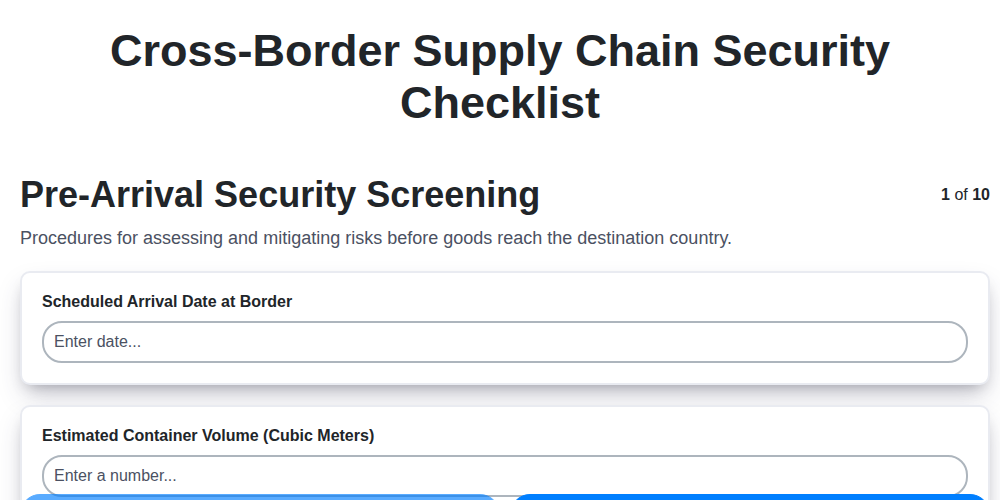
Table of Contents
- Introduction: The Growing Importance of Cross-Border Supply Chain Security
- Why a Cross-Border Supply Chain Security Checklist is Essential
- 1. Pre-Arrival Security Screening: Identifying Risks Before Goods Depart
- 2. Importer/Exporter Due Diligence: Knowing Your Partners
- 3. Customs Broker Selection & Management: Your Gateway to Compliance
- 4. Documentation Security: Protecting Sensitive Information
- 5. Physical Security of Goods (Origin): Safeguarding Assets at Source
- 6. Transportation Security (In-Transit): Securing Goods During Movement
- 7. Border Crossing Procedures: Navigating Customs Effectively
- 8. Destination Country Import Controls: Understanding Local Regulations
- 9. Data Security & Visibility: Tracking and Protecting Information
- 10. Incident Response & Reporting: Preparing for the Unexpected
- 11. Technology Solutions for Enhanced Security
- 12. Training and Awareness for Your Team
- 13. Regular Audits and Continuous Improvement
- Conclusion: Building a Resilient Cross-Border Supply Chain
- Resources & Links
TLDR: Importing and exporting goods internationally? Don't leave security to chance! This checklist outlines 10 crucial steps - from vetting partners to securing data - to protect your cross-border supply chain from risks like theft, fraud, and disruptions. Use it to proactively identify vulnerabilities and ensure a smoother, safer flow of goods.
Introduction: The Growing Importance of Cross-Border Supply Chain Security
The globalization of trade has unlocked unprecedented opportunities, but it's also dramatically increased the complexity - and vulnerability - of supply chains. Goods now traverse borders frequently, involving numerous stakeholders and transit points, making them susceptible to disruptions ranging from theft and counterfeiting to geopolitical instability and cyberattacks. Recent events, including the pandemic and ongoing conflicts, have starkly highlighted these risks, pushing businesses to prioritize cross-border supply chain security like never before. Protecting your goods and data isn't just about minimizing financial loss; it's about safeguarding brand reputation, ensuring regulatory compliance, and maintaining business continuity. A proactive, comprehensive approach is no longer optional - it's essential. This checklist offers a framework to assess and strengthen your cross-border supply chain security posture, helping you navigate the challenges and build a more resilient operation.
Why a Cross-Border Supply Chain Security Checklist is Essential
In today's globalized marketplace, cross-border supply chains are incredibly complex and vulnerable. Disruptions, whether due to natural disasters, geopolitical instability, cyberattacks, or even simple human error, can have devastating financial and reputational consequences. Relying on reactive measures simply isn't enough anymore. A proactive approach, anchored by a comprehensive security checklist, is the key to resilience.
Think about it: your goods traverse multiple jurisdictions, are handled by various parties, and navigate evolving regulations. Without a structured, repeatable process - a checklist - critical security considerations can easily fall through the cracks. This isn't just about compliance; it's about safeguarding your assets, protecting your brand, and ensuring business continuity.
A well-designed checklist provides a framework for consistent risk assessment, allows you to identify vulnerabilities before they become problems, and ultimately builds a more robust and trustworthy supply chain. It's the foundation for a more secure and efficient operation, allowing you to focus on growth rather than constantly firefighting. Ignoring this essential tool leaves you exposed to unnecessary risks and potential disruptions - a gamble few businesses can afford.
1. Pre-Arrival Security Screening: Identifying Risks Before Goods Depart
Before a single box leaves its origin, a robust pre-arrival security screening process is your first line of defense against cross-border supply chain disruptions. This isn't just about compliance; it's about proactively minimizing risk.
What does this entail? It's a multi-faceted approach encompassing:
- Origin Country Risk Assessment: Evaluate the security landscape of the origin country. Consider political instability, crime rates, and the prevalence of counterfeit goods. Public resources, government advisories, and industry reports can provide valuable insights.
- Supplier Risk Profiling: Go beyond basic vendor questionnaires. Conduct thorough assessments of your suppliers, including their security protocols, employee vetting procedures, and adherence to ethical sourcing practices. Consider independent audits or third-party assessments for higher-risk suppliers.
- Cargo Screening: Implement procedures to screen cargo manifests and shipment details for potential red flags. This might include reviewing product descriptions, quantities, weights, and declared values. Utilize automated screening tools where possible to flag anomalies.
- Advanced Technology Utilization: Explore the use of technologies like blockchain for enhanced traceability and anomaly detection, or AI-powered risk assessment tools to analyze vast datasets and predict potential vulnerabilities.
- Collaboration & Information Sharing: Share threat intelligence with your supply chain partners. Open communication can help identify emerging risks and develop collective mitigation strategies.
By investing in pre-arrival screening, you shift from reactive problem-solving to proactive risk mitigation, significantly bolstering your cross-border supply chain security.
2. Importer/Exporter Due Diligence: Knowing Your Partners
Your supply chain is only as strong as its weakest link, and that often involves the partners you choose. Thorough importer and exporter due diligence is a crucial, often overlooked, element of cross-border supply chain security. It's not enough to simply find a vendor offering the best price; you need to understand their security practices, reputation, and compliance record.
Why is this critical? Partner vulnerabilities can become your vulnerabilities. A compromised exporter, for instance, could introduce counterfeit goods, malware, or even explosives into your supply chain. Conversely, an importer with lax security could be a target for theft or smuggling attempts.
Here's what your due diligence should cover:
- Financial Stability: Assess their financial health. A struggling company may cut corners on security to survive.
- Reputation and History: Research their background. Check for past violations, legal issues, or negative publicity related to security or compliance. Utilize resources like trade databases and news archives.
- Compliance with Laws & Regulations: Verify adherence to relevant import/export regulations in their country and any applicable international agreements. This includes sanctions compliance.
- Security Protocols: Inquire about their internal security procedures, including employee screening, access controls, and loss prevention measures. Request documentation to support their claims.
- KYC (Know Your Customer) & KYB (Know Your Business) Procedures: Do they have robust KYC/KYB processes to screen their own customers and suppliers?
- Contractual Obligations: Clearly outline security expectations and compliance requirements within your contracts. Include audit clauses and the right to conduct on-site assessments.
- Subcontractor Review: If they utilize subcontractors, understand their security posture as well. You're ultimately responsible for the security of your entire chain.
- Ongoing Monitoring: Due diligence isn't a one-time event. Regularly reassess partner risk and performance.
Failing to properly vet your cross-border partners is a significant risk. Invest the time and resources upfront to build a resilient and secure supply chain.
3. Customs Broker Selection & Management: Your Gateway to Compliance
Navigating customs regulations across borders is a complex undertaking. Choosing the right customs broker isn't just a convenience; it's a crucial element of your cross-border supply chain security. A competent broker acts as your expert guide, ensuring compliance and minimizing delays and potential penalties.
Here's what to consider when selecting and managing your customs broker:
- Licensing & Accreditation: Verify that the broker is properly licensed and accredited by the relevant authorities in both the origin and destination countries. Don't hesitate to request proof of their credentials.
- Experience & Expertise: Look for a broker with proven experience handling shipments similar to yours, especially if your goods are complex, sensitive, or require specialized permits. Ask about their track record and expertise in your specific industry.
- Technology Integration: Does the broker leverage technology to provide visibility and streamline processes? A broker with robust IT systems can offer real-time updates on shipment status, automate documentation, and facilitate communication.
- Communication & Responsiveness: Excellent communication is key. The broker should be readily available to answer questions, provide updates, and address any concerns promptly.
- Security Protocols: Inquire about the broker's internal security protocols. They should have procedures in place to protect sensitive information and prevent unauthorized access.
- Regular Audits & Performance Reviews: Implement regular audits of the broker's performance. This includes reviewing their compliance records, response times, and accuracy in documentation. Periodic performance reviews will help identify areas for improvement and ensure they are consistently meeting your needs.
- Contractual Agreements: Establish a clear contractual agreement outlining responsibilities, liabilities, and performance expectations. This protects both your organization and the broker.
A strong partnership with a reliable customs broker can be the difference between a smooth, secure cross-border operation and a costly, compliance nightmare.
4. Documentation Security: Protecting Sensitive Information
Cross-border supply chains rely heavily on documentation - bills of lading, commercial invoices, packing lists, certificates of origin, and countless others. These documents aren't just paperwork; they contain vital data about your goods, your business, and your trading partners. Compromising this information can lead to fraud, theft, delays, and significant financial losses.
What's at Risk?
- Intellectual Property Theft: Documents can reveal design specifications, proprietary formulas, or manufacturing processes.
- Financial Fraud: Altered invoices or fraudulent certificates of origin can facilitate illegal transactions and evade duties.
- Cargo Theft: Detailed packing lists provide thieves with a blueprint of your shipment, its contents, and its value.
- Reputational Damage: Data breaches and security lapses erode trust with customers and partners.
Key Security Measures:
- Digitalization & Encryption: Transition to digital document management systems with robust encryption protocols. Limit access to authorized personnel only.
- Access Control: Implement strict access controls, requiring multi-factor authentication and role-based permissions.
- Secure Communication Channels: Utilize secure email and file-sharing platforms. Avoid transmitting sensitive information via unsecured methods.
- Document Authentication: Verify the authenticity of documents received from partners. Use digital signatures and electronic verification tools where possible.
- Regular Audits: Conduct periodic audits of your document management practices to identify vulnerabilities and ensure compliance.
- Employee Training: Train employees on document security best practices and the importance of protecting sensitive information.
- Version Control: Implement a system for managing document versions to prevent unauthorized alterations and ensure everyone is working with the correct information.
5. Physical Security of Goods (Origin): Safeguarding Assets at Source
The journey of your goods begins long before they cross a border. Weak security at the origin country leaves your entire supply chain vulnerable. This stage demands a proactive, layered approach to ensure goods are protected from theft, tampering, and damage.
Here's what to prioritize:
- Secure Storage Facilities: Assess the physical security of your supplier's warehousing and storage facilities. Look for features like controlled access (card readers, biometric scans), perimeter fencing, surveillance cameras (with recording capabilities), and alarm systems. Request documentation proving these measures are in place and regularly maintained.
- Inventory Management & Accountability: Robust inventory management systems are vital. Ensure your suppliers are using them to track goods accurately and promptly identify discrepancies. Regular audits and reconciliation of inventory data are crucial.
- Employee Screening & Training: Background checks for warehouse personnel and comprehensive security training for all employees handling your goods are non-negotiable. This should cover topics like identifying suspicious activity, reporting procedures, and proper handling techniques.
- Access Control & Chain of Custody: Implement strict access control measures. Define a clear chain of custody for each shipment, detailing who is responsible for the goods at each handling point.
- Tamper-Evident Packaging: Utilize tamper-evident packaging materials and seals. These provide a visible deterrent and immediately indicate if goods have been compromised.
- Risk Assessment & Mitigation: Conduct a thorough risk assessment of your supplier's origin location. Consider factors like local crime rates, political instability, and the prevalence of organized theft rings. Develop mitigation strategies tailored to the specific risks identified.
By strengthening security at the origin, you build a foundation of trust and reliability throughout your cross-border supply chain.
6. Transportation Security (In-Transit): Securing Goods During Movement
The journey from origin to destination is often the most vulnerable point in a cross-border supply chain. Once goods leave your control, securing them during in-transit movement requires meticulous planning and ongoing vigilance. Here's what to consider:
- Route Risk Assessment: Analyze potential risks along proposed transportation routes. Factors to consider include geopolitical instability, known piracy or theft hotspots, and natural disaster vulnerability. Opt for routes with lower inherent risks whenever feasible.
- Carrier Selection & Vetting: Don't just choose a carrier based on price. Conduct thorough due diligence on potential carriers, including reviewing their security protocols, insurance coverage, track record, and adherence to relevant regulations. Look for certifications like C-TPAT or similar programs.
- Container Security: Ensure containers are tamper-proof and properly sealed. Utilize container tracking technology to monitor location and detect any unauthorized openings. Consider high-security containers for high-value or sensitive goods.
- Real-Time Tracking & Monitoring: Implement robust real-time tracking systems that provide visibility into the location and condition of goods throughout the journey. Set up alerts for deviations from planned routes or unexpected stops.
- Secure Packaging & Labeling: Utilize secure packaging methods to deter theft and tampering. Clear and accurate labeling can also help prevent misdirection or loss.
- Escort Services: For extremely high-value or sensitive shipments, consider utilizing armed escort services, particularly in regions with higher security risks.
- Layered Security Approach: Implement a layered approach to transportation security, combining multiple measures to create a more robust defense against potential threats.
7. Border Crossing Procedures: Navigating Customs Effectively
Border crossing procedures are often the most scrutinized and potentially problematic stage in cross-border supply chains. Smooth, compliant passage through customs is vital for on-time delivery and avoiding costly delays and penalties. Here's what you need to focus on:
Advance Preparation is Key: Don't wait until the goods are at the border!
- Harmonized System (HS) Code Verification: Ensure accurate HS code classification. Misclassification can lead to incorrect duties, taxes, and potential delays. Regularly review and update these codes as regulations evolve.
- Binding Tariff Information (BTI): Where available, obtain a BTI from customs authorities. This provides certainty regarding tariff classification and duty rates.
- Advance Notification: Utilize any available advance notification programs offered by customs. This allows them to review documentation and potentially expedite clearance.
- Importer Record (IR) Compliance: Ensure your Importer Record (IR) is active, accurate, and meets all requirements. A suspended or revoked IR can halt imports entirely.
During the Border Crossing:
- Cooperation with Customs Officials: Maintain open communication and proactively answer any questions from customs officials. A cooperative attitude can go a long way.
- Proper Presentation of Documents: Have all required documents readily available and presented in the correct order. Common documents include commercial invoices, packing lists, bills of lading, certificates of origin, and any permits or licenses.
- Compliance with Examination Procedures: If selected for examination, cooperate fully and allow access for inspections. Be prepared to provide additional information if requested.
- Understanding Inspection Rights: Be aware of the customs authority's right to inspect goods and request supporting documentation.
Post-Clearance:
- Record Keeping: Maintain copies of all customs clearance documents for the required retention period, in case of audits or inquiries.
- Stay Informed of Regulatory Changes: Customs regulations are subject to change. Regularly monitor updates and adapt your procedures accordingly.
8. Destination Country Import Controls: Understanding Local Regulations
Navigating destination country import controls is arguably one of the most complex aspects of cross-border supply chain security. Each nation possesses a unique set of regulations, tariffs, and compliance requirements that can significantly impact the smooth and legal flow of goods. Failing to adhere to these rules can result in costly delays, penalties, seizure of goods, and even legal action.
Beyond the Basics: It's not enough to simply understand general import duties. You need a granular understanding of:
- Product-Specific Regulations: Certain products (food, pharmaceuticals, chemicals, electronics) are subject to stricter controls, labeling requirements, and pre-import approvals.
- Permitting & Licensing: Many goods require specific import permits or licenses issued by the destination country's regulatory agencies. Application processes can be lengthy and require detailed documentation.
- Country of Origin Rules: Incorrect classification of origin can lead to inaccurate duty calculations and compliance issues.
- Prohibited and Restricted Goods: Be acutely aware of items banned or restricted from import, including those with potential security implications (e.g., dual-use items).
- Environmental and Social Compliance: Increasingly, destination countries are demanding proof of sustainable practices and ethical sourcing.
- Import Labeling Requirements: Detailed labeling, including country of origin, product specifications, and hazard warnings, is often mandatory.
Proactive Steps:
- Dedicated Regulatory Expert: Consider engaging a local regulatory expert or consultant familiar with the destination country's import landscape.
- Regular Updates: Regulations change frequently. Subscribe to updates from government agencies and industry associations.
- Harmonized System (HS) Code Verification: Ensure accurate HS code classification.
- Pre-Shipment Verification: Confirm all required documentation and compliance checks are completed before goods leave the origin country.
9. Data Security & Visibility: Tracking and Protecting Information
In cross-border supply chains, data isn't just information; it's the lifeblood of operations. From shipment tracking and documentation to compliance records and supplier information, the sheer volume and sensitivity of data flowing across borders make it a prime target for breaches and disruptions. Robust data security and visibility are therefore paramount.
What This Means for Your Checklist:
- Implement End-to-End Tracking: Don't just track where goods are; track the data surrounding them. This includes shipment manifests, customs declarations, certificates of origin, and any associated documentation. Utilize technologies like blockchain, IoT sensors, and secure cloud platforms for real-time visibility.
- Secure Data Storage & Transmission: Employ encryption (both in transit and at rest), secure file sharing protocols, and restrict access to sensitive data based on the principle of least privilege. Regularly update cybersecurity protocols and conduct vulnerability assessments.
- Supplier Data Security Assessment: Your partners-suppliers, freight forwarders, customs brokers-are extensions of your own organization. Evaluate their data security practices and ensure they align with your standards. Include data security clauses in contracts.
- Data Access Controls & Audit Trails: Implement strict access controls, ensuring only authorized personnel can view or modify critical data. Maintain comprehensive audit trails to track data access and changes, facilitating investigation in case of incidents.
- Data Backup and Recovery: Regularly back up critical data and establish a robust data recovery plan to minimize disruption in case of data loss or system failures.
- Data Visibility Platforms: Consider implementing a supply chain visibility platform that integrates data from multiple sources, providing a single, consolidated view of your cross-border operations. This improves decision-making and allows for proactive risk mitigation.
Failing to prioritize data security and visibility can lead to significant financial losses, reputational damage, and legal repercussions. It's not just about protecting data; it's about maintaining control and resilience in your cross-border supply chain.
10. Incident Response & Reporting: Preparing for the Unexpected
Even with the most robust security measures, incidents can and do happen in cross-border supply chains. A proactive incident response plan isn't just about damage control; it's about minimizing disruption, protecting your reputation, and ensuring compliance.
This section of your security checklist focuses on preparedness. It's not enough to react to an incident; you need a framework in place before one occurs.
Key Elements of an Incident Response Plan:
- Defined Roles & Responsibilities: Clearly assign who is responsible for what during an incident. This includes internal teams (security, legal, logistics) and external partners (customs brokers, freight forwarders).
- Communication Protocol: Establish a clear and documented communication plan, outlining how information will be disseminated internally and externally. Designate spokespersons to manage media inquiries.
- Incident Classification & Prioritization: Create a system for classifying incidents (e.g., theft, loss, damage, counterfeiting, unauthorized access) and prioritizing responses based on severity and potential impact.
- Reporting Procedures: Detail how incidents must be reported - both internally (to management and security teams) and externally to relevant authorities (customs, law enforcement, regulatory bodies). Understand your reporting obligations under various countries' laws and regulations.
- Post-Incident Analysis & Improvement: Following any incident, conduct a thorough review to identify root causes, assess the effectiveness of existing security measures, and implement corrective actions. This feedback loop is crucial for continuous improvement.
- Training & Drills: Regularly train your team on the incident response plan and conduct simulated exercises to test its effectiveness and identify areas for improvement.
Remember, a well-defined incident response and reporting plan demonstrates your commitment to security and builds trust with stakeholders throughout your cross-border supply chain.
11. Technology Solutions for Enhanced Security
The complexities of cross-border supply chains demand more than just procedural diligence - they require robust technological solutions. Fortunately, a growing array of tools can significantly bolster your security posture. Here's a look at some key technologies:
- Blockchain: Provides an immutable, transparent ledger for tracking goods, verifying origin, and enhancing traceability. This helps combat counterfeiting and ensures product authenticity.
- IoT (Internet of Things) Sensors: Real-time tracking of goods with sensors monitoring temperature, humidity, location, and even tampering attempts. This provides crucial visibility and alerts to deviations from expected conditions.
- AI & Machine Learning: Predictive analytics can identify potential vulnerabilities and fraud risks by analyzing data patterns. AI can also automate security screening and risk assessment processes.
- Supply Chain Visibility Platforms: These platforms centralize data from various sources, providing a holistic view of your entire supply chain, allowing for proactive risk mitigation.
- Digital Identity Verification: Utilizing secure digital identity solutions can streamline importer/exporter due diligence and reduce the risk of dealing with fraudulent entities.
- Cybersecurity Tools: Protecting sensitive data related to shipments and transactions is paramount. Employing robust cybersecurity measures, including encryption, firewalls, and intrusion detection systems, is essential.
- Automated Document Management: Secure, cloud-based platforms for managing and sharing customs documentation minimize the risk of data breaches and ensure compliance.
Investing in these technologies isn't just about enhancing security; it's about increasing efficiency, improving resilience, and maintaining a competitive edge in the global marketplace.
12. Training and Awareness for Your Team
A robust cross-border supply chain security program isn't solely about processes and technology; it's about people. Your team - from procurement and logistics to customer service - are the first line of defense against potential threats. Investing in comprehensive training and awareness programs is crucial for fostering a security-conscious culture.
This goes beyond a one-off presentation. We're talking about ongoing, tailored training addressing specific risks relevant to your products, routes, and partner locations. Key areas to cover include:
- Recognizing Suspicious Activities: Equipping employees to identify unusual patterns, red flags in documentation, or concerning behavior.
- Security Procedures: Ensuring everyone understands and adheres to established protocols, from documentation handling to physical security measures.
- Cybersecurity Best Practices: Reinforcing safe online behavior and data handling, especially crucial given the reliance on digital communication and platforms.
- Regulatory Updates: Keeping the team informed about evolving import/export regulations, security mandates, and best practices.
- Reporting Mechanisms: Clearly outlining how and to whom suspicious activities or security concerns should be reported, fostering a 'see something, say something' mentality.
Regular refresher courses, simulated incident exercises, and incorporating security awareness into onboarding processes will significantly strengthen your overall supply chain resilience. Remember, a well-trained team is your most valuable asset in mitigating risk and ensuring the integrity of your cross-border operations.
13. Regular Audits and Continuous Improvement
Security isn't a one-and-done task; it's an ongoing journey. Implementing a robust cross-border supply chain security checklist is just the beginning. To ensure its continued effectiveness and adapt to evolving threats and regulatory changes, regular audits and a commitment to continuous improvement are essential.
What to Audit:
- Compliance: Are you adhering to all internal policies and relevant international regulations (e.g., C-TPAT, Authorized Economic Operator - AEO)?
- Process Effectiveness: Are the steps outlined in your checklist actually working as intended? Identify bottlenecks and areas of potential vulnerability.
- Technology Performance: Evaluate the performance and security of your technology solutions used for tracking, screening, and communication.
- Personnel Training: Assess the effectiveness of your training programs and ensure all personnel involved in the supply chain are up-to-date on security protocols.
Continuous Improvement Actions:
- Post-Incident Reviews: After any security incidents (even minor ones), conduct thorough reviews to identify root causes and implement corrective actions.
- Threat Intelligence Monitoring: Stay informed about emerging threats and vulnerabilities impacting cross-border trade.
- Feedback Loops: Establish channels for feedback from all stakeholders - importers, exporters, customs brokers, carriers - to identify areas for improvement.
- Regular Updates: Update your security checklist and protocols at least annually, or more frequently as needed, to reflect changes in regulations, technology, and threat landscape.
- Benchmarking: Compare your security practices with industry best practices and identify opportunities for optimization.
By prioritizing regular audits and a culture of continuous improvement, you can strengthen your cross-border supply chain security posture and minimize risks.
Conclusion: Building a Resilient Cross-Border Supply Chain
Ultimately, securing your cross-border supply chain is not a one-time fix but an ongoing journey. This checklist, encompassing pre-arrival screening, due diligence, security at origin, transportation safeguards, and robust data management, provides a solid framework for minimizing risks and ensuring the integrity of your goods. By consistently reviewing and updating these processes, embracing new technologies, and fostering collaboration with partners, you can build a resilient supply chain capable of weathering disruptions and maintaining a competitive edge. Remember, proactive security is not an expense; it's an investment in the long-term health and stability of your business.
Resources & Links
- U.S. Customs and Border Protection (CBP): Official website of the U.S. CBP. Provides information on import regulations, security programs (like C-TPAT), and enforcement activities.
- World Customs Organization (WCO): International organization dedicated to simplifying and harmonizing customs procedures worldwide. Offers standards, tools, and resources for cross-border trade.
- Customs Trade Partnership Against Terrorism (C-TPAT): U.S. government-led initiative to build partnerships with importers, exporters, and carriers to enhance supply chain security. Offers benefits like expedited clearance.
- International Organization for Standardization (ISO): Develops and publishes international standards. Relevant standards include ISO 28000 (Security Management Systems) and ISO 27001 (Information Security Management Systems).
- Supply Chain Security Association (SCSA): A non-profit organization offering resources and training related to supply chain risk management and security, including cross-border security.
- Federation of International Freight Forwarders Associations (FIATA): FIATA represents international freight forwarders and logistics providers. Resources on customs brokerage and compliance are available.
- American Institute of Certified Public Accountants (AICPA): Provides resources for due diligence and risk management, especially relevant for sections dealing with importer/exporter due diligence and financial aspects of supply chains.
- National Institute of Standards and Technology (NIST): Provides standards and guidelines for cybersecurity and risk management. Relevant to data security, incident response, and technology solutions sections.
- Interpol: International criminal police organization. Useful for understanding transnational crime risks and how to report suspicious activity relevant to cargo security.
- Port Security Alliance: A non-profit organization focused on port and maritime security. Provides insights into physical security best practices.
- U.S. Department of Homeland Security - Business Engagement: Provides information and resources for businesses to understand and comply with U.S. import and export regulations.
- Risk.net: Provides news and analysis on financial risk management. Useful for understanding the financial implications of supply chain disruptions and security breaches.
- The Transportation Research Board (TRB): Provides research and information on all modes of transportation, including security and risk management.
- International Chamber of Commerce (ICC): ICC develops international rules and standards for trade and commerce, including Incoterms and trade facilitation.
- National Customs Brokers & Forwarders Association of America: An organization for customs brokers that provide resources and information on customs regulations.
Frequently Asked Questions
How often should I review and update my cross-border supply chain security checklist?
Your security checklist should be reviewed and updated at least annually, or more frequently if there are significant changes to your business, your suppliers, or the threat landscape. Continuous improvement is key.
Comments
There are no comments yet. Be the first to add one!
SCM - Supply Chain Management Solution Demo
Struggling with supply chain disruptions & lack of visibility? ChecklistGuro delivers a centralized SCM solution, connecting your suppliers, manufacturers, & distributors for improved collaboration and control. Simplify operations & boost efficiency.
Related Articles
The Ultimate Supply Chain Inventory Accuracy Audit Checklist: A Step-by-Step Guide
Supply Chain Capacity Planning Checklist: Ensure Readiness for Peak Demand
The Ultimate Supply Chain Network Optimization Checklist: A Step-by-Step Guide
Supply Chain Risk Assessment Checklist: Your Guide to Resilience
Navigating Sustainability: Your Supply Chain Compliance Checklist

Top 10 SAP Logistics Business Network (LBN) Alternatives for 2025

Fortify Your Supply Chain: The Ultimate Resilience Assessment Checklist
Navigating Global Trade: Your Essential Import/Export Compliance Checklist
Need help with
Supply Chain Management (SCM)?
Have a question? We're here to help. Please submit your inquiry, and we'll respond promptly.