Maximize Uptime & Efficiency: Your Energy Storage System Performance Checklist Template
Published: 12/05/2025 Updated: 07/02/2026
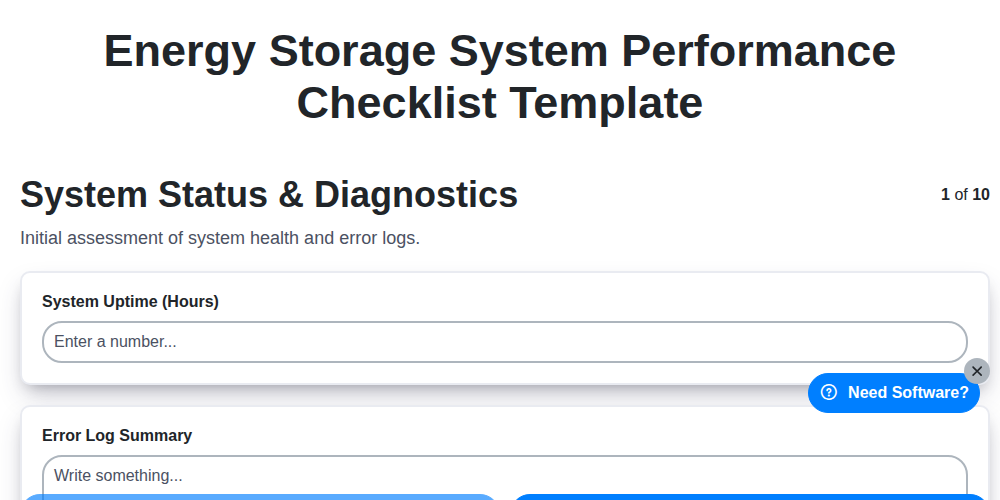
Table of Contents
- Introduction: Why a Performance Checklist is Crucial
- 1. System Status & Diagnostics: Initial Assessment
- 2. Battery Performance Metrics: Deep Dive into Health
- 3. Inverter Efficiency & Output: Measuring Conversion
- 4. Thermal Management System: Keeping Cool Under Pressure
- 5. Safety Systems & Controls: Ensuring Operational Integrity
- 6. Communication & Data Logging: Monitoring and Analysis
- 7. Grid Integration & Compliance: Meeting Standards
- 8. Physical Inspection & Maintenance: Hardware Health
- 9. Environmental Conditions: Impact Assessment
- 10. Performance Trends & Degradation: Identifying Patterns
- 11. Checklist Template: A Practical Guide
- 12. Best Practices for Consistent Monitoring
- Conclusion: Proactive Maintenance for Longevity
- Resources & Links
TLDR: Keep your energy storage system running smoothly and efficiently! This checklist template provides a step-by-step guide to regularly assess system health, from battery performance and inverter efficiency to safety and grid compliance. Download it to proactively identify and address potential issues before they impact your uptime and maximize your investment.
Introduction: Why a Performance Checklist is Crucial
Energy storage systems (ESS) are rapidly becoming essential components of modern power grids and microgrids, offering solutions for renewable energy integration, grid stability, and peak shaving. However, ensuring these systems operate reliably and efficiently over their lifespan requires diligent monitoring and proactive maintenance. A reactive approach to ESS management can lead to costly downtime, reduced performance, and even safety hazards.
That's where a comprehensive performance checklist comes in. Think of it as your ESS's health record. Regularly using a well-structured checklist allows you to identify potential issues early, track performance trends, and optimize operations. It moves you from simply hoping your ESS is performing well to knowing it is, backed by data and regular assessments. This proactive approach minimizes risks, maximizes ROI, and ultimately extends the life of your valuable energy storage investment. This article will outline a detailed checklist to guide your ESS performance assessments, providing a framework for robust and reliable operation.
1. System Status & Diagnostics: Initial Assessment
The very first step in any comprehensive energy storage system performance review is a thorough assessment of its overall system status and diagnostics. This goes beyond simply checking if the system is on - it's about understanding its operational health and identifying any immediate concerns.
Begin by reviewing the system's central control panel or monitoring software. Are there any active alarms or error codes? Document these meticulously. Check the system's overall uptime and note any recent shutdowns or restarts. Look for any unusual behavior reported by the system's diagnostics tools.
Furthermore, verify the connection status of all key components - battery modules, inverter, charge controllers, and communication interfaces. A disconnected or malfunctioning component can significantly impact performance, even if it doesn't trigger a critical alarm. Confirm firmware versions are up-to-date on all devices as outdated firmware can sometimes lead to unexpected issues. This initial diagnostic review forms the foundation for deeper analysis in subsequent checklist sections.
2. Battery Performance Metrics: Deep Dive into Health
The heart of any energy storage system (ESS) is its battery pack. Understanding and regularly monitoring its performance metrics is crucial for maximizing lifespan, ensuring reliable operation, and proactively identifying potential issues. This section delves into the key battery performance indicators you should be tracking.
State of Health (SOH): Arguably the most vital metric, SOH represents the battery's current capacity compared to its original, rated capacity. A decrease in SOH indicates degradation. Track this regularly - a consistent decline signals the need for further investigation.
State of Charge (SOC): While SOC is essential for operational management, it also provides clues about battery health. Frequent deep discharges or consistently operating near 100% SOC can accelerate degradation. Monitoring SOC trends helps optimize charging strategies.
Internal Resistance (IR): An increase in IR indicates a loss of electrochemical activity within the battery cells, often due to physical or chemical changes. High IR leads to reduced efficiency and increased heat generation. Regular IR measurements are a powerful diagnostic tool.
Voltage and Current Characteristics: Analyzing voltage profiles during charge and discharge cycles can reveal issues like cell imbalances, dendritic growth, or loss of active material. Significant deviations from expected voltage curves necessitate troubleshooting.
Capacity Fade: This refers to the gradual loss of usable capacity over time. Tracking capacity fade rate allows for accurate predictions of remaining battery life and future replacement planning.
Coulombic Efficiency (CE): CE measures the ratio of charge output to charge input. A lower CE implies energy losses due to parasitic reactions and self-discharge.
Cycle Count: While not a direct indicator of health, cycle count provides context for other performance metrics. Correlate cycle count with SOH, IR, and capacity fade to understand the overall degradation pattern.
Temperature Distribution within the Pack: Inconsistent temperatures across cells can lead to uneven aging. Monitoring temperature gradients helps identify potential hotspots and optimize cooling strategies.
Regularly reviewing these metrics, combined with thorough record-keeping, provides a comprehensive understanding of battery health and enables proactive maintenance to extend lifespan and maximize performance.
3. Inverter Efficiency & Output: Measuring Conversion
The inverter is the heart of your energy storage system, responsible for converting DC power from the batteries into usable AC power for your loads or the grid. Monitoring its performance is critical for overall system efficiency and longevity. This section focuses on key metrics to assess inverter operation.
What to Check:
- Output Power: Regularly measure the inverter's AC output power under various load conditions. Compare these values to the inverter's nameplate rating and expected performance. Significant deviations indicate potential issues.
- Efficiency Curve: Ideally, your inverter should have a performance curve outlining efficiency across a range of power outputs. Track your system's efficiency curve and compare it to the manufacturer's specifications. A shifting curve or consistent drop in efficiency is a red flag.
- THD (Total Harmonic Distortion): High THD indicates waveform distortion, potentially harming connected equipment and reducing grid acceptance. Keep THD within acceptable limits as specified by your grid operator.
- Power Factor: A power factor close to 1 (unity) indicates efficient power delivery. Low power factor means wasted energy. Monitor and address factors impacting power factor.
- Voltage & Frequency Stability: Inverters must maintain stable voltage and frequency output. Fluctuations can damage sensitive electronics and cause grid instability.
- Alarm Logs: Review inverter alarm logs frequently. These logs provide valuable insights into any operational issues, even those not immediately apparent.
- Startup & Shutdown Times: Note and record the time it takes for the inverter to start and stop. Unexpected delays can impact system responsiveness.
Tools Needed: Power meter, grid analyzer, inverter monitoring software.
4. Thermal Management System: Keeping Cool Under Pressure
Effective thermal management is absolutely critical for the longevity and performance of any energy storage system. Excessive heat accelerates battery degradation, reduces lifespan, and can even pose safety risks. This section of the checklist focuses on ensuring your thermal management system is functioning optimally.
Key Checks:
- Coolant Levels & Quality: Verify coolant levels are within the manufacturer's specified range. Check coolant condition for signs of contamination, corrosion, or degradation. Perform regular coolant testing (pH, specific gravity) as recommended.
- Pump/Fan Operation: Confirm pumps and fans are operating at the expected speed and without unusual noises or vibrations. Monitor their power consumption and compare it to baseline data.
- Heat Exchanger Performance: Inspect heat exchangers for fouling, scaling, or blockages. Assess temperature differentials across the heat exchanger to gauge efficiency. Consider periodic cleaning or chemical treatment.
- Temperature Sensors & Calibration: Ensure all temperature sensors within the system are functioning correctly. Verify calibration accuracy and replace any sensors that are drifting out of specification.
- Airflow Patterns: For systems utilizing air cooling, assess airflow patterns to ensure adequate ventilation and prevent hot spots. Check for obstructions or blockages.
- Leak Detection: Regularly inspect all hoses, pipes, and connections for signs of leaks. Address any leaks promptly to prevent further damage and maintain system efficiency.
- Control System Logic: Review the thermal management system's control logic to ensure it's functioning as intended - accurately responding to temperature fluctuations and adjusting cooling capacity.
Properly maintaining the thermal management system will significantly contribute to the overall health and extended operational life of your energy storage solution.
5. Safety Systems & Controls: Ensuring Operational Integrity
Energy storage systems (ESS) handle significant voltage and current, demanding robust safety measures. This checklist section focuses on verifying the functionality and proper operation of those crucial safety systems.
Checklist Items:
- Emergency Shutdown (ESD) Functionality: Manually trigger the ESD system and confirm it immediately disconnects the ESS from the grid and internal circuits. Verify reset procedures are clear and functional.
- Overvoltage/Undervoltage Protection: Confirm the system's overvoltage and undervoltage protection thresholds are configured correctly and trigger as expected during testing.
- Overcurrent Protection: Simulate overcurrent conditions (within safe testing parameters) and verify the appropriate protective devices (fuses, circuit breakers) trip as designed.
- Ground Fault Detection & Interruption: Test the ground fault detection system's ability to identify and isolate ground faults. Confirm sensitivity is appropriate and doesn't trigger false positives.
- Fire Detection & Suppression: Inspect fire detectors and suppression systems (e.g., sprinkler systems, inert gas systems). Verify detectors are clean, operational, and alarms are properly linked. Confirm the suppression system's integrity and test (if appropriate and permitted per manufacturer guidelines).
- Battery Cell Monitoring & Protection: Review battery cell monitoring data - voltage, temperature, state of charge. Verify protection mechanisms (e.g., cell balancing, over-temperature protection) are functioning correctly.
- Arc Flash Mitigation: Verify arc flash mitigation strategies (e.g., PPE requirements, rapid transfer schemes) are documented and appropriate for the system's voltage and current levels.
- Personnel Safety Interlocks: Confirm any personnel safety interlocks, such as door sensors or access controls, are operational and preventing unauthorized access to energized equipment.
- Alarm System Verification: Test all safety-related alarms and ensure they are clearly audible/visible and routed to the designated personnel.
Importance: Neglecting safety systems can have catastrophic consequences, including equipment damage, injury, and environmental impact. Regular and thorough testing of these controls is paramount for responsible and reliable ESS operation.
6. Communication & Data Logging: Monitoring and Analysis
A robust communication and data logging system is the nervous system of your energy storage system (ESS). Without it, you're flying blind, unable to proactively identify issues, optimize performance, or demonstrate compliance. This section of the checklist focuses on verifying the health and accuracy of these critical functions.
Key Checks:
- Data Acquisition & Transmission: Confirm the data acquisition system (DAQ) is functioning correctly, collecting all designated parameters (voltage, current, temperature, state of charge, etc.) from all relevant components. Verify data is being transmitted reliably to the central monitoring system or cloud platform.
- Data Integrity: Check for data loss, corruption, or anomalies. Compare historical data with current readings. Look for patterns that might indicate sensor drift or communication errors.
- Alarm & Alert Functionality: Test alarm triggers for critical events (over-voltage, under-voltage, high temperature, cell imbalance, etc.). Ensure alerts are received promptly by the designated personnel.
- Data Security: Assess the security protocols in place to protect data from unauthorized access or cyber threats. This includes password strength, encryption methods, and access controls.
- Reporting & Visualization: Evaluate the clarity and usefulness of data visualizations (dashboards, graphs, reports). Can you easily identify trends, anomalies, and performance deviations? Are reports generated automatically and on-time?
- Timestamp Accuracy: Verify that timestamps are accurate and synchronized across all data sources. This is crucial for correlating events and accurately diagnosing problems.
- Data Retention Policy: Confirm the data retention policy aligns with regulatory requirements and operational needs. Assess the availability and accessibility of historical data for analysis and auditing.
A well-maintained data logging system allows for predictive maintenance, optimized energy dispatch, and a comprehensive understanding of your ESS's overall health and performance.
7. Grid Integration & Compliance: Meeting Standards
Integrating an Energy Storage System (ESS) with the electrical grid isn't just about plugging it in; it's about meeting rigorous technical and regulatory requirements. This section of your checklist focuses on verifying that your ESS is operating within approved parameters and adhering to all applicable grid codes and compliance standards.
Here's what you'll be evaluating:
- Voltage & Frequency Ride-Through: Confirm the ESS is responding appropriately to grid voltage and frequency fluctuations as dictated by local regulations (e.g., IEEE 1547 in the US, EN 50549 in Europe). This includes checking response times and voltage/frequency limits.
- Power Factor Correction: Verify the ESS is contributing to power factor correction, minimizing reactive power and improving grid stability. Measure and record power factor values to ensure they meet requirements.
- Harmonic Distortion: Assess harmonic distortion levels produced by the ESS. Excessive harmonics can negatively impact grid equipment; mitigation strategies may be necessary.
- Protection Coordination: Validate the ESS protection schemes (e.g., overcurrent, undervoltage, overvoltage) are properly coordinated with the utility's protection system to prevent unnecessary outages and ensure safety.
- Communication Protocols: Ensure correct configuration and functionality of communication interfaces (e.g., Modbus, IEC 61850) enabling secure data exchange with the grid operator and SCADA systems.
- Compliance Documentation: Maintain up-to-date records of all compliance tests, certifications, and approvals. This documentation is crucial for audits and demonstrating adherence to regulatory frameworks.
- Cybersecurity: Evaluate the security measures in place to protect the ESS and grid from cyber threats, including authentication protocols and data encryption.
Regular verification of these aspects ensures reliable grid interaction, minimizes operational disruptions, and demonstrates commitment to responsible energy storage practices.
8. Physical Inspection & Maintenance: Hardware Health
Regular physical inspection is crucial for identifying potential issues before they lead to costly downtime or performance degradation. This goes beyond a simple visual check; it's a methodical evaluation of all hardware components.
Here's what to look for:
- Battery Modules/Cells: Inspect for swelling, corrosion, leaks, or any visible damage. Pay close attention to terminal connections, ensuring they are clean and tight.
- Inverter & Converter: Check for dust accumulation on cooling fins, ensuring proper ventilation. Look for any signs of burning or discoloration on circuit boards. Inspect wiring and connectors for damage or fraying.
- Enclosure: Evaluate the enclosure for any signs of physical stress, cracks, or corrosion. Ensure all access points are properly sealed to maintain environmental control.
- Mounting Hardware: Verify the integrity of mounting brackets and supports, ensuring everything is securely fastened and hasn't shifted over time.
- Cabling & Connectors: Inspect all cables for damage, proper routing, and secure connections. Labeling is essential for troubleshooting.
- Cooling System Components (Fans, Pumps): Verify proper operation and check for unusual noises or vibrations. Inspect fan blades for debris accumulation.
- Grounding Connections: Ensure all grounding connections are secure and free of corrosion.
Maintenance Tasks:
- Cleaning: Regularly clean dust and debris from all components.
- Torque Checks: Periodically check and re-torque connections according to manufacturer specifications.
- Lubrication: Lubricate any moving parts as recommended by the manufacturer.
- Wiring Inspection & Repair: Address any damaged wiring immediately.
9. Environmental Conditions: Impact Assessment
The performance and lifespan of an energy storage system (ESS) are significantly affected by its surrounding environment. This section of the checklist focuses on identifying and mitigating potential environmental risks. We're looking beyond just temperature - a comprehensive assessment includes humidity, altitude, seismic activity, and even exposure to pollutants.
High temperatures accelerate battery degradation, reducing capacity and increasing internal resistance. Conversely, excessively low temperatures can hinder ion mobility, impacting charge and discharge rates. Humidity can lead to corrosion of electrical components, while altitude affects air density and cooling efficiency. Areas prone to seismic activity require specialized mounting and structural considerations. Pollutants like salt spray (in coastal areas) or industrial emissions can also contribute to system degradation.
During inspection, document ambient temperatures (both average and peak), relative humidity, altitude, and any visible signs of environmental impact such as corrosion, condensation, or dust accumulation. Assess the adequacy of site drainage to prevent water damage. Consider the potential for extreme weather events (heavy rain, snow, high winds) and how these might affect system operation and safety. Record observations and recommend corrective actions such as improved ventilation, protective enclosures, or adjustments to system operational parameters to minimize environmental stress. This proactive approach contributes directly to maximizing the long-term reliability and effectiveness of your ESS.
10. Performance Trends & Degradation: Identifying Patterns
Long-term success with any Energy Storage System (ESS) hinges on understanding and proactively addressing performance degradation. This isn't about just checking current values; it's about analyzing trends over time. Regularly review historical data - ideally spanning months or even years - to identify subtle shifts that could indicate underlying issues.
Look for:
- Capacity Fade: A gradual reduction in the usable energy the battery can store. This is a common factor and needs to be tracked against expected degradation rates.
- Increased Internal Resistance: This translates to less power available and higher operating temperatures. Monitor impedance values and look for upward trends.
- Voltage Sag/Rise: Changes in voltage profiles during charge and discharge cycles can reveal battery health issues and potential electrolyte imbalances.
- Cycle Count Correlation: Compare performance metrics against the number of charge/discharge cycles. Is degradation accelerating beyond expectations?
- Seasonal Variations: Temperature fluctuations can significantly impact battery performance. Account for these when interpreting data.
- Unusual Events: Correlate performance dips with specific events like power outages, extreme weather, or maintenance procedures.
Establish baseline performance during commissioning and then periodically compare subsequent readings. Utilize charting tools and data visualization to quickly identify anomalies. Early detection of these trends allows for preventative maintenance, optimization strategies, and informed decisions about future replacements, extending the lifespan and maximizing the return on investment for your ESS.
11. Checklist Template: A Practical Guide
To ensure consistent and thorough performance evaluations of your Energy Storage System (ESS), we've compiled a comprehensive checklist template. This isn't just a list; it's a framework for proactive maintenance, early problem detection, and maximized lifespan for your investment. Below is a breakdown of the key sections and what you should be looking for during each assessment. Remember to tailor this template to your specific ESS model and operational environment.
Download the Template - We created a downloadable PDF version of this checklist for easier implementation.
Here's a look at what each section covers:
- 1. System Status & Diagnostics: Initial power-up sequence, error log review, firmware version verification, overall system health indicators.
- 2. Battery Performance Metrics: Voltage, current, state of charge (SOC), state of health (SOH), internal resistance, capacity fade over time. Crucially important for predicting remaining useful life.
- 3. Inverter Efficiency & Output: Input/output voltage and current, power factor, harmonic distortion, efficiency at various load levels, troubleshooting any power quality issues.
- 4. Thermal Management System: Temperature readings of battery modules, cooling system performance (fans, pumps, chillers), coolant levels and condition, airflow assessment. Overheating is a major degradation factor.
- 5. Safety Systems & Controls: Functional testing of safety relays, emergency shutoff procedures, fire detection and suppression systems, high/low voltage protection. Safety is paramount.
- 6. Communication & Data Logging: Verification of data transmission to monitoring platforms, accuracy of logged data, review of historical performance data, investigation of any communication errors.
- 7. Grid Integration & Compliance: Compliance checks with applicable grid codes and regulations, voltage and frequency ride-through capabilities, reactive power control functionality.
- 8. Physical Inspection & Maintenance: Visual inspection for signs of damage (corrosion, leaks, cracks), cleaning of components, tightening of connections.
- 9. Environmental Conditions: Monitoring ambient temperature, humidity, and air quality around the ESS. Record any unusual conditions.
- 10. Performance Trends & Degradation: Analyze long-term performance data to identify any degradation patterns and predict future performance. Compare to baseline data.
- 11. Documentation: Record all findings, actions taken, and recommendations for improvement. Maintain a detailed logbook.
Frequency: We recommend performing a brief visual inspection weekly, a more detailed assessment monthly, and a comprehensive review annually, or as dictated by manufacturer recommendations.
Who Should Use It? This checklist is valuable for site operators, maintenance technicians, and energy storage consultants alike.
12. Best Practices for Consistent Monitoring
Consistent monitoring isn't just about having a checklist; it's about how you use it and the habits you build around it. Here's how to ensure your energy storage system performance monitoring delivers meaningful results:
- Schedule & Adherence: Establish a regular monitoring schedule (daily, weekly, monthly - dictated by your system's needs and warranty requirements). Treat these appointments like any other critical maintenance task.
- Defined Roles & Responsibilities: Clearly assign responsibility for each checklist item. This ensures no vital checks fall through the cracks.
- Standardized Procedures: Document detailed procedures for each monitoring task. This minimizes variability in data collection and interpretation, especially when multiple personnel are involved. Include photos or videos where helpful.
- Calibration & Verification: Regularly calibrate monitoring equipment (thermometers, voltage meters, etc.) and verify data accuracy against known benchmarks.
- Data Centralization & Accessibility: Store all checklist data in a centralized, easily accessible location - a spreadsheet, database, or dedicated asset management platform. This facilitates trend analysis and reporting.
- Automated Alerts: Leverage automated alerts for out-of-range readings or deviations from expected performance. This proactive approach allows for rapid response to potential issues.
- Regular Review & Updates: Periodically review the checklist itself. As technology evolves or your system ages, update the checklist to reflect new considerations and potential failure modes.
- Training & Competency: Ensure all personnel responsible for monitoring are adequately trained on the checklist procedures, data interpretation, and corrective actions.
- Documentation of Actions: Meticulously document any corrective actions taken based on checklist findings. This creates a historical record of system maintenance and improvements.
- Trend Analysis & Reporting: Don't just collect data; analyze it. Track key performance indicators (KPIs) over time to identify patterns and potential degradation. Generate regular reports for stakeholders.
Conclusion: Proactive Maintenance for Longevity
Ultimately, implementing and consistently utilizing an Energy Storage System Performance Checklist like the one outlined here isn't just about ticking boxes; it's about safeguarding your investment and maximizing its lifespan. Proactive maintenance, guided by a structured checklist, shifts you from reactive firefighting to preventative care. By regularly assessing system status, performance metrics, and safety protocols, you can identify potential issues before they escalate into costly repairs or performance degradation. Remember, energy storage systems are complex assets; diligent upkeep translates directly to reliable power, optimized efficiency, and a longer, more profitable operational life. Don't wait for problems to arise - be proactive and ensure your energy storage system delivers consistent and dependable performance for years to come.
Resources & Links
- Energy Storage Association (ESA): The ESA is the leading trade association for energy storage. They provide industry reports, standards updates, and resources related to energy storage system performance and best practices. Great for keeping abreast of evolving industry standards.
- National Renewable Energy Laboratory (NREL): NREL conducts research and development related to renewable energy and energy storage, often publishing reports and data on battery performance and degradation. Search their publications for specific research on metrics discussed in the checklist.
- International Energy Agency (IEA): The IEA provides data and analysis on energy markets, including energy storage. Their reports can offer context for grid integration and compliance issues mentioned in the checklist. Look for reports on battery storage deployment.
- Underwriters Laboratories (UL): UL provides safety testing and certification for energy storage systems. Their standards and guidelines are critical for safety systems and controls as described in the checklist. Check for certifications relevant to your specific system.
- American National Standards Institute (ANSI): ANSI coordinates the development of consensus standards and helps ensure interoperability. Several standards relevant to energy storage may be found using their resources and searches. Helpful for understanding compliance and grid integration.
- National Institute of Standards and Technology (NIST): NIST develops standards and guidelines for measurement science, including battery performance and testing. Relevant for understanding the accuracy and reliability of diagnostic tools mentioned in the checklist and for ensuring correct measurement procedures.
- PV InfoLink: Provides data and analysis on the solar and energy storage markets. Valuable for understanding trends in battery costs, performance, and degradation rates; consider pricing and efficiency trends relevant to inverter output.
- Battery Systems: This website provides articles, news, and resources on battery technologies, including performance and maintenance. Search for content relating to battery health and thermal management.
- Drivetrains: Drivetrains specializes in hybrid and energy storage solutions. Although targeted at vehicle applications, their technical documentation on battery management systems and thermal management can provide insights relevant to stationary energy storage systems.
- Schneider Electric: Schneider Electric is a global leader in energy management and automation. They offer a wide range of energy storage solutions and resources, including technical documentation and best practices.
- SolarWinds: SolarWinds provides monitoring and management solutions that can be adapted for energy storage systems. Explore their solutions for remote monitoring and data logging - relevant for ensuring consistent monitoring practices.
Frequently Asked Questions
Where can I find more detailed information about energy storage system maintenance?
Consult the ESS manufacturer's manuals, industry best practices guides (e.g., from SEIA, IEA), and engage with qualified energy storage professionals for comprehensive maintenance information.
Comments
There are no comments yet. Be the first to add one!
Energy Management Solution Demo
Managing operations, safety, and compliance in the energy sector is critical. ChecklistGuro's Work OS platform streamlines your workflow from exploration and production to distribution and maintenance. Enhance safety, improve efficiency, and ensure regulatory adherence. Discover how ChecklistGuro can transform your energy business!
Related Articles
Stay Compliant: Your Energy Metering Compliance Checklist Template
Unlock Savings: Your Complete Energy Efficiency Audit Checklist
Your Ultimate Energy Efficiency Audit Checklist Template
Power Through: Your Essential Energy Grid Outage Support Checklist
Oil & Gas Well Safety Inspection Checklist: Ensuring a Secure Operation
HVAC System Maintenance Checklist: Building Climate Control & Energy Savings
Renewable Energy Project Checklist Template
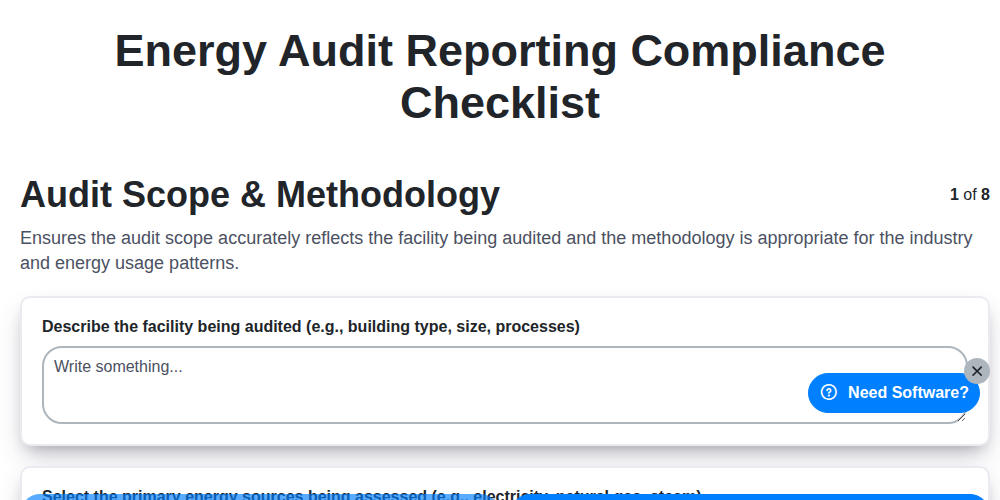
Energy Audit Reporting Compliance: Your Checklist for Success
Need help with
Energy?
Have a question? We're here to help. Please submit your inquiry, and we'll respond promptly.