FTA Compliance Checklist: Your Guide to Avoiding Penalties
Published: 12/09/2025 Updated: 07/02/2026
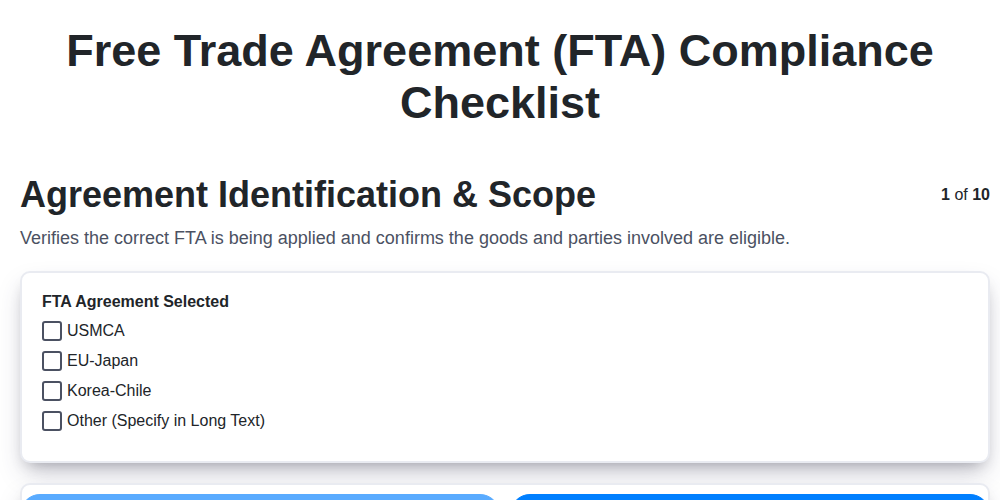
Table of Contents
- Introduction: Why FTA Compliance Matters
- 1. Agreement Identification & Scope: Which FTA Applies?
- 2. Understanding Origin Determination: Where Did Your Goods Come From?
- 3. Diving into Documentation Requirements: What Records Do You Need?
- 4. Record Keeping & Verification: Maintaining a Traceable Audit Trail
- 5. Rules of Origin Specifics: Navigating the Complexities
- 6. The Importance of Supplier Declarations
- 7. Customs Broker Compliance: Partnering for Success
- 8. Harmonized System (HS) Code Verification: Accurate Classification is Key
- 9. Periodic Review & Updates: Staying Current with Changes
- 10. Training and Awareness: Empowering Your Team
- 11. Common FTA Compliance Pitfalls to Avoid
- 12. Technology Solutions for Streamlining FTA Compliance
- Conclusion: Ensuring Long-Term FTA Benefits
- Resources & Links
TLDR: Trading under Free Trade Agreements (FTAs) can be complex! This checklist is your shortcut to staying compliant. It walks you through everything from confirming the right agreement applies to your goods to keeping meticulous records and training your team, minimizing costly penalties and maximizing benefits.
Introduction: Why FTA Compliance Matters
Free Trade Agreements (FTAs) offer incredible opportunities for businesses looking to expand internationally and reduce costs. However, simply knowing an FTA exists isn't enough; navigating the complexities of compliance is crucial to reaping those benefits. Failure to adhere to FTA regulations can result in penalties, loss of preferential tariff rates, and potential disruptions to your supply chain. This isn't just a legal matter; it's a business imperative. Understanding and meticulously following FTA rules ensures you're maximizing cost savings, maintaining a competitive edge, and avoiding costly errors. This checklist will guide you through the key areas, enabling you to confidently manage your FTA obligations.
1. Agreement Identification & Scope: Which FTA Applies?
Choosing the right FTA is the foundational step. Don't assume you know which one applies! Many countries have FTAs with numerous partners, and each agreement has its own specific rules and benefits.
Here's what to consider:
- Identify Your Products: Precisely define the goods you are importing or exporting. Generic descriptions aren't enough; you need detailed product specifications.
- Determine the Involved Parties: Know the countries of origin, destination, and transshipment (if applicable).
- Review FTA Texts: Carefully examine the official text of potential FTAs. Don't rely solely on summaries or promotional materials. Official language is key.
- Check for Geographic Scope: Understand the countries included under each agreement. Some FTAs are broader than others.
- Consider Most Favored Nation (MFN) Status: Before diving into FTAs, confirm if the countries involved already have MFN status. If so, an FTA might not offer any advantage.
- Seek Expert Advice: When in doubt, consult with a trade expert or customs broker. Misidentifying the applicable FTA can lead to costly errors.
2. Understanding Origin Determination: Where Did Your Goods Come From?
Determining the "origin" of your goods is arguably the most complex, yet crucial, step in FTA compliance. It's not simply where the product was manufactured; it's a legal determination based on intricate rules. Goods originating in a party to the FTA are generally eligible for preferential tariff treatment (lower or zero duties). But proving that origin can be tricky.
Here's why it's so important and what you need to consider:
- Beyond Manufacturing Location: Origin isn't just about where the final assembly occurred. It often hinges on where the materials used to create the goods originated. This can involve tracing back through a complex supply chain.
- Rules of Origin (ROO): Each FTA has specific ROO, which dictate the criteria for determining origin. These rules often involve "substantial transformation" - a significant change in the product's nature or form during production.
- Wholly Obtained Goods: These are goods produced entirely from materials originating in the FTA party. This is the easiest scenario.
- Manufacturing Operations: If materials from multiple FTA parties (or non-FTA parties) are used, the ROO will specify requirements regarding processing and value contribution. This could include requirements related to labor, materials, or specific processing steps.
- Cumulative Origin: Some FTAs allow for cumulative origin, meaning that goods can be deemed originating if they meet certain value-added requirements from multiple FTA parties.
- Due Diligence is Key: Thoroughly review the specific FTA's ROO documentation to understand the exact criteria. Don't assume - verify.
Failing to accurately determine origin can result in penalties, denied benefits, and potential trade disputes.
3. Diving into Documentation Requirements: What Records Do You Need?
FTA compliance isn't just about knowing the rules; it's about proving you followed them. This means meticulous record-keeping. Failing to maintain adequate documentation is a significant risk, potentially leading to penalties, denied preferential treatment, and damaged reputation. Let's break down the essential records you need to keep:
- Commercial Invoices: These are the cornerstone. They must clearly state the value of the goods, transaction date, quantity, description, and the relevant FTA reference (e.g., the specific agreement being utilized).
- Shipping Documents: Bills of lading, airway bills, or other shipping documents detailing the movement of goods are crucial to track the origin and chain of custody.
- Packing Lists: Provide a detailed breakdown of the contents of each package, which can be vital for verifying descriptions and quantities.
- Certificates of Origin (COO): Whether self-certified or obtained from a government authority, these are the proof of origin and are essential for claiming preferential treatment. Keep originals and copies.
- Production Records (for claimed transformation): If claiming preferential treatment based on a substantial transformation in your country, detailed records of the manufacturing process are vital. This includes bills of materials, labor records, and machinery usage logs.
- Supplier Declarations (SDo): These are declarations from your suppliers, attesting to the origin of the goods they're providing you. Maintain these carefully, as you are responsible for verifying their accuracy.
- Purchase Orders: These documents outline the terms and conditions of the purchase, including descriptions and quantities of goods, which help tie back to commercial invoices.
- Any other supporting documentation: Depending on the specific FTA and the goods involved, you might need additional documents like permits, licenses, or certificates.
It's vital to understand that the retention period for these records varies depending on the FTA and your country's regulations. Consult your FTA's specific requirements and seek legal advice to ensure compliance.
4. Record Keeping & Verification: Maintaining a Traceable Audit Trail
FTA compliance isn't a one-and-done activity; it demands meticulous record keeping and a robust verification process. Customs authorities are increasingly rigorous in their audits, and a well-maintained audit trail is your best defense against penalties and delays.
What constitutes sufficient record keeping? It goes far beyond simply retaining invoices. You need to document everything relevant to your FTA claims. This includes:
- Detailed Production Processes: Illustrate how goods were manufactured, outlining the origin of materials and components at each stage. Flowcharts and diagrams can be incredibly useful.
- Supplier Information: Maintain records of all suppliers, including their contact information, origin of goods they provide, and copies of any supplier declarations.
- Calculations: Clearly document all origin calculations performed, detailing the methodology used and the data inputs. Don't rely on spreadsheets alone - consider implementing a more robust system for consistency.
- Transaction Details: Retain copies of all commercial documents, including invoices, purchase orders, packing lists, and bills of lading.
- Customs Clearance Records: Secure copies of all customs entries, rulings, and correspondence with customs authorities.
Verification is Key: Regularly verify the accuracy and completeness of your records. This involves both internal reviews and potentially independent audits. Internal reviews should assess the consistency of your application of FTA rules and identify any potential gaps. Independent audits provide an impartial perspective and can help uncover previously unseen risks.
Remember, the retention period for records typically extends for several years (often 5-7 years, or longer depending on the specific FTA), so establishing a secure and easily accessible record-keeping system is crucial. A digital system offers advantages in terms of searchability, security, and accessibility - essential for efficient audits and ongoing compliance.
5. Rules of Origin Specifics: Navigating the Complexities
Understanding the general rules of origin isn't always enough. Each Free Trade Agreement (FTA) has its own intricacies and specific requirements that dictate how goods qualify for preferential treatment. These specifics are where many businesses stumble.
Here's a breakdown of why these specifics are crucial and what you need to be aware of:
- Product-Specific Rules: Don't assume all goods within a product category are treated the same. Many FTAs have product-specific rules, meaning the required change in tariff classification or value-added percentage varies significantly depending on the exact product. For example, certain automotive parts might require a much stricter rule of origin than simpler manufactured goods.
- Regional Value Addition (RVA): This is a common requirement, stipulating a minimum percentage of value that must be added in the exporting country or a designated region. Determining RVA can be complex, involving detailed calculations of material inputs, processing costs, and labor expenses.
- Wholly Obtained Goods: Some FTAs provide a simplified origin determination for wholly obtained goods - those produced entirely from domestic materials or resources. However, the definition of domestic can be surprisingly narrow and requires careful consideration.
- Substantial Transformation: This concept assesses whether a product has undergone sufficient processing to be considered originating in the FTA partner country. The level of transformation required varies and is often detailed in the agreement's text.
- Swiss-Type Rules: These rules, often used for textiles and apparel, focus on the tariff classification of fabrics and yarns used in the production process. They're known for their complexity and require meticulous tracking of material inputs.
Pro Tip: Don't rely solely on general guidelines. Consult the specific FTA text and consider seeking expert advice to ensure you're interpreting and applying the rules correctly for each of your products. Misinterpreting these specifics can lead to denied preferential treatment and costly penalties.
6. The Importance of Supplier Declarations
Supplier Declarations (SDs) are the backbone of many Free Trade Agreement (FTA) claims. They're the formal statements from your suppliers confirming that goods meet the origin requirements of the agreement. Without a valid SD, you likely can't claim preferential tariff treatment, potentially negating the entire purpose of participating in the FTA.
Think of it this way: you're relying on your suppliers' understanding of their own production processes and the origin rules. They must accurately declare the origin of the materials they provide to you. A strong SD process requires you to have robust communication channels with your suppliers, ensuring they are aware of their responsibilities and have the necessary training to complete these declarations correctly. It's not enough to simply receive an SD; you need to verify its accuracy and completeness. Failing to obtain or properly vet supplier declarations can lead to significant penalties, increased audit scrutiny, and potentially, being denied preferential duty rates. A proactive approach to supplier declarations - including regular audits and clear contractual obligations - is key to successful FTA compliance.
7. Customs Broker Compliance: Partnering for Success
Navigating Free Trade Agreements (FTAs) can be complex, and that's where a reliable customs broker becomes invaluable. They're not just facilitators; they're strategic partners in ensuring your compliance and maximizing benefits. This section focuses on the crucial aspect of Customs Broker Compliance.
Why Partner with a Compliant Broker?
Your chosen broker acts as your representative to customs authorities. Their expertise minimizes errors and delays, potentially saving you significant time and money. A compliant broker should be:
- Licensed and Bonded: Verify their licensing and surety bond are current and valid.
- FTA Expertise: They should have demonstrated experience and understanding of the specific FTA(s) you're utilizing. Don't hesitate to ask about their experience with your target market.
- Up-to-Date Knowledge: Regulations change frequently. Your broker should actively stay informed about changes impacting FTA compliance.
- Proactive Communication: A good broker provides clear and timely communication regarding potential issues and updates.
- Record Keeping & Audit Trail: They should maintain accurate records related to your shipments and be prepared to assist with audits.
Your Role in Broker Compliance:
While your broker handles much of the interaction with customs, you remain ultimately responsible for ensuring compliance. Provide them with accurate and complete information, including origin documentation, product descriptions, and sales contracts. Regularly review their work and ask questions if anything is unclear.
Choosing the Right Broker:
Consider broker reputation, experience, and willingness to collaborate. Don't be afraid to interview multiple brokers to find the best fit for your business.
8. Harmonized System (HS) Code Verification: Accurate Classification is Key
The Harmonized System (HS) code is the foundation of FTA compliance. It's a standardized numbering system used globally to classify traded products, and selecting the wrong code can derail your preferential tariff treatment. A misclassification can lead to denied benefits, increased duties, penalties, and even potential audits.
Here's why meticulous HS code verification is paramount:
- Duty Savings: Correct HS codes unlock the preferential tariff rates promised by the FTA. An incorrect code means paying the Most Favored Nation (MFN) rate, negating the benefit.
- Compliance & Avoidance of Penalties: Customs authorities are increasingly scrutinizing HS code accuracy. Incorrect classifications trigger red flags.
- Product Eligibility: Some FTAs have specific product inclusions and exclusions based on HS code categories. Confirming the correct code ensures your goods are actually eligible.
- Origin Determination: HS codes often play a crucial role in determining product origin, further impacting FTA eligibility.
Verification Steps:
- Consult the Official HS Nomenclature: Don't rely on assumptions. Refer to the official, most current version of the HS nomenclature.
- Read the Tariff Notes: These notes provide vital clarifying information for specific headings and subheadings. They often dictate the correct classification.
- Consider Binding Rulings: If available, consult any binding tariff rulings issued by customs authorities for similar products.
- Seek Expert Assistance: When in doubt, consult with a customs broker or HS classification specialist.
- Maintain Records: Document your HS code verification process, including the reasoning behind your classification.
9. Periodic Review & Updates: Staying Current with Changes
FTAs are living documents. They evolve through amendments, interpretations, and case law. What was compliant yesterday might not be today. Failing to regularly review and update your compliance processes can lead to costly errors, penalties, and lost benefits.
Here's why periodic reviews are critical:
- Amendment Updates: Agreements are often updated to reflect changing trade dynamics. You need to be aware of these changes and how they impact your products and operations.
- Interpretation Changes: Customs authorities continually release guidance and rulings that clarify how the FTA should be interpreted. Staying abreast of these interpretations is essential.
- Case Law: Court decisions can significantly impact the application of an FTA. Monitoring relevant case law is vital for ensuring ongoing compliance.
- Changes in Product Classifications: The Harmonized System (HS) and related classifications are periodically updated, which can affect origin determinations.
- Internal Process Evolution: As your business grows and changes, so too should your compliance procedures.
Recommended Frequency: We advise conducting a comprehensive review at least annually, and ideally more frequently (e.g., semi-annually) depending on the complexity of your supply chain and the specific FTAs you utilize. Don't wait for a customs audit to uncover gaps - be proactive!
10. Training and Awareness: Empowering Your Team
FTA compliance isn't just about processes; it's about people. A well-trained and aware team is your first line of defense against costly errors and penalties. This section emphasizes the vital role of ongoing training and fostering a culture of compliance within your organization.
Here's why comprehensive training is crucial:
- Reduced Errors: Regular training ensures your team understands the intricacies of the agreement, origin rules, and documentation requirements, minimizing unintentional mistakes.
- Increased Efficiency: Properly trained staff can navigate complex processes more quickly and accurately, saving valuable time and resources.
- Improved Communication: Training fosters a shared understanding of compliance obligations, improving communication between departments and with external partners like suppliers and customs brokers.
- Proactive Compliance: Awareness empowers employees to identify potential issues and proactively address them before they escalate.
- Adaptability: FTAs are often amended or updated. Ongoing training keeps your team informed of these changes and ensures continued compliance.
What should your training cover?
- Agreement Basics: A refresher on the specific FTA your company utilizes.
- Origin Rules Explained: Detailed walkthroughs of origin determination processes.
- Documentation Best Practices: Proper completion and retention of necessary documents.
- HS Code Application: Understanding how to correctly classify goods.
- Role-Specific Responsibilities: Clear delineation of responsibilities for different team members.
Beyond initial training:
- Regular Refresher Courses: Schedule periodic updates to reinforce knowledge.
- New Hire Onboarding: Incorporate FTA compliance into the onboarding process for new employees.
- Communication Channels: Utilize internal newsletters, memos, and meetings to disseminate compliance information.
- Feedback Mechanisms: Encourage employees to ask questions and provide feedback on compliance processes.
11. Common FTA Compliance Pitfalls to Avoid
Navigating Free Trade Agreements (FTAs) can feel like traversing a complex maze. While the potential benefits - reduced tariffs and streamlined trade - are significant, failing to comply can lead to penalties, lost savings, and reputational damage. Here are some common pitfalls businesses often encounter:
- Ignoring the "De Minimis" Rule: Many FTAs have a de minimis value threshold. Goods below this value might be exempt from duties and taxes, but failing to understand and correctly apply this can lead to unnecessary costs and delays.
- Insufficient Origin Determination: Simply stating Made in [Country] isn't enough. Accurate origin determination requires a deep dive into the good's components, processing, and applicable rules of origin. Errors here are frequent and costly.
- Incomplete or Missing Documentation: Missing or inaccurate certificates of origin, commercial invoices, or other required documents is a leading cause of denied claims.
- Failure to Maintain Proper Records: Customs authorities can and will audit your records. Inadequate record-keeping makes compliance verification impossible.
- Overlooking Change in Circumstances: FTAs are constantly evolving. Regulations, interpretations, and even the goods covered can change. Failing to stay abreast of these updates is a recipe for non-compliance.
- Supplier Declaration Issues: Relying solely on supplier declarations without verifying their accuracy or understanding their obligations can lead to problems.
- Assuming Customs Broker Expertise is Enough: While customs brokers are valuable partners, the ultimate responsibility for compliance rests with the importer/exporter.
- Neglecting Internal Training & Awareness: Employees involved in international trade need proper training to understand FTA requirements and their role in compliance.
- Not Understanding "Substantial Transformation": This critical concept determines origin for many goods and requires careful analysis of manufacturing processes.
- Incorrect HS Code Classification: An incorrect Harmonized System (HS) code triggers incorrect duty rates and can raise red flags with customs.
- Ignoring Specific Product-Specific Rules: Certain products have particularly complex origin rules that demand specialized knowledge.
12. Technology Solutions for Streamlining FTA Compliance
Navigating Free Trade Agreement (FTA) compliance can feel like a manual labyrinth, but thankfully, technology offers a powerful escape. Several software solutions are emerging to automate and simplify the process, reducing errors and freeing up valuable resources. Here's a look at how technology is transforming FTA compliance:
- FTA Management Software: These platforms centralize all aspects of FTA compliance. They often include modules for origin determination, documentation management, HS code classification, and reporting. Many integrate with existing ERP systems, creating a seamless workflow.
- Automated Origin Determination: Sophisticated algorithms can analyze product components and manufacturing processes to automatically determine origin based on complex rules of origin. This significantly reduces manual calculation errors and accelerates the process.
- Document Management Systems (DMS): Securely store, organize, and share all FTA-related documentation electronically, ensuring easy access and version control. This reduces reliance on paper and streamlines audits.
- HS Code Classification Tools: AI-powered tools can suggest the correct HS codes based on product descriptions and attributes, minimizing misclassification penalties.
- Blockchain Technology: While still evolving, blockchain can offer increased transparency and traceability within the supply chain, crucial for verifying origin and compliance.
- Data Analytics & Reporting: Gain real-time visibility into compliance status, identify potential risks, and generate reports for audits and internal reviews.
Investing in the right technology isn't just about efficiency; it's about mitigating risk, improving accuracy, and ultimately, maximizing the benefits of FTA participation.
Conclusion: Ensuring Long-Term FTA Benefits
Navigating Free Trade Agreement (FTA) compliance can feel complex, but the rewards - reduced tariffs, streamlined trade, and a competitive edge - are well worth the effort. This checklist provides a solid foundation, but remember that FTAs are constantly evolving. Proactive engagement with your customs broker, ongoing staff training, and regular internal audits are critical for sustained success. Don't view compliance as a one-time task; it's an ongoing process. By embedding these practices into your business operations, you can confidently leverage the benefits of FTAs for years to come and mitigate the risks associated with non-compliance. Stay informed, stay vigilant, and reap the rewards of global trade.
Resources & Links
- U.S. Department of Commerce - Trade: Official U.S. government website offering extensive resources on international trade, including information on Free Trade Agreements, regulations, and compliance.
- U.S. Customs and Border Protection (CBP): CBP's website provides official guidance, rulings, and updates related to import regulations, including FTA compliance. Crucial for understanding requirements and penalties.
- World Trade Organization (WTO): While broad, the WTO website offers background on trade agreements and the Harmonized System (HS), providing context for FTA understanding.
- Importer Security Alliance (ISA): Offers training, resources, and compliance assistance for importers, including specific FTA guidance and webinars. Useful for a deeper dive into practical application.
- World Trade Tools: Provides tools, resources, and training related to international trade compliance, including FTA training and document management solutions.
- Thomson Reuters - Trade Compliance: Offers a range of trade compliance solutions, news, and resources, including FTA information and updates. A good source for industry insights.
- Panjiva (S&P Global): Provides trade data and analytics, allowing you to research import records, identify suppliers, and assess FTA compliance patterns. Valuable for verification and risk assessment.
- SimplyImport: Offers free trade agreement resources, HS code lookup, and tariff information. A good starting point for basic FTA research.
- Trade Compliance International: Publishes news, articles, and reports on trade compliance topics, including FTA updates and best practices.
- OneSource (a Hitachi Solution): Offers trade compliance software solutions, including FTA management tools for automation and streamlined processes. Demonstrates technology options.
- DHL Global Trade Compliance: DHL offers trade compliance services and solutions, including FTA consulting and support. Valuable for understanding logistics and customs broker partnerships.
- KWT - Global Trade Compliance Consultants: Offers expert consulting services for FTA compliance, including audits, training, and implementation support. Good for more complex situations.
Frequently Asked Questions
What does FTA compliance refer to?
FTA compliance refers to adherence to the regulations and guidelines set by the Federal Transit Administration (FTA) for grant recipients, primarily public transit agencies. These regulations cover financial management, procurement, safety, and other crucial areas to ensure public funds are used responsibly and effectively.
Why is FTA compliance so important?
FTA compliance is essential to safeguard federal funding. Non-compliance can lead to penalties like corrective action plans, suspension of funding, and even legal action, hindering a transit agency's ability to provide essential services. It also builds public trust and accountability.
Who needs to follow the FTA compliance checklist?
Any agency receiving federal funding through the FTA, including public transit agencies, regional transportation authorities, and other entities involved in transit-related projects, must adhere to FTA compliance guidelines. This includes project managers, finance personnel, procurement officers, and anyone involved in managing grant funds.
What are some common areas covered in the FTA compliance checklist?
The checklist typically covers areas like procurement standards (competitive bidding, conflict of interest), cost principles, reporting requirements, project management, safety inspections, and equal employment opportunity. Specific areas will vary based on the type of grant and project.
What is a 'Corrective Action Plan' (CAP) and how does it relate to FTA compliance?
A CAP is a formal plan outlining steps to rectify non-compliance issues identified by the FTA. When an agency fails to meet FTA requirements, the FTA may require a CAP to be developed and implemented, with deadlines and oversight mechanisms.
What are some potential penalties for non-compliance?
Penalties for non-compliance can range from written warnings and increased monitoring to suspension or termination of federal funding, fines, and even legal action. The severity depends on the nature and extent of the non-compliance.
Where can I find the official FTA regulations and guidance?
The official FTA regulations and guidance are available on the FTA website: www.fta.gov. You can search for specific regulations based on your grant program or project type. The FTA also provides training and webinars to assist recipients.
How often should I review and update my FTA compliance checklist?
You should review and update your compliance checklist at least annually, or more frequently if there are changes in federal regulations, agency policies, or project scope. Staying proactive ensures ongoing compliance.
What role does documentation play in FTA compliance?
Thorough documentation is crucial. It provides evidence of your compliance efforts and helps demonstrate adherence to regulations during audits or investigations. Document all processes, decisions, and actions related to grant management.
Who should I contact if I have questions about FTA compliance?
Your agency's Grants Management Specialist, FTA Regional Representative, or the FTA Office of Legal Counsel are good resources for clarifying questions about FTA compliance. Consulting with legal counsel specializing in government regulations is also recommended.
Comments
There are no comments yet. Be the first to add one!
SCM - Supply Chain Management Solution Demo
Struggling with supply chain disruptions & lack of visibility? ChecklistGuro delivers a centralized SCM solution, connecting your suppliers, manufacturers, & distributors for improved collaboration and control. Simplify operations & boost efficiency.
Related Articles
The Ultimate Supply Chain Inventory Accuracy Audit Checklist: A Step-by-Step Guide
Supply Chain Capacity Planning Checklist: Ensure Readiness for Peak Demand
The Ultimate Supply Chain Network Optimization Checklist: A Step-by-Step Guide
Supply Chain Risk Assessment Checklist: Your Guide to Resilience
Navigating Sustainability: Your Supply Chain Compliance Checklist

Top 10 SAP Logistics Business Network (LBN) Alternatives for 2025

Fortify Your Supply Chain: The Ultimate Resilience Assessment Checklist
Navigating Global Trade: Your Essential Import/Export Compliance Checklist
Need help with
Supply Chain Management (SCM)?
Have a question? We're here to help. Please submit your inquiry, and we'll respond promptly.