A Step-by-Step Guide to the Inbound Receiving Process
Published: 06/18/2026 9:00 PM Updated: 06/19/2026 11:49 AM
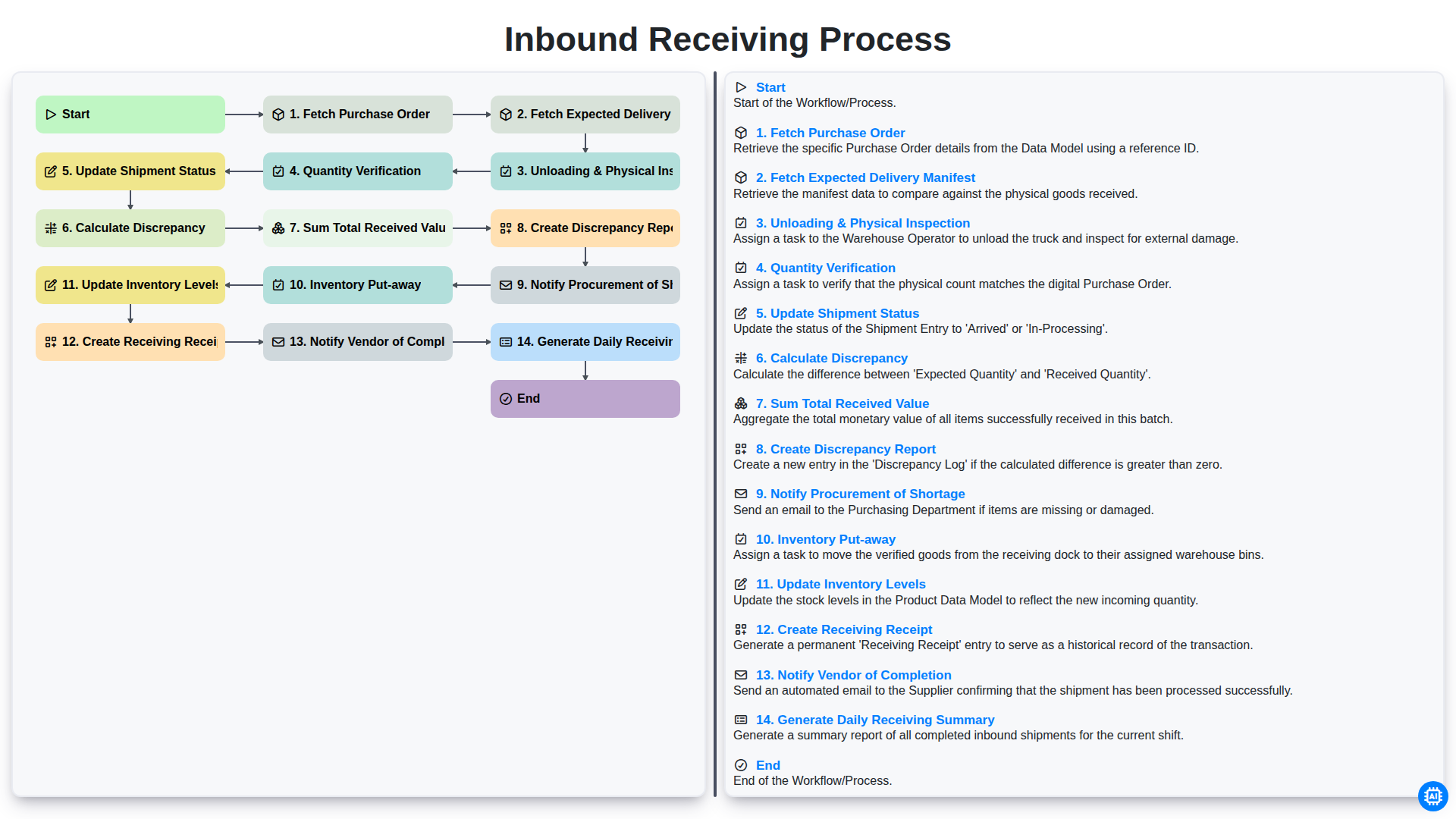
Table of Contents
- Introduction to Efficient Inbound Receiving
- Phase 1: Pre-Arrival Preparation
- Step 1: Fetching the Purchase Order
- Step 2: Fetching the Expected Delivery Manifest
- Phase 2: Physical Dock Operations
- Step 3: Unloading and Physical Inspection
- Step 4: Quantity Verification
- Phase 3: Data Validation and Discrepancy Management
- Step 5: Updating Shipment Status
- Step 6: Calculating Discrepancies and Summing Received Value
- Step 7: Creating Discrepancy Reports and Procurement Notification
- Phase 4: Inventory Integration
- Step 8: Inventory Put-away and Updating Stock Levels
- Step 9: Finalizing Documentation and Reporting
- Resources & Links
TLDR: Master your supply chain efficiency with this comprehensive guide to the Inbound Receiving Process workflow. Learn how to streamline everything from initial PO retrieval and physical inspection to discrepancy reporting and inventory updates, ensuring accuracy and seamless communication between procurement and vendors.
Introduction to Efficient Inbound Receiving
The inbound receiving process is the critical gateway of your supply chain. It is the precise moment when goods transition from being in transit to becoming part of your active inventory. When executed seamlessly, this process ensures data accuracy, maintains stock integrity, and provides a foundation for smooth downstream operations like warehousing and fulfillment.
However, a disorganized receiving workflow can lead to a domino effect of operational headaches-ranging from phantom stockouts and inaccurate inventory levels to costly discrepancies that disrupt financial reporting. An efficient inbound process isn't just about moving boxes off a truck; it is a systematic series of checks, balances, and documentation steps designed to catch errors at the dock before they penetrate your warehouse management system. By mastering the flow from initial document retrieval to final inventory update, businesses can minimize shrinkage, optimize labor productivity, and maintain a reliable relationship with both vendors and procurement teams.
Phase 1: Pre-Arrival Preparation
Efficiency in the inbound receiving process begins long before the delivery truck arrives at the loading dock. The foundation of a seamless workflow lies in the critical pre-arrival preparation phase, where accuracy and foresight prevent bottlenecks downstream.
This phase focuses on two essential preparatory steps: Fetching the Purchase Order (PO) and Fetching the Expected Delivery Manifest. By proactively retrieving the relevant Purchase Order, the receiving team can establish a clear baseline of what has been legally and financially committed to the company. Simultaneously, cross-referencing this with the Expected Delivery Manifest allows the warehouse staff to anticipate the volume and nature of incoming goods.
Taking these steps in advance ensures that the receiving team is not working blindly. When the warehouse team knows exactly what is scheduled to arrive, they can allocate the necessary dock space, arrange for the appropriate handling equipment, and ensure that the necessary staff is positioned to manage the workload. This proactive approach transforms the receiving dock from a reactive environment into a controlled, organized gateway for your supply chain.
Step 1: Fetching the Purchase Order
The inbound receiving process begins long before the truck arrives at the loading dock. The foundational step is Fetching the Purchase Order (PO). This stage involves retrieving the digital or physical documentation that outlines exactly what was ordered, from whom, and at what price.
Fetching the correct PO is critical because it serves as the single source of truth for the entire receiving workflow. Without an accurate PO, the receiving team has no baseline to measure the incoming shipment against. By accessing the PO details in your system beforehand, you can prepare the warehouse staff for the specific items, quantities, and handling requirements expected, ensuring that the subsequent inspection and verification steps are both accurate and efficient.
Step 2: Fetching the Expected Delivery Manifest
Once the Purchase Order has been retrieved, the next critical step in the inbound process is to fetch the Expected Delivery Manifest. While the Purchase Order serves as the internal instruction of what should arrive, the delivery manifest is the document provided by the carrier or vendor that outlines exactly what is currently in transit.
Aligning these two documents is essential for a seamless receiving workflow. By cross-referencing the manifest with your internal records, the receiving team can prepare the warehouse floor for the specific volume and type of goods arriving. This proactive step allows the team to allocate the necessary dock space, arrange for appropriate handling equipment (such as forklifts or pallet jacks), and ensure that the receiving staff is briefed on the incoming shipment's contents before the truck even hits the bay. This preparation is the foundation for reducing bottlenecking and ensuring that the subsequent physical inspection is as efficient as possible.
Phase 2: Physical Dock Operations
Once the initial documentation has been prepared, the focus shifts from the office to the warehouse floor. This phase represents the most critical touchpoint in the supply chain, where digital records meet physical reality. The process begins with Unloading & Physical Inspection, where items are removed from the transport vehicle and checked for any visible signs of damage or tampering.
Immediately following the visual check, the team must perform a rigorous Quantity Verification. This involves cross-referencing the physical count of the goods against the Expected Delivery Manifest to ensure that what was promised is what has actually arrived. This stage is the primary safeguard against receiving errors and is essential for maintaining high inventory accuracy.
Step 3: Unloading and Physical Inspection
Once the delivery vehicle has been securely docked, the hands-on phase of the receiving process begins. This stage is the first line of defense in maintaining inventory integrity. The unloading process involves carefully removing goods from the transport vehicle and moving them to a designated staging area.
During this phase, the team must conduct a thorough physical inspection. This is not merely about moving boxes; it is a critical quality control checkpoint. Staff must examine the exterior of all packaging for any signs of transit damage, such as crushed corners, punctures, leaks, or broken seals. Any visible damage must be documented immediately. This step is vital because identifying compromised goods at the point of entry prevents damaged inventory from ever entering your warehouse ecosystem, saving significant time and costs associated with returns and claims later in the supply chain.
Step 4: Quantity Verification
Once the physical inspection of the goods is complete, the process moves into the critical phase of Quantity Verification. This step serves as the bridge between seeing the goods and recording them in your system. During this stage, the receiving clerk meticulously compares the physical count of the items unloaded from the truck against the quantities listed on the Expected Delivery Manifest and the original Purchase Order.
The goal here is to ensure absolute mathematical accuracy. It is not enough to simply check that the boxes are intact; every individual unit must be accounted for. This is the precise moment where hidden errors-such as a pallet that looks full but is actually missing several items-are caught. By performing a rigorous count at this stage, you prevent the common pitfall of overstating your stock, which can lead to broken promises to customers and significant-driven errors in downstream fulfillment.
Phase 3: Data Validation and Discrepancy Management
Once the physical inspection is complete, the focus shifts from the loading dock to the digital record. This critical stage ensures that what was physically unloaded matches what was documented in your procurement system. The process begins by calculating discrepancies between the actual items received and the original purchase order. By comparing the physical count against the expected delivery manifest, you can identify any shortages or overages immediately.
During this phase, the system must sum the total received value to ensure financial accuracy for incoming stock. If any inconsistencies are detected, the workflow triggers the automatic creation of a discrepancy report. This isn't just an internal record; the system must immediately notify the procurement department of any shortages, allowing them to initiate claims or follow up with suppliers without delay. This rigorous validation ensures that your financial records and vendor accountability remain airtight, preventing phantom inventory from entering your system.
Step 5: Updating Shipment Status
Once the physical inspection and quantity verification are complete, the next critical step is to Update Shipment Status within your Warehouse Management System (WMS) or ERP. This step serves as the digital bridge between the physical movement of goods and your real-time data.
Updating the status immediately ensures that the system reflects the current state of the shipment (e.g., changing it from In Transit to Arrived or Partially Received). This real-time visibility is vital for preventing duplicate receiving entries and providing the procurement team with an accurate view of what has actually hit the dock. Without this immediate update, the rest of the supply chain operates on ghost data, which can lead to inaccurate stock availability and missed replenishment opportunities.
Step 6: Calculating Discrepancies and Summing Received Value
Once the physical verification of the goods is complete, the workflow moves into a critical phase of data reconciliation. After comparing the actual physical count against the original purchase order and the delivery manifest, the system must calculate the discrepancy. This involves identifying any variances, such as shortages (items missing from the shipment) or overages (extra items received), which could impact both your inventory accuracy and your financial records.
Simultaneously, the process involves summing the total received value. This step is vital for accounting purposes, as it determines the exact monetary value of the stock that is officially entering your warehouse. By automating the calculation of the total value of the good items received, the system ensures that your landed costs and accounts payable are updated with high precision, reducing the risk of human error during manual entry.
Step 7: Creating Discrepancy Reports and Procurement Notification
When the physical count does not align with the expected delivery, the workflow shifts from routine verification to critical error management. Once the Calculate Discrepancy step identifies a mismatch between the quantities received and the quantities invoiced, the system must immediately trigger the Create Discrepancy Report process. This document serves as the official record of the shortage or damage encountered during the unloading phase.
Transparency is vital in supply chain management, which is why the next critical move is to Notify Procurement of Shortage. By automatically alerting the procurement team the moment a discrepancy is logged, you eliminate the communication lag that often leads to payment errors or stockouts. This proactive notification allows procurement officers to immediately contact vendors for replacements, issue credit memos, or adjust pending purchase orders, ensuring that your financial records and inventory expectations remain synchronized.
Phase 4: Inventory Integration
Once the physical verification is complete and any discrepancies have been addressed, the focus shifts from the loading dock to the digital ecosystem of your warehouse. The final stage of the inbound process is all about ensuring that what is physically present in your facility is accurately reflected in your management system.
This phase begins with Inventory Put-away, where the verified goods are moved from the receiving area to their designated storage bins or racks. As items are placed, the system must be updated in real-time to Update Inventory Levels, ensuring that your stock counts are precise and available for order fulfillment.
To close the loop on the receiving cycle, the system must Create a Receiving Receipt, serving as the official record of the transaction. To maintain high standards of vendor management and operational transparency, the process concludes with automated communication: Notify the Vendor of Completion to confirm the delivery was successful, and Generate a Daily Receiving Summary to provide management with a high-level overview of all inbound activity. This seamless integration ensures that your data remains a single source of truth, preventing stockouts and overstocking errors.
Step 8: Inventory Put-away and Updating Stock Levels
Once the receiving process has been validated and all discrepancies have been documented, the focus shifts from inspection to integration. The Inventory Put-away stage is a critical transition point where the physical goods move from the receiving dock to their designated storage locations. This step requires precision; items must be placed in their correct bins, aisles, or pallets to ensure optimal warehouse organization and accessibility for future picking operations.
As the physical movement occurs, it is equally important to simultaneously Update Inventory Levels within your Warehouse Management System (WMS) or ERP. This real-time synchronization ensures that your digital records mirror the physical reality of your warehouse. By updating stock levels immediately upon put-away, you eliminate phantom stock issues, prevent stockouts, and provide your sales and procurement teams with an accurate, real-time view of available inventory, effectively maintaining the integrity of your entire supply chain.
Step 9: Finalizing Documentation and Reporting
Once the physical movement of goods is complete, the focus shifts to the administrative closing of the receiving cycle. The final stage of the workflow ensures that all digital records match the physical reality of the warehouse. This begins with the creation of a Receiving Receipt, a critical document that serves as the official proof of what entered the facility.
To maintain end-to-end transparency, the process concludes with three vital communication and reporting steps:
- Vendor Notification: An automated or manual notification is sent to the vendor to confirm the completion of the delivery, closing the loop on the logistics chain.
- Discrepancy Resolution: If any shortages or damages were identified during the inspection, the previously generated discrepancy reports are finalized to ensure all stakeholders are aligned.
- Daily Receiving Summary: The day concludes with the generation of a comprehensive daily summary. This report provides management with a high-level overview of total volume received, total value processed, and any operational bottlenecks encountered.
By meticulously completing these documentation steps, you ensure that your financial records, inventory accuracy, and vendor relationships remain beyond reproach.
Resources & Links
- Supply Chain Management Review: A professional resource for industry best practices, case studies, and deep dives into warehouse management and logistics optimization.
- Inbound Logistics: A leading industry publication providing news, trends, and expert insights specifically focused on inbound supply chain operations and transportation.
- Warehouse Management Best Practices: A guide to implementing standard operating procedures (SOPs) for receiving, inspection, and inventory accuracy in the warehouse.
- GS1 Global Standards: Essential resources for understanding barcode usage, scanning, and identification protocols during the physical inspection and verification phase.
- ASCM (Association for Supply Chain Management): The gold standard for supply chain professionals, offering frameworks for managing discrepancies, procurement communication, and inventory control.
- Financial Accuracy in Inventory Management: Resources focused on the financial implications of the receiving process, such as calculating received value and reconciling discrepancies with accounting.
Found this Article helpful?
Comments
There are no comments yet. Be the first to add one!
WMS - Warehouse Management System Solution Demo
Optimize your warehouse operations & boost efficiency! ChecklistGuro's WMS streamlines inventory management, order fulfillment, and shipping. Reduce errors, improve accuracy, & maximize space utilization. Manage it all with our Work OS.
Related Articles
Seamless RFID Integration: Your WMS Checklist Template for Success
Mastering Warehouse Labeling: Your WMS Process Checklist Template
The Ultimate Supply Chain Inventory Accuracy Audit Checklist: A Step-by-Step Guide
Mastering Putaway: Your WMS Optimization Checklist

Mastering Your Yard: A Warehouse WMS Yard Management Checklist Template
Warehouse Data Integrity: Your WMS Checklist Template
WMS System Performance Monitoring Checklist: A Comprehensive Guide
Warehouse WMS Error Handling Checklist: A Proactive Guide to Minimizing Disruptions
We can do it Together
Need help with
Checklists?
Have a question? We're here to help. Please submit your inquiry, and we'll respond promptly.