Mastering Warehouse Labeling: Your WMS Process Checklist Template
Published: 12/19/2025 10:00 PM Updated: 12/20/2025 12:14 PM
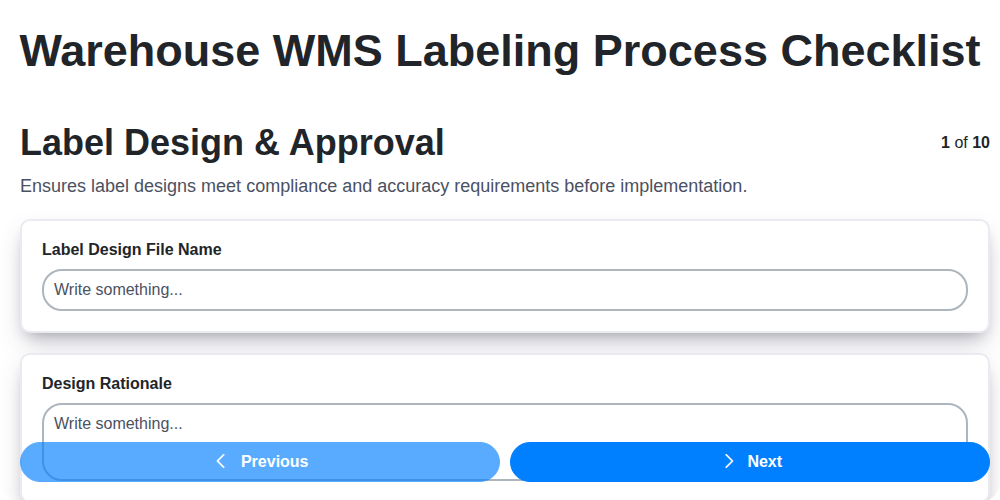
Table of Contents
- Introduction: Why Warehouse Labeling Matters
- 1. Label Design & Approval: Setting the Foundation
- 2. Printer Setup & Configuration: Ensuring Operational Readiness
- 3. WMS Data Integration: Seamless Data Flow
- 4. Label Material & Adhesive Quality: Durability & Performance
- 5. Printing Accuracy & Readability: Avoiding Costly Errors
- 6. Application Process Verification: First-Pass Success
- 7. Exception Handling & Rework: Addressing Labeling Issues
- 8. Security & Access Controls: Protecting Sensitive Data
- 9. Documentation & Record Keeping: Audit Trails & Traceability
- 10. Compliance & Regulatory Checks: Staying Within the Law
- 11. Training & User Proficiency: Empowering Your Team
- 12. Continuous Improvement: Optimizing Your Labeling Workflow
- Conclusion: Achieving Labeling Excellence
- Resources & Links
TLDR: This checklist template ensures your warehouse labeling process, integrated with your WMS, is accurate, efficient, and compliant. It covers everything from label design and printer setup to application verification and security, minimizing errors, saving time, and keeping you audit-ready. Download the template to streamline your labeling and boost warehouse performance!
Introduction: Why Warehouse Labeling Matters
Accurate and consistent labeling is the unsung hero of a well-managed warehouse. It's far more than just slapping a sticker on a box; it's a critical link in your supply chain, impacting everything from picking and packing efficiency to inventory accuracy and ultimately, customer satisfaction. Poor labeling leads to mis-shipments, delays, increased labor costs due to manual corrections, and frustrated customers. Conversely, a robust and reliable labeling process, backed by a comprehensive checklist, minimizes errors, streamlines workflows, and contributes directly to overall warehouse productivity and profitability. This post dives into the key elements of a successful warehouse labeling process, focusing on a detailed checklist to ensure every step is executed flawlessly.
1. Label Design & Approval: Setting the Foundation
A well-designed label is the cornerstone of an efficient warehouse labeling process. This isn't just about aesthetics; it's about functionality and clear communication. Start with a comprehensive brief outlining the information required on the label - this might include product codes, lot numbers, expiration dates, barcodes, and handling instructions.
Crucially, involve all relevant stakeholders - warehouse managers, operations personnel, IT, and even potentially sales or quality control - in the design review process. Ensure the design adheres to your company's branding guidelines and is easily scannable and understandable by anyone in the warehouse.
Consider factors like font size, barcode symbology (e.g., Code 128, QR code), placement of information, and the use of color to highlight key data. A visual mock-up or prototype is invaluable for testing readability and identifying potential issues before mass printing. Formal approval, documented with signatures or digital sign-off, ensures everyone is on board and reduces the risk of costly errors later. Don't skip this step - a small investment in design upfront prevents significant headaches down the line.
2. Printer Setup & Configuration: Ensuring Operational Readiness
A flawlessly designed label is useless if your printer can't produce it reliably. This section focuses on ensuring your printer is properly set up and configured to meet the demands of your warehouse WMS labeling process.
Initial Assessment & Compatibility: Begin with a thorough compatibility check. Confirm the printer model is supported by your WMS and can handle the chosen label material. Check for required interfaces (USB, Ethernet, etc.) and driver compatibility with your operating system.
Driver Installation & Verification: Install the latest printer drivers, ideally obtained directly from the manufacturer's website. Verify the installation by printing a test label with generic text and graphics. This ensures basic functionality and identifies any initial driver issues.
Label Size & Resolution Settings: Precisely configure the label size settings within the printer's control panel or driver. Inaccurate dimensions will result in misaligned or truncated labels. Adjust print resolution to achieve optimal readability - a higher resolution generally improves barcode scanability, but may impact print speed.
Ribbon/Ink Cartridge Setup: Follow the printer manufacturer's instructions precisely when installing the ribbon or ink cartridge. Ensure proper tensioning and alignment to prevent smudging or fading. Keep a supply of spares readily available to avoid production delays.
Calibration and Alignment: Calibrate the printer to ensure accurate label placement. Alignment is crucial for barcode readability and overall label aesthetics. Many printers have built-in calibration routines - utilize them!
Network Connectivity (if applicable): For networked printers, verify network connectivity and IP address assignment. Ensure the printer is accessible by the WMS server and designated users.
Security Settings: For networked printers, review and configure security settings to restrict unauthorized access and modifications.
3. WMS Data Integration: Seamless Data Flow
The heart of a successful warehouse labeling process lies in the seamless integration with your Warehouse Management System (WMS). Without it, you're relying on manual data entry, increasing the potential for errors and significantly slowing down operations.
This integration ensures that the data printed on each label - SKU numbers, lot numbers, expiration dates, barcodes, and any other relevant information - is accurate and directly pulled from the WMS. Think of it as a direct pipeline: a transaction in the WMS automatically triggers label printing, minimizing manual intervention and maximizing efficiency.
Here's why this integration is critical:
- Accuracy: Eliminates data entry errors, a common source of picking, packing, and shipping mistakes.
- Real-time Updates: Labels reflect the most current inventory levels and location data, preventing mislabeling and fulfillment errors.
- Automation: Automates the entire labeling process, freeing up warehouse personnel for higher-value tasks.
- Traceability: Provides a complete audit trail, crucial for recalls and quality control.
- Inventory Visibility: Enhances overall inventory visibility and control.
The integration process itself may vary depending on your WMS and labeling system. Common methods include API connections, CSV file exports, or direct database linking. Work closely with your WMS provider and labeling system vendor to ensure a robust and reliable connection is established and regularly maintained. Regular testing and validation of the integration is also essential to prevent disruptions and maintain data integrity.
4. Label Material & Adhesive Quality: Durability & Performance
The backbone of any reliable warehouse labeling system is the materials themselves. Don't underestimate the impact of label stock and adhesive quality - a label that peels, fades, or disintegrates defeats the entire process.
Material Considerations:
- Environment: Warehouse environments are often harsh - fluctuating temperatures, humidity, potential for spills, and abrasion from handling. Choose label materials (paper, polyolefin, vinyl, polypropylene, etc.) specifically designed to withstand these conditions. Consider factors like UV resistance for areas with sunlight exposure and chemical resistance for areas prone to spills.
- Weight and Handling: Labels on heavier items require more robust materials to prevent tearing and ensure they remain securely attached during shipping and handling.
- Surface Compatibility: Different surfaces (wood, plastic, metal) require specific adhesives for optimal adhesion. Mismatching materials can lead to premature label failure.
Adhesive is Key:
- Permanent vs. Removable: Choose the correct adhesive type based on the label's intended lifespan and whether it needs to be removed easily.
- Temperature Resistance: Ensure the adhesive maintains its bonding strength across the expected temperature range.
- Testing is Crucial: Conduct rigorous adhesion testing under simulated warehouse conditions. Test both initial adhesion and long-term performance. A small investment in testing can prevent costly errors later.
Ultimately, selecting the right label material and adhesive isn't just about cost; it's about ensuring the longevity and reliability of your warehouse labeling system.
5. Printing Accuracy & Readability: Avoiding Costly Errors
Labels are your warehouse's visual communication; they convey crucial information about product identification, location, and handling instructions. Inaccurate or illegible labels aren't just frustrating - they're expensive. Misplaced items, incorrect shipments, and delayed processes all stem from label failures.
This section of the checklist focuses on ensuring your labels are consistently printed with accuracy and are easily readable by scanners and human eyes alike. Here's what to verify:
- Font Size & Typeface: Ensure the font size is large enough to be clearly visible even when the label is slightly crumpled or viewed from a distance. Choose a clear, easily recognizable font.
- Barcode/QR Code Quality: Barcodes and QR codes must be crisp and complete. Check for smudging, blurring, or damage that could prevent scanning. Run test scans regularly.
- Print Resolution: High resolution printing is essential for barcode clarity and data accuracy. Check your printer's settings and calibrate as needed.
- Data Verification: Implement a system to verify data printed on the label against the WMS records immediately after printing. This can be a simple visual check by a trained employee, or an automated process.
- Color Contrast: Ensure sufficient contrast between the printed text/barcode and the label background. Poor contrast makes readability difficult.
- Regular Printer Maintenance: Clean print heads and check ink/toner levels to prevent printing defects.
- Label Orientation: Confirm labels are printing in the correct orientation as required by the WMS and application process.
Investing time here prevents costly errors and boosts overall warehouse efficiency.
6. Application Process Verification: First-Pass Success
Label application isn't just about printing a label; it's about ensuring it sticks exactly where and how it's needed, the first time. Achieving a high first-pass success rate-meaning labels are applied correctly on the initial attempt-is crucial for warehouse efficiency, inventory accuracy, and overall operational cost reduction.
This verification step goes beyond simply checking if the label is present. It's about a structured assessment of the entire application process, from operator technique to equipment performance. Here's what to consider:
- Operator Training & Technique: Observe label applicators. Are they consistently applying labels at the correct angle, pressure, and location? Refresher training and clear, visual guides can be incredibly beneficial.
- Application Equipment Assessment: Regularly inspect applicators (manual or automated) for proper calibration and maintenance. This includes checking dispenser speeds, pressure settings, and alignment.
- Surface Condition Evaluation: Verify the surfaces to which labels are being applied are clean, dry, and free from debris. Contaminants drastically reduce adhesion.
- Adhesion Testing: Conduct spot tests on representative product samples to confirm the label adhesive remains effective over time and under varying environmental conditions.
- Visual Inspection & Audit: Implement regular visual checks of applied labels, verifying position, orientation, and legibility. Random audits can identify recurring issues.
- Data Collection & Analysis: Track first-pass failure rates. Identify trends and root causes to implement corrective actions.
A proactive approach to application process verification minimizes errors, reduces rework, and ultimately contributes to a smoother, more reliable warehouse operation.
7. Exception Handling & Rework: Addressing Labeling Issues
No labeling process is perfect. Errors will happen. A robust exception handling and rework process is crucial to minimize disruption and maintain data integrity. This isn't about blaming; it's about identifying root causes and implementing solutions.
Here's what a solid exception handling workflow includes:
- Identification & Reporting: Clearly define who is responsible for identifying labeling errors (receiving, picking, packing, quality control). Implement a simple, accessible reporting system - whether it's a designated form, digital ticketing system, or verbal reporting - to log issues immediately.
- Categorization of Errors: Classify errors (e.g., misprinted data, incorrect label type, damaged label, WMS data error). This helps determine the scope of the problem and the appropriate response.
- Rework Procedures: Establish clear, documented procedures for correcting errors. This might include:
- Re-printing Labels: For data errors, define the process for re-printing the correct labels. This should include verification steps before application.
- Replacing Damaged Labels: Outline how to handle labels that are torn, faded, or otherwise damaged.
- Correcting Application Errors: Define the process for correcting labels applied incorrectly (e.g., skewed, misplaced).
- Root Cause Analysis: Regularly analyze reported exceptions to identify recurring problems. Is it a printer malfunction, a WMS data issue, or a training deficiency? Document findings and implement corrective actions.
- Data Integrity Verification: Always verify that the corrected label accurately reflects the product data in the WMS. Double-checking is essential to avoid compounding errors.
- Auditing and Review: Periodically audit the exception handling process to ensure its effectiveness and identify areas for improvement.
Proactive exception handling minimizes waste, improves accuracy, and ultimately contributes to a more efficient and reliable warehouse operation.
8. Security & Access Controls: Protecting Sensitive Data
Warehouse WMS labeling isn't just about accurate placement; it's about protecting valuable data. Labels often contain information critical for traceability, inventory management, and potentially even customer data. A breach here can lead to significant operational disruption, financial losses, and reputational damage.
This section of your checklist should focus on restricting access to the labeling process and safeguarding the data used. Key considerations include:
- Role-Based Access: Implement role-based access controls within your WMS and label printing system. Not everyone needs access to label design or printer configuration. Define specific roles (e.g., Label Designer, Printer Operator, Supervisor) with limited permissions.
- Password Protection & Multi-Factor Authentication: Enforce strong password policies for all users involved in label creation, printing, and data management. Consider implementing Multi-Factor Authentication (MFA) for enhanced security.
- Label Design File Security: Label design files often contain sensitive information. Store them in secure, access-restricted locations with version control.
- Data Encryption: Ensure the data transmitted between the WMS, printer, and any external systems is encrypted, especially if using wireless networks.
- Audit Trails: Maintain detailed audit trails of all label-related activities, including design changes, printing jobs, and user access attempts. This helps identify unauthorized access or modifications.
- Physical Security: Secure label printers and associated hardware from unauthorized access and tampering.
Regularly review and update these security measures to stay ahead of evolving threats.
9. Documentation & Record Keeping: Audit Trails & Traceability
Robust documentation and meticulous record-keeping are the bedrock of a successful warehouse WMS labeling process. It's not just about having pretty labels; it's about being able to prove their accuracy, integrity, and adherence to standards. This section details why and how to keep comprehensive records.
Why It Matters:
- Audit Readiness: Regulatory audits (and internal reviews) are inevitable. Detailed records provide the evidence needed to demonstrate compliance.
- Traceability: From initial design to application, you need a clear chain of custody for your labels. This allows you to trace back the origin of errors, identify trends, and improve processes.
- Root Cause Analysis: When issues arise (mislabeling, damaged goods), accurate records facilitate swift and effective root cause analysis.
- Continuous Improvement: Analyzing labeling data over time allows you to identify areas for optimization, from label design to application techniques.
What to Document:
- Label Design Approval Records: Retain all approvals for label designs, including who approved them, the date, and the version number.
- Printer Configuration Logs: Keep records of printer setup, configuration changes, and maintenance performed.
- Data Integration Validation: Log all validations performed on WMS data integration, noting any discrepancies and resolutions.
- Label Material Batch Records: Track the batch numbers of label materials used, correlating them to any issues encountered.
- Print Job Logs: Record details of each print job, including operator, date, time, number of labels printed, and any errors.
- Application Verification Results: Document results of verification processes, including date, time, operator, and any deviations observed.
- Exception Handling Records: Maintain detailed records of any exceptions encountered during labeling, the corrective action taken, and the outcome.
- Training Records: Keep records of all training provided to employees involved in the labeling process.
- Change Management Records: Document any changes made to the labeling process, including the reason for the change, who approved it, and the effective date.
Best Practices:
- Digital Records: Prioritize digital records for easy searchability and storage.
- Secure Storage: Ensure records are stored securely and accessible only to authorized personnel.
- Retention Policy: Establish a clear records retention policy that complies with regulatory requirements.
- Regular Review: Periodically review records to identify trends and areas for improvement.
10. Compliance & Regulatory Checks: Staying Within the Law
Warehouse labeling isn't just about clear visuals; it's a critical component of regulatory compliance. Depending on the goods you handle and where you operate, numerous regulations can impact your labeling requirements. This step in your checklist ensures you're not just organized, but also legally sound.
What to Check:
- Industry-Specific Regulations: Research and understand the specific labeling regulations relevant to your industry. This could include food labeling (FSMA), pharmaceutical labeling (serialization requirements), hazardous materials (Hazmat labeling - DOT), or others.
- Country-Specific Requirements: If you're exporting goods, adhere to the importing country's labeling laws. These can vary significantly.
- Barcode/QR Code Standards: Ensure your barcode and QR code formats comply with relevant industry standards (e.g., GS1). Incorrect formats can lead to scanning issues and compliance violations.
- Weight & Measurement Accuracy: Verify labels accurately reflect the product's weight and measurements, as mandated by regulations.
- Environmental Regulations: Consider regulations surrounding label materials. Are they recyclable or biodegradable as required?
- Traceability Requirements: Many regulations necessitate clear traceability information on labels. Ensure this data is accurate and consistently applied.
- Regular Updates: Labeling regulations evolve. Implement a system for regularly monitoring and updating your procedures to stay compliant.
Documentation is Key: Keep meticulous records of all compliance checks and any updates made to your labeling processes. This demonstrates due diligence in the event of an audit. Consulting with legal or regulatory experts is highly recommended to ensure full compliance.
11. Training & User Proficiency: Empowering Your Team
A flawlessly designed and implemented WMS labeling process is only as effective as the people executing it. Comprehensive training and ongoing proficiency assessments are crucial for maximizing efficiency, minimizing errors, and ensuring the long-term success of your labeling system.
This isn't just about showing employees how to press "print." It's about understanding why each step matters, the impact of errors, and the importance of following procedure. Training should cover:
- Labeling Process Overview: A clear explanation of the entire workflow, from data input to application.
- WMS System Navigation: How to access and interpret data within the WMS relevant to labeling.
- Label Design & Interpretation: Understanding label fields, barcodes, and any specific instructions.
- Printer Operation & Troubleshooting: Basic printer maintenance and error resolution.
- Application Techniques: Proper label application methods to ensure adhesion and readability.
- Exception Handling: Procedures for dealing with damaged labels, incorrect data, or application errors.
Beyond initial training, consider refresher courses, ongoing assessments, and opportunities for employees to provide feedback on the labeling process. A proficient and engaged team will not only execute flawlessly but also identify areas for improvement, continuously optimizing your WMS labeling operations. Encourage questions, reward accuracy, and foster a culture of continuous learning to ensure your team remains a valuable asset in your warehouse's success.
12. Continuous Improvement: Optimizing Your Labeling Workflow
Labeling isn't a set it and forget it process. To maximize efficiency, minimize errors, and adapt to changing needs, a commitment to continuous improvement is vital. Regularly review your labeling workflow, using data and observations to identify bottlenecks and areas for enhancement.
Here's how to foster a culture of continuous improvement within your warehouse labeling process:
- Data Analysis: Track key metrics like label printing time, error rates (misprints, incorrect data), material waste, and application speed. Identify trends and patterns indicating areas needing attention.
- Employee Feedback: Your warehouse team are on the front lines. Encourage open communication and solicit their suggestions for improvements. They often have invaluable insights into practical challenges.
- Technology Evaluation: Stay abreast of advancements in labeling technology, including more efficient printers, innovative label materials, and enhanced WMS integration. Could automation reduce manual intervention and increase throughput?
- Regular Audits: Periodically audit your labeling process against the checklist you're using to ensure adherence to best practices and identify opportunities for refinement.
- Process Mapping: Revisit your process map regularly. Have any new products or processes changed the labeling requirements?
- Pilot Programs: Before implementing significant changes, test them in a controlled environment (pilot program) to assess their impact and make necessary adjustments.
- Feedback Loop: Establish a system for sharing improvement suggestions and tracking their implementation. Acknowledging and rewarding employee contributions fosters a proactive approach to optimization.
By embracing a mindset of continuous improvement, you can refine your labeling workflow, reduce costs, enhance accuracy, and maintain a competitive edge in your warehouse operations.
Conclusion: Achieving Labeling Excellence
Implementing and consistently following a robust warehouse WMS labeling process checklist isn't just about printing labels - it's about safeguarding inventory accuracy, streamlining operations, and mitigating costly errors. By meticulously addressing each element, from initial design approval to ongoing compliance checks, you build a labeling system that's a true asset to your warehouse. Remember, this isn't a set it and forget it endeavor. Continuous monitoring, periodic audits, and adaptation to evolving WMS updates and regulatory changes are crucial for sustained labeling excellence. Investing in a well-defined and actively managed checklist demonstrates a commitment to operational efficiency and ultimately, customer satisfaction. Your warehouse labeling is a critical touchpoint - treat it with the care and attention it deserves.
Resources & Links
- Zebra Technologies: A leading global provider of barcode and RFID technologies, printers, scanners, and software. Excellent resource for label printers, media, and solutions related to warehouse labeling. Covers a wide range of topics from printer selection to label design best practices.
- Label Trax: Offers cloud-based label management software. Useful for understanding label design workflows, data integration, and version control, which relate to the 'Label Design & Approval' and 'WMS Data Integration' sections.
- Barcode Pros: Provides comprehensive barcode solutions, including printers, scanners, and software. A good resource for understanding printer specifications, label media options, and troubleshooting printing issues, relevant to multiple sections.
- Honeywell: Offers a diverse range of automation and data capture solutions, including barcode scanners and mobile computers used in warehouse labeling processes. Can assist with understanding data capture hardware needed for verification and application.
- National Institute of Standards and Technology (NIST): Provides standards and guidelines for data security, traceability, and regulatory compliance, important for 'Security & Access Controls' and 'Compliance & Regulatory Checks'.
- GS1: A global standards organization that develops and maintains standards for barcodes, RFID, and other identification technologies, vital for understanding 'Label Design & Approval' and global trade compliance.
- WMS Integrators: Specializes in Warehouse Management System (WMS) integration. Helpful for understanding the 'WMS Data Integration' aspect and ensuring labeling processes are tightly linked to WMS functionality. Offers consulting and implementation services.
- 3M: A materials science company, offering a vast array of adhesives and label materials. Excellent for understanding 'Label Material & Adhesive Quality' and selecting the right materials for specific warehouse environments.
- Supply Chain Digital: Features articles and insights on supply chain technology and best practices. Offers a broader context around warehouse labeling and its impact on overall supply chain efficiency - useful for understanding the 'Introduction' and 'Continuous Improvement' sections.
- Label Peel: Provides specialized label application equipment, particularly auto-applicators. Relevant for the 'Application Process Verification' section and automating the labeling process.
Frequently Asked Questions
What is warehouse labeling and why is it important?
Warehouse labeling is the process of attaching labels to items, pallets, shelves, and other areas within a warehouse to identify and track inventory. It's vital for accurate picking, putaway, inventory control, and overall warehouse efficiency. Poor labeling leads to errors, delays, and increased operational costs.
What is a WMS and how does it relate to warehouse labeling?
A Warehouse Management System (WMS) is a software solution used to manage warehouse operations. It often dictates the labeling standards and formats needed for optimal integration. Our checklist template helps ensure your labeling process aligns with your WMS requirements.
What types of information should be included on warehouse labels?
Common information includes product codes (SKUs), lot numbers, serial numbers, expiration dates, dimensions, weight, and WMS location codes. The specific data will depend on your industry and WMS configuration.
Why use a checklist template for warehouse labeling?
A checklist ensures consistency and accuracy in your labeling process. It reduces errors caused by human oversight and helps to standardize practices across the warehouse, particularly helpful for new hires or during process changes.
Can this checklist template be customized?
Yes! The template is designed to be flexible. You can easily add or remove steps to match your specific warehouse processes, labeling materials, and WMS requirements. We encourage you to tailor it to your unique needs.
What materials are best for warehouse labels?
The best label material depends on the environment. Consider factors like temperature, humidity, and exposure to chemicals. Common choices include paper, vinyl, polypropylene, and thermal transfer ribbons. Ensure the material is compatible with your label printer.
What are some common mistakes to avoid when implementing warehouse labeling?
Common mistakes include using inconsistent label formats, using illegible fonts, failing to regularly update label standards, and not training employees on proper labeling procedures. The checklist helps identify and prevent these issues.
How often should I review and update my warehouse labeling procedures?
We recommend reviewing your labeling procedures at least annually, or more frequently if there are changes to your WMS, inventory, or warehouse layout. Regular reviews maintain accuracy and efficiency.
What is thermal transfer labeling and when is it preferred?
Thermal transfer labeling uses heat to transfer ink from a ribbon onto a label. It provides durable, high-resolution labels ideal for harsh environments and where longevity is required.
Found this Article helpful?
Comments
There are no comments yet. Be the first to add one!
WMS - Warehouse Management System Solution Demo
Optimize your warehouse operations & boost efficiency! ChecklistGuro's WMS streamlines inventory management, order fulfillment, and shipping. Reduce errors, improve accuracy, & maximize space utilization. Manage it all with our Work OS.
Related Articles

Ensuring Success: Your WMS Automation Validation Checklist Template

Mastering Your Yard: A Warehouse WMS Yard Management Checklist Template
The Ultimate Supply Chain Inventory Accuracy Audit Checklist: A Step-by-Step Guide
Mastering Putaway: Your WMS Optimization Checklist
Warehouse WMS Error Handling Checklist: A Proactive Guide to Minimizing Disruptions
Warehouse Data Integrity: Your WMS Checklist Template
WMS System Performance Monitoring Checklist: A Comprehensive Guide
Seamless RFID Integration: Your WMS Checklist Template for Success
We can do it Together
Need help with
Warehouse Management System (WMS)?
Have a question? We're here to help. Please submit your inquiry, and we'll respond promptly.