Incoterms Compliance Checklist for Supply Chain: Your Guide to Smooth Operations
Published: 09.12.2025 Updated: 02.07.2026
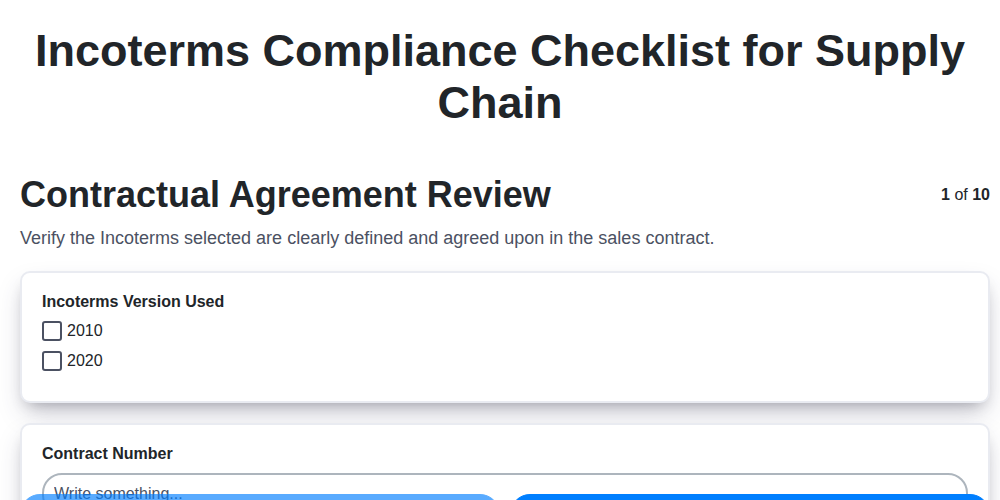
Table of Contents
- Introduction: Why Incoterms Matter
- 1. Contractual Agreement Review: Laying the Foundation
- 2. Responsibility Allocation: Who's Doing What?
- 3. Cost Allocation: Defining Financial Obligations
- 4. Documentation Requirements: The Paper Trail
- 5. Delivery Point Clarification: Location, Location, Location
- 6. Risk Management: Identifying and Mitigating Potential Issues
- 7. Customs & Regulatory Compliance: Navigating International Laws
- 8. Insurance Coverage: Protecting Your Assets
- 9. Training & Awareness: Empowering Your Team
- 10. Periodic Review: Staying on Track
- 11. Common Incoterms Mistakes to Avoid
- 12. Technology Solutions for Incoterms Management
- Conclusion: Ensuring Incoterms Compliance for a Resilient Supply Chain
- Resources & Links
TLDR: Feeling lost with Incoterms? This checklist ensures your supply chain operations are compliant and risk-free. It covers everything from contract review and cost allocation to customs, insurance, and training - helping you avoid costly mistakes and keep your shipments moving smoothly.
Introduction: Why Incoterms Matter
In the complex world of global supply chains, misunderstandings can be costly - and often stem from differing interpretations of responsibility and risk. That's where Incoterms (International Commercial Terms) come in. These standardized trade terms, published by the International Chamber of Commerce (ICC), clearly define the obligations of buyers and sellers in international transactions, covering aspects like delivery, risk transfer, and costs. Failing to properly understand and adhere to the chosen Incoterms can lead to disputes, delays, unexpected expenses, and damage to valuable business relationships. This isn't just a legal formality; it's a crucial element for efficient, predictable, and profitable global trade. This checklist is designed to guide you through the key areas of Incoterms compliance, minimizing risk and maximizing clarity across your supply chain.
1. Contractual Agreement Review: Laying the Foundation
The foundation of any successful international supply chain hinges on a crystal-clear contractual agreement. This isn't just about prices and quantities; it's the bedrock upon which Incoterms compliance is built. A rushed or vague contract can lead to costly disputes, delays, and ultimately, undermine the entire operation.
Begin with a meticulous review of your sales contracts and purchase agreements. Don't just skim - actively dissect each clause, particularly those referencing shipping terms. Are the Incoterms explicitly stated? Are they the correct version (remember Incoterms are revised periodically)? Ambiguity here is a red flag.
Verify that all parties involved - buyer, seller, freight forwarder, and any intermediaries - understand the chosen Incoterms and their implications. Misinterpretations, even minor ones, can shift responsibility and costs in unexpected ways.
Consider seeking legal counsel specializing in international trade to ensure the contract is legally sound and accurately reflects the intended Incoterms obligations. This upfront investment can prevent significantly larger issues down the line. Finally, document this review process - recording who participated, findings, and any agreed-upon clarifications - for future reference and audit trails.
2. Responsibility Allocation: Who's Doing What?
One of the most common sources of supply chain disputes stems from a murky understanding of who is responsible for what. Incoterms aren't just about costs; they dictate duties and responsibilities. Failing to clearly define these can lead to unexpected expenses, delays, and frustrated parties.
Your Incoterms compliance checklist must explicitly outline the responsibilities of both the seller and the buyer for each aspect of the shipment. This goes beyond simply stating the Incoterm rule (e.g., CIF, FOB). It involves detailing exactly who is accountable for tasks like:
- Export Clearance: Is it the seller's responsibility to handle export customs formalities, or is it delegated to the buyer?
- Import Clearance: Conversely, who handles import customs clearance in the destination country?
- Transportation: Who arranges and pays for the carrier? This includes inland transport as well as ocean or air freight.
- Loading & Unloading: Who's responsible for safely loading and unloading the goods at origin and destination?
- Port Charges: Who covers terminal handling charges, documentation fees, and other port-related costs?
- Security: Who is responsible for ensuring the security of the goods throughout the transportation process?
A well-defined responsibility matrix, clearly linking each task to a specific party, is invaluable. Consider using a table format for easy reference. Don't assume - spell it out explicitly! Regularly review and update this matrix as your supply chain evolves. Remember, clarity now prevents costly conflicts later.
3. Cost Allocation: Defining Financial Obligations
Cost allocation within an international supply chain can be a significant source of disputes if not clearly defined upfront. Incoterms dictate which party is responsible for which costs, but understanding the nuances is critical. This section goes beyond simply stating the Incoterm; it's about clarifying exactly what costs are covered.
Consider these key areas:
- Freight Costs: Clearly state who is responsible for ocean freight, air freight, or inland transport charges. Don't just say buyer pays freight; specify which legs of the journey are the buyer's responsibility.
- Insurance Costs: Is insurance included in the Incoterm? If so, who selects the insurer and bears the cost? If not, explicitly state that each party is responsible for insuring their own goods.
- Loading/Unloading Costs: Define who handles loading and unloading charges at the origin and destination. Are these included in freight costs, or are they separate?
- Port Charges & Terminal Fees: Specify responsibility for port dues, terminal handling charges, and other similar fees.
- Customs Clearance Costs: Determine which party covers customs duties, taxes, and clearance fees. While the Incoterm might suggest responsibility, detailing this avoids ambiguity.
- Storage Costs: Who pays for storage at the origin or destination if delays occur?
- Inspection Costs: Is inspection required? Who pays for the inspection and associated costs?
Pro-Tip: Create a detailed cost matrix mapping each potential cost to the responsible party. This document serves as a reference point and reduces the likelihood of misunderstandings. Include this matrix as an appendix to the contract.
4. Documentation Requirements: The Paper Trail
Incoterms aren't just about who does what; they're intrinsically linked to a robust paper trail. Failing to maintain meticulous documentation can lead to disputes, delays, and ultimately, financial losses. This section outlines essential documents and best practices for Incoterms compliance.
Key Documents to Have Ready:
- Commercial Invoice: A fundamental document detailing the transaction, including price, quantity, and terms of sale. This is often the first document customs officials will review.
- Packing List: Provides a detailed inventory of the goods within each package, including weights and dimensions. Crucial for verifying shipment accuracy.
- Bill of Lading (B/L) or Air Waybill (AWB): Acts as a receipt for shipment and a document of title. Ensure the Incoterms are correctly indicated on this document - a critical error can shift responsibilities.
- Certificate of Origin (C.O.): Determines the goods' country of origin and impacts import duties and trade agreements. Requirements vary by country and product.
- Insurance Documents: Proof of the insurance coverage in place, as stipulated by the Incoterms rule (e.g., CIF, CIP).
- Inspection Certificates (if applicable): Documents verifying the quality or compliance of the goods, particularly relevant for certain commodities.
- Sales Contract: The overarching agreement that specifies the Incoterms to be used and other crucial details.
Best Practices:
- Standardize Formats: Establish consistent templates for all required documents to minimize errors and ensure clarity.
- Digital Record Keeping: Maintain digital copies of all documents for easy accessibility and audit trails.
- Document Sharing: Clearly define how and when documents will be shared between buyer and seller.
- Version Control: Implement a system to track revisions and ensure everyone is using the latest versions of documents.
- Regular Audit: Periodically review your documentation practices to identify areas for improvement.
Proper documentation isn't just about ticking boxes; it's a cornerstone of risk mitigation and a vital component of seamless Incoterms compliance.
5. Delivery Point Clarification: Location, Location, Location
The seemingly simple act of specifying the delivery point is surprisingly a major source of disputes in international trade. Incoterms dictate the point where the risk and responsibility transfer from the seller to the buyer, and ambiguity here can lead to significant financial implications. Don't just say Port of Shanghai. Be specific!
Consider these details to ensure clarity:
- Exact Terminal: Within a port, there are multiple terminals. Specify the terminal name (e.g., Shanghai Ocean Container Terminal - Berth 12).
- Vessel/Aircraft: For sea or air freight, identify the vessel or aircraft name, if known.
- On-board/Alongside: Clearly state whether the goods are to be loaded on board the vessel (seller's responsibility) or alongside (buyer's responsibility). The Incoterms definition for each is crucial.
- Named Place: If using a named place, ensure both parties have a precise understanding of the location. A Google Maps link can be surprisingly helpful!
- Loading/Unloading: Specify if the seller is responsible for loading the goods onto the carrier or if this falls under the buyer's obligations.
Lack of precise delivery point definition can lead to arguments over who bears the cost and risk of delays, damage, or loss - a costly headache you can avoid with careful planning.
6. Risk Management: Identifying and Mitigating Potential Issues
Incoterms are designed to clarify responsibilities, but they don't eliminate risk. A robust risk management strategy is crucial for Incoterms compliance. This goes beyond simply selecting the right term; it's about proactively identifying potential pitfalls and having plans to address them.
Common Incoterms-Related Risks:
- Misinterpretation of Responsibilities: Even with a seemingly clear Incoterms term, misunderstandings can arise, leading to disputes about who bears the cost of delays, damage, or unexpected expenses.
- Currency Fluctuations: If payment is tied to a foreign currency, fluctuating exchange rates can significantly impact profitability.
- Political Instability & Trade Wars: Changes in government regulations, tariffs, or trade agreements can impact Incoterms obligations and costs.
- Transportation Disruptions: Natural disasters, strikes, or port congestion can delay shipments and impact who is responsible.
- Security Risks: Theft, damage, or loss of goods during transit are ongoing concerns.
- Force Majeure Events: Unexpected events outside of anyone's control (like pandemics) can dramatically alter the landscape and impact obligations.
Mitigation Strategies:
- Scenario Planning: Conduct what-if scenarios to anticipate potential problems and pre-determine responsibility. For example, what happens if a shipment is delayed by a port strike under FOB?
- Due Diligence on Partners: Thoroughly vet carriers, customs brokers, and other partners to ensure reliability and compliance.
- Contingency Planning: Develop backup plans for alternative routes, carriers, or suppliers.
- Contractual Clauses: Include specific clauses addressing unforeseen circumstances, such as force majeure.
- Risk Transfer: Utilize appropriate insurance coverage (more on that below) to transfer risk to a third party.
- Communication: Maintain open and frequent communication with all parties involved to identify and address issues promptly.
By proactively addressing these risks, businesses can minimize potential losses and ensure smoother, more predictable international trade operations under the chosen Incoterms.
7. Customs & Regulatory Compliance: Navigating International Laws
International trade isn't just about agreeing on price and delivery; it's a complex web of customs regulations, tariffs, and import/export restrictions. Non-compliance can lead to significant delays, penalties, and even legal action. This section focuses on ensuring your Incoterms align with and support regulatory adherence.
Checklist Considerations:
- Import/Export Classifications: Accurately classify your goods under the Harmonized System (HS) codes relevant to both the origin and destination countries. Incorrect classification directly impacts tariff rates and can trigger audits. Verify these classifications with customs brokers or regulatory bodies.
- Tariff & Duty Obligations: Clearly define who is responsible for paying tariffs, duties, and other import/export taxes within your Incoterms agreement. This should reflect the agreed-upon responsibility allocation from earlier sections.
- Trade Agreements & Preferential Rates: Investigate if any trade agreements (e.g., NAFTA/USMCA, EU trade deals) exist between the origin and destination countries. Leverage these to potentially reduce or eliminate tariffs, but ensure all requirements for preferential treatment are met (e.g., certificate of origin).
- Import/Export Licenses & Permits: Determine if any licenses or permits are required for the goods being shipped. This could be related to product type (e.g., food, chemicals, pharmaceuticals) or origin. The responsible party must obtain these before shipment.
- Country-Specific Regulations: Research specific import/export regulations for each country involved. This includes labeling requirements, packaging standards, and restrictions on certain products.
- Prohibited Goods: Be acutely aware of any prohibited goods or substances that cannot be imported or exported under any circumstances.
- Sanctions & Embargoes: Regularly check for updated sanctions or embargoes that may restrict trade with certain countries or entities.
- Documentation Accuracy: Ensure all customs documentation (commercial invoice, packing list, certificate of origin, etc.) is meticulously accurate and complete. Discrepancies are a major red flag for customs officials.
8. Insurance Coverage: Protecting Your Assets
Incoterms dictate responsibility, but they don't eliminate risk. While a clearly defined Incoterm might state who is responsible for loss or damage, it doesn't provide a financial safety net. This is where insurance coverage becomes absolutely crucial.
Who Should Be Insured? The answer isn't always straightforward and depends on the specific Incoterm used. Generally, the buyer is responsible for procuring insurance under Incoterms like CIF and CIP, while the seller typically handles it for FOB, FAS, and EXW. However, it's vital that this responsibility is explicitly stated in the sales contract. Don't assume - document!
What Coverage is Necessary? Consider these points:
- Marine Cargo Insurance: This is almost always required, especially for international shipments, covering loss or damage to goods during transit.
- Liability Insurance: Protects against claims arising from injury or damage caused by your goods.
- Contingency Plans: Think about potential delays, strikes, or natural disasters. Can you absorb the financial impact if events disrupt your supply chain?
Key Considerations:
- Policy Scope: Ensure your policy covers the specific Incoterm used and the countries involved in the transaction. Read the fine print!
- Value of Goods: Accurately assess the value of the goods being shipped to ensure adequate coverage. Underinsurance can lead to devastating losses.
- Clauses and Exclusions: Understand the limitations of your insurance policy and address any potential gaps in coverage.
- Communication is Key: Both buyer and seller should be aware of the insurance coverage in place and share relevant details.
Ultimately, robust insurance coverage isn't just about ticking a box; it's about safeguarding your business and ensuring continuity in your supply chain.
9. Training & Awareness: Empowering Your Team
Incoterms compliance isn't just a matter of ticking boxes; it's about ensuring everyone involved in your supply chain understands their responsibilities and the implications of the chosen Incoterms. A well-trained team is your first line of defense against costly errors and disputes.
This isn't a one-and-done effort. Regular training and ongoing awareness programs are crucial. Consider these steps:
- Tailored Training: Don't assume a general trade compliance course is sufficient. Create training specific to the Incoterms you frequently utilize and the roles within your organization. Sales, procurement, logistics, and even customer service need a foundational understanding.
- Role-Specific Focus: Highlight the specific Incoterms-related duties and responsibilities tied to each role. For example, procurement might focus on negotiating the right Incoterm with suppliers, while logistics focuses on adhering to the requirements outlined.
- Practical Scenarios & Case Studies: Move beyond theoretical concepts. Present real-world scenarios and case studies illustrating how Incoterms impact different situations - from delays to unexpected costs.
- Regular Refresher Courses: Incoterms are periodically updated. Ensure your team receives updates when new versions are released and stays informed about any changes that might affect their work.
- Communication is Key: Promote a culture of open communication where employees feel comfortable asking questions and raising concerns regarding Incoterms.
A proactive approach to training and awareness fosters a culture of compliance, reduces risk, and ultimately strengthens your supply chain.
10. Periodic Review: Staying on Track
In the dynamic world of international trade, what works today might not work tomorrow. That's why a periodic review of your Incoterms compliance is absolutely crucial. Don't treat your initial Incoterms selection as a set it and forget it scenario.
How often should you review? We recommend at least annually, but more frequently (semi-annually or even quarterly) is advisable, particularly if you're dealing with volatile markets, evolving regulations, or changes in your supply chain partners.
What should the review encompass?
- Changes in Regulations: Customs laws, export controls, and other regulations are constantly updated. Ensure your chosen Incoterms remain compliant.
- Market Volatility: Fluctuations in freight rates, fuel costs, and currency exchange rates can impact the cost implications of different Incoterms. Re-evaluate if the initial selection remains optimal.
- Supplier/Customer Updates: Any changes in your partners' capabilities, processes, or risk tolerance should trigger a review.
- Process Improvements: As your internal processes evolve, consider whether the selected Incoterms are still aligning with your operational efficiencies.
- Performance Data: Review shipping times, costs, and any disputes arising from Incoterms interpretations. This data can highlight areas for improvement and potential Incoterms adjustments.
A consistent periodic review demonstrates a commitment to best practices, minimizes risk, and helps maintain a resilient and efficient global supply chain.
11. Common Incoterms Mistakes to Avoid
One of the most frequent Incoterms pitfalls revolves around the precise definition of the place of delivery. It's not just a geographic location; it dictates when the seller's responsibilities shift to the buyer. Failing to clearly define this, or assuming a general understanding, can lead to significant disputes. For example, if the contract states FOB Shanghai, does that mean the goods are ready for loading at the terminal, or actually loaded onto the vessel? Similarly, with DDP, is the seller responsible for customs clearance at the buyer's premises, or just up to the border? Vague phrasing here can result in unexpected costs and liabilities for either party. Always spell out the delivery point with specific details - including terminal names, addresses, or clearly defined milestones - to prevent ambiguity and associated complications.
12. Technology Solutions for Incoterms Management
Managing Incoterms effectively can be a complex, document-heavy process. Fortunately, technology offers a range of solutions to streamline operations, reduce errors, and improve overall supply chain visibility. Several software options are emerging to specifically address Incoterms management, alongside functionality within broader TMS (Transportation Management Systems) and ERP (Enterprise Resource Planning) platforms.
These solutions often include features like:
- Automated Rule Selection: Guides users to the appropriate Incoterm based on shipment specifics (mode of transport, origin, destination, etc.)
- Centralized Incoterms Database: Creates a single source of truth for agreed-upon Incoterms, accessible across the organization.
- Contract Integration: Automatically pulls relevant Incoterm details from sales contracts and order documents.
- Workflow Automation: Automates tasks related to responsibility allocation, cost allocation, and documentation requirements.
- Real-time Visibility: Provides tracking and updates related to Incoterms responsibilities throughout the shipment lifecycle.
- Compliance Reporting: Generates reports to demonstrate adherence to agreed-upon Incoterms and regulatory requirements.
While implementation requires investment, the long-term benefits - including reduced disputes, minimized delays, and improved trade compliance - often outweigh the initial costs. Explore options ranging from dedicated Incoterms management software to integrating functionality within your existing systems to find the best fit for your organization's needs.
Conclusion: Ensuring Incoterms Compliance for a Resilient Supply Chain
Ultimately, consistent Incoterms compliance isn't just about ticking boxes; it's about building a resilient and predictable supply chain. By diligently working through this checklist - from initial contract review to ongoing training - you can minimize costly misunderstandings, prevent disputes, and foster stronger relationships with your trading partners. Remember, proactive compliance translates to reduced risk, increased efficiency, and a more profitable operation. Investing the time and effort upfront will pay dividends in the long run, safeguarding your business and ensuring a smoother, more reliable flow of goods across borders. Don't treat Incoterms as an afterthought - make them a cornerstone of your global trade strategy.
Resources & Links
- ICC - Incoterms: The official source for Incoterms rules. This site provides detailed explanations, FAQs, and the latest versions of the rules. Essential for understanding the legal framework.
- World Trade Organization (WTO): Provides information about international trade regulations, which heavily influence Incoterms application. Understanding WTO guidelines is crucial for compliance.
- International Trade Administration (ITA) - US Government: Provides guides and information on exporting and importing, often including references to Incoterms and their implications for US businesses.
- Export.gov: A comprehensive resource for U.S. exporters. Includes information on Incoterms and their role in international transactions.
- U.S. Customs and Border Protection (CBP): Provides information on import and export regulations, including how Incoterms affect customs procedures and responsibilities.
- UNESCAP - Trade Facilitation: Focuses on promoting efficient and predictable trade. Provides resources and tools, some of which indirectly relate to Incoterms application.
- Council of Supply Chain Management Professionals (CSCMP): A professional organization providing research, education, and networking for supply chain professionals. Often publishes articles and insights related to Incoterms and international logistics.
- BIMA Corp.: Provides global trade management and compliance solutions, including Incoterms management tools and expert advice.
- DHL: A leading logistics provider. Their website often has guides and resources on international shipping, including guidance on Incoterms.
- FedEx: Another major logistics provider with resources pertaining to international shipping and Incoterms.
- Shiply Incoterms Guide: A helpful, detailed explanation of incoterms rules.
- Lexology - Incoterms: A legal information platform containing articles and updates on Incoterms and related legal aspects.
- Hewatt Incoterms Guide: Provides a simple guide to understand incoterms
- Freightos Incoterms Guide: A simple guide to help you understand Incoterms.
Frequently Asked Questions
What are Incoterms?
Incoterms (International Commercial Terms) are a set of standardized trade terms published by the International Chamber of Commerce (ICC). They define the responsibilities of buyers and sellers in international trade, covering things like delivery, risk transfer, and payment.
Why is Incoterms compliance important for my supply chain?
Incorrect Incoterms can lead to misunderstandings, delays, unexpected costs, and disputes between buyers and sellers. Compliance ensures both parties clearly understand their obligations, facilitating smoother transactions and minimizing disruptions to the supply chain.
What is an Incoterms Compliance Checklist and how can it help?
An Incoterms Compliance Checklist is a tool that helps ensure all necessary steps are taken to correctly apply and manage Incoterms in your international transactions. It acts as a reminder and helps prevent errors, ensuring everyone involved understands their responsibilities.
Which Incoterms rules should I use?
The current version is Incoterms 2020. You should choose the Incoterms rule that best suits your product, mode of transport (sea, air, road, rail, or multimodal), and the level of risk you're comfortable taking. Consult the full ICC rules and consider the specific needs of your transaction.
What are the key elements I should consider when selecting an Incoterms rule?
Consider factors like the mode of transport, the buyer's and seller's capabilities and resources, insurance responsibilities, customs clearance, and who is responsible for export/import documentation.
What does 'EXW' (Ex Works) mean?
EXW means the seller makes the goods available at their premises. The buyer is responsible for all costs and risks from that point onward, including export clearance.
What are the differences between 'CIF' (Cost, Insurance, and Freight) and 'CIP' (Carriage and Insurance Paid To)?
Both involve the seller arranging and paying for carriage and insurance to a named place. However, under CIF, the insurance coverage is for the minimum coverage. CIP requires the seller to obtain and provide proof of insurance with a specified level of coverage.
What is the role of the buyer in Incoterms compliance?
The buyer is responsible for understanding the chosen Incoterms rule and its implications, ensuring the seller is aware of the chosen rule, and fulfilling their obligations as defined by the selected rule. They also need to be prepared to handle their responsibilities as outlined by the chosen rule.
What documentation is typically required for Incoterms compliance?
Common documentation includes commercial invoices, packing lists, bills of lading, air waybills, certificates of origin, and insurance documents. The specific documents depend on the Incoterms rule and the countries involved.
Comments
There are no comments yet. Be the first to add one!
SCM - Supply Chain Management Solution Demo
Struggling with supply chain disruptions & lack of visibility? ChecklistGuro delivers a centralized SCM solution, connecting your suppliers, manufacturers, & distributors for improved collaboration and control. Simplify operations & boost efficiency.
Related Articles
The Ultimate Supply Chain Inventory Accuracy Audit Checklist: A Step-by-Step Guide
Supply Chain Capacity Planning Checklist: Ensure Readiness for Peak Demand
The Ultimate Supply Chain Network Optimization Checklist: A Step-by-Step Guide
Supply Chain Risk Assessment Checklist: Your Guide to Resilience
Navigating Sustainability: Your Supply Chain Compliance Checklist
Top 10 SAP Logistics Business Network (LBN) Alternatives for 2025

Fortify Your Supply Chain: The Ultimate Resilience Assessment Checklist
Navigating Global Trade: Your Essential Import/Export Compliance Checklist
Need help with
Supply Chain Management (SCM)?
Have a question? We're here to help. Please submit your inquiry, and we'll respond promptly.