LNG Facility Safety & Inspection Checklist: A Comprehensive Guide
Published: 12/05/2025 Updated: 07/02/2026
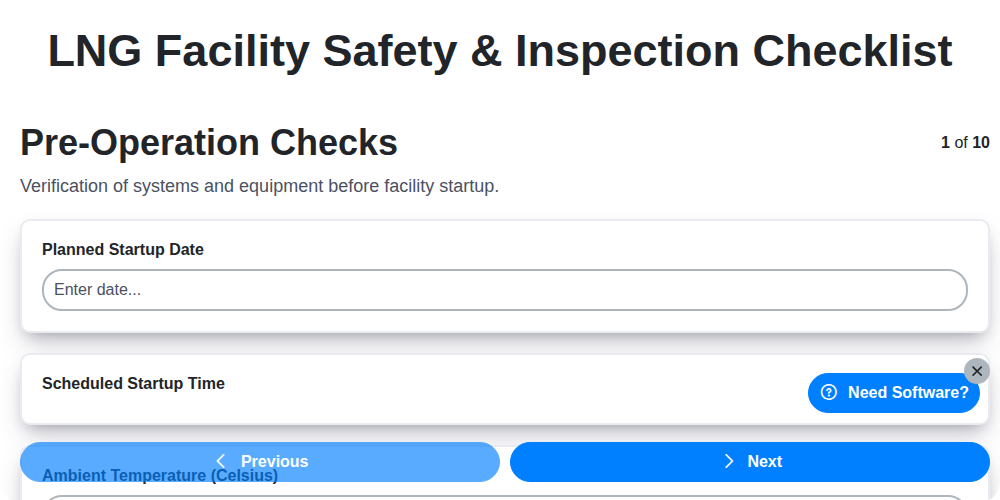
Table of Contents
- Introduction: The Criticality of LNG Facility Safety
- Why a Robust Safety & Inspection Checklist is Essential
- 1. Pre-Operation Checks: Setting the Stage for Safe Operations
- 2. Tank & Vessel Inspections: Ensuring Structural Integrity
- 3. Pipeline Integrity Management: Preventing Leaks & Failures
- 4. Fire Protection Systems: Early Detection & Rapid Response
- 5. Gas Detection & Monitoring: Constant Vigilance
- 6. Electrical Safety: Mitigating Hazards
- 7. Security Systems: Protecting Assets & Personnel
- 8. Personnel Training & Competency: The Human Element
- 9. Environmental Compliance: Minimizing Impact
- 10. Post-Operation Checks: Closure and Documentation
- 11. Key Considerations for Inspection Frequency
- Conclusion: Maintaining Excellence in LNG Facility Safety
- Resources & Links
TLDR: Running an LNG facility? This checklist is your essential guide to keeping everything running safely and efficiently! It covers everything from pre-operation checks to environmental compliance, ensuring your tanks, pipelines, fire protection, electrical systems, security, and personnel are all up to par. Download the template and proactively mitigate risks - peace of mind for your operations.
Introduction: The Criticality of LNG Facility Safety
Liquefied Natural Gas (LNG) facilities represent a complex interplay of cutting-edge technology and inherent risk. The process of liquefying natural gas, storing it at cryogenic temperatures, and transporting it globally demands unwavering adherence to stringent safety protocols. A single lapse in judgment or equipment failure can have devastating consequences, ranging from environmental damage and financial losses to, most importantly, potential harm to personnel and surrounding communities. This isn't just about regulatory compliance; it's about a fundamental commitment to operational excellence and the protection of life and property. This checklist, and the robust inspection program it represents, is a vital tool in achieving that goal.
Why a Robust Safety & Inspection Checklist is Essential
LNG facilities operate with incredibly complex and potentially hazardous processes. A single deviation from established procedures or a neglected piece of equipment can have catastrophic consequences, impacting not only the facility itself but also the surrounding environment and communities. That's why a robust safety and inspection checklist isn't just a good practice; it's an absolute necessity.
Think of it as the backbone of your safety program. A well-structured checklist ensures consistent, thorough, and documented inspections, moving beyond ad-hoc observations and relying on a systematic approach. It minimizes human error by providing clear, step-by-step guidelines for personnel, ensuring critical checks aren't overlooked. Furthermore, consistent application reveals trends and potential weaknesses in your processes before they escalate into incidents. Ultimately, a comprehensive checklist translates to reduced risk, improved operational efficiency, and enhanced peace of mind for everyone involved.
1. Pre-Operation Checks: Setting the Stage for Safe Operations
Before any LNG production, loading, or unloading activities commence, a meticulous pre-operation checklist is absolutely crucial. This isn't simply a formality; it's the bedrock of a safe and efficient operation. These checks verify that all systems are ready and capable of handling the demands of LNG processing.
The pre-operation checklist typically includes:
- Equipment Verification: Ensuring all critical equipment like pumps, compressors, and cryogenic valves are functioning correctly and within specified parameters. This goes beyond visual inspection, involving testing and, where necessary, calibration.
- Parameter Validation: Verifying critical operational parameters, such as pressures, temperatures, and flow rates, are within acceptable ranges before introducing LNG or natural gas. Deviations need immediate investigation and correction.
- Isolation Checks: Confirming proper isolation of equipment and systems not involved in the immediate operation. This prevents unintended activation and potential hazards.
- Clearance and Permits: Ensuring all necessary work permits and clearances are in place, confirming that any ongoing maintenance or repair work is completed and doesn't pose a risk.
- Communication & Coordination: A final review with all relevant personnel - operators, maintenance crew, and security - to ensure everyone understands their roles and responsibilities for the upcoming operation.
A thorough pre-operation check significantly reduces the likelihood of incidents and establishes a foundation of safety for all subsequent activities.
2. Tank & Vessel Inspections: Ensuring Structural Integrity
LNG facilities rely heavily on large, specialized tanks and vessels to store and process the liquefied natural gas. The integrity of these structures is paramount to safety and operational efficiency. Routine and rigorous inspections are crucial to identify and mitigate potential risks before they escalate into serious incidents.
This section of the safety checklist focuses on detailed assessments of all tanks and vessels, covering both internal and external components. Key areas of focus include:
- External Inspections: Visual checks for corrosion, dents, bulges, cracks, and any signs of deterioration. This includes the tank shell, roof, insulation, and supports. Non-destructive testing (NDT) methods such as ultrasonic thickness gauging, magnetic particle inspection, and dye penetrant testing are routinely employed.
- Internal Inspections: Periodically, internal inspections are necessary, often requiring specialized access equipment and personnel. These inspections focus on the tank bottom, welds, and any internal structures for corrosion, erosion, and cracking. Internal inspections are often scheduled based on time, operating history, and any anomalies detected during external assessments.
- Welding Integrity: All welds are critical and require thorough inspection using appropriate NDT techniques to ensure their continued strength and resistance to cracking.
- Foundation Assessment: The stability of the tank foundation must be verified, including monitoring for settlement or ground movement.
- Pressure Vessel Inspections: Vessels used for processing LNG, such as vaporizers and reliquefiers, undergo similar rigorous inspections focusing on pressure rating, material degradation, and valve functionality.
- Documentation: Meticulous records of all inspection findings, repair work, and testing results are essential for tracking tank and vessel condition and demonstrating compliance.
Consistent adherence to inspection schedules and qualified personnel executing these checks are essential to maintaining the structural integrity of these vital assets.
3. Pipeline Integrity Management: Preventing Leaks & Failures
LNG facilities rely heavily on pipelines to transport gas both within the site and to external locations. Maintaining their integrity is paramount - a pipeline failure can have devastating consequences, ranging from environmental damage and facility downtime to serious safety hazards. This section outlines the critical checks for pipeline integrity.
Visual Inspections & External Corrosion Monitoring: Regular visual checks are the first line of defense. Technicians should meticulously inspect pipelines for signs of external corrosion, dents, gouges, or any physical damage. Utilizing corrosion monitoring coupons and cathodic protection surveys are essential to assess the effectiveness of corrosion mitigation strategies. Specific attention should be given to areas prone to stress corrosion cracking, such as bends and welds.
Internal Inspection Pigs (Smart Pigs): Scheduled deployment of "smart pigs" is crucial. These sophisticated devices travel within the pipeline, collecting data on wall thickness, corrosion levels, and the presence of cracks or anomalies. The data gathered provides a comprehensive internal assessment, identifying potential problem areas often invisible through external inspection. Analysis of pig data informs proactive repair and maintenance plans.
Pressure Testing & Hydrostatic Testing: Periodic pressure testing, including hydrostatic testing, verifies the pipeline's ability to withstand operating pressures. These tests simulate real-world conditions, identifying leaks and weaknesses before they escalate into failures. Documentation of test results and any remedial actions is critical.
Welding & Joint Integrity: Welds are potential weak points in the pipeline. Non-destructive testing (NDT) methods like radiographic testing (RT), ultrasonic testing (UT), and magnetic particle inspection (MPI) should be performed regularly on welds to identify flaws. Proper welding procedures and qualified welders are essential.
Pipeline Mapping & Right-of-Way Management: Maintaining accurate pipeline maps and managing the right-of-way (ROW) are critical. This includes ensuring adequate clearance from structures, monitoring ground movement, and preventing unauthorized digging or construction that could damage the pipeline. Regular ROW patrols are a necessity.
Leak Detection & Repair: Implementing a leak detection system, often utilizing acoustic sensors or other detection technologies, provides early warning of potential leaks. Rapid response teams should be readily available to locate and repair any detected leaks efficiently.
4. Fire Protection Systems: Early Detection & Rapid Response
LNG facilities present unique fire hazards due to the flammable nature of the stored product. A robust and regularly inspected fire protection system isn't just important; it's critical for ensuring the safety of personnel, the environment, and the facility itself. This section of the checklist focuses on proactively preventing and mitigating fire incidents.
Key Inspection Points Include:
- Fire Water System: Verify adequate water supply, pressure, and flow rates. Check for leaks, corrosion, and proper functionality of pumps and hydrants. Test sprinkler heads for proper distribution patterns.
- Foam Systems: Test foam concentrate levels and mixing capabilities. Confirm foam nozzles are clear and properly aimed. Evaluate foam expansion capabilities. Regular foam testing is essential, as foam degradation can occur over time.
- Fire Pumps & Generators: Ensure fire pumps are operational and regularly tested with backup generators ready to seamlessly take over in case of power failure.
- Fire Extinguishers: Inspect extinguishers for proper charge, accessibility, and that they haven't been tampered with. Ensure personnel are trained in their proper use.
- Fire Alarms & Detection Systems: Test smoke and heat detectors, as well as manual pull stations, to confirm immediate activation upon detection. Verify alarm signals reach designated personnel and emergency response teams.
- Firefighting Equipment & PPE: Inspect firefighting suits, breathing apparatus, and other specialized equipment for damage and ensure they're readily available and in good working condition.
- Emergency Response Plan Review: Regularly review and update the fire emergency response plan, ensuring it's clear, concise, and all personnel are familiar with procedures.
Documentation: All inspections, tests, and maintenance activities must be thoroughly documented, including dates, findings, and corrective actions taken.
5. Gas Detection & Monitoring: Constant Vigilance
LNG facilities operate with highly flammable substances, making robust gas detection and monitoring systems absolutely critical. This isn't a set it and forget it component; it requires constant vigilance and proactive maintenance. Our checklist emphasizes the following:
- Sensor Calibration & Functionality: Regularly calibrate all gas detectors (methane, ethane, propane, etc.) according to manufacturer's specifications. This includes verifying response times and sensitivity. Document all calibration records.
- Coverage Verification: Ensure detectors are strategically placed to provide comprehensive coverage of potential leak sources - around tanks, within buildings, along pipelines, and in ventilation systems. Confirm coverage maps remain accurate based on any facility modifications.
- Alarm System Integrity: Test alarm triggers, audible and visual alerts, and automated shutdown procedures at scheduled intervals. Verify alarm escalation protocols are clear and followed correctly.
- Data Logging & Analysis: Continuous monitoring data should be logged and analyzed for trends that might indicate developing issues. Review data regularly for unusual readings or anomalies.
- Redundancy & Backup: Implement redundant gas detection systems in critical areas. Ensure backup power supplies are functional to maintain monitoring during power outages.
- Periodic Gas Surveys: Conduct periodic, comprehensive gas surveys using portable detection equipment to identify potential leaks not detected by fixed systems.
- False Alarm Management: Investigate and address the root cause of false alarms to prevent desensitization among personnel and ensure prompt responses to genuine threats.
6. Electrical Safety: Mitigating Hazards
LNG facilities operate with significant electrical infrastructure, powering critical processes from liquefaction to regasification. Consequently, electrical safety is paramount. This section of the checklist focuses on preventing electrical incidents, which can range from minor shocks to catastrophic explosions.
Our inspection process includes rigorous checks of:
- High-Voltage Equipment: Visual inspection for cracks, corrosion, and proper insulation on transformers, switchgear, and motors. We verify secure connections and adherence to manufacturer specifications.
- Low-Voltage Systems: Ensuring proper labeling, grounding, and circuit breaker functionality. Checking for overloaded circuits and potential fire hazards related to wiring.
- Arc Flash Risk Assessments: Validating current arc flash studies and ensuring appropriate personal protective equipment (PPE) is available and correctly utilized by personnel. Regularly updating these assessments is crucial as facility modifications occur.
- Lockout/Tagout (LOTO) Procedures: Verifying the effectiveness and adherence to LOTO protocols during maintenance and repair activities. This includes ensuring proper training and documentation.
- Cable Management & Routing: Inspection for damaged cables, improper routing (avoiding sharp bends and heat sources), and adequate support to prevent strain.
- Emergency Power Systems: Testing and verification of backup power sources, including generators and UPS systems, ensuring they are ready to automatically engage during power outages.
Failure to maintain stringent electrical safety measures can lead to devastating consequences. Our checklist aims to proactively identify and mitigate these risks, creating a safer working environment.
7. Security Systems: Protecting Assets & Personnel
LNG facilities represent high-value targets and require robust security systems to safeguard assets, personnel, and the surrounding community. This checklist section focuses on verifying the effectiveness of those systems. Regular inspection and maintenance are critical, not just for compliance, but for maintaining a proactive security posture.
Here's what needs to be assessed:
- Perimeter Security: Inspect fencing, barriers, and gates for integrity and functionality. Verify proper signage and access control procedures. Look for evidence of breaches or attempts.
- Surveillance Systems (CCTV): Confirm cameras are operational, lenses are clean, and recording capabilities are functioning correctly. Check for adequate coverage of critical areas, including tank farms, loading areas, and perimeter boundaries. Review recorded footage periodically for anomalies.
- Access Control Systems: Verify card readers, biometric scanners, and other access control devices are working as intended. Audit access logs for unauthorized access attempts and confirm proper user management protocols are followed.
- Intrusion Detection Systems (IDS): Test IDS sensors and alarms to ensure they are detecting potential breaches. Confirm proper response protocols are in place and understood by security personnel.
- Emergency Response Integration: Ensure security systems are integrated with emergency response plans and communication systems. Regularly test communication pathways and response procedures.
- Cybersecurity: While distinct from physical security, recognize the crucial intersection. Ensure network security protocols are up-to-date and that security systems are protected from cyber threats. A compromised security system can have devastating physical consequences.
- Security Personnel: Assess the preparedness and training of security personnel. Conduct drills and simulations to ensure they can effectively respond to security incidents.
Regular inspection and prompt corrective action are paramount in maintaining a secure LNG facility.
8. Personnel Training & Competency: The Human Element
LNG facilities are complex environments, and the safety and reliability of operations are fundamentally linked to the knowledge, skills, and judgment of the personnel involved. A robust training and competency program isn't just a regulatory requirement; it's a cornerstone of a proactive safety culture.
This section of the checklist focuses on ensuring every employee, from operators to maintenance technicians, possesses the necessary expertise to perform their duties safely and effectively. This includes:
- Initial Onboarding: Comprehensive training covering site-specific hazards, emergency procedures, and operational protocols is crucial for all new hires.
- Role-Specific Training: Operators need specialized training on equipment operation, process understanding, and abnormal condition response. Maintenance personnel require training on specific equipment maintenance procedures and safety precautions.
- Refresher Training: Regular refresher courses reinforce knowledge, update personnel on new procedures, and address emerging hazards. Frequency should be determined by risk assessment and regulatory requirements.
- Competency Assessments: Regularly assess employee competency through written tests, practical demonstrations, and observation. Document results and provide remedial training where needed.
- Emergency Response Drills: Conduct realistic emergency drills (fire, gas leak, etc.) to test response procedures and ensure personnel can react calmly and effectively under pressure.
- Leadership Training: Equip supervisors and managers with the skills to promote a safety-conscious environment, effectively communicate risks, and enforce safety protocols.
- Record Keeping: Meticulously maintain training records, competency assessments, and drill participation data to demonstrate compliance and identify areas for improvement.
A well-structured and consistently updated personnel training & competency program significantly reduces the likelihood of human error, improves incident response, and fosters a culture where safety is everyone's responsibility.
9. Environmental Compliance: Minimizing Impact
LNG facilities operate within sensitive ecosystems, and stringent environmental compliance is paramount. This section of the safety and inspection checklist focuses on minimizing potential impacts and ensuring adherence to all relevant regulations. Key elements include verifying the functionality of wastewater treatment systems, confirming proper management of stormwater runoff to prevent contamination, and monitoring air emissions to ensure they remain within permitted levels. Regular inspections should assess the integrity of containment areas to prevent leaks and spills, and verify the effectiveness of noise reduction measures to protect local wildlife. Documentation of waste disposal practices and adherence to spill prevention, control, and countermeasures (SPCC) plans are also crucial. Continuous monitoring and reporting are vital for demonstrating ongoing commitment to environmental stewardship and maintaining operational permits.
10. Post-Operation Checks: Closure and Documentation
The final, crucial step in ensuring LNG facility safety is thorough post-operation checks. This isn't just about shutting down equipment; it's a systematic process of verifying operational integrity and documenting the entire shutdown procedure. This phase is critical for identifying any unforeseen issues that might have arisen during operation and preparing the facility for the next operational cycle.
Here's what a robust post-operation checklist should encompass:
- System Shutdown Verification: Confirm that all systems are properly shut down according to established procedures. This includes pumps, compressors, valves, and other critical equipment. Verify isolation points and ensure they're maintained.
- Residual Gas Monitoring: Conduct a final round of gas detection to confirm the complete absence of flammable gas within the facility. Document readings carefully.
- Equipment Stabilization: Ensure equipment is stabilized and appropriately cooled or warmed, depending on the specific technology, to prevent damage or corrosion during downtime.
- Leak Testing: Perform a final leak check of critical connections and seals. Record findings and initiate repair actions if necessary.
- Data Logging Review: Review logged data from all monitoring systems, including temperature, pressure, and flow rates, for any anomalies that occurred during the operational period.
- Documentation: Meticulously document everything. This includes observations, readings, any deviations from normal procedures, and maintenance performed. Detailed records are essential for future reference, audits, and continuous improvement. A signed-off checklist, photos, and any repair logs should be part of this documentation.
- Security System Re-Verification: Confirm the security systems are functioning correctly and that the facility is secured according to established protocols.
Effective post-operation checks, combined with comprehensive documentation, provide a vital safety net, minimizing risks and ensuring the longevity and reliability of your LNG facility.
11. Key Considerations for Inspection Frequency
Establishing a robust LNG facility safety and inspection checklist is only half the battle; determining how often each item should be inspected is equally critical. A one-size-fits-all approach simply won't suffice. Several factors significantly influence inspection frequency, and a risk-based methodology is vital.
Regulatory Requirements: Always begin with mandatory inspection schedules dictated by local, national, and international regulations. These are the non-negotiable baselines.
Risk Assessment: Conduct thorough risk assessments for each system and piece of equipment. Higher-risk items (e.g., critical tank components, high-pressure pipelines) warrant more frequent inspections. Consider the potential consequences of failure and the likelihood of occurrence.
Equipment Age & Condition: Older equipment, or equipment showing signs of wear and tear, necessitates closer monitoring. Implement accelerated inspection schedules for assets nearing the end of their design life or exhibiting performance degradation.
Operational Factors: Changes in operating conditions, such as increased throughput or variations in feed gas composition, can impact equipment stress and require adjustments to inspection frequency.
Past Inspection Results: Recurring findings or near misses during previous inspections should trigger more frequent monitoring and investigation.
Manufacturer Recommendations: Consult equipment manufacturer guidelines for recommended inspection intervals and maintenance schedules.
Historical Data Analysis: Track inspection data over time to identify trends and patterns. This allows for data-driven adjustments to inspection frequencies, ensuring optimal safety and efficiency.
Type of Inspection: Different inspection types (visual, non-destructive testing, functional testing) should have distinct frequencies based on their scope and criticality. For example, a visual check might be monthly, while advanced NDT may only be required every few years.
By carefully considering these factors, you can establish an inspection program that balances safety, cost-effectiveness, and regulatory compliance.
Conclusion: Maintaining Excellence in LNG Facility Safety
Ultimately, a robust LNG facility safety and inspection program isn't a one-time effort, but a continuous journey of vigilance and improvement. This checklist, encompassing pre-operation readiness, detailed tank and vessel assessments, pipeline integrity checks, fire protection efficacy, gas detection accuracy, electrical safety protocols, comprehensive security measures, verified personnel competency, stringent environmental compliance, and thorough post-operation reviews, serves as a vital framework. Regular adherence to this checklist, coupled with a proactive safety culture, reduces risk, protects assets, and most importantly, safeguards personnel and the surrounding environment. Embracing a commitment to continuous improvement-incorporating lessons learned from audits, near misses, and industry best practices-is key to maintaining excellence and ensuring the ongoing safe and reliable operation of LNG facilities.
Resources & Links
- International Energy Agency (IEA): Provides comprehensive data, analysis, and forecasts related to energy markets, including LNG. Valuable for understanding the broader context of LNG operations and safety considerations.
- Shell - LNG: Shell is a major player in the LNG industry, their website often contains information and insights related to safety and operational best practices, though detailed checklists won't be available, understanding their approach can be helpful.
- Equinor: Similar to Shell, Equinor (formerly Statoil) is a significant LNG operator. Reviewing their public information and case studies may offer insights into their safety protocols and inspection procedures.
- BP: Another major LNG operator. Their website, technical papers (if available), and sustainability reports may contain relevant safety information.
- American Petroleum Institute (API): API develops industry standards and best practices. Many safety-related procedures for LNG facilities are based on or referenced by API standards (e.g., API 1104 for LNG Plant Site Selection and Design). Check for relevant standards and publications. Requires membership for full access to many resources.
- American Society of Mechanical Engineers (ASME): ASME develops codes and standards for the design, construction, and operation of pressure vessels, tanks, and pipelines, all critical to LNG facilities. Provides technical standards relevant to structural integrity and inspection. Requires membership for full access.
- National Institute of Standards and Technology (NIST): NIST conducts research and develops standards and guidelines related to safety, measurement, and materials science. May have publications relevant to materials performance and failure prevention.
- Occupational Safety and Health Administration (OSHA): OSHA provides regulations and guidelines for workplace safety in the United States. While LNG-specific regulations might be limited, the general principles and requirements for hazardous materials handling and process safety management (PSM) are applicable. Especially useful for personnel training and safety protocols.
- Environmental Protection Agency (EPA): The EPA regulates environmental impact and compliance. Relevant for understanding permitted levels, emissions control, and environmental protection measures for LNG facilities.
- International Organization for Standardization (ISO): ISO develops and publishes international standards, including those related to quality management (ISO 9001) and environmental management (ISO 14001), which can inform safety management systems.
- ExxonMobil: Another major player in the LNG industry. Similar to Shell and Equinor, review their website for insights into their operational safety practices.
- LNG Industry - Website: A news and resource website dedicated to the LNG industry, often featuring articles about safety and incidents.
- TÜV SÜD: A global technical services provider offering inspection, testing, certification, and consulting services for the energy sector, including LNG facilities. Often conducts audits and inspections.
- DNV: Similar to TÜV SÜD, DNV provides assurance and risk management services to the energy industry. They may have guidelines and reports related to LNG facility safety.
- Health and Safety Executive (HSE - UK): Provides guidance and regulations related to health and safety, particularly concerning hazardous industrial processes, useful for a broader perspective on safety management.
Frequently Asked Questions
What should I do if I identify a safety hazard during an inspection?
Immediately report the hazard to the appropriate personnel (e.g., supervisor, safety manager). Document the hazard, including its location, description, and potential risks. Ensure the hazard is corrected or mitigated before continuing operations.
What does 'Tier 1' and 'Tier 2' inspection refer to in LNG facilities?
In LNG facilities, 'Tier 1' inspections are focused on daily, routine checks by operations personnel, while 'Tier 2' inspections are more detailed, periodic checks performed by qualified inspectors. Tier 3 inspections are more comprehensive audits.
Where can I find more detailed regulatory information for LNG facility safety?
Relevant regulatory bodies include OSHA (Occupational Safety and Health Administration), EPA (Environmental Protection Agency), and state-specific regulatory agencies. Industry standards from organizations like the American Petroleum Institute (API) also provide guidance.
Comments
There are no comments yet. Be the first to add one!
Energy Management Solution Demo
Managing operations, safety, and compliance in the energy sector is critical. ChecklistGuro's Work OS platform streamlines your workflow from exploration and production to distribution and maintenance. Enhance safety, improve efficiency, and ensure regulatory adherence. Discover how ChecklistGuro can transform your energy business!
Related Articles
Stay Compliant: Your Energy Metering Compliance Checklist Template
Unlock Savings: Your Complete Energy Efficiency Audit Checklist
Your Ultimate Energy Efficiency Audit Checklist Template
Power Through: Your Essential Energy Grid Outage Support Checklist
Oil & Gas Well Safety Inspection Checklist: Ensuring a Secure Operation
HVAC System Maintenance Checklist: Building Climate Control & Energy Savings
Renewable Energy Project Checklist Template
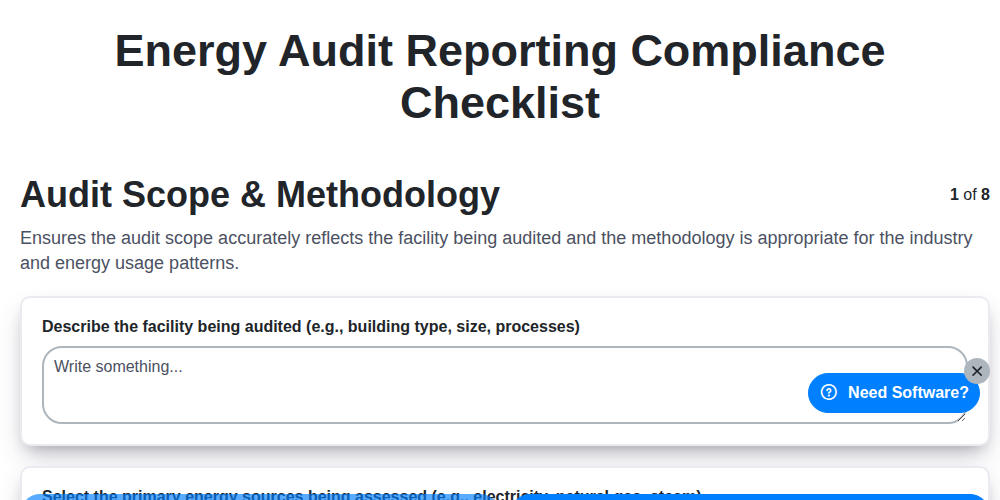
Energy Audit Reporting Compliance: Your Checklist for Success
Need help with
Energy?
Have a question? We're here to help. Please submit your inquiry, and we'll respond promptly.