Logistics Performance Monitoring Checklist: A Comprehensive Guide
Published: 12/09/2025 10:00 PM Updated: 12/14/2025 7:45 AM
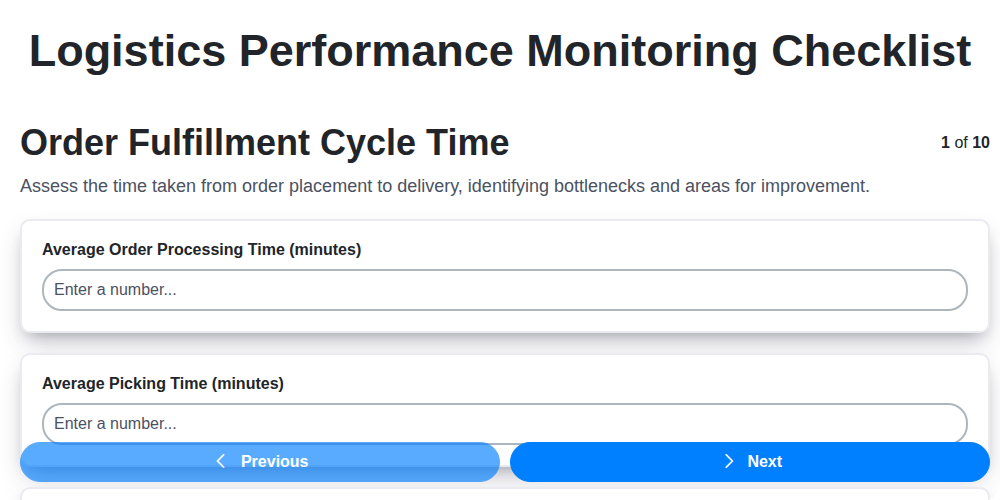
Table of Contents
- Introduction: Why Logistics Performance Monitoring Matters
- 1. Order Fulfillment Cycle Time: Speed and Efficiency
- 2. Transportation Costs & Efficiency: Optimizing Your Routes
- 3. Warehouse Operations Metrics: Productivity and Space Utilization
- 4. Carrier Performance & Reliability: Building Strong Partnerships
- 5. Inventory Accuracy & Management: Minimizing Stockouts and Overstocking
- 6. Customs Compliance & Documentation: Avoiding Delays and Penalties
- 7. Reverse Logistics Process: Handling Returns Effectively
- 8. Technology & Data Integration: Leveraging Data for Insights
- 9. Security & Risk Management: Protecting Your Supply Chain
- 10. Sustainability & Environmental Impact: Reducing Your Carbon Footprint
- 11. Key Performance Indicators (KPIs) to Track
- 12. Tools and Technologies for Logistics Monitoring
- Conclusion: Continuous Improvement Through Monitoring
- Resources & Links
TLDR: Feeling overwhelmed by logistics? This checklist template acts as your performance dashboard! It covers everything from order fulfillment speed and transport costs to warehouse efficiency, customs compliance, and sustainability. Use it to identify bottlenecks, track improvements, and ensure your logistics are running smoothly and cost-effectively.
Introduction: Why Logistics Performance Monitoring Matters
In today's fiercely competitive landscape, efficient logistics are no longer a nice-to-have - they're a business imperative. Consumers demand faster delivery, greater transparency, and increasingly, sustainable practices. Failing to meet these expectations can lead to lost customers, increased costs, and damage to your brand reputation.
Logistics performance monitoring provides a data-driven approach to understanding your supply chain's strengths and weaknesses. It's more than just tracking shipments; it's about proactively identifying areas for improvement, optimizing processes, and ensuring resilience against disruptions. Without consistent monitoring, you're essentially flying blind, reacting to problems after they've already impacted your bottom line. This checklist provides a framework for that necessary oversight, helping you move from reactive problem-solving to proactive optimization and a significant competitive advantage.
1. Order Fulfillment Cycle Time: Speed and Efficiency
In today's fast-paced e-commerce landscape, order fulfillment cycle time is a critical differentiator. Customers expect speed and transparency, and anything less can lead to lost sales and negative reviews. This isn't just about how quickly you ship an order; it's about the entire process, from order placement to delivery confirmation.
Let's break down what to monitor within this key area:
- Order Processing Time: How long does it take to process an order after it's received? This includes order validation, payment authorization, and initiation of picking.
- Picking Time: The time spent retrieving items from the warehouse. Look for bottlenecks and opportunities to optimize picking routes and methods (e.g., zone picking, wave picking).
- Packing Time: Efficiency in packaging directly impacts throughput. Evaluate packaging materials, station setup, and employee training.
- Shipping Time: This is largely dependent on your carrier, but internal processes can still influence it. Accurate address validation and efficient labeling are key.
- Delivery Confirmation Time: The time taken to confirm delivery. Providing tracking information and proactive updates enhances customer satisfaction.
Key Metrics to Track:
- Average Fulfillment Cycle Time: The overall time from order placement to delivery.
- Order Fulfillment Time by Channel: Comparing fulfillment times across different sales channels (website, marketplace, etc.) can reveal channel-specific challenges.
- First-Time Delivery Accuracy: The percentage of orders delivered on the initially promised delivery date.
- Cycle Time Variance: Identifying orders that take significantly longer than average to fulfill and investigating the root causes.
By consistently monitoring and analyzing these metrics, you can identify areas for improvement, streamline your fulfillment process, and ultimately provide a superior customer experience.
2. Transportation Costs & Efficiency: Optimizing Your Routes
Transportation costs are a significant portion of overall logistics spend, and inefficiencies here can quickly erode profitability. This section delves into key metrics and strategies for optimizing your transportation performance.
Key Metrics to Monitor:
- Cost per Mile/Kilometer: A fundamental measure of transportation efficiency. Track this across different modes (truckload, LTL, rail, air) and routes.
- Fuel Efficiency (MPG/L/km): Monitor vehicle fuel consumption and identify opportunities for improvement through driver training, route optimization, and vehicle maintenance.
- On-Time Delivery Percentage: Reflects the reliability of your transportation network and customer satisfaction.
- Empty Miles/Kilometers: Represents miles/kilometers traveled without cargo, a significant waste of resources.
- Average Transit Time: The time it takes for goods to move from origin to destination. Shorter transit times improve customer satisfaction and reduce inventory holding costs.
- Delivery Density: Measures the number of deliveries made per route, indicating route efficiency.
Strategies for Optimization:
- Route Optimization: Utilize route planning software to find the most efficient routes, considering factors like traffic, distance, and delivery windows.
- Mode Selection: Regularly evaluate the most cost-effective transportation mode based on urgency, distance, and cargo characteristics.
- Consolidation: Combine smaller shipments into larger ones to leverage volume discounts and reduce the number of trips.
- Negotiate Rates: Regularly review and negotiate rates with carriers to secure competitive pricing.
- Real-Time Visibility: Implement tracking systems to monitor shipments in real-time and proactively address potential delays.
- Driver Training: Invest in driver training programs to improve fuel efficiency and safe driving practices.
- Backhauls: Maximize vehicle utilization by securing backhaul loads (cargo for the return trip).
- Load Optimization: Ensure vehicles are loaded to their maximum legal and safe capacity.
By consistently monitoring these metrics and implementing optimization strategies, you can significantly reduce transportation costs and enhance overall logistics performance.
3. Warehouse Operations Metrics: Productivity and Space Utilization
Your warehouse isn't just a storage space; it's the engine driving your logistics performance. Optimizing warehouse operations is critical for reducing costs, improving order fulfillment speed, and boosting overall customer satisfaction. Here's a closer look at key metrics to monitor and how they contribute to a high-performing warehouse:
1. Order Picking Accuracy: This metric measures the percentage of orders picked correctly. Errors are costly, leading to returns, re-picks, and dissatisfied customers. Aim for 99.9% or higher. Track error types to identify root causes (e.g., mislabeled items, incorrect picking locations).
2. Picking Speed (Units per Hour): This gauges the rate at which warehouse staff can accurately pick items. This is heavily influenced by warehouse layout, picking methods (zone picking, wave picking, etc.), and training. Continuous improvement here translates to faster order fulfillment.
3. Put-Away Time (Units per Hour): Measures the efficiency of the receiving and put-away process. Slow put-away can create bottlenecks and impact space utilization.
4. Space Utilization: Analyzing how effectively you're using your warehouse space is crucial. This involves tracking:
- Cube Utilization: Percentage of total warehouse cube that's occupied.
- Pallet Density: Number of pallets per square foot.
- Aisle Width Optimization: Finding the balance between efficient movement and maximizing storage.
5. Dock-to-Stock Time: The time it takes for received goods to be processed and placed into storage. Minimizing this time improves inventory flow and reduces delays.
6. Receiving Efficiency: Tracking how quickly goods are received, inspected, and prepared for put-away.
Beyond the Numbers: Continuous Improvement
Regularly review these metrics, analyze trends, and identify areas for improvement. Implement lean principles, optimize warehouse layout, invest in automation (where appropriate), and provide ongoing training to your team. A data-driven approach to warehouse operations unlocks significant gains in efficiency and cost savings.
4. Carrier Performance & Reliability: Building Strong Partnerships
Your logistics network hinges on the performance of your carriers. A breakdown in their reliability can ripple through your entire operation, impacting delivery times, customer satisfaction, and ultimately, your bottom line. This section isn't just about tracking numbers; it's about cultivating strong, collaborative partnerships.
Here's what to monitor:
- On-Time Delivery (OTD) Percentage: This is the cornerstone metric. Track the percentage of shipments arriving within the promised timeframe. Break it down by carrier, lane, and product type for granular insights.
- Transit Times: Compare actual transit times against estimated times. Unexpected delays highlight potential inefficiencies or carrier issues.
- Damage Rates: A high damage rate points to improper handling or insufficient packaging. Investigate root causes and collaborate with carriers to improve.
- Communication & Responsiveness: Evaluate carrier responsiveness to inquiries, issues, and exceptions. Proactive communication is crucial.
- Claims Processing Efficiency: How quickly and efficiently are claims processed? A slow process can signal larger problems.
- Capacity & Flexibility: Assess the carrier's ability to handle fluctuations in volume and adapt to changing needs.
- Cost Per Mile/Kilometer: Track costs to identify opportunities for optimization and negotiate better rates.
- Network Coverage & Geographic Reach: Does the carrier service the required geographic areas effectively?
Beyond the metrics, actively engage with your carriers. Regular performance reviews, proactive communication about anticipated volume changes, and collaborative problem-solving are essential for building resilient and reliable partnerships. Remember, a strong carrier relationship is a strategic asset, not just a vendor relationship.
5. Inventory Accuracy & Management: Minimizing Stockouts and Overstocking
Inventory accuracy is the bedrock of a smoothly running logistics operation. Inaccurate inventory data - whether it's overstocking or, even worse, stockouts - can trigger a domino effect of problems, including delayed orders, frustrated customers, increased carrying costs, and ultimately, lost revenue.
This section of your Logistics Performance Monitoring Checklist focuses on ensuring your inventory data reflects reality. Key metrics to track include:
- Inventory Turnover Rate: How quickly your inventory is sold and replaced. A low turnover rate can signal obsolete stock or poor demand forecasting.
- Order Fill Rate: The percentage of customer orders that can be fulfilled immediately from available inventory. Low fill rates directly impact customer satisfaction.
- Inventory Accuracy Rate: The percentage of inventory records that are correct. This is a crucial indicator of your inventory control processes.
- Obsolescence Rate: Measures the percentage of inventory that's become outdated or unusable.
- Holding Costs: The total cost of storing inventory, including warehousing fees, insurance, and potential spoilage.
Beyond simply tracking these metrics, it's vital to understand why inaccuracies arise. Common culprits include human error during receiving and picking, inadequate cycle counting procedures, and a lack of integration between inventory management systems and other logistics platforms.
Regular cycle counts, robust receiving protocols, and the implementation of barcode scanning or RFID technology are all strategies to improve accuracy. Furthermore, investing in a robust Warehouse Management System (WMS) and ensuring proper training for your team are critical steps towards achieving and maintaining accurate inventory data, ultimately contributing to a more efficient and profitable logistics performance.
6. Customs Compliance & Documentation: Avoiding Delays and Penalties
Navigating customs regulations can be a minefield for logistics professionals. Non-compliance isn't just inconvenient; it can lead to significant delays, hefty penalties, and damage to your reputation. This section of your logistics performance monitoring checklist should focus on ensuring accuracy and efficiency in all customs-related processes.
Here's what to monitor:
- Accurate HS Codes: Incorrect Harmonized System (HS) codes are a major cause of delays. Regularly review and update your HS code classifications to reflect changes in products or regulations. Implement a process for verification and training for staff responsible for code assignment.
- Complete & Accurate Documentation: Ensure all required documents (commercial invoices, packing lists, certificates of origin, etc.) are complete, accurate, and readily available. A single missing or inaccurate detail can trigger scrutiny.
- Duty & Tax Calculations: Verify the accuracy of duty and tax calculations to avoid underpayment, which can lead to audits and penalties. Consider using software or expert consultants for complex calculations.
- Import/Export Licenses & Permits: Track expiration dates and renewal processes for all necessary import/export licenses and permits. Proactive renewal prevents disruptions.
- Regulatory Updates: Customs regulations are constantly evolving. Establish a system to stay informed about changes, subscribe to relevant industry newsletters, and participate in webinars or training sessions.
- Record Keeping: Maintain meticulous records of all customs transactions for audit purposes. Ensure records are easily accessible and stored securely.
- Compliance Audits: Conduct regular internal audits of your customs compliance processes to identify and address potential weaknesses.
By proactively monitoring these areas, you can significantly reduce the risk of customs-related delays and penalties, ensuring smoother, more cost-effective international trade.
7. Reverse Logistics Process: Handling Returns Effectively
Returns are an unavoidable part of any business, especially in today's e-commerce driven world. A poorly managed reverse logistics process - the steps taken to handle returns, repairs, and recycling - can quickly erode customer satisfaction, increase costs, and damage your brand reputation. It's no longer sufficient to just accept returns; you need a robust, efficient, and customer-centric process.
Here's what to consider in your reverse logistics evaluation:
- Return Authorization (RA) Process: Is it easy for customers to initiate a return? A complex and frustrating RA process is a major pain point. Ensure clear instructions, readily available online forms, and prompt responses.
- Return Transportation: Who bears the cost of return shipping? Offer free returns strategically, considering the impact on customer acquisition and loyalty. If customers are responsible, provide clear and affordable options.
- Inspection & Disposition: What happens when a returned item arrives? Establish clear inspection criteria. Items should be assessed for resale, repair, refurbishment, or disposal quickly. Define roles and responsibilities for handling each outcome.
- Refund/Exchange Processing: Streamline the refund or exchange process. Customers expect prompt resolution and clear communication regarding the status of their request.
- Data Analysis & Root Cause Identification: Analyze return data to identify trends. Frequent returns of a specific product might indicate a quality issue or inaccurate product descriptions. A spike in returns could point to problems with packaging or shipping. Use this data to improve processes and prevent future returns.
- Sustainability Considerations: Explore options for sustainable reverse logistics, such as donating usable items or recycling materials, reducing waste and demonstrating corporate responsibility.
A well-managed reverse logistics process isn't just about handling returns; it's about turning a potential negative into a positive customer experience and driving continuous improvement across your entire supply chain.
8. Technology & Data Integration: Leveraging Data for Insights
In today's fast-paced logistics landscape, relying on gut feeling and manual tracking simply isn't enough. Robust technology and seamless data integration are crucial for proactive performance monitoring and continuous improvement. This isn't just about having fancy software; it's about connecting the disparate systems that manage your logistics processes and turning raw data into actionable insights.
Key Areas to Consider:
- Real-Time Visibility: Implement a Transportation Management System (TMS) and Warehouse Management System (WMS) integrated with your Order Management System (OMS) to gain real-time visibility into inventory, shipments, and order status.
- Data Consolidation: Eliminate data silos by connecting systems and standardizing data formats. A centralized data warehouse or data lake can be invaluable for this.
- Automated Reporting: Automate the generation of key performance indicator (KPI) reports. This frees up valuable time and ensures consistent, accurate data analysis.
- Predictive Analytics: Leverage data analytics tools to forecast demand, optimize routes, and anticipate potential disruptions. Machine learning can further enhance these predictions.
- IoT Integration: Consider incorporating Internet of Things (IoT) devices for real-time tracking of assets, temperature monitoring, and condition monitoring.
- API Connectivity: Utilize APIs to connect different platforms and allow for data exchange between your logistics partners.
- Data Security: Prioritize data security measures to protect sensitive information and ensure compliance with relevant regulations.
- User-Friendly Dashboards: Ensure your data is presented in a clear and user-friendly dashboard format that allows all stakeholders to easily understand key performance metrics.
By embracing technology and prioritizing data integration, you can transform your logistics performance monitoring from a reactive exercise into a proactive, data-driven strategy.
9. Security & Risk Management: Protecting Your Supply Chain
In today's complex and interconnected world, supply chain security isn't just a best practice-it's a necessity. Disruptions, theft, fraud, and increasingly sophisticated cyber threats can cripple operations and damage your reputation. A robust security and risk management framework is critical for resilience and ongoing success.
What to Monitor and Evaluate:
- Physical Security Assessments: Regularly assess vulnerability points across your facilities (warehouses, distribution centers, transportation hubs). This includes perimeter security, access control, surveillance systems, and employee training. Document findings and track corrective actions.
- Cybersecurity Posture: Supply chain disruptions often originate from cyberattacks. Monitor your IT infrastructure, data security protocols, and vendor cybersecurity practices. Look for vulnerabilities in your ERP systems, WMS, and TMS. Implement multi-factor authentication and regularly update software.
- Third-Party Risk Management: Your suppliers and partners are extensions of your supply chain. Evaluate their security protocols, conduct audits (especially for critical vendors), and ensure contractual obligations include security requirements.
- Employee Screening & Training: Background checks and ongoing security awareness training are essential to prevent internal threats. Focus on areas like fraud prevention, data security, and reporting suspicious activity.
- Cargo Security Measures: Implement measures to protect goods during transit, including secure packaging, tamper-evident seals, and GPS tracking. Consider security escorts for high-value or sensitive cargo.
- Contingency Planning & Business Continuity: Develop and regularly test plans for potential disruptions like natural disasters, political instability, and terrorist attacks. Ensure backup systems and alternative suppliers are in place.
- Compliance with Regulations: Stay abreast of and comply with relevant security regulations (e.g., C-TPAT, ISO 28000). Track compliance status and identify areas for improvement.
- Incident Response Plan: Have a clear, documented plan outlining procedures for responding to security incidents. Regular drills and tabletop exercises help ensure preparedness.
Key Metrics to Track:
- Number of security incidents (theft, fraud, data breaches)
- Time to detect and respond to incidents
- Cost of security incidents
- Security audit scores
- Employee security training completion rates
10. Sustainability & Environmental Impact: Reducing Your Carbon Footprint
Logistics isn't just about speed and efficiency anymore; it's increasingly about responsibility. Consumers and regulators alike are demanding that businesses minimize their environmental impact, and a robust logistics performance monitoring system needs to reflect this. Neglecting sustainability can damage your brand reputation, increase operational costs (due to potential carbon taxes or resource scarcity), and ultimately, impact long-term viability.
Here's what you should be tracking:
- Carbon Emissions per Shipment: This is a crucial metric. Analyze emissions related to transportation modes, warehousing operations (energy consumption), and packaging.
- Packaging Waste: Monitor the amount and type of packaging materials used. Are you prioritizing recyclable, reusable, or compostable options? Track waste generation and explore reduction strategies.
- Fuel Efficiency: Continuously assess the fuel efficiency of your transportation fleet. Consider alternative fuels (electric, hydrogen) and driver training programs to optimize consumption.
- Warehouse Energy Consumption: Track electricity and water usage in your warehouses and distribution centers. Implement energy-saving measures like LED lighting, efficient HVAC systems, and renewable energy sources.
- Sustainable Sourcing: Evaluate the environmental practices of your suppliers and prioritize those committed to sustainability.
- Transportation Mode Optimization: Analyze the environmental impact of different transportation modes. Favor lower-emission options whenever possible, even if it means slightly longer transit times.
- Circular Economy Initiatives: Explore opportunities to implement circular economy principles, such as product take-back programs and the use of recycled materials.
- Reporting and Transparency: Regularly report on your sustainability performance and be transparent with stakeholders about your efforts and progress.
By incorporating these sustainability metrics into your logistics performance monitoring checklist, you're not just improving your environmental footprint; you're building a more resilient and responsible supply chain for the future.
11. Key Performance Indicators (KPIs) to Track
Logistics performance monitoring isn't about collecting data; it's about using that data to drive continuous improvement. Here's a breakdown of essential KPIs to track, grouped by area, to gain a holistic view of your logistics operations:
Order Fulfillment: Order Fulfillment Cycle Time - Measures the total time from order placement to delivery. A shorter cycle time indicates efficiency and responsiveness.
Transportation: Transportation Costs & Efficiency - This encompasses cost per mile, fuel consumption, on-time delivery percentage, and miles per gallon. Lower costs and higher efficiency are the goals here.
Warehouse Operations: Warehouse Operations Metrics - Track metrics like storage utilization, picking accuracy, putaway time, and order processing time. High accuracy and speed are key.
Carrier Performance: Carrier Performance & Reliability - Monitor on-time performance, damage rates, claims frequency, and pricing consistency. Reliable carriers are invaluable.
Inventory Management: Inventory Accuracy & Management - Assess inventory turnover rate, stockout rates, and carrying costs. Accurate inventory minimizes waste and maximizes availability.
Customs & Compliance: Customs Compliance & Documentation - Track compliance violations, detention/demurrage costs, and clearance times. Maintaining accurate documentation is crucial for avoiding penalties.
Reverse Logistics: Reverse Logistics Process - Analyze return rates, processing time for returns, and associated costs. A streamlined reverse logistics process improves customer satisfaction and minimizes losses.
Technology & Data: Technology & Data Integration - Evaluate data accuracy, system uptime, and the effectiveness of your logistics software. Reliable data is the foundation of informed decisions.
Risk & Security: Security & Risk Management - Track incident rates (theft, damage), security audit scores, and the effectiveness of your risk mitigation strategies.
Sustainability: Sustainability & Environmental Impact - Monitor carbon footprint, waste reduction efforts, and the use of sustainable packaging. This demonstrates corporate responsibility.
By diligently tracking these KPIs and regularly analyzing the trends, you can identify areas for improvement, optimize your logistics performance, and ultimately gain a competitive advantage.
12. Tools and Technologies for Logistics Monitoring
The modern logistics landscape demands more than just spreadsheets and gut feeling. Thankfully, a wealth of tools exist to automate data collection, analysis, and reporting, significantly enhancing your monitoring capabilities. Here's a glimpse of what's available:
- Transportation Management Systems (TMS): These platforms are crucial for optimizing transportation routes, tracking shipments in real-time, and analyzing freight costs. Many TMS solutions offer built-in dashboards for performance monitoring.
- Warehouse Management Systems (WMS): Essential for warehouse operations, WMS track inventory, manage workflows, and provide metrics on receiving, put-away, picking, packing, and shipping.
- Control Tower Platforms: These offer a unified view of your entire supply chain, integrating data from various sources (TMS, WMS, carrier systems) to provide end-to-end visibility and proactive exception management.
- IoT (Internet of Things) Sensors: Track assets, monitor temperature and humidity (critical for perishable goods), and provide real-time location data.
- Blockchain Technology: Offers enhanced transparency and traceability, particularly valuable for complex supply chains and sensitive goods.
- Data Analytics & Business Intelligence (BI) Tools: Platforms like Tableau, Power BI, and Google Data Studio allow you to visualize data, identify trends, and generate custom reports based on your logistics performance metrics.
- Automated Reporting Tools: Software that automatically pulls data from various systems and generates pre-defined or custom reports, saving time and reducing manual errors.
Choosing the right tools depends on your specific needs, budget, and the complexity of your operations. Start by identifying your biggest pain points and then research solutions that can address those challenges effectively.
Conclusion: Continuous Improvement Through Monitoring
Ultimately, consistent and thorough logistics performance monitoring isn't a one-time project; it's a continuous journey. The checklist outlined provides a robust framework, but its true value lies in how actively you utilize it. Regularly reviewing these metrics, identifying trends, and implementing corrective actions - whether it's streamlining warehouse processes, renegotiating carrier contracts, or investing in technology - will drive significant, sustainable improvements. Don't just check the boxes; analyze the results, challenge assumptions, and foster a culture of data-driven decision-making within your logistics team. By embracing this mindset, you'll unlock greater efficiency, reduce costs, and build a more resilient and competitive supply chain. The power to optimize your logistics performance is in your hands - start monitoring, start analyzing, and start improving today.
Resources & Links
- McKinsey & Company: Provides insights and reports on supply chain management, logistics, and performance optimization. Good for high-level strategic thinking and industry trends.
- Boston Consulting Group: Similar to McKinsey, BCG offers consulting services and publishes articles on logistics and supply chain topics, often with data-driven analysis.
- PwC: A global consulting firm with a strong focus on supply chain and operations. Their publications and insights can provide a broader perspective on logistics performance.
- Deloitte: Another major consulting firm covering supply chain and logistics, offering detailed reports and analysis, often tailored to specific industries.
- Logistics Management: A leading trade publication covering all aspects of logistics and supply chain management. Offers practical articles, case studies, and industry news.
- Supply Chain 24/7: Provides daily news and insights on supply chain, logistics, and transportation. A good source for staying current on trends and technologies.
- APICS (The Association for Supply Chain Management): A professional organization providing certifications, education, and resources for supply chain professionals. Their website has valuable information on best practices and metrics.
- CSCMP (Council of Supply Chain Management Professionals): Similar to APICS, CSCMP is a professional organization with a focus on supply chain management education and resources, including benchmarking studies and best practices documentation.
- Effortless: Offers comprehensive guides and resources on various logistics operations, including fulfillment, shipping, and warehousing, with practical advice and examples.
- ShipHero: Provides shipping and fulfillment solutions and offers a blog with articles and resources on logistics operations and performance monitoring.
- Infor: A software company offering supply chain management solutions. Their website provides content on industry trends and best practices.
- BluePrism: A Robotic Process Automation (RPA) provider. Their website features content on automation in logistics, which can influence performance metrics.
- Oracle: A major software provider for supply chain management. Their website offers white papers and articles on optimizing logistics operations.
- SAP: Similar to Oracle, SAP is a leading ERP and supply chain management software provider with extensive resources and thought leadership content.
- Sapo: Sapo provides consulting services on supply chain management with a strong focus on data driven insights. Good for process improvement and optimization.
- Project44: Focuses on real-time transportation visibility. Useful for the 'Transportation Costs & Efficiency' and 'Carrier Performance' sections, highlighting data-driven improvements.
Frequently Asked Questions
What is Logistics Performance Monitoring (LPM)?
Logistics Performance Monitoring (LPM) is the process of tracking and evaluating key performance indicators (KPIs) to assess the efficiency and effectiveness of your logistics operations. It involves setting benchmarks, collecting data, analyzing performance, and identifying areas for improvement. This checklist guide provides a structured approach to doing so.
Why is Logistics Performance Monitoring important?
Effective LPM is crucial for reducing costs, improving delivery times, enhancing customer satisfaction, optimizing resource utilization, and gaining a competitive advantage. It allows you to identify bottlenecks, inefficiencies, and potential risks before they significantly impact your business.
Who should use this checklist?
This checklist is beneficial for logistics managers, supply chain professionals, operations managers, and anyone involved in overseeing and improving logistics processes within a company, regardless of industry or business size.
What types of KPIs are covered in this checklist?
The checklist covers a wide range of KPIs across key logistics areas including transportation, warehousing, inventory management, order fulfillment, and customer service. These KPIs cover metrics such as on-time delivery, order accuracy, inventory turnover, warehouse utilization, and freight costs.
How often should I perform logistics performance monitoring?
The frequency of monitoring depends on the specific KPIs and the volatility of your operations. However, regular monitoring (e.g., weekly, monthly, quarterly) is generally recommended. Critical KPIs might require daily monitoring, while others can be reviewed less frequently.
What's the difference between a KPI and a metric?
While often used interchangeably, a metric is a raw data point (e.g., total miles driven), while a KPI is a specific, measurable, achievable, relevant, and time-bound indicator used to evaluate performance (e.g., average fuel consumption per mile). KPIs are derived from metrics.
How do I determine appropriate KPI benchmarks?
Benchmarks can be based on industry averages, historical data, competitor performance, or company-specific goals. Consider factors like geographical location, product type, and customer expectations when setting benchmarks. Regularly review and adjust benchmarks to reflect changing conditions.
What should I do if a KPI consistently falls below the benchmark?
Investigate the root cause of the underperformance. Analyze the underlying processes and data to identify bottlenecks, inefficiencies, or systemic issues. Implement corrective actions and track progress to ensure improvement. Consider whether the benchmark itself needs adjustment.
How can I use this checklist to automate my LPM process?
While the checklist provides a structured approach, automation tools and software can significantly streamline the process. Look for solutions that allow you to integrate data sources, track KPIs in real-time, and generate automated reports. Many Transportation Management Systems (TMS) and Warehouse Management Systems (WMS) offer LPM capabilities.
Is there a specific order I need to follow the checklist in?
The checklist is designed to be comprehensive, but the order can be adapted to your specific needs. However, starting with foundational areas like transportation and warehousing is generally recommended, then moving to more specialized areas.
Found this Article helpful?
Comments
There are no comments yet. Be the first to add one!
SCM - Supply Chain Management Solution Demo
Struggling with supply chain disruptions & lack of visibility? ChecklistGuro delivers a centralized SCM solution, connecting your suppliers, manufacturers, & distributors for improved collaboration and control. Simplify operations & boost efficiency.
Related Articles
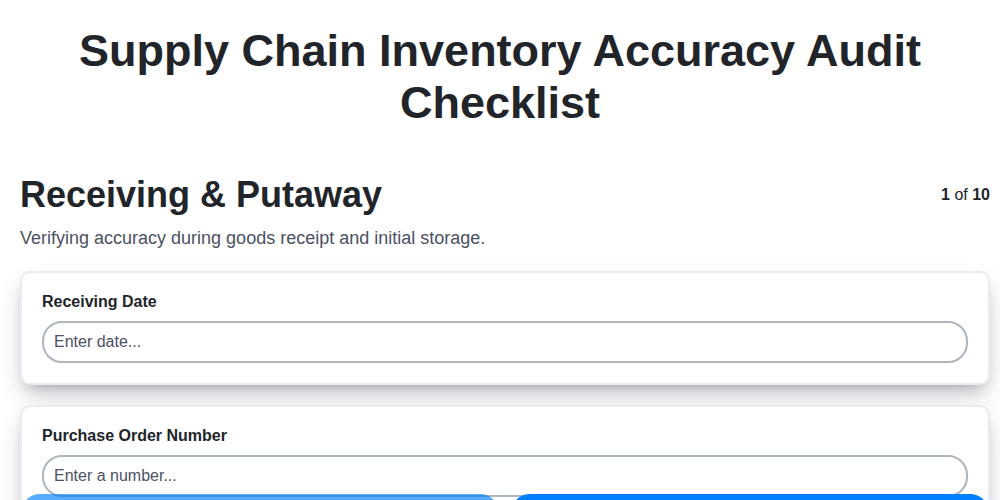
The Ultimate Supply Chain Inventory Accuracy Audit Checklist: A Step-by-Step Guide
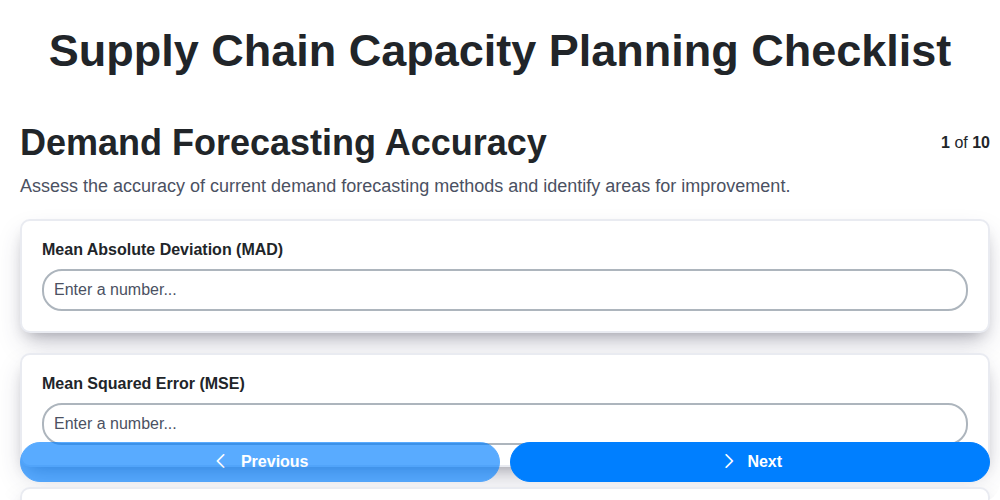
Supply Chain Capacity Planning Checklist: Ensure Readiness for Peak Demand
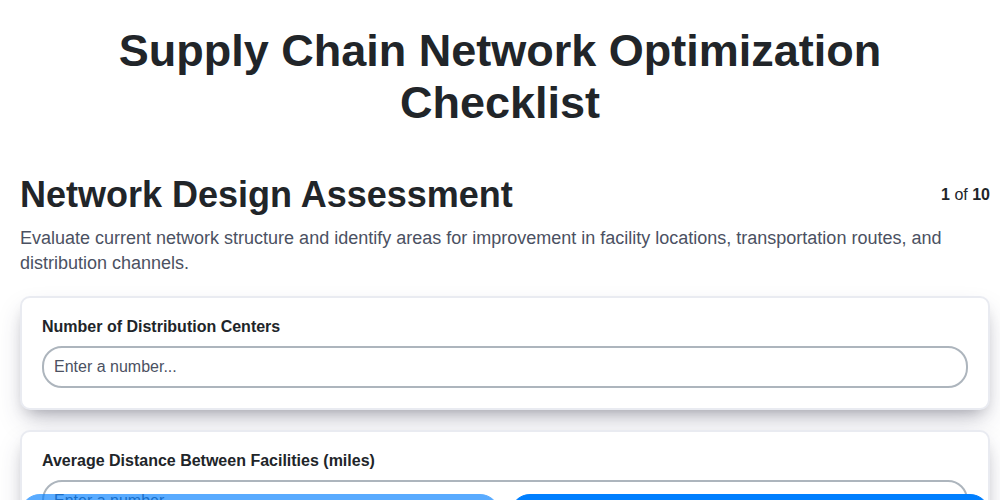
The Ultimate Supply Chain Network Optimization Checklist: A Step-by-Step Guide
Supply Chain Risk Assessment Checklist: Your Guide to Resilience
Navigating Sustainability: Your Supply Chain Compliance Checklist

Top 10 SAP Logistics Business Network (LBN) Alternatives for 2025

Fortify Your Supply Chain: The Ultimate Resilience Assessment Checklist
Navigating Global Trade: Your Essential Import/Export Compliance Checklist
We can do it Together
Need help with
Supply Chain Management (SCM)?
Have a question? We're here to help. Please submit your inquiry, and we'll respond promptly.