MRP Capacity Planning Checklist: A Step-by-Step Guide to Success
Published: 12/14/2025 10:00 PM Updated: 12/15/2025 1:32 PM
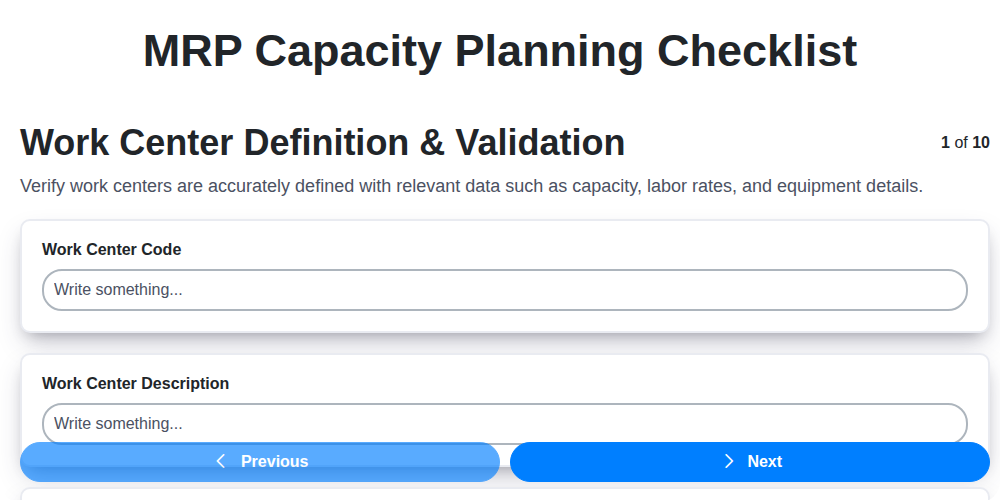
Table of Contents
- Introduction: Why Capacity Planning Matters in MRP
- 1. Work Center Definition & Validation: The Foundation of Capacity
- 2. Resource Availability Assessment: Knowing What You Have
- 3. Bottleneck Identification: Pinpointing Constraints
- 4. Planned Capacity vs. Demand Alignment: Bridging the Gap
- 5. Scheduling Rules & Prioritization: Optimizing Workflow
- 6. Exploring Alternative Capacity Options: Beyond the Basics
- 7. Preventative Maintenance Schedule: Minimizing Downtime
- 8. Capacity Buffer and Contingency Plans: Preparing for the Unexpected
- 9. Data Accuracy and Integration: Ensuring Reliable Insights
- 10. Documentation and Communication: Keeping Everyone Informed
- 11. Regularly Review and Update Your Capacity Plan
- 12. Key Performance Indicators (KPIs) for Capacity Planning
- Conclusion: Mastering MRP Capacity Planning
- Resources & Links
TLDR: Overwhelmed by MRP Capacity Planning? This checklist breaks down the process into 10 clear steps - from defining your work centers to creating backup plans - ensuring you can meet demand, avoid bottlenecks, and keep production running smoothly. Download the template and conquer your capacity planning!
Introduction: Why Capacity Planning Matters in MRP
MRP (Material Requirements Planning) systems are powerful tools for managing inventory and production, but they're only as effective as the capacity planning behind them. It's not enough to simply know what materials you need and when; you must also have the resources - people, machines, and equipment - available to produce those materials on time.
Without robust capacity planning, your MRP system can become a source of frustration, leading to missed deadlines, expedited orders, and ultimately, dissatisfied customers. Over-promising and under-delivering damages reputation and erodes trust. Conversely, effective capacity planning allows you to confidently commit to delivery dates, optimize resource utilization, and improve overall operational efficiency. This section will lay the groundwork for understanding why a thorough capacity planning checklist is a crucial companion to your MRP system.
1. Work Center Definition & Validation: The Foundation of Capacity
Before you can even begin to plan capacity, you need a crystal-clear understanding of where and how your work gets done. That means meticulously defining and validating your work centers. This isn't just a technical exercise; it's the bedrock upon which your entire capacity planning process rests.
What constitutes a work center? Think of it as a distinct area or group of equipment/people performing a specific type of work. It could be a machining cell, an assembly line, a painting station, or even a dedicated team of engineers.
Here's what you need to do:
- Comprehensive Listing: Document every work center involved in your manufacturing process. Don't overlook seemingly minor operations - they can still impact capacity.
- Detailed Description: For each work center, define its capabilities, equipment, skills required, and the types of products it handles.
- Validation Against Reality: Crucially, compare your documented work centers against how things actually happen on the shop floor. Are there undocumented processes or equipment being used? Is there overlap between centers?
- Standardization: Ensure consistency in how work centers are defined across departments and shifts. This reduces confusion and improves data accuracy.
- Regular Review: Work centers aren't static. As processes change, equipment is added or removed, or new products are introduced, your definitions need to be updated. Review them at least annually, and ideally more frequently.
Accurate work center definitions are the essential first step. Without them, your capacity planning will be based on flawed assumptions, leading to inaccurate forecasts and potentially costly mistakes.
2. Resource Availability Assessment: Knowing What You Have
Before you can realistically plan your MRP capacity, you need to know exactly what resources you have available. This isn't just about counting machines; it's a deep dive into the capabilities and limitations of your workforce, equipment, and any outsourced resources.
Go Beyond the Basics:
Detailed Resource Records: Don't just list your work centers; record everything about them. This includes:
Machine Capabilities: What can each machine actually produce? Speed, acceptable tolerances, material compatibility, cycle times. Don't assume what's in the manual is reality; measure performance.
Labor Skills & Availability: What skills do your employees possess? How many hours per week can they realistically dedicate to each work center? Account for breaks, meetings, and training. Don't forget vacation time and potential absenteeism.
Tooling & Fixtures: Do you have sufficient tooling for the jobs planned? Is it in good repair? Tooling changes can be significant time sinks.
Material Availability (indirectly): While the MRP system handles material planning, a shortage of a critical consumable (like a specialty cutting fluid) can still impact capacity.
Real-World Data is Key: Relying on outdated or theoretical numbers is a recipe for disaster. Conduct time studies, gather production data, and regularly review these figures. Document any discrepancies.
Consider Shift Patterns: Account for all shifts, including overtime and potential for additional shifts, but with realistic expectations.
Outsourced Resources: If you outsource any operations, meticulously track their capacity and lead times. Factor in potential risks associated with reliance on external vendors.
Without a precise understanding of your resource availability, your capacity planning efforts will be built on shaky ground. This assessment is the foundation for everything that follows.
3. Bottleneck Identification: Pinpointing Constraints
Capacity planning isn't just about knowing how much you have; it's about understanding where it's most critical. Bottlenecks are the chokepoints in your production process - the resources or workstations that limit overall output. Identifying them is paramount to effective capacity planning.
How to Find Your Bottlenecks:
- Process Mapping: Visually map your production process, documenting each step and the resources involved. This clarifies the flow and highlights potential areas of congestion.
- Cycle Time Analysis: Measure the cycle time (time taken to complete a task) at each work center. A consistently longer cycle time signals a potential bottleneck.
- Work-in-Progress (WIP) Levels: High WIP levels before a particular work center often indicate it's struggling to keep up. Look for build-up of materials waiting to be processed.
- Utilization Rates: While high utilization seems good, if a work center is consistently running near or at 100% while others are underutilized, it's likely a bottleneck.
- Throughput Monitoring: Track the number of units produced by each work center over time. Low throughput is a clear warning sign.
- Operator Feedback: Don't underestimate the experience of your operators. They often have invaluable insights into process bottlenecks. Actively solicit their input.
Beyond the Obvious: Bottlenecks aren't always the most obvious resources. It could be a specific machine, a particular skill set, or even a system constraint (like approval processes).
Addressing Bottlenecks: Once identified, address them strategically. Options range from investing in new equipment, optimizing processes, cross-training employees, to adjusting scheduling rules. Remember, eliminating all bottlenecks isn't the goal; it's about managing them effectively to maximize overall production capacity.
4. Planned Capacity vs. Demand Alignment: Bridging the Gap
This isn't just about knowing how much capacity you have; it's about ensuring that capacity matches what your customers are expecting. A beautiful capacity plan is useless if it doesn't reflect the reality of incoming orders and anticipated future demand.
The core of this step lies in consistently comparing your planned capacity (derived from your work center data and resource assessment) with your forecasted demand. This isn't a one-time exercise; it's a continuous process.
Here's what you need to consider:
- Demand Forecasting Accuracy: How confident are you in your demand predictions? Regularly review your forecasting methods and adjust them based on historical data and market trends. A sudden spike in orders will quickly expose misaligned capacity.
- Sales & Operations Planning (S&OP): Robust S&OP processes are vital. These collaborative sessions should involve Sales, Operations, and Finance to reconcile demand signals with operational capabilities.
- Lead Time Realism: Are your lead times accurately reflecting your current capacity? Underestimated lead times lead to over-promising and, ultimately, dissatisfied customers.
- Order Visibility: Maintain clear visibility into open orders and their impact on capacity. Don't wait for the rush; proactively address potential conflicts.
- Regular Reconciliation: Schedule regular reviews (weekly or even daily) to compare planned capacity against actual or forecasted demand. Use visualizations (charts, graphs) to highlight discrepancies.
- Flexibility to Adjust: Be prepared to adjust your capacity plan. This might involve overtime, subcontracting, or even, in extreme cases, managing customer expectations regarding delivery dates.
Bridging this gap proactively prevents bottlenecks, minimizes delays, and keeps your commitments to your customers.
5. Scheduling Rules & Prioritization: Optimizing Workflow
Effective MRP capacity planning isn't just about knowing how much capacity you have; it's about knowing how to use it. Without clear scheduling rules and prioritization strategies, even a well-defined capacity plan can fall apart due to inefficient workflow and missed deadlines.
Think of your shop floor as a complex dance. Each work center needs to move in sync with the others to produce a coordinated output. Prioritization rules act as the choreography, ensuring the most critical jobs get the resources they need first.
Common Scheduling Rule Considerations:
- Due Date: This is often the default - prioritize jobs with the closest due dates to avoid late deliveries and customer dissatisfaction.
- Economic Order Quantity (EOQ): When dealing with batch production, prioritize jobs that contribute to more efficient batch sizes, minimizing setup times and material handling costs.
- Critical Ratio (CR): CR is calculated as (Due Date - Current Date) / Remaining Operations. Higher CR indicates a more urgent need for attention.
- First-Come, First-Served (FCFS): While simple, this method can lead to inefficiencies if urgent, smaller jobs are delayed by larger, less critical ones. It's generally less effective than other methods.
- Shortest Processing Time (SPT): Prioritizes jobs that will be completed fastest, reducing overall lead time and freeing up resources sooner.
- Sequencing Based on Material Availability: Prioritize jobs utilizing materials already on hand, avoiding delays caused by waiting for raw materials.
Prioritization Beyond the Immediate:
Consider factors beyond just the job itself. Can certain jobs, when completed, unlock further production or alleviate a bottleneck? Factor in these strategic considerations into your prioritization matrix.
Regular Review and Adjustment:
Your scheduling rules shouldn't be set in stone. Regularly review their effectiveness - are they delivering the desired results? Are they adaptable to changes in demand or unexpected events? Be prepared to adjust and refine your approach to continuously optimize workflow and responsiveness.
6. Exploring Alternative Capacity Options: Beyond the Basics
Relying solely on your existing resources can quickly become a recipe for missed deadlines and frustrated customers. When your core capacity simply can't handle the demand, it's time to explore alternatives. This goes beyond just throwing extra staff at the problem - it requires a strategic look at how you can adjust your capabilities.
Here are some avenues to consider:
- Outsourcing/Subcontracting: This is often the first thought, and for good reason. Identifying non-core processes or tasks that can be handled externally allows you to alleviate internal pressure. Carefully vet potential partners, ensuring quality and adherence to your standards. Consider both short-term project outsourcing and longer-term strategic partnerships.
- Temporary Staffing: Agencies specializing in skilled labor can provide a quick boost during peak seasons or when covering for absences. While onboarding takes time, the flexibility is valuable.
- Overtime: While a short-term solution, consistent overtime leads to burnout and decreased productivity. Use it sparingly and strategically.
- Equipment Augmentation/Rental: Renting additional machinery or tooling can temporarily expand production capability. Assess the long-term cost-benefit compared to purchasing.
- Process Optimization & Automation: While not immediate, analyzing and streamlining processes to remove bottlenecks and incorporating automation (even simple tools) can permanently increase capacity. This requires upfront investment but offers a sustainable solution.
- Shifting Work Between Centers: If you have multiple work centers, analyze if tasks can be moved between them to better utilize available capacity. This requires careful planning and consideration of skill sets.
- Supplier Collaboration: Can suppliers adjust their delivery schedules or produce components with tighter tolerances, reducing your internal processing time?
Before implementing any alternative, meticulously calculate the cost (both direct and indirect) and impact on quality and lead times. A poorly planned alternative can create more problems than it solves.
7. Preventative Maintenance Schedule: Minimizing Downtime
Unplanned downtime is a manufacturing nightmare. It halts production, impacts delivery dates, and can significantly damage your reputation. A robust preventative maintenance (PM) schedule is your first line of defense. This isn't just about fixing things when they break; it's a proactive approach to preventing breakdowns in the first place.
Here's what to consider when integrating PM into your MRP Capacity Planning:
- Define Maintenance Tasks: Clearly identify all necessary maintenance tasks for each work center, including inspection, lubrication, cleaning, component replacement, and calibration. Refer to manufacturer recommendations and historical data.
- Establish Frequency: Determine the optimal frequency for each task. This should be based on manufacturer guidelines, equipment usage intensity, and historical failure data. Consider time-based schedules (e.g., monthly, quarterly, annually) and usage-based schedules (e.g., every X number of cycles).
- Schedule Integration: Crucially, integrate your PM schedule directly within your MRP system. This ensures that maintenance downtime is factored into your capacity planning calculations. Don't treat it as a separate activity - it is a production activity.
- Resource Allocation: Allocate the necessary labor and materials for PM activities. This might involve dedicated maintenance personnel or pulling resources from production temporarily. Accurate resource allocation prevents conflicts and ensures timely completion.
- Record Keeping: Maintain detailed records of all maintenance activities, including date, tasks performed, parts used, and technician involved. This data is invaluable for refining your PM schedule and identifying recurring issues.
- Regular Review & Adjustment: PM schedules aren't set in stone. Regularly review the schedule's effectiveness and make adjustments based on performance data, equipment changes, and operator feedback.
8. Capacity Buffer and Contingency Plans: Preparing for the Unexpected
MRP capacity planning isn't just about meeting projected demand; it's about withstanding unexpected disruptions. Things will go wrong - equipment failures, sudden order spikes, material shortages, and even unforeseen employee absences. A robust capacity buffer and well-defined contingency plans are your safety net.
What is a Capacity Buffer?
Think of a capacity buffer as extra, unused capacity held in reserve. It's the difference between your maximum potential output and your planned output. This buffer can be built into your schedule through slightly extended work hours, readily available overtime options, or having a few machines or personnel dedicated solely to handling surge capacity. It's not about permanently adding excessive capacity (which is costly), but strategically reserving some flexibility.
Contingency Plans: Beyond the Buffer
The buffer provides short-term breathing room, but contingency plans address longer-term or more significant disruptions. These plans should be documented and regularly reviewed. Consider:
- Alternative Suppliers: Identify and pre-qualify backup suppliers for critical materials.
- Work Center Swapping: Can operations be shifted to other work centers if one is down? Define the process and any required re-training.
- Simplified Production Sequences: Are there ways to reduce complexity and shorten production times in a pinch?
- Outsourcing Options: Have a list of potential contract manufacturers ready to handle overflow work.
- Prioritized Order Fulfillment: Define criteria for prioritizing orders during times of constrained capacity - consider factors like customer importance, contract obligations, and profit margins.
Regular Review is Key: Don't just create these plans and forget about them. Periodically (at least quarterly) review and update them. Simulate disruptions to test their effectiveness and identify areas for improvement. Ensure all relevant personnel are familiar with their roles and responsibilities. A proactive approach to capacity buffers and contingency planning transforms potential crises into manageable challenges.
9. Data Accuracy and Integration: Ensuring Reliable Insights
Capacity planning is only as good as the data feeding it. Garbage in, garbage out - it's a cliché for a reason. Inaccurate or poorly integrated data will lead to flawed capacity plans, missed deadlines, and frustrated teams. This section focuses on ensuring the data underpinning your MRP capacity planning is reliable and seamlessly connected.
Key Considerations:
- Bill of Materials (BOM) Accuracy: Verify your BOMs are current and reflect the actual materials and operations required for each product. Discrepancies here directly impact calculated capacity needs.
- Routing Validation: Routings define the steps and work centers involved in production. Regularly audit your routings to ensure they accurately represent your manufacturing processes. Are steps missing? Are they in the correct sequence?
- Work Center Data: Confirm work center records contain accurate setup times, run rates, and efficient capacity. Review these periodically as equipment ages or processes are improved.
- Integration with Other Systems: Your MRP system shouldn't exist in a vacuum. It needs to be integrated with your sales order management, inventory management, and potentially even shop floor data collection systems. This allows for a real-time view of demand and actual capacity usage.
- Data Validation Processes: Implement validation checks within your system to flag potential errors or inconsistencies. This could include range checks for data entry or automated comparisons of planned versus actual performance.
- Regular Data Cleansing: Schedule routine data cleansing activities to identify and correct inaccuracies. This is especially important for systems that have been in place for a long time.
- User Training: Ensure all users involved in data entry and MRP maintenance are properly trained to minimize errors and understand the importance of data integrity.
Without a strong foundation of accurate and integrated data, even the best capacity planning strategies will fall short.
10. Documentation and Communication: Keeping Everyone Informed
Capacity planning isn't a one-and-done activity; it's an ongoing process. And for it to be truly effective, consistent communication and thorough documentation are absolutely critical. Without them, even the most meticulously planned capacity can fall apart due to misunderstandings, missed updates, or a lack of visibility across departments.
Here's what documentation and communication should include:
- Clearly Defined Processes: Document your capacity planning process itself - who's involved, what steps are taken, and when. This creates repeatability and allows new team members to quickly get up to speed.
- Capacity Plans & Assumptions: Detailed records of your planned capacity, including the assumptions used to develop them. This allows for future review and adjustments as realities shift.
- Constraint Identification & Resolution: Document identified bottlenecks, the analysis performed, and the actions taken to alleviate them. This creates a valuable knowledge base for future problem-solving.
- Regular Reporting: Establish a cadence for reporting capacity status - including actual vs. planned capacity, potential overloads, and upcoming capacity changes. Tailor reports to different audiences (e.g., production managers, executives).
- Open Communication Channels: Foster an environment where team members feel comfortable raising concerns about capacity constraints. Utilize regular meetings, dashboards, and collaborative platforms to share information.
- Change Management: Document any changes to the capacity plan and communicate these changes promptly to all affected stakeholders. Explain the reasoning behind the changes and their potential impact.
Effective documentation and communication aren't just about sharing information; they're about building trust, ensuring accountability, and fostering a culture of continuous improvement in your capacity planning efforts.
11. Regularly Review and Update Your Capacity Plan
A capacity plan isn't a set it and forget it document. The manufacturing landscape is dynamic - new orders arrive, machine breakdowns happen, personnel changes occur, and demand fluctuates. Regularly reviewing and updating your capacity plan is vital for maintaining responsiveness and avoiding reactive firefighting.
Here's what consistent review entails:
- Frequency: Aim for at least monthly reviews, increasing to weekly during periods of high demand or significant change.
- Performance Metrics: Track key performance indicators (KPIs) like on-time delivery, work-in-progress (WIP), machine utilization, and overtime hours. Significant deviations from targets are red flags.
- Feedback Loop: Solicit feedback from production managers, shop floor personnel, and even key customers. Their insights are invaluable.
- Demand Forecast Revisions: As sales and operations planning (S&OP) generates updated forecasts, immediately integrate those changes into your capacity model.
- Process Improvements: As you implement process improvements (e.g., faster setup times, improved tooling), update the plan to reflect the enhanced capacity.
- Technology Updates: If you introduce new equipment or upgrade existing systems, the plan must accurately represent the change.
Ignoring this crucial step renders your entire capacity planning effort largely ineffective. Treat it as a continuous improvement cycle - constantly refining and adapting to ensure your production capacity aligns with your business needs.
12. Key Performance Indicators (KPIs) for Capacity Planning
Capacity planning isn't just about creating a plan; it's about continuously monitoring and improving it. To ensure your capacity planning efforts are effective, it's crucial to track key performance indicators (KPIs). Here are some vital metrics to consider:
- Work Center Utilization: Tracks the percentage of time a work center is actively processing jobs. High utilization can be good, but consistently exceeding optimal levels can indicate bottlenecks and impending overload.
- On-Time Delivery (OTD): Reflects your ability to meet promised delivery dates. Capacity planning directly impacts OTD; insufficient capacity leads to delays.
- Work-in-Progress (WIP): Monitoring WIP levels helps identify potential backlogs and inefficiencies within the production process. Rising WIP often signals capacity constraints.
- Lead Time: Tracks the total time from order placement to delivery. Efficient capacity planning contributes to shorter lead times.
- Capacity Utilization Variance: Compares planned utilization rates with actual utilization. Significant deviations require investigation and adjustments to the plan.
- Bottleneck Utilization Rate: Focuses specifically on the utilization of identified bottlenecks. This helps pinpoint areas requiring immediate attention.
- Planned vs. Actual Output: A direct comparison of projected output against actual output reveals the accuracy of your capacity planning assumptions.
- Overtime Hours: Tracking overtime usage highlights areas where capacity is consistently insufficient and can drive cost optimization strategies.
- Customer Satisfaction (related to delivery): Ultimately, successful capacity planning should contribute to improved customer satisfaction.
- Inventory Turns: Efficient capacity planning should minimize excess inventory while ensuring timely order fulfillment.
- Cost of Expediting: Measures the expense incurred to rush orders due to capacity limitations. This highlights the financial impact of inadequate planning.
- Work Center Throughput: Measures the number of units completed by a work center within a specific timeframe.
Regularly reviewing these KPIs and taking corrective action when necessary is paramount for maintaining a responsive and efficient production system.
Conclusion: Mastering MRP Capacity Planning
Successfully navigating MRP capacity planning isn't a one-time event; it's an ongoing process. By consistently working through the checklist - from meticulous work center validation to robust contingency planning - you're not just predicting future capacity; you're building a resilient, responsive manufacturing operation. Don't treat this checklist as a mere task list, but as a framework for continuous improvement. Regularly review and update each step to reflect changes in demand, resource availability, and operational efficiencies. Embracing a proactive and data-driven approach to capacity planning will minimize bottlenecks, optimize resource utilization, and ultimately, ensure your ability to meet customer commitments and achieve your business goals. The investment in a disciplined capacity planning process pays dividends in reduced lead times, improved on-time delivery, and a significant boost to overall operational performance.
Resources & Links
- APICS (The Association for Supply Chain Management): APICS is a leading professional association for supply chain and operations professionals. They offer certifications, training, and resources related to capacity planning and MRP, including white papers, webinars, and online courses. Their CPIM (Certified in Production and Inventory Management) certification is highly relevant.
- MRP Innovations: MRP Innovations offers MRP software and related resources. Their website provides articles and guides focused on MRP processes including capacity planning and related topics.
- NetSuite: NetSuite is a comprehensive ERP solution. Their website provides resources and articles on various manufacturing processes, including capacity planning, often tied to ERP system implementation and best practices.
- Manufacturing.com: This website offers a vast library of articles, webinars, and other content relevant to manufacturing professionals. Search for terms like 'capacity planning,' 'MRP,' and 'work center' to find helpful insights.
- The Lean Enterprise Institute: While primarily focused on Lean Manufacturing, the principles of identifying and eliminating waste (including excess capacity or bottlenecks) are highly relevant to effective capacity planning. Their website has resources on Lean principles applicable to all aspects of production.
- Infor: Infor offers ERP and manufacturing software solutions. Their website provides content on optimizing manufacturing processes, including capacity planning and resource management.
- Oracle: Oracle offers ERP and related software. Their website contains numerous articles and resources on manufacturing and supply chain processes, often discussing capacity management within a larger ERP context.
- SAS: SAS provides analytics software that can be used for capacity planning and demand forecasting. Their website includes resources on using data analytics to optimize manufacturing operations.
- Microsoft Dynamics 365 Manufacturing: Microsoft's Dynamics 365 offers manufacturing-specific modules. Their site features content and resources to assist with modern manufacturing, including capacity planning and optimization.
- Deloitte - Operations: Deloitte offers consulting services, and their site offers insights on operational efficiency and optimization, relevant to capacity planning and manufacturing processes. Search for manufacturing and operations related content.
Frequently Asked Questions
What is MRP Capacity Planning?
MRP Capacity Planning is a process that checks if you have enough resources (machines, labor, tools) to meet the production schedule generated by your Material Requirements Planning (MRP) system. It ensures you can actually produce what you planned to produce, preventing delays and bottlenecks.
Why is MRP Capacity Planning important?
Without capacity planning, your MRP system can create unrealistic production schedules. This leads to missed deadlines, increased costs due to expedited orders, customer dissatisfaction, and overall production inefficiencies. It helps align material planning with production capabilities.
What's the difference between MRP and MRP Capacity Planning?
MRP focuses on material requirements-what materials and components are needed to build a finished product. MRP Capacity Planning takes that material plan and checks if you have the resources to *produce* those materials based on the planned schedule. MRP answers 'what' needs to be made, Capacity Planning answers 'can we make it?'
Who should be involved in the MRP Capacity Planning process?
Typically, it involves production planners, manufacturing engineers, shop floor supervisors, and potentially procurement, depending on your organization's structure. Collaboration is key to ensure accurate information and realistic schedules.
What are the key steps in the MRP Capacity Planning checklist?
The checklist generally includes: 1) Review MRP Output, 2) Identify Bottlenecks, 3) Evaluate Resource Availability, 4) Adjust Production Schedule (if needed), 5) Monitor and Review performance.
What are 'bottlenecks' in the context of MRP Capacity Planning?
Bottlenecks are resources (machines, labor, tools) that have limited capacity and restrict the overall production rate. They are the slowest points in your manufacturing process and can significantly impact your ability to meet the MRP schedule.
How do I identify bottlenecks?
You can identify bottlenecks by analyzing resource utilization rates. Resources with utilization rates consistently above 80-90% are likely bottlenecks. Process flow diagrams, value stream mapping, and historical data can also reveal bottlenecks.
What are some ways to address capacity bottlenecks?
Options include: adding more resources (machines, labor), improving existing resource efficiency (maintenance, training), outsourcing some production, adjusting the production schedule to prioritize critical jobs, and changing product design for easier manufacturing.
What is 'resource loading' and how does it relate to capacity planning?
Resource loading is the process of assigning production operations to specific resources. It's a core part of capacity planning because it visually shows how each resource will be utilized, helping identify overloads and underutilization.
How often should I perform MRP Capacity Planning?
The frequency depends on your production environment. Consider weekly or bi-weekly reviews, especially for companies with volatile demand or limited capacity. Regular review helps proactively address potential issues.
Found this Article helpful?
Comments
There are no comments yet. Be the first to add one!
Related Articles
MRP System Performance Monitoring Checklist: Ensure Peak Efficiency
MRP System Implementation Checklist: Your Step-by-Step Guide

Top 10 MRPeasy Alternatives for 2025

The 5 Best Bill of Materials (BOM) Management Software of 2025
MRP Planning Parameter Setup Checklist: Your Guide to Accuracy & Efficiency

The 10 Best Manufacturing Management Software of 2025
How to improve your Bill of Materials (BOM) Management
MRP User Training Checklist: Ensuring Proficiency & Success
We can do it Together
Need help with
Material Requirements Planning (MRP)?
Have a question? We're here to help. Please submit your inquiry, and we'll respond promptly.