MRP Production Planning Checklist: Your Step-by-Step Guide to Success
Published: 12/14/2025 10:00 PM Updated: 12/15/2025 2:01 PM
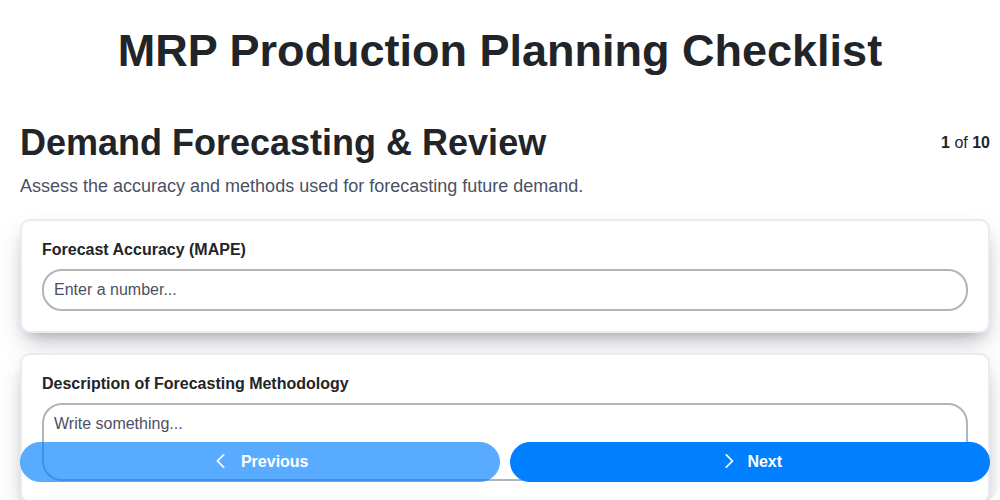
Table of Contents
- Introduction: Why an MRP Production Planning Checklist Matters
- 1. Demand Forecasting & Review: Setting the Foundation
- 2. Bill of Materials (BOM) Verification: Ensuring Accuracy
- 3. Inventory Levels & Safety Stock: Balancing Supply and Demand
- 4. Lead Time Management: Reducing Delays
- 5. Capacity Planning: Matching Resources to Requirements
- 6. Running the MRP: The Core Calculation
- 7. Reviewing the MRP Output: Identifying Potential Issues
- 8. Shop Floor Control Integration: Connecting Planning to Execution
- 9. Exception Handling: Addressing Discrepancies
- 10. Reporting & Analysis: Tracking Performance
- 11. Data Accuracy & Validation: The Cornerstone of Reliability
- 12. System Configuration & Maintenance: Keeping Your MRP System Healthy
- Conclusion: Mastering MRP Production Planning
- Resources & Links
TLDR: Feeling overwhelmed by MRP? This checklist breaks down production planning into 10 essential steps - from forecasting demand and verifying your BOM to running the MRP and ensuring data accuracy. Use it to streamline your process, avoid costly errors, and keep your production on track!
Introduction: Why an MRP Production Planning Checklist Matters
Material Requirements Planning (MRP) is a powerful tool for managing production, but its effectiveness hinges on meticulous planning and consistent execution. Simply implementing MRP software isn't enough - you need a robust, repeatable process to ensure accuracy, efficiency, and ultimately, on-time delivery. That's where an MRP Production Planning Checklist becomes essential.
Think of it as your guide, ensuring every critical step is completed and verified. Without a structured checklist, you risk overlooking vital considerations, leading to stockouts, excess inventory, missed deadlines, and ultimately, dissatisfied customers. This checklist acts as a safeguard against these common pitfalls, providing a clear, documented procedure that can be followed by anyone involved in the production planning process - from planners to supervisors. It promotes consistency, reduces errors, and ensures everyone is aligned on the goals of your MRP system. Investing time in developing and adhering to a strong checklist is an investment in the long-term success of your manufacturing operations.
1. Demand Forecasting & Review: Setting the Foundation
Accurate production planning hinges on a solid understanding of what your customers will need, and when. This isn't guesswork; it's a process. Start with historical sales data - analyze trends, seasonality, and any cyclical patterns. Don't stop there! Incorporate external factors like market trends, competitor activities, promotional campaigns (both yours and theirs!), and economic indicators.
Your forecasting method should be chosen based on the complexity of your products and the data available. Simple moving averages might suffice for stable demand, while more sophisticated statistical models or even machine learning techniques could be necessary for volatile products.
Crucially, forecasting isn't a set it and forget it exercise. Regularly review your forecasts - at least monthly, but ideally more frequently for shorter lead time items - and compare them to actual sales. Identify any significant deviations and understand why they occurred. Adjust your forecasting models and processes accordingly. A collaborative approach, involving sales, marketing, and operations, ensures a comprehensive and realistic demand view, laying the groundwork for all subsequent planning steps.
Checklist Items:
- Review historical sales data (at least 2-3 years)
- Analyze sales trends, seasonality, and cyclical patterns.
- Incorporate external factors (market trends, promotions, economic indicators).
- Validate forecast accuracy against actual sales.
- Document assumptions and rationale behind forecast adjustments.
- Schedule regular forecast review meetings with relevant stakeholders.
2. Bill of Materials (BOM) Verification: Ensuring Accuracy
A faulty Bill of Materials (BOM) is a silent killer of production efficiency. It's the foundational document that defines what goes into your finished product, and any inaccuracies can ripple through your entire operation. Regular BOM verification is not a one-and-done task; it's an ongoing process.
Why is BOM Verification Critical?
- Incorrect Quantities: Misstated component quantities lead to material shortages or overstocking, impacting production schedules and increasing costs.
- Wrong Components: Using the wrong parts compromises product quality, potentially leading to recalls and damaging your reputation.
- Missing Components: Incomplete BOMs halt production lines, leading to delays and missed deadlines.
- Obsolete Parts: Using outdated components can prevent proper assembly or create compatibility issues.
What Should Your Verification Process Include?
- Regular Audits: Schedule periodic reviews of your BOMs. Frequency depends on the complexity of your products and the rate of change in materials.
- Engineering Change Order (ECO) Tracking: Carefully track all ECOs and ensure they're accurately reflected in the BOM. A robust ECO process is essential.
- Cross-Functional Collaboration: Involve engineering, procurement, production, and quality control teams in the verification process. Different perspectives catch different errors.
- Visual Inspection: Periodically compare the BOM to the physical product. This simple check can reveal discrepancies.
- Software Validation: Utilize your MRP system's BOM management features to ensure data integrity and version control.
Don't underestimate the power of a clean, accurate BOM. It's a cornerstone of effective MRP and a key driver of operational excellence.
3. Inventory Levels & Safety Stock: Balancing Supply and Demand
Maintaining optimal inventory levels is a constant balancing act. Too little, and you risk stockouts, production delays, and unhappy customers. Too much, and you're tying up valuable capital, incurring storage costs, and facing potential obsolescence. Your MRP system is a powerful tool for achieving this balance, but it relies on accurate data and careful planning.
This section of your MRP process focuses on setting appropriate inventory levels and calculating necessary safety stock. Here's what to consider:
- Review Historical Demand: Analyze past sales data, seasonality trends, and any promotional impacts. Use this information to refine your demand forecasts - inaccurate forecasts directly impact inventory targets.
- Calculate Average Demand: Determine the average demand for each component and finished good. This forms the baseline for your inventory targets.
- Determine Lead Times: Accurate lead times (both internal and external) are critical. Longer lead times necessitate higher safety stock.
- Calculate Safety Stock: Implement a robust safety stock calculation method. This usually involves considering demand variability, lead time variability, and a desired service level (the probability of meeting demand). Many MRP systems offer built-in safety stock calculation tools, but understand the formulas and assumptions behind them.
- Consider ABC Analysis: Categorize inventory based on value and usage (A - high value/usage, B - medium, C - low). 'A' items warrant tighter control and more frequent review than 'C' items.
- Regularly Review & Adjust: Inventory levels are dynamic. Continuously monitor performance, review actual demand against forecasts, and adjust safety stock levels accordingly. Market changes, supplier issues, or process improvements can all necessitate changes.
4. Lead Time Management: Reducing Delays
Lead times are a critical, often underestimated, factor in successful MRP execution. They represent the total time it takes from the initiation of a production process to its completion and availability. Inaccurate or poorly managed lead times can snowball into missed deadlines, increased inventory, and frustrated customers.
What's included in Lead Time?
It's more than just how long something takes to manufacture. Break down your lead times into their component parts:
- Supplier Lead Time: The time it takes your suppliers to deliver raw materials.
- Manufacturing Lead Time: The time spent on the shop floor - processing, inspections, etc.
- Setup Time: Time needed to prepare equipment for production runs.
- Inspection Time: Time spent checking quality.
- Movement Time: Time for material handling between steps.
Why Accurate Lead Times Matter for MRP:
MRP relies heavily on accurate lead time data. Overestimating lead times can lead to excessive safety stock, tying up capital and potentially obscuring real demand signals. Underestimating them, however, risks stockouts and production delays.
Tips for Lead Time Management:
- Regularly Review and Update: Lead times are rarely static. Continuously monitor and update them based on actual performance data.
- Collaborate with Suppliers: Work closely with your suppliers to understand their lead times and explore opportunities for reduction. Negotiate shorter lead times where possible.
- Analyze Bottlenecks: Identify bottlenecks in your internal processes that are lengthening manufacturing lead times. Implement improvements to streamline these areas.
- Standardize Processes: Consistent processes reduce variability and contribute to more predictable lead times.
- Consider Batch Sizes: Smaller batch sizes often reduce lead times but can increase setup costs. Find the optimal balance.
- Document Assumptions: Clearly document any assumptions made when establishing lead times to ensure consistency and facilitate future reviews.
By proactively managing lead times and keeping them accurate within your MRP system, you significantly enhance your production planning efficiency and responsiveness.
5. Capacity Planning: Matching Resources to Requirements
MRP isn't just about what you need; it's about ensuring you can actually make it. Capacity planning is the crucial step where you evaluate whether your resources - machinery, personnel, tooling - can handle the production volumes generated by the MRP plan. Simply generating a schedule that's impossible to execute leads to delays, bottlenecks, and ultimately, dissatisfied customers.
Here's what capacity planning within your MRP process should involve:
- Resource Assessment: Identify all resources involved in production - machines, workstations, skilled labor, etc. Gather data on their available working hours, setup times, and maximum output rates.
- Workload Comparison: Compare the planned MRP workload against these resource capacities. This often involves creating a resource histogram showing planned vs. available capacity.
- Bottleneck Identification: Pinpoint the resource(s) most likely to become overloaded - the bottlenecks. These are the areas needing the most attention.
- Capacity Adjustments: Explore options to address capacity shortages. This might involve:
- Overtime: Extending working hours for existing resources.
- Subcontracting: Outsourcing some production to external vendors.
- Process Improvement: Optimizing processes to increase efficiency.
- Additional Resources: Investing in new equipment or hiring more personnel (a longer-term solution).
- Constraint Management: Implement strategies to manage constraints - focus on preventing bottlenecks from impacting the entire production schedule. Theory of Constraints (TOC) principles can be very helpful here.
Effective capacity planning isn't a one-time event; it's an ongoing process integrated with your MRP system, regularly reviewed and adjusted based on actual performance and changing demand.
6. Running the MRP: The Core Calculation
This is where the magic (and the bulk of the work) happens. Once you're confident your inputs are solid, it's time to actually run the Material Requirements Planning (MRP) calculation. This isn't just a button you push; it's a critical process that determines your production schedule.
The core MRP calculation takes your demand forecast, BOM, inventory records, lead times, and capacity data and crunches the numbers to generate a proposed production plan. The system will determine:
- Gross Requirements: The total quantity of each component and finished good needed to meet demand.
- Net Requirements: The amount of materials and components you need to produce, accounting for existing inventory and planned receipts (orders already placed).
- Planned Order Releases: The quantity and timing of planned orders to be issued to production or purchasing departments. This is essentially the MRP system suggesting what needs to be made and when.
Don't just run and forget! A thorough review is essential. Analyze the planned order releases carefully. Are they realistic? Do they make sense given your shop floor constraints and supplier capabilities? Look for unusual spikes or dips in planned orders - these are often indicators of data errors or unrealistic assumptions. This review process highlights areas for further refinement and optimization, ensuring the plan is both achievable and effective.
7. Reviewing the MRP Output: Identifying Potential Issues
Running the MRP isn't the finish line; it's the starting point for a deeper analysis. The output, while a powerful tool, requires careful review to ensure its accuracy and effectiveness. Simply accepting the calculated orders isn't enough - you need to actively hunt for potential problems.
Here's what to look for when reviewing your MRP output:
- Unusually Large or Small Orders: Significant deviations from historical order patterns deserve investigation. These could indicate errors in demand forecasts, inaccurate BOMs, or lead time issues.
- Negative Inventory Requirements: These are red flags. They signify a planning discrepancy, potentially stemming from incorrect data or a flawed BOM.
- Late Finish Dates: Examine orders with late finish dates. Can production be expedited? Do you need to adjust capacity? Are the lead times realistic?
- Bottlenecks: Identify resources or work centers that are consistently overloaded. These represent constraints in your production process that need addressing.
- Material Shortages: Prioritize materials with near-zero inventory levels or those flagged for potential shortage.
- Order Sequencing & Prioritization: Assess whether the MRP has appropriately prioritized orders based on due dates and critical path considerations.
- Analyze Planned Receipts: Verify planned receipts (e.g., scheduled deliveries from suppliers) are accurate and will arrive as expected. Unexpected delays here can immediately disrupt the plan.
Don't be afraid to question the numbers. A critical eye and a willingness to delve deeper into the why behind the MRP output are crucial for optimizing your production planning.
8. Shop Floor Control Integration: Connecting Planning to Execution
MRP isn't just about calculating what you need to make; it's about ensuring that plan actually happens. That's where Shop Floor Control (SFC) integration becomes critical. Without it, your MRP system becomes a theoretical exercise, disconnected from the reality of production.
Effective integration bridges the gap between the MRP system's output (work orders, schedules) and the actual shop floor activities. This means:
- Real-Time Visibility: SFC systems provide real-time data on work order status, machine utilization, labor performance, and material consumption. This data feeds back into the MRP system, allowing for dynamic adjustments based on actual progress.
- Automated Work Order Issuance: Instead of manual processes, SFC can automatically issue work orders generated by the MRP system to the shop floor, reducing errors and accelerating production.
- Accurate Data Feedback: As work progresses, SFC captures actual start and finish times, quantities produced, and any issues encountered. This data is fed back into the MRP system, refining future planning.
- Improved Traceability: SFC integration enhances product traceability, allowing you to track materials and processes throughout the manufacturing cycle.
- Reduced Bottlenecks: By monitoring shop floor performance, integration highlights bottlenecks and inefficiencies, enabling proactive adjustments to the production schedule.
Ultimately, robust SFC integration transforms MRP from a planning tool into a comprehensive manufacturing execution system, driving efficiency, reducing waste, and improving overall performance.
9. Exception Handling: Addressing Discrepancies
No MRP system runs perfectly smoothly. Unexpected issues arise - late deliveries, unexpected demand spikes, machine breakdowns - and these throw a wrench in your carefully planned production schedule. Effective exception handling is crucial for minimizing disruption and maintaining control.
This section isn't about preventing problems (though proactive planning helps!), it's about what you do when they occur. Your MRP system should flag exceptions clearly, but it's your team's response that matters. Common exceptions include:
- Material Shortages: The MRP run highlights a potential shortage. Investigate the root cause - supplier delays, incorrect BOM, or inaccurate inventory data. Implement immediate actions like expedited orders, alternative sourcing, or adjustments to the production schedule.
- Capacity Overloads: The plan indicates a workstation or resource is over-allocated. Prioritize jobs, reschedule tasks, consider overtime, or look for opportunities to reassign work.
- Demand Changes: A sudden surge or drop in customer orders requires immediate recalculation of the MRP plan and potential adjustments to production.
- BOM Discrepancies: Unexplained differences between the BOM and actual materials needed on the shop floor demand immediate investigation and correction to prevent waste and production errors.
Key to Successful Exception Handling:
- Clearly Defined Procedures: Have documented steps for addressing common exception types.
- Designated Responsibility: Assign clear ownership for investigating and resolving exceptions.
- Communication is Key: Keep all stakeholders informed of issues and corrective actions.
- Root Cause Analysis: Don't just fix the symptom. Identify the underlying cause to prevent recurrence.
- Feedback Loop: Use exception data to refine forecasting, BOMs, and process improvements.
Exception handling shouldn't be a reactive firefighting exercise; it's a vital opportunity to continuously improve your MRP process and build a more resilient production plan.
10. Reporting & Analysis: Tracking Performance
MRP systems aren't just about calculating material needs; they're powerful tools for performance analysis. Consistent reporting and rigorous review are critical for continuous improvement. Here's what you should be tracking:
- Forecast Accuracy: Regularly compare actual demand against your forecasts. Calculate metrics like Mean Absolute Deviation (MAD) or Mean Squared Error (MSE) to identify areas where forecasting needs refinement.
- MRP Plan Adherence: Monitor how closely your production schedule aligns with the MRP-generated plan. Significant deviations indicate issues with data accuracy, capacity constraints, or planning parameter adjustments needed.
- On-Time Delivery (OTD): Track the percentage of orders shipped on time and in full. Poor OTD can stem from MRP plan issues or downstream operational bottlenecks.
- Inventory Turns: Analyze inventory turnover rates to identify excess stock or potential shortages. A low turnover might signal over-planning or obsolete materials.
- Work-in-Progress (WIP) Levels: Monitor WIP to identify bottlenecks and inefficiencies in the production process. High WIP often points to capacity limitations or process imbalances.
- Exception Report Review: Dedicated time should be allocated to reviewing and analyzing exception reports. Address underlying causes, not just the symptoms.
- Key Performance Indicators (KPIs): Define and track relevant KPIs tied to the MRP process - examples include forecast accuracy, material availability, and production efficiency.
- Trend Analysis: Don't just look at snapshots. Analyze trends over time to identify systemic issues and measure the impact of improvements.
Regular, insightful reporting is what transforms an MRP system from a calculation engine into a strategic planning tool.
11. Data Accuracy & Validation: The Cornerstone of Reliability
MRP systems are only as good as the data they consume. Garbage in, garbage out - it's a cliché, but profoundly true in the context of production planning. Regularly verifying and validating your data isn't a one-time task; it's an ongoing commitment crucial for accurate MRP execution and ultimately, successful production.
Here's why data accuracy matters and what you should be doing:
- Ripple Effect Errors: A single inaccurate entry, like a misconfigured lead time or an incorrect inventory quantity, can propagate through the entire MRP process, leading to shortages, overstocking, and costly disruptions.
- Regular Audits: Schedule routine data audits. This shouldn't just focus on large datasets. Targeted checks of frequently used items, critical components, and areas known to be prone to errors are vital.
- Validation Points: Establish validation checkpoints throughout the MRP cycle. For instance, after a demand forecast update, verify the changes are reflected accurately in the BOM and inventory records.
- Source Data Verification: Don't just trust your system. Cross-reference data with original sources - sales orders, purchase orders, supplier quotes, and even physical inventory counts.
- User Training & Accountability: Ensure all users entering data are properly trained on data entry protocols and understand the impact of inaccuracies. Implement accountability measures for incorrect entries.
- Automated Checks (where possible): Explore using automated validation rules within your MRP system to catch obvious errors before they impact planning. This might include range checks, mandatory field validations, and consistency checks across modules.
- Feedback Loop: Encourage users to flag data discrepancies they observe. A user-friendly process for reporting errors is crucial for continuous improvement.
Prioritizing data accuracy is an investment that directly impacts the efficiency and reliability of your MRP system and your overall production performance.
12. System Configuration & Maintenance: Keeping Your MRP System Healthy
Your MRP system isn't a set it and forget it solution. Just like any complex machinery, it requires ongoing attention and maintenance to ensure optimal performance and prevent costly errors. Neglecting this critical aspect can lead to inaccurate planning, wasted resources, and ultimately, a breakdown in your production process.
Here's what proactive system configuration and maintenance should include:
- Regular Parameter Review: MRP systems rely on numerous parameters - lead times, lot sizes, safety stock levels, planning horizons, etc. These values aren't static. Review them at least annually, and ideally more frequently, to account for changes in suppliers, processes, demand patterns, and product designs.
- User Access Control & Permissions: Ensure proper user access controls are in place. Limit access to sensitive configuration areas to authorized personnel only. Regularly review and update user permissions.
- Security Audits: Conduct regular security audits to identify and mitigate potential vulnerabilities. This includes password management, data encryption, and firewall configurations.
- Software Updates & Patches: Stay current with software updates and security patches released by your MRP vendor. These updates often include performance improvements, bug fixes, and critical security enhancements. Don't delay - follow vendor recommendations.
- Data Backup & Disaster Recovery: Implement a robust data backup and disaster recovery plan. Regularly test backups to ensure data can be restored quickly and reliably in the event of a system failure.
- Integration Testing: If your MRP system integrates with other systems (CRM, ERP, accounting), regularly test these integrations to ensure data flows seamlessly and accurately.
- Performance Monitoring: Monitor system performance - response times, processing speeds, resource utilization - to identify potential bottlenecks and proactively address them.
- Documentation & Training: Maintain comprehensive documentation of system configurations and processes. Provide ongoing training for users to ensure they understand how to use the system effectively and avoid errors.
By prioritizing system configuration and maintenance, you're not just keeping your MRP system running; you're safeguarding your entire production plan and ensuring its continued accuracy and reliability.
Conclusion: Mastering MRP Production Planning
Implementing and maintaining a robust MRP system isn't a one-and-done project; it's an ongoing journey. As you've seen through the checklist outlined, success hinges on meticulous planning, constant vigilance, and a commitment to continuous improvement. Regularly revisiting each step - from accurate demand forecasting to rigorous exception handling - will ensure your MRP system remains a powerful tool for optimizing production, minimizing waste, and ultimately, boosting profitability. Don't be afraid to adapt and refine your processes based on performance data and evolving business needs. By embracing this iterative approach, you can truly master MRP production planning and unlock its full potential.
Resources & Links
- APICS (The Association for Supply Chain Management): APICS is a leading professional organization for supply chain and operations management. Their website offers certifications (like CPIM and CSCP), educational resources, and industry best practices related to MRP and production planning. A great source for foundational knowledge and ongoing professional development.
- NetSuite: NetSuite is a popular ERP system with strong MRP capabilities. Their website has many articles and guides on MRP implementation and best practices. While marketing-focused, they offer valuable insights.
- Oracle: Oracle offers a range of ERP and supply chain management solutions, including MRP. Their website contains whitepapers, case studies, and demos that can offer a more in-depth understanding of advanced MRP features.
- Microsoft Dynamics 365: Microsoft Dynamics 365 is a cloud-based ERP system with robust MRP functionality. Their site provides resources for implementing and optimizing production planning processes.
- Infor: Infor offers industry-specific ERP solutions, many with powerful MRP modules. Their website provides case studies, webinars, and resources demonstrating their MRP capabilities within various industries.
- QAD: QAD is a global ERP provider specializing in manufacturing. Their website features articles and thought leadership pieces on MRP, production planning, and supply chain optimization.
- The Manufacturing Skill Standards Network (MSSN): MSSN develops skills standards for manufacturing, including those related to production planning and MRP. Their website offers valuable training resources and definitions of key terminology.
- Supply Chain Brain: Supply Chain Brain is a publication covering all aspects of supply chain management. You'll find numerous articles discussing MRP, production planning, and the challenges manufacturers face.
- SME (Society of Manufacturing Engineers): SME provides resources for manufacturing professionals, including articles, training courses, and industry events related to MRP and production planning.
- Gartner: Gartner is a research and advisory company providing insights into technology and business trends. While often requiring a subscription, they offer valuable reports and analysis of ERP and MRP systems, useful for strategic decision-making.
Frequently Asked Questions
What is MRP and why should I use it?
MRP stands for Material Requirements Planning. It's a system used for planning and managing production schedules, raw materials, and component procurement. Using MRP helps you avoid stockouts, minimize excess inventory, reduce lead times, and improve overall production efficiency.
Who is this checklist for?
This checklist is designed for production planners, inventory managers, and anyone involved in managing production processes and material flow, regardless of industry. It's helpful for those new to MRP and those looking to refine their existing MRP processes.
What does 'Bill of Materials' (BOM) refer to in the checklist?
The Bill of Materials (BOM) is a comprehensive list of all the components, raw materials, and sub-assemblies required to manufacture a finished product. Ensuring your BOM is accurate and up-to-date is a critical first step in MRP planning.
What is 'Lead Time' and why is it important in MRP?
Lead Time is the total time it takes to receive materials or produce a product. Accurate lead time data is essential for MRP to generate realistic production schedules and avoid delays. It includes procurement lead time (supplier delivery) and manufacturing lead time.
What's the difference between gross requirements and net requirements in MRP?
Gross Requirements are the total demand for a component or finished product. Net Requirements are calculated by subtracting the available inventory (on-hand and planned) from the gross requirements. This reveals the amount that needs to be ordered or produced.
What is 'Safety Stock' and how does it affect MRP?
Safety Stock is extra inventory kept on hand to buffer against unexpected demand fluctuations or supply chain disruptions. MRP considers safety stock levels when calculating material requirements to ensure a sufficient supply.
Can I use this checklist with any MRP software?
Yes, this checklist is a general guide and can be adapted to work with various MRP software systems. The specific implementation details will vary depending on the software you use.
What should I do if my BOM is inaccurate?
An inaccurate BOM will lead to incorrect material requirements and production issues. Immediately investigate and correct the BOM. Then, re-run your MRP calculations to reflect the changes. Implement processes to regularly review and update BOMs.
How often should I review and update my MRP plan?
The frequency of review depends on the volatility of demand and supply. Generally, a weekly or bi-weekly review is recommended, but more frequent checks may be necessary during periods of high uncertainty or significant changes.
What if I don't have historical sales data for MRP planning?
While historical data is ideal, you can still use MRP. Start with best-guess estimates for demand and lead times, regularly review and adjust these estimates based on actual performance. Consider using forecasting techniques to improve accuracy over time.
Found this Article helpful?
Comments
There are no comments yet. Be the first to add one!
Related Articles
MRP System Performance Monitoring Checklist: Ensure Peak Efficiency
MRP System Implementation Checklist: Your Step-by-Step Guide

Top 10 MRPeasy Alternatives for 2025

The 5 Best Bill of Materials (BOM) Management Software of 2025
MRP Planning Parameter Setup Checklist: Your Guide to Accuracy & Efficiency

The 10 Best Manufacturing Management Software of 2025
How to improve your Bill of Materials (BOM) Management
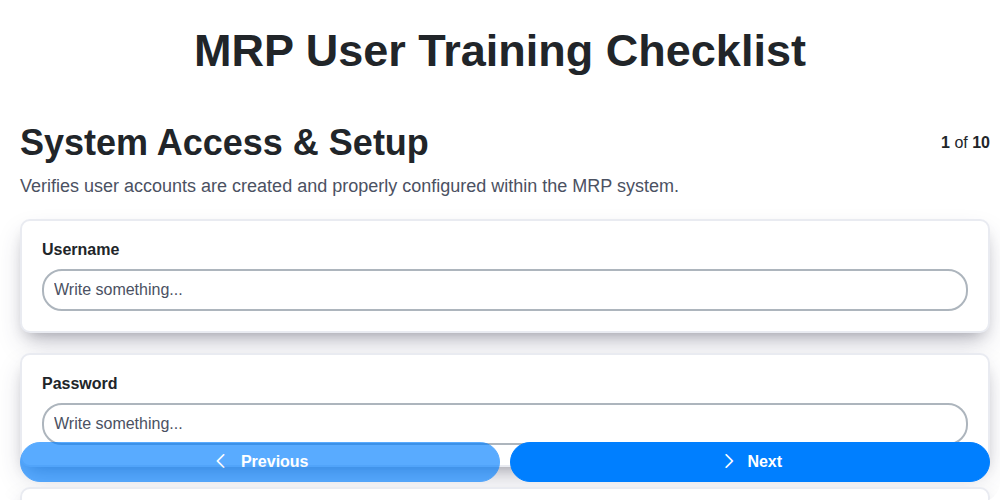
MRP User Training Checklist: Ensuring Proficiency & Success
We can do it Together
Need help with
Material Requirements Planning (MRP)?
Have a question? We're here to help. Please submit your inquiry, and we'll respond promptly.