MRP Work Order Management Checklist: Your Step-by-Step Guide to Success
Published: 12/14/2025 10:00 PM Updated: 12/15/2025 1:51 PM
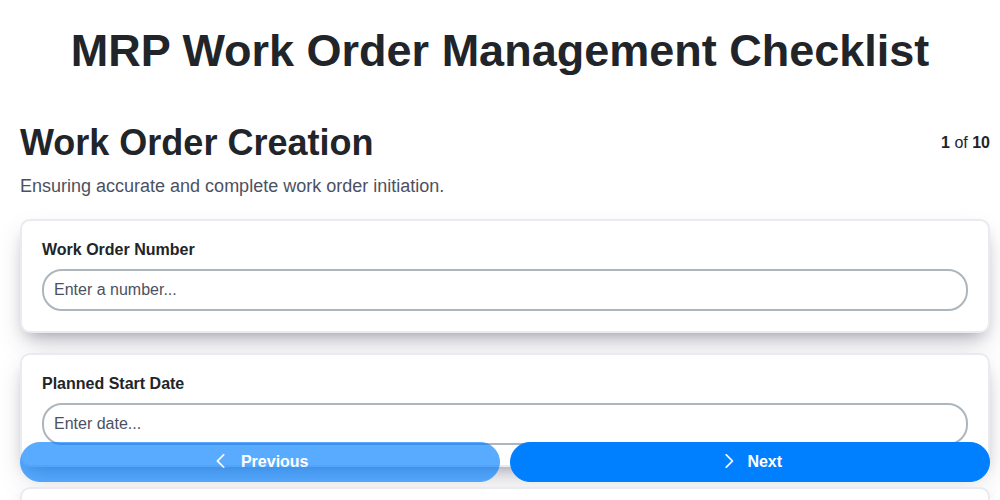
Table of Contents
- Introduction: Why a Work Order Management Checklist Matters
- 1. Work Order Creation: Defining the Scope
- 2. Material Allocation: Ensuring Availability
- 3. Routing and Operations: Mapping the Production Path
- 4. Labor Assignment: Assigning the Right Skills
- 5. Shop Floor Data Collection: Real-Time Progress Tracking
- 6. Work Order Status Updates: Keeping Everyone Informed
- 7. Variance Analysis: Identifying and Addressing Discrepancies
- 8. Work Order Closure: Formalizing Completion
- 9. Inventory Reconciliation: Maintaining Accuracy
- 10. Reporting & Analysis: Identifying Trends and Areas for Improvement
- 11. Common Pitfalls in Work Order Management
- 12. Integrating Your Checklist with Your MRP System
- Conclusion: Streamlining Your Production Process
- Resources & Links
TLDR: Overwhelmed by work order management? This checklist ensures every step - from creation to closure - is covered, minimizing errors, tracking progress, and maximizing efficiency in your MRP system. It's your shortcut to streamlined manufacturing!
Introduction: Why a Work Order Management Checklist Matters
In today's fast-paced manufacturing environment, efficiency and accuracy are paramount. A disorganized work order process can quickly lead to costly delays, material shortages, production bottlenecks, and ultimately, dissatisfied customers. That's where a robust work order management checklist becomes invaluable.
Think of it as your roadmap for successful production. It ensures that every step, from the initial creation of the work order to its final closure, is consistently executed and thoroughly documented. This consistency minimizes errors, improves traceability, and provides a clear picture of your production process. Beyond just ticking boxes, a well-designed checklist fosters accountability, facilitates continuous improvement, and ultimately contributes to a leaner, more responsive, and profitable manufacturing operation. This post will break down a comprehensive checklist for MRP work order management, so let's dive in!
1. Work Order Creation: Defining the Scope
The foundation of any successful MRP system is a well-defined work order. This initial step isn't just about generating a document; it's about accurately translating a production need into actionable instructions. A thorough work order creation process sets the stage for efficient material flow, accurate labor allocation, and ultimately, timely production.
Here's what a robust work order creation process should encompass:
- Clearly Defined Product/Component: Specify exactly what needs to be produced. Include part numbers, revision levels, and any relevant engineering drawings or specifications. Ambiguity at this stage leads to errors down the line.
- Quantity Requirements: State the precise quantity needed, considering both current demand and any safety stock levels.
- Due Date & Priority: Establish a realistic due date, considering production capacity and material availability. Assign a priority level to ensure the order is executed according to its importance.
- Bill of Materials (BOM) Linkage: The work order should automatically pull the required components from the BOM, minimizing manual entry and ensuring accuracy.
- Routing Connection: Link the work order to the correct routing, defining the sequence of operations needed.
- User Authorization: Implement a system where authorized personnel create and approve work orders to maintain control and prevent unauthorized production.
- Notes/Special Instructions: Include any relevant information, such as specific quality requirements, tooling needs, or vendor instructions.
A comprehensive work order creation process is an investment in efficiency. By ensuring accuracy and completeness at this critical first step, you're laying the groundwork for a streamlined and reliable manufacturing operation.
2. Material Allocation: Ensuring Availability
A well-managed MRP system hinges on accurate material allocation. This step is critical to avoid production delays and minimize costly stockouts. It's more than just assigning materials to a work order; it's a proactive process that verifies availability and triggers replenishment when necessary.
Here's what a robust material allocation process should include:
- Real-time Inventory Checks: Integrate your MRP system with your inventory management system. This allows for a live view of stock levels when creating a work order, preventing the assignment of materials that are already committed or unavailable.
- Safety Stock Considerations: The system should automatically factor in safety stock levels. If a material's stock falls below the safety stock threshold, the MRP should flag the work order for expedited material procurement.
- Lead Time Awareness: The allocation process must account for material lead times. Orders should be placed early enough to ensure materials arrive before they are needed on the shop floor.
- Reservation and Commitment: Reserved materials can't be used for other work orders. The allocation process should clearly define and enforce these commitments to avoid double-booking.
- Alternative Material Identification: Having approved alternative materials readily available is a key contingency plan. The system should allow for easy substitution if a primary material is unexpectedly unavailable.
- Automated Reordering: As materials are allocated, the system should automatically generate purchase requisitions for replenishment if inventory falls below predefined minimum levels.
- User Validation: While automation is key, a manual validation step by a material planner can catch any unforeseen circumstances or exceptions.
By meticulously managing material allocation, you not only guarantee timely production but also optimize your inventory levels and minimize waste.
3. Routing and Operations: Mapping the Production Path
This stage is the backbone of your MRP work order management. Routing defines the sequence of operations needed to manufacture a product, while Operations detail precisely how each step is performed. Think of Routing as the roadmap, and Operations as the detailed instructions for each mile marker.
Key Considerations for Effective Routing & Operations:
- Clear Sequence: The routing must accurately reflect the logical order of production steps. Skipping steps or incorrect sequencing will lead to errors, rework, and delays.
- Detailed Operations: Each operation should outline everything required: machine setup instructions, tooling needed, specific parameters (speed, temperature, pressure), quality checks, and any required documentation.
- Machine & Resource Availability: Ensure the machines and resources specified in the routing are available when needed. This often ties into capacity planning within your MRP system.
- Skill Requirements: Clearly define the skill level required for each operation. This information feeds into labor assignment, ensuring the right personnel are matched to the tasks.
- Standardization: Strive for standardized operations wherever possible. This reduces variation, improves quality, and simplifies training.
- Version Control: Routing and operations aren't static. Maintain version control to track changes and ensure everyone is using the correct instructions. Document why changes were made.
- Integration with BOM: Routing must be tightly integrated with the Bill of Materials (BOM) to ensure the right materials are available at the right time for each operation.
Neglecting this crucial step can easily derail the entire production process, leading to missed deadlines and increased costs.
4. Labor Assignment: Assigning the Right Skills
Efficient labor assignment is critical to keeping your work orders on schedule and within budget. Simply assigning anyone available isn't enough; aligning the right skillset with the specific tasks outlined in the work order is paramount.
Your MRP system should facilitate this process by allowing you to:
- Define Skill Sets: Categorize your workforce based on their expertise (e.g., milling, welding, electrical).
- Link Skills to Operations: Clearly identify the required skills for each operation within the work order routing.
- Assess Labor Availability: Check the real-time availability of personnel with the necessary skills. Consider factors like breaks, training, and prior commitments.
- Automated Assignment (Ideally): Ideally, your system should suggest suitable candidates based on skill set and availability. While manual override is often necessary, automation can significantly reduce assignment time and improve accuracy.
- Track Labor Hours: Accurately track the time spent by each employee against specific work order operations. This data is vital for cost analysis and future planning.
- Consider Cross-Training: Regularly evaluate opportunities to cross-train employees to broaden their skillset and increase flexibility in labor allocation.
Failure to properly assign labor can lead to delays, rework, and increased costs. A well-integrated MRP system streamlines this process, ensuring the right people are working on the right tasks at the right time.
5. Shop Floor Data Collection: Real-Time Progress Tracking
Shop floor data collection is the backbone of a responsive and efficient MRP system. It moves beyond simply issuing work orders and provides visibility into how those orders are progressing. This isn's just about marking a work order as in progress; it's about capturing the granular details of the manufacturing process.
Key elements of effective shop floor data collection include:
- Actual Start and End Times: Recording the precise times when operations begin and end allows for accurate tracking against planned schedules.
- Quantity Produced: Capturing the actual quantity produced in each operation is crucial for variance analysis and material consumption tracking.
- Scrap and Rework: Documenting scrap and rework directly at the shop floor provides immediate insight into quality issues and process inefficiencies.
- Operator Input: Allowing operators to provide notes or observations about the work order - equipment issues, material discrepancies, or any deviations from the plan - is invaluable.
- Real-Time Updates: Ideally, data is captured and transmitted in real-time, providing immediate visibility to supervisors and planners. This allows for proactive interventions and adjustments before issues escalate.
Implementing robust shop floor data collection requires a user-friendly system - whether that's a paper-based form, a handheld device, or an integrated MES (Manufacturing Execution System). The goal is to make data capture easy and intuitive for shop floor personnel, ensuring consistent and accurate information feeds into your MRP system.
6. Work Order Status Updates: Keeping Everyone Informed
Consistent and timely work order status updates are the lifeblood of a smoothly functioning MRP system. Delayed or inaccurate information can cascade into production bottlenecks, missed deadlines, and frustrated team members.
This isn't just about ticking a box; it's about transparency and accountability. Updates should reflect the actual progress of the work order, not just the planned schedule. Key elements to track and communicate include:
- Percentage Completion: A simple, visual indicator of how far along the work order is.
- Start and End Times: Actual start and completion times for each operation.
- Any Delays or Issues: Immediately flag any problems encountered (material shortages, equipment malfunctions, quality issues). Include details and proposed solutions.
- Assigned Resources: Clearly identify who is currently working on the order.
- Scheduled vs. Actual Times: Highlight discrepancies, allowing for proactive adjustments.
Implement a system - whether it's a digital platform, a shared spreadsheet, or a well-defined manual process - that ensures all relevant personnel (production managers, supervisors, shop floor workers, even customers in some cases) are kept in the loop. Real-time updates are ideal, but frequent, scheduled updates are a minimum requirement.
7. Variance Analysis: Identifying and Addressing Discrepancies
Variance analysis is a critical step in effective MRP work order management. It's not just about tracking what should have happened; it's about understanding why there were differences and taking corrective actions. This involves comparing planned versus actual performance across various aspects of the work order, including material usage, labor hours, and machine run time.
What to Analyze:
- Material Usage Variance: Were materials used as planned? Over- or under-consumption indicates potential issues with material standards, inaccurate bills of materials, or inaccurate scrap rates.
- Labor Hour Variance: Did labor take longer or shorter than anticipated? This might point to training gaps, inefficient processes, or inaccurate time estimates.
- Machine Time Variance: Were machines running longer or shorter than expected? This can reveal equipment issues, process bottlenecks, or inaccurate setup times.
- Cost Variance: This is a composite variance looking at the total cost difference between planned and actual.
How to Address Discrepancies:
- Investigate Root Causes: Don't just flag a variance; dig deeper to understand why it occurred. This often involves talking to shop floor personnel and reviewing relevant data.
- Update Standards: If variances are consistent and attributable to inaccurate standards (BOMs, routings, time estimates), update them to reflect reality.
- Improve Processes: Identify inefficiencies and bottlenecks and implement process improvements.
- Training and Skill Development: Address skill gaps identified through labor hour variances.
- Preventative Maintenance: Recurring machine time variances might indicate a need for more proactive maintenance.
- Regular Review: Variance analysis shouldn't be a one-off exercise. Regularly review variances and track the effectiveness of corrective actions.
By proactively identifying and addressing variances, you can continuously improve your work order management processes, reduce costs, and enhance overall operational efficiency.
8. Work Order Closure: Formalizing Completion
Closing a work order isn't just about marking it done in your MRP system. It's a critical step for data integrity, process improvement, and ultimately, a healthy manufacturing operation. A proper closure process ensures all activities are accounted for, variances are documented, and lessons are learned for future efficiency.
Here's what a thorough work order closure should involve:
- Final Inspection & Verification: Confirm the finished goods meet quality standards and specifications. Any non-conformances should be documented before closure.
- Material Consumption Confirmation: Verify all materials allocated to the work order have been consumed. This includes scrap and rejects. Discrepancies require investigation and correction.
- Labor Hour Validation: Ensure recorded labor hours match the actual time spent on the work order. Unusual deviations should be reviewed.
- Cost Confirmation: Compare the actual cost of the work order (materials, labor, overhead) against the planned cost. Significant variances need to be understood and addressed.
- Documentation Completion: Ensure all relevant documents related to the work order, such as inspection reports, non-conformance reports, and photos, are linked and accessible.
- System Status Update: Officially close the work order within the MRP system, triggering downstream processes like invoice generation or release of allocated resources.
- Archiving: Securely archive the complete work order file for audit trails and future reference. Follow your company's record retention policies.
A rushed or incomplete closure can lead to inaccurate costing, inventory discrepancies, and a lack of visibility into process bottlenecks. Taking the time to execute a robust closure procedure is a small investment that yields significant returns in operational excellence.
9. Inventory Reconciliation: Maintaining Accuracy
Work order management doesn't end with completion; it culminates in ensuring inventory accuracy. This crucial step bridges the gap between planned consumption and actual usage, safeguarding against discrepancies and maintaining a reliable picture of your stock levels.
Inventory reconciliation involves comparing the materials theoretically consumed during a work order (as defined in the Bill of Materials and routing) with the actual materials issued and used on the shop floor. Significant differences can point to errors in material allocation, routing inaccuracies, scrap, or even potential theft.
Here's how to approach it:
- Compare Planned vs. Actual: Review the theoretical consumption outlined in the work order against the actual material consumption records from your shop floor data collection.
- Investigate Variances: Any significant discrepancies require immediate investigation. Determine the root cause - was there a material scrap? A routing error? Was the wrong material issued?
- Update Inventory Records: Based on your findings, adjust your inventory records to reflect the accurate usage. This might involve decreasing stock levels, updating scrap accounts, or correcting material locations.
- Document Findings: Keep a clear record of all reconciliations, including any variances and the corrective actions taken. This transparency is vital for audit trails and continuous improvement.
- Regular Reconciliation Frequency: Implement a schedule for reconciliation - daily, weekly, or monthly - depending on your production volume and inventory complexity.
Accurate inventory reconciliation isn't just about correcting errors; it's about strengthening your entire MRP system and improving operational efficiency.
10. Reporting & Analysis: Identifying Trends and Areas for Improvement
Data is only valuable if it's analyzed and acted upon. This final step in your MRP Work Order Management checklist focuses on leveraging the information gathered throughout the entire process. Regularly generate reports covering key metrics such as work order cycle times, material usage, labor efficiency, and variance rates.
Look beyond just the numbers. What trends are you seeing? Are certain work order types consistently running late? Are specific materials frequently experiencing shortages or excesses? Are certain operations consistently over or under budget?
These reports should highlight areas ripe for improvement. For example:
- Long cycle times: Could indicate routing inefficiencies or bottlenecks in the shop floor.
- High variance rates: Might point to inaccurate material estimates or labor discrepancies.
- Material shortages: Suggests a need to review material planning and safety stock levels.
- Labor inefficiencies: May require retraining or process optimization.
Don't just passively review reports. Share findings with relevant teams (production, procurement, engineering) and collaboratively develop action plans. Implement changes, track their impact, and continuously refine your processes to optimize work order management and overall operational efficiency. This cyclical feedback loop is vital for continuous improvement within your manufacturing environment.
11. Common Pitfalls in Work Order Management
Even with a robust MRP system and a meticulously crafted checklist, work order management isn't always smooth sailing. Here are some common pitfalls that can derail your production and impact your bottom line:
- Insufficient Data Accuracy: Garbage in, garbage out. Inaccurate BOMs, routing data, or labor standards directly impact work order accuracy and lead to costly errors and rework. Regular data cleansing and validation are essential.
- Lack of Communication & Collaboration: Siloed departments (engineering, procurement, production) lead to misinterpretations and delays. Clear, documented communication channels and collaborative workflows are vital.
- Ignoring Shop Floor Feedback: Shop floor personnel often have valuable insights into process inefficiencies and material issues. Dismissing their input can prevent critical improvements.
- Inadequate Training: Poorly trained employees can make errors, slow down production, and misinterpret work order instructions. Ongoing training and refresher courses are necessary.
- Neglecting Preventative Maintenance: Equipment breakdowns disrupt work order schedules and create bottlenecks. A proactive maintenance program is crucial.
- Overlooking Lead Time Variability: Relying solely on average lead times can be misleading. Accounting for variability and potential delays is key to realistic scheduling.
- Lack of Real-Time Visibility: Without real-time data on work order status, it's difficult to identify and address issues promptly.
- Failing to Standardize Processes: Inconsistent processes lead to unpredictable results and increased error rates. Standardize work order creation, execution, and closure procedures.
- Ignoring Safety Protocols: Cutting corners on safety to expedite work orders can lead to accidents and costly delays. Safety must always be the priority.
- Poorly Defined Escalation Paths: When issues arise, a clear escalation path ensures timely resolution and prevents delays.
- Lack of Continuous Improvement: Work order management shouldn't be a set it and forget it process. Regularly review and refine your processes to optimize efficiency.
12. Integrating Your Checklist with Your MRP System
Your MRP (Material Requirements Planning) system is the heart of your manufacturing process, and your checklist is the roadmap for executing work orders effectively. They shouldn't exist in isolation. Seamless integration between the two is crucial for maximizing efficiency and minimizing errors.
Here's how to approach integrating your checklist directly into your MRP system:
- Automated Triggering: Ideally, checklist items should automatically trigger based on actions within your MRP system. For example, upon work order creation, the first few checklist items related to material allocation and routing should automatically appear.
- Data Synchronization: Checklist completion data needs to flow back into your MRP system. This allows for accurate tracking of work order progress, labor costs, material consumption, and overall performance. Imagine automatically updating the work order status in the MRP system as In Progress once the Shop Floor Data Collection step is marked complete.
- Customizable Checklists: Leverage your MRP system's capabilities to allow for customizable checklists based on product type, complexity, or specific process variations. Not all work orders are created equal, and your checklist should reflect that.
- Real-Time Visibility: Integration should provide real-time visibility into checklist progress across your entire team. This helps identify bottlenecks, proactively address issues, and keep everyone on the same page.
- API Integration: Most modern MRP systems offer APIs (Application Programming Interfaces). Utilize these to build a custom integration that perfectly aligns with your workflow.
- Third-Party Solutions: Explore third-party solutions that specialize in bridging the gap between MRP systems and checklists. These platforms often provide pre-built integrations and user-friendly interfaces.
By strategically integrating your checklist with your MRP system, you're not just creating a list of tasks; you're building a connected, data-driven manufacturing process.
Conclusion: Streamlining Your Production Process
Ultimately, a robust MRP Work Order Management Checklist, diligently followed, is more than just a list of tasks - it's a cornerstone of a streamlined and efficient production process. By systematically addressing each step, from initial creation to final closure, you're not just ticking boxes; you're building a foundation for reduced errors, minimized delays, improved resource utilization, and enhanced overall production performance. Embrace this checklist as a living document, regularly reviewing and refining it to adapt to evolving business needs and ensure continuous improvement within your manufacturing operations. A well-managed work order process translates directly to a healthier bottom line and a more competitive edge in today's dynamic marketplace.
Resources & Links
- NetSuite: A comprehensive ERP solution, NetSuite often includes robust work order management functionalities. Their site offers information on MRP and manufacturing processes.
- Oracle Manufacturing Cloud: Oracle's manufacturing cloud offers similar features, providing insights into best practices and potential system integrations for work order management.
- Infor CloudSuite Industrial (SyteLine): Focuses on manufacturing and provides insights into work order management best practices within their platform. Helpful for understanding potential software features.
- MRPSystem.com: A resource specifically dedicated to MRP systems. Offers guides and explanations of various MRP concepts, including work order management.
- APICS (now ASCM): The Association for Supply Chain Management (ASCM) provides resources, certifications, and best practices for supply chain professionals. Offers a strong foundation in manufacturing principles.
- NAM (National Association of Manufacturers): A leading trade association for manufacturers in the United States. Provides insights, reports, and resources related to manufacturing processes and technology.
- The Lean Enterprise Institute: Focuses on Lean Manufacturing principles. Understanding Lean can significantly improve work order management efficiency and reduce waste.
- Gartner: Provides research and analysis on various technologies, including ERP and manufacturing software. Can help with understanding trends and choosing the right systems.
- EY Manufacturing Consulting: EY offers consulting services focused on manufacturing operations. Their insights can be valuable for optimizing work order processes.
- Deloitte Manufacturing Insights: Deloitte provides insights and best practices for manufacturing companies. May contain information relevant to work order management strategies.
Frequently Asked Questions
What is an MRP work order and why is it important?
An MRP (Material Requirements Planning) work order is a detailed instruction to manufacture a product or component. It specifies the materials needed, the operations to be performed, the labor required, and the timeline for completion. Effective work order management is crucial for efficient production, minimizing delays, and accurately tracking costs within an MRP system.
Who should use this MRP work order management checklist?
This checklist is beneficial for anyone involved in manufacturing processes, including production managers, work order clerks, shop floor supervisors, and anyone responsible for managing the flow of materials and labor within an MRP system.
What does 'MRP' stand for in the article's title?
MRP stands for Material Requirements Planning. It's a system used to plan and manage inventory and production schedules based on forecasted demand.
What are the key steps outlined in the checklist?
The checklist covers everything from initial work order creation and approval, to material allocation, scheduling, execution, inspection, and finally, work order closure and record keeping. It highlights key checkpoints at each stage.
What is BOM (Bill of Materials) and why is it important in work order management?
A Bill of Materials (BOM) is a comprehensive list of raw materials, parts, sub-assemblies, and components needed to manufacture a product. It's essential for accurate material requirements planning within a work order; the BOM is used to determine what needs to be pulled and allocated to the work order.
What is meant by 'material allocation' in the checklist?
Material allocation refers to the process of assigning and reserving the necessary raw materials and components from inventory to a specific work order. This prevents shortages and ensures materials are available when needed.
How does scheduling play a role in work order success?
Effective scheduling involves prioritizing work orders based on due dates, resource availability, and production capacity. Proper scheduling minimizes bottlenecks, maximizes throughput, and helps meet deadlines.
What are some common pitfalls in work order management that this checklist helps avoid?
This checklist addresses common problems like inaccurate BOMs, material shortages, missed deadlines, poor communication, and inadequate record keeping - all of which can lead to production delays and increased costs.
What types of records should be kept for each work order?
Records should include material consumption data, labor hours, machine time, inspection results, any deviations from the original plan, and overall work order performance. These records are crucial for analysis and continuous improvement.
Can this checklist be customized for different manufacturing environments?
Yes, the checklist is designed to be a framework. You can tailor it to suit your specific manufacturing processes, industry regulations, and company policies. Add or remove steps as needed.
What is the purpose of the 'work order closure' step?
Work order closure involves final inspection, documentation of completion, reconciliation of materials and labor, and updating inventory records. It's the final confirmation that the work order is complete and provides valuable data for future planning.
Found this Article helpful?
Comments
There are no comments yet. Be the first to add one!
Related Articles
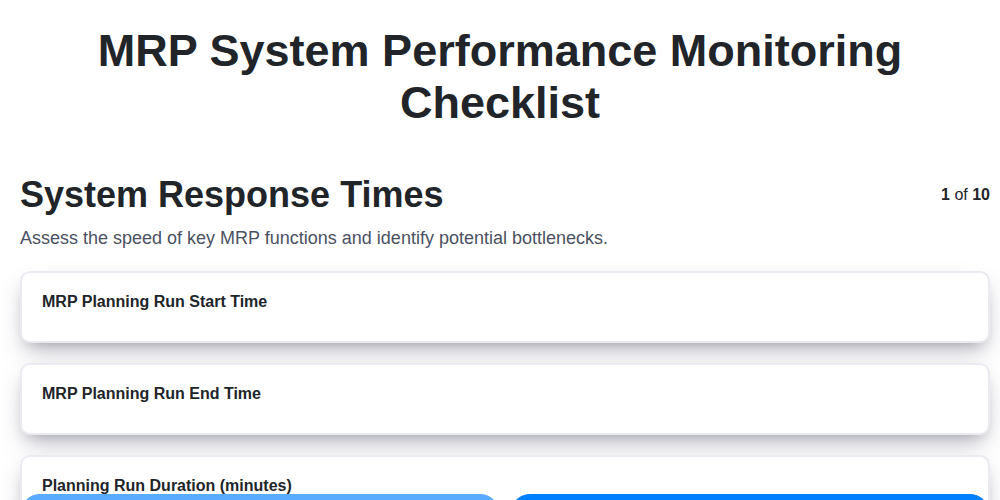
MRP System Performance Monitoring Checklist: Ensure Peak Efficiency
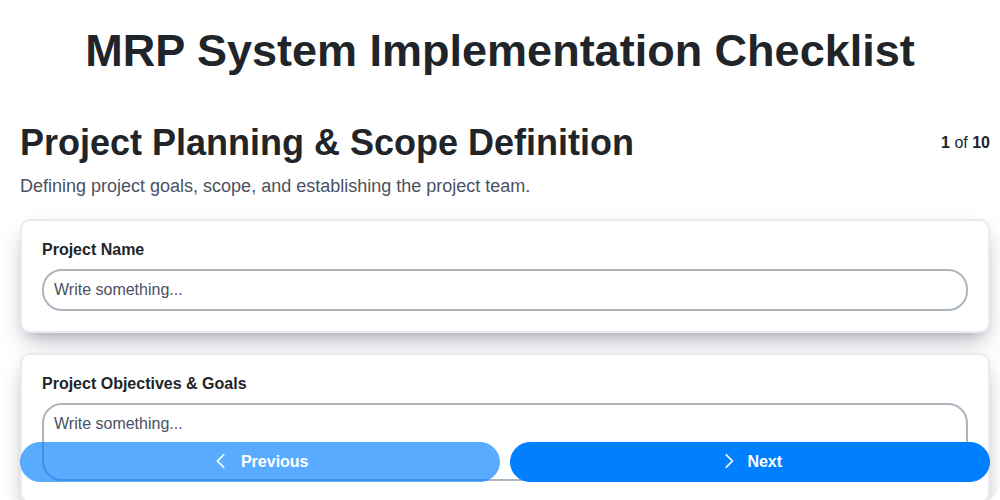
MRP System Implementation Checklist: Your Step-by-Step Guide

Top 10 MRPeasy Alternatives for 2025

The 5 Best Bill of Materials (BOM) Management Software of 2025
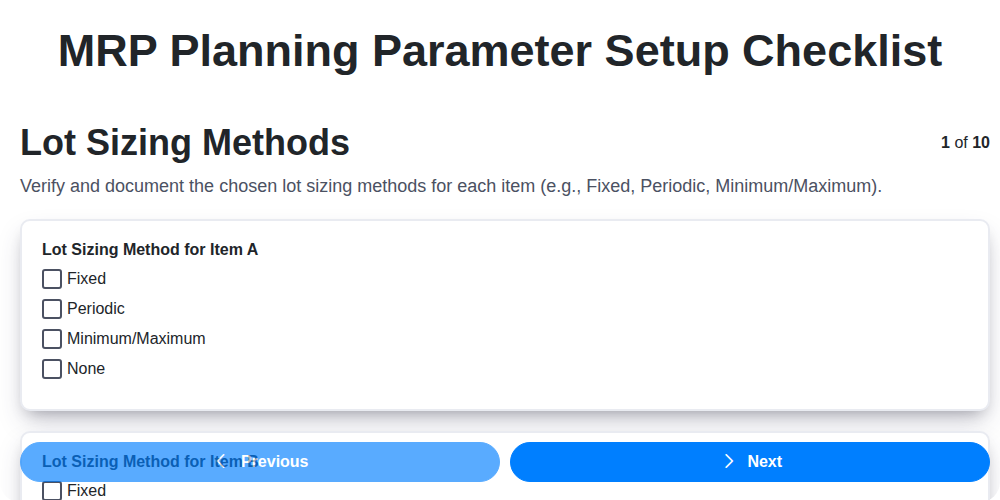
MRP Planning Parameter Setup Checklist: Your Guide to Accuracy & Efficiency

The 10 Best Manufacturing Management Software of 2025
How to improve your Bill of Materials (BOM) Management
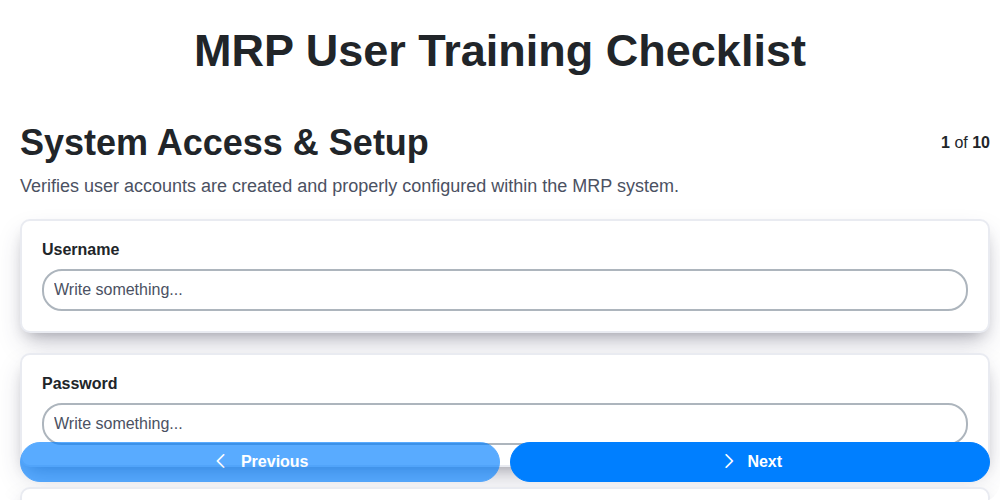
MRP User Training Checklist: Ensuring Proficiency & Success
We can do it Together
Need help with
Material Requirements Planning (MRP)?
Have a question? We're here to help. Please submit your inquiry, and we'll respond promptly.