Paper vs ChecklistGuro in Warehouse Management System (WMS)
Published: 12/20/2025 Updated: 07/02/2026
Table of Contents
- The Warehouse Management Challenge
- Traditional Paper-Based Warehouse Systems: A Recipe for Headaches?
- What are Warehouse Checklists and Why Are They Crucial?
- Common Warehouse Checklists: A Closer Look
- The Limitations of Paper Checklists in a Modern Warehouse
- Introducing ChecklistGuro: A Digital WMS Solution
- Key Features of ChecklistGuro for Warehouse Management
- How ChecklistGuro Simplifies Common Warehouse Tasks
- Real-Time Visibility and Control
- Cost Savings with ChecklistGuro
- Comparing Paper vs. ChecklistGuro: A Feature Breakdown
- Implementation and User Adoption
- ChecklistGuro: More Than Just Checklists
- The Future of Warehouse Management is Digital
- Resources & Links
TLDR: Ditch the chaotic paper checklists and spreadsheets! ChecklistGuro offers a digital, streamlined solution for warehouse management. We're talking real-time inventory tracking, task assignment, automated reporting, and reduced errors - all leading to increased efficiency and a healthier bottom line. See how ChecklistGuro can transform your warehouse from paper-based to powerfully organized!
The Warehouse Management Challenge
Warehouse management isn's just about stacking boxes. It's a complex ecosystem encompassing inventory control, order fulfillment, shipping, receiving, and a constant battle against errors and inefficiencies. For many businesses, this traditionally means a reliance on paper-based checklists and manual processes. While seemingly simple at first, this approach quickly becomes a breeding ground for problems. Lost papers, illegible handwriting, missed steps, and a lack of real-time visibility are just a few of the headaches that arise. Scaling operations with paper becomes exponentially harder, and the potential for costly mistakes increases dramatically. Businesses quickly find themselves scrambling to keep up, struggling to accurately track inventory, and ultimately impacting customer satisfaction. The challenge isn't just managing the physical goods; it's managing the information surrounding them - and that's where many businesses fall short.
Traditional Paper-Based Warehouse Systems: A Recipe for Headaches?
Let's be honest, managing a warehouse with stacks of paper checklists and a team relying on manual updates isn't just outdated, it's a breeding ground for errors and inefficiencies. Think about it: misplaced forms, illegible handwriting, delays in information updates, and the constant risk of losing crucial data.
These seemingly small issues snowball quickly. A misplaced receiving document can disrupt inventory counts, leading to stockouts or overstocking. Incorrect picking and packing lists translate to shipping errors and frustrated customers. And good luck trying to analyze trends or identify bottlenecks when your data is scattered across countless sheets of paper!
Beyond the operational challenges, paper-based systems also drain valuable time and resources. Employees spend excessive time searching for forms, manually updating records, and resolving discrepancies. This diverts their attention from core tasks like receiving, picking, and shipping, ultimately impacting overall productivity. Furthermore, scaling a paper-based system to accommodate growth is practically impossible - adding complexity and creating even more points of potential failure. The cost of these inefficiencies, in terms of both time and money, can be significant.
What are Warehouse Checklists and Why Are They Crucial?
Warehouse checklists are more than just lists of things to do; they're the backbone of an efficient and accurate warehouse operation. They's standardized procedures documented to ensure every task, from receiving goods to order fulfillment and shipping, is completed consistently and correctly. Think of them as the play-by-play guide for every process.
These checklists aren't just about ticking boxes. They're crucial for several key reasons:
- Accuracy & Reduced Errors: Minimize mistakes with clearly defined steps and assigned responsibilities. Human error is inevitable, but structured checklists drastically reduce its impact.
- Standardization & Consistency: Ensure everyone follows the same process, regardless of who's performing the task. This eliminates discrepancies and improves overall quality.
- Training & Onboarding: New employees can quickly grasp procedures and become productive faster with clear, visual guides.
- Compliance & Auditing: Demonstrate adherence to regulations and internal protocols with documented processes.
- Efficiency & Time Savings: Streamline operations by removing ambiguity and unnecessary steps.
- Inventory Control: Detailed checklists often include inventory checks, ensuring accuracy and preventing loss.
Common warehouse checklists include:
- Receiving checklists: To verify incoming shipments against purchase orders.
- Put-away checklists: To ensure items are stored in the correct locations.
- Picking checklists: To ensure the right items are selected for orders.
- Packing checklists: To confirm order accuracy and proper packaging.
- Shipping checklists: To verify shipping details and documentation.
- Cycle counting checklists: To regularly verify inventory levels.
Common Warehouse Checklists: A Closer Look
Warehouse operations rely on a surprising number of checklists, often more than people initially realize. Let's break down some of the most common ones and what they typically involve.
Receiving Checklists: These are your first line of defense against discrepancies. They detail steps for unloading trucks, verifying quantities against purchase orders, inspecting goods for damage, and properly recording receipt dates. A thorough receiving checklist ensures you're only putting accurate stock into your warehouse.
Putaway Checklists: Once received, inventory needs a designated location. Putaway checklists guide personnel to the correct storage areas, ensuring items are placed efficiently and accessible. They often include details on racking heights, weight limits, and specific storage requirements (e.g., temperature control).
Picking Checklists: These lists outline the process of retrieving items to fulfill orders. They guide pickers to the correct locations, verify item codes and quantities, and ensure proper packaging and labeling. Accuracy here is crucial to avoid shipping errors and customer dissatisfaction.
Packing Checklists: Following picking, packing checklists ensure items are securely packed and prepared for shipment. They cover aspects like cushioning, labeling, and weight verification - minimizing damage during transit.
Shipping Checklists: These checklists document the final steps before goods leave the warehouse, including verifying shipping addresses, generating tracking numbers, and ensuring all necessary paperwork is included.
Inventory Cycle Count Checklists: Regularly verifying inventory levels is vital. Cycle count checklists guide staff through the process of counting specific items, identifying discrepancies, and investigating root causes.
Safety Checklists: Warehouse environments can be hazardous. Safety checklists cover everything from forklift inspections to ensuring clear pathways and proper PPE usage, minimizing accidents and protecting employees.
Maintenance Checklists: Equipment breakdowns can halt operations. Maintenance checklists detail regular inspections and servicing of forklifts, racking systems, and other critical equipment, preventing costly downtime.
These checklists, when executed diligently, contribute significantly to a well-managed and efficient warehouse. However, managing these processes with paper checklists is often inefficient, error-prone, and difficult to track.
The Limitations of Paper Checklists in a Modern Warehouse
Paper checklists, while seemingly simple and familiar, quickly become a significant bottleneck in a modern, fast-paced warehouse environment. The fundamental limitations stem from their inherent nature as static, manual documents. Let's break down the key issues:
- Lack of Real-Time Visibility: Paper checklists offer a snapshot in time. If an issue arises or a change needs to be made, everyone isn't instantly updated. This leads to miscommunication, delays, and potential errors.
- Manual Data Entry & Error Prone: Every piece of information must be manually transcribed, increasing the likelihood of typos, omissions, and inaccuracies. This impacts inventory counts, order fulfillment accuracy, and overall operational efficiency.
- Difficult to Track & Audit: Finding a specific checklist or tracing the history of a process can be a time-consuming scavenger hunt. Audits become laborious and prone to errors.
- Limited Reporting Capabilities: Extracting meaningful insights from paper checklists requires painstaking manual compilation - a tedious and time-consuming process.
- Scalability Challenges: As your warehouse grows, the complexity of paper-based processes increases exponentially. Managing and coordinating these processes becomes increasingly difficult.
- Environmental Impact: The sheer volume of paper consumed by a busy warehouse contributes to environmental waste.
- Lost or Damaged Checklists: Physical documents are susceptible to loss, damage, or theft, leading to data loss and operational disruptions.
Introducing ChecklistGuro: A Digital WMS Solution
ChecklistGuro isn't just another software; it's a comprehensive digital warehouse management system built around the power of checklists. We understand the challenges of maintaining accurate inventory, ensuring timely order fulfillment, and optimizing warehouse operations. That's why we've designed a platform that centralizes all your essential WMS tasks into customizable, trackable checklists.
Imagine a world where every receiving process, picking route, packing procedure, and shipping confirmation is documented, assigned, and monitored in real-time. With ChecklistGuro, this isn't a dream - it's your new reality.
Our system moves beyond simple task lists. It's a dynamic hub for managing your entire warehouse workflow. Key features include:
- Customizable Checklists: Tailor checklists to your specific processes - no generic templates here!
- Real-time Tracking: Monitor task progress and identify bottlenecks instantly.
- Role-Based Access: Control who sees and modifies data for enhanced security and accountability.
- Automated Reporting: Generate insightful reports on warehouse performance to identify areas for improvement.
- Mobile Accessibility: Empower your team with access to checklists and data on the warehouse floor via mobile devices.
Essentially, ChecklistGuro transforms your warehouse from a reactive environment to a proactive, efficient, and data-driven operation.
Key Features of ChecklistGuro for Warehouse Management
ChecklistGuro isn't just about replacing paper; it's about elevating your warehouse operations. Here's a breakdown of the key features designed specifically to address common warehouse challenges:
- Customizable Checklists & Templates: Forget generic solutions. Create checklists tailored to your exact processes - receiving, putaway, picking, packing, shipping, cycle counts, and more. We provide starter templates, but the real power lies in adapting them to your unique workflows.
- Real-Time Inventory Tracking: Say goodbye to manual counts and frustrating discrepancies. ChecklistGuro provides a live view of your inventory levels, automatically updated with each completed task. Know exactly what you have, where it is, and when to reorder.
- Task Assignment & Accountability: Clearly assign tasks to team members and track their progress in real-time. Eliminate confusion and ensure accountability for every step in the warehouse process. Set deadlines and receive notifications for overdue tasks.
- Barcode/QR Code Scanning: Integrate barcode and QR code scanning for faster and more accurate data capture. Streamline receiving, putaway, and picking processes, reducing human error.
- Automated Reporting & Analytics: Gain valuable insights into your warehouse performance. Generate reports on task completion times, inventory turnover, and other key metrics. Identify bottlenecks and areas for improvement.
- Mobile Accessibility: Equip your warehouse team with mobile devices to access checklists and update inventory data in real-time, regardless of their location within the warehouse.
- Integration Capabilities: While ChecklistGuro can function as a standalone system, its flexibility allows for integration with other business systems (ERP, accounting software) to further streamline operations.
- User Roles & Permissions: Control access to sensitive data and functionalities based on user roles, ensuring security and compliance.
How ChecklistGuro Simplifies Common Warehouse Tasks
Let's dive into some specific examples of how ChecklistGuro can revolutionize your daily warehouse operations. Forget manually chasing down misplaced inventory or struggling to reconcile discrepancies. Here are a few key tasks that become significantly easier:
- Receiving: Instead of a stack of paper receipts, create a digital receiving checklist. Assign tasks to specific team members, record lot numbers and expiry dates instantly, and flag any discrepancies immediately. Automated notifications ensure issues are addressed promptly, preventing costly delays.
- Putaway: Gone are the days of relying on memory or poorly maintained maps. Use ChecklistGuro to guide warehouse staff to the precise location for each item, optimizing space utilization and reducing retrieval time. Integrate with your existing inventory system for seamless updates.
- Picking & Packing: Create checklists tailored to specific order types. Ensure accurate order fulfillment by prompting staff to verify items against the order details. Generate packing slips directly from the checklist, saving valuable time.
- Cycle Counting: Move beyond infrequent, overwhelming full inventory counts. Implement regular cycle counting with targeted checklists. Assign responsibilities, track progress, and identify areas needing attention - all within the platform. This leads to more accurate inventory records and fewer surprises.
- Shipping: Validate order details, verify packaging integrity, and record shipping information with ease. Automatically generate shipping labels and track shipments in real-time, ensuring orders reach customers on time.
- Equipment Inspections: Maintain a preventative maintenance schedule for forklifts, pallet jacks, and other vital equipment. ChecklistGuro allows you to create inspection checklists, assign them to specific staff members, and track completion, ensuring equipment is safe and operational.
Each checklist can be customized to your warehouse's specific needs, with the ability to add images, videos, and custom fields to enhance clarity and accuracy.
Real-Time Visibility and Control
Paper checklists offer a fleeting snapshot in time. By the time that sheet makes its way to a manager, the situation on the warehouse floor might have already shifted. With ChecklistGuro, you gain real-time visibility.
Imagine this: a receiving team completes their inspection checklist on their tablets. That data instantly updates the master inventory, visible to everyone - from the shipping department to the warehouse supervisor. No more frantic phone calls or endless manual updates.
This instant data flow isn't just about knowing what exists; it's about knowing where it is, who is responsible for it, and when tasks are completed. Our system allows for immediate alerts when discrepancies arise - a damaged shipment, a missed task, or an approaching expiration date. This proactive approach allows you to address issues before they escalate into costly problems. You're no longer reacting to what has happened; you're prepared for what might happen. This control translates directly to reduced errors, improved efficiency, and increased overall warehouse performance.
Cost Savings with ChecklistGuro
Let's be honest, paper-based systems aren't just inconvenient; they're expensive. Think about it: the cost of paper itself, printing supplies, storage space for those stacks of checklists, and the labor hours spent manually compiling reports. Then there's the hidden cost of errors - miscounted inventory, delayed shipments, and frustrated customers.
ChecklistGuro offers a drastically different equation. Our platform eliminates many of these traditional expenses.
- Reduced Paper & Printing Costs: Obvious, but significant. Less paper consumption contributes to sustainability efforts too!
- Lower Labor Costs: Automated processes and real-time data availability free up your team to focus on higher-value tasks instead of chasing down information or re-entering data.
- Minimized Errors: Digital checklists reduce human error, leading to fewer costly mistakes in inventory and order fulfillment.
- Improved Space Utilization: Say goodbye to overflowing filing cabinets and storage rooms dedicated solely to paper records.
- Faster Reporting & Analysis: Get instant insights into warehouse performance, identify bottlenecks, and make data-driven decisions - all without manual data aggregation.
While there's an investment in our platform, the return on investment (ROI) is typically realized quickly through increased efficiency and reduced operational costs. We offer flexible pricing plans to fit various business sizes, ensuring accessibility and a clear path to long-term savings. We're happy to provide a personalized ROI estimate based on your current warehouse processes - just reach out!
Comparing Paper vs. ChecklistGuro: A Feature Breakdown
Let's break down the core functionalities and how they differ between traditional paper checklists and a digital solution like ChecklistGuro. We'll look at key areas like inventory tracking, task management, reporting, and error reduction.
Inventory Tracking:
- Paper: Relies on manual counts, often leading to discrepancies and delays in identifying shortages or overages. Updates are recorded manually, making it difficult to get a real-time view of stock levels.
- ChecklistGuro: Provides real-time inventory updates as tasks are completed. Customizable checklists reflect specific product details (SKUs, lot numbers, expiration dates), drastically reducing the chance of errors. Integrations with existing inventory systems (ERP, etc.) are often possible, offering a truly unified view.
Task Management & Assignment:
- Paper: Tasks are assigned physically, often with unclear responsibilities and lack of visibility into progress. Tracking who completed what, and when, is a laborious process.
- ChecklistGuro: Allows for easy task assignment to team members with defined due dates and priorities. Progress is visible in real-time, and automated reminders ensure tasks don't fall through the cracks. You can track individual and team performance.
Reporting & Analysis:
- Paper: Reports are compiled manually, often requiring significant time and effort. Data is typically historical and lacks the depth needed for insightful analysis.
- ChecklistGuro: Generates automated reports on inventory levels, task completion rates, worker performance, and more. Customizable dashboards provide at-a-glance visibility into key warehouse metrics. Data can be easily exported for further analysis.
Error Reduction & Accuracy:
- Paper: Prone to human error - misread handwriting, missed steps, and incorrect data entry are common.
- ChecklistGuro: Reduces errors through guided checklists, mandatory fields, and validation rules. Digital signatures and audit trails provide accountability and traceability.
Cost & Scalability:
- Paper: Initial cost may seem low, but consider the ongoing expenses of printing, storage, and the time wasted due to errors and inefficiencies. Not easily scalable as operations grow.
- ChecklistGuro: Subscription-based, offering a predictable cost. Highly scalable - easily adapts to changing warehouse sizes and operational complexity.
Implementation and User Adoption
Switching from paper-based systems or even basic spreadsheets to a WMS like ChecklistGuro can feel daunting, but it doesn't have to be. Successful implementation hinges on planning and a focus on user adoption. Here's a breakdown of key considerations:
Phased Rollout: Avoid overwhelming your team. Consider a phased rollout, starting with a specific area of your warehouse or a smaller team. This allows for iterative improvements and minimizes disruption.
Training is Key: Comprehensive training is absolutely crucial. Don't just show employees how to use the software; explain why it's beneficial for them and the business. Address their concerns and provide ongoing support. Short, focused training sessions are often more effective than long, drawn-out ones. Utilize video tutorials and quick reference guides.
Data Migration: If you're moving data from existing spreadsheets or paper records, plan this carefully. Data accuracy is paramount. Consider a data cleansing process before migration to ensure the information you're importing is reliable.
Feedback Loop: Establish a feedback loop. Encourage your team to share their experiences and suggestions. Actively listen to their concerns and make adjustments to the system or training based on their input. This shows your team you value their expertise and helps fine-tune the system for optimal usability.
Champions: Identify champion users within your team who are enthusiastic about the new system. These individuals can help promote adoption, answer questions, and provide peer-to-peer support.
Continuous Improvement: WMS implementation isn't a set it and forget it process. Regularly review your workflows, analyze data, and identify areas for improvement. ChecklistGuro's reporting features make this easier than ever.
ChecklistGuro: More Than Just Checklists
While the name suggests checklists, ChecklistGuro offers so much more than just a digital checklist platform. Think of it as a complete workflow automation and business process management (BPM) tool, specifically designed to tackle the complexities of warehouse operations. We've built a system that integrates various functionalities, allowing you to move beyond simple task tracking and truly optimize your warehouse processes.
Here's a glimpse of what you can achieve with ChecklistGuro:
- Customizable Workflows: Build automated workflows for receiving, putaway, picking, packing, and shipping. Define dependencies, assign responsibilities, and ensure every step is executed consistently.
- Real-time Data & Reporting: Get instant visibility into warehouse performance with customizable dashboards and reports. Track key metrics like inventory turnover, order fulfillment rates, and employee productivity.
- Inventory Management: Integrate with your existing inventory system or utilize our built-in tools to track stock levels, manage locations, and minimize stockouts and overstocking.
- Task Assignment & Collaboration: Assign tasks to team members, track progress, and facilitate seamless communication - ensuring accountability and efficient teamwork.
- Document Management: Securely store and manage important warehouse documents, such as safety manuals, training records, and inspection reports, directly within the platform.
- Mobile Accessibility: Empower your warehouse team with mobile access to checklists and workflows, allowing them to update information and complete tasks on the go.
The Future of Warehouse Management is Digital
The days of relying on handwritten notes and manually tracked inventory are rapidly fading. The modern warehouse demands agility, accuracy, and real-time visibility - capabilities that paper simply can't deliver. Digital Warehouse Management Systems (WMS) are no longer a nice-to-have; they're a necessity for businesses aiming to thrive in today's competitive landscape.
We're seeing a significant shift towards automation, data-driven decision-making, and integrated systems. Cloud-based solutions allow for remote access and collaboration, while mobile devices empower warehouse staff to perform tasks efficiently on the go. The future isn't just about streamlining processes; it's about proactively identifying and addressing potential bottlenecks before they impact your operations. This predictive capability, coupled with improved accuracy and reduced labor costs, makes a digital WMS an investment with a truly impressive return. Embracing digital transformation isn't just keeping up with the curve - it's seizing the opportunity to lead it.
Resources & Links
- NIST Warehouse Management: Provides information and resources related to warehouse management from the National Institute of Standards and Technology, focusing on best practices and technology adoption.
- Supply Chain Dive - Warehouse Management: A resource for industry news and analysis concerning warehouse management trends, challenges, and solutions.
- APICS (The Association for Supply Chain Management): Provides training, certifications, and resources for supply chain professionals, including those involved in warehouse management. Explore their courses and whitepapers.
- Zebra Technologies - Warehouse Management: Zebra provides hardware and software solutions for warehouse management, with articles and case studies demonstrating the impact of technology.
- ChecklistGuro - Homepage: Learn more about ChecklistGuro's features and benefits for various business processes, including warehouse management.
- Forbes - AI in Warehouses: Discusses the role of AI in modern warehouses, highlighting trends and potential benefits, relevant to the 'Future of Warehouse Management' section.
- Blueprinte - What is WMS: Comprehensive overview of WMS (Warehouse Management System) - useful for readers unfamiliar with the term.
- Infor - WMS: Another resource to better understand WMS and explore more advanced warehouse solutions.
Frequently Asked Questions
What is the main difference between using paper-based systems and ChecklistGuro in warehouse management?
Paper-based systems rely on manual processes and physical documents for tracking inventory and tasks, while ChecklistGuro is a digital WMS that automates these processes, providing real-time visibility and improved efficiency.
What are the advantages of using ChecklistGuro over traditional paper-based warehouse management?
ChecklistGuro offers numerous advantages, including reduced errors, increased accuracy, faster data entry, improved inventory visibility, streamlined workflows, better reporting, and increased overall efficiency. Paper systems are prone to human error and lack real-time data.
What types of warehouse operations can ChecklistGuro help manage?
ChecklistGuro can manage a wide range of warehouse operations, including receiving, putaway, picking, packing, shipping, cycle counting, inventory tracking, and task management. It can be customized to fit specific warehouse processes.
Is ChecklistGuro suitable for small warehouses or is it primarily for large operations?
ChecklistGuro is scalable and suitable for warehouses of all sizes. While larger warehouses may see more significant gains, even smaller warehouses can benefit from the increased efficiency and accuracy it provides compared to paper-based systems.
What kind of training is required to implement and use ChecklistGuro?
ChecklistGuro is designed for ease of use. Training typically involves a few hours per user to become familiar with the platform and its functionalities. We provide comprehensive documentation and support resources.
How does ChecklistGuro integrate with other business systems (e.g., accounting, ERP)?
ChecklistGuro offers integration capabilities with various business systems through APIs and pre-built connectors. This allows for seamless data exchange and avoids manual data entry between systems. Specific integrations depend on the other systems used.
What are the costs associated with using ChecklistGuro compared to maintaining a paper-based system?
While ChecklistGuro has a subscription cost, it can often offset this through increased efficiency, reduced errors, and optimized inventory levels. Paper-based systems incur costs for paper, printing, storage, and the time spent on manual tasks, which can be substantial when factored in.
Can ChecklistGuro be customized to fit our specific warehouse processes?
Yes, ChecklistGuro is highly customizable. You can tailor checklists, workflows, reporting, and other features to align with your unique warehouse operations and requirements.
What security measures are in place to protect our data when using ChecklistGuro?
ChecklistGuro employs robust security measures, including data encryption, access controls, regular backups, and compliance with industry security standards. We prioritize data security and confidentiality.
How does ChecklistGuro help with inventory accuracy?
ChecklistGuro helps improve inventory accuracy by enforcing standardized procedures, minimizing manual errors through digital data capture, and providing real-time visibility into inventory levels and movements.
Comments
There are no comments yet. Be the first to add one!
WMS - Warehouse Management System Solution Demo
Optimize your warehouse operations & boost efficiency! ChecklistGuro's WMS streamlines inventory management, order fulfillment, and shipping. Reduce errors, improve accuracy, & maximize space utilization. Manage it all with our Work OS.
Related Articles
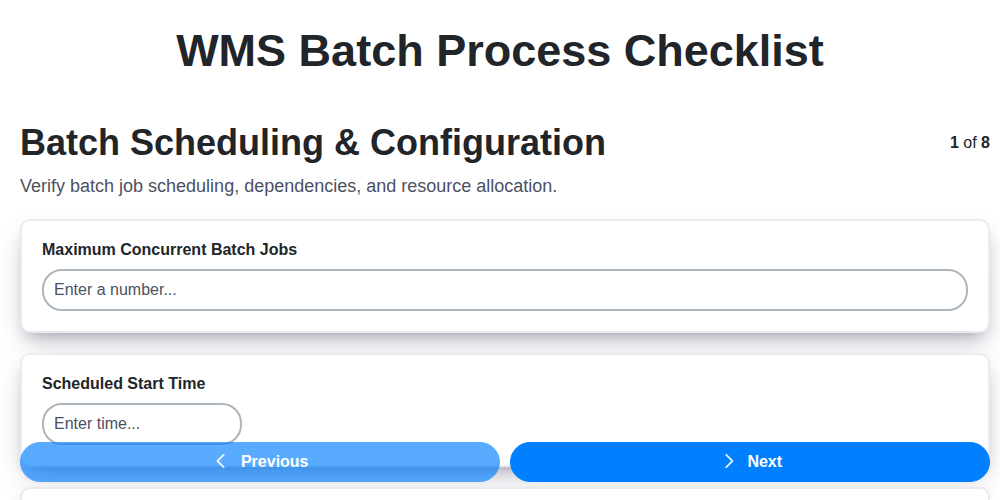
Ensuring Success: Your WMS Batch Process Checklist Template
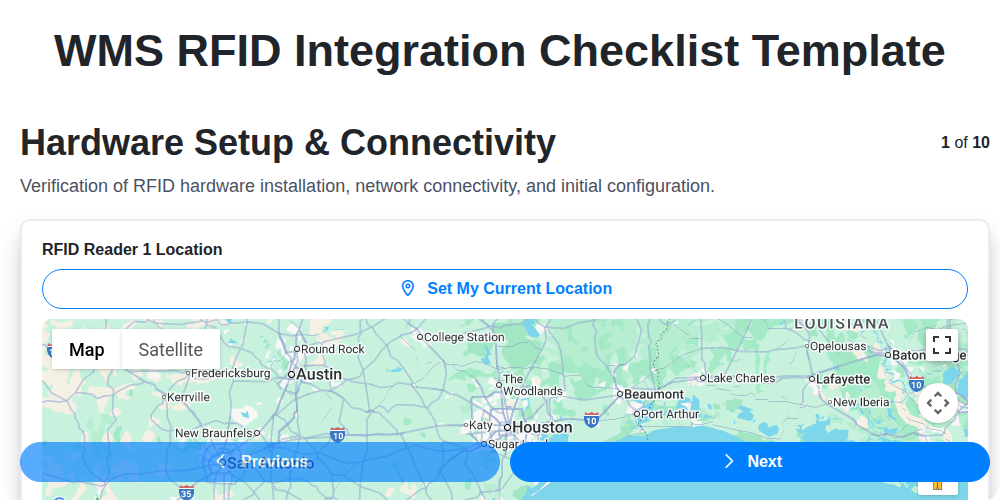
Seamless RFID Integration: Your WMS Checklist Template for Success
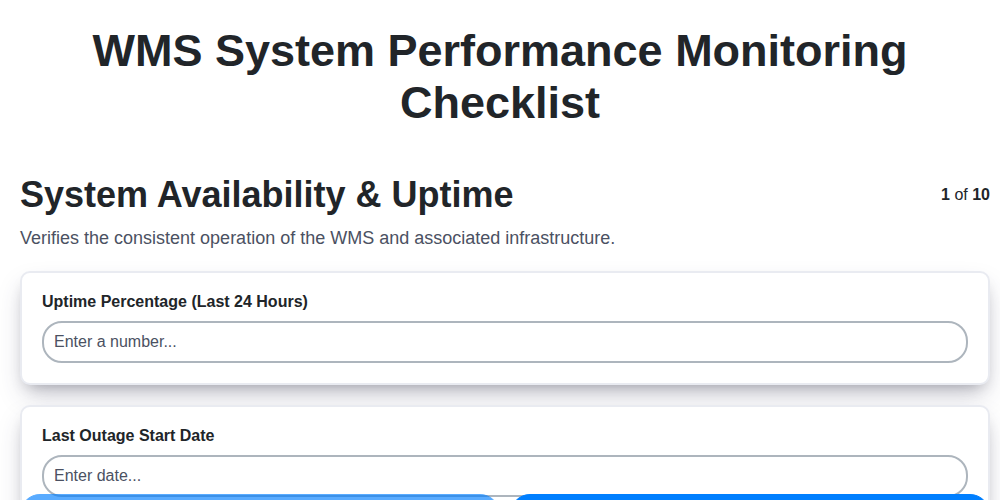
WMS System Performance Monitoring Checklist: A Comprehensive Guide

Mastering Your Yard: A Warehouse WMS Yard Management Checklist Template

Ensuring Success: Your WMS Automation Validation Checklist Template
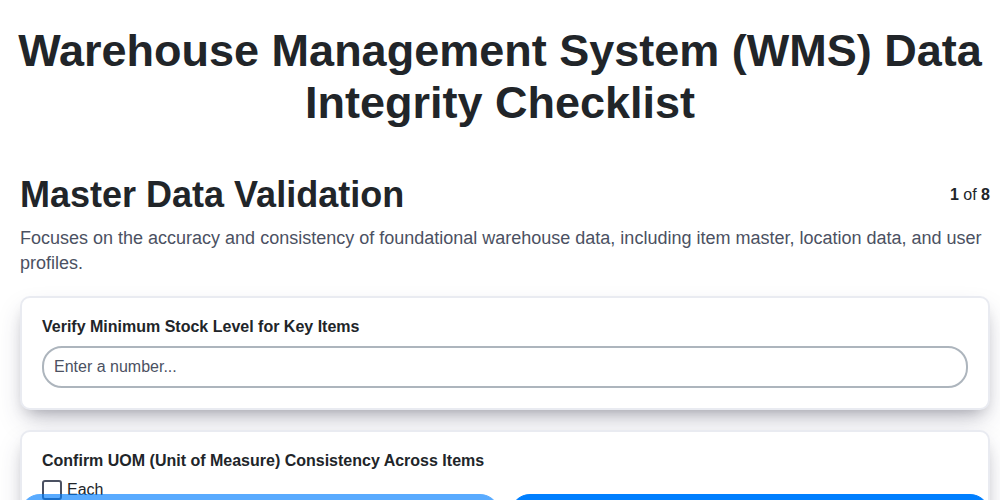
Warehouse Data Integrity: Your WMS Checklist Template
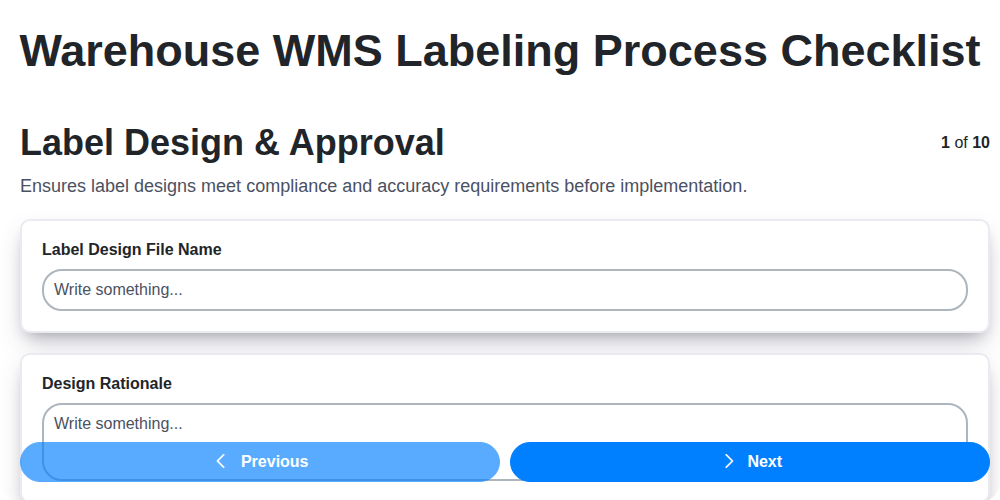
Mastering Warehouse Labeling: Your WMS Process Checklist Template

Warehouse WMS Security Checklist: A Comprehensive Guide to Protecting Your Operations
Need help with
Checklists?
Have a question? We're here to help. Please submit your inquiry, and we'll respond promptly.